
If you tore through The Silent Patient and immediately wanted something that would do the same thing to your brain, start here: Gone Girl by Gillian Flynn for the dual unreliable narrator structure, Verity by Colleen Hoover for the manuscript-within-a-story gut punch, and Nathaniel Connors’ The Nether for readers ready to push the psychological tension into darker supernatural territory. All three are available on Kindle, and Connors’ titles are free on Kindle Unlimited.
What makes The Silent Patient so hard to shake is its architecture. Macmillan frames it as Hitchcockian suspense crossed with Agatha Christie plotting: a therapist obsessed with a silent patient, a diary that rewrites everything, and a final reveal that forces you to replay every scene. The books below were chosen because they replicate at least one of those structural moves.
| Book | Core Similarity | Tone | Format (U.S.) |
|---|---|---|---|
| Gone Girl | Dual unreliable narrators, diary device | Domestic noir | Paperback / Kindle |
| Verity | Manuscript twist, unreliable perspective | Dark domestic | Paperback / Kindle |
| The Widow | Unreliable grief narrative | Domestic thriller | Paperback / Kindle |
| The Model Patient | Therapist/patient dynamic, period setting | Historical psychological | Paperback / Kindle |
| The Nether | Supernatural unreliable narrator, revenge/guilt | Dark supernatural | Kindle / Kindle Unlimited |
| Stories of a Condemned Soul | Psychological guilt, dark tone | Supernatural horror | Kindle / Kindle Unlimited |
| Evolution A200: A Bubonic Apocalypse | Dystopian dread, unreliable world | Dystopian horror | Kindle / Kindle Unlimited |
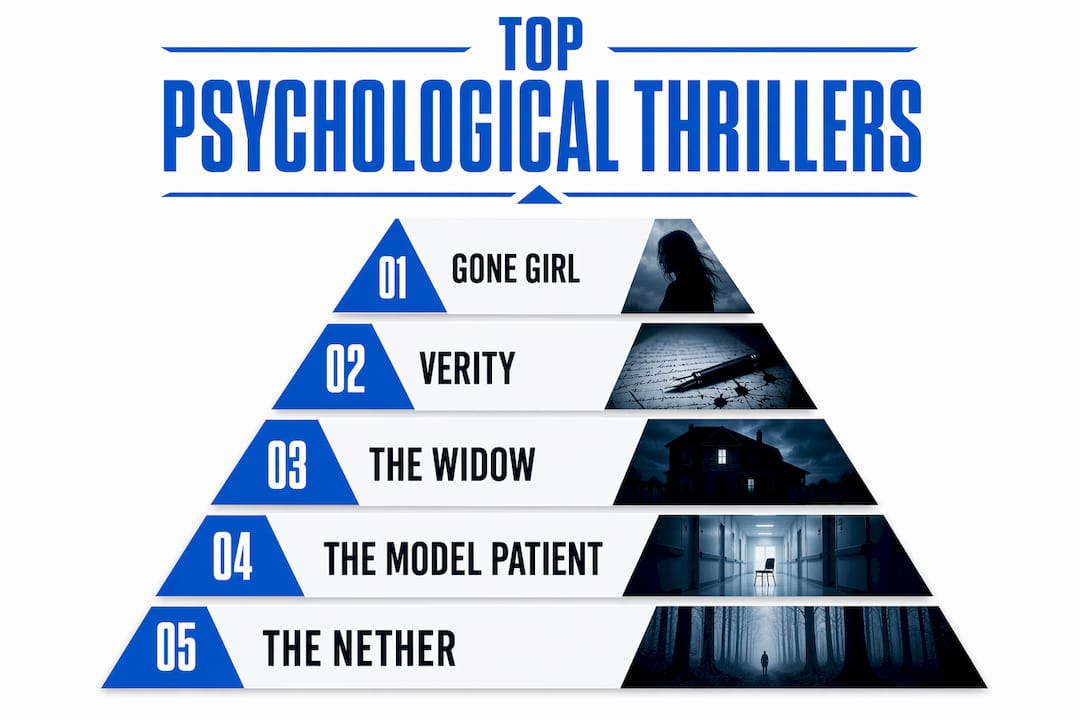
Table of Contents
- What are the best books like The Silent Patient?
- How do these books compare at a glance?
- How were these picks chosen?
- Which book should you pick based on what you loved most?
- How Nathaniel Connors’ books fit this list
- Key Takeaways
- What draws me to this corner of fiction
- Read Nathaniel Connors on Kindle Unlimited now
- Further reading and sources
What are the best books like The Silent Patient?
1. Gone Girl — Gillian Flynn
Two narrators, both lying. Nick and Amy alternate chapters, each version of events quietly contradicting the last. Flynn’s dual unreliable narrators deliver the same retroactive reframing The Silent Patient does, except the twist keeps moving. Best for readers who loved the structural deception. Paperback and Kindle; widely available in U.S. libraries. Content note: domestic violence, manipulation, explicit language.
2. Verity — Colleen Hoover
A ghostwriter discovers a manuscript that may be a confession to murder. The question of whether the document is real or staged drives the same “can I trust what I’m reading?” dread as Alicia’s diary. Best for readers who loved the diary device. Paperback and Kindle. Content note: graphic violence, pregnancy loss, sexual content.

3. The Widow — Fiona Barton
Jean’s husband dies and she finally gets to tell her story. Except her story keeps shifting. The novel uses a journalist, a detective, and Jean herself as competing perspectives, each one unreliable in a different way. Best for domestic thriller fans who want procedural texture alongside the doubt. Paperback and Kindle. Content note: child abduction themes, grief.
4. The Model Patient — Lucy Ashe
Set in 1960s London, this one centers on a therapist-patient relationship warped by obsession. Hachette’s publisher notes emphasize how Ashe balances empathy with manipulative power dynamics, which is exactly the tension The Silent Patient builds between Theo and Alicia. Best for readers who loved the therapist angle and want a historical backdrop. Paperback and Kindle. Content note: mental health institutionalization, period-era social constraints.
5. The Nether — Nathaniel Connors
Where the above titles stay in the domestic or clinical, The Nether goes somewhere darker. The psychological pressure here comes from supernatural forces that may or may not be real, keeping the reader in the same state of doubt that makes The Silent Patient so effective. Best for readers ready to move from domestic noir into dark supernatural fiction. Kindle and Kindle Unlimited. Content note: supernatural violence, themes of revenge and guilt.
6. Stories of a Condemned Soul — Nathaniel Connors
A collection that explores guilt and redemption through characters who cannot fully trust their own perception. The short-form structure mirrors the short-chapter pacing that makes psychological thrillers so compulsive. Best for readers who want psychological intensity without a single long narrative commitment. Kindle and Kindle Unlimited. Content note: dark themes, violence, moral ambiguity.
7. Evolution A200: A Bubonic Apocalypse — Nathaniel Connors
The psychological unreliability here is baked into the world itself: a dystopian setting where the rules of reality have collapsed. The dread is systemic rather than domestic, but the core sensation of not knowing what to believe carries over directly. Best for readers who want the twist sensation applied to a larger, darker canvas. Kindle and Kindle Unlimited. Content note: dystopian horror, epidemic themes, graphic scenes.
8. The Model Patient (Lucy Ashe) note: All recommended titles here are standalones, which matters. Twist structures work best in self-contained reads, and every book on this list rewards finishing without a sequel commitment.
Pro Tip: If you read on Kindle Unlimited, start with Nathaniel Connors’ titles — they’re included at no extra cost and let you sample the darker supernatural end of this list before committing to a purchase.
How do these books compare at a glance?
| Book | Why similar | Tone | Pacing | Best for | Formats (U.S.) | Content notes |
|---|---|---|---|---|---|---|
| Gone Girl | Dual unreliable narrators, diary | Domestic noir | Fast, alternating chapters | Twist lovers | Paperback, Kindle | Domestic violence, manipulation |
| Verity | Manuscript twist, unreliable document | Dark domestic | Short chapters, propulsive | Diary-device fans | Paperback, Kindle | Graphic violence, pregnancy loss |
| The Widow | Competing unreliable perspectives | Domestic thriller | Slow-burn procedural | Character-driven readers | Paperback, Kindle | Child abduction themes |
| The Model Patient | Therapist/patient obsession, period setting | Historical psychological | Measured, atmospheric | Therapist-dynamic fans | Paperback, Kindle | Institutionalization, period constraints |
| The Nether | Supernatural unreliable narrator | Dark supernatural | Tense, short chapters | Dark supernatural readers | Kindle, KU | Supernatural violence, revenge |
| Stories of a Condemned Soul | Guilt, moral ambiguity, perception doubt | Supernatural horror | Short-form, punchy | Anthology/horror fans | Kindle, KU | Dark themes, violence |
| Evolution A200 | Dystopian unreliable world | Dystopian horror | Propulsive, dread-driven | Dystopian horror fans | Kindle, KU | Epidemic horror, graphic scenes |
How were these picks chosen?
Effective psychological thrillers work by engineering doubt, not just shock. Every title here was evaluated against five criteria:
- Twist strength: Does the ending reframe what came before, or just surprise?
- Unreliable narrator: Is the reader actively misled by a character’s perspective?
- Therapist or domestic setting: Does the story use intimacy or professional trust as the mechanism for deception?
- Pacing: Do short chapters and screenplay-like momentum accumulate urgency?
- Re-readability: Are clues planted early enough that a second read rewards the effort?
Format availability was checked against U.S. Amazon listings. Nathaniel Connors’ titles were confirmed on Kindle Unlimited. Editorial sources consulted include BookBub’s curated list, publisher pages, and SpinToRead’s structural analysis.
Pro Tip: The re-readability test is the fastest way to separate a great twist from a cheap one. If you can’t find the clues on page 30 after finishing, the author didn’t earn the ending.
Which book should you pick based on what you loved most?
Loved the twist above everything else?
Start with Gone Girl. The structural reversal is the closest match to The Silent Patient’s final-chapter reframe, and Flynn plants her clues with the same deliberate retroactive logic.
Loved the therapist/patient dynamic?
The Model Patient is the direct answer. The 1960s London setting adds period social pressure that deepens the power imbalance between therapist and patient beyond what a contemporary setting can do.
Want darker, supernatural elements?
Move to The Nether by Nathaniel Connors. The psychological doubt stays intact; the source of that doubt shifts from a clinical setting to something more unsettling.
Prefer a slower burn with procedural texture?
The Widow gives you competing narrators and a journalist’s investigation that unfolds at a deliberate pace, rewarding patience rather than sprint-reading.
Pro Tip: Cross-genre readers who loved the “can I trust this narrator?” sensation should try Connors’ work next. The doubt doesn’t disappear in dark supernatural fiction — it just loses its clinical explanation, which makes it worse.
How Nathaniel Connors’ books fit this list
Connors writes at the intersection of psychological tension and dark supernatural fiction, which puts his work in a distinct position on this list. Where The Silent Patient and Gone Girl locate their unreliable narrators in domestic or clinical spaces, Connors strips away those familiar settings and leaves the reader with no stable ground at all.
The Nether explores revenge and guilt through a narrator whose perception of reality is itself the unreliable element. Stories of a Condemned Soul moves through guilt and redemption in short, punchy pieces that hit with the same urgency as a chapter-a-night thriller. Evolution A200: A Bubonic Apocalypse takes the psychological dread of not knowing who to trust and scales it to a collapsing world.
All three titles are available on Kindle and free for Kindle Unlimited subscribers, which means you can read them at no extra cost if you’re already subscribed. For readers who want to move from the psychological thriller shelf into darker supernatural and dystopian territory, Connors’ work is the natural next step.
Pro Tip: Start with Stories of a Condemned Soul if you’re new to Connors. The short-form structure lets you gauge the tone before committing to a full novel.
Key Takeaways
The best follow-up to The Silent Patient matches on at least two of these: twist structure, unreliable narrator, intimate setting, and propulsive short-chapter pacing.
| Point | Details |
|---|---|
| Match on twist type | Choose books where the ending reframes the whole narrative, not just surprises. |
| Unreliable narrator is the core hook | Every title here misleads through a character’s perspective, not just plot mechanics. |
| Check format before buying | Nathaniel Connors’ titles are on Kindle Unlimited; others require purchase or library access. |
| Standalone reads only | All recommended titles are self-contained, so no sequel commitment is required. |
| Nathanielconnors for darker reads | The Nether, Stories of a Condemned Soul, and Evolution A200 extend the psychological tension into supernatural and dystopian territory, free on Kindle Unlimited. |
What draws me to this corner of fiction
The thing most readers miss about The Silent Patient is that the twist isn’t the point. The point is the doubt that builds for 300 pages before the twist lands. Michaelides designs every chapter so you’re never quite sure whether Theo is a reliable investigator or a man constructing a story he needs to believe. That sustained uncertainty is harder to write than any single reversal.
That’s the same territory I work in. Revenge, guilt, and redemption are interesting to me precisely because they’re states where characters can’t trust their own perception of events. A person consumed by guilt will misread everything. A character seeking revenge will rationalize whatever they need to. That unreliability isn’t a trick. It’s the psychological reality of those emotional states, and it’s what makes the fiction feel true even when the setting is supernatural or dystopian. If you want to keep that feeling going after The Silent Patient, the books on this list will get you there. My own titles are on Kindle Unlimited if you want to go darker.
Read Nathaniel Connors on Kindle Unlimited now
If you’ve finished The Silent Patient and want to push further into the psychological dark, Nathaniel Connors’ titles are waiting. The Nether, Stories of a Condemned Soul, and Evolution A200: A Bubonic Apocalypse are all available on Kindle Unlimited at no extra cost for subscribers, and on Kindle and paperback for everyone else.
These aren’t comfort reads. They’re built for readers who want the doubt to stay with them. Visit nathanielconnors.com to see all available titles, or go straight to the Kindle Unlimited page to start reading today.
Further reading and sources
- SpinToRead: Books Like The Silent Patient — Structural analysis of dual timelines, diary devices, and pacing parallels; the most detailed editorial breakdown of why specific titles match.
- Macmillan: The Silent Patient — Publisher overview of the novel’s architecture; useful for understanding the Hitchcock/Christie framing.
- Hachette: The Model Patient by Lucy Ashe — Publisher description of the therapist/patient dynamic and period setting.
- BookBub: 26 Thrilling Books Like The Silent Patient — Broad reader-facing list with thematic groupings; good for finding additional picks beyond this shortlist.
- ParamountPlus: Psychological Thrillers That Mess With Your Head — Editorial analysis of how doubt and second-guessing define the genre’s best entries.