
If you want immersive, thought-provoking dark fiction, start with Tender Is the Flesh for body horror that cuts to the bone, or The Road for post-apocalyptic survival dread that never lets up. Both are widely considered the most viscerally effective dystopian horror novels for readers who want more than a bleak backdrop.
Quick shortlist — pick by mood:
- The Handmaid’s Tale (Atwood) — suffocating dread
- 1984 (Orwell) — paranoid surveillance terror
- The Road (McCarthy) — raw survival grief
- Tender Is the Flesh (Bazterrica) — extreme body horror
- The Stand (King) — epic plague apocalypse
- Never Let Me Go (Ishiguro) — quiet existential horror
- Evolution A200: A Bubonic Apocalypse (Connors) — biological collapse thriller
- The Nether (Connors) — psychological supernatural dread
Pairing suggestions: After The Road, go to A Boy and His Dog at the End of the World for a warmer but equally bleak survival voice. After Tender Is the Flesh, try The Book of the Unnamed Midwife for feminist body horror with more narrative momentum.
Content warning: Several titles on this list contain graphic violence, sexual assault, body horror, and child death. Specific trigger warnings appear in each book entry below.
Pro Tip: If you are new to the genre, start with Never Let Me Go or The Last Policeman before moving to Tender Is the Flesh or The Stand. The former two ease you in; the latter two do not.
Table of Contents
- Which dystopian horror novels should you read by mood?
- Annotated entries for every book on the list
- What makes a novel “dystopian horror” rather than just dystopian fiction?
- How do you pick your next dark speculative fiction read?
- Why does dystopian horror resonate now, and why do some books get banned?
- Recent and notable titles worth your attention right now
- Key Takeaways
- Why these books matter more than the genre label suggests
- Nathanielconnors’ dystopian horror fiction is on Kindle Unlimited now
- Useful sources and further reading
Which dystopian horror novels should you read by mood?
The best way to navigate this genre is by the kind of dread you want, not just by the label “dystopian horror.” These four moods cover the full spectrum.
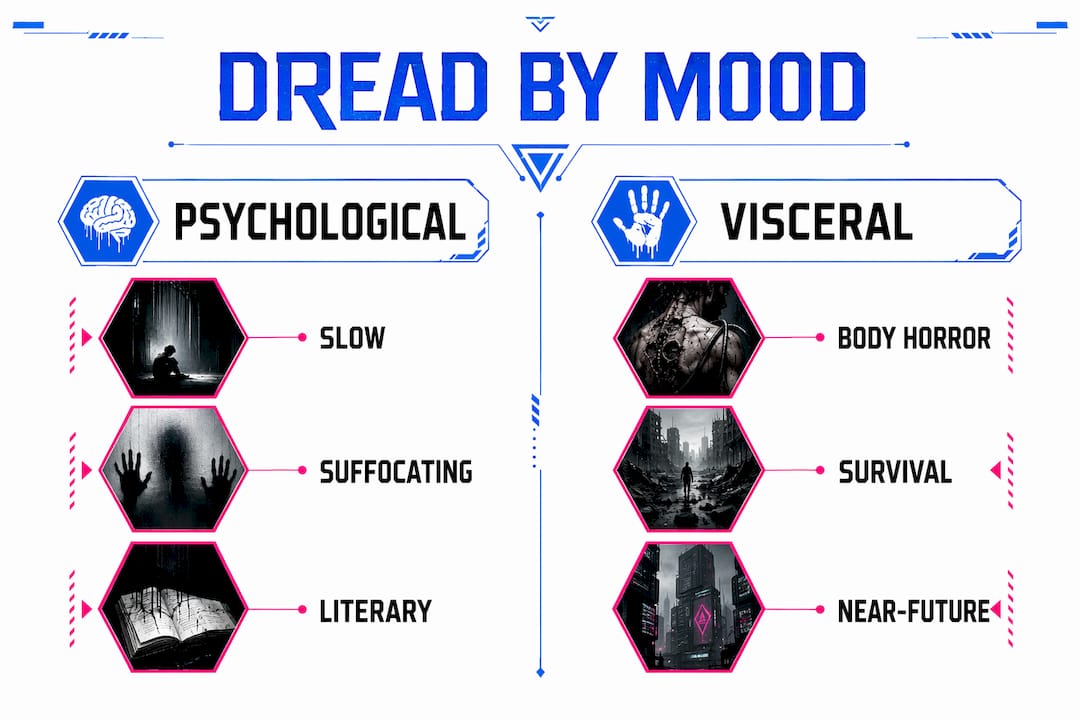
Psychological dread (slow, suffocating, literary)
These books build horror through institutional control and the quiet erosion of identity. The setting is oppressive but recognizable; the terror is in what people accept as normal. The Handmaid’s Tale, 1984, Brave New World, Never Let Me Go, and The Last Policeman all belong here. So does The Nether by Nathaniel Connors, which layers supernatural psychological pressure onto a world where the boundaries between guilt and reality dissolve.
Body horror and social allegory
When the horror is physical and the system has made it routine, you are in this territory. Tender Is the Flesh is the defining example: human slaughter reframed as ordinary commerce. The Book of the Unnamed Midwife belongs here too, with its unflinching account of bodily survival in a world that has turned violently against women. Evolution A200: A Bubonic Apocalypse by Nathaniel Connors fits squarely in this group, following a biological catastrophe where the collapse of public health infrastructure exposes the worst of human behavior.
Post-apocalyptic survival horror
The world is already gone. What remains is the question of what people become when systems fail completely. The Road, The Stand, and A Boy and His Dog at the End of the World are the core picks. For post-apocalyptic monster narratives with a darker supernatural edge, Connors’ work extends this tradition into territory where survival and damnation overlap.
Prescient near-future horror
These books feel like warnings. 1984, Brave New World, and The Last Policeman all describe futures that read less like speculation and more like extrapolation. Publisher roundups consistently note that dystopian fiction creates an “unshakeable sense of familiarity” that makes futures feel disturbingly close. Stories of a Condemned Soul by Nathaniel Connors operates in this register, using short, punishing narratives to examine guilt and moral collapse in systems that have stopped functioning.
Annotated entries for every book on the list
The Handmaid’s Tale — Margaret Atwood (1985)
Offred is a Handmaid in the Republic of Gilead, a theocratic state built on the ruins of the United States, where women are property of the state and her only function is to breed. The horror is bureaucratic and intimate at once. Atwood’s prose is controlled and cold, which makes the violence land harder. Mood: suffocating, literary. Who should read it: readers who want political horror with a feminist lens and a slow-building sense of doom. Trigger warnings: sexual slavery, rape, torture, execution, reproductive coercion. Available in paperback, ebook, and audiobook.
1984 — George Orwell (1949)
Winston Smith lives under a totalitarian regime where surveillance is total and thought itself is a crime. Orwell’s vision of Newspeak, doublethink, and Room 101 has become the template for surveillance horror in fiction. The dread here is intellectual as much as visceral. Mood: paranoid, claustrophobic. Who should read it: anyone who wants the foundational text of near-future horror novels set in dystopia. Trigger warnings: torture, psychological abuse, political violence. Widely available in all formats.
Brave New World — Aldous Huxley (1932)
Huxley’s World State engineers happiness through genetic conditioning, recreational drugs, and the elimination of meaningful choice. The horror is that nobody suffers visibly. That absence of suffering is the point. Mood: satirical, unsettling. Who should read it: readers who prefer philosophical dread over graphic content. Trigger warnings: sexual content, drug use, themes of dehumanization. Available in paperback and ebook.
Never Let Me Go — Kazuo Ishiguro (2005)
Kathy, Tommy, and Ruth grow up at Hailsham, a boarding school with a secret that defines their entire lives. Ishiguro withholds the full horror until the reader has already fallen for the characters, which makes the revelation devastating. This is the quietest book on the list and one of the most emotionally destructive. Mood: melancholic, slow-burn existential dread. Who should read it: literary fiction readers who want horror that lingers for weeks. Trigger warnings: themes of death, loss of bodily autonomy, grief. Available in paperback, ebook, and audiobook.
The Road — Cormac McCarthy (2006)
A father and son walk south through a burned America, carrying nothing but each other. McCarthy strips the prose to almost nothing, and the result is relentless. No chapters, minimal punctuation, no named characters. The horror is not monsters; it is what people do when civilization is gone. Mood: bleak, harrowing, grief-soaked. Who should read it: readers who want survival horror that is also a meditation on love. Trigger warnings: extreme violence, cannibalism, child endangerment, suicide ideation. Available in paperback, ebook, and audiobook.
The Stand — Stephen King (1978/1990)
A mutated super-flu wipes out roughly 99% of the global population within weeks, and the survivors divide into two camps: one drawn to a 108-year-old woman in Nebraska, the other to a dark figure in Las Vegas. King’s longest novel is also his most ambitious horror-dystopia. Mood: epic, mythic, terrifying. Who should read it: readers who want scale and character depth alongside their apocalypse. Trigger warnings: graphic violence, sexual assault, child death, plague imagery. Available in paperback, ebook, and audiobook.
Tender Is the Flesh — Agustina Bazterrica (2020)
After a virus makes animal meat toxic, governments legalize human slaughter. Marcos works at a processing plant and tries not to think about what he does. Bazterrica’s novel won the Clarín Novel Prize and was a strong commercial success in the United States. The prose is deliberately flat and clinical, which makes the body horror worse. Mood: grotesque, cerebral, deeply unsettling. Who should read it: readers who can handle extreme content and want horror that functions as social critique. Trigger warnings: graphic depictions of human slaughter, sexual violence, body horror. Available in paperback and ebook.
The Book of the Unnamed Midwife — Meg Elison (2014)
A plague kills most women and nearly all children. The unnamed narrator survives by disguising herself as a man and documenting what she sees. Elison won the Philip K. Dick Award for this novel, and it earns every word of that recognition. Mood: raw, feminist, unsparing. Who should read it: readers who want survival horror with a sharp political consciousness. Trigger warnings: sexual violence, graphic violence, misogyny, reproductive trauma. Available in paperback and ebook.
A Boy and His Dog at the End of the World — C.A. Fletcher (2019)
Griz lives in a depopulated world with his family and their dogs. When a stranger steals one of the dogs, Griz follows him across a ruined Britain. Fletcher’s novel is quieter than most post-apocalyptic horror books, but the loneliness it builds is profound. Mood: elegiac, tense, quietly devastating. Who should read it: readers who want survival horror with emotional warmth and a dog you will love. Trigger warnings: animal death, violence, themes of extinction. Available in paperback and ebook.
The Last Policeman — Ben H. Winters (2012)
Detective Hank Palace investigates a murder in a New Hampshire town six months before an asteroid destroys Earth. Most people have stopped caring about anything. Palace hasn’t. The horror here is existential: what does justice mean when nothing will survive? Mood: melancholic, procedural, quietly devastating. Who should read it: readers who want dystopian thrillers with a literary sensibility and a ticking clock. Trigger warnings: suicide, depression, violence. Available in paperback and ebook.
The Nether — Nathaniel Connors
A supernatural psychological thriller set in a world where guilt and reality blur until the protagonist cannot tell which is more dangerous. Connors builds dread through character interiority rather than external threat, which gives the horror an unusually intimate quality. Mood: psychological, dark, atmospheric. Who should read it: readers who want horror that lives inside the mind rather than on the page’s surface. Trigger warnings: psychological horror, themes of guilt and damnation. Available on Amazon in ebook and paperback, and free to read on Kindle Unlimited.
Stories of a Condemned Soul — Nathaniel Connors
A short story collection that moves through revenge, guilt, and moral collapse in compressed, punishing narratives. Each story functions as a self-contained horror, but together they build a portrait of a world where systems have failed and individuals bear the cost. Mood: dark, literary, psychologically intense. Who should read it: readers who prefer short fiction and want horror that rewards rereading. Trigger warnings: violence, themes of guilt, moral horror. Available on Amazon in ebook and paperback, and free on Kindle Unlimited.
Evolution A200: A Bubonic Apocalypse — Nathaniel Connors
A biological catastrophe tears through a society already stretched to breaking. Connors traces the collapse of public health infrastructure and the human behavior it exposes, from institutional failure to individual cruelty. The horror is not the plague itself but what the plague reveals. Mood: tense, visceral, socially conscious. Who should read it: readers who want post-apocalyptic horror books grounded in biological realism and psychological depth. Trigger warnings: graphic depictions of disease, death, violence, institutional collapse. Available on Amazon in ebook and paperback, and free on Kindle Unlimited.
What makes a novel “dystopian horror” rather than just dystopian fiction?
Dystopian horror is dystopian fiction where the stakes have turned nightmarish: the failed system does not just oppress, it destroys, and survival strips away empathy until characters are reduced to instinct.
Dystopian fiction centers on failed systems, abuse of power, and how extraordinary circumstances reshape ordinary lives. That is the foundation. What separates dystopian horror from dystopian science fiction is the addition of three elements: visceral or psychological terror, the active erosion of the protagonist’s humanity, and stakes that feel nightmarish rather than merely unjust.
1984 is dystopian SF until Room 101, where it becomes horror. Never Let Me Go is literary fiction until the full implications of Hailsham land, at which point it is something closer to existential horror. Tender Is the Flesh is body horror from page one, using the flat logic of the slaughterhouse to make the reader complicit in the horror before they realize it.
Prose style matters here. Effective dystopian horror often uses what critics have called “chilly aloofness”: a restrained, emotionally withheld voice that lets grotesque scenes land without telegraphing how the reader should feel. Bazterrica does this throughout Tender Is the Flesh. McCarthy does it in The Road. The absence of explicit emotional cueing forces the reader to supply the horror themselves, which makes it stick longer.
How do you pick your next dark speculative fiction read?
Choose by mood and your tolerance for graphic content, not by genre label alone. Here is a fast decision checklist.
- Do you want slow psychological dread or fast visceral horror? Slow: Never Let Me Go, The Last Policeman, The Nether. Fast: Tender Is the Flesh, The Stand, Evolution A200.
- How much graphic content can you handle? Mild: Brave New World, Never Let Me Go. Moderate: 1984, A Boy and His Dog at the End of the World. Extreme: Tender Is the Flesh, The Road, The Stand.
- Do you want a near-future setting or full collapse? Near-future surveillance: 1984, The Handmaid’s Tale, Stories of a Condemned Soul. Full collapse: The Road, The Stand, Evolution A200.
- Do you prefer short or long? Under 300 pages: Tender Is the Flesh, The Last Policeman, The Nether, Stories of a Condemned Soul. 500+ pages: The Stand, The Handmaid’s Tale.
- Do you have Kindle Unlimited? Nathaniel Connors’ titles (The Nether, Stories of a Condemned Soul, Evolution A200) are all free to read on Kindle Unlimited.
- Do you want literary fiction or genre horror? Literary: Never Let Me Go, The Road, The Handmaid’s Tale. Genre horror: The Stand, Evolution A200, The Nether.
Pro Tip: Read the first 15 pages before committing. If the prose voice does not pull you in by then, try a different title from the same mood group. Voice is the single biggest factor in whether a dystopian horror novel works for a specific reader.
Why does dystopian horror resonate now, and why do some books get banned?
Dystopian horror acts as an “eerie alarm bell” that lets readers process real-world anxieties — climate change, surveillance, government overreach — through fictional extremes. That is not a new function for the genre, but the specific anxieties have sharpened.
When a novel describes a government that controls reproduction (The Handmaid’s Tale), a surveillance state that criminalizes thought (1984), or a biological collapse that exposes institutional failure (Evolution A200), readers recognize the architecture. The fiction is extreme; the underlying logic is not. That gap between “this is impossible” and “this is already happening in pieces” is where the genre’s power lives.
The prescience is not accidental. The most compelling dark speculative fiction details futures that are disturbingly close to the present, which elevates the genre from escapism to cultural critique. That is also why these books generate challenges in libraries and schools. Censorship analyses show that the most common reasons for challenging dystopian titles are sexual content and explicit material, followed by political sensitivity and depictions of violence.
The Handmaid’s Tale has been challenged repeatedly for sexual content and religious themes. Brave New World faces challenges for drug use and sexual content. 1984 has been challenged for political content and sexual scenes. The pattern is consistent: the books that most accurately mirror uncomfortable realities are the ones most likely to be pulled from shelves.
If you want to avoid unexpectedly graphic content, check the trigger warnings in the annotated entries above before starting. The books rated “extreme” in graphicness (Tender Is the Flesh, The Road, The Stand) are not for every reader, and knowing that upfront saves a lot of distress.
Recent and notable titles worth your attention right now
The genre is producing strong new work. These are the titles generating conversation in 2025 and 2026.
- The Unworthy by Agustina Bazterrica (2025): Bazterrica’s follow-up to Tender Is the Flesh frames climate collapse and ideological extremism through a claustrophobic, religiously ordered community. Feminist dystopian horror that interrogates devotion and survival. If you loved Tender Is the Flesh, this is the obvious next read.
- Them by W.H. Chizmar (2026): A post-apocalyptic survival horror debut combining a government experiment gone wrong with rural Americana ruins and a survivor’s slow erosion of humanity. One of the most anticipated horror releases of 2026.
- The Collector: A dystopian horror novel where grief is forbidden and memory erasure is state policy. The bureaucratic control produces a specific kind of psychological horror — the horror of being made to forget — that sits in a different register from most titles on this list.
- Evolution A200: A Bubonic Apocalypse by Nathaniel Connors: Worth flagging again here because it fits the current moment precisely. Biological collapse as a lens for institutional failure is a theme readers are actively seeking, and Connors delivers it with psychological depth that most genre entries miss.
Key Takeaways
The single most useful principle for navigating dystopian horror novels is this: choose by the kind of dread you want, check the trigger warnings before you start, and sample the first 15 pages before committing to a full read.
| Point | Details |
|---|---|
| Choose by mood, not label | Match the dread style (psychological vs. visceral) to your tolerance before picking a title. |
| Check trigger warnings first | Several titles include extreme content; the annotated entries above list specific warnings for each book. |
| Sample before committing | The first 15 pages reveal whether the prose voice will work for you — voice is the deciding factor. |
| Kindle Unlimited readers | Nathaniel Connors’ three titles are free to read on Kindle Unlimited, covering psychological, body horror, and post-apocalyptic subgenres. |
| Best single starting point | Never Let Me Go or The Last Policeman for new readers; Tender Is the Flesh or The Road for readers ready for extreme content. |
Why these books matter more than the genre label suggests
The conventional wisdom about dystopian horror is that it works because it is “timely.” That framing undersells what the best books actually do. Timeliness is a byproduct. What makes 1984 or The Road or Tender Is the Flesh genuinely disturbing is not that they predicted something specific. It is that they identified a logic — the logic of control, of survival, of commodification — and followed it to its conclusion without flinching.
Most horror relies on the irrational: the monster, the haunting, the inexplicable. Dystopian horror is more unsettling because it is entirely rational. Every step in Tender Is the Flesh follows from the previous one. Every rule in Gilead has a bureaucratic justification. The horror is not that something impossible happened. It is that something inevitable happened, and people adapted.
That is also why prose style matters so much in this genre. A writer who signals how the reader should feel — who tells you this is horrifying — gives the reader an escape route. The “chilly aloofness” that Bazterrica and McCarthy use removes that escape. The prose does not react. The reader has to. That gap between what is described and the absence of emotional guidance is where the real dread lives, and it is what separates the best books on this list from competent genre entries that simply have bleak settings.
When I read and write in this space, I look for that quality: a narrative that trusts the reader to feel the horror without being told to. The Nether and Evolution A200 are built on that principle. The psychological cost of survival, the moral erosion that happens when systems fail — those are the threads worth following, in any book on this list or beyond it.
Nathanielconnors’ dystopian horror fiction is on Kindle Unlimited now
Nathaniel Connors writes the kind of dark speculative fiction that stays with you. The Nether delivers psychological supernatural dread. Stories of a Condemned Soul works through guilt and moral collapse in sharp, compressed narratives. Evolution A200: A Bubonic Apocalypse follows biological catastrophe into the human behavior it exposes.
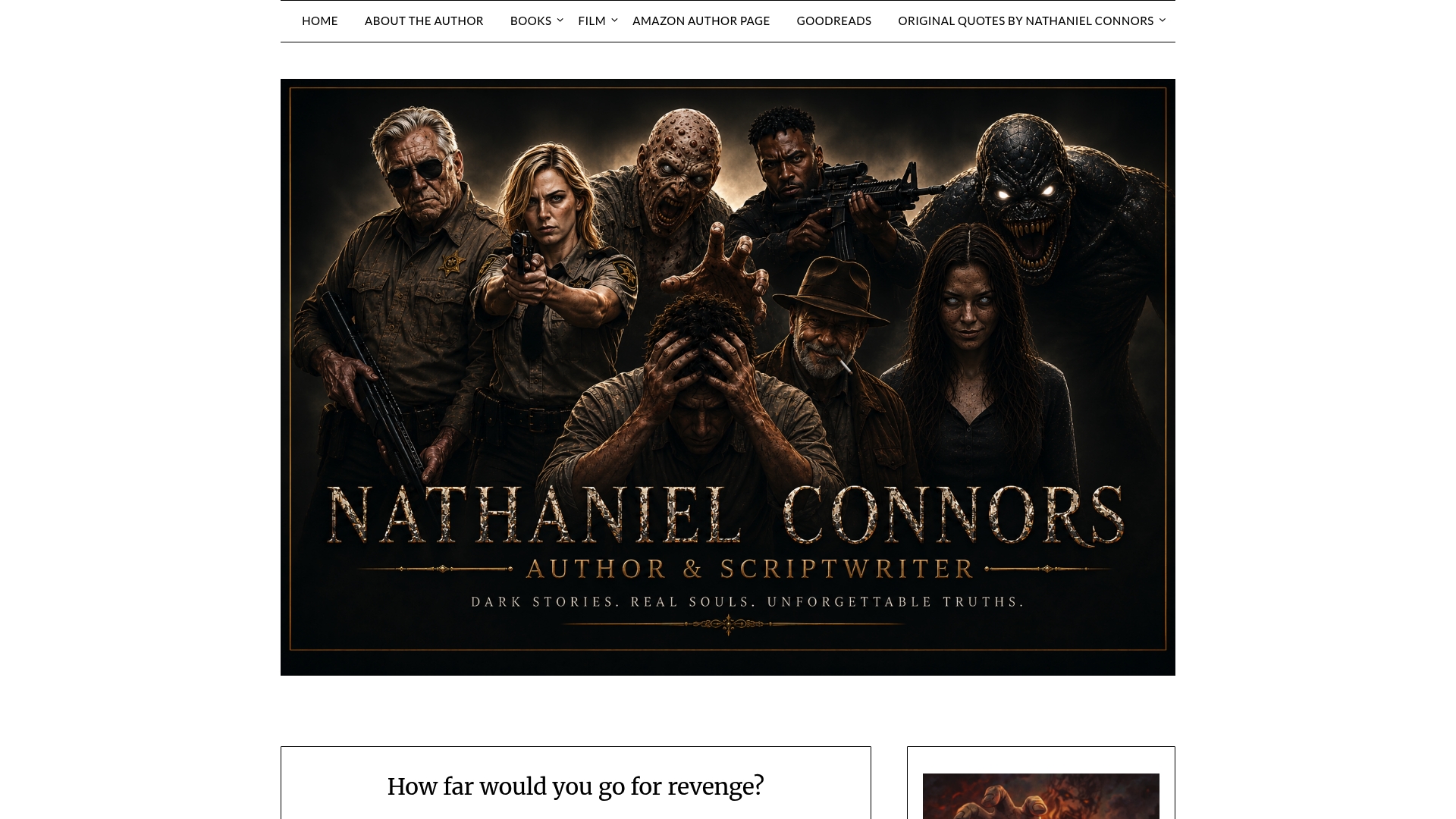
All three titles are available in ebook and paperback on Amazon, and every one of them is free to read for Kindle Unlimited subscribers. If you have worked through the classics on this list and want something that brings the same psychological intensity to original dark fiction, Nathanielconnors’ full catalog is the place to start.
Useful sources and further reading
These are the primary sources used to support claims in this article, organized by type.
Publisher and author pages
| Source | Type | Why it’s useful |
|---|---|---|
| Simon & Schuster — Tender Is the Flesh | Publisher page | Full plot summary and awards |
| Penguin Random House Retail — The Stand | Publisher page | Confirms the massive population loss premise and edition details |
| Simon & Schuster — The Unworthy | Publisher page | Publisher description linking climate crisis to ideological extremism |
| Simon & Schuster — Them | Publisher page | 2026 debut premise and tone description |
| Titan Books — The Collector | Publisher page | Plot summary for grief-as-crime dystopian premise |
| Pushkin Press — Tender Is the Flesh | Publisher/critical notes | Source for “chilly aloofness” stylistic observation |
Essays and roundups
- Penguin Random House dystopian books roundup — editorial curation with analysis of prescience and familiarity in the genre
- The Novelry — best dystopian novels — definition of dystopian fiction and the “eerie alarm bell” framing
- Pan Macmillan — best dystopian novels of all time — curated roundup covering classic and contemporary titles
Censorship and challenges
- Purdue ePubs — Censorship in the Library — academic analysis of the most common reasons dystopian and literary titles are challenged in schools and libraries; the primary source for the censorship discussion in this article