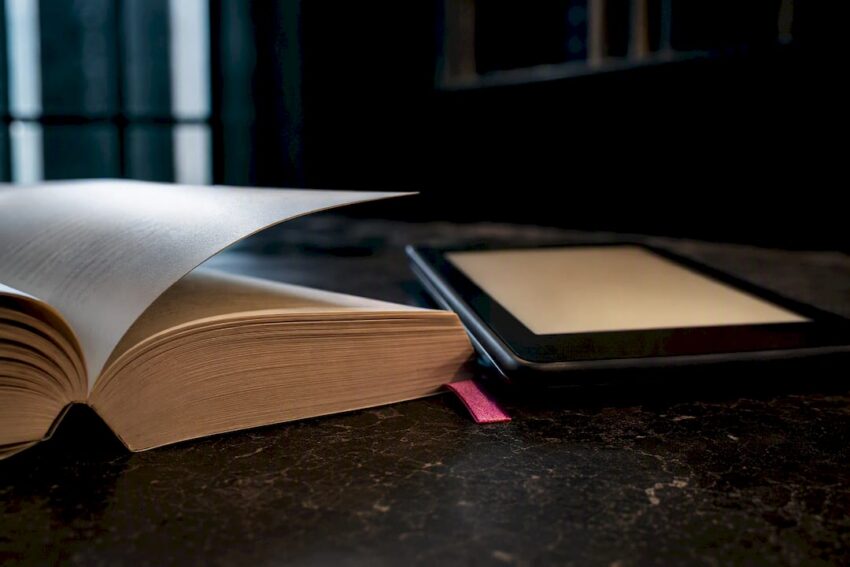
For most readers, the honest answer is both, chosen by purpose rather than loyalty: eBooks win for commuting, travel, and binge reading whole series fast, while paperbacks win for deep study, comprehension, and anything you want to keep, lend, or display. Budget-focused readers who read a lot tend to land on subscriptions like Kindle Unlimited, while collectors and slow readers stay loyal to print. The trade-offs that decide it, ownership limits, resale value, eye comfort, and how each format handles memory, get their own breakdown below.
TL;DR:
- eBooks are significantly cheaper for heavy readers through subscriptions like Kindle Unlimited, which can reduce the per-book cost to nearly zero for those reading multiple titles monthly.
- Paperbacks are more durable, resellable, and deliver better long-term ownership, making them preferable for collectors and readers who want a physical library.
- Physical books provide better memory retention and comprehension for complex texts due to spatial landmarks, while eBooks excel for quick research and digital annotation.
- Portability heavily favors eReaders, which can hold thousands of titles in a lightweight device, but physical books offer sentimental value and a tangible shelf presence.
- Eye strain is generally lower with eReaders using e-ink technology, which reflects ambient light like paper, whereas backlit screens, especially on phones or tablets, increase fatigue during long reading sessions.
Table of Contents
- Paperback Vs Ebook: A Quick Pros and Cons Breakdown
- How Does Format Affect Focus and Comprehension?
- Are Ebooks Cheaper Than Paperbacks Long Term?
- Which Format Travels and Stores Better?
- Do Ebooks Help With Accessibility and Reading Comfort?
- What Do You Actually Own With Each Format?
- Is Paperback or Ebook Better for the Environment?
- How Do You Choose the Right Format for You?
- What’s the Actual Difference Between a Paperback and an Ebook?
- Which Devices and Apps Work With Ebooks?
- Is It Easier to Find a Book in Paperback or Ebook?
- Does Reading on Paper Cause Less Eye Strain Than a Screen?
- Author Perspective: Why I Publish in Both Formats
- Where to Get Nathaniel Connors’s Books
- Sources
Paperback Vs Ebook: A Quick Pros and Cons Breakdown
Print still dominates the American market by revenue and units, according to Statista’s format-share tracking, and that single fact tells you something the “digital killed print” narrative gets wrong. Paperbacks aren’t a legacy format limping along. They’re the format most Americans still choose, even with a phone in every pocket.
Here’s the split, stripped down to what actually changes your reading life.
Paperback pros:
- No batteries, no login, no software updates ever
- Better memory retention and comprehension for long, complex texts
- Resells, lends, and survives a coffee spill (mostly)
- Feels permanent on a shelf, which matters to collectors
Paperback cons:
- Heavier to carry, especially in multiples
- Costs more per unit to produce and ship
- Takes up physical space that eventually becomes a moving problem
eBook pros:
- Carries hundreds of titles on one device
- Instant lookup, search, adjustable text, and built-in dictionaries
- Often cheaper per title, and dramatically cheaper per book under a subscription
eBook cons:
- You’re usually licensing access, not owning a copy outright
- No resale, and limited ability to lend
- Dependent on battery, firmware, and a company’s continued support
Best-for mapping, based on how these traits actually play out:
| Reader profile | Better fit | Why |
|---|---|---|
| Daily commuter | eBook | One device, zero extra weight |
| Student cramming for exams | Paperback (with eBook backup) | Print aids retention; digital aids search |
| Collector | Paperback | Editions, covers, and resale value matter |
| Reader with vision or dexterity limits | eBook | Adjustable fonts and text-to-speech |
| Budget-conscious binge reader | eBook subscription | Per-title cost drops fast with volume |
How Does Format Affect Focus and Comprehension?
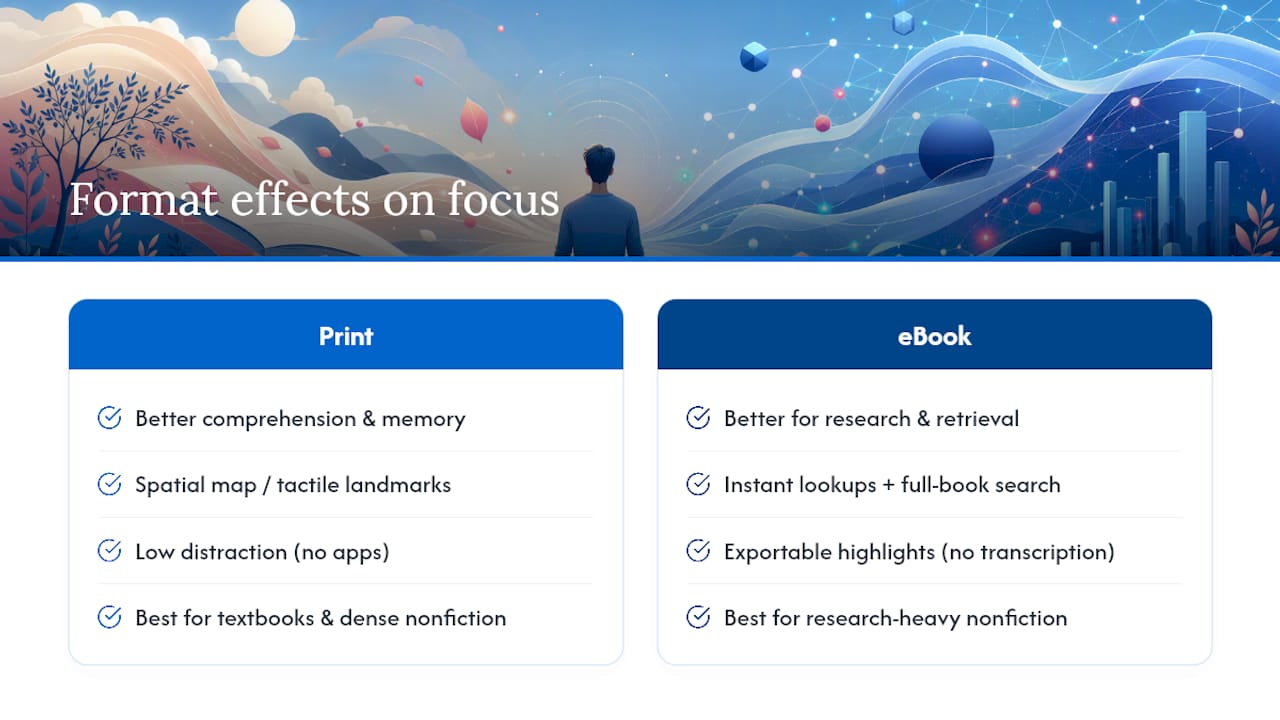
Print has a real, measurable edge here, and it’s not nostalgia talking. Research summarized in Psychology Today found that physical books can improve comprehension and memory retention compared to e-readers, largely because paper gives your brain something screens don’t: a spatial map. You remember that the big plot twist happened “near the end, on the right-hand page, about two-thirds down.” That tactile landmarking helps you navigate and recall long-form text in a way a scrolling screen simply can’t replicate.
eBooks fight back with a different kind of advantage. HowToGeek makes a solid case that eReaders are objectively better for research reading: instant word lookups, built-in search across an entire book, and highlights you can export instead of transcribe. If you’re reading nonfiction and need to find that one paragraph again three chapters later, a Kindle beats flipping pages every time.
Distraction is the real wild card, and it’s mostly a phone problem, not an eBook problem. Reading on a tablet that also runs Instagram invites trouble. Reading on a dedicated eReader with notifications off behaves almost like paper.
So the practical split looks like this: textbooks and dense nonfiction lean print, research-heavy reading leans digital, and leisure fiction, including horror and dark thriller reading where the point is immersion, works well in whichever format keeps you turning pages without picking up your phone.
Are Ebooks Cheaper Than Paperbacks Long Term?
Paperbacks generally cost more to produce, print, warehouse, and ship, and that cost shows up in the sticker price. eBooks skip nearly all of it, which is a big reason digital editions often undercut print by several dollars per title.
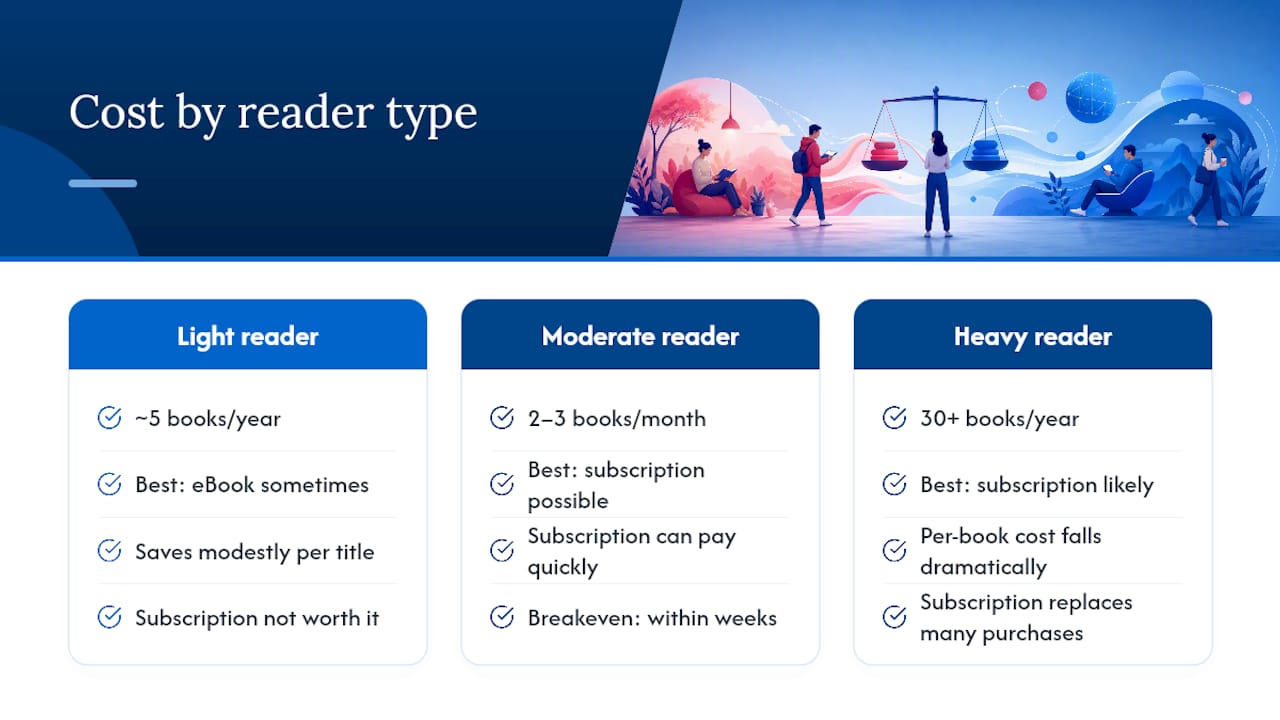
But “cheaper” depends entirely on how you read. A reader who buys five books a year will likely save modestly going digital, title for title. A reader who devours 30 or more books a year is a different story. That’s where subscription economics take over: Investopedia’s comparison notes that models like Kindle Unlimited can push the per-book cost down dramatically for heavy readers, since one flat monthly fee replaces dozens of individual purchases. If you read two or three books a month, a subscription can pay for itself within weeks. Our breakdown of Kindle Unlimited versus buying eBooks outright walks through exactly where that breakeven point tends to land.
There’s a flip side print keeps that digital can’t touch: resale. A paperback holds trade-in or resale value at a used bookstore or online marketplace; a licensed eBook has none. That’s worth factoring in for anyone who reads a book once and moves on. Industry-wide, AAP’s revenue reporting shows print still generates the bulk of publishing revenue in the United States, a sign that plenty of readers still see enough value in owning a physical copy to pay the premium.
Which Format Travels and Stores Better?
No contest for portability: an eReader holds an entire vacation’s worth of reading in something lighter than a single hardcover. That’s the single biggest lifestyle argument for digital, and it’s why so many commuters and travelers go all in on eBooks.
Paperbacks bring something a device can’t: a shelf from an independent press. There’s real value, sentimental and practical, in seeing your reading history lined up in a room, in being able to hand a favorite to a friend without a password. That value comes with a cost, though. Physical collections take up space, and space costs money, especially when you’re moving.
Digital isn’t risk-free either. Battery deaths at the worst moment, firmware updates that change how a device behaves, and the general reality that your library lives on someone else’s servers are all real considerations. The fix is simple: download titles for offline reading before a trip, and if a platform allows DRM-free files, keep a personal backup.
Do Ebooks Help With Accessibility and Reading Comfort?
For readers with vision or dexterity challenges, eBooks are frequently the better tool, not just a convenient one. OrCam’s accessibility overview points out that adjustable fonts, variable brightness, high-contrast display modes, and built-in text-to-speech make digital reading genuinely easier for many people who struggle with small print or holding a heavy book open.
Specific features worth knowing about:
- Font size and typeface adjustment, useful for low vision or dyslexia
- Text-to-speech narration built into most eReading apps
- High-contrast or dark modes that reduce glare
- One-handed page turns, easier than holding open a thick paperback
Print still has a place here, though. Some readers with sensory processing needs or certain cognitive conditions focus better with a fixed, non-illuminated page and no notification risk. If that’s you, a large-print paperback edition might outperform even an accessibility-optimized eBook. The right call depends on the specific need, not a blanket rule for either format.
What Do You Actually Own With Each Format?
A paperback is yours the moment you pay for it. It doesn’t need a company’s servers, an account login, or a firmware update to keep working; as research on reading in the digital age points out, printed text needs no electricity or servicing to remain readable, decades from now if you take care of it.
Most eBooks work differently. You’re typically buying a license to access a file within a platform’s ecosystem, not a transferable copy you fully control. Platforms can restrict formats, and in rare cases pull titles entirely. If long-term access matters to you, look for DRM-free purchase options where they exist, and keep records of what you’ve bought.
Collectors get an extra layer of value from print: signed copies, first editions, and cover variants carry a durability and rarity that a digital file simply cannot replicate.
Is Paperback or Ebook Better for the Environment?
Neither format is environmentally free, and the honest comparison depends on how much you read. Paperbacks carry a footprint from paper production, printing, and shipping. eBooks shift that cost to manufacturing an eReader and the electricity to charge it.
Lifecycle estimates commonly cited by outlets like Kitaboo suggest an eReader’s manufacturing footprint breaks even against print somewhere around 20 to 25 books read, assuming a device that lasts several years. Read fewer books than that on the device before replacing it, and paper may actually come out ahead.
Practical moves either way: buy used paperbacks when you can, keep an eReader running as long as possible instead of upgrading yearly, and recycle old devices through a manufacturer take-back program rather than a drawer.
How Do You Choose the Right Format for You?
Run through this checklist before your next book purchase:
- How often do you read? Heavy readers benefit more from digital subscriptions; occasional readers may not recoup the cost.
- Do you travel or commute with your reading? If yes, weight and portability push you toward eBooks.
- What’s your budget shape? One-time spender or steady monthly reader, each favors a different pricing model.
- Do you have vision or dexterity needs? That often tips the scale toward digital’s adjustable features.
- Do you want to keep, lend, or resell the book? Only paperback delivers on all three.
A few quick reader profiles to sanity-check your answer:
- The student: Paperback for deep study and annotation, eBook for quick searchability during research. Both, honestly.
- The commuter: eBook, almost always, for the sheer weight savings alone.
- The collector: Paperback or hardcover, no contest, since resale and display value matter more than convenience.
- The budget binge-reader: A subscription service, since per-title cost collapses once you’re reading multiple books a month. Our Kindle Unlimited versus Scribd comparison breaks down which subscription fits genre fiction fans best.
- The occasional reader: Whichever format is already in the house. Neither has a clear edge at low volume.
Pro Tip: Before committing to a full library in either format, test both cheaply first. Borrow a library eBook, download a free sample chapter, or grab a used paperback for a few dollars. You’ll know within one chapter which format keeps you reading.
What’s the Actual Difference Between a Paperback and an Ebook?
A paperback is a bound, printed physical object, ink on paper, glued or sewn into a soft cover. An eBook is a digital file, usually in EPUB or MOBI format, displayed through software on a screen. That distinction sounds obvious, but it drives every other difference in this comparison: production cost, portability, durability, and how your brain processes the words on the page.
Paperbacks are manufactured in print runs, shipped to warehouses, and sold as finite physical units. Once a run sells out, getting more takes time and money. eBooks have no such constraint. A single file can be sold infinitely with zero marginal production cost once it’s formatted, which is a big part of why digital pricing tends to run lower.
The reading interface differs too. A paperback needs nothing but ambient light and two working hands. An eBook needs a charged device, compatible software, and usually an internet connection at some point to download or sync your library. That dependency is the trade you make for the convenience of carrying a thousand books in your pocket.
Which Devices and Apps Work With Ebooks?
Compatibility is where eBooks get genuinely complicated compared to a paperback’s zero-setup simplicity. Amazon’s Kindle ecosystem runs on its own AZW and KFX formats, readable on Kindle devices and the free Kindle app across phones, tablets, and computers. Most other retailers and libraries use the EPUB format instead, which works on Apple Books, Kobo devices, Google Play Books, and library apps like Libby.
The practical snag: Kindle format and EPUB format don’t talk to each other. Buy a Kindle-format book and you’re locked into Amazon’s apps and devices. This is exactly why checking format compatibility before buying, especially if you’re mixing purchases across retailers, saves a real headache later. Readers who stick with one ecosystem (all Kindle, or all EPUB) avoid the conversion mess entirely.
Is It Easier to Find a Book in Paperback or Ebook?
New releases from major publishers almost always launch in both formats simultaneously, so availability is often a wash for current titles. Where the gap shows up is at the edges: older backlist titles, small-press releases, and self-published work are frequently eBook-only, since digital carries no print-run risk for the publisher.
Paperbacks pull ahead in a different way, used-book availability. Secondhand paperbacks circulate through used bookstores, library sales, and resale marketplaces in a way licensed eBooks structurally cannot, since there’s no legal secondhand market for most digital licenses. If you’re hunting a specific out-of-print title, a used paperback search often beats a digital storefront that simply doesn’t carry it anymore.
Subscription services complicate the picture further. A book can be “available” on Kindle Unlimited one month and gone the next, since publishers rotate titles in and out of these programs on their own schedules, unlike a paperback sitting on your shelf, which is available for as long as you own it.
Does Reading on Paper Cause Less Eye Strain Than a Screen?
Paper has a built-in advantage here: it reflects ambient light rather than emitting its own, which is closer to how your eyes evolved to read. No screen means no flicker, no blue-light exposure, and no backlight glare competing with the words.
E-ink displays, the technology behind dedicated eReaders like a basic Kindle, close most of that gap. They reflect light similarly to paper and don’t emit the blue light that backlit phone and tablet screens do, which is why most eye-strain complaints trace back to reading on phones and tablets, not dedicated eReaders.
Backlit screens are the real culprit for fatigue, especially in low light or during long reading sessions. If eye strain is a concern, an e-ink eReader with adjustable warmth settings, read in decent ambient light with regular breaks, performs close to paper. Reading the same book on a phone at midnight is where fatigue actually creeps in.
Author Perspective: Why I Publish in Both Formats
I offer my novels in paperback and eBook, and through Kindle Unlimited, because readers don’t experience dark fiction the same way twice. Some want The Nether on their nightstand, spine cracked, dog-eared at the scene that got under their skin. Others want Stories of a Condemned Soul loaded on a phone for a commute, or free through Kindle Unlimited so they can binge without a second thought.
Format changes how dread lands. A paperback slows you down, forces you to sit with the unease between chapters. An eBook lets you keep going at 1 a.m. when you know you shouldn’t. Both are valid ways to read horror. I just want readers to have the choice.
— Nathaniel
Where to Get Nathaniel Connors’s Books
If this comparison has you leaning toward trying a format you don’t usually reach for, dark supernatural fiction is a good low-risk place to start. My novels, including The Nether, Stories of a Condemned Soul, and Evolution A200: A Bubonic Apocalypse, are available in both paperback and eBook formats, and select titles can be read through Kindle Unlimited.
If you’re a heavy reader weighing subscription value against buying outright, that decision matters more with genre fiction you might binge in a weekend. Start with the full collection of dark supernatural thrillers to see formats and available purchasing options for each title, or check Kindle Unlimited access if you’d prefer to read without individual purchase. Either way, pick the format that fits how you actually read, then pick up the book.
Sources
- The Case for Paper: Books vs. E-Readers | Psychology Today
- Book format market share (USA) | Statista
- 4 ways eReaders are objectively better than paper books | HowToGeek