
The best multiple POV apocalypse novels use several narrators to show what one survivor can never see: the collapse from many angles, and the private damage each person carries through it. Start with Dark Inside for four teenagers on converging roads, Station Eleven for a web of lives before and after the collapse, Broken Earth for a fractured, inventive voice, and Cloud Atlas for an ambitious chain of stories. This guide explains what counts, what each book does with its viewpoints, and how to choose.
TL;DR
- A multi-POV apocalypse novel alternates between two or more viewpoint characters, usually in different places, times or states of mind, while the world ends or rebuilds around them.
- The form works because it lets a story show the scale of a catastrophe and the intimacy of guilt, grief and fear at once.
- Strong starting points: Dark Inside, Station Eleven, the Broken Earth trilogy, Cloud Atlas, Season of the Dead and the MaddAddam trilogy.
- If you read on a subscription, check the Kindle Unlimited badge on each edition in your own store before you commit.
- If you want dystopian horror with real psychological weight, our Evolution A200 novels are free to read with Kindle Unlimited.
Table of Contents
- What counts as a multiple POV apocalypse novel
- What multiple viewpoints do for an apocalypse story
- Six multi-POV apocalypse novels worth your time
- Quick comparison
- How to choose your next read
- Reading on Kindle Unlimited
- Why the psychology matters more than the structure
- Start with Evolution A200
- FAQ
- Sources
What counts as a multiple POV apocalypse novel
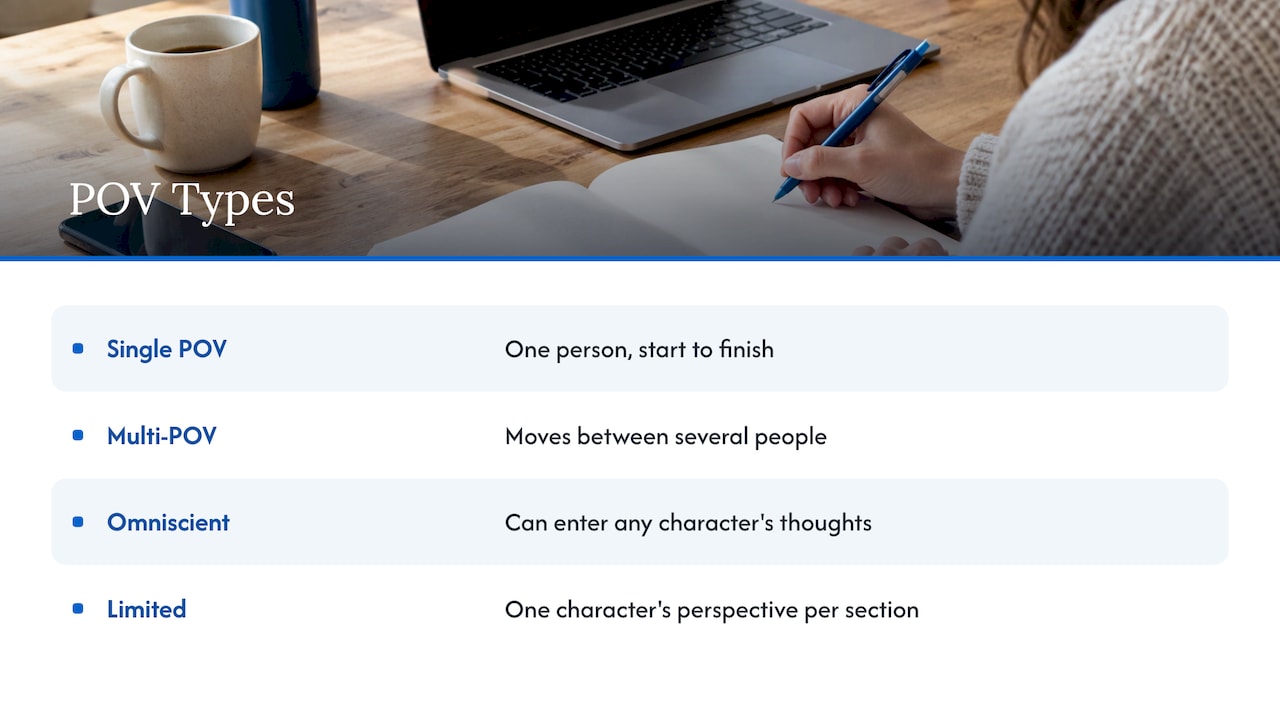
A point of view (POV) is the mind a scene is told through. A single-POV novel stays with one person from start to finish. A multi-POV novel moves between several. Writing teachers split these into two broad approaches: an omniscient narrator who can dip into any character’s thoughts, and a limited approach where each section stays inside one character and cannot see into the others, as this craft guide on multiple points of view explains.
An apocalypse novel is one where the end of the world, or the world after it, drives the plot. That covers sudden disasters, plagues, slow collapses and the long aftermath. If you are unsure whether a book belongs to the dystopian shelf or the post-apocalyptic one, our piece on how dystopian and post-apocalyptic fiction differ draws the line.
Combine the two ideas and you get a particular reading experience. You are never trapped in one head, so the catastrophe feels larger than any single survivor. Yet each chapter still lets you sit close to one person’s fear.
What multiple viewpoints do for an apocalypse story
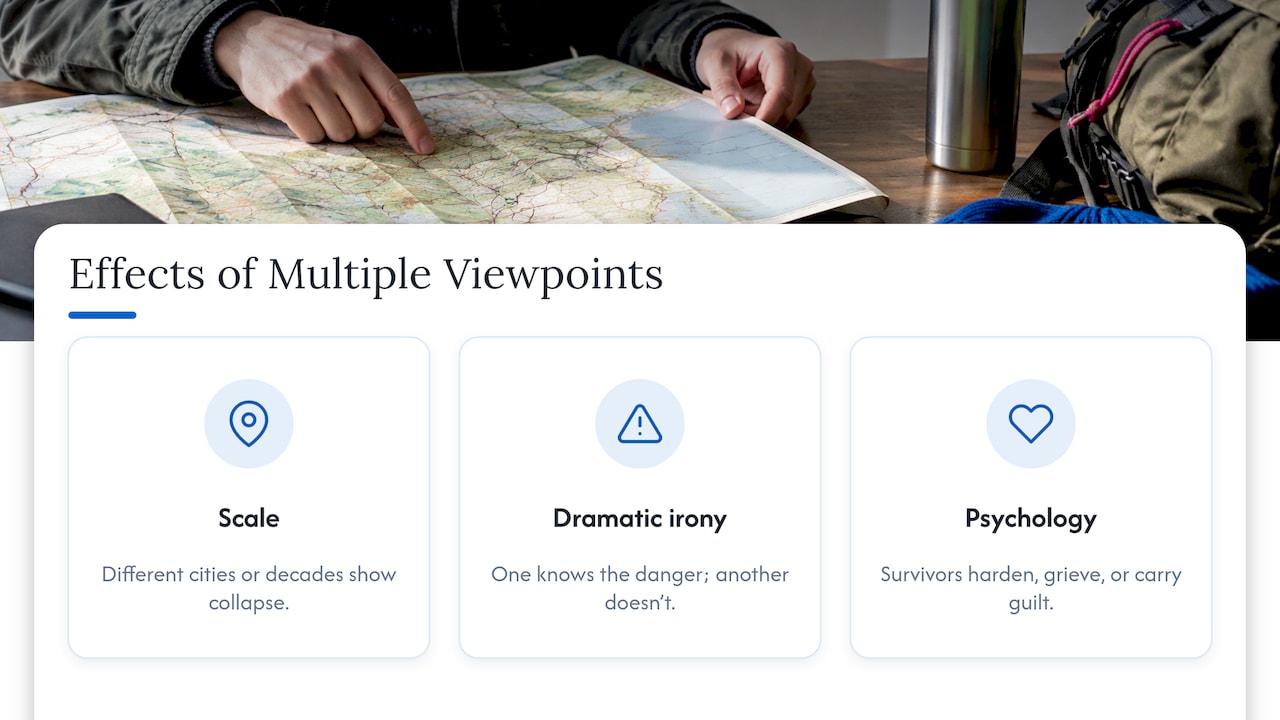
Three things happen when an author splits the camera.
Scale. One narrator sees one street. Several narrators in different cities, or different decades, show the collapse as something that happened to everyone at once.
Dramatic irony. When you know what character A is walking toward and character B does not, every ordinary scene carries dread. Horror readers know this tension well.
Psychology. Different people break differently. One survivor hardens, another grieves, another carries guilt. Putting these side by side turns the apocalypse into a study of character, not just a backdrop.
The cost is that each voice must be distinct enough to recognize without a name at the top of the chapter. The craft advice is consistent: give every narrator a strong voice and something particular to reveal, and use place or time to signal switches, a point the multi-POV craft guide makes directly. When you read, that is a useful test of any book on the list below.
Six multi-POV apocalypse novels worth your time
Dark Inside by Jeyn Roberts: four teenagers, four starting points
Earthquakes devastate the west coast of North America and turn most survivors into murderous mobs. According to Kirkus Reviews, four teenagers, Aries in Vancouver, Mason in Calgary, Clementine in Iowa and Michael in Colorado, travel separately until their storylines converge.
The separate threads let each teen discover hidden strengths before the narrative merges. Guilt-ridden Michael learns to forgive himself, and Mason learns to love. This is the clearest example on the list of POV serving emotional change. It is also the most accessible entry point if you are new to the form.
Station Eleven by Emily St. John Mandel: a web of lives
This novel shifts through multiple perspectives and is non-linear, so the easiest way to map it is by how each character relates to the actor Arthur at the moment of his death. Kirsten was a child actor in the play, and Jeevan was a paramedic in training who rushed to the stage. The connections between characters form and fray across the collapse.
The viewpoints here create a quiet, elegiac mood rather than a frantic one. Choose it if you want the apocalypse as loss and memory.
The Fifth Season and the Broken Earth trilogy by N.K. Jemisin: voice as structure
Jemisin tells Essun’s story amid a magical apocalypse, and the trilogy uses multiple points of view, hops across time and changes style from chapter to chapter. The Fifth Season begins in second person and mixes first and third person throughout, and the narrator explains in the second book why the second-person voice connects to Essun.
Here the POV is not only a way to cover more ground. The shifts in voice are part of the mystery. This is the pick for readers who like to puzzle out how a story is built.
Cloud Atlas by David Mitchell: six strands, one long arc
An academic reading in Project MUSE describes six narrative strands told by six individuals in separate places and eras, running from a mid-nineteenth-century seafaring account to a post-apocalyptic future. The circular structure suggests a regression toward a Hobbesian state of nature, a world where life is a struggle of all against all.
Only part of the book is post-apocalyptic, so it suits readers who enjoy literary ambition more than constant survival action.
Season of the Dead: four authors, four survivors
A Readers’ Favorite review from 2013 describes this zombie-apocalypse novel as written collaboratively by four authors. It follows four survivors, a Nebraska zoologist, a Canadian prisoner, a Pittsburgh chemist and a resident of Dublin, in four threads across the world. The reviewer says the structure keeps the plot tight until a satisfying resolution. It is a good fit if you want a global outbreak told from several corners of the map.
The MaddAddam trilogy by Margaret Atwood
Atwood’s trilogy tells its story from several characters’ viewpoints before, during and after a catastrophe she calls the “waterless flood.” Later volumes alternate between Ren and Toby, with flashbacks. Pick it up if you want speculative fiction with a satirical edge and a long timeline.
Quick comparison
| Book | What the POVs do | Mood |
|---|---|---|
| Dark Inside | Four teens on separate paths that converge | Tense, coming-of-age |
| Station Eleven | Interlocking lives across time | Elegiac, quiet |
| Broken Earth | Shifting person, tense and style | Inventive, intense |
| Cloud Atlas | Six stories in a nested structure | Literary, sweeping |
| Season of the Dead | Four survivors on different continents | Outbreak thriller |
| MaddAddam | Alternating narrators and flashbacks | Satirical, dark |
How to choose your next read
Match the book to what you want from the apocalypse.
- You want fast, emotional momentum: choose converging threads, as in Dark Inside or Season of the Dead.
- You want grief and memory: choose a web of lives across time, as in Station Eleven.
- You want formal invention: choose Broken Earth or Cloud Atlas.
- You want dread and psychological weight: choose books where the horror comes from what characters did and what they cannot forgive themselves for.
That last category is where we work. If you like plague fiction in particular, our guide to pandemic apocalypse books and the three reading paths for plague apocalypse novels go deeper. For stories driven by movement and risk, see our list of apocalyptic road trip novels. If survival itself is your interest, there is a roundup of post-apocalyptic survival books, and a piece that tests survival ethics through four novels.
Reading on Kindle Unlimited
Kindle Unlimited is Amazon’s subscription that lets you read eligible ebooks without buying each one. Eligibility is set title by title and edition by edition, and it changes, so check the Kindle Unlimited badge and the read-for-free button on the book’s own Amazon page before you plan around it. Many big-publisher backlist titles will not carry it. Indie and Amazon-published horror and dystopian fiction often does, which makes a subscription a cheap way to sample the genre. Our Kindle Unlimited tips cover how to get more from a subscription, and the Kindle Unlimited subscribers page lists what you can read from us.
Why the psychology matters more than the structure
We start from a simple belief: an apocalypse is only as frightening as the people inside it. The plague, the collapse, the silence on the radio are the setting. What stays with a reader afterward is a person facing something they did, something they lost, or something they cannot forgive.
That is why we write about revenge, guilt and redemption, and why we care so much about character development and plots that keep working on you after the last page. Whether a story is told through one mind or many, the test is the same: do you believe these people, and do you feel their fear as your own?
If you read multi-POV apocalypse fiction for that kind of depth, you will feel at home with our dystopian horror. Evolution A200: A Bubonic Apocalypse and its follow-up put a plague at the center and the psychological monsters inside us right beside it.
Nathaniel
Start with Evolution A200
If the novels above leave you wanting dystopian horror with emotional depth, begin with Evolution A200: A Bubonic Apocalypse, then continue to Evolution A200: Radio Silence. Both are on Kindle Unlimited, so subscribers can read them without extra cost, and they are also available in ebook and paperback on Amazon. You can see the full set on our books page, read about the first novel, or get the announcement of both novels.
Prefer something supernatural? The Nether and Stories of a Condemned Soul explore guilt and the darkness we carry. Start at The Nether, or read our guide to dark supernatural books for readers who want real dread.
FAQ
What is a multiple POV novel?
It is a novel told through the viewpoints of more than one character. Some use an omniscient narrator who can enter any mind, while others keep each section limited to a single character, as described in this overview of multi-POV craft. Most apocalypse examples use the limited approach, with chapters labeled by character or place.
Is a multi-POV apocalypse novel good for a first-time reader of the genre?
Yes, if you choose a book with converging threads. Dark Inside follows four teens whose separate storylines come together, which makes the shifts easy to follow. Books that jump across centuries, such as Cloud Atlas, suit readers who already enjoy complex structure.
How do I know whether a book is on Kindle Unlimited?
Open the book’s Amazon page and look for the Kindle Unlimited badge and a read-for-free button. Check the specific edition, because availability is set per title and can change. Our Kindle Unlimited tips walk through it.
Do I need to like horror to enjoy these books?
Not always. Station Eleven is quiet and elegiac, while Broken Earth is intense fantasy. If you do enjoy horror and psychological tension, our books lean that way, and our dark supernatural thrillers page is a good place to begin.
Sources
- How to Write Multiple Points of View in a Novel: 8 Tips
- Station Eleven: A quiet and lovely post-apocalyptic novel
- Dark Inside, Kirkus Reviews
- Point of View in N.K. Jemisin’s Broken Earth trilogy, Barnes & Noble blog
- Book review of Season of the Dead, Readers’ Favorite