
Literary horror uses style, ambiguity, and character interiority to interrogate a theme, often leaving readers unsettled without resolution; genre horror delivers a promised sequence of scares built toward release and closure. The line between them is porous. Plenty of the best-known titles, including a large portion of Stephen King’s catalog, sit somewhere in the middle, borrowing tools from both camps.
TL;DR:
- Literary horror emphasizes interiority, ambiguity, and aftermath, often leaving characters’ perceptions or psychological states unresolved after the scare.
- Genre horror focuses on pace, clear threats, and climactic revelations, building toward a decisive confrontation or resolution.
- Structural models show literary horror minimizes the Revel and concentrates on lingering aftermath, while genre emphasizes the Revel as the story’s climax.
- Authors like Stephen King blend both modes, using familiar tropes for genre effect or twisting them for literary critique.
- Test a horror story by checking if it advances toward resolution or lingers on psychological aftermath to determine its genre focus.
Table of Contents
- Literary Horror vs Genre Horror: Definitions and Key Signals
- The Craft Signals That Separate the Two Approaches
- An Annotated Reading List: Seeing Both Modes in Action
- How to Tell What You’re Reading, and How to Write It
- Where Craft Resources Fit Into This Distinction
- Why the Labels Matter Less Than the Effect
- Start Closer to the Psychological End of the Shelf
- Sources
- FAQ
Literary Horror vs Genre Horror: Definitions and Key Signals
Literary horror treats fear as a lens rather than a destination. It borrows the tools of literary fiction, dense prose, unreliable narration, sustained interiority, to explore something uncomfortable about identity, memory, or grief, and it often refuses to hand the reader a clean ending. Critics writing for Writer’s Digest describe this mode as one that asks unsettling questions instead of simply delivering shocks.
Genre horror, by contrast, runs on a contract. The reader opens the book expecting a haunted house, a monster, a body count, and a shape to the fear, and the story is built to deliver on that promise with escalating tension and payoff. That doesn’t make it lesser. Novelist Paul Tremblay has argued that horror is best understood as an affect, a measurable emotional response of fear, loathing, or dread, rather than a fixed narrative formula, a point he makes in a conversation with LA Review of Books. Under that definition, both modes qualify as horror. They just aim the emotion differently.
The distinction has deep roots. Ann Radcliffe drew a line in 1826 between terror, the dread that builds before something happens, and horror, the revulsion that follows an act of violence or revelation. Modern critics still use that terror versus horror framework to separate psychologically driven fiction from work built around physical shock. Literary horror tends to live on the terror side of that line, lingering in anticipation and aftermath. Genre horror often lives closer to the moment of impact itself.
A handful of shorthand phrases help readers and writers spot the difference fast:
- Sentence-level attention: prose slows down to notice detail, rhythm, and voice, rather than moving purely to advance plot.
- Aftermath-focused: the story lingers after the scare instead of cutting away once the threat passes.
- Ambiguous close: no tidy explanation, and the reader is left to sit with unresolved dread.
- Beat-driven pacing: chapters build toward expected set pieces, the sighting, the escalation, the confrontation.
- Trope deployment vs. subversion: genre horror uses familiar tropes to trigger a reliable reaction; literary horror often twists them to make a point.
Scholarship collected in The Horror Theory Reader makes a broader case that horror’s emotional charge, across both modes, tends to reflect real cultural anxieties around race, gender, disability, and identity. That’s part of why the “literary” label gets attached to work that uses fear to say something specific about the world, rather than to move a plot forward.
The Craft Signals That Separate the Two Approaches
Look at where a story spends its attention. Genre horror spends it on pace: short chapters, clear stakes, a monster or threat that behaves consistently enough for readers to track. Literary horror spends it on the sentence itself, on interiority, on a character’s unraveling perception of what’s real.
A useful lens comes from critic John Clute’s structural model, cited in Nightmare Magazine’s essay on literary horror, which breaks a horror story into four stages:
- Sighting: the first hint that something is wrong.
- Thickening: dread accumulates, and the world starts to feel unstable.
- Revel: the moment of full exposure, the monster shown, the violence delivered.
- Aftermath: what’s left once the Revel has passed.
Genre horror tends to build toward the Revel and treat it as the payoff the reader has been promised. Literary horror often minimizes or withholds the Revel entirely, spending its real weight on the Aftermath, the psychological residue of what happened or almost happened. That single structural choice, where the emotional weight sits, is often the clearest tell of intent.
Resolution follows the same pattern. Genre horror generally offers catharsis: the threat is named, fought, and either defeated or survived. Literary horror is more likely to end in ambiguity, leaving the reader unsure what was real, a deliberate strategy rather than a failure to land the ending, as one reading of the current folk horror revival points out. Tropes work differently too. A folklore figure or haunted object can serve as reliable scare machinery in genre work, or it can become a vehicle for social critique in literary horror, a distinction laid out clearly in critical writing on splatterpunk’s relationship to tradition.
Pro Tip: If you want to test a manuscript fast, find the story’s Revel and ask what happens on the next page. If the scene moves toward resolution, you’re likely reading genre horror. If it lingers on a character’s altered psychology, you’re closer to literary territory.
An Annotated Reading List: Seeing Both Modes in Action
- a large portion of Stephen King’s catalog: King writes inside genre conventions, distinct threats, escalating stakes, satisfying payoffs, while layering in the character-driven realism critics associate with literary fiction, a blend The Encyclopedia of Science Fiction attributes to his cross-genre range.
- Victor LaValle’s fiction: LaValle uses monster-story frameworks to explore race, class, and inherited trauma, landing him on contemporary lists of literary horror worth reading.
Notice the pattern: crossover titles keep the reader guessing about voice and intent, while straightforward genre entries make their contract explicit within the first chapter.
How to Tell What You’re Reading, and How to Write It
For readers, three questions on the back cover or opening pages usually settle the question fast:
- Does the jacket copy promise a specific threat and outcome, or does it promise a mood and a question?
- Do early reviews mention “unputdownable” pacing, or do they mention “haunting” and “lingering”?
- Does the first chapter name the monster, or does it spend its time inside a character’s head?
For writers, the checklist runs the other direction:
- Decide early where your story’s weight sits: the Revel or the Aftermath. That single choice shapes the outline.
- Practice sentence-level control. Slow the prose down at moments of dread instead of racing past them.
- Plant theme through image and repetition, not through a character stating the point aloud.
- If you’re using a familiar trope, decide whether you want it to work reliably (genre) or whether you want to bend it until it says something new (literary).
- Test your ending against genre expectations on purpose. An ambiguous close only works if the reader can tell it’s deliberate, not accidental.
Pro Tip: Write your Aftermath scene before you finish drafting the Revel. If you can’t imagine what lingers once the scare is over, the scare probably won’t land either.
Craft guides on writing psychological horror walk through the sentence-level techniques that create dread without relying on gore, useful groundwork for anyone testing these questions on their own manuscript.
Where Craft Resources Fit Into This Distinction
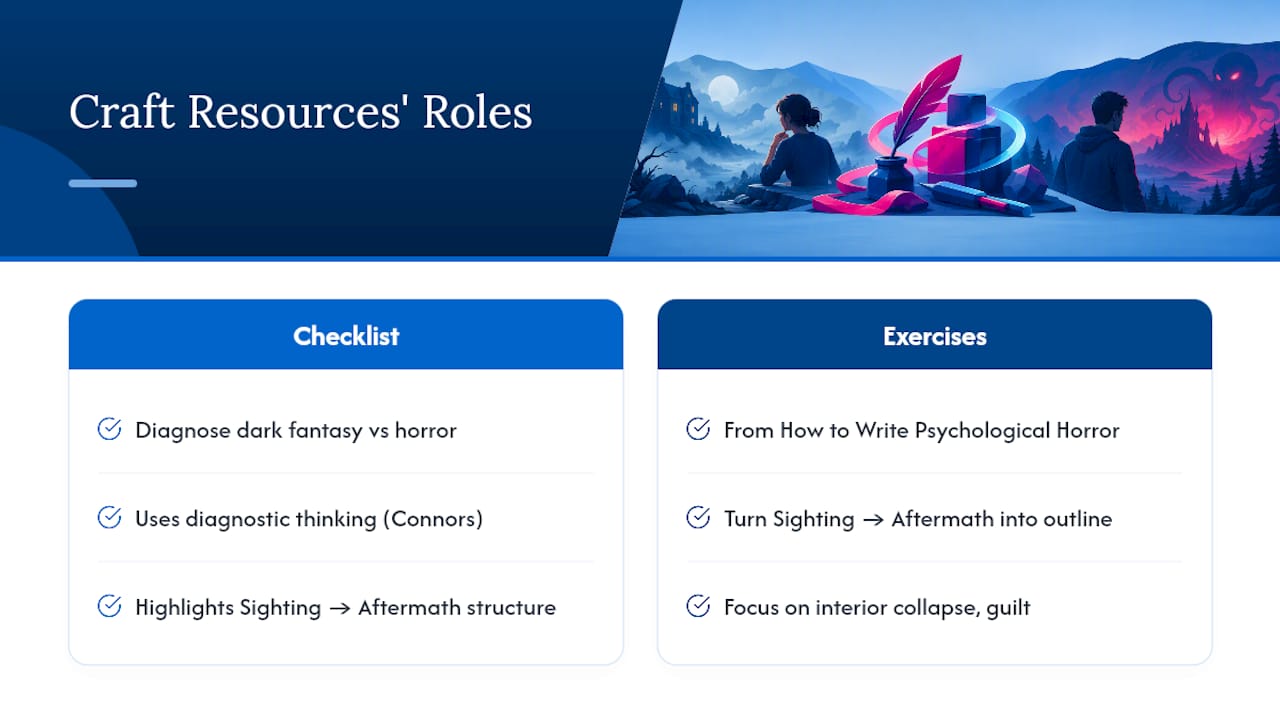
Nathaniel Connors’ fiction sits deliberately at the psychological end of this spectrum, work built around guilt, revenge, and the interior collapse that follows violence rather than the violence itself. That approach shows up directly in craft writing like 3 Craft Tests to Tell Dark Fantasy From Horror, which applies the same diagnostic thinking used above to a related genre boundary. Writers working through the checklist in this article can pair it with How to Write Psychological Horror for exercises that turn the Sighting to Aftermath structure into a working outline.
Why the Labels Matter Less Than the Effect
Pick literary horror when you want a book that argues with you after you close it. Pick genre horror when you want the promise honored, monster named, threat resolved, adrenaline earned. Neither choice is more serious than the other, and the best writers borrow from both without apology.
The real mistake is judging a book by its label instead of its effect. A story that lingers in your chest for a week has done its job, whether a bookstore shelved it under “literary fiction” or “horror.” Read for the reaction. Write toward the one you want to cause.
— Nathaniel
Start Closer to the Psychological End of the Shelf
If the aftermath-focused, character-driven side of this comparison is where your interest landed, that’s exactly the territory Nathaniel Connors writes in. Expect these things from his work:
- The Nether Series builds dread around guilt and revenge rather than around a monster you can name and defeat.
- The EA200 Series, starting with Evolution A200: A Bubonic Apocalypse, pushes psychological collapse into a dystopian, plague-ravaged setting where the real threat is what people become under pressure.
- Every title leans on interiority and unresolved tension over shock value, the same signals covered in the characteristics section above.
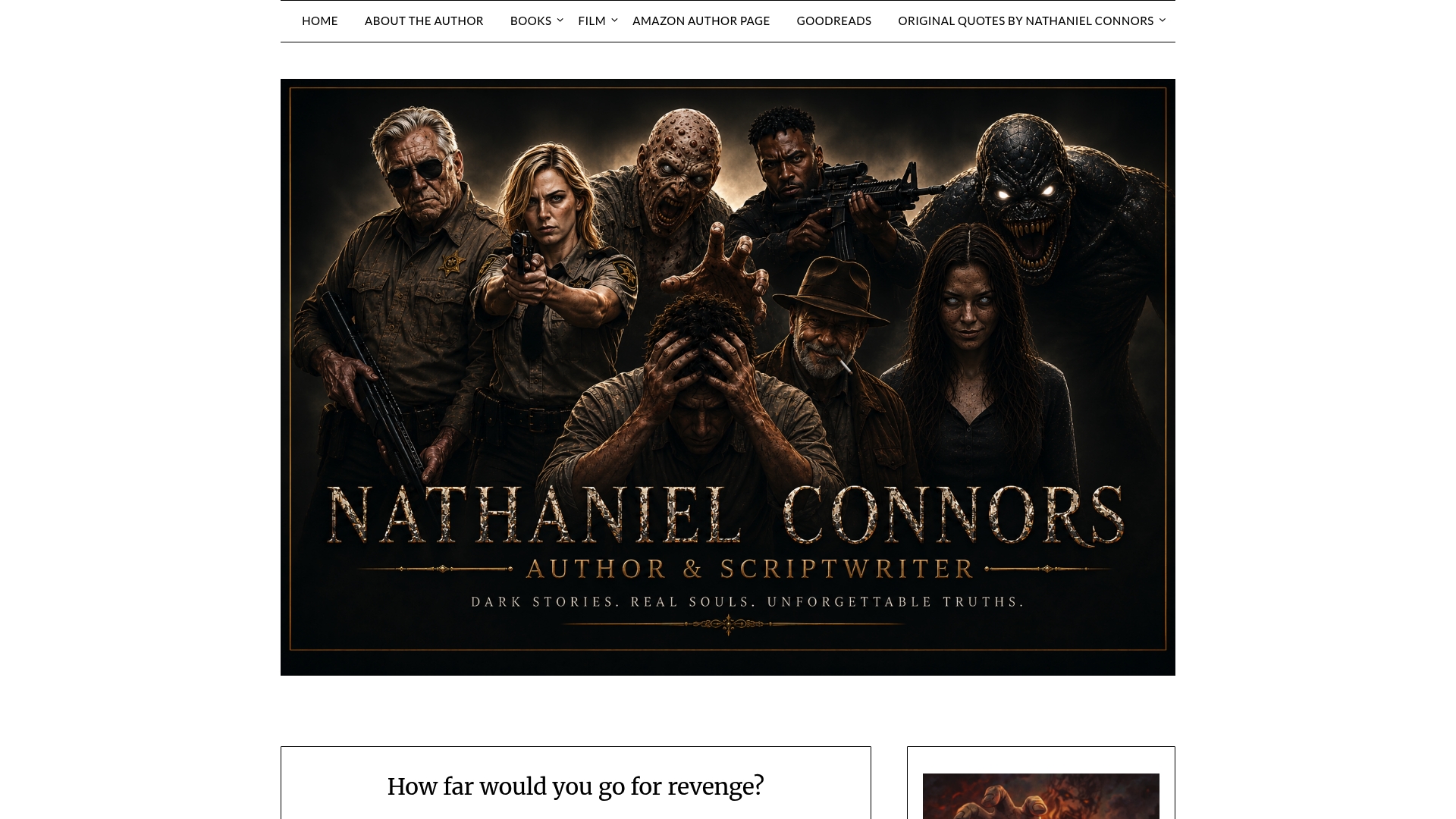
Both series are available in ebook and paperback formats, and free to read for Kindle Unlimited subscribers, so sampling a chapter costs nothing but time. Start with the full book catalog to find the entry point that matches the kind of dread you’re after.
Sources
- There are a lot of hells: A conversation with Paul Tremblay (LA Review of Books)
- Horror and terror — Wikipedia
- What Defines Literary Horror in Today’s Evolving Landscape? (Writer’s Digest)
- The Horror Theory Reader (University of Minnesota Press)
FAQ
Is horror a literary genre?
Horror qualifies as a literary genre, but critics increasingly treat it as an affect, a specific emotional response of fear or dread, rather than a fixed set of plot rules, according to novelist Paul Tremblay. That framing is why the same book can read as both horror and literary fiction at once.
What are the two main types of horror?
The two broad modes are literary horror, which uses ambiguity and interiority to explore a theme, and genre horror, which delivers a promised sequence of scares built toward a resolution. The split traces back to Ann Radcliffe’s 1826 distinction between terror and horror, dread before an event versus revulsion after one.
What is splatterpunk?
Splatterpunk is a subgenre of horror fiction defined by graphic, explicit violence and a willingness to push physical extremity further than traditional horror allows. It sits firmly on the genre side of the spectrum, since it uses shock and gore to produce a specific, reliable reaction, a use of tropes for effect rather than critique, as described in the entry on the movement.
Is Stephen King horror or sci-fi?
Stephen King writes primarily horror, but his catalog regularly blends in science fiction, fantasy, and psychological suspense. Critics point to his character-driven realism as evidence that his work often straddles genre horror and literary technique, rather than sitting cleanly in either camp, per The Encyclopedia of Science Fiction.