If you want dark supernatural thrillers that actually linger, start with a short stack of novels and films built on dread rather than jump scares, then use the guide below to match one to your mood. This list runs from Andrew Pyper’s academic hauntings to Nathaniel Connors’s character-driven horror, covers film staples like The Sixth Sense and Hereditary, and ends with a quick decision framework so you stop scrolling and start reading or watching.
TL;DR:
- Dark supernatural thrillers focus on psychological stakes like guilt, grief, and revenge, rather than gore or physical scares.
- Many titles use unreliable narrators and slow reveals to intensify ambiguity around whether supernatural events are real or psychological.
- Preference choices should consider pacing, whether dread is rooted in psychological or occult elements, and the narrator’s trustworthiness.
- Films like The Sixth Sense, Hereditary, and The Others exemplify the genre’s emphasis on atmosphere, twist endings, and deep character studies.
- Nathaniel Connors’s novels prioritize character-driven dread, blending guilt and societal collapse as core themes, and are ideal for character-focused horror fans.
Table of Contents
- What Makes a Thriller “Dark” and “Supernatural”?
- The Best Dark Supernatural Thriller Novels to Read Next
- The Best Dark Supernatural Thriller Films to Watch Next
- Psychological Supernatural Thrillers That Blur What’s Real
- How to Pick the Right Dark Supernatural Thriller for Your Mood
- An Author’s View on Writing Character-Driven Dread
- Where Dark Supernatural Thrillers Came From
- The Narrative Techniques That Define This Genre
- How This Genre Shaped Popular Culture
- How Dark Supernatural Thrillers Differ From Horror and Fantasy
- What Actually Makes These Stories Worth Your Time
- Start With Nathaniel Connors’s Dark Supernatural Thrillers
- Sources
What Makes a Thriller “Dark” and “Supernatural”?
A dark supernatural thriller pairs an inexplicable force (a ghost, a demon, an ambiguous entity) with psychological stakes heavy enough to make the supernatural feel almost secondary. The “dark” part isn’t gore. It’s moral weight: guilt, grief, revenge, or a protagonist who might be losing their grip on reality. The “supernatural” part is the engine that won’t let the character look away.
What separates this genre from straight horror is pacing and intent. Horror often wants a physical reaction, a scream, a flinch. A supernatural thriller wants dread that sits in your chest for days. Readers hunting this specific combination tend to value atmosphere and psychological complexity over gore or jump-scare pacing, which explains why the same handful of books and films keep resurfacing on curated lists years after release.
The Best Dark Supernatural Thriller Novels to Read Next
Book lists in this genre tend to follow a familiar structure: title, one-line hook, who it’s for. That format works because it respects your time, so here’s a version built the same way, mixing widely recognized titles with picks that reward patient readers.
- The Demonologist by Andrew Pyper. A Milton scholar’s daughter vanishes after a demonic encounter, and his search doubles as a study of belief versus academic skepticism. Pyper builds the novel around an investigator-scholar whose credentials make the horror land harder.
- The Nether by Nathaniel Connors. A haunting, dystopian descent that treats its supernatural threat as a mirror for guilt and repressed trauma. Best for readers who want the psychological damage to outlast the plot twist.
- Stories of a Condemned Soul by Nathaniel Connors. A collection built around characters already past the point of redemption, wrestling with the consequences of their own choices. Good entry point if you prefer shorter, standalone dread over a single long arc.
- Evolution A200: A Bubonic Apocalypse by Nathaniel Connors. Dystopian horror that fuses plague-era paranoia with a slower psychological unraveling. Suited to readers who like their supernatural thrillers grounded in something closer to plausible collapse.
- The Haunting of Hill House by Shirley Jackson. The house doesn’t do anything overtly monstrous; it just erodes Eleanor’s sense of self until you can’t tell what’s real. The blueprint for every unreliable-narrator haunted house story since.
- House of Leaves by Mark Z. Danielewski. Experimental formatting turns a haunted documentary into a haunted book. Not for casual reading, but unmatched for readers who want the medium itself to feel unstable.
- Bird Box by Josh Malerman. An unseen entity that drives people to violence works as pure premise horror, but the real tension is a mother rationing trust in a world with no safe information.
- The Little Stranger by Sarah Waters. A slow-burn gothic thriller where the “ghost” might be psychological projection from a doctor obsessed with a crumbling estate. Patience required, payoff guaranteed.
- Mexican Gothic by Silvia Moreno-Garcia. Folk horror and colonial rot blend inside a decaying manor, giving the genre a fresher setting than the usual New England farmhouse.
- We Have Always Lived in the Castle by Shirley Jackson. Less overtly supernatural, more psychologically corrosive. Included because it shows how far “dark” can stretch without a single ghost.
Pro Tip: If you’re new to a title, sample the audiobook narration before committing to the ebook. Slow-burn psychological thrillers often land harder read aloud, since a good narrator controls pacing you might rush past on the page.
The Best Dark Supernatural Thriller Films to Watch Next
Film lists in this genre lean on a recurring cast of investigator protagonists: psychologists, detectives, skeptics who get proven wrong. Analyses of the genre’s history point to this pattern again and again, and it’s worth knowing going in, because it shapes how each of these plays out.
- The Sixth Sense (1999). A child psychologist confronts a case he can’t explain, built entirely around the twist ending everyone already knows and the atmosphere that still works anyway.
- The Exorcist (1973). The genre’s foundational text: a mother’s desperation and a priest’s crisis of faith carry more weight than the possession itself.
- The Shining (1980). Isolation, alcoholism, and a haunted hotel blur until you can’t separate Jack Torrance’s breakdown from the ghosts allegedly causing it.
- Hereditary (2018). Grief curdles into something occult across three generations. One of the clearest modern examples of trauma driving the supernatural rather than the reverse.
- Stir of Echoes (1999). An underrated companion to The Sixth Sense, using hypnosis and a suburban ghost to unravel a working-class family’s denial.
- The Crow (1994). Revenge-driven and visually gothic, it’s proof that catharsis, not scares, is often the real draw in supernatural thrillers built around wronged protagonists.
- Near Dark (1987). A genre hybrid that swaps typical vampire glamour for grimy Americana, favored by viewers who want their supernatural horror stripped of romance.
- Insidious (2010). A family’s search for a comatose son opens into an astral-projection mythology that trades gore for creeping architectural dread.
- The Others (2001). A mother in a fog-locked house slowly realizes the haunting isn’t what it seems, built on a twist that rewards a second viewing.
- A Tale of Two Sisters (2003). Korean horror that treats memory and trauma as the actual haunting mechanism, with the ghost as symptom rather than cause.
If you’re watching for craft rather than pure entertainment, put on the commentary track for Hereditary or The Others. Both directors talk openly about how misdirection is built shot by shot, which changes how you read every future twist ending.
Psychological Supernatural Thrillers That Blur What’s Real
The unreliable narrator is the genre’s sharpest tool: when you can’t trust the person telling the story, every supernatural event carries a second, scarier possibility. That doubt is what keeps a haunted house story from collapsing into a monster-of-the-week plot.
Several titles use this device to devastating effect:
- The Haunting of Hill House (Eleanor’s crumbling perception of the house and herself)
- The Little Stranger (a narrator whose obsession may be inventing the ghost)
- The Others (a mother whose grip on her own household is the film’s actual mystery)
- Stir of Echoes (hypnosis as the trigger for a reality no one else can confirm)
- The Demonologist (an academic mind trying to rationalize what it can’t explain)
- The Nether by Nathaniel Connors (a protagonist whose guilt reshapes what he’s willing to believe is happening)
Experienced readers consistently name this trope as the difference between forgettable horror and something that stays with them: grounding supernatural dread in deep character study prevents a story from feeling like generic action horror. It’s why Nathaniel Connors builds his work around psychological damage first and supernatural mechanics second. When you’re evaluating a new title, look for tight point of view, a slow reveal rather than an early info dump, and a narrator whose version of events you have real reason to doubt.
How to Pick the Right Dark Supernatural Thriller for Your Mood
Match the book or film to what you actually want tonight, not what topped a list somewhere. Run through these before committing:
- Pace: Do you want a slow burn (The Little Stranger) or something that moves fast (Bird Box)?
- Engine: Is the dread mostly psychological (Hill House) or mostly occult (The Exorcist)?
- Narrator reliability: Do you want to doubt what’s real, or do you want a clear-eyed investigator (The Demonologist)?
- Intensity: Are you fine with graphic content, or do you want atmosphere without violence?
- Length: A 300-page novel and a two-hour film demand very different commitments on a Tuesday night.
Watch for red flags before you buy or press play: marketing that promises “nonstop scares” often signals jump-scare filler rather than the slow dread this genre does best. A trailer stitched entirely from loud stingers is usually hiding a thin story.
Pro Tip: Read the first chapter or watch the first fifteen minutes before committing fully. Dark supernatural thrillers announce their pace almost immediately, and that opening stretch tells you more than any synopsis.
An Author’s View on Writing Character-Driven Dread
Nathaniel Connors builds his fiction around one belief: the scariest monster is the one a character becomes, not the one that shows up in the dark. His novels, including The Nether and Evolution A200: A Bubonic Apocalypse, use folklore and dystopian collapse as pressure, not spectacle, letting guilt and grief do the real damage. That approach mirrors why investigator protagonists anchor so many classic entries in the genre: a strong, doubting point of view makes the supernatural believable. His titles are available free for Kindle Unlimited subscribers.
Where Dark Supernatural Thrillers Came From
The genre’s roots run through Gothic literature: Mary Shelley and later Shirley Jackson established the idea that a haunted setting could function as a character’s psychology made physical. The Haunting of Hill House, published in 1959, set the template that most modern entries still follow: ambiguous hauntings, unreliable perception, dread over explanation.
Film caught up through the 1970s and 1980s, with The Exorcist and The Shining proving audiences would sit through slow psychological builds if the payoff justified it. The 1990s brought a wave of skeptic-turned-believer stories, The Sixth Sense and Stir of Echoes among them, that leaned harder on twist structure than earlier entries had.
The 2010s marked a shift toward “elevated horror,” a term critics attached to films like Hereditary and The Witch that used supernatural elements to examine grief, inheritance, and generational trauma rather than deliver scares alone. Novels followed a parallel path: contemporary writers, Nathaniel Connors among them, increasingly frame the supernatural as a consequence of psychological or societal collapse rather than an isolated haunting. The genre didn’t abandon its Gothic roots; it just got more interested in why the ghost showed up in the first place.
The Narrative Techniques That Define This Genre
Three techniques recur often enough to count as genre signatures. The first is the slow reveal, withholding the true nature of the threat until the reader or viewer has already invested in the character’s internal state. The Others is built entirely on this delay.
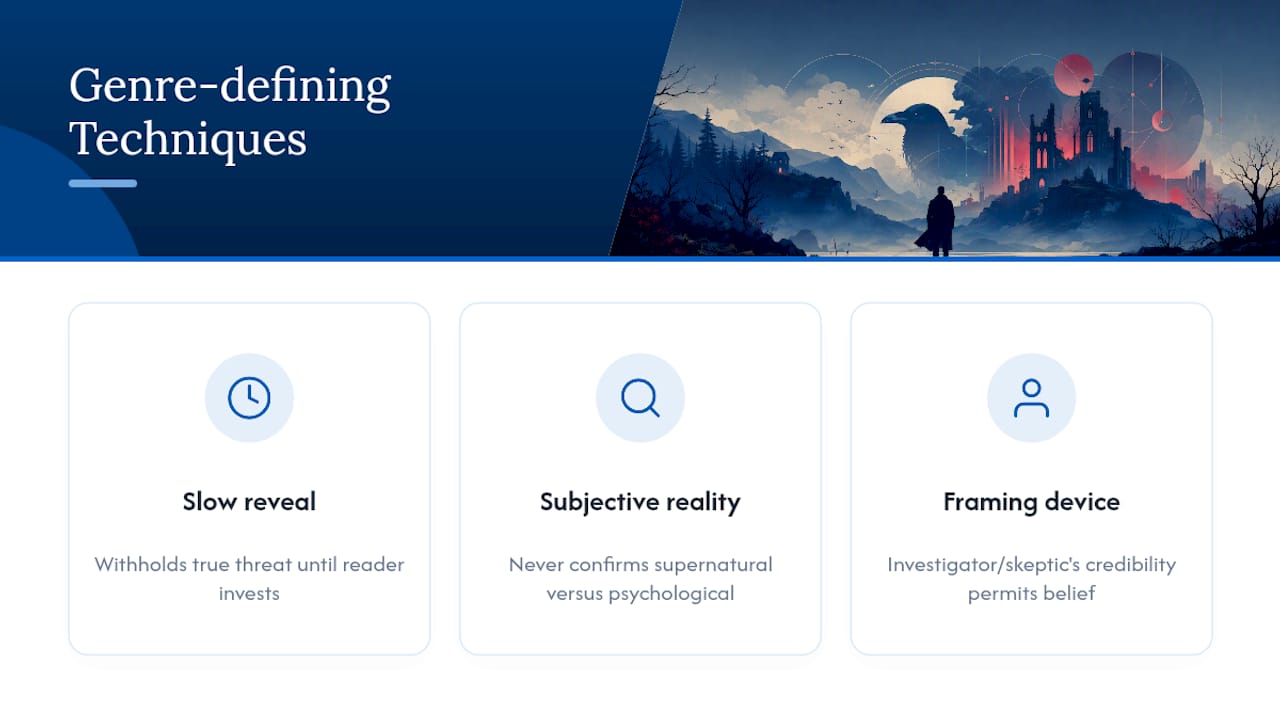
The second is subjective reality, where the story never fully confirms whether events are supernatural or psychological. House of Leaves pushes this furthest, using unreliable documentation and shifting typography to make the reader question the text itself, not just the characters inside it.
The third is the framing device, an investigator, academic, or skeptic whose credibility gives the audience permission to believe. Pyper’s protagonist in The Demonologist works this way: his scholarly rigor makes the eventual descent into belief land harder than it would with a less grounded narrator. Writers looking to study this structure closely can find a breakdown of related horror suspense techniques useful for seeing how tension gets built scene by scene rather than through shock alone.
How This Genre Shaped Popular Culture
Dark supernatural thrillers have supplied some of the most quoted twist endings in film history, and The Sixth Sense alone shifted how mainstream audiences approach a second viewing of any thriller. The “wait, go back and rewatch it” phenomenon became a marketing strategy other genres borrowed directly.
The genre also normalized ambiguity as a satisfying ending. Before The Others and Hereditary, mainstream horror leaned toward clear resolutions. Now, audiences expect and often prefer a story that leaves room for interpretation. That shift bled into television, prestige horror series, and even literary fiction that borrows supernatural framing to discuss trauma without naming it directly.
Recurring motifs from these stories, haunted houses as psychological metaphors, revenge-driven ghosts, academic skeptics turned believers, have become shorthand recognizable even to people who’ve never seen the source films. A broader look at horror motifs shows how deeply these visual and narrative patterns have embedded themselves across genre fiction generally, not just film.
How Dark Supernatural Thrillers Differ From Horror and Fantasy
Straight horror generally prioritizes visceral reaction: it wants you afraid in the moment, whether through gore, jump scares, or body horror. A dark supernatural thriller wants dread that outlasts the scene, built through character and ambiguity rather than shock. You can enjoy both, but they’re aiming at different nervous systems.
Fantasy, by contrast, usually builds an internally consistent supernatural system with clear rules: magic works a certain way, and the story respects that logic. Dark supernatural thrillers tend to keep their supernatural elements deliberately unresolved. Is the ghost real, or is the narrator unraveling? That question staying open is often the entire point, which is the opposite of how most fantasy operates.
Dark paranormal romance sits closest to this genre but shifts the emotional engine from dread to desire, using the supernatural as tension between attraction and danger rather than as a threat to survive. If you want a clearer breakdown of where psychological thrillers end and horror begins, this comparison walks through the distinction in more detail than genre labels usually allow.
What Actually Makes These Stories Worth Your Time
Most genre roundups treat “scary” as the only metric that matters, ranking titles by how hard they can make you jump. That’s the wrong yardstick. The novels and films that hold up on a second read or rewatch are the ones where the supernatural threat exposes something true about the character carrying it, guilt, denial, grief dressed up as a haunting.
Conventional advice tells readers to chase gore level or scare frequency when picking a next title. I’d argue you should chase narrator instability instead. A story where you can’t fully trust the person telling it will unsettle you longer than any jump scare, and it’s the throughline connecting Hill House to The Demonologist to Connors’s own work in The Nether.
If you take one thing from this list, prioritize point of view over premise. A tired haunted-house setup becomes fresh in the hands of a narrator you can’t quite trust, and a great premise falls flat without one.
— Nathaniel
Start With Nathaniel Connors’s Dark Supernatural Thrillers
If the psychological picks above are the kind of dread you’re after, Nathaniel Connors’s catalog was built for exactly that reading experience. The Nether puts guilt and dystopian collapse in the same frame, letting the supernatural threat mirror what the protagonist can’t outrun. Stories of a Condemned Soul offers that same character-first dread in shorter, standalone doses if you’d rather sample the style before committing to a full novel. Evolution A200: A Bubonic Apocalypse pushes further into plague-era horror, pairing societal breakdown with the slow psychological unraveling this list keeps circling back to.
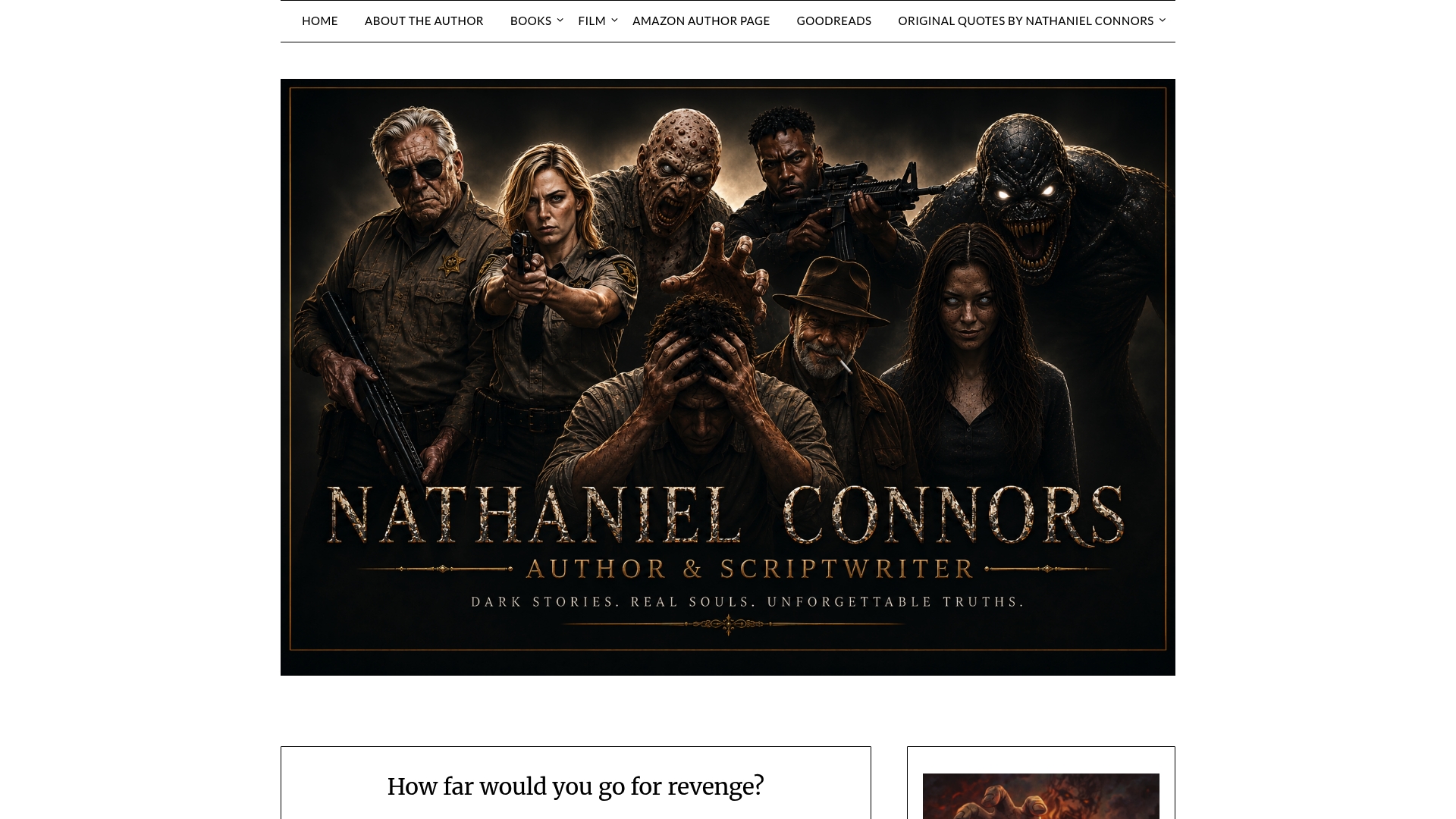
All three titles are available in ebook and paperback on Amazon, and every one is free to read for Kindle Unlimited subscribers, no added cost beyond the subscription you may already have. If any of the picks above made you want more of this specific flavor of dread, character-driven, psychologically grounded, unwilling to hand you easy answers, browse the full collection of dark supernatural books and start with whichever premise pulls you in first.
Sources
For more on the investigator-protagonist trope and classic film picks, see Collider’s supernatural thriller roundup and the ranked list from BBG News. Andrew Pyper’s author page for The Demonologist offers background on the novel discussed above. For revenge and catharsis themes explored further, this essay on cathartic supernatural revenge is worth a read.
- Best supernatural thrillers in film history | Collider
- The Demonologist – Andrew Pyper
- 10 Greatest supernatural thrillers of all time, ranked – BBG NEWS