
Start here. These are the dystopian short stories worth your time, whether you’re a reader who wants something unsettling in under an hour or a teacher building a unit around control, conformity, and what it means to be human.
Essential shortlist (with one-line synopses and age tags):
- “Harrison Bergeron” — Kurt Vonnegut (1961) | A society enforces total equality by handicapping anyone above average. Short read. Middle school and up.
- “The Lottery” — Shirley Jackson (1948) | A village’s annual ritual ends in ritual murder, normalized by tradition. Short read. Grade 8 and up.
- “The Veldt” — Ray Bradbury (1950) | Children’s virtual-reality nursery turns lethal when technology replaces parental love. Short read. Grade 7 and up.
- “All Summer in a Day” — Ray Bradbury (1954) | On a sun-starved planet, classmates lock a girl in a closet on the one day the sun appears. Short read. Middle school.
- “There Will Come Soft Rains” — Ray Bradbury (1950) | A smart house runs its routines after nuclear war has killed every human inside. Short read. Grade 6 and up.
- “The Machine Stops” — E. M. Forster (1909) | Humanity lives underground, dependent on an all-providing machine that begins to fail. Medium read. High school and up.
- “The Minority Report” — Philip K. Dick (1956) | A pre-crime police chief discovers he’s been predicted as the next murderer. Medium read. High school and up.
- “I Have No Mouth, and I Must Scream” — Harlan Ellison (1967) | A sadistic AI tortures the last surviving humans for eternity. Short read. Adult only.
- “The Ones Who Walk Away from Omelas” — Ursula K. Le Guin (1973) | A utopian city’s happiness rests on one child’s perpetual suffering. Short read. Grade 10 and up.
- “Examination Day” — Henry Slesar (1958) | A boy takes a government intelligence test. His parents wait for the results. Short read. Middle school.
- “Pop Squad” — Paolo Bacigalupi (2006) | In a world of immortality, a detective enforces laws against having children. Short read. Adult.
Table of Contents
- Why short dystopian fiction works for readers and teachers
- Canonical dystopian short stories: synopses, publication info, and discussion prompts
- 1. “Harrison Bergeron” — Kurt Vonnegut (1961)
- 2. “The Lottery” — Shirley Jackson (1948)
- 3. “The Veldt” — Ray Bradbury (1950)
- 4. “All Summer in a Day” — Ray Bradbury (1954)
- 5. “There Will Come Soft Rains” — Ray Bradbury (1950)
- 6. “The Machine Stops” — E. M. Forster (1909)
- 7. “The Minority Report” — Philip K. Dick (1956)
- 8. “I Have No Mouth, and I Must Scream” — Harlan Ellison (1967)
- 9. “The Ones Who Walk Away from Omelas” — Ursula K. Le Guin (1973)
- 10. “Examination Day” — Henry Slesar (1958)
- 11. “Pop Squad” — Paolo Bacigalupi (2006)
- Contemporary short dystopias and where to discover them
- Pick by purpose: best short dystopias for classrooms, book clubs, and tech-thriller fans
- How to use these stories in class or a book group
- Where to read or buy these stories
- The rise of algorithmic and psychological dystopias in recent short fiction
- Key Takeaways
- Why the short form is where dystopia does its best work
- Nathanielconnors’s dystopian horror collections
- Useful sources and further reading
Why short dystopian fiction works for readers and teachers
The short story is the ideal vehicle for dystopian themes. A novel like 1984 demands weeks of commitment; a story like “The Lottery” delivers the same gut-punch in twenty minutes. That compression is the point: dystopian short fiction forces a single idea to its logical extreme and leaves no room for the reader to look away.
Critics and teachers have identified three themes that recur across the best short dystopias: loss of individuality, technological dominance, and corruption of social or governmental systems. Those three categories also map neatly onto different audiences.
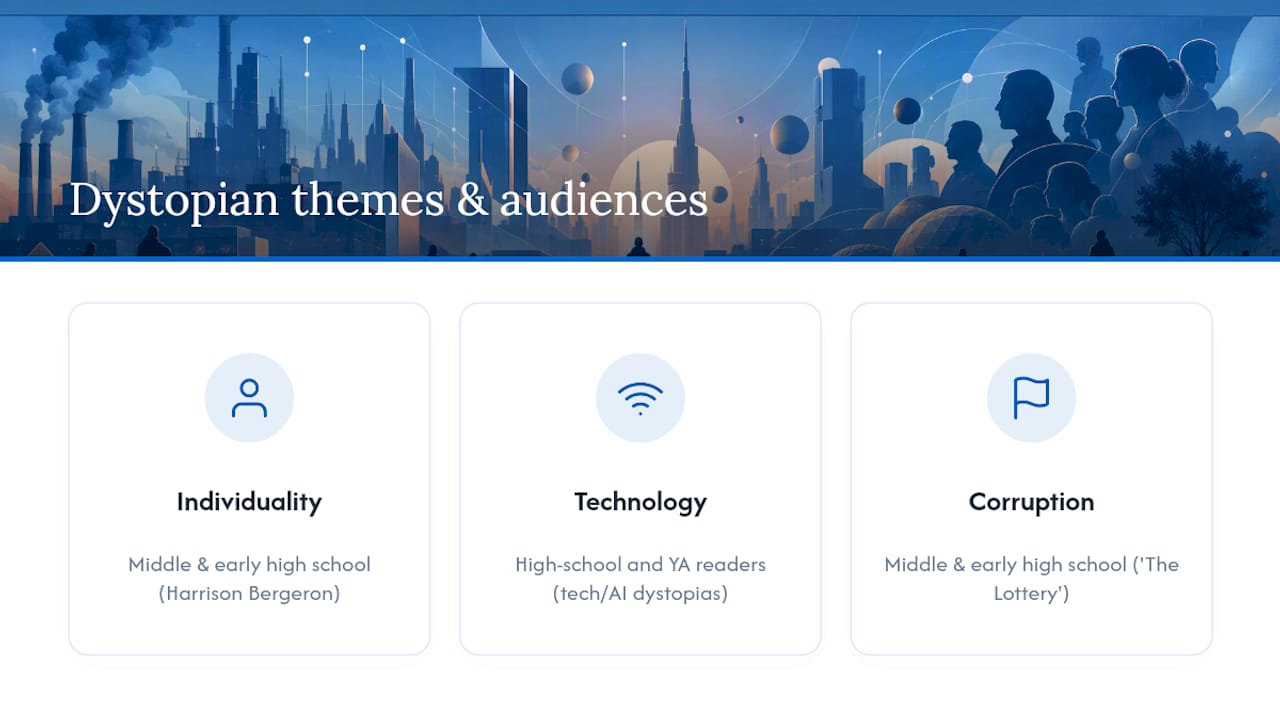
Political cautionary tales (“The Lottery,” “Harrison Bergeron”) work well in middle school and early high school ELA units. The allegory is clear, the reading time is short, and the discussion questions write themselves. Tech and AI dystopias (“The Veldt,” “The Machine Stops,” “Pop Squad”) suit high-school and YA readers who are already living inside the technology being critiqued. Psychological horror dystopias (“I Have No Mouth, and I Must Scream”) belong in adult reading groups or upper-level college courses. The violence and despair are not incidental; they are the argument. Moral parable stories (“The Ones Who Walk Away from Omelas”) work across ages but generate the richest discussion with readers who can sit with an unanswered ethical question.
Content-warning guidance for classroom planning: “The Lottery” contains graphic violence and is generally appropriate from Grade 8 onward. “I Have No Mouth, and I Must Scream” includes torture, sexual violence, and extreme psychological horror; reserve it for adult readers. “Pop Squad” deals with infanticide and is best suited to adult book clubs or mature high-school AP courses.
Pro Tip: When planning a single-session class, match story length to your window. Bradbury’s three-page stories (“All Summer in a Day,” “There Will Come Soft Rains”) leave forty minutes for discussion. Forster’s “The Machine Stops” runs closer to novella length and works better as pre-class assigned reading.
Canonical dystopian short stories: synopses, publication info, and discussion prompts
1. “Harrison Bergeron” — Kurt Vonnegut (1961)
In 2081, the government enforces equality by strapping weights to the strong, masking the beautiful, and buzzing the intelligent. Harrison, a gifted teenager, tears off his handicaps on live television. The moment lasts seconds. Age tag: Middle school and up. Reading time: 15 minutes. Discussion prompt: If equality requires everyone to be reduced to the lowest common denominator, is it still equality?
2. “The Lottery” — Shirley Jackson (1948)
A small American town gathers for its annual lottery on a June morning. The mood is festive. The prize is death by stoning. Jackson published this in The New Yorker and received more reader mail than any story in the magazine’s history up to that point. Age tag: Grade 8 and up. Reading time: 20 minutes. Discussion prompt: What traditions in your own community do people follow without questioning why?
3. “The Veldt” — Ray Bradbury (1950)
A family’s automated “Happylife Home” includes a virtual nursery that projects any landscape the children imagine. The children imagine Africa. Lions. And their parents. Age tag: Grade 7 and up. Reading time: 25 minutes. Discussion prompt: At what point does technology stop serving a family and start replacing it?
4. “All Summer in a Day” — Ray Bradbury (1954)
On Venus, where the sun appears for only one hour every seven years, a class of children locks their classmate Margot in a closet out of jealousy. She is the only one who remembers sunlight. Age tag: Middle school. Reading time: 15 minutes. Discussion prompt: How does envy turn ordinary cruelty into something systematic?
5. “There Will Come Soft Rains” — Ray Bradbury (1950)
A fully automated house in Allendale, California continues its routines after a nuclear blast has vaporized its family. The house makes breakfast, reads poetry, and eventually burns to the ground. No human character appears. Age tag: Grade 6 and up. Reading time: 15 minutes. Discussion prompt: What does it mean that nature, not the house, survives?
6. “The Machine Stops” — E. M. Forster (1909)
Written over a century ago, Forster imagined humanity living in underground cells, each person connected to a global network called the Machine that provides everything: food, ideas, communication. When the Machine begins to malfunction, no one knows how to live without it. The Project Gutenberg archive hosts the full text for free. Age tag: High school and up. Reading time: 60–90 minutes. Discussion prompt: Which current technologies would be hardest for you to lose, and why?
7. “The Minority Report” — Philip K. Dick (1956)
Police Commissioner John Anderton runs a pre-crime division that arrests people before they commit murder. Then the system predicts that Anderton himself will kill someone. The story asks whether free will survives prediction. Age tag: High school and up. Reading time: 45 minutes. Discussion prompt: If a system could predict your future crime with 99% accuracy, should it be allowed to punish you in advance?
8. “I Have No Mouth, and I Must Scream” — Harlan Ellison (1967)
An omnipotent computer called AM has destroyed humanity and kept five people alive to torture forever. The story is told by one of them. Ellison’s original text is available in reprint archives and remains one of the most viscerally disturbing stories in the American science fiction canon. Age tag: Adult only. Reading time: 30 minutes. Discussion prompt: What does it mean to retain humanity when stripped of every human capacity?
9. “The Ones Who Walk Away from Omelas” — Ursula K. Le Guin (1973)
Omelas is a beautiful, joyful city. Its prosperity depends on one child kept in filth and misery in a basement. Everyone knows. Most stay. Some walk away. Le Guin never tells you where they go. Age tag: Grade 10 and up. Reading time: 20 minutes. Discussion prompt: Are you a person who stays in Omelas or walks away, and what does your answer reveal?
10. “Examination Day” — Henry Slesar (1958)
On his twelfth birthday, Dickie Jordan is told he must take a government intelligence test. His parents are nervous in a way they won’t explain. The ending lands in a single phone call. Widely assigned in middle-school classrooms for its compact structure and immediate emotional impact. Age tag: Middle school. Reading time: 10 minutes. Discussion prompt: What does a government that fears intelligence tell us about power?
11. “Pop Squad” — Paolo Bacigalupi (2006)
In a future where immortality treatments are standard, reproduction is illegal. A detective enforces the law by killing children born to women who chose motherhood over immortality. The story’s horror is that the detective believes in what he does. Age tag: Adult. Reading time: 30 minutes. Discussion prompt: How does a society’s definition of progress determine who gets to exist?
Contemporary short dystopias and where to discover them
The dominant shift in recent short dystopian fiction is away from jackbooted governments and toward something quieter and harder to resist: algorithmic optimization, AI-mediated social control, and the slow erosion of interiority. The threat in these stories isn’t a dictator. It’s a recommendation engine.
Naomi Kritzer’s “Better Living Through Algorithms” in Clarkesworld is a sharp example. The story examines what happens when an AI system genuinely improves people’s lives, and what that improvement costs them. It’s funny, unsettling, and exactly the kind of story that generates forty-five minutes of classroom debate.
Clarkesworld also publishes translated work that brings global perspectives to dystopian themes. Youha Nam’s “National Center for the Preservation of Human Dignity” is a translated Korean story that approaches state control and bureaucratic dehumanization from an angle most American readers haven’t encountered before. Both stories are free to read on the magazine’s website.
Lightspeed Magazine is another reliable source. Its story “Monopticon” explores panopticon-style surveillance with the kind of specificity that makes the concept visceral rather than theoretical. For readers who want to stay current with the form, the Hugo Award shortlists for Best Short Story and Best Novelette are published annually and represent the field’s consensus on what’s worth reading. The Clarkesworld and Lightspeed archives are searchable by theme, making it straightforward to build a reading list around a specific angle like surveillance, AI, or climate collapse.
Pick by purpose: best short dystopias for classrooms, book clubs, and tech-thriller fans
Middle school (Grades 6–8):
- “All Summer in a Day” — Bradbury. Emotionally immediate, no graphic content, and short enough to read aloud in class.
- “There Will Come Soft Rains” — Bradbury. Zero human characters; great for teaching point of view and inference.
- “Examination Day” — Slesar. Ten minutes to read, ten seconds to feel the ending. Perfect for a single-period lesson.
High school and YA (Grades 9–12):
- “Harrison Bergeron” — Vonnegut. Pairs naturally with discussions of meritocracy, equity, and political satire.
- “The Lottery” — Jackson. The gold standard for teaching how conformity enables atrocity.
- “The Minority Report” — Dick. Works well alongside units on criminal justice, surveillance, and civil liberties.
Adult book clubs:
- “The Ones Who Walk Away from Omelas” — Le Guin. Generates the kind of argument that continues after the meeting ends.
- “Pop Squad” — Bacigalupi. Morally complex, beautifully written, and deeply uncomfortable in the best way.
- “I Have No Mouth, and I Must Scream” — Ellison. Not for every group, but unforgettable for those who can handle it.
For readers who love Black Mirror-style tech dystopias:
- “The Veldt” — Bradbury. Predates Black Mirror by sixty years and is just as bleak.
- “Better Living Through Algorithms” — Kritzer. The closest thing to a Black Mirror episode in short-story form.
- “Monopticon” — Lightspeed. Surveillance as the story’s entire architecture.
Theme-based pairings:
- Government control: “Harrison Bergeron” + “Examination Day”
- Surveillance and panopticon: “The Minority Report” + “Monopticon”
- Technology replacing humanity: “The Machine Stops” + “The Veldt”
- Moral complicity: “The Lottery” + “The Ones Who Walk Away from Omelas”
How to use these stories in class or a book group
For a single 45–60 minute session, pick one story under 20 minutes and build the rest of the class around discussion. “Examination Day” and “All Summer in a Day” are the most reliable choices for this format. Read aloud together, then move straight to questions.
For a 90-minute book group, assign the story in advance and open with ten minutes of personal reaction before moving to structured discussion. Le Guin and Bacigalupi reward this format; their stories require processing time that a cold read doesn’t allow.
Sample discussion questions mapped to core dystopian themes:
Loss of individuality:
- What does the society in this story fear most about individual difference?
- Which character comes closest to genuine autonomy, and what does it cost them?
Technological control:
- Does the technology in this story serve the people, or have the people been reshaped to serve it?
- What would the characters need to unlearn to survive without it?
Social and governmental corruption:
- Who benefits from the system in this story, and who pays for it?
- At what point did the society cross the line, and could it have stopped?
Lightweight assessment options:
- Micro-fiction response: Write a 200-word story set in the same world, one generation later.
- Newspaper obituary: Write the obituary for a character from the story as it would appear in that world’s state-run newspaper.
- Debate format: Split the group into defenders and critics of the story’s society. Each side has five minutes to argue, then open floor.
- Paired reading: Assign two stories from the same theme cluster and ask readers to write a one-page comparison of how each society maintains control.
Where to read or buy these stories
You can legally access many of the classics for free and find contemporary stories through magazines or anthologies.
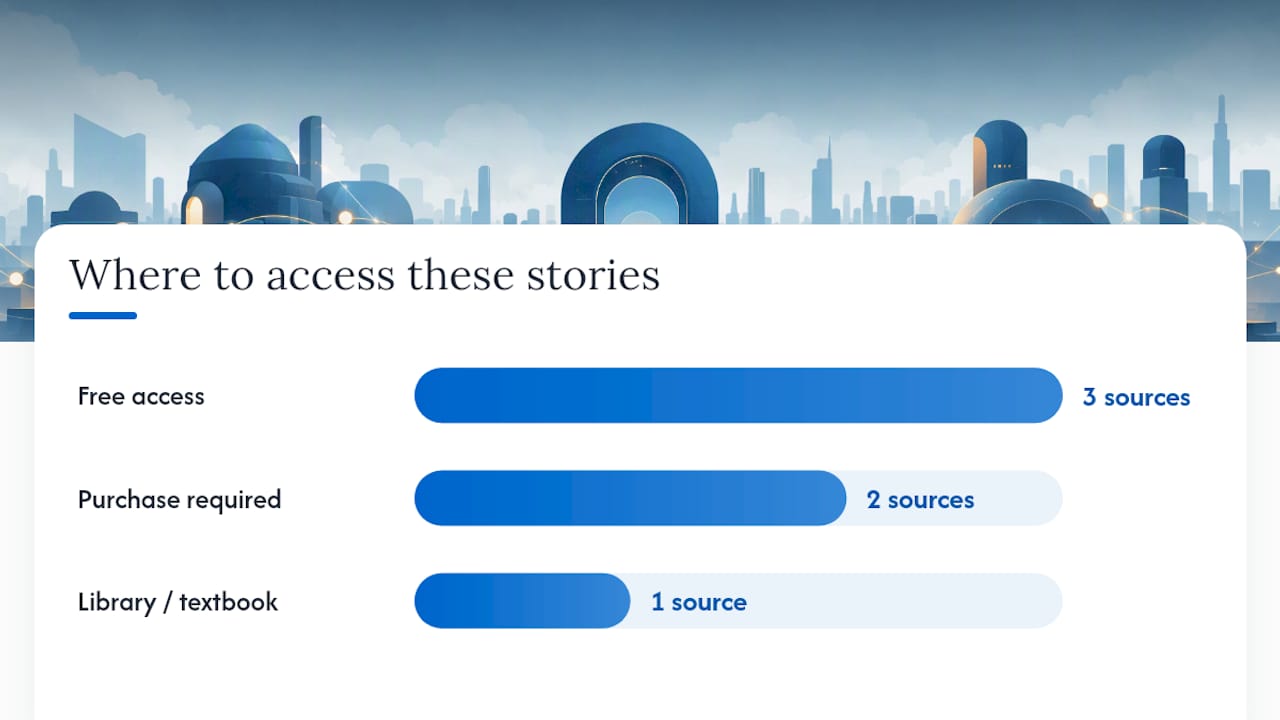
| Source | Stories / Content Available | Availability |
|---|---|---|
| Project Gutenberg | “The Machine Stops” (Forster) and other pre-1928 texts | Free, public domain |
| Clarkesworld Magazine | Kritzer, Nam, and current Hugo-eligible short fiction | Free online; some archived issues |
| Lightspeed Magazine | “Monopticon” and contemporary SF shorts | Free online; paid subscription for full archive |
| Brave New Worlds anthology (ed. John Joseph Adams) | various dystopian stories including Bacigalupi, Le Guin, Slesar | Purchase; reviewed at Tangent Online |
| Standard school anthologies | Bradbury, Vonnegut, Jackson (widely reprinted) | Library copies; textbook editions |
| Amazon / Kindle | Individual story collections; author collections | Purchase or Kindle Unlimited |
Practical procurement tips:
- “The Machine Stops” is in the public domain and available free through Project Gutenberg. Print it directly for classroom use.
- Brave New Worlds (ISBN 978-1597801683) is the most efficient single anthology purchase for a dystopian unit, covering eleven of the stories on this list.
- Most public libraries carry the major Bradbury, Vonnegut, and Jackson collections. Place a hold through your library’s digital catalog; many offer ebook lending through Libby or Hoopla.
- For contemporary stories, Clarkesworld and Lightspeed maintain free online archives. Bookmark the Hugo shortlist pages for annual updates.
- Single-issue magazine purchases from Clarkesworld and Lightspeed typically run a few dollars and include several stories, making them cost-effective for individual readers.
The rise of algorithmic and psychological dystopias in recent short fiction
The clearest trend in contemporary short dystopian fiction is the move inward. Classic dystopias were built on visible architecture: the Ministry of Truth, the lottery slip, the handicap bag. Today’s best short dystopias locate the control inside the character’s own cognition, mediated by systems that feel helpful.
“The most unsettling contemporary dystopias aren’t about governments that oppress. They’re about systems that optimize — and the people who can’t tell the difference between being helped and being managed.” Naomi Kritzer’s “Better Living Through Algorithms” in Clarkesworld captures this precisely: an AI that improves users’ lives in measurable ways while quietly narrowing what those lives can contain.
This shift matters for teachers choosing texts. The older stories ask “what would a totalitarian state do to us?” The newer ones ask “what are we already letting happen?” That second question tends to generate more uncomfortable, more productive classroom conversations, because the students are already living inside the answer.
Key Takeaways
The single most useful selection rule for dystopian short stories: match reading time to your session length, then filter by age tag, and let theme drive the discussion.
| Point | Details |
|---|---|
| Match length to your session | Stories under 20 minutes (Slesar, Bradbury) suit single-period classes; longer ones (Forster, Dick) work better as pre-assigned reading. |
| Use age tags seriously | “I Have No Mouth, and I Must Scream” is adult-only; “All Summer in a Day” is safe from Grade 6. Ignoring these tags creates avoidable problems. |
| Three themes anchor discussion | Loss of individuality, technological dominance, and social/governmental corruption cover nearly every story on this list and generate the strongest prompts. |
| Free texts exist for the classics | “The Machine Stops” is free via Project Gutenberg; Clarkesworld and Lightspeed offer contemporary stories free online. |
| Nathanielconnors for dark extensions | Readers ready to go deeper into psychological and dystopian horror will find thematically aligned short fiction in Nathanielconnors’s collections, available on Kindle Unlimited. |
Why the short form is where dystopia does its best work
The conventional wisdom is that dystopia needs scale: the sprawling world-building of 1984, the layered society of The Handmaid’s Tale. That’s wrong, or at least incomplete. The short story is where dystopian ideas are sharpest, because compression forces the author to choose one mechanism of control and follow it to its end without flinching.
“The Ones Who Walk Away from Omelas” is four thousand words. It contains more genuine moral weight than most dystopian novels three times its length. “Examination Day” is barely a thousand words and lands harder than most full-length thrillers. The brevity isn’t a limitation. It’s the argument.
What I look for when assembling a list like this is stories that don’t resolve. The best dystopian short fiction leaves the reader with a question they can’t answer cleanly, because that discomfort is where the real thinking starts. “The Lottery” doesn’t explain why the village keeps doing it. Le Guin doesn’t tell you where the walkers go. Ellison doesn’t offer a way out. That refusal to comfort the reader is what makes these stories last.
For teachers: the stories that generate the most discussion are almost always the ones with the most ambiguous endings. Assign those first.
Nathanielconnors’s dystopian horror collections
If the stories on this list have you wanting more darkness, Nathanielconnors writes in exactly this territory. Stories of a Condemned Soul, The Nether, and Evolution A200: A Bubonic Apocalypse each push into the psychological and dystopian-horror space that connects directly to the themes running through this list: control, guilt, survival, and what remains of a person when systems strip everything away.
All three titles are available in ebook and paperback on Amazon, and every one of them is included in Kindle Unlimited, so subscribers read at no additional cost. For readers who finished “I Have No Mouth, and I Must Scream” and wanted something longer with that same psychological intensity, Stories of a Condemned Soul is the natural next read. Start there, or browse the full dystopian horror collection to find the title that fits your mood.
Useful sources and further reading
- Clarkesworld Magazine — ‘Better Living Through Algorithms’ by Naomi Kritzer
- I Have No Mouth, and I Must Scream — Harlan Ellison (reprint PDF)
- Examination Day — Wikipedia
- Project Gutenberg — public-domain text resource
- Clarkesworld Magazine — ‘National Center for the Preservation of Human Dignity’ by Youha Nam
- Tangent Online — Brave New Worlds: Dystopian Stories (anthology review/listing)
- LitReactor — 8 prescient dystopian shorts
- Lightspeed Magazine — ‘Monopticon’