
If you want a horror novel you can finish tonight, start with Nathaniel Connors’ short catalog, including The Nether and Stories of a Condemned Soul. Both fall under the typical length ceilings that define a genuinely short horror novel, making them suitable for a quick read. What follows is a curated shortlist and a breakdown of what makes the short form hit harder than a 400-page slow burn.
TL;DR:
- Short horror novels under 300 pages can be finished in a few hours and focus on a single, intense conflict without subplots or filler.
- Novellas prioritize a concentrated narrative voice and a clear emotional or psychological core, making their tension feel more immediate and visceral.
- The genre’s roots trace back to Poe and Lovecraft, with a current boom driven by indie publishers and digital platforms offering quick, high-impact reads.
- Popular subgenres in short horror include psychological dread, cosmic horror, body horror, folk horror, and dystopian themes, each benefiting from brevity.
- For best impact, assess early chapters for foreshadowing and pay attention to narrative tone, as tight point of view and pacing are key to the genre’s effectiveness.
Table of Contents
- What Counts as a Short Horror Novel?
- Curated Short Horror Novels Worth Your Next Free Evening
- Why Short Horror Novels Hit Harder Than Long Ones
- Where Short Horror Novels Came From
- The Authors Who Defined Short Horror
- The Subgenres Hiding Inside Short Horror
- How to Read a Short Horror Novel Like a Critic
- Why I Write Short Horror
- Where to Read Nathaniel Connors’ Short Horror Now
- Sources
- FAQ
What Counts as a Short Horror Novel?
A short horror novel generally runs under a few hundred pages or roughly tens of thousands of words. Editorial roundups like Book Riot’s list of short horror novels tend to cap their picks under 300 pages, which lines up with what most readers mean when they ask for something “quick but scary.” At an average adult reading speed, a novella of this length can be read in a few hours. A 150-page book might take even less.
The terms get used loosely, so it helps to separate them:
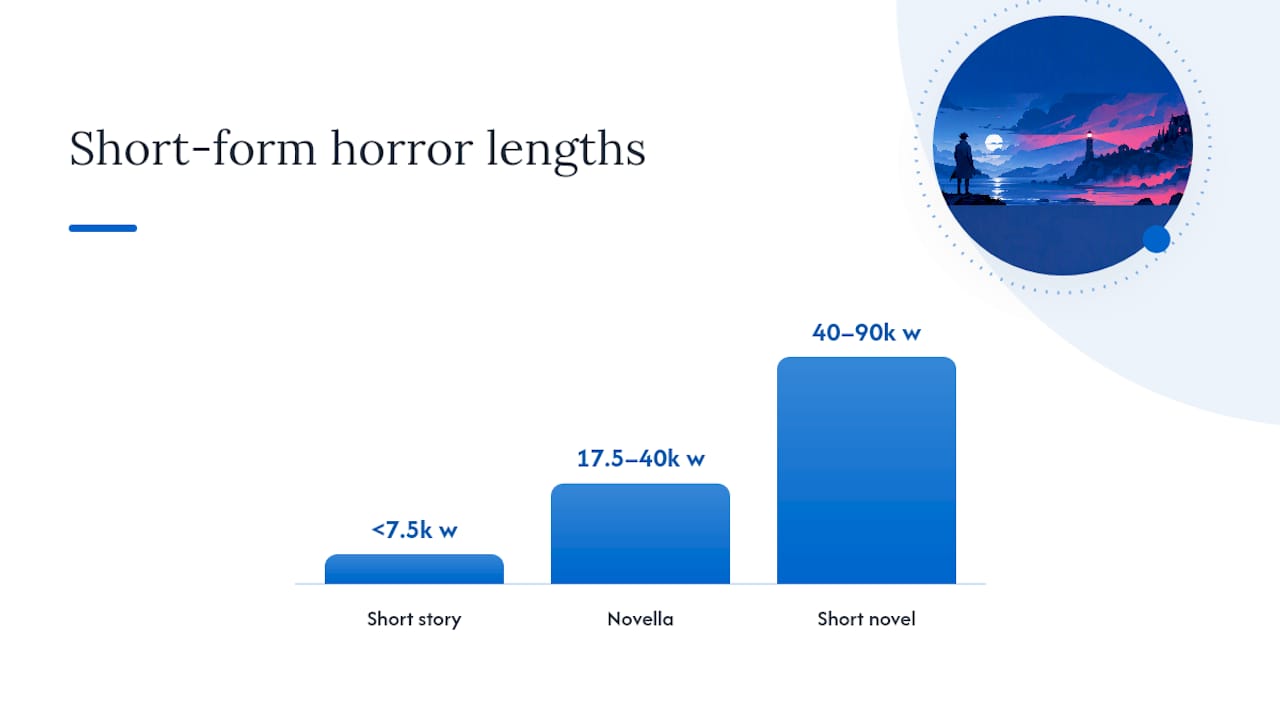
- Short story: usually under 7,500 words, a single scene or shock built around one image or twist.
- Novella: roughly 17,500 to 40,000 words, long enough for a real arc but tight enough to avoid subplots.
- Short novel: 40,000 to 90,000 words, closer to a traditional novel but still readable in a weekend.
Novellas function differently than either. Critics who cover the form point out that they concentrate existential and ethical stakes into a limited scope, which is a fancy way of saying there’s no room for filler. Every scene has to earn its place.
When picking a short horror read, look for three things: a single driving conflict rather than a sprawling cast, a strong narrative voice that can carry tension without relying on plot mechanics, and a subgenre that matches your mood, whether that’s psychological dread, body horror, or cosmic unease. You’ll find short horror through indie presses, Kindle Unlimited, and public-domain archives like Project Gutenberg, which hosts full-length classics for free. Ebooks are the easiest format for this kind of reading since most short novels are formatted for a single sitting on a phone or e-reader screen.
Pro Tip: If you’re not sure how long a book will actually take you, check the Amazon listing’s “print length” or file size in KB. Anything under 900 KB for a Kindle file is almost always a fast read.
Curated Short Horror Novels Worth Your Next Free Evening
Start with the client’s own catalog, then branch into mood-based picks that cover the range of what short horror can do.
Nathaniel Connors’ short horror catalog
- The Nether — A descent into a psychological underworld where guilt takes physical shape. Best for readers who want dread that comes from character, not jump scares. Runs short enough for a single evening and is available in ebook and paperback, with the option to read free through Kindle Unlimited.
- Stories of a Condemned Soul — A collection built around themes of revenge and redemption, told through interlinked narratives that hit hardest when read back to back. Best for readers who want the intensity of a novella but the variety of a story collection. Ebook and paperback formats, sampled easily via Kindle Unlimited.
- Evolution A200: A Bubonic Apocalypse — A dystopian horror premise that turns a plague scenario into a meditation on what people become under pressure. Best for readers who want their horror laced with social dread rather than pure supernatural scares. Available in ebook and paperback, also readable through Kindle Unlimited.
Six more short horror picks by reading mood
- If you want claustrophobic psychological dread: look for a voice-driven novella with a single narrator and an unreliable sense of what’s real. This subgenre thrives on interior monologue over external action, and it’s the format that critics say amplifies ethical and existential dilemmas into visceral, voice-driven experiences.
- If you want cosmic dread with no modern hand-holding: go straight to the public-domain classics. H. P. Lovecraft’s shorter works, freely available through Project Gutenberg, remain the reference point for existential horror that never explains itself fully. The Shadow Over Innsmouth is a solid entry point and costs nothing to read.
- If you want body horror in a hurry: look for novellas under 150 pages built around a single physical transformation or infection. These lean on visceral pacing, with short chapters that mimic the character’s own deterioration.
- If you want a haunted-house story you can finish in one night: pick a novella with a single setting and a small cast. The limited scope keeps tension high without needing a sprawling backstory, which is exactly the structural advantage the novella format is built for.
- If you want folk horror with an unsettling ending: choose something rooted in a specific rural or isolated setting, where community rituals or old traditions curdle into threat. This subgenre rewards patience over jump scares.
- If you want dystopian horror that doubles as commentary: look for short novels where the monster is the system, not a creature. This is the space where a title like Evolution A200 fits naturally, and where readers who liked it might also enjoy a broader list of dystopian horror novels for further reading.
Each of these categories rewards a different kind of reader, but they share the same structural advantage: nothing wastes your time. A short horror novel either commits fully to its premise in the first twenty pages or it doesn’t work at all, and that pressure tends to produce sharper writing than a novel with 300 pages to stall in.
If you’re building a rotation of quick reads, pair a psychological pick with a cosmic one and a body-horror one, so you’re not reading the same emotional note three times in a row. And if a title from this list leaves you wanting more from the same subgenre, a curated collection of short dystopian novels built for one-sitting dread is a natural next stop.
Why Short Horror Novels Hit Harder Than Long Ones
A novella can’t afford a subplot. That constraint is the entire secret to why short horror works: with no room to wander, every scene has to build tension toward the same target. Novellas typically eschew complex subplots to maintain sustained tension on a single problem, which is precisely what makes them feel more intense than a 400-page novel with the same premise stretched thin.
The form is also having a real moment. Industry coverage has described a “golden age” for horror novellas, driven by indie imprints and digital-first publishing models that can bring a concise, high-impact manuscript to readers far faster than a traditional trade cycle allows. That shift matters for readers, too, because it means the short horror shelf isn’t a compromise anymore. It’s where a lot of the most ambitious current work is happening.
Novellas function like parables. Limited scope concentrates existential and ethical stakes into something more visceral than a sprawling novel can manage.
Digital-first publishing has changed discovery as much as production. Kindle Unlimited lets readers sample multiple authors without committing to a full purchase, which is exactly how a lot of readers stumble onto a new favorite short horror writer they’d never have picked up in a bookstore.
Pro Tip: Match the length to the emotional effect you want. A novella under 100 pages tends to deliver a single sharp scare that lingers. A short novel closer to 200 pages has room for a slower build and a more devastating final twist. Pick based on whether you want a jolt or a bruise.
Where Short Horror Novels Came From
Horror’s short form isn’t new. It’s arguably the genre’s original shape. Edgar Allan Poe built his reputation on short stories in the 1830s and 1840s, proving that dread could be delivered in a handful of pages just as effectively as in a full novel. By the early 1900s, writers working in pulp magazines, including H. P. Lovecraft, refined the short horror novella into something closer to what we’d recognize today: a tightly scoped narrative built around a single unbearable revelation.
The mid-20th century saw horror short fiction move into paperback anthologies and genre magazines, keeping the form alive even as the novel became the industry’s default unit. Stephen King’s early novella collections in the 1980s, including Different Seasons, showed mainstream readers that a short horror story could carry as much weight as anything three times its length.
What’s changed more recently is distribution, not craft. Ebook platforms and indie presses have lowered the cost of publishing a 30,000 word manuscript, which used to be an awkward length for traditional print runs. That’s part of why coverage of the current novella boom points to niche publishers actively seeking out short, high-impact horror rather than treating it as a lesser format squeezed in between short stories and full novels.
The Authors Who Defined Short Horror
A handful of writers set the template that every short horror novel still works from. Edgar Allan Poe proved dread could live in a few thousand words, and stories like “The Tell-Tale Heart” remain the clearest example of a single unreliable voice carrying an entire narrative. H. P. Lovecraft pushed the form toward cosmic scale, using short novellas to suggest horrors too vast to fully describe, with works like The Shadow Over Innsmouth still free to read through Project Gutenberg.
Shirley Jackson brought psychological precision to the form, and The Haunting of Hill House remains a touchstone for how a short novel can make a setting feel like a character. Richard Matheson did the same for high-concept dread, compressing big ideas into lean, propulsive novellas that influenced decades of horror and science fiction writers after him.
More recently, a wave of contemporary writers has kept the novella format critically relevant, with several recent short works winning genre awards and building the kind of momentum that outlets have started calling a golden age for the form. That momentum is why a modern short horror catalog, including work like Connors’ The Nether, sits in a genuine lineage rather than existing as a shortcut around a “real” novel.
The Subgenres Hiding Inside Short Horror
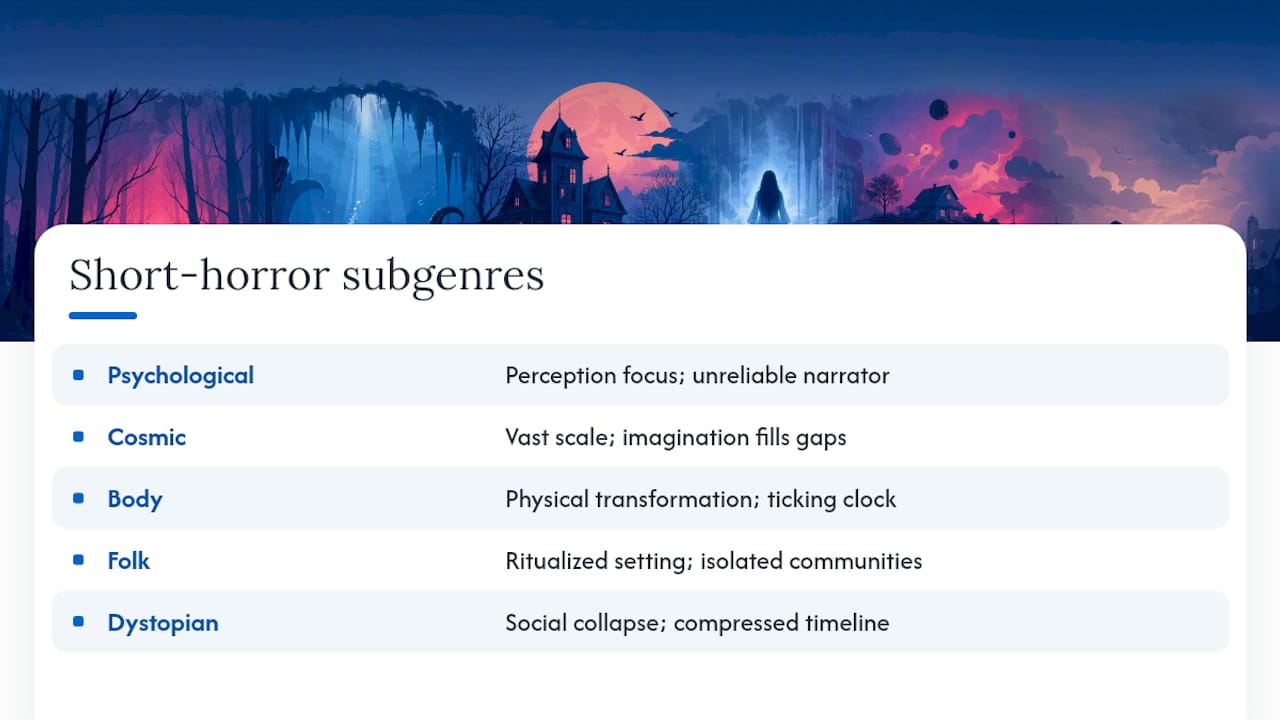
Short horror isn’t one flavor. It’s several, compressed. Psychological horror uses an unreliable narrator and interior focus to generate dread from perception rather than events, which is why it thrives in the novella format’s tight point of view. Cosmic horror goes the opposite direction, using brevity to suggest a scale too large to fully render, letting the reader’s imagination do the heavy lifting Lovecraft never had to spell out.
Body horror compresses physical transformation into a ticking clock, often using short chapters that mirror a character’s deterioration in real time. Folk horror leans on setting and ritual, working best in short form because isolated communities and rural dread don’t need three hundred pages of world-building to feel suffocating.
Dystopian horror turns the short novel into social commentary, using a compressed timeline to show how quickly a system or society can curdle into something monstrous. That’s the register Evolution A200 works in, treating a plague scenario as a lens on group behavior rather than a straightforward survival story. Each of these subgenres uses length differently, but they all rely on the same trick: less space means less room for the reader to look away.
How to Read a Short Horror Novel Like a Critic
Pay attention to the first chapter. In a short horror novel, the opening pages usually plant every seed the ending will pay off, so a second read often reveals foreshadowing that a longer novel would bury under subplot. Ask what the single central image or fear is. Most short horror organizes itself around one unresolved tension rather than several competing threats.
Watch the narrative voice closely. Because novellas rely on concentrated point of view, the narrator’s reliability, tone, and word choices often do more work than the plot itself. A shift in how a narrator describes something, a sudden flatness or a sudden excess of detail, is frequently the clearest signal that something in the story has broken.
Notice pacing at the sentence level, not just the chapter level. Short horror can’t rely on slow atmospheric build across a hundred pages, so tension often compresses into sentence rhythm: short, clipped lines during a scare, longer unbroken ones during dread that hasn’t landed yet. Reading with that in mind turns a quick one-sitting read into something you can actually analyze, not just consume.
Why I Write Short Horror
I write short because dread doesn’t need three hundred pages to do its work. My priority with a book like The Nether was to keep the reader locked on one psychological thread from the first page to the last, without the subplots that would let them look away. Short horror rewards that discipline.
For occasions, I’d suggest matching the book to the moment. The Nether fits a commute or a lunch break, since its focus holds attention in short bursts. Stories of a Condemned Soul works best as a single-sitting night read, when you can move through its linked stories without interruption. Evolution A200 is a weekend book, dense enough with social dread to reward slower reading. More on the author’s background and full catalog is available at Nathaniel Connors’ author site.
— Nathaniel
Where to Read Nathaniel Connors’ Short Horror Now
If the shortlist above sent you looking for a starting point, the fastest route is the dark supernatural thrillers catalog, where The Nether, Stories of a Condemned Soul, and Evolution A200: A Bubonic Apocalypse are all listed with their current formats.
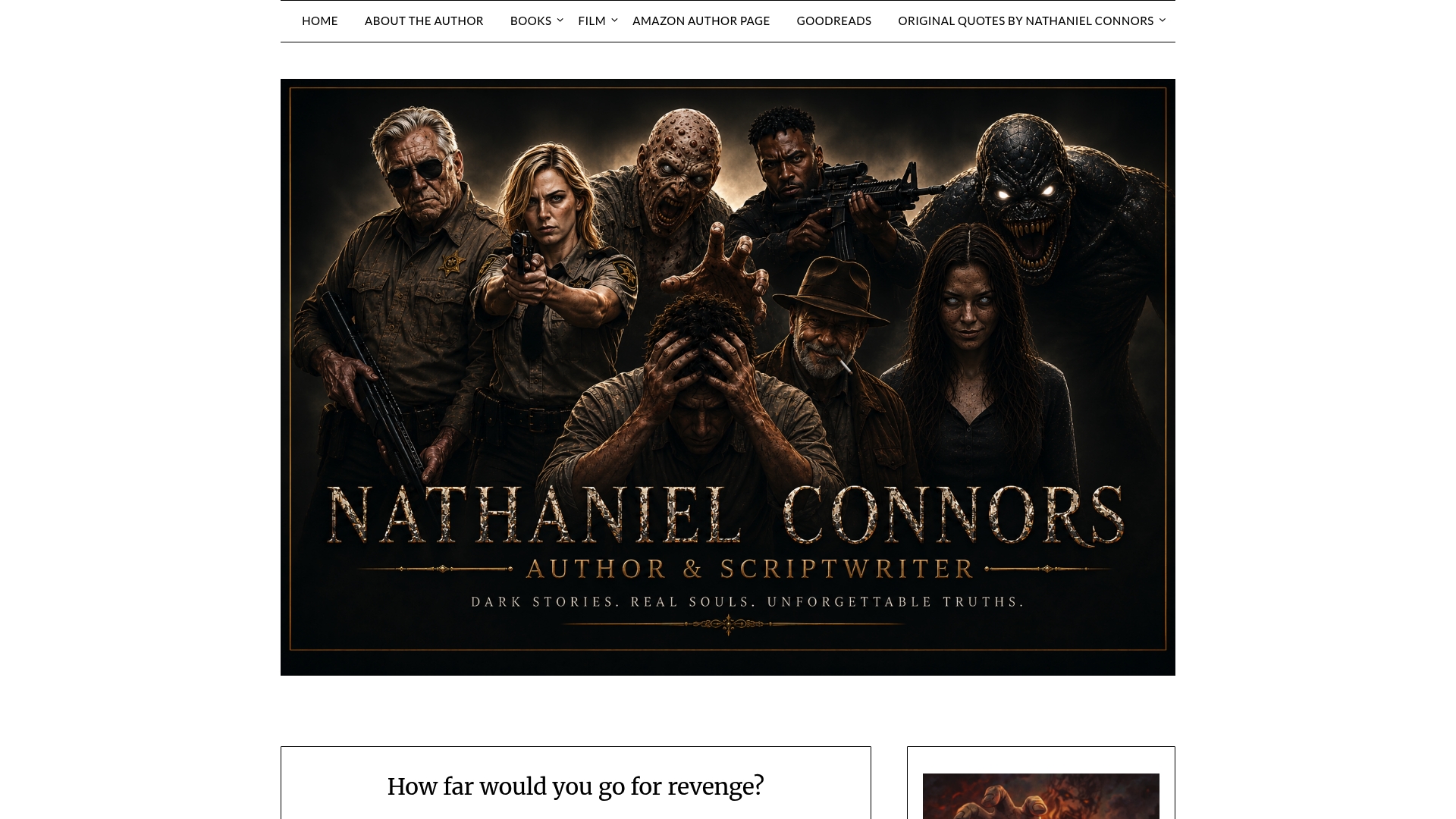
All three are available in ebook and paperback on Amazon, and each can be sampled at no added cost through Kindle Unlimited, so you can test whether the voice fits your taste before committing to a second title. If you’re drawn more to the dread-without-gore end of the genre, the dark supernatural books collection narrows the catalog down to the darkest, most psychologically driven entries. This article recommended these three titles as the fastest way into a genuinely intense short horror read, and both catalog pages are built to get you from browsing to reading in a couple of clicks.
Sources
The claims about novella craft, market resurgence, and public-domain access in this article draw on the following sources:
- The golden age of horror novellas
- 16 spooky novellas by women and nonbinary authors
- Project Gutenberg: H. P. Lovecraft works
FAQ
What Is the Best Book of Horror Short Stories?
There’s no single definitive answer, since taste in horror varies widely, but classic anthologies built around Poe or Lovecraft remain the standard entry point, and both are freely accessible through Project Gutenberg. For a modern option built around linked short narratives, Stories of a Condemned Soul offers a similar anthology feel in novella form.
What Is the Best Short Horror Story?
Among public-domain classics, Lovecraft’s The Shadow Over Innsmouth is frequently cited as a high point of short-form cosmic horror and can be read for free. “The best” is subjective, but that story’s influence on the genre is hard to overstate.
What Is the Shortest Horror Story Ever Written?
Definitions vary depending on what counts as a complete story, but extremely short horror pieces, sometimes just a few sentences, have circulated for decades as a kind of literary dare. These “flash horror” pieces work on the same principle as novellas, just compressed to an extreme: one unresolved image, no room to explain it away.
What Is the Scariest Short Story Ever Written?
Readers and critics disagree constantly on this, but Poe’s psychological horror stories and Lovecraft’s cosmic pieces consistently top most lists for their lasting influence on the genre. If you want a modern short novel built on similar psychological unease, The Nether works from the same tradition of dread generated by an unreliable inner voice.