
The Nether is worth reading if you want psychological dystopian horror that lingers instead of jump-scares. Nathaniel Connors builds dread through guilt, revenge, and the slow collapse of a mind under pressure, not gore for its own sake. It’s a strong pick for readers already into slow-burn dread, and it can be sampled through subscription services and Amazon.
TL;DR:
- The book’s slow psychological unraveling emphasizes guilt as a corrosive force rather than a single event.
- Revenge drives the protagonist’s actions but often leads to self-destruction, highlighting its destructive nature.
- The dystopian setting mirrors internal mental collapse, reinforced by imagery of confinement and surveillance.
- Prose is sparse and atmospheric, with rhythm shifting to reflect the protagonist’s spiraling mental state.
- The novel is best suited for readers who prefer psychological dread and moral ambiguity over fast-paced action.
Table of Contents
- What Happens in The Nether? A Spoiler-Free Plot Summary
- What Are the Main Themes in The Nether?
- How Strong Are the Characters and the Prose?
- What Is the Pacing and Reading Experience Like?
- Who Will Enjoy The Nether the Most?
- Where Can You Buy or Read The Nether?
- Should You Read The Nether? Final Verdict
- Where The Nether Fits in Connors’ Catalog
- Ready to Start The Nether? Here’s Your Next Step
- FAQ
What Happens in The Nether? A Spoiler-Free Plot Summary
Practically speaking, here’s what you’re getting:
- Formats: ebook and paperback, both listed on the author’s books page
- Length: a novel-length read, not a novella. Expect several sittings rather than one long afternoon.
The official The Nether book page has the full plot framing if you want more before diving in, without wrecking the reveals.
What Are the Main Themes in The Nether?
Revenge, guilt, and redemption are the three engines driving The Nether, and Connors doesn’t let any of them resolve cleanly. Guilt shows up first, usually attached to a decision the protagonist can’t undo. Revenge follows as a coping mechanism that looks righteous right up until it doesn’t. Redemption stays just out of reach for most of the book, which is exactly the point. This isn’t a story that hands you closure. It makes you sit with the discomfort of not knowing whether anyone deserves it.
The dystopian setting isn’t wallpaper; it creates a pressure chamber that, much like staging in Sweeney Todd | Ocean Theatre Co., strips away social buffers to expose raw psychological tension. It’s a pressure chamber that strips away the social buffers people normally use to avoid confronting themselves. Recurring imagery around confinement and surveillance reinforces that claustrophobia, and the narration leans close enough to the protagonist’s head that you start questioning what’s real and what’s paranoia.
- Guilt as a slow poison rather than a single dramatic event
- Revenge framed as both motivation and self-destruction
- A dystopian backdrop that mirrors internal collapse
- Close, occasionally unreliable narration that keeps you off balance
Pro Tip: If you like unpacking unreliable narrators, read the first three chapters twice. Details that seem like scene-setting the first time read very differently once you know where the guilt is coming from.
How Strong Are the Characters and the Prose?
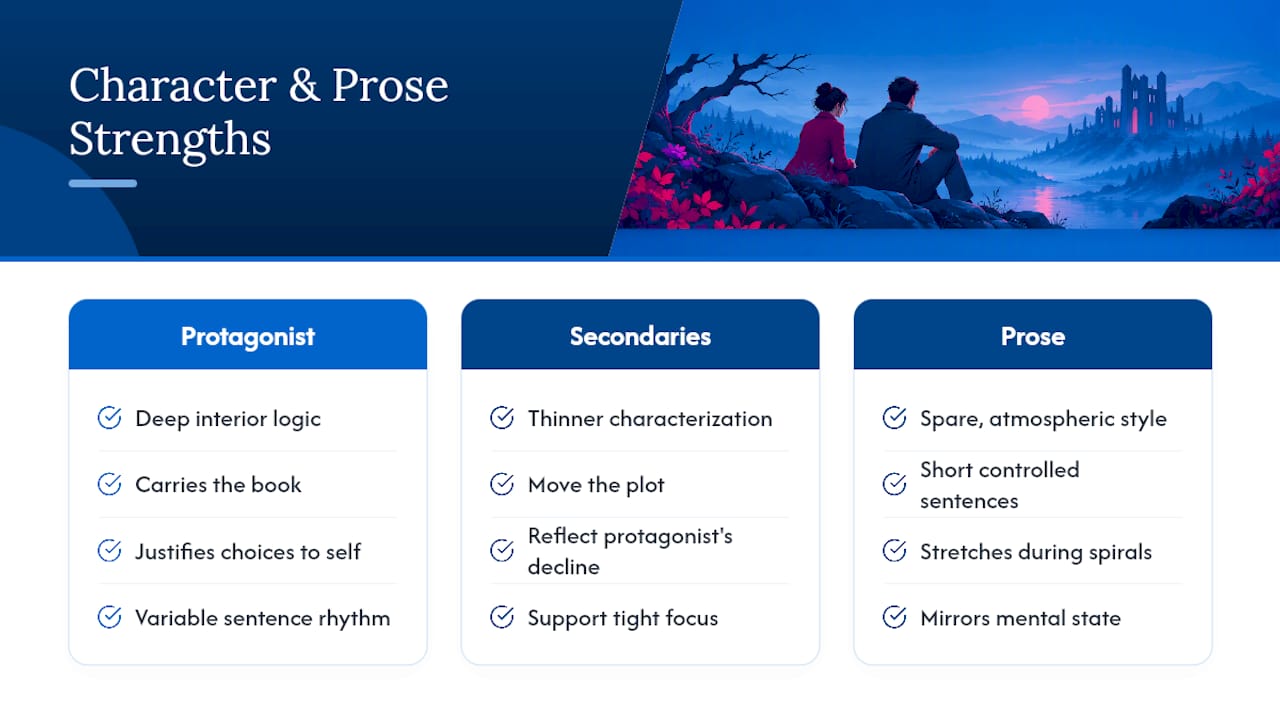
The protagonist carries the book, and that’s a good thing, because Connors spends real time on interior logic instead of just describing outward behavior. You get to watch a person justify choices to themselves in ways that feel uncomfortably plausible. Secondary characters are thinner by comparison. A few exist mainly to move the plot or reflect the protagonist’s decline, which works for the book’s tight psychological focus but means you shouldn’t expect a sprawling ensemble.
The prose itself is spare and atmospheric rather than lyrical. Short, controlled sentences build tension in the quieter scenes, then stretch out during the character’s spiraling moments, which mirrors the mental state on the page. It’s not a flashy style, but it’s a deliberate one, and it supports the book’s psychological aims better than ornate description would. The emotional arc tracks guilt tightening into something closer to compulsion, and the prose rhythm shifts right along with it.
What Is the Pacing and Reading Experience Like?
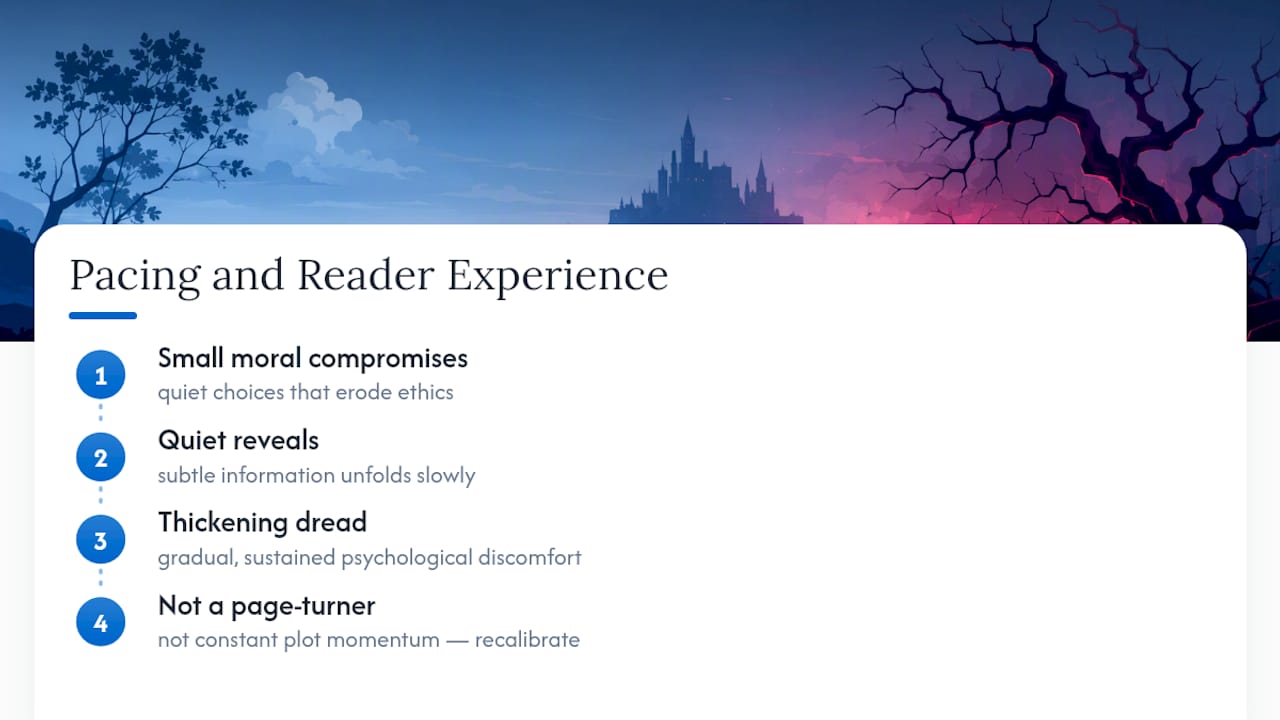
This is a slow burn, not a page-turner in the traditional thriller sense. Tension builds through accumulation: small moral compromises, quiet reveals, dread that thickens rather than spikes. If you’re expecting constant plot momentum, recalibrate your expectations before you start.
The atmosphere leans heavily on psychological unease rather than physical horror. You won’t get much graphic violence, but you will get sustained discomfort tied to guilt, control, and the erosion of self. That’s worth flagging as trigger guidance: themes of psychological manipulation, self-destructive behavior, and disturbing moral choices run through the book, so readers sensitive to those subjects should go in aware.
Who Will Enjoy The Nether the Most?
The Nether fits readers who already gravitate toward psychological dread over action, and who don’t mind a book that refuses to tie things up neatly. If you finished a dystopian thriller and immediately wanted to talk through what the ending actually meant, this is your lane.
- Fans of slow-burn psychological horror over fast-paced thrillers
- Readers who enjoy morally compromised protagonists
- Anyone drawn to dystopian settings used as psychological metaphor, not just backdrop
Trigger warnings: psychological manipulation, themes of guilt and revenge, disturbing moral choices, and depictions of internal breakdown. If that’s too intense right now, consider a lighter dark fantasy title instead and come back to The Nether later.
Where Can You Buy or Read The Nether?
- Read free: borrow through Kindle Unlimited
- Own it: buy the ebook or paperback through the author’s book page
Should You Read The Nether? Final Verdict
The Nether earns its recommendation on strength of theme and psychological control, not on speed or scope. Here’s the breakdown:
- Pros: tight thematic focus on guilt and revenge, genuinely unsettling atmosphere, prose that matches the character’s mental unraveling, strong fit for readers who want dread over jump-scares
- Cons: secondary characters get less development, pacing demands patience, ending withholds tidy resolution
| Consideration | Verdict |
|---|---|
| Best for | Slow-burn psychological horror fans |
| Pacing | Deliberate, not fast |
| Content intensity | High psychological, low graphic violence |
| Access | Free via Kindle Unlimited, or buy on Amazon |
If you’re on the fence, borrow it through Kindle Unlimited first. There’s no financial risk, and the trailer will tell you within two minutes whether the tone is your kind of unsettling.
— Nathaniel
Where The Nether Fits in Connors’ Catalog
The Nether isn’t an outlier in Nathaniel Connors’ work. It shares DNA with Stories of a Condemned Soul and Evolution A200: A Bubonic Apocalypse, both of which dig into similar psychological territory: guilt as a driving force, dystopian pressure as a mirror for internal collapse. If The Nether works for you, either of those is a logical next read.
Readers looking for author credentials or reader testimonials can find both on the official site, alongside the trailer that gives newcomers a fast gut check on tone before they commit to the full book.
Ready to Start The Nether? Here’s Your Next Step
If dread that builds slowly and characters who justify their own worst decisions sound like your kind of read, The Nether is the strongest entry point into Nathaniel Connors’ catalog right now. What sets his work apart isn’t shock value. It’s the psychological depth and character work that keeps you turning pages long after a jump-scare would have worn off, and every title is available at no added cost through Kindle Unlimited.
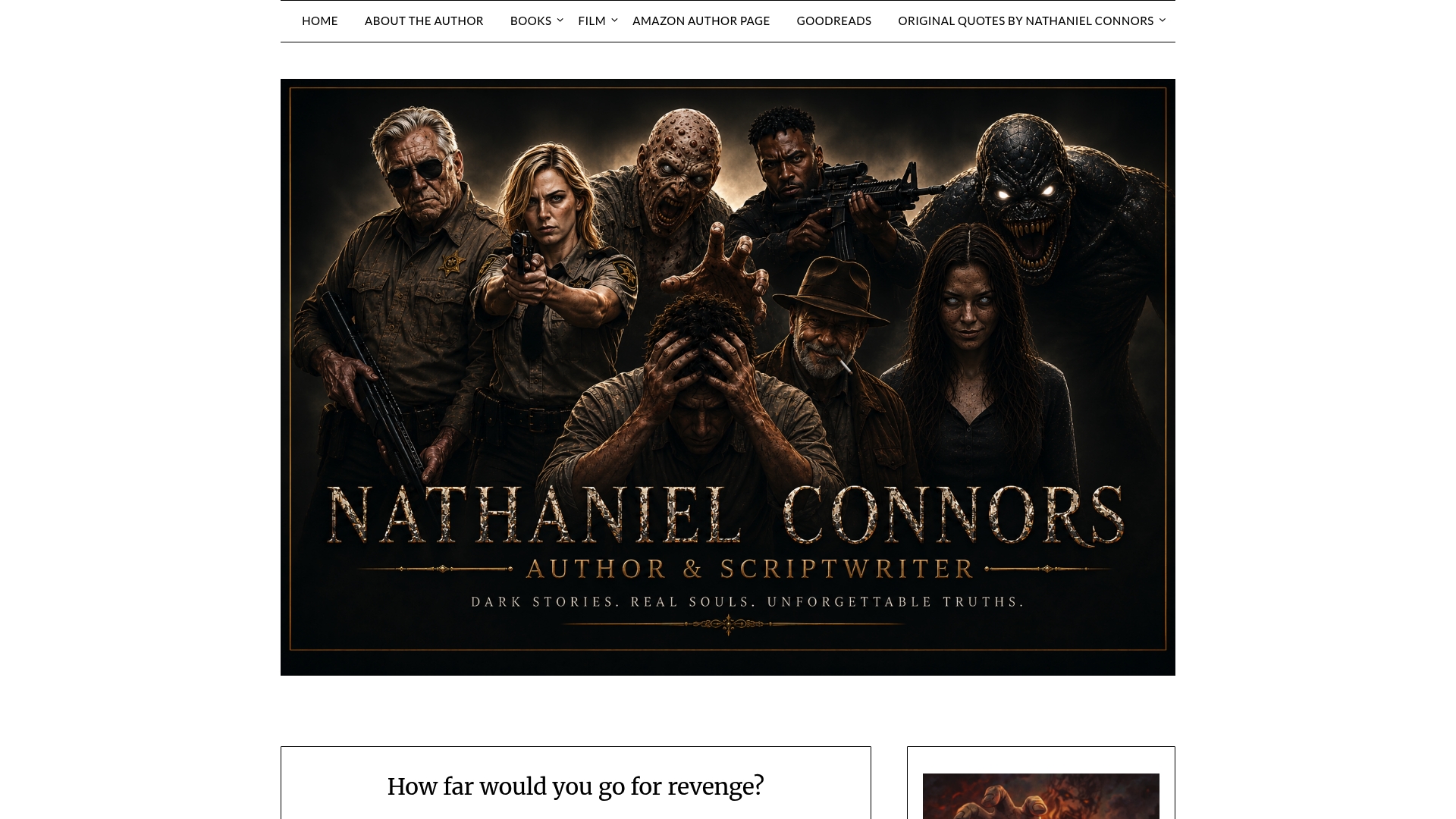
Start with The Nether’s official book page for the full plot setup and buy links, or head straight to the books category page to see the full lineup, including Evolution A200: A Bubonic Apocalypse. If you want a quick gut check before committing, the official trailer takes two minutes and tells you exactly what kind of dread you’re signing up for.
FAQ
Is The Nether Available on Kindle Unlimited?
Yes. The Nether is included with Kindle Unlimited, so subscribers can read it without paying per book. It’s also sold separately on Amazon in ebook and paperback formats.
Is The Nether Appropriate for Sensitive Readers?
The Nether contains psychological manipulation, guilt-driven revenge, and disturbing moral choices, with minimal graphic violence. Readers sensitive to intense psychological content should approach it aware of that intensity, or start with a lighter dark fantasy title first.
How Long Does It Take to Read The Nether?
The Nether is a full-length novel, so most readers should expect several sittings rather than a single session. Pacing is deliberate, and the slow-burn structure rewards patience over speed.
Is The Nether Part of a Series?
The Nether stands as its own dystopian horror title within Nathaniel Connors’ broader catalog, which also includes Stories of a Condemned Soul and Evolution A200: A Bubonic Apocalypse. Readers who enjoy its themes often move on to those titles next.
Where Can I Watch the Official Book Trailer?
The official book trailer for The Nether is hosted directly on the author’s site. It’s a quick way to preview the tone before deciding whether to read or buy.