
Evolution A200: A Bubonic Apocalypse by Nathaniel Connors is dystopian horror with thriller pacing. Its emotional engine is psychological: guilt, consequence and the monsters people carry inside them. If a bookstore or Kindle category forces a single label, “horror” is the closest fit. Readers who like dystopian fiction, apocalypse stories or psychological thrillers will find the book speaks to them as well.
That answer needs some unpacking, because genre labels overlap. A plague-driven collapse of society can be shelved under horror, dystopia, post-apocalyptic fiction or speculative fiction, and each label sets a different expectation. Below we explain what each label promises, how the book relates to it, and how to find it on Amazon and Kindle Unlimited.
TL;DR
- Primary genre: dystopian horror, the way the book is presented on its own page.
- Also fits: thriller, psychological horror and speculative fiction, the umbrella for stories that depart from realism.
- Tone: dread and moral weight rather than gore for its own sake. A reader review roundup describes it as guilt-driven horror.
- Where to read it: ebook and paperback on Amazon, and free to read with Kindle Unlimited.
- Series: it opens the EA200 series, which continues with Evolution A200: Radio Silence.
Table of Contents
- The short answer: dystopian horror with a thriller engine
- What each genre label tells you before you read
- Why a bubonic apocalypse lands on several shelves
- Atmosphere and themes: how mood shapes genre
- Perspective: why we call it dystopian horror
- Where the EA200 series fits in the larger picture
- Read it on Kindle Unlimited
- How to find this kind of book on Amazon
- For writers: what the genre blend teaches
- FAQ
- Sources
The short answer: dystopian horror with a thriller engine
Genre is, first of all, a practical tool. Booksellers use it to group novels so readers can find the kind of book they want, as one guide to writing genre fiction puts it. So the useful question is not which label is correct in the abstract. It is which label gets the right reader to the book.
For Evolution A200: A Bubonic Apocalypse, three labels do most of the work:
- Horror, because the book is built to unsettle you. Fear and dread are the experience it promises.
- Dystopian, because the world it describes is one where the social order has broken down and people live under its consequences.
- Thriller, because the story moves with urgency and tension rather than lingering for its own sake.
The site’s own category page for the book calls it “Dystopian Horror & Thriller Fiction”, and that is the most honest one-line description we can give. If you want the longer reasoning on how those lines get drawn, our piece on psychological thriller versus horror walks through it.
What each genre label tells you before you read
Genre conventions work as a promise. According to one publishing-craft guide to genre, conventions such as danger and a ticking clock in thrillers, or fear and dread in horror, reassure readers that the experience they want is inside the book. Here is how the labels around this title line up with that promise.
| Label | What the reader expects | How it relates to Evolution A200 |
|---|---|---|
| Horror | Fear, dread, a sense of threat that does not resolve cleanly | The central label. The plague apocalypse is the threat, and the dread comes from people as much as from disease |
| Dystopian fiction | A damaged or oppressive society and what it does to individuals | A strong secondary label, because the story is about a world already bent out of shape |
| Post-apocalyptic | Life after a collapse, with survival at the center | Adjacent. The apocalypse is in the title, but the book is driven by moral and psychological pressure |
| Thriller | Momentum, stakes, a ticking clock | Shapes the pacing and the plotting |
| Speculative fiction | Any story that departs from realism | The umbrella over all of the above |
That last row deserves a note. Speculative fiction is generally defined as an umbrella genre that includes subgenres departing from realism, which is why a book can be horror and dystopian and still sit comfortably under one broad heading.
If you want to see where the dystopian and post-apocalyptic lines blur, we cover that in Dystopian vs Post-Apocalyptic: How to Tell the Difference.
Why a bubonic apocalypse lands on several shelves
The title does a lot of genre signaling on its own. “Bubonic” points to plague, a threat with a long history in the human imagination. “Apocalypse” tells you the stakes are civilizational. “A200” adds a designation that reads like a file number, which suggests a world with systems, records and something being classified. Together they put the book at the meeting point of horror and dystopia.
This is why one reader calls it a horror novel and another calls it dystopian. Neither is wrong. They are describing different layers of the same book:
- The surface layer is the apocalypse: the outbreak, the collapse, the fear of what is coming.
- The structural layer is dystopian: a society reorganized around catastrophe, and the people squeezed inside it.
- The inner layer is psychological: what characters did, what they cannot undo, and how that follows them.
A book that works on all three layers will never fit neatly into one category. That is a feature for readers who like their horror with some thought behind it, and it is why we describe the genre as a blend rather than a single tag.
Atmosphere and themes: how mood shapes genre
Genre is not decided by premise alone. Mood matters just as much. Writers build a story’s atmosphere through their choices of specific details, images, words and phrases, and those choices evoke emotion in the reader, as the same genre-writing guide explains. A plague story told with clinical detachment would read as a thriller. The same story told with claustrophobic, sensory detail reads as horror.
Connors writes dark supernatural and psychological fiction, and the themes that run through his work are revenge, guilt and redemption. In Evolution A200 the guilt-driven angle is the one readers tend to pick up on. Our review roundup of the book, which collects a 4.4 out of 5 rating from 33 readers, frames it as guilt-driven horror. That detail matters for genre because it tells you where the fear comes from: not only from the outbreak, but from the characters’ own reckoning.
This is also why we put atmosphere ahead of shock. If you want to see how that choice plays out across the genre, read Horror Atmosphere vs Gore: What Actually Scares Readers. And if you are a tabletop gamer or storyteller curious about how dread gets built at the table, these ideas for cosmic horror inspiration show the same principle from another angle.
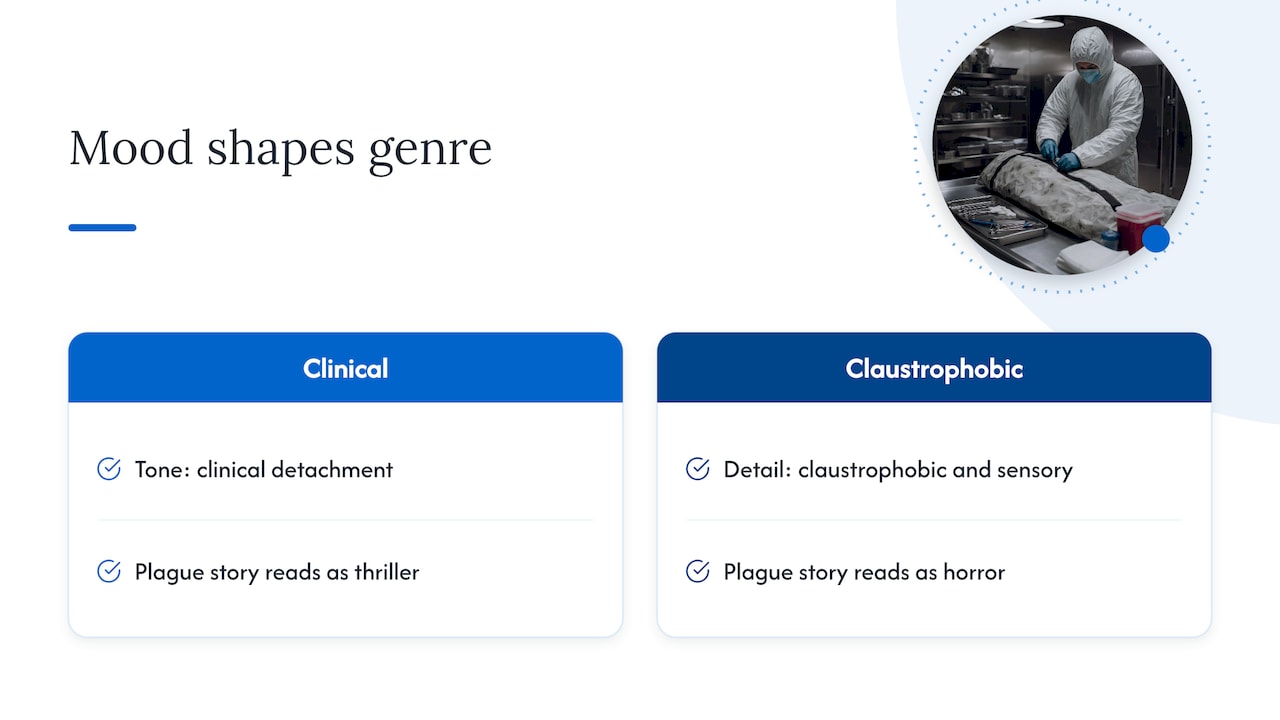
Signs the book is horror rather than pure dystopia
A quick test helps when you are deciding which label to trust:
- Does the story want you afraid, or only informed? Horror aims at the first. A dystopia can be content with the second.
- Is the threat inside the characters? When fear comes from conscience as well as circumstance, the book leans psychological horror.
- Does the ending settle the question? Horror often leaves a residue. Dystopian satire tends to close its argument.
By those three tests, Evolution A200 belongs on the horror side of the line, with dystopia as its setting rather than its whole point.
Perspective: why we call it dystopian horror
We get asked about the genre often, and our answer comes from how the book is meant to be read. We do not see Evolution A200: A Bubonic Apocalypse as a book that borrows a plague for spectacle. We see it as a story about what a collapse reveals in people. The world is dystopian because it shows how pressure rearranges loyalty and conscience. The horror comes from watching characters face what they have done.
That is why we describe our approach as psychological depth first, and why we are comfortable sitting between genres. Readers who come for the apocalypse tend to stay for the characters, and readers who come for the characters tend to be surprised by how much dread the setting carries. Our stories are designed to leave you thinking after the last page, and the genre blend is how we get there.
If you want a label for a shelf, use dystopian horror. If you want a label for the feeling, it is closer to a guilt-soaked thriller with the lights off.
— Nathaniel
Where the EA200 series fits in the larger picture
The book is the opening of the EA200 series, and the next title, Evolution A200: Radio Silence, carries the same blend of dystopian setting and horror pressure. The series sits alongside the Nether books, which lean more toward dark supernatural fiction. You can browse both on the books page.
If you are mapping where this book belongs among similar reads, two of our guides help:
- The Best Dark Supernatural Books for Readers Who Want Real Dread for readers who like the horror side.
- Dystopian Ethics Books: Novels That Test Your Conscience for readers who like the moral weight.
Read it on Kindle Unlimited
If the genre sounds like your kind of dread, the quickest way in is the first book. Evolution A200: A Bubonic Apocalypse is available as an ebook and paperback on Amazon, and it is free to read if you subscribe to Kindle Unlimited. You can open the book’s page for the details, or see the full list on the books page.
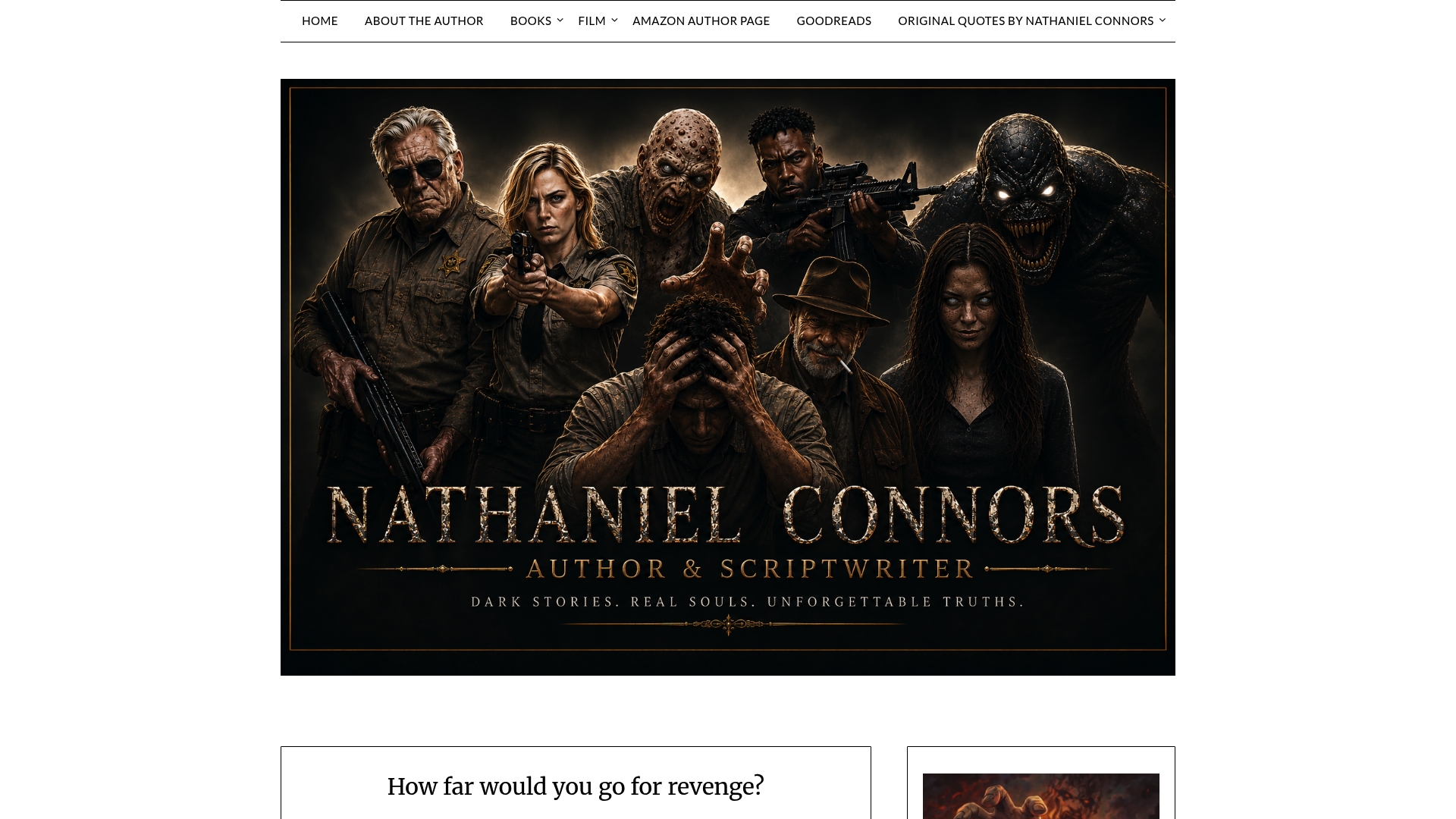
For a broader starting point across the catalog, Start with Nathaniel Connors’s Dark Supernatural Thrillers lays out where each title fits.
How to find this kind of book on Amazon
Because genre is a bookseller’s sorting tool, the way you search changes what you find. A few habits help:
- Search by blend, not by single label. Terms like “dystopian horror” or “plague apocalypse thriller” surface books that straddle the lines.
- Check the categories on the product page. Amazon lists the shelves a book sits on, which tells you how the publisher positions it.
- Read the review language. Words like “dread”, “atmosphere” and “guilt” tell you more about the experience than the category does.
- Filter for Kindle Unlimited if you want to try a title without an extra purchase.
If you prefer slow dread without the supernatural, our guide to slow burn non-supernatural horror on Kindle Unlimited is a good next stop.
For writers: what the genre blend teaches
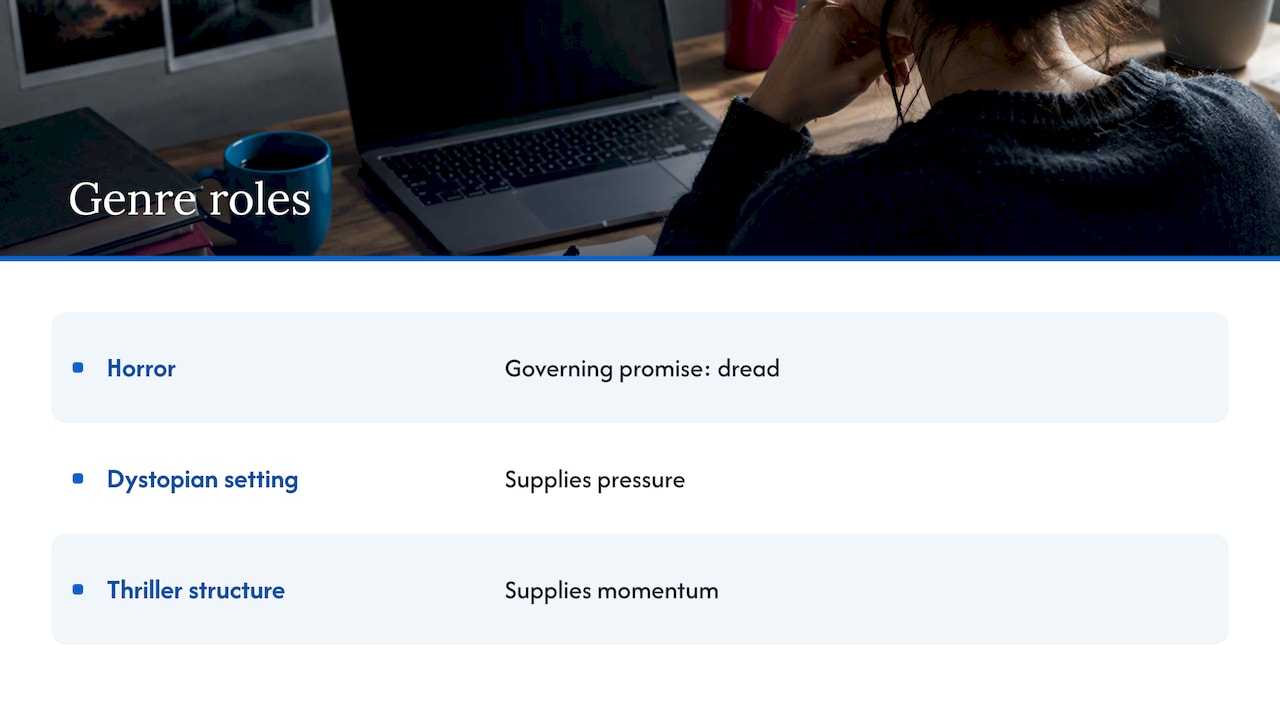
Part of our audience writes as well as reads, and this book is a handy case study in blending genres without muddying them. The trick is to choose one governing promise and let the others support it. Here, the promise is dread. The dystopian setting supplies pressure, and the thriller structure supplies momentum.
To go deeper on the craft side, see How to Write Psychological Horror: A Craft Guide and 20 Psychological Thriller Tropes Every Writer Should Know. If your own project leans supernatural, Build a Supernatural Thriller Without Gore is written for you.
FAQ
What genre is Evolution A200: A Bubonic Apocalypse?
It is dystopian horror with thriller pacing. The book’s page presents it as dystopian horror and thriller fiction. Its fear comes from a plague-driven collapse and from the guilt its characters carry.
Is Evolution A200 post-apocalyptic?
It shares ground with post-apocalyptic fiction because the title names an apocalypse. We shelve it as dystopian horror because the story is driven by psychological and moral pressure inside a broken society, not by survival logistics alone.
Is Evolution A200 a psychological thriller?
Partly. It uses thriller momentum and a psychological core, but its main promise is dread, which puts it closer to horror. If you enjoy psychological thrillers that turn dark, you are likely to enjoy it.
Is it gory?
The book is built around atmosphere and psychological dread rather than shock for its own sake. Our approach to horror is explored in Horror Atmosphere vs Gore if you want to see how we think about it.
Can I read it free?
Yes, if you have a Kindle Unlimited subscription. It is also available as an ebook and a paperback on Amazon.
Sources
- Writing Genre Fiction: A Guide to the Craft
- Genre Mastery: Writing Books That Sell
- Speculative fiction (Wikipedia)