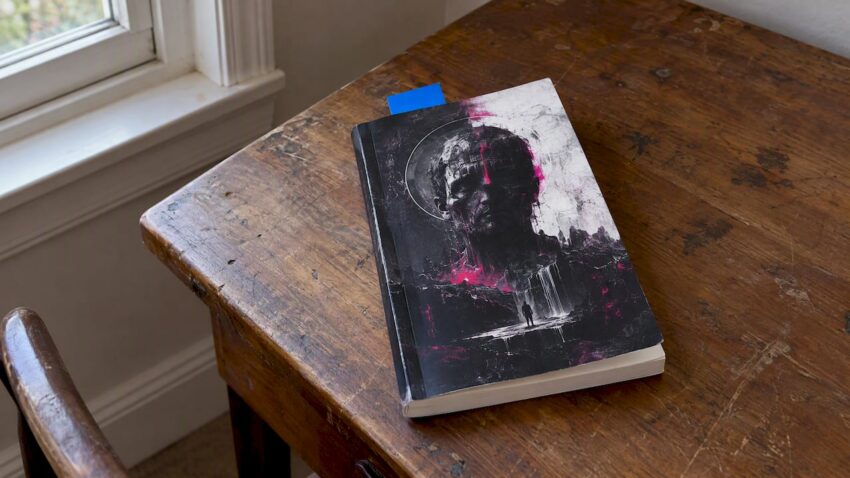
The best-known line from Stories of a Condemned Soul is Jon Jacob’s: “My story is meaningless if not for the man who brokered my soul.” It opens Nathaniel Connors’s Volume One and sets up the whole book: a grieving father, a salesman and a bargain made for revenge. Below you will find that line in context, a reading of what it does, and, so you do not mix up your sources, how it differs from the other famous “condemned” writing, Victor Hugo’s.
TL;DR
- The signature quote, “My story is meaningless if not for the man who brokered my soul,” belongs to Jon Jacob, the narrator of Stories of a Condemned Soul by Nathaniel Connors, not to Victor Hugo or any film or game.
- Victor Hugo’s The Last Day of a Condemned Man (1829) is a different work: a death-row journal, not a supernatural soul-bargain. Searches for “condemned” quotes often blend the two.
- “Condemned soul” works on two levels: a literal damnation and a metaphor for being trapped by guilt or grief. Good captions and quotes keep that distinction.
- Always credit the speaker beside the quote. Here, Jon Jacob is the speaker, in a story told in his own voice.
- If you want the line in its full setting, the book is free to read with Kindle Unlimited.
Table of Contents
- The line that defines the book
- What “condemned soul” means, in the book and in general
- Condemned soul quotes by emotional function
- Victor Hugo is a different condemned man
- Quotes about condemnation and mercy
- Captions for a broken or condemned soul
- Our perspective: why a soul-bargain story has to start with grief
- Read the line where it lives
- Using these quotes well
- FAQ
- Sources
The line that defines the book
“My story is meaningless if not for the man who brokered my soul.”
Jon Jacob, The Salesman (Stories of a Condemned Soul, Volume One)
The book’s own page presents this as the opening epigraph, with the blurb right under it. In that blurb, Jon Jacob sits alone in a dim pub with a bottle of whiskey, pulled under by grief for his daughter. A smooth, unsettling stranger then offers him something unthinkable: revenge.
The sentence is built carefully, and it rewards a slow read.
- “My story.” The narrator claims authorship of his own life. He is telling us this as a confession, after the fact.
- “Is meaningless if not for.” He admits he has no story without the bargain. His grief alone would have been private and shapeless. The deal gave it a plot.
- “The man who brokered my soul.” The verb is commercial. A broker arranges a transaction between parties. Jon does not say the man took his soul or stole it. He says it was brokered, which implies a negotiation, terms and a signature. The condemnation is something he agreed to.
That last point matters for how you use the quote. Many “condemned soul” lines are about punishment handed down from outside. Jon’s line is about a choice that felt reasonable at the lowest point of his life.
What “condemned soul” means, in the book and in general
In ordinary usage, a condemned soul is one regarded as doomed to punishment, destruction or misery. Thesaurus entries for the phrase link “condemned” with being doomed or cursed. That is the literal, religious or supernatural sense, and it is the one a bargain with a salesman invites.
In psychological horror the phrase also works as a metaphor. A person can feel condemned by guilt, by despair or by their own verdict on themselves, with no devil involved. That is a literary usage, not a single universal definition, and a good writer lets both meanings hum at once.
That double reading is the engine of Connors’s book. The supernatural deal is real inside the story, yet the pressure that drives Jon toward it is human: a dead child, a bottle, and a wish for someone to pay. If you like the idea of horror that reads as moral drama, our piece on psychological horror quotes collects lines in the same register.
Condemned soul quotes by emotional function
A quote article is more useful when each line has a job. Instead of a pile of aesthetic captions, here is how the Connors line, and the lines around it in this tradition, work by feeling.
| Feeling | What the line does | Where to look |
|---|---|---|
| Guilt and self-authorship | Admits the speaker chose the bargain | Jon Jacob’s epigraph in Stories of a Condemned Soul |
| Vengeance as a trap | Shows revenge arriving as an offer, not an impulse | The salesman’s pitch in Volume One’s blurb |
| Mental imprisonment | Makes the mind itself the cell | Hugo’s opening chapter |
| Desperate hope | Shrinks the future to minutes | Hugo’s final chapter |
| Mercy over judgment | Argues condemnation should be tempered | Anthologies of quotations on “condemned” |
For readers who came for darker, colder lines about payback, the dark revenge quotes collection is the closer match.
Victor Hugo is a different condemned man
Part of what Google returns for this search is Victor Hugo, and the confusion is understandable. Both works put a condemned person at the center. They are otherwise very different books, and the attribution should sit directly beside any quote you use.
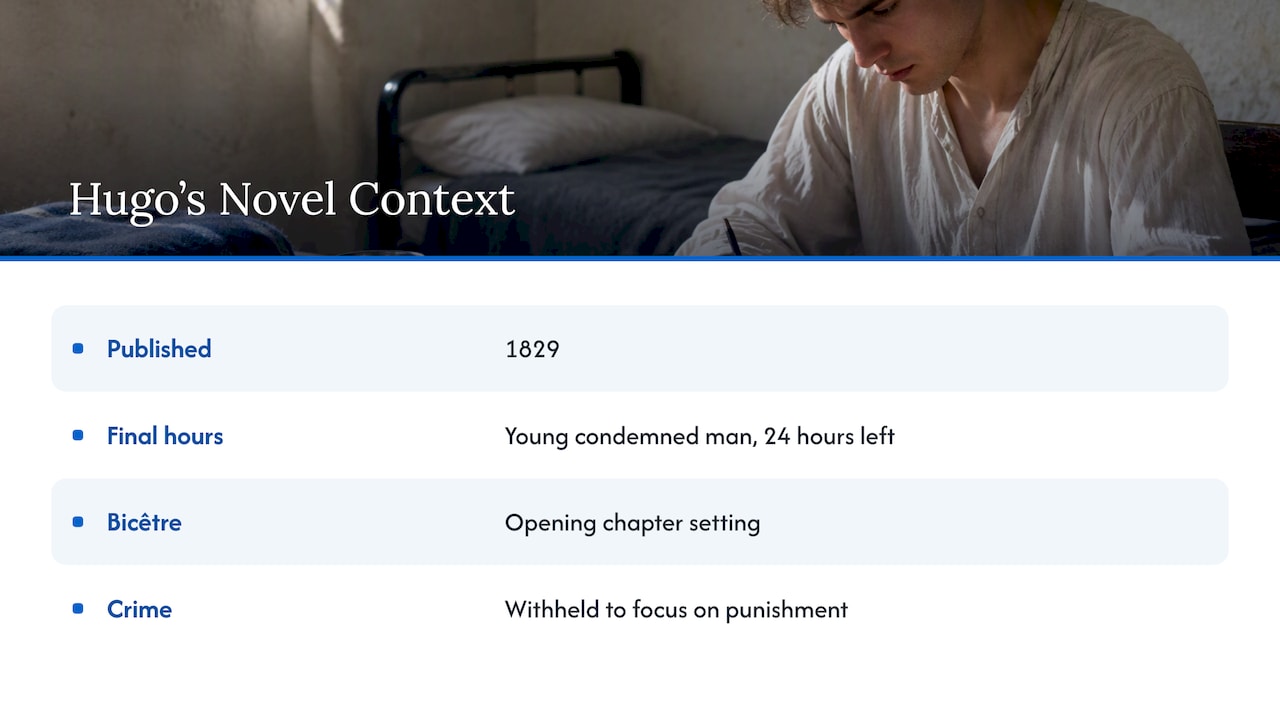
Hugo’s Le Dernier Jour d’un condamné was published in 1829. The Bibliothèque nationale de France describes it as the journal of a young condemned man who has only twenty-four hours left to live. Its recurring cry, “Condamné à mort !” (“Condemned to death!”), is the line most associated with the book in French.
The BnF’s reading is that Hugo withholds the prisoner’s crime, so the reader’s attention stays on the human experience of punishment. Its anthology notes that the opening chapter drops us into the Bicêtre prison, the first of the “three steps” left to the prisoner. In the English translations circulating online, the narrator is a man whose body is in irons while his soul is fettered by a single relentless idea.
Hugo is also making a political argument against the death penalty. A frequently shared passage reads, in one English translation, “Vengeance comes from the individual and punishment from God.” Translations vary from edition to edition, so if you plan to quote Hugo in print, check the wording against the original French text, which is freely available on Project Gutenberg.
Side by side
| Hugo, The Last Day of a Condemned Man | Connors, Stories of a Condemned Soul | |
|---|---|---|
| Published | 1829 | Volume One, listed on the author’s site |
| Form | First-person journal of a man facing execution | First-person story of a man who sold his soul |
| What condemns | A legal sentence | A bargain made in grief |
| Supernatural? | No | Yes |
| Core question | What does state punishment do to a human mind? | What does revenge cost the person who buys it? |
| Role of guilt | Deliberately withheld | Central to the narrator |
The useful overlap is psychological. Hugo turns a legal sentence into an interior experience in which the mind becomes a prison. Read the Jon Jacob line through that lens and “brokered my soul” stops being only a devil’s-bargain flourish. It becomes a statement about a man who has been living inside his own verdict ever since.
Quotes about condemnation and mercy
Not every reader searching “condemned” wants dread. Some want the opposite: lines that push back on harsh judgment. Quotation anthologies on the theme, such as this compilation of “condemned” quotes, include writers like Grace Aguilar, who argues that condemnation should be checked by sympathy, and John Stuart Mill, who writes about the seriousness of wrongdoing. Because that site is a secondary compilation, verify any wording against the original book before you print a long excerpt.
These lines sit well beside horror, because redemption stories need something to be redeemed from. If that is the angle you are after, we wrote about how ritual makes atonement feel earned in horror, and about revenge in literature from the classics to modern reads.
Captions for a broken or condemned soul
One question people ask is what makes a good caption for a story about a broken soul. A few rules we follow:
- Keep it short and specific. “Broken” is a mood. A bottle in a dim pub is an image.
- Name the cause, not just the damage. Grief, a bargain, a debt. Lines with a cause feel like fiction rather than a poster.
- Do not romanticize suffering. Condemnation reads as tragic when the speaker takes responsibility, and as cheap when pain is treated as glamour.
- Credit the speaker. If the line is Jon Jacob’s, say so. If it is yours, own it.
Themes that Hugo’s chapters support, according to the BnF material, include mental captivity, time running out, guilt and desperate hope. His closing chapter reduces hope to begging for a few more minutes. BnF’s note on that final chapter says it has nothing heroic about it, and that restraint is a good model for any caption: let the plainness do the work.
Our perspective: why a soul-bargain story has to start with grief
When we talk about this book, we start with the epigraph, because it tells you how to read everything after it. A salesman who offers revenge is a familiar figure. What makes the story land is that Jon is not a villain at the start. He is a father who cannot face a memory, so he chooses numbness, and numbness leaves him open to the one offer that feels like action.

We care about guilt that is earned rather than announced. The quote works because it does not say “I regret my choice.” It says the story would not exist without the man who arranged it. Regret is implied, and so is a kind of dependence, which is far more unsettling. That is the register we aim for across the work: the monster outside is real, but the monster inside is what stays with you. If you write fiction yourself, our notes on making guilt-ridden characters believable go further into how.
One caution for anyone quoting horror: a line gains power from its context. Pulled out alone, “My story is meaningless” can sound like despair. In the book it is the voice of a man who knows exactly what he traded away.
— Nathaniel
Read the line where it lives
If the quote caught you, the story behind it is Stories of a Condemned Soul (Volume One). Nathaniel Connors’s books are available in ebook and paperback on Amazon and are free to read for Kindle Unlimited subscribers. If you want to see what else is on the shelf, the books page lists The Nether series and the EA200 series, and Evolution A200: A Bubonic Apocalypse is the place to go if you prefer dystopian horror to a supernatural bargain.
Reading with a group? The book club questions for Stories of a Condemned Soul are built around exactly this opening line and the choices that follow it.
Using these quotes well
A few practical notes if you plan to share or cite what you have read here.
- Put the attribution on the same line. “Jon Jacob, Stories of a Condemned Soul” takes seconds to add and prevents the Hugo mix-up.
- Use the exact wording. The Connors line is short enough to copy cleanly from the book’s page.
- Keep excerpts brief. One or two lines with credit is a courtesy to any author. Longer passages belong in the book.
- Check translations. Hugo’s text was written in French. English phrasing differs between editions, so cite the translator when you quote it.
- Say which meaning you intend. Literal damnation and psychological self-condemnation are different claims. A caption can hint at both, but an essay should say which one it is making.
FAQ
Who said “My story is meaningless if not for the man who brokered my soul”?
It is spoken by Jon Jacob, the narrator of The Salesman, the story at the heart of Stories of a Condemned Soul (Volume One) by Nathaniel Connors. It is printed as the epigraph on the book’s page. It is not a Victor Hugo line or a film quote.
What does “condemned soul” mean?
Literally, it describes a soul regarded as doomed to punishment, destruction or misery. In literature it is also used figuratively for someone trapped by guilt, despair or self-judgment. Which sense applies depends on the story, and the best fiction often keeps both in play.
What is Victor Hugo’s most famous quote about a condemned man?
The line most tied to his 1829 book is the cry “Condamné à mort !”, or “Condemned to death!”, which the Bibliothèque nationale de France highlights from chapter two. Many English-language quote pages also circulate translated passages about mercy and vengeance, so verify wording before you publish.
What are some good quotes about condemnation?
The strongest ones challenge hasty judgment rather than glorify punishment, such as writers who argue that sympathy should check condemnation. For the darker side, look to horror and revenge fiction. Our collections of psychological horror quotes and dark revenge quotes are good places to start.
Sources
- « Condamné à mort ! », BnF Essentiels
- Le Dernier Jour d’un condamné dans le texte, BnF Essentiels
- Quatre heures, BnF Gallica
- Le Dernier Jour d’un Condamné, Project Gutenberg
- The Last Day of a Condemned Man quotes, Goodreads
- Condemned soul, OneLook Thesaurus
- Condemned: Quotes & Texts, Kwize