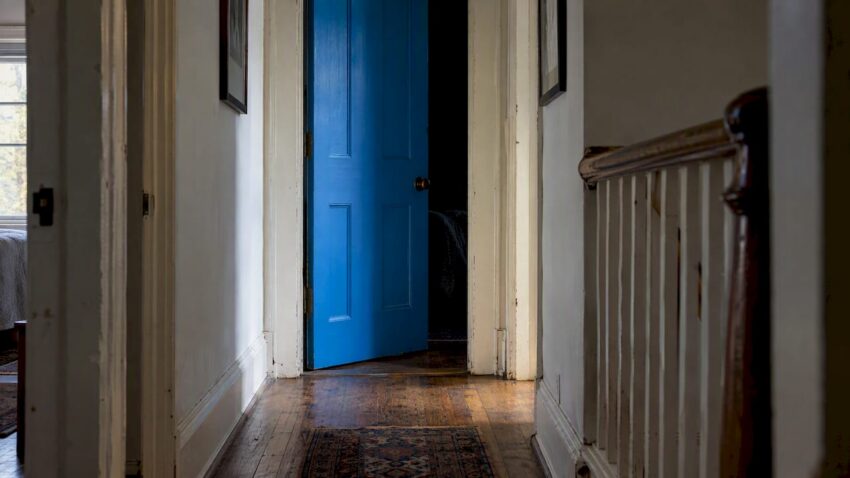
Dread is the reader’s certainty that something terrible is coming, held for a long time before it arrives. To write it, you plant a small sign of wrongness early, withhold the full shape of the threat, make the setting slightly off, and let a believable character feel it too. Then you wait longer than feels comfortable. This guide walks through each of those moves with examples you can try on your own pages today.
TL;DR
- Dread is anticipation, not shock. The reader must be sure something is coming and unable to stop it.
- Hint at the threat in the first pages, then delay the confrontation.
- Use small, almost-normal wrong details instead of explanations. Let the reader’s imagination supply the worst.
- Give your characters real emotions and give the supernatural real costs, so the threat feels credible.
- Escalate with structure (countdowns, clocks, rising consequences) and pay off the promise you made.
Table of Contents
- What dread is, and how it differs from fear and surprise
- Open with a pinprick of foreboding
- Foreshadow and withhold
- Make the setting almost normal, then not quite
- Control the pace
- Write characters who feel it
- Give the supernatural rules and a price
- Escalate and land the ending
- A 20-minute dread exercise
- Perspective
- See dread at work in Nathaniel Connors’s books
- FAQ
- Sources
What dread is, and how it differs from fear and surprise
Fear is a reaction to something present. Surprise is a jolt that ends as fast as it starts. Dread sits between them and lasts longer than either: you know the door will open, you just don’t know when, or what will be behind it. One craft guide puts it as the reader’s certainty that something is coming, held long before it arrives.
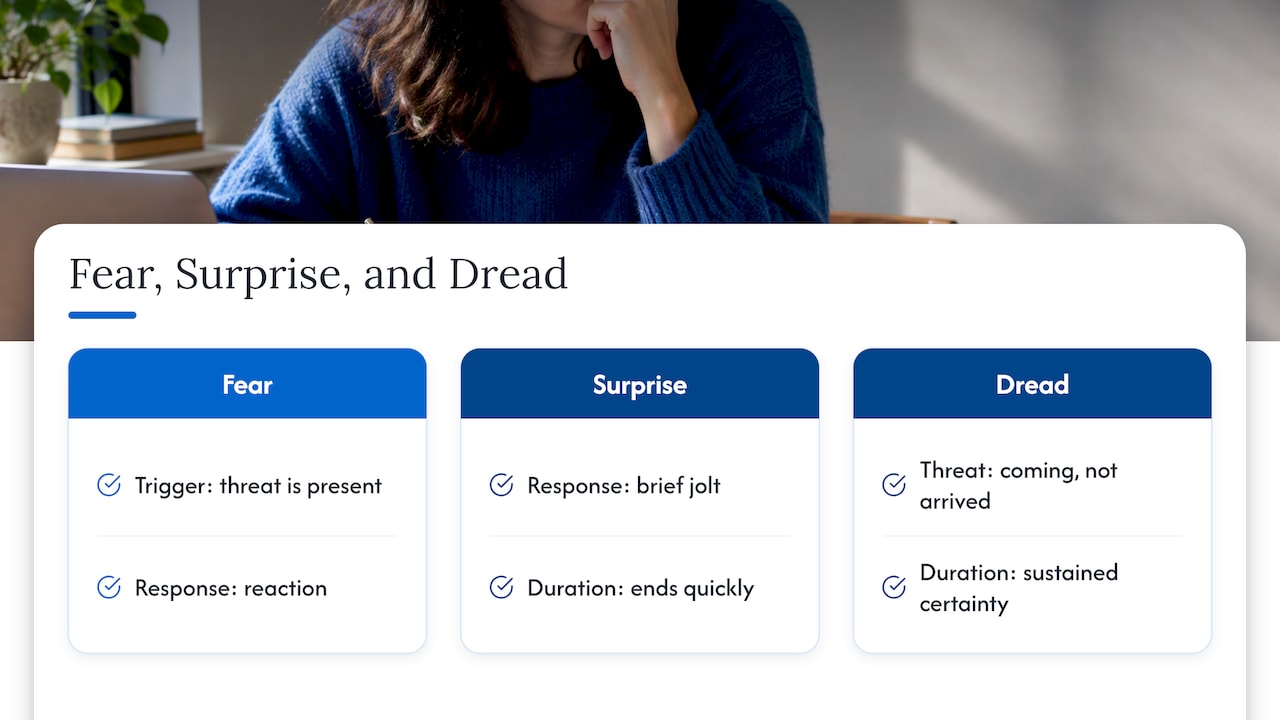
The distinction is old. An academic survey of cinematic fear notes that in Ann Radcliffe’s 1826 account, terror (the anticipatory state we are calling dread) expands the soul and awakens the faculties, while horror is the revulsion that follows the encounter. The same paper cites philosopher Noel Carroll’s observation that dread narratives often lack a concrete object of fear and instead push the audience to entertain unknown, perhaps unavowable threats.
For a writer, that has a practical consequence. Every time you show the monster clearly, you convert dread into horror, and horror is a shorter emotion. If you want to keep the reader in the tense, anticipatory state, you have to protect the unknown. It is also why dread is not the same as mystery. In horror, the goal is not to let the reader solve a puzzle ahead of the protagonist but to sustain tension while the character faces something they cannot yet name.
If you want a longer look at how this plays against blood and shock, our piece on atmosphere versus gore covers what scares readers when nothing graphic is on the page.
Open with a pinprick of foreboding
Dread cannot start in chapter ten. Writer’s Digest advises introducing the horror early, or at least hinting at it with a pinprick of foreboding, then delaying the ultimate confrontation with details such as hesitant footsteps, wind, shadows and a world that feels slightly off-kilter.
Here is what that looks like in practice. Compare two openings:
- Marta moved into the old house on Tuesday. It was big and quiet.
- Marta moved into the old house on Tuesday. By Thursday she had stopped asking why every clock in it ran four minutes slow.
The second tells you nothing about the threat, yet you already expect one. A character is noticing something and trying to rationalize it. That is the whole mechanism.
A few rules for the first page:
- Name the core fear for yourself. Know whether the book is about being watched, being replaced, being forgotten or being punished. You do not have to say it, but every detail should point at it.
- Give the reader someone to worry about. Opening guides recommend a relatable character in the first paragraph and a threat signaled through symptoms instead of an explicit reveal, as in this step-by-step opening guide.
- Raise a question in the first lines. An active scene with a distinct voice makes the reader lean in before they know why.
Foreshadow and withhold
Foreshadowing builds dread by using subtle, off-kilter details or objects that suggest something is fundamentally wrong without stating the threat. That is the view of a professional mystery writers’ chapter in its piece on tension in psychological suspense. The same article explains that gradual reveals give readers time to absorb each unsettling fact, which keeps them engaged and anxious as they connect the pieces.
Withholding does the other half of the work. When the protagonist and the reader are both unsure of the nature or the true scale of the threat, the mind fills the gap. The Kennedy Center’s teaching resource on the skeleton of a scary story lists fear of the unknown, dark and isolated settings, deteriorating settings, ominous repetition and a twist showing that things were not what they seemed as the main engines of suspense.
A useful method is the three-step escalation of a single sign:
- Dismissible. A dog refuses to enter one room. Anyone could explain it.
- Persistent. The dog now waits outside that door every night, facing it.
- Demanding. One night the dog is gone, and the door is open an inch.
The progression follows the idea that dread should build through a small, dismissible disturbance that grows into a sign the character cannot ignore and that forces curiosity. Notice that at no point did you explain anything.
One caution on withholding: it only works if the reader trusts you will pay off. Ambiguity lets readers fill gaps with their own suspicions about the danger, but a reader who senses the author has nothing behind the curtain will stop worrying.
Make the setting almost normal, then not quite
Atmosphere is where most dread lives on the sentence level. Specific, concrete rendering of a place, claustrophobic or isolating spaces, and sensory description that makes the mundane feel off are the building blocks listed in this breakdown of what makes a story scary. The advice to describe your setting as if it were alive is a good prompt: ask what the room wants, what it hides, what it has been waiting for.
The most efficient tool is the small disturbance. Writer’s Digest notes that minor disruptions, like objects slightly out of place, work as persistent interruptions that heighten anxiety once an established pattern is broken. That means you first have to establish the pattern. Show the reader your character’s morning routine, the order of the kitchen, the sound of the street. Then move one cup.
Try these kinds of wrongness:
- Time: clocks, schedules or seasons that don’t line up.
- Sound: a noise that stops when the character stops.
- Repetition: the same stranger, phrase or number appearing in unrelated places.
- Decay: a building that is a little worse each time the character returns.
- Absence: the thing that should be there and isn’t, such as birdsong or a neighbor’s light.
We go deeper on sentence-level techniques in our guide’s section on line-level tactics that produce unease.
Control the pace
Dread needs an unhurried, deliberate buildup, with information parceled out slowly, as the mystery writers’ article on psychological suspense describes. Most writers rush because silence on the page feels like nothing is happening. In dread, that silence is where the happening is.
Practical pacing choices:
- Lengthen the approach. If a character walks toward a basement, give the walk three beats before the door: a sound, a thought, a hesitation.
- Shorten the sentences as the moment nears. Rhythm tells the body what to feel. Neil Lerner, a professor at Davidson College, says that in film music accelerating rhythms and rising volume can signal to the brain that something is hunting, triggering an instinctive fight-or-flight response. Prose can borrow the same trick with sentence length and white space.
- Cut passive filler. One horror editor argues that passive construction dilutes dread and suggests hunting for stray “was” and “is” constructions in your self-edit.
- Break the slow rhythm once, late. A long stretch of quiet followed by a single disruption resets the reader’s nerves and makes the next quiet worse.
Write characters who feel it
Readers borrow dread from characters. If your protagonist shrugs at a thing that should frighten them, so will the reader. Writer’s Digest makes the point that realistic emotional reactions to unreal events help the unreal feel real. So let people be afraid in specific, human ways: they over-explain, make bad jokes, check the lock twice, avoid the topic with their spouse.
Stakes matter as much as reactions. The reader should care about the character as a whole person rather than a future victim, which makes the coming danger feel personal. Give them a job they are bad at, a debt, a sister they haven’t called. Then threaten those things.
The same craft source frames horror as depending on believable vulnerability: readers fear the threat, its agenda, and the characters’ limited control over their fate. Limited control is the key phrase. A competent character with a plan reduces dread. A competent character whose plan quietly fails increases it.
Our pieces on character-driven horror and on building a believable interior life and emotional stakes look at this in more depth.
Give the supernatural rules and a price
A threat with no logic feels arbitrary, and arbitrary things are hard to dread. If your ghost, curse or creature can do anything, the reader cannot anticipate anything. Craft discussions of fantasy and supernatural elements recommend that abilities carry consequences, ramifications and limitations, and that a personal cost forces characters to weigh what they can do against what they must live with afterward.
For a supernatural thriller, one guide suggests revealing the rules gradually through the protagonist’s investigation, keeping them consistent, and making each use or encounter cost something real and progressively harder to recover from. In practice:
- Decide what the threat cannot do. A ghost that cannot cross running water gives your characters a plan, and a reason to leave the water.
- Decide what each encounter takes: memory, sleep, a relationship, a year of life.
- Let the reader learn the rules before the character fully admits them. That gap is dread.
If you are working on this particular subgenre, our guide on building a supernatural thriller without gore goes further.
Escalate and land the ending
Dread needs a trajectory. Structural cues like countdown headings, which measure distance, time or resources, work as a promise to the reader that a climax is approaching. A chapter titled “Eleven days” tells the reader that a clock exists, and every scene after it is read against that clock.
Time pressure also helps. Literal ticking clocks or implied limits force urgent action and raise suspense. The trap is making the clock merely decorative. Each time it ticks, something should be lost.
A few habits for the ending:
- Raise cost, not volume. Make the third incident worse because of what it takes, not because it is louder.
- Pay off the first sign. Whatever you planted in the opening pinprick should come back, changed.
- Reveal late and partially. When the threat finally appears, show enough to satisfy and keep enough to haunt. The reader should close the book still imagining the part you did not describe.
- Use the quiet after. A short, flat aftermath scene often disturbs more than the climax.
Filmmakers face the same problem in a tighter format; our look at horror short film structure shows how one fear can carry three acts.
A 20-minute dread exercise
Set a timer and write one scene of about 400 words using this recipe:
- Pick an ordinary place: a laundromat, a hallway, a parked car.
- Write two minutes of routine so the pattern is clear.
- Add one wrong detail, and have your character explain it away.
- Add a second, related detail, and have the character stop explaining.
- End before anything happens.
Then read it aloud and mark every place where you named the threat. Cut those lines. For more drills like this, see our timeboxed writing exercises for psychological horror, and for the full toolkit, our craft guide to psychological horror.
It also helps to study how dread works in finished books. Our list of slow burn horror books is a good place to start reading like a writer.
Perspective
When I build a story, I begin with the question of what my character is most afraid to admit, and then I let the world slowly agree with them. That is where dread comes from for me: the monster outside is rarely as frightening as the one that guilt has been feeding inside.
In our books, revenge, guilt and redemption are not themes added on top of the plot. They are the engine. A reader who senses that a character has earned what is coming, and that the character knows it, will wait through a lot of quiet pages. That is why we favor character development and intricate plots over shock. We want the reader to put the book down and keep thinking.
If you write dark supernatural fiction, trust the slow approach. Give the reader a reason to care, a rule to fear and a price to watch being paid. Then resist the urge to show the whole face too soon.
Nathaniel
See dread at work in Nathaniel Connors’s books
If you would rather read dread than diagram it, start with The Nether, a dystopian horror novel built on guilt and consequence, or Evolution A200: A Bubonic Apocalypse, where the threat is known long before it arrives. Both are available on Amazon in ebook and paperback, and free to read for Kindle Unlimited subscribers.
You can browse every title on the books page, or read about how Kindle Unlimited works for our readers.
FAQ
How do you start writing a scary story with dread?
Open with an ordinary scene and one small wrong detail, and give the reader a person to care about. Hint at the threat in the first page without explaining it. Then delay any confrontation so the anticipation has room to grow.
What is the difference between dread and suspense?
Suspense is the tension of waiting for an outcome, often a specific one. Dread is the sense that something terrible is coming and cannot be stopped, often without a defined object. Dread usually leans on the unknown, while suspense can come from a known danger with an uncertain result.
Can you write dread without a monster or gore?
Yes. Dread depends on foreshadowing, withheld information, off-kilter settings and believable characters, not on showing violence. Small disturbances, like objects slightly out of place, can unsettle readers more than explicit scenes because the reader’s imagination supplies the worst.
How long should dread build before the payoff?
There is no fixed length, but the buildup should feel slightly longer than comfortable and should escalate throughout. Use countdowns, time limits and rising costs so the reader feels progress, and make sure each stage changes something for the character.
What should I do when I dread writing itself?
Shrink the task. Set a short timer, write one rough scene using a recipe like the exercise above, and edit nothing until it ends. Many writers find that lowering the stakes of a single session makes the blank page less threatening.
Sources
- How to write horror (Kanonara)
- Defining Cinematic Fear: Horror, Shock, Dread and Terror
- Writing Nail-Biters: How to Write Suspense in Horror (Dabble)
- 7 Tricks for Writing Terrifying Horror Fiction and Monster Stories (Writer’s Digest)
- How to Start a Horror Story: 5 Simple Steps + 4 Examples
- Dialing Up the Tension in Psychological Suspense (MWA Midwest)
- The Skeleton of a Scary Story (Kennedy Center)
- How to Write Scary Ghost Stories (James Colton)
- What Makes a Story Scary (Cornett Fiction)
- Dark Corners: 4 Strategies for Developing Horror Settings (Writer’s Digest)
- Your Brain on Music: Chills and Thrills (Kennedy Center)
- Hurts So Good: How to Make Your Horror More Interesting (Writer’s Digest)
- How to Write Scary Novels Infused With Fun and Humor (Writer’s Digest)
- Writing Excuses Episode 15: Costs and Ramifications of Magic
- How to Write Supernatural Thrillers (iWrity)