
Grief horror is fiction in which loss is the engine of the fear: the haunting, the creature or the bargain exists because someone cannot let go. The best way to choose one is by the kind of grief you want to read about: denial, rage, bargaining, depression or acceptance. Below are ten books sorted that way, with no major spoilers, plus a few notes on how to read them and where to find more dark fiction with psychological weight.
TL;DR
- Grief horror works because the monster is rooted in a real emotion. The scares land harder when the reader recognizes the loss underneath.
- Pick by emotional register. Reactor’s five-stage list pairs One Yellow Eye, How to Sell a Haunted House, The Fisherman, Crossroads and The Haar with denial, anger, bargaining, depression and acceptance.
- Short and bleak: Cold Snap. Epic and cosmic: The Fisherman. Dystopian: The Collector. Classic: Pet Sematary.
- If guilt, revenge and redemption are the themes you want, Nathaniel Connors’s dark supernatural fiction is free to read with Kindle Unlimited.
Table of Contents
- Why grief makes such good horror
- How to choose: match the book to your mood
- Five novels, one for each stage
- Five more grief horror books worth your time
- What the best grief horror books have in common
- Reading grief horror well
- Where Nathaniel Connors fits in
- Our view on grief and horror
- FAQ
- Sources
Why grief makes such good horror
A ghost story needs a reason for the ghost to stay. Grief supplies one. The dead person is still loved, still missed, and the living will do almost anything to close the gap. Horror takes that impulse and asks what it would cost if the world said yes.
That is why these books tend to be quieter than slashers and heavier than most thrillers. The threat is usually external, a burial ground, a creek, a horned figure in the snow, but the real tension is inside a person who is not okay. The fear comes from watching someone make a choice you can understand, even as you can see where it leads.
If you want to know where this sits in the wider genre, our guide to psychological thriller versus horror explains how the two overlap. Grief horror usually borrows from both: the interior unraveling of a psychological thriller, and the open dread of the supernatural.
How to choose: match the book to your mood
The stages of grief are a popular model, not a strict sequence, and people rarely move through them in tidy order. But as a reading guide, they work well. Reactor built a list of horror novels for each of the five stages of grief, and it is a handy way to pick by temperament.
| Stage | Book | Horror flavor | Best if you want |
|---|---|---|---|
| Denial | One Yellow Eye | Post-epidemic, limbo | A numb, suspended dread |
| Anger | How to Sell a Haunted House | Campy, creepy haunting | Dark humor and family rage |
| Bargaining | The Fisherman | Lovecraftian | Slow, cosmic unease |
| Depression | Crossroads | Ghost story | A heavy, atmospheric read |
| Acceptance | The Haar | Sea creature, coastal gloom | A quieter, more hopeful ending |
The flavors above come from the same Reactor piece. The sections below add the books that sit outside that list.
Five novels, one for each stage
Denial: One Yellow Eye
According to Reactor, this novel is set after a zombie epidemic, and its heroine, Kesta, is stuck in a kind of limbo, watching her husband fight for his life. Denial is the right word for it. The world has ended in a loud, obvious way, yet the horror that matters is the refusal to accept what is happening in one small room. Read it when you want apocalypse without the action-movie noise.
Anger: How to Sell a Haunted House
Here the horror grows from Louise’s rage over the loss of her parents. Reactor describes the book as campy and creepy, which is a useful signal: grief does not always arrive as solemn sorrow. Sometimes it arrives as resentment at the siblings, the estate, the house full of belongings you now have to sort. If you like your horror with a sharp tongue, start here.
Bargaining: The Fisherman
John Langan’s 2016 novel follows two widowers. Abe lost his wife to cancer; Dan lost his wife and twin sons in a car crash. They find solace in fishing together until stories about Dutchman’s Creek pull them into something Lovecraftian. Reactor notes that the book shows how wishes made during the bargaining stage of grief would be a nightmare rather than a dream come true. It is long, patient and strange, and the structure lets the dread build over many pages. Choose it when you want grief on an enormous, cosmic scale.

Depression: Crossroads
Reactor places this ghost story under depression, as a novel about depression growing out of grief and loss. It suits readers who want atmosphere over plot twists: a mood that sits on the chest and refuses to lift. If you read for the feeling of a book more than its mechanics, this is the one.
Acceptance: The Haar
Muriel’s long-held grief and her eventual acceptance sit at the center of this book, with an amorphous sea creature drifting through the mist. Acceptance in horror is rarely comfortable, but this is the entry on the list for readers who want the darkness to resolve into something like peace.
Five more grief horror books worth your time
Pet Sematary by Stephen King
This is the book most readers name first, and the top-ranking pages for this topic agree. A father buries his young son in a place that corrupts love into something monstrous. Parents often say it reads differently before and after having children. It is the clearest example of the genre’s central question: would you do it, knowing what might come back?
Cold Snap by Amanda Jacobs
In this novella, reviewed by Library Journal, Christine takes her son to a remote cabin in the snowy Pennsylvania Wilds for Christmas after her husband falls fatally from the roof while hanging lights. A horned figure begins calling to her in her dead husband’s voice. The review describes a portrait of grief and guilt. At novella length, it is a good pick for an evening or two of reading, and a holiday setting adds a bleak irony.
The Grief Hole by Kaaron Warren
Theresa can see people’s clinging ghosts, each hinting at how its owner will die. After an intervention goes wrong, she retreats to an uncle’s seaside home and finds more tragedy among relatives still reeling from the suicide of her artist cousin, Amber. Horror.org’s review calls the book’s depictions of grief, depression and suicide intense and poignant, with character reveals that stay tender rather than exploitative. Because the subject matter includes suicide, it is a book to approach when you are ready for it.
Withered by AGA Wilmot
This queer paranormal psychological horror novel follows eighteen-year-old Ellis, who moves with their mother to the small town of Black Stone after their father’s death and Ellis’s survival of a life-threatening eating disorder. The town sits near areas with unusually high death rates, and the new house becomes the battleground of a decades-long spectral war. It pairs grief with mental health in a way that suits readers who want a younger protagonist and a more intimate scale.
The Collector by Laura Kat Young
For dystopian readers, this 2023 novel imagines a society where grief is forbidden and purged from the mind. Lieutenant Dev Singh records the memories of people with incurable depression before the Bureau erases them. When the Bureau learns he has been secretly journaling his own memories, and that the depression is in him too, he is sent to a sanatorium. It is a strong example of what happens when grief horror leaves the haunted house and takes on the state.
If that kind of book appeals, our roundup of dystopian horror novels and our piece on dystopian ethics books go deeper on stories where society itself becomes the threat.
What the best grief horror books have in common
Across these ten, a few patterns hold.
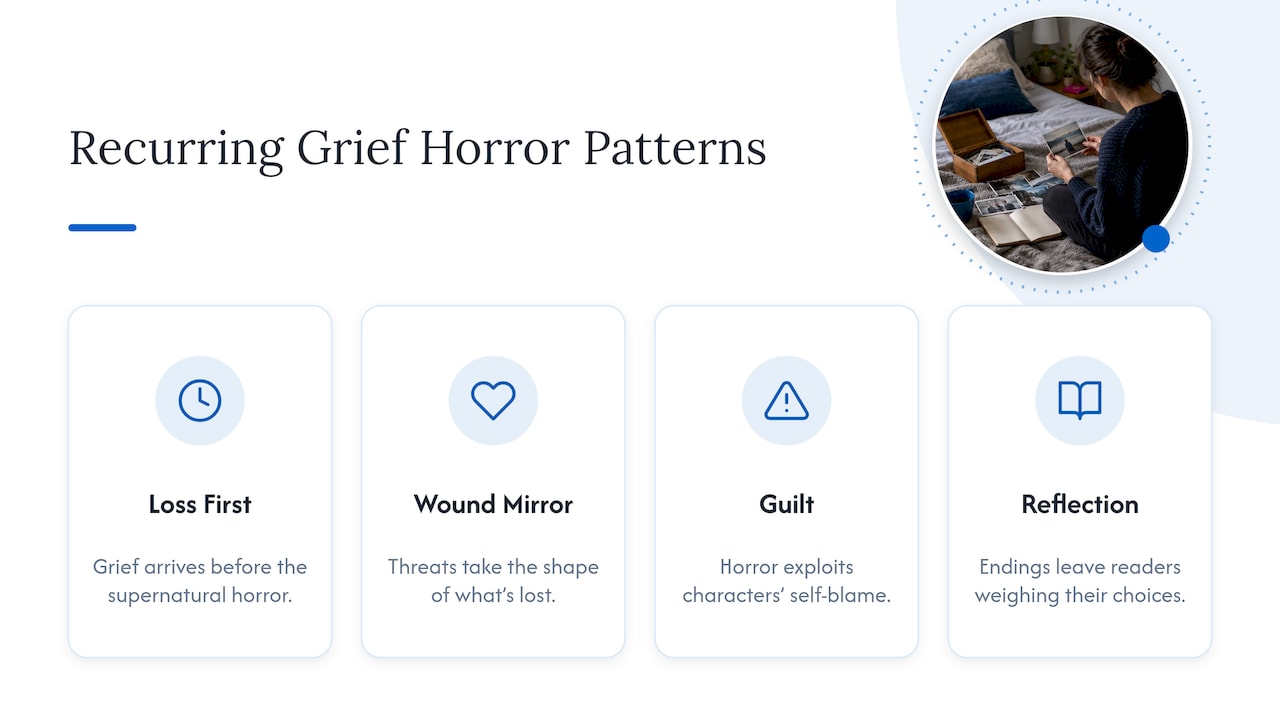
The loss comes first. The reader meets the grief before the horror arrives, so the supernatural element feels earned instead of tacked on.
The monster mirrors the wound. A creek that grants wishes for the bereaved, a voice that mimics a dead husband, a state that bans sadness: each threat is shaped like the thing the character cannot give up.
Guilt travels with grief. Many of these characters blame themselves, and the horror exploits it. Cold Snap explicitly pairs the two, and the same pairing runs through much of the genre.
The ending asks something of you. The books that linger are the ones that leave the reader weighing what they would have done. That lingering is the point.
For a lighter touch on the same territory, fiction about Halloween night horror shows how fear stories can sit alongside darker emotional material. And if you want to understand the technique, our craft guide to psychological horror covers how writers build dread through interior life and limited perspective.
Reading grief horror well
These books are built to disturb, and a few suggestions make them easier to enjoy.
- Check the subject matter first. Several of the titles above deal with suicide, the death of a child or serious illness. Read the description before you start, especially if you have a recent loss of your own.
- Match length to your energy. A novella like Cold Snap asks for a weekend. The Fisherman asks for a stretch of weeks.
- Pace yourself. Heavy books are easier in small doses, with something lighter between them.
- Talk about it. Reading groups and online communities are full of people who love this subgenre and will gladly compare notes.
If grief is weighing on you in daily life, rather than on the page, a doctor or a licensed grief counselor is the person to see. Fiction can keep you company, but it is not a substitute.
Where Nathaniel Connors fits in
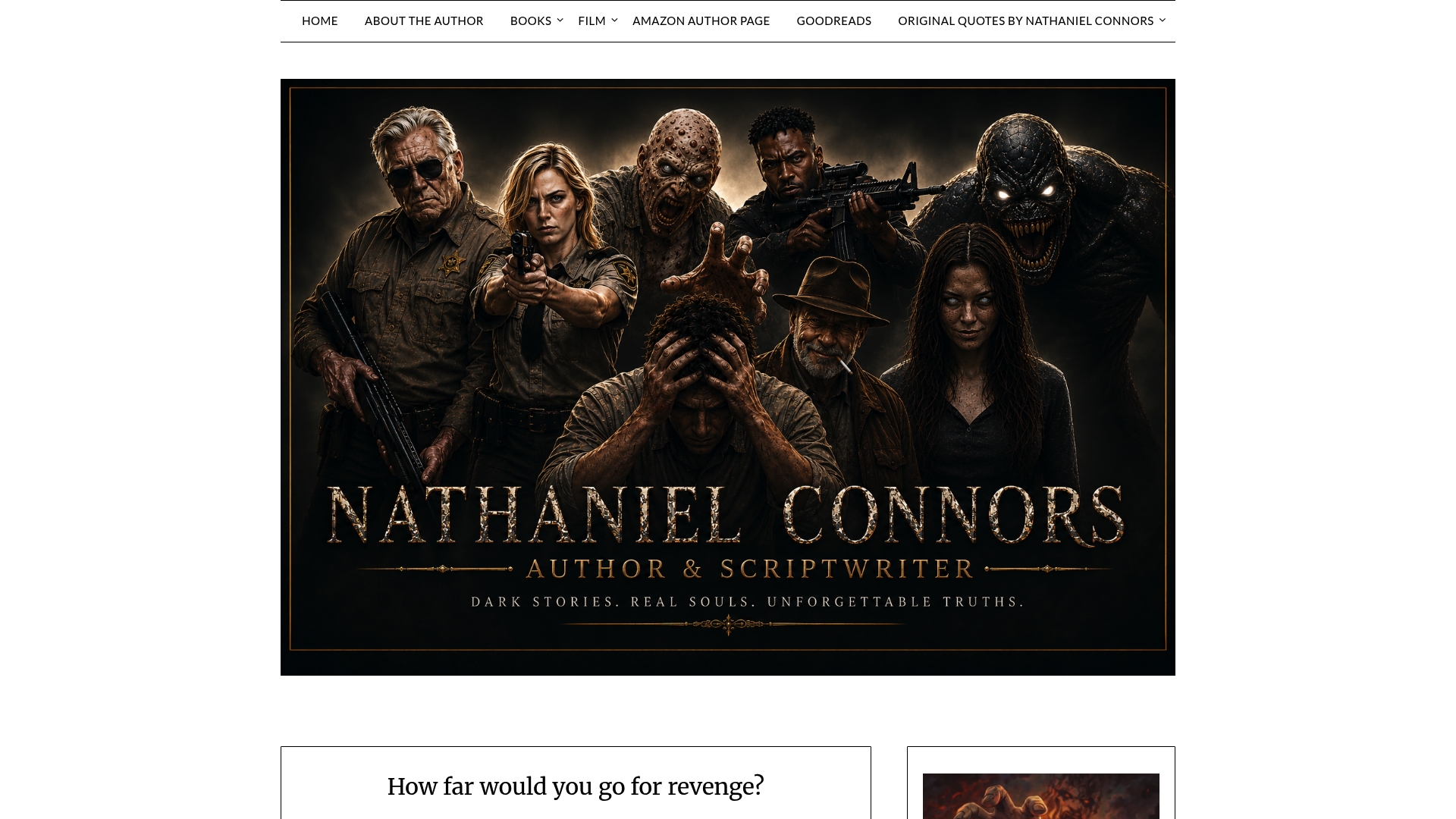
Nathaniel Connors writes dark supernatural fiction built on revenge, guilt and redemption, with stories that explore the psychological monsters inside us. His books include The Nether, Stories of a Condemned Soul and Evolution A200: A Bubonic Apocalypse. Readers who come to grief horror for the emotional depth, the guilt that will not lift and the sense of a person haunted from within, will find the same preoccupations here.
The books are available on Kindle Unlimited, so subscribers can read them at no added cost. If you want to see where to begin, The Nether Series and the EA200 Series are collected on one page, and The Nether is a natural first stop for readers who like their dread psychological.
For a wider view of the territory, the best dark supernatural books is a good next read, and slow burn non-supernatural horror on Kindle Unlimited covers books where the monster is entirely human.
Our view on grief and horror
Horror and grief share a root: both are about what we cannot control. We think the most frightening stories are the ones where the monster is a mirror, where the thing that stalks a character is the guilt they have been carrying for years.
That is the thread through our work. Revenge, guilt and redemption are not plot devices to us. They are the way a person tries to make sense of a loss, and horror is the genre honest enough to show what that effort can cost.
We write for readers who finish a book and keep thinking about it days later. Rich characters and intricate plots matter because dread only works when you care who it is happening to. A reader who has lost someone does not need to be told that darkness is real. They need a story that takes it seriously.
That is why we want our books to be easy to pick up, and why they are free to read with Kindle Unlimited. If a story speaks to you, we would like you to be able to follow it.
Nathaniel
FAQ
What is grief horror?
Grief horror is horror fiction where mourning, loss or guilt drives the story. The supernatural or monstrous element usually grows out of a character’s refusal or inability to accept a death. Pet Sematary and The Fisherman are two well-known examples.
Which grief horror book should I read first?
Start with the mood you want. Pet Sematary is the classic and the most widely recommended. Cold Snap is short and easy to finish in a weekend. The Fisherman suits readers who like slow, atmospheric, Lovecraftian dread.
Are there grief horror books with a dystopian setting?
Yes. The Collector by Laura Kat Young imagines a society that forbids grief and erases the minds of those who suffer from depression. For more in this vein, see our list of short dystopian novels for one-sitting dread.
Can I read grief horror on Kindle Unlimited?
Availability changes over time, so check each title’s Amazon page for current Kindle Unlimited status. Nathaniel Connors’s books, including The Nether and Evolution A200: A Bubonic Apocalypse, are available to Kindle Unlimited subscribers.
Is grief horror too dark if I am grieving?
It depends on you and the book. Some readers find that these stories give shape to feelings that are hard to name; others prefer to wait. Check content notes before you start, and if your grief feels overwhelming, talk to a doctor or a licensed grief counselor.
Sources
- Horror Novels for Each of the Five Stages of Grief, Reactor
- Cold Snap, Library Journal
- Notable Works Review: The Grief Hole by Kaaron Warren, Horror.org