
The best virus outbreak thrillers are not really about the virus. They use a spreading disease to strip a society down and see who people become when the rules stop working. If you want a ticking clock, you start with the science-driven classics. If you want something that stays with you, look for the books where guilt, fear and survival do as much damage as the pathogen. That second kind is what we write: the Evolution A200 novels, which start with a bubonic plague apocalypse, are built around the psychological monsters that an outbreak lets loose.
This guide sorts pandemic thrillers by what they give you, names the titles worth your time, and shows how to choose between a lab-and-hazmat read and a character-driven dystopian one.
TL;DR
- Outbreak thrillers split into three camps: science and procedure, society after collapse, and psychological horror. Knowing which you want saves you a bad purchase.
- The established names are The Andromeda Strain, The Stand, Outbreak, Oryx and Crake, Station Eleven and The End of October.
- A pandemic works as a backdrop because the stakes are total, the unknown is frightening and the clock never stops.
- For dystopian horror with emotional weight, Nathaniel Connors’s Evolution A200 books and The Nether are available on Kindle Unlimited.
Table of Contents
- Why outbreaks make such good thrillers
- The three kinds of outbreak thriller
- The established pandemic thrillers worth knowing
- How to choose one with real psychological depth
- Where the fiction ends and real health begins
- Dystopian horror where the outbreak is the setting, not the point
- Reading these books on Kindle Unlimited
- Our view: the monster is never the virus
- Start the series
- FAQ
- Sources
Why outbreaks make such good thrillers
A villain can be outrun, outwitted or arrested. A virus cannot. It is invisible, it travels through the people you love, and every ordinary act, from shaking hands to opening a door, becomes a risk. That is a gift to a storyteller.
Thriller writer Daniel Kalla, writing in Strand Magazine, argues that a pandemic is an ideal backdrop because the stakes are as high as they can get and a new outbreak carries a haunting sense of the unknown. Add a ticking clock and you have the engine for both quest-for-the-cure stories and overcoming-the-monster stories.
There is a second pull, and it is the one horror readers feel most. Crime Reads writer Alice Martin notes that contagion fiction is gripping not only for the threat itself but because it shows how an outbreak can catalyze social change, including the strange freedom of being released from social constraint. The disease is the pretext. The real story is what the survivors do.
The three kinds of outbreak thriller
Before you pick a book, decide which of these you are in the mood for.
| Type | What drives it | Reader gets | Examples |
|---|---|---|---|
| Science and procedure | Investigators racing a pathogen | Lab detail, institutional tension, a cure plot | The Andromeda Strain, Outbreak, The End of October |
| Collapse and aftermath | Life after the system fails | Atmosphere, loss, rebuilding | Station Eleven, Oryx and Crake, The Stand |
| Psychological horror | Guilt, fear and obsession under pressure | Dread, moral damage, lingering questions | Dystopian horror such as Evolution A200 |
Most books blend two. The useful question is which one leads. If a novel opens in a laboratory, the plot will chase the cure. If it opens in an empty street, it will chase meaning.
The established pandemic thrillers worth knowing
These are the titles that appear again and again on curated lists. A Strand Magazine roundup names The Andromeda Strain (1969), The Stand (1978), Outbreak (1987), Oryx and Crake (2003), Station Eleven (2014), The Eyes of Darkness (1981) and the nonfiction The Hot Zone (1994).
The science-first reads
The Andromeda Strain is the template: a team of scientists races to understand a lethal organism that arrived from space. It is cool, procedural and built on the pleasure of watching experts think. Outbreak pushes the same idea toward a mass-market pace.
The End of October by Lawrence Wright is the modern version. The New York Times called it a sweeping, authoritative and genuinely intelligent thriller about a virus resembling Covid-19. Its hero, microbiologist Henry Parsons, is sent by the WHO to an Indonesian internment camp where 47 people have died of acute hemorrhagic fever. The same review praises what it calls the joy of competence in the writing and the characters. It also notes that some of the psychological development is heavy-handed, which is a reminder that a procedural thriller tends to put plot ahead of its characters’ inner lives. The National Book Review describes the story as a prescient thriller in which the fictional Kongoli virus triggers shelter-in-place orders, closures and economic disaster while an epidemiologist chases a vaccine.
The collapse-and-aftermath reads
The Stand by Stephen King is the benchmark for the genre’s second half. Crime Reads argues its strongest stretch is the opening third, where characters are not simply terrified but re-energized and spurred to survive. That observation explains why these books last: the plague is the end of one world and, for some characters, the start of another.
Station Eleven imagines a depopulated world in the wake of a pandemic, and Oryx and Crake by Margaret Atwood imagines technology, genetic engineering and global warming releasing a pandemic that wipes out society. Both are quieter and more literary than a classic thriller, and both reward readers who like to feel the loss.

The same Crime Reads list adds Chuck Wendig’s Wanderers, Fever 1793, The White Plague and Phase Six to the contagion canon. If you want a broader set of titles, our guide to pandemic apocalypse books goes through 15 novels.
Newer and cozier-to-find options
Publishers Weekly’s list of 13 essential pandemic novels adds A Beginning at the End by Mike Chen, The Dog Stars by Peter Heller, The Dreamers by Karen Thompson Walker and In a Perfect World by Laura Kasischke. Each leans toward character over procedure, which makes them good bridges if you usually read literary fiction and want to try the genre.
How to choose one with real psychological depth
A gripping outbreak premise is easy. A book that holds up after the last page is rarer. Use these checks on any title before you commit.
- Look at who the protagonist is. A scientist or investigator points to a procedural. An ordinary person with a secret points to a psychological book.
- Check where the book spends its pages. Count how many chapters happen inside institutions versus inside living rooms, cars and heads.
- Ask what the outbreak exposes. The strongest books use the disease to expose something that was already there: a family fracture, a hidden crime, a failure of nerve.
- Look at the ending’s promise. A cure plot ends with an answer. A psychological book ends with a question.
- Match the scale to your mood. Global stories give you scope. Small-cast stories give you intimacy and dread.
The difference between pandemic stories and plague stories matters here too, because plague fiction tends toward the older, more mythic register of dread. We break that down in how pandemic and plague fiction differ.
Where the fiction ends and real health begins
Thrillers exaggerate. They compress months of epidemiology into a weekend and give every virus a dramatic personality. Real illness is usually duller and more manageable. If a good scare sends you looking for facts, a practical guide on telling flu and COVID-19 symptoms apart is a better companion to your own health decisions than any novel. Keep the fiction for the dread and take real symptoms to a medical professional.
Dystopian horror where the outbreak is the setting, not the point
This is the territory our books occupy. Nathaniel Connors writes dark supernatural and dystopian fiction about revenge, guilt and redemption, and his plots are built to leave readers thinking after the story ends. The outbreak in his Evolution A200 series is a bubonic plague, an old killer in a new collapse, and the books follow the people inside it rather than the labs outside it.
The series begins with Evolution A200: A Bubonic Apocalypse, and continues with Evolution A200: Radio Silence. If you like to know the order before you start, our Evolution A200 timeline and reading order lays it out. For a reader’s view, see the Evolution A200 review, and for the dread of the plague itself, our piece on bubonic plague in fiction.
If you want psychological horror without the outbreak, The Nether and Stories of a Condemned Soul sit in the same dark territory. Our guide to dystopian horror novels places them alongside other reads in the field.
Reading these books on Kindle Unlimited
A pandemic binge is easier when the cost is not stacking up. Nathaniel Connors’s books are available on Kindle Unlimited, so subscribers can read them without paying per title, and they are also sold as ebooks and paperbacks on Amazon. Availability of other authors’ books changes as publishers add and remove titles, so check each listing in the Kindle store before you plan a reading list around it. For ways to get more from a subscription, see our Kindle Unlimited tips.
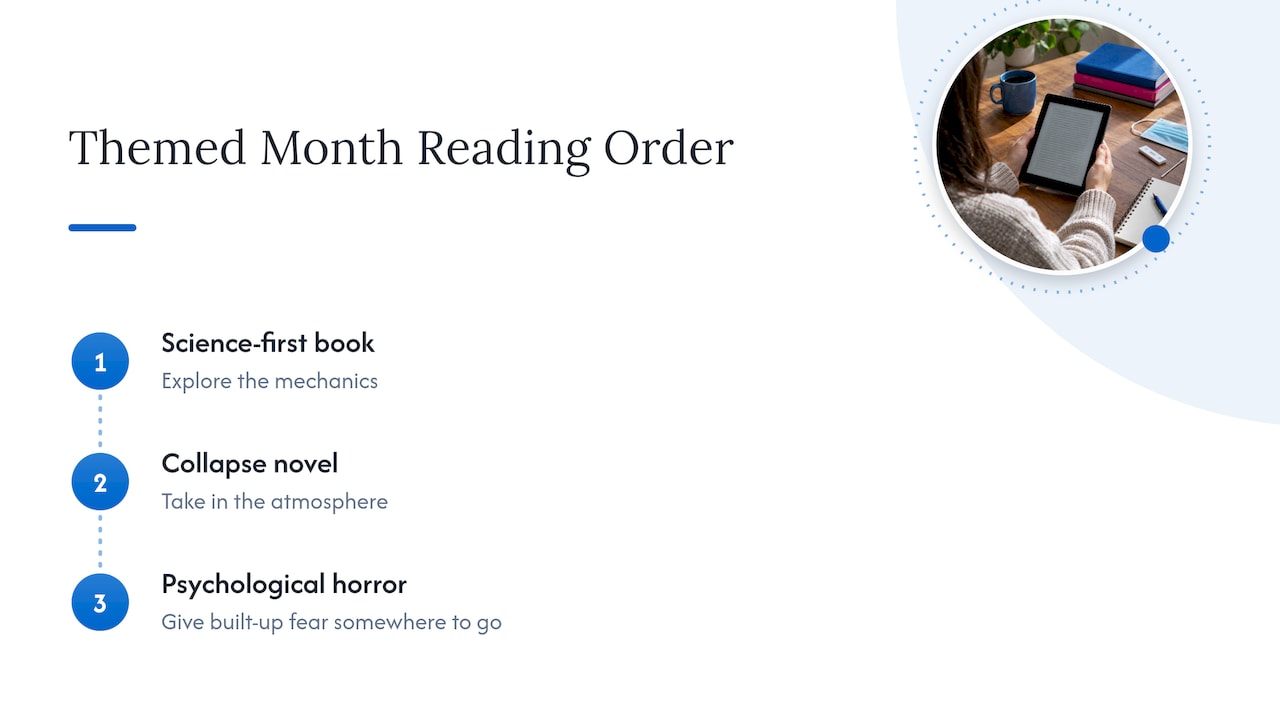
A sensible order for a themed month: start with one science-first book for the mechanics, move to one collapse novel for the atmosphere, and finish on psychological horror, where the fear you have built up has somewhere to go.
Our view: the monster is never the virus
We write outbreaks the way we write everything else: as a pressure test for people. A virus gives you a clock and a closed door. What matters is who is on the other side of that door with you, and what you have never told them.
Readers often ask whether a plague story needs lab detail to feel real. We think it needs consequence. A single choice made in fear, or a single secret carried into a quarantine, does more work than a page of pathogen biology. That is why the Evolution A200 books follow guilt as closely as they follow infection.
The books that stay with us are the ones that leave a question open. We would rather you close the book still arguing with a character than satisfied by a tidy cure. If that sounds like the kind of dread you want, start with the plague and keep reading.
Nathaniel
Start the series
If you want the plague apocalypse with the psychological pressure turned up, begin with the first Evolution A200 novel. It is free to read with Kindle Unlimited and also available as an ebook or paperback on Amazon.
Browse The Nether and Evolution A200 series to see every title, or read our note for Kindle Unlimited subscribers.
FAQ
What are the best virus outbreak thrillers to read first?
Start with the one that matches your taste. The Andromeda Strain and The End of October suit readers who like scientists solving a puzzle. The Stand and Station Eleven suit readers who want the world after the collapse. For dystopian horror with a plague at its center, try Evolution A200: A Bubonic Apocalypse.
Are pandemic thriller books different from zombie or apocalypse novels?
Often they overlap, but the focus differs. A pandemic thriller keeps a recognizable disease and its spread at the center, while an apocalypse novel may treat the cause as backdrop. The Stand sits across both, which is why it appears on so many lists.
Which outbreak novels have strong psychological depth?
Look for books where character comes before procedure. Station Eleven and The Dreamers lean literary, and psychological horror such as the Evolution A200 novels focuses on guilt and fear. Reviewers have noted that even a strong procedural like The End of October can feel heavy-handed in its psychology, so the lead character’s inner life is a good thing to check before you buy.
Can I read Nathaniel Connors’s books on Kindle Unlimited?
Yes. His books are available through Kindle Unlimited for subscribers, and they are also sold as ebooks and paperbacks on Amazon. You can see the full list on our books page.
Sources
- A Virus Upends the World in a Sweeping New Novel, The New York Times
- The Top Pandemic Thrillers to Turn to Right Now, Strand Magazine
- 13 Essential Pandemic Novels, Publishers Weekly
- Sick with Suspense: Six Thrillers That Explore Contagions, Crime Reads
- 5 Hot Books: A Big Novel about a Pandemic, The National Book Review
- Flu vs. COVID-19 Symptoms: How to Tell and When to Test