
Evolution A200: A Bubonic Apocalypse is a plague-apocalypse horror novel. Its main content concerns are an uncontrolled outbreak and societal collapse, zombie-style violence including attacks where victims are eaten raw, bodily transformation, and infected people who keep their memories and act with intelligence. Reviewers describe the gore as lighter than you might expect. The dread comes mostly from the idea of an enemy that thinks.
This page lists those warnings plainly, shows where the book is gentler than its premise suggests, and helps you decide whether it is right for you right now. It is built from the book’s own descriptions and from reader reviews. It is not an official rating, because the book does not carry one.
TL;DR
- Main themes: a rapidly spreading plague, mass death, collapse of institutions, and guilt over starting it.
- Violence: zombie attacks, including victims being eaten raw. One reviewer still found it lighter on gore than expected.
- The sharpest warning: the infected can retain memories, hold grievances and act strategically. If loss of identity or intelligent predators is your trigger, read with care.
- Not the same as nonstop splatter: the unease is psychological more than graphic.
- Check before you buy: price and Kindle Unlimited status change, so confirm both on the listing.
Table of Contents
- What the book is about, without spoilers
- Content warnings, one by one
- What the book is not
- Who should read it, and who should wait
- How to read it more safely
- Our perspective
- Where to find the book
- FAQ
- Sources
What the book is about, without spoilers
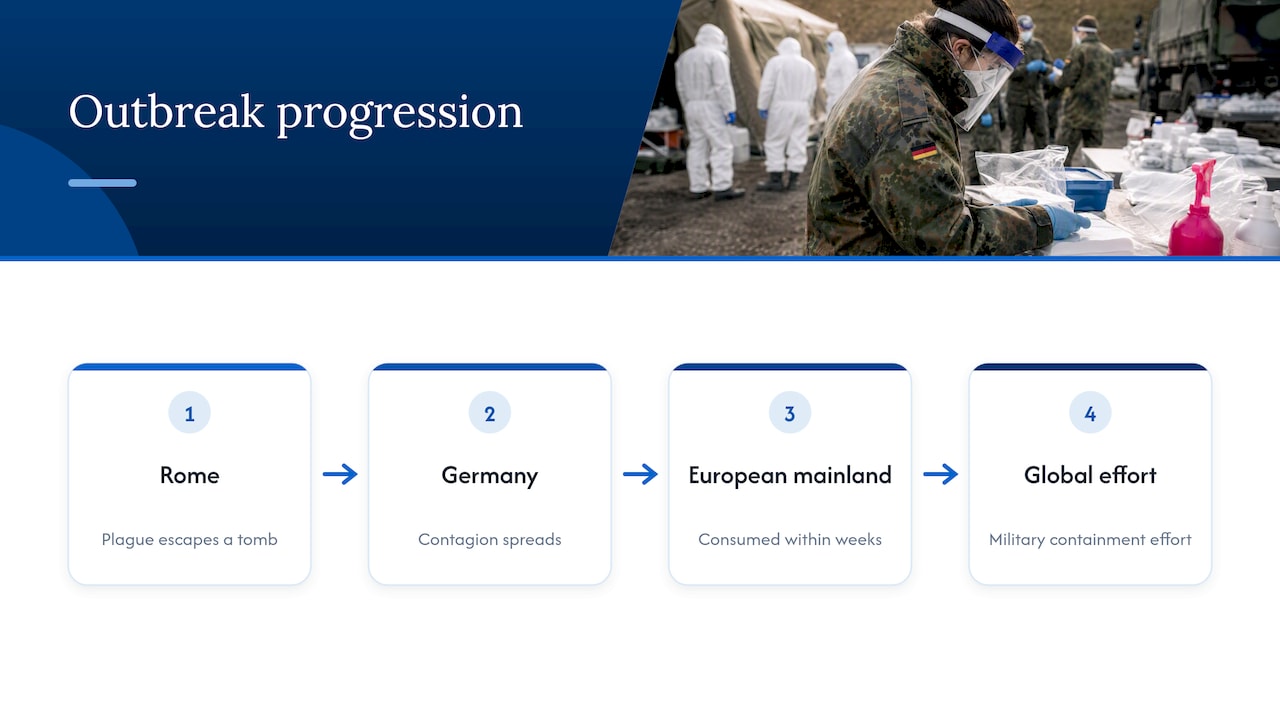
The novel opens with a dated confession. According to the Amazon description, the narrator says the plague escaped its internment through his own hands and those of the people who aided his expedition. The contagion spreads from a tomb in Rome into Germany. Within weeks it consumes the European mainland and triggers a global military effort to contain it.
The Four Moon Reviews write-up adds that the virus survives, and that a pharmaceutical company is involved in what follows. The Goodreads page mentions a threat to the eastern United States.
That setup matters for warnings. This is a book about a catastrophe the narrator feels responsible for. Guilt is a running theme, so readers who find self-blame, culpability or the aftermath of a preventable disaster hard to sit with should know that going in.
Content warnings, one by one
Here is a plain list of what readers report. Every item rests on the two review sources cited here. We have not invented categories to look thorough. If a topic is not listed, we have no source describing it, which is not the same as saying it is absent.
| Content | What readers report | How heavy it feels |
|---|---|---|
| Plague and mass death | Rapid outbreak, collapse of normal life, a global containment effort | Central to the plot |
| Zombie violence | Attacks by the infected, including eating victims raw | Present, but one reviewer wanted more gore |
| Bodily transformation | People becoming monsters | Present as a premise |
| Intelligent infected | Infected who may keep memories and act with intelligence | The most unsettling element, per one reviewer |
| Identity and agency loss | Personality traces surviving infection | Psychological rather than graphic |
| Guilt and responsibility | A narrator tied to the outbreak’s cause | Theme throughout |
Plague, contagion and societal collapse
The outbreak is not background. It drives every chapter. Goodreads reader material describes a rapidly spreading infection that crosses a continent in weeks. If you read during a period when pandemic news, illness anxiety or fear of contagion feels close to home, this is the first warning to weigh. The story treats contagion as something that outruns the people trying to stop it.
That said, the setting is a fictional medieval-plague-meets-zombie scenario with a tomb, a horseman’s plague and a military response. It is not a realistic account of any real outbreak. Some readers find that distance comforting. Others find the speed and scale of the collapse enough to put the book down. You know which group you are in.
Zombie violence and attacks on the body
A detailed 2021 review lists zombie violence and attacks that involve eating victims raw. If graphic cannibalism is a hard line for you, treat that as confirmed content.
The same reviewer says the book has less gore than they expected and wished for more. That is useful in both directions. A reader who avoids gore should not take it as a promise that the book is mild, because the violence is still there. A reader who wants only a little of it may find the level manageable. Opinions differ here, and one review is one voice.
Infected people who think
This is the warning we would put at the top for psychologically sensitive readers. Reviews describe infected characters who retain memories, remember personal slights and organize strategically, rather than behaving as conventional mindless zombies. Some infections in the story are reported as nonfatal.
The Four Moon reviewer rated the intelligent-zombie premise as the creepiest part of the book, and the review mentions the possibility of an intelligent infected army. Think of this as a separate warning from gore. It touches:
- Loss of agency: being changed while something of you remains aware.
- Identity loss: a person turning into a threat to the people they loved.
- Intelligent predators: an enemy that plans, waits and holds grudges.
A reader can be fine with splatter and still be shaken by these. The reverse is also true.
Guilt, blame and the narrator’s confession
The opening frames the outbreak as the narrator’s fault, shared with his expedition. Readers who are sensitive to survivor guilt, or to stories where one decision causes widespread death, should expect that thread to run through the whole book. It is also what gives the novel its emotional weight. Our own review roundup of Evolution A200 looks at how readers respond to this guilt-driven approach.
What the book is not
Warnings can make a book sound harsher than it is, so here is the other side, taken from the same sources.
- Not described as nonstop gore. One reviewer explicitly wanted more of it.
- Not mindless-monster horror. The infected are the point, and they behave in ways readers found more disturbing than simple hunger.
- Not a how-to or a realistic pandemic report. The setup is supernatural-flavored: a tomb, an old plague, a sinister corporate motive.
We will not claim anything the sources do not support, such as detailed notes on language, sexual content or substance use. We have none that we can cite. If those matter to you, read the sample on the retail listing before buying, and check the reader reviews for those specific topics.
Who should read it, and who should wait
A reasonable way to decide is to ask which kind of fear you want from a book.
Good fit if you want:
- Plague-driven collapse with a human, guilt-laden narrator.
- Zombie horror with a twist: intelligence, memory and strategy.
- Dread that is more psychological than graphic.
Consider waiting if you are:
- Currently anxious about illness or contagion in real life.
- Hard-stopped by cannibalism or attacks on the body, even at moderate levels.
- Sensitive to stories about losing control of your own mind or body.
This is not medical advice. If a story’s themes tend to trigger intense anxiety, panic or distressing memories, it is reasonable to pick a different book or read it with support. A mental health professional you trust can help you decide what is safe for you.
How to read it more safely
A few practical habits help readers who want the story but not the shock.
- Read the retail sample first. The sample shows tone and violence level before you commit.
- Read in daylight, in short sessions. Plague-and-collapse stories can build dread over a long sitting.
- Know your own stop signals. If the intelligent-infected material bothers you more than the gore, you will notice it early.
- Skim a review for your specific trigger. Reader reviews often name what the summary leaves out.
Our perspective
We wrote Evolution A200 to ask what happens when the monster remembers. The gore was never the point. We wanted the reader to sit next to a narrator who knows he helped start this, and to feel dread from the infected still being someone.
That is why we think the honest warning is not just “zombie violence.” The harder question is whether you are comfortable with the idea of intelligence surviving transformation, and with a narrator who carries blame. We would rather you know that before page one than feel tricked on page fifty. A reader who closes the book early because it is not the right moment has lost nothing. A reader who comes back later, ready, will get more from it.
If you want to see how the book fits among similar titles, our guide to pandemic apocalypse books and our reading paths for plague apocalypse novels can help you pick an entry point that suits your tolerance.
— Nathaniel
Where to find the book
Evolution A200: A Bubonic Apocalypse is Book 1 of the E-A200 series. The Amazon listing shows the ebook, and there is a paperback edition too. Prices and Kindle Unlimited eligibility can change, so check the listing on the day you buy instead of relying on any page, including this one.
You can read about the novel on its page on our site. The series continues with Evolution A200: Radio Silence, and our announcement that both novels are available explains how they connect. To browse everything we have published, see the books category.
If you read the first book and want to know whether to continue, the same warnings generally apply to the sequel’s genre, but we have no sourced content notes for Radio Silence on this page, so check its listing and sample too.
FAQ
Does Evolution A200 have a lot of gore?
Readers report zombie violence, including attacks where victims are eaten raw. One detailed 2021 review found less gore than expected, though. The violence is present, but the book is not described as nonstop splatter. If gore is a firm limit for you, read the sample first.
Are the zombies in Evolution A200 mindless?
No. Reviewers describe infected people who can keep memories, remember grievances and act with intelligence. That is a major source of the book’s unease. Readers sensitive to loss of identity or intelligent predators should treat it as a warning in its own right.
Is Evolution A200 a good read for someone anxious about pandemics?
It may be hard. The plot centers on a plague that spreads across a continent within weeks and leads to collapse. It is fictional and supernatural in flavor, but the speed of the spread can still hit a nerve. If real-world illness worries you right now, consider waiting, and talk to a mental health professional if the anxiety is significant.
Do I need to read the first book before Radio Silence?
The series is numbered, and Evolution A200: A Bubonic Apocalypse is Book 1. Starting there is the natural order. It also lets you judge the content before committing to the sequel.
Is it available on Kindle Unlimited?
We publish our books for Kindle Unlimited readers, but availability and prices can change. Look at the current Amazon listing to confirm before you download.
Sources
- Evolution A200: A Bubonic Apocalypse on Goodreads
- Four Moon Reviews: Evolution A200: A Bubonic Apocalypse by Nathaniel Connors