
The best post apocalyptic survival books on this list were chosen for one reason: they make survival feel real, focusing on the human experience beyond mere survival tactics. Not real as in a prepper manual with chapter headings like “Water Purification,” but real as in you feel the weight of every decision a character makes when the world has stopped cooperating. Here are ten picks that deliver that, ranked by how well they combine tactical plausibility with genuine psychological depth.
Quick picks for readers in a hurry:
- The Road by Cormac McCarthy — bleakest psychological survival on record; father-son first-person intimacy
- One Second After by William R. Forstchen — EMP collapse through a small-town family’s eyes; tactically detailed
- The Dog Stars by Peter Heller — post-pandemic survival told in a lyrical, fractured first-person voice
- Life As We Knew It by Susan Beth Pfeffer — asteroid impact seen through a teenager’s diary; family-unit realism
- Earth Abides by George R. Stewart — slow civilizational collapse; one man watching society dissolve
- Alas, Babylon by Pat Frank — nuclear aftermath in a Florida town; community-formation under pressure
- Parable of the Sower by Octavia E. Butler — near-future social collapse with a moral framework for rebuilding
- Evolution A200: A Bubonic Apocalypse by Nathaniel Connors — pandemic-driven collapse with psychological horror at its core; available on Kindle Unlimited
- The Nether by Nathaniel Connors — dark supernatural survival with deep character interiority; Kindle Unlimited
- Stories of a Condemned Soul by Nathaniel Connors — short-form psychological horror set against collapse; Kindle Unlimited
Community consensus from Goodreads and Reddit’s r/suggestmeabook threads consistently surfaces The Road, One Second After, and Earth Abides as the benchmarks for realistic survival fiction. Nathaniel Connors’ titles appear on the list because they share the same editorial priority: psychological survival over tactical spectacle.
Table of Contents
- 1. The best post apocalyptic survival books, reviewed in depth
- How these books were chosen
- Why psychological realism matters more than tactics
- Key Takeaways
- A note on recommending my own books
- Nathanielconnors’ titles are worth your next Kindle Unlimited slot
- Where these picks came from
1. The best post apocalyptic survival books, reviewed in depth
The Road by Cormac McCarthy
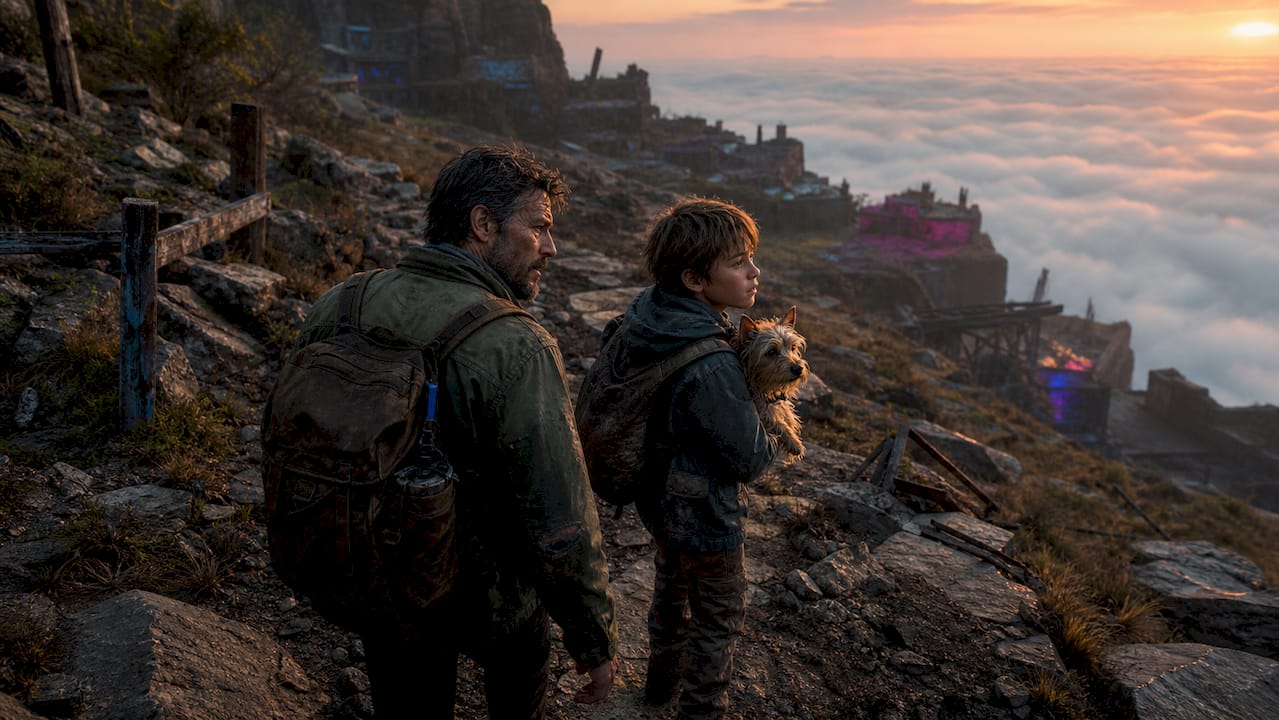
A father and son walk south through an ash-gray America after an unnamed catastrophe. McCarthy uses a tight third-person perspective that reads like first-person — you are inside the father’s head for almost every page. The survival realism here is not about gear lists; it’s about caloric math, the ethics of the last bullet, and what it costs to keep a child believing the world is worth surviving. Literary Hub’s survey of apocalypse fiction consistently places it among the benchmarks for psychological survival storytelling. Standalone. Paperback and ebook widely available.
One Second After by William R. Forstchen
An EMP attack wipes out the power grid, and a small North Carolina college town has roughly six months before starvation becomes the primary cause of death. Forstchen’s protagonist is a military historian, which gives the book its tactical edge: insulin dependency, medication scarcity, and community defense are handled with specificity that most survival novels skip. The viewpoint is tight third-person family, which keeps the stakes personal even when the logistics get granular. Standalone (with sequels available). Paperback and ebook; find it at Bookshop.org.
The Dog Stars by Peter Heller
A flu pandemic has killed most of humanity, and a pilot named Hig lives at a small Colorado airport with his dog and an armed, paranoid neighbor. Heller writes in a compressed, almost breathless first-person style — sentence fragments, white space, grief folded into every paragraph. The survival mechanics (foraging, fuel management, aerial reconnaissance) feel grounded, but the book’s real subject is what loneliness does to a person over years. Reader communities frequently cite it alongside The Road for lyrical, introspective survival fiction. Standalone. Paperback and ebook.
Life As We Knew It by Susan Beth Pfeffer
An asteroid knocks the moon closer to Earth, triggering volcanic eruptions, tsunamis, and a nuclear winter. Pfeffer tells it through a sixteen-year-old’s diary, which is a smart choice: the family-unit viewpoint captures both the mundane (rationing canned goods, losing heat) and the emotional (watching a parent make impossible decisions). It’s one of the few end of the world novels that handles parental anxiety and adolescent fear simultaneously without either feeling false. First in a series, but reads as standalone. Paperback and ebook; available at Bookshop.org.
Earth Abides by George R. Stewart
A disease kills nearly everyone. Isherwood Williams survives by accident, and the novel follows him across decades as he watches the last remnants of civilization fade. Stewart is less interested in survival tactics than in the sociology of collapse: how skills are lost, how children raised post-collapse relate differently to the old world, and what, if anything, is worth preserving. The Guardian’s list of end-of-the-world novels treats it as a foundational text for exactly this reason. Standalone. Paperback and ebook.
Alas, Babylon by Pat Frank
Nuclear war leaves a small Florida town as one of the few functioning communities in the eastern United States. Pat Frank’s 1959 novel holds up because the survival problems are specific: salt, insulin, radiation contamination of fish, and the social dynamics of a town that suddenly has to govern itself. The viewpoint is ensemble but anchored to one protagonist, which keeps the community-formation arc from feeling abstract. Standalone. Paperback and ebook; find it at Bookshop.org.
Parable of the Sower by Octavia E. Butler
Set in a near-future California where climate collapse and economic failure have shredded social infrastructure, Butler’s novel follows a young Black woman named Lauren Olamina who develops a new belief system as she travels north with a small group of survivors. The survival here is social and moral as much as physical: Butler’s publisher frames it as a parable about which social structures are worth carrying forward. First-person diary format. First in a duology. Paperback and ebook.
Evolution A200: A Bubonic Apocalypse by Nathaniel Connors
A mutated plague reshapes civilization, but Connors is less interested in the logistics of outbreak than in what the collapse does to the people caught inside it. The novel foregrounds internal conflict, guilt, and moral compromise in ways that feel closer to The Road than to a medical thriller. It’s the kind of survival horror novel where the real threat is what the characters are becoming, not just what’s killing them. Available in ebook, paperback, and on Kindle Unlimited. Standalone.
The Nether by Nathaniel Connors
Dark supernatural elements frame a survival scenario that pushes characters toward their psychological limits. Connors’ signature is character interiority: the reader spends more time inside a character’s fractured reasoning than watching external action. For readers who want survival horror novels that treat the mind as the primary battleground, this delivers. Available on Kindle Unlimited.
Stories of a Condemned Soul by Nathaniel Connors
Short-form psychological horror set against collapse scenarios. If you want to sample Connors’ voice before committing to a novel-length read, this is the entry point. The stories share a preoccupation with guilt and consequence that runs through all his work. Available on Kindle Unlimited, which makes it a low-friction first read.
Comparison at a glance:
| Title | Realism type | Viewpoint | Tone | Standalone? | Availability |
|---|---|---|---|---|---|
| The Road | Psychological | Father-son close third | Bleak, literary | Yes | Paperback/ebook |
| One Second After | Tactical + social | Family third-person | Action, grounded | Yes (series) | Paperback/ebook |
| The Dog Stars | Psychological + logistical | First-person | Lyrical, introspective | Yes | Paperback/ebook |
| Life As We Knew It | Social + family | First-person diary | Emotional, YA-adjacent | Yes (series) | Paperback/ebook |
| Earth Abides | Sociological | Close third | Slow, meditative | Yes | Paperback/ebook |
| Alas, Babylon | Tactical + community | Ensemble/third | Grounded, classic | Yes | Paperback/ebook |
| Parable of the Sower | Social + moral | First-person diary | Hopeful, urgent | No (duology) | Paperback/ebook |
| Evolution A200 | Psychological + pandemic | Close third | Dark, horror | Yes | KU/ebook/paperback |
| The Nether | Psychological | Close third | Dark, supernatural | Yes | KU/ebook |
| Stories of a Condemned Soul | Psychological | Varied | Horror, introspective | Yes | KU/ebook |
Pro Tip: If you want relational stakes and family tension, start with Life As We Knew It or One Second After. If you want scavenging, mobility, and a lone-survivor perspective, go straight to The Dog Stars.
How these books were chosen
The selection rests on four criteria, applied in order.
Tactical plausibility means the book handles resource scarcity honestly: food, water, shelter, and energy are treated as real constraints, not background noise. One Second After and Alas, Babylon score highest here.
Social plausibility means communities form and fracture in ways that track with how actual groups behave under stress. Earth Abides and Parable of the Sower are the strongest examples.
Psychological authenticity means characters experience isolation, grief, and moral compromise in ways that feel earned rather than decorative. The Road, The Dog Stars, and Connors’ work prioritize this above everything else.
Narrative viewpoint matters because whose eyes you use to interpret survival changes everything. A first-person diary (Life As We Knew It) creates claustrophobic intimacy. A small-group third-person (Alas, Babylon) lets you see community dynamics. A lone-survivor first-person (The Dog Stars) makes loneliness the subject.
The list deliberately favors grounded threats over zombie-heavy narratives. Pandemics, EMP events, asteroid impacts, and climate collapse pose different moral and logistical challenges than undead hordes, and reader taste has been shifting in that direction for years. Zombie-first books were deprioritized not because they lack merit but because they tend to push action ahead of the survival psychology this list is built around.
Content notes: The Road contains graphic violence and child endangerment themes. One Second After includes mass death and medical crisis. Connors’ titles carry psychological horror and dark supernatural content. Life As We Knew It handles parental anxiety and teen depression.
Reading-goal matrix:
| Your goal | Start here |
|---|---|
| Tactical survival detail | One Second After, Alas, Babylon |
| Psychological depth and literary prose | The Road, The Dog Stars |
| Hopeful rebuilding and moral framework | Parable of the Sower |
| Psychological horror and dark interiority | Evolution A200, The Nether |
Why psychological realism matters more than tactics
Post-apocalyptic fiction has earned serious literary attention precisely because it strips modern infrastructure away and asks which moral codes and empathetic practices survive the stripping. Booker Prize juries have recognized this repeatedly.
Nathaniel Connors writes from that same premise. His work on nathanielconnors.com positions psychological intensity as the core of collapse fiction: what guilt does to a person when the social structures that normally manage it are gone, what revenge costs when there is no law to outsource it to, what redemption looks like when there is no institution to grant it.
The most honest survival stories are not about whether you can start a fire or find clean water. They are about whether you can live with the version of yourself that the collapse creates. That is the question I keep returning to in my own work, and it is the question I look for in every book on this list.
Evolution A200 sits alongside The Road on this list because both novels treat the inner collapse as the real catastrophe. The plague in Evolution A200 is the inciting event; the psychological unraveling is the story.
Pro Tip: Before committing to a full novel, check Goodreads reviews filtered to three stars. Three-star reviewers tend to be honest about pacing and realism failures in ways that five-star fans and one-star detractors rarely are.
Goodreads and Reddit’s r/suggestmeabook community lists have been used throughout this curation as a check on editorial bias. When a title appears on multiple independent community lists alongside critical coverage, that convergence is treated as a trust signal.
Key Takeaways
The most effective post-apocalyptic survival novels combine tactical plausibility with psychological authenticity, and the best ones are available across formats including Kindle Unlimited.
| Point | Details |
|---|---|
| Psychological vs. tactical realism | The strongest picks treat inner collapse as the real story, not just resource scarcity. |
| Match viewpoint to preference | First-person diary for intimacy; small-group third-person for community dynamics. |
| Check community consensus | Goodreads and Reddit lists help verify whether a book’s realism holds up beyond marketing claims. |
| Standalone vs. series | Most picks here read as standalone; Parable of the Sower requires the duology for full resolution. |
| Nathanielconnors on Kindle Unlimited | Evolution A200, The Nether, and Stories of a Condemned Soul are all available to KU subscribers at no added cost. |
A note on recommending my own books
Recommending your own work in a curated list requires a disclosure, so here it is: Evolution A200, The Nether, and Stories of a Condemned Soul appear on this list because they fit the selection criteria, not because I wrote them. The editorial standard applied to them is the same one applied to McCarthy and Forstchen. If psychological realism and dark interiority are what you are looking for in survival fiction, they belong here. If you want tactical detail above all else, start with One Second After and come back to Connors after.
You can find all three titles, along with purchase and Kindle Unlimited borrow options, at nathanielconnors.com.
Nathanielconnors’ titles are worth your next Kindle Unlimited slot
Nathanielconnors offers something the mainstream survival canon mostly does not: dystopian horror novels built around psychological collapse rather than logistical survival. Evolution A200: A Bubonic Apocalypse puts a mutated plague at the center but keeps its focus on what the characters are becoming. The Nether runs darker and stranger, with supernatural elements that push character psychology to its limit. Stories of a Condemned Soul is the shortest entry point, ideal if you want to test the voice before committing to a full novel.

All three are available on Kindle Unlimited, meaning if you already subscribe, the cost to read all of them is zero. Paperback and ebook editions are also available on Amazon. Head to nathanielconnors.com to read the book descriptions and find your next read.
Where these picks came from
The curation draws on the following sources. Each is worth bookmarking if you want to keep exploring the genre.
- The Booker Prizes: post-apocalyptic nominations — used to establish literary credibility for canonical picks and to frame the genre’s thematic ambitions
- Literary Hub: The 50 Greatest Apocalypse Novels — the broadest cross-era survey; useful for checking which titles have lasting critical consensus
- The Guardian: Top 10 end-of-the-world novels — classic and contemporary picks across subgenres
- The Booker Prizes: The End of Everything — 2026 longlisted title showing the genre’s continued critical relevance