Horror worldbuilding must make the impossible feel inevitable, and it does that by grounding uncanny elements in believable, sensory detail and consistent rules the reader can trust. Skip the grounding, and the scares feel arbitrary. Skip the rules, and dread turns into confusion. This guide breaks down the principles, sensory tactics, and time-boxed exercises that turn a vague premise into a setting readers can’t shake.
TL;DR:
- Trust in the ordinary ensures the impossible elements feel credible, making the supernatural threats more effective and believable.
- Using sensory details selectively, such as inconsistent lighting or localized cold spots, creates a more immersive and dread-inducing environment.
- Consistent supernatural rules, including origin, constraints, cost, and consequences, are essential for maintaining fear and avoiding confusion.
- Setting should actively behave as an antagonist through isolation and environmental behavior that reflect or distort character psychology.
- Borrowing real cultural fears and history enriches horror settings, adding weight and resonance without requiring extensive exposition.
Table of Contents
- The Core Principles of Horror Worldbuilding
- Sensory Details That Build Dread
- Building Supernatural Rules That Create Real Stakes
- Making Setting the Antagonist
- Common Craft Mistakes and How to Fix Them
- Exercises to Build Your Horror World Right Now
- Nathaniel Connors’s Applied Notes on Worldbuilding
- Why History and Culture Shape Horror Settings
- How Setting Shapes Fear in Characters and Readers
- Weaving Horror Themes Into Your Worldbuilding
- An Author’s Take on What Makes Horror Worlds Work
- Study These Books and Craft Guides Next
- Sources
- FAQ
The Core Principles of Horror Worldbuilding
Every effective horror setting rests on three mechanics working together: grounding, corruption, and inevitability. Miss one, and the whole structure wobbles.
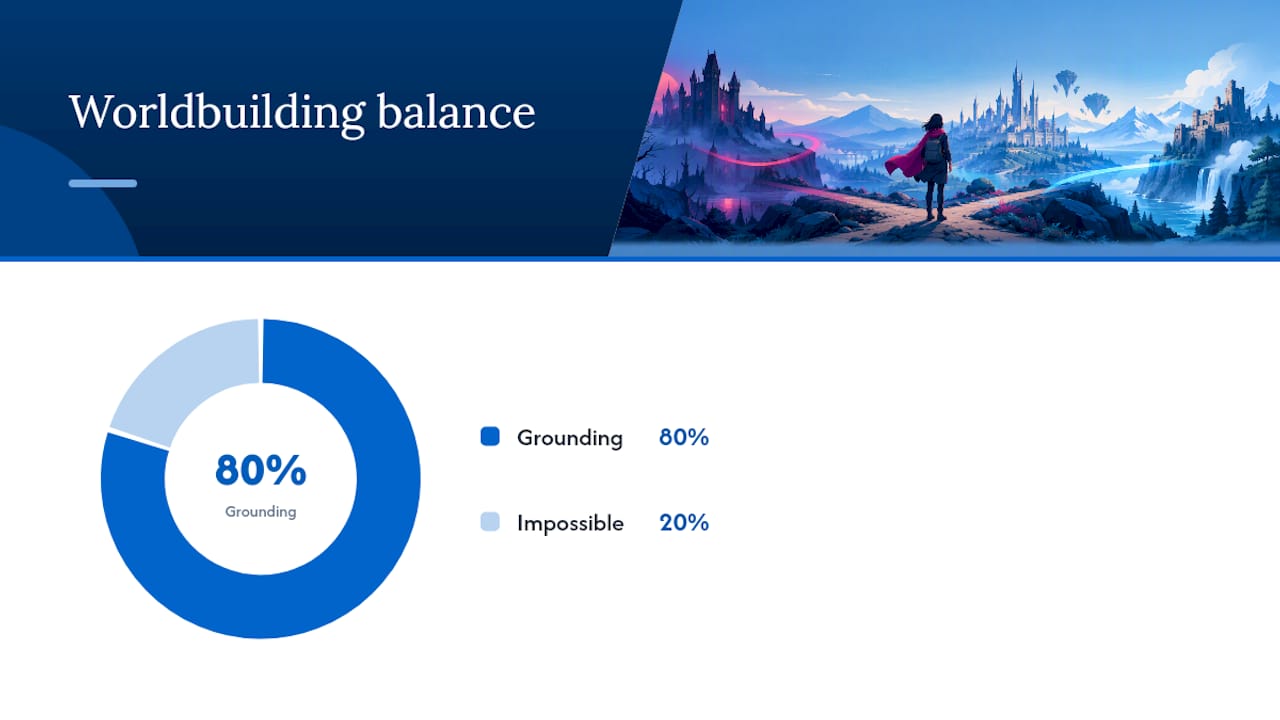
Start with the 80/20 rule. Roughly 80 percent of your world should feel mundane and verifiable: real jobs, real weather, real friction like a broken furnace or a long commute. The other 20 percent carries the impossible element. Readers accept the monster because they already trust the landlord who won’t fix the heat. This principle is fundamental to effective horror worldbuilding. Writers front-load the strange stuff before earning any trust.
Next comes corruption of the familiar, what Freud called the unheimlich, or uncanny. The technique takes something safe (a childhood bedroom, a family dinner, a doctor’s office) and twists it just enough to feel wrong. The uncanny works by making the familiar unhomely, which is precisely why haunted houses are scarier than haunted caves. You already have expectations about houses.
Finally, inevitability. Dread only lands when the reader senses the walls closing in through cause and effect, not coincidence. A character’s earlier choice should trip the wire that later kills them.
- Grounding example: A rideshare driver’s GPS keeps rerouting through a neighborhood that isn’t on any map.
- Corruption example: A mother notices her son’s reflection blinks a half-second before he does.
- Inevitability example: The protagonist ignored a warning sign in chapter two; by chapter ten, that same sign is the only thing that could have saved her.
Sensory Details That Build Dread
Horror worldbuilding fails when writers try to describe everything. Choose two or three sensory anchors, repeated with variation, and readers absorb far more dread than they would from an exhaustive catalog of sights and smells. Craft guides consistently favor this selective approach over sensory overload, because a reader’s imagination fills gaps far more effectively than your prose can.
Here’s how to work each sense without drowning the scene:
- Lighting: Use inconsistency, not darkness alone. A flickering bulb that stabilizes right when something moves is scarier than total blackness.
- Sound: Silence is a tool, not an absence. Cut ambient noise abruptly before a scare, then layer in one small, wrong sound (a drip with no source).
- Temperature: Cold spots work best when localized. A cold patch on a warm night reads as unnatural in a way general chill doesn’t.
- Texture: Let characters touch things they shouldn’t need to touch. Damp wallpaper, a doorknob that’s warmer than the room.
- Smell: Pair a comforting scent (bread, rain) with a wrong undertone (bread and copper) to create cognitive dissonance.
Sound design principles from film and audio actually translate well to prose. Layered whispers and low, sustained tones work on readers the same way they work on audiences in a theater, by building tension beneath conscious notice.
Pro Tip: Write your scariest paragraph, then cut every sensory detail except two. Read both versions aloud. The trimmed version almost always wins because the reader’s brain does the rest of the work.
Building Supernatural Rules That Create Real Stakes
Internal consistency is what separates dread from confusion. If your monster can do anything, it can do nothing scary, because the reader stops believing the threat has limits worth fearing. Most of your supernatural system should stay off the page, but the visible 20 percent has to behave the same way every single time.
A simple four-part template keeps this manageable:
- Origin: Where does the power or threat come from? (A curse, a contamination, an inherited debt.)
- Constraints: What can’t it do? (It can’t cross running water; it can’t act before midnight.)
- Cost: What does using or resisting it cost the characters? (Memory, blood, sanity, time.)
- Consequence: What happens when the cost isn’t paid?
A werewolf that transforms only during a specific lunar phase, loses memory of the transformation, and can be tracked by silver residue gives characters something to plan around. That’s a rule set with narrative teeth. Compare that to a monster that just “gets stronger” with no explanation. One creates strategy. The other creates a shrug.
Making Setting the Antagonist
A setting becomes an antagonist when it actively behaves, not just backdrops the story. That means designing isolation and constraint the same way you’d design a character’s motivations.
Isolation comes in three flavors, and the strongest horror worldbuilding often stacks two or three at once:
- Physical isolation: No cell signal, one road in, a bridge that floods every spring.
- Social isolation: A town that closes ranks against outsiders, or a family too ashamed to ask for help.
- Informational isolation: Records that don’t add up, an institution that stonewalls questions, a history everyone in town agrees not to mention.
Environmental behavior should escalate along with the plot. A road that floods once is weather. A road that floods every time your protagonist tries to leave is a trap with intent. The setting can also mirror or distort character psychology, a claustrophobic character trapped in a house whose hallways keep getting narrower literalizes her fear rather than just describing it.
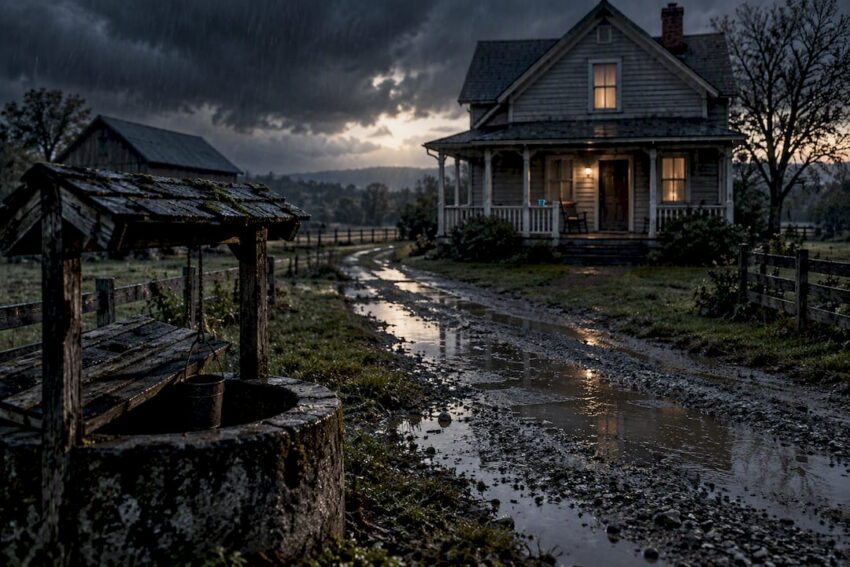
Picture a family moving into a rural house with no cell service, one gravel road to the highway, and a well that the previous owners sealed. The road floods after the first storm. The seal on the well breaks the same night. Neither event needs a monster to feel threatening. That’s setting doing the antagonist’s job before anything supernatural even shows up.
Common Craft Mistakes and How to Fix Them
Most horror worldbuilding problems trace back to a handful of repeatable errors.
- Over-explaining the threat. Once a reader fully understands a monster, that monster stops being scary. Fix it by cutting your explanation in half during revision and letting behavior imply the rest.
- Inconsistent supernatural rules. If your ghost can touch objects in chapter three but not chapter nine, readers notice, even subconsciously. Build a one-page rule sheet before you draft and check every supernatural beat against it.
- Convenient solutions. A character who happens to find the one object that stops the threat breaks inevitability. Replace convenience with earned tactics: the solution should cost something the character already sacrificed for.
Pro Tip: During revision, highlight every sentence that explains “how” the horror works. If you can delete half of them without confusing the plot, delete them.
Exercises to Build Your Horror World Right Now
These five exercises take under an hour combined and work whether you’re starting a new project or fixing a stalled one.
- Research scout (10 minutes): List five real, verifiable details about your setting’s profession, geography, or era.
- Sensory inventory (10 minutes): Pick your two or three sensory anchors and write one sentence for each.
- Rule sheet (15 minutes): Fill out the origin, constraints, cost, consequence template for your central threat.
- Contradiction mapping (10 minutes): Reread your draft and flag any moment your rules bend for convenience.
- Isolation map (10 minutes): Sketch the physical, social, and informational barriers trapping your characters.
A reusable micro-template: mundane anchor → corrupting twist → rule → vulnerability → escalation beat.
- Sketch one: A daycare (anchor) where one child draws the same stranger every day (twist). The stranger can only be seen by children under seven (rule). Drawing him a second time invites him closer (vulnerability). The drawings start appearing on walls the child never touched (escalation).
- Sketch two: A highway rest stop (anchor) where the vending machines restock overnight with expired products from decades ago (twist). Nothing bad happens if you don’t eat the food (rule). Refusing it three nights in a row means the machines stop restocking at all (vulnerability). On the fourth night, the lights in the parking lot start counting down instead of flickering (escalation).
Nathaniel Connors’s Applied Notes on Worldbuilding
Two revision choices can sharpen dread in narratives. For example, cutting an early detailed explanation of an outbreak’s origin to a single ambiguous line and delaying fuller details can increase tension. Similarly, replacing arbitrary supernatural appearances with fixed rules, such as a ghost only appearing when someone lies, can heighten suspense.
Readers who want to see these principles at work in a full manuscript can look at how psychological horror creates dread without gore or browse the full catalog of dark supernatural fiction for longer examples of rule design in practice.
Why History and Culture Shape Horror Settings
Horror worldbuilding rarely invents from nothing. It borrows dread from real history and specific cultural fears, then repurposes them. Gothic fiction built its haunted castles and decaying estates around real anxieties about inheritance, class collapse, and crumbling aristocracy. That’s not decoration. The rot in the walls stood for something readers of the era actually feared losing.
The uncanny itself has a documented history, moving from external Gothic architecture (creaking mansions, foggy moors) to internal psychological unease as horror fiction matured. Scholarship tracing this shift through Gothic, German Schauerroman, and French fantastique traditions shows why modern horror often blends both. A haunted house is scarier when it’s also a haunted mind.
This matters practically because borrowing a real cultural fear (institutional distrust, generational trauma, environmental collapse) gives your setting instant weight without needing exposition. A plague setting hits differently in a culture that’s lived through one. A story about a town hiding a shared secret lands harder when readers recognize the specific, local shape that secrecy takes, whether that’s a mining town’s buried accidents or a coastal community’s drowned history. Research the real fears embedded in your setting’s time and place before inventing the supernatural layer. The supernatural works better when it’s standing on something true.
How Setting Shapes Fear in Characters and Readers
Setting doesn’t just surround your characters, it works on them, and through them, on the reader. Horror exploits genuine, evolved fear responses. Humans carry built-in danger-management systems tuned to cues like darkness, unpredictable movement, and predator-shaped silhouettes, which is why a poorly lit hallway triggers unease even in readers who know nothing bad is scripted to happen there.
A character trapped in an isolating setting experiences psychological strain that a skilled writer can track scene by scene: hypervigilance, distorted time perception, a shrinking sense of safe space. When you write those internal shifts alongside the external threat, readers absorb the fear secondhand, because they’re watching a mind erode in real time, not just a body in danger.
The reverse also holds. A setting that reflects a character’s specific psychological wound (claustrophobia mirrored in shrinking rooms, guilt mirrored in a house that keeps rearranging itself around a specific memory) creates a feedback loop. The environment amplifies the character’s fear, the character’s fear colors how the reader interprets the environment, and the two reinforce each other until neither feels separable. That loop is the psychological engine under most memorable horror settings, from haunted houses to isolated research stations.
Weaving Horror Themes Into Your Worldbuilding
Horror themes and worldbuilding elements work best fused, not layered on top of each other. A world built for adventure fantasy and then dressed up with monsters will read like exactly that: a costume. The theme has to shape the geography, the economy, the institutions, and the daily rituals of the setting from the ground up.
If your theme is guilt, build a world where debts (literal or moral) never fully discharge, where every transaction carries an invisible cost that compounds. If your theme is bodily corruption, let that logic infect the setting itself: buildings that seem to rot on a schedule, technology that degrades organically rather than mechanically. Magic systems benefit from the same treatment. Writers designing plausible ritual costs and constraints often look to real occult and ceremonial traditions for structure, and resources like this guide to ceremonial magic offer useful frameworks for escalating cost and consequence that translate directly into fiction.

The tightest horror worldbuilding treats theme as infrastructure rather than seasoning. Readers can’t point to where the theme “starts,” because it’s baked into how the world’s roads, laws, and rituals function. That’s the difference between a story with horror elements and a story that is, structurally, horror.
An Author’s Take on What Makes Horror Worlds Work
The gap between competent horror and unforgettable horror usually isn’t imagination. It’s restraint. Writers with brilliant monster concepts still fail because they explain too much and trust too little. Try one exercise from this guide this week, the rule sheet or the isolation map, and see what changes when you build the world before you build the scare.
— Nathaniel
Study These Books and Craft Guides Next
Reading a technique explained is useful. Watching it work across an entire novel is where the principles actually click, which is why The Nether Series and the EA200 Series exist as full-length case studies in grounded dread, consistent rules, and setting-as-antagonist. Every technique in this guide, the 80/20 grounding rule, the isolation mechanics, the earned inevitability, shows up worked through in these novels at full length, not just in isolated scenes.
Start with The Nether if you want to see isolation and institutional secrecy pushed to their limit, or Evolution A200: A Bubonic Apocalypse if you’re building a world where environmental collapse functions as the antagonist. Both are free to read for Kindle Unlimited subscribers, and studying how a published novel sustains dread across three hundred pages will teach you more than any single craft article can, including this one. Pick one, read the first three chapters with the rule-sheet template in front of you, and track where the grounding happens before the corruption ever shows up.
Sources
- Fear: An evolutionary perspective on its biological, behavioral, and cultural bases
- Freud and the uncanny (course notes)
- Dark Corners: 4 strategies for developing horror settings
- The Devil’s in the details: worldbuilding for horror writers
FAQ
What Is the Most Terrifying Story Ever Written?
There’s no single agreed-upon answer, since terror is personal and shaped by what a reader already fears. What consistently ranks among the most effective, though, are stories that ground the impossible in mundane detail and never over-explain the threat, the same principles covered in this guide.
What Are the Core Elements of a Horror Story?
Most horror fiction leans on a shared set of building blocks: a grounded, believable setting, a consistent supernatural or psychological threat, escalating stakes, isolation, sensory atmosphere, and a sense of inevitability. Not every story uses all of them equally, but the strongest ones rarely skip grounding or consistency.
What Are Some Good Horror Story Ideas?
Strong horror ideas usually start with a mundane fear (debt, isolation, a broken institution) and add one corrupting twist, rather than starting with the monster itself. A daycare where only children can see a recurring visitor, or a small town where the well water remembers, both work because the ordinary setting comes first.
How Do I Make My Horror Setting Feel Real Instead of Generic?
Apply the 80/20 rule: build roughly 80 percent of your world from verifiable, mundane detail before introducing the supernatural 20 percent. Readers trust the impossible element once they’ve already trusted the ordinary one, which is the foundation of effective horror worldbuilding.
Where Can I See These Horror Worldbuilding Techniques Applied in a Full Story?
Nathaniel Connors’s novels, including The Nether and Evolution A200: A Bubonic Apocalypse, apply grounding, consistent rules, and setting-as-antagonist across full-length narratives. Both are free to read for Kindle Unlimited subscribers.