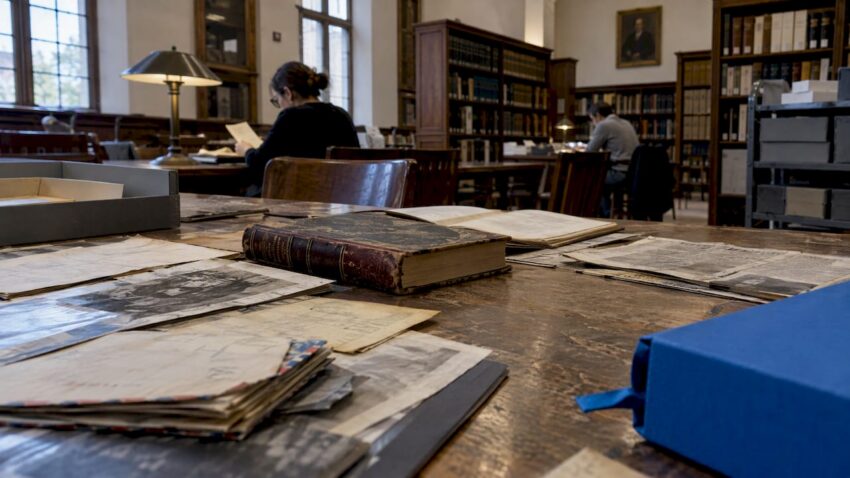
Epistolary horror books tell their stories through documents: letters, diary entries, emails, chat logs, news clippings. The best of them make you feel like you are reading evidence you were never meant to see. Start with Dracula or Frankenstein for the foundations, add House of Leaves or Dark Matter for modern craft, and read on for why the form works so well on readers who like fear with psychological depth. If you read through Kindle Unlimited, there is a note near the end on where our own dark fiction fits.
TL;DR
- Epistolary horror is told through documents such as letters, diary entries and newspaper clippings instead of a conventional narrator.
- Start with the two founding books, Dracula (1897) and Frankenstein (1818), then move to modern picks like Dark Matter, House of Leaves and Things Have Gotten Worse Since We Last Spoke.
- The form creates dread through gaps, unreliable accounts and isolation: you assemble the horror yourself.
- Many of the best examples are novellas, so they suit a single evening or weekend.
- If you like fragmented, psychologically heavy fear, our own books pair well with this reading list.
Table of Contents
- What makes horror epistolary
- The classics worth reading first
- Modern epistolary horror to read next
- Novel, novella or story: pick by time and appetite
- Why documents make fear feel closer
- How to choose your first epistolary horror book
- Perspective
- Where to read next: our dark fiction
- FAQ
- Sources
What makes horror epistolary
The word comes from the Greek for letter, but the modern meaning is wider. An epistolary story is built from the documents its characters would actually produce. The reader never gets the calm, all-seeing voice of a standard novel. You get one person’s panicked diary, a second person’s official report, a third person’s text messages, and you must decide what happened between them.
That is why the format suits horror. Reactor’s survey of the form covers books as different as a vampire novel, a Gothic science tale, a story assembled from reports about a telekinetic teenager, and a novel about a house that is larger inside than outside. What they share is that the story arrives in pieces, and the pieces do not always agree.
The classics worth reading first
Dracula (1897)
Bram Stoker’s novel is a pillar of early horror, told through letters, diaries and newspaper clippings about an infamous vampire. It also uses telegrams and shipping logs, according to Nerdist’s list of epistolary horror. Read it for the way no single character ever sees the whole threat. Each narrator holds a fragment, and the dread comes from the delay before the fragments are put together.
An academic reading of the book argues that its mixed epistolary form creates Gothic tension through fragmented perspectives, unreliable accounts and isolation, along with anxieties about progress and gender roles. In plain terms: because the characters cannot compare notes in real time, the monster has room to move.
Frankenstein (1818)
Mary Shelley’s novel is an early example of epistolary fiction. It is relayed in letters from Captain Robert Walton to his sister, framing the story of a young scientist who creates a sentient creature. The nesting matters. You hear the creature’s account through the scientist, who is heard through the captain, who is writing to his sister. Every layer is a chance for someone to shade the truth.
Carrie (1974)
Stephen King’s first published novel is built from reports, clippings and excerpts from books, pieced together to reconstruct the events leading to a catastrophe. We learn the ending early. The horror is in watching the documents explain how a town let it happen.
The Call of Cthulhu (1928)
Lovecraft’s short story is a good small dose of the form. It uses notes left by the narrator’s great uncle to uncover a cult devoted to an ancient entity. It takes under an hour and shows how a found paper trail can feel more menacing than a monster on stage.
Modern epistolary horror to read next
Dark Matter by Michelle Paver (2010)
A novel told through the journal entries of wireless operator Jack Miller on a 1937 Arctic expedition. The journal form heightens the isolation: there is nobody to talk to, so the diary becomes the only witness. It is a strong choice if you want slow, atmospheric fear rather than shocks.
House of Leaves
This is the one for readers who like a puzzle. It is a tale of a house that is larger inside than outside, told through texts and manuscripts. It is a novel, and a demanding one: expect to hold several layers of commentary in your head at once.
Things Have Gotten Worse Since We Last Spoke (2021)
Eric LaRocca’s novella is told through email correspondence and chat logs, documenting a disturbing, psychosexual relationship between two women. It is short, intense and explicit in its themes, so go in knowing that.
The Night Visitors
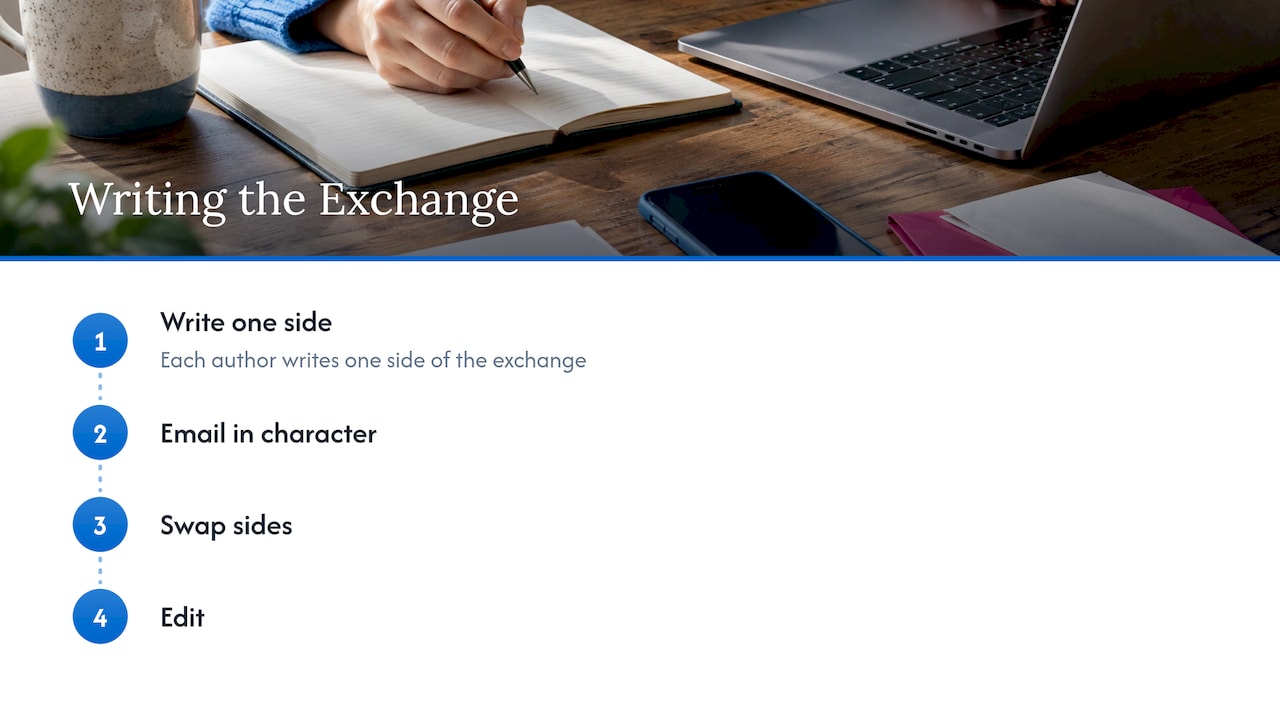
Jenn Ashworth and Richard V. Hirst’s novella is, per The Guardian’s modern epistolary list, an exchange of emails between two women investigating an unsolved murder. Its method is as interesting as its plot. Ashworth explains that the two authors each wrote one side of the exchange, emailing each other in character before swapping sides to edit. If you are curious about how writers build a story this way, that is a rare look at the process.
Episode Thirteen
Craig DiLouie’s novel presents its plot through emails, texts, transcripts of filmed footage, journal entries and news articles, a format a reviewer noted appeals to fans of both epistolary novels and found-footage horror. If you like the shaky-camera genre but prefer to read, start here.
Novel, novella or story: pick by time and appetite
The format affects length. According to Reactor’s 2023 roundup, Frankenstein, Dracula, House of Leaves and Dark Matter are novels, while The Night Visitors, Things Have Gotten Worse Since We Last Spoke and The Secret Skin are novellas.
| You want | Try | Form |
|---|---|---|
| The foundations of the genre | Dracula, Frankenstein | Novels |
| Isolation and slow dread | Dark Matter | Novel |
| A formal puzzle | House of Leaves | Novel |
| A short, intense read | Things Have Gotten Worse Since We Last Spoke | Novella |
| A mystery told in emails | The Night Visitors | Novella |
| A quick taste of the form | The Call of Cthulhu | Short story |
If you have never read the form, a novella is the lowest-risk way in. If you already love it, a long novel like House of Leaves rewards patience.
Why documents make fear feel closer
Three mechanics do most of the work.
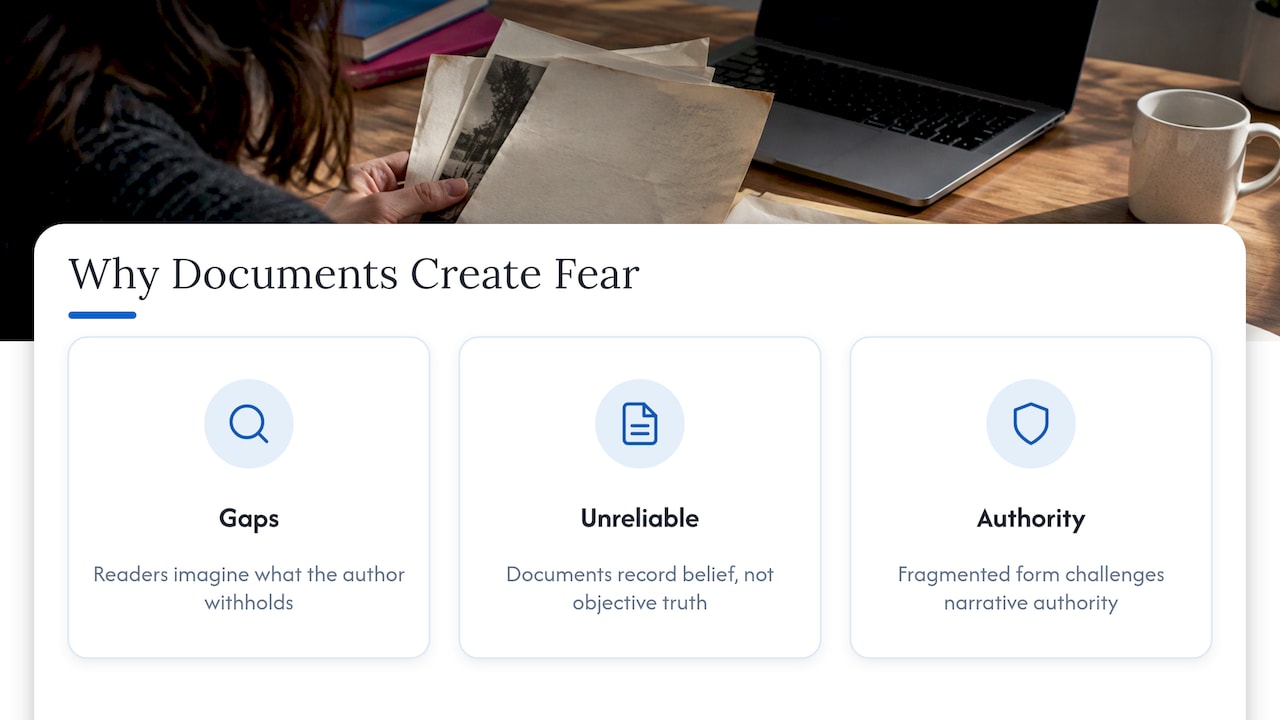
You fill the gaps. A diary stops mid-sentence. A letter is never answered. Your imagination supplies what the author withheld, and what you imagine is usually worse than what could be printed.
Every narrator can be wrong. A document records what its writer believed, hoped or wanted someone else to believe. Scholars such as Ronald Rosbottom describe epistolary narrative as occupying a liminal space, a continuous dance between hope and memory, which builds psychological tension into the form itself. If unreliable narration is what draws you, our guide to spotting and choosing unreliable narrator horror covers it in depth.
The form challenges authority. An academic essay on the form notes that its ambiguous, fragmented nature can challenge narrative authority, which makes it useful in speculative fiction and horror. The same piece says critics sometimes call epistolary fiction a gimmick, yet it serves genres that need to deliver a lot of exposition quickly. A found report can explain a collapsing world in one page without a character lecturing.
That last point is why the form keeps turning up in dystopian and apocalyptic stories. A radio transcript, a quarantine notice and a private journal can show you a society breaking down from three angles in a few pages.
How to choose your first epistolary horror book
- Decide what kind of fear you like. Atmospheric and lonely: Dark Matter. Gothic and sweeping: Dracula. Modern and uncomfortable: Things Have Gotten Worse Since We Last Spoke. Playful and mind-bending: House of Leaves.
- Match the length to your week. Novellas and short stories finish in one or two sittings, which suits a form built on momentum.
- Read the first few pages for voice. Because the story is only the characters’ own words, you need to like spending time inside those voices.
- Check the format you read on. Documents with unusual layouts can read differently on an e-reader than on paper, so choose the format that suits the book.
Perspective
We read epistolary horror as a lesson in restraint. The form hands you a handful of documents and walks away, and the reader does the frightening part. That is the same instinct behind how we write: dread comes from a character’s interior life, from what guilt, revenge and loss do to a mind, not from showing everything.
The books we write, including The Nether, Stories of a Condemned Soul and Evolution A200: A Bubonic Apocalypse, are dark supernatural and dystopian fiction. They explore the psychological monsters inside us, with character development and plots meant to stay with you after the last page. If you like the fragmented, unsettling pull of found documents, you will likely recognize the same appetite in our work.
If you are interested in the craft side, we have written about how psychological horror works on the page, including how limited perspective creates doubt.
Nathaniel
Where to read next: our dark fiction
If epistolary horror has you hungry for stories with psychological weight and emotional stakes, try The Nether Series and the EA200 Series. Evolution A200: A Bubonic Apocalypse is dystopian horror, and our books are available in ebook and paperback on Amazon and free to read for Kindle Unlimited subscribers.
New to the subscription? Our Kindle Unlimited tips explain how to get more from it. For a wider reading list of dread-first fiction, see the best dark supernatural books.
FAQ
What is an epistolary horror novel?
It is a horror story told through documents instead of standard narration: letters, diaries, emails, clippings and similar records. The reader pieces the plot together from these fragments. Dracula is the most famous example.
What are the most famous epistolary horror novels?
The classics are Dracula by Bram Stoker (1897) and Frankenstein by Mary Shelley (1818). Stephen King’s Carrie (1974) is a well-known later example. For something newer, try Dark Matter by Michelle Paver (2010) or House of Leaves.
Is epistolary horror always long?
No. Several of the best-known modern examples, including The Night Visitors and Things Have Gotten Worse Since We Last Spoke, are novellas. Lovecraft’s The Call of Cthulhu is a short story.
Where should a first-time reader start?
Pick the fear you like. For atmosphere and isolation, start with Dark Matter. For the genre’s roots, read Dracula. For a fast, modern, intense read, try a novella.
Sources
- DRACULA and 15 Other Epistolary Horror Novels and Stories, Nerdist
- Eight Incredible Examples of Epistolary Horror, Reactor
- Eight Chilling Takes on Epistolary Horror, Reactor
- Top 10 modern epistolary novels, The Guardian
- Constructing Evil through the Epistolary in Bram Stoker’s Dracula, McGill Macksey Journal
- Getting Away with It: Epistolary Fiction, The Cincinnati Review
- Book Review: Episode Thirteen by Craig DiLouie, BiblioSanctum