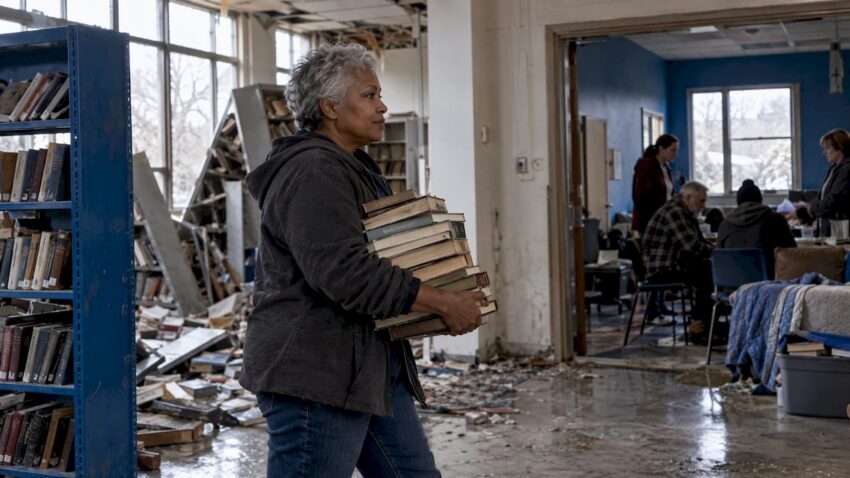
Redemption in dystopian fiction is rarely a clean pardon. It is a character, or a community, paying for harm done under a system that rewards doing harm, and finding that the payment changes something, even if it does not fix everything. The best dystopian stories make that change costly, partial and believable, which is why it lingers after the last page.
This guide walks through the main shapes redemption takes in dystopia, with examples you can read or watch, and explains what separates an earned ending from a cheap one.
TL;DR
- Dystopia is built to punish and flatten people, so redemption in it means a choice made against the system, not a reward the system hands out.
- Four patterns recur: sacrifice, collective rebuilding, reckoning with shame and guilt, and redemption that stays unfinished.
- Endings range from systems overcome to comprehensive defeat, and the ending type shapes how much redemption a story can offer.
- Psychological depth is what makes it land: the reader has to feel the guilt before the change can matter.
- If you want this theme in dystopian horror, our books are free with Kindle Unlimited.
Table of Contents
- What redemption means when the world is rigged
- Why redemption is hard to earn in dystopia
- Four shapes redemption takes
- How to tell earned redemption from a cheap one
- Why dark fiction suits this theme
- Perspective
- Start reading the theme in dystopian horror
- FAQ
- Sources
What redemption means when the world is rigged
In a conventional drama, redemption is moral: a person wrongs others, recognizes it, and acts differently. Dystopia complicates this because the wrongdoing is often built into the system. A guard, a censor or a soldier can do harm while following every rule, so the first act of redemption is seeing that the rules themselves are the problem.
That is why dystopian fiction pairs so naturally with guilt. A Yale Teachers Institute curriculum unit describes the genre as exposing real-world flaws and political corruption while asking readers to consider how societies might reverse wrongs and avoid dysfunctional outcomes. Reversing a wrong is redemption’s practical core. The question is who does the reversing, and at what price.
It also helps to separate redemption from two neighbors it is often mistaken for:
- Survival keeps a character alive. Redemption asks what the character does with the life.
- Rebellion opposes the system. Redemption can include rebellion, but it also needs an account of the character’s own part in the harm.
A rebel with clean hands is a hero. A rebel who once enforced the system, and knows it, is a redemption story.
Why redemption is hard to earn in dystopia
Dystopian endings do not all promise hope. A Middlebury Institute overview of five types of dystopian narrative separates stories where the system is overcome from those of conditional defeat, pyrrhic victory or comprehensive defeat, using The Hunger Games and 1984 as contrasting examples. The same overview notes that The Handmaid’s Tale leaves the protagonist’s personal resolution unclear, so resistance continues with its outcome open.
That range matters for redemption. In a comprehensive-defeat story such as 1984, the character cannot redeem himself because the system removes his ability to choose. In a pyrrhic victory, redemption exists but costs nearly everything. In an open ending, redemption is a direction rather than a destination.
For a reader, this is a useful lens. Before you start a dystopian novel, ask what kind of ending it is built for. A grim ending does not mean the theme is absent. Sometimes the whole point is to show what it costs to hold on to a conscience.
Four shapes redemption takes
Sacrifice: redemption through a costly choice
The most visible pattern is the character who turns on the system and pays for it. An Oxford Political Review essay on Mad Max: Fury Road contrasts Immortan Joe’s counterfeit promise of religious redemption with Furiosa’s effort to help the escaped women and transform the Citadel. Nux, the essay notes, turns away from the V8 cult and sacrifices himself for his comrades.
Two details make this work. First, the false version is shown beside the real one: the system sells a cheap afterlife reward, and the character rejects it for something harder. Second, the essay reads the Green Place, the hoped-for refuge, as proving unavailable, so the characters pursue a political form of redemption by revolutionizing the place they fled. Redemption is not escape. It is returning to fix what you left.
This pairs well with the theme of revenge. A character who starts by wanting payback and ends by choosing something else has made the most dramatic redemptive move available. We unpack that collision in redemption versus revenge.
Collective rebuilding: redemption as inheritance
Some stories refuse to make redemption a private matter. Rodney Smolla’s law review essay on Fahrenheit 451 presents Montag’s escape and alliance with the Book People as a contribution to preserving books and rebuilding after catastrophe. He frames the ending as a promise of human redemption through historical memory, care for survivors, and the hope that learning from past destruction can interrupt recurring war.
The weight here is intergenerational. Montag, a man who burned books for a living, cannot undo the burning. What he can do is carry knowledge forward. Redemption becomes a relay, passed on rather than completed.
Jasmin Kirkbride’s 2025 reading of Jeff VanderMeer’s Borne, in a scholarly article on radically hopeful climate fiction, points the same direction: Rachel and Wick return to the Balcony Cliffs, begin again, and invite others, especially feral children, into a new community. Readers who respond to this pattern often respond to the bonds that carry it, which we explore in found family in dystopia.
Shame and guilt: redemption that starts with being seen
Psychological dystopias go inward. KPBS reported in January 2023 that Marisa Crane’s I Keep My Exoskeletons to Myself imagines a future America where people judged to have harmed others receive an extra shadow that publicly marks and shames them. Crane says shame can make it difficult for people to heal, grow and move on. The novel’s protagonist, Kris, grieves her wife while raising a daughter who is also assigned an extra shadow, with close friends and family providing community. The coverage reads the book as putting love and chosen family at the center of healing in a punitive society.
The lesson is sharp: a system that brands guilt does not produce redemption. It produces concealment. Real change in such a story happens in the people who refuse to let the mark be the whole account of a person.
Amy Weiss-Meyer’s 2016 Atlantic review of David Means’s Hystopia describes a different approach to the same problem. In that Vietnam-era alternate America, a state program tries to treat trauma through reenactment and memory erasure. The review says the novel questions whether suppressing painful memories can heal: its characters must recover buried memories to move forward, while the state’s treatment may serve the country’s continued war more than the patients. Redemption, here, requires remembering.

The unfinished kind: redemption as a process
The most honest stories deny the reader a clean closure. Zachary Stevenson’s essay on Marilynne Robinson’s Gilead novels argues that reconciliation in the series is often partial: relationships bridge theological, familial, socioeconomic and racial divisions without erasing continuing alienation. Robinson places restoration beside unresolved injuries and loneliness, so redemption reads as an unfinished process. Gilead is not a dystopia in the strict sense, but the same logic of partial repair runs through the dystopian stories that earn their endings.
Kirkbride makes a similar point about Borne. Its ending leaves characters permanently affected by past horrors: Rachel does not tell Wick that she killed the Magician, and Wick never fully recovers his health. Revival is framed critically, not as simple salvation.
Margaret Atwood’s Oryx and Crake sits between hope and ruin. A scholarly essay on the novel, indexed under apocalypse and transgression, describes Jimmy/Snowman moving from passivity toward a morally consequential choice when he meets other human survivors, undergoing a personal catharsis and becoming morally responsible. The open ending suggests a new opportunity for humanity without promising it.
How to tell earned redemption from a cheap one
Whether you are reading or writing, a few tests separate a redemption that lands from one that feels pasted on:
- The harm is specific. We should see what the character did, not hear that they were bad. Guilt with no concrete memory behind it is decoration.
- The system offers a counterfeit. Fury Road’s false promise of glory shows what the real choice is up against.
- The cost is paid on the page. Sacrifice, loss or exposure, something the character cannot take back.
- Other people are involved. The harmed, the allies and the next generation all have a stake. Solitary absolution rarely convinces in a genre about collective failure.
- Something stays broken. Wick’s health never fully returns. A scar signals that the harm was real.
If you write fiction yourself, our guide to writing redemption arcs in seven stages works through how to build these beats, and redemption in horror shows how ritual can make atonement feel earned.
Why dark fiction suits this theme
Dystopia and horror share a method: put a person under pressure and watch what the pressure reveals. Add a supernatural or apocalyptic frame, and guilt can take a physical form, an enemy that follows, a world that will not let a character forget. Redemption then becomes more than a moral lesson. It is the only exit from a trap that the story has made frightening to stay inside.
That is also why psychological depth matters more than spectacle. A bubonic collapse or a condemned soul is a setting. What stays with a reader is the character’s private reckoning inside it. If you like to test your own conscience against a story’s choices, dystopian ethics books collects novels built for that, and dystopian horror novels pulls together haunting reads for readers who want the fear and the moral weight together.
Perspective
We write about guilt because we think it is the most honest engine a dark story can have. In our fiction, the monsters that matter most live inside the characters: the revenge they cannot put down, the thing they did that they cannot explain, the small chance that they could still be someone else.
That is where redemption belongs in a dystopia. Not as a reward at the end, but as a question that runs through every scene: will this person choose differently when it costs them everything?
Our books, The Nether and Evolution A200: A Bubonic Apocalypse among them, explore revenge, guilt and redemption through rich character development and intricate plots meant to leave you thinking after the story ends. We would rather give you an ending that unsettles and stays with you than one that tidies everything away.
Nathaniel
Start reading the theme in dystopian horror
If the patterns above are the ones you read for, The Nether Series and the EA200 Series bring revenge, guilt and redemption into dark supernatural and dystopian horror. Every title is available in ebook and paperback on Amazon and is free to read for Kindle Unlimited subscribers. Browse the full list on our books page, or begin with Evolution A200: A Bubonic Apocalypse.

If you already subscribe, our Kindle Unlimited tips cover how to get more from it.
FAQ
What does redemption mean in dystopian fiction?
It means a character, or a community, acts against a corrupt system and takes responsibility for harm done within it. Unlike plain rebellion, it includes an honest accounting of the character’s own part. The result is often partial, a change in direction rather than a full pardon.
Can a dystopian story have redemption and still end badly?
Yes. In the Middlebury Institute’s typology, endings include pyrrhic victory and conditional defeat, where something is gained at great cost. A character can redeem a conscience and still lose the fight, and the loss is part of why the redemption feels real.
Which dystopian stories are good examples of redemption?
Fahrenheit 451 offers collective, intergenerational redemption through Montag’s alliance with the Book People. Mad Max: Fury Road gives sacrifice and political transformation through Furiosa and Nux. Oryx and Crake and Borne show redemption that is open or unfinished. For horror readers, our redemption arc books list goes further.
How is redemption different from revenge in these stories?
Revenge answers harm with harm and keeps the cycle running. Redemption breaks it, usually by choosing repair, memory or sacrifice over payback. Many dark stories put both in one character and let the reader watch which one wins.
Sources
- Reexamining our World through Dystopian Literature, Yale Teachers Institute
- The Five Types of Dystopian Narrative, Middlebury Institute
- Mad Max, Fury Road: Imagining Redemption in a Dystopian Representation of the Present, Oxford Political Review
- The Life of the Mind and a Life of Meaning, Michigan Law Review
- Radically Hopeful Dystopian Climate Fiction, Taylor & Francis
- Debut novel marks shame with extra shadows, KPBS
- David Means’s Novel Hystopia, The Atlantic
- Our Experience is Fragmentary: Partial Redemption in Robinson’s Gilead novels, BYU ScholarsArchive
- Dystopian fiction, apocalypse, transgression: Oryx and Crake, AFIAL