The best single location horror ideas pair one place with one reason nobody can leave and one secret that gets worse the longer they stay. Below are 15 premises you can write as a story or shoot as a short, plus a method for turning any of them into a complete draft.
TL;DR
- A single-location story needs a primary location, a short time span and a limited cast, and its engine is conflict, not a small budget.
- Decide what keeps people inside: a physical cage (a bunker, a car) or a situational one (obligation, hierarchy, a promise).
- Escalate by changing the danger, the personal cost or what the character understands, never by repeating the same attack.
- Pick two or three sensory details and one impossible detail, and the familiar room turns uncanny.
- The 15 premises below are starting points: each lists the room, the cage and the secret.
Table of Contents
- What counts as a single-location horror story
- Start with the cage, not the monster
- 15 single location horror ideas
- How to choose between these premises
- Make a familiar room unsettling
- Keep tension rising when nobody can leave
- Give the people inside conflicting goals
- From idea to full story in six steps
- Perspective
- Read how contained dread feels on the page
- FAQ
- Sources
What counts as a single-location horror story
People search for this under several names. A single-location movie is usually called a contained film, while a chamber film puts the weight on concentrated psychological conflict and interpersonal pressure rather than on the physical space alone. For horror, the distinction is useful: a contained story traps bodies, a chamber story traps relationships, and the strongest ideas do both.
No Film School describes a contained story as one with a primary location, a short time span and a limited cast, and it adds that the dramatic engine should be intensified conflict rather than merely a smaller scale. Keep that sentence in mind. A cheap set does not make a good premise. A good premise makes the set unavoidable.
Start with the cage, not the monster
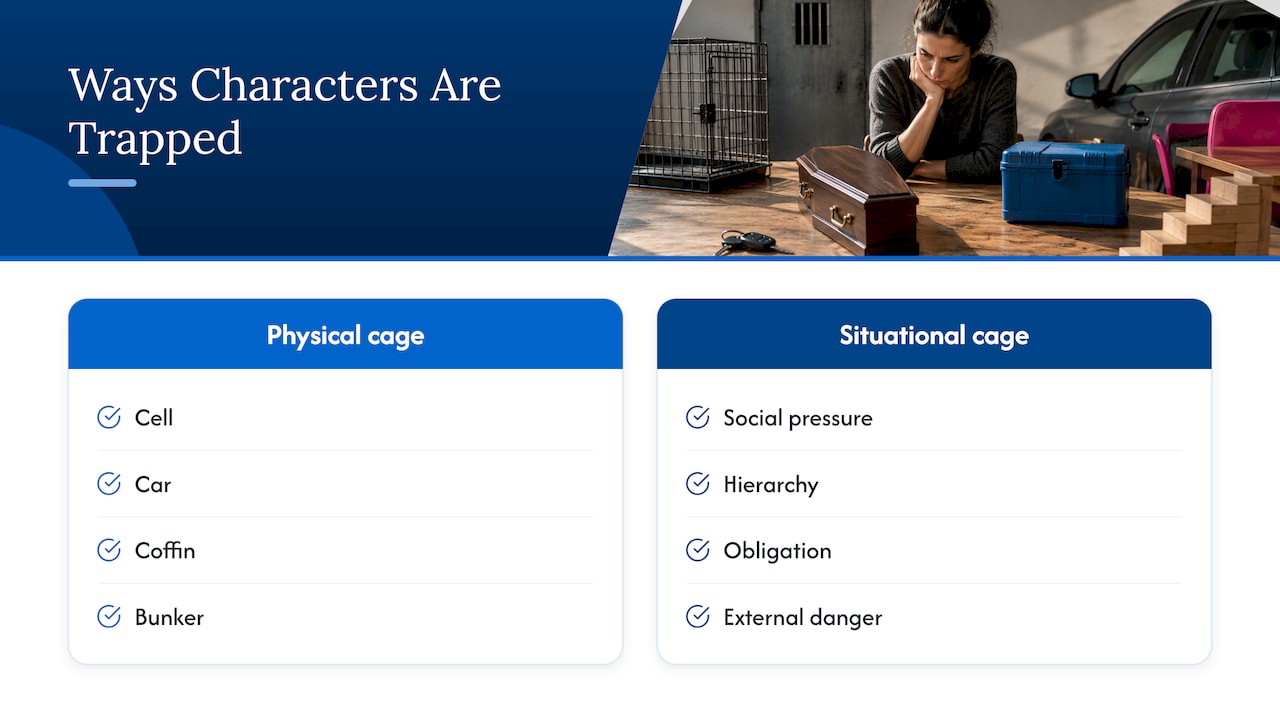
Before you pick a room, pick the reason nobody walks out. No Film School separates a physical cage, such as a cell, car, coffin, bunker or locked room, from a situational cage built from social pressure, hierarchy, obligation or external danger.
The same source says to make the cage feel airtight without contrivance by planting and paying off every element that prevents departure. If a reader asks “why don’t they just leave?” and your answer arrives late, the tension leaks. Answer it in the first pages.
The second decision is how remote the place feels. Writer’s Digest notes that a strong setting anchors the story in a specific time and location, and that physical remoteness can make escape nearly impossible while emotional isolation can imprison a character in anger, grief or trauma. You can use either, or let one hide inside the other.
15 single location horror ideas
The first seven are adapted from the contained concepts in Raindance’s seven-room shoot, which show that sound, playback, a closed door, a required confession, an empty chair or a repeating room can sustain escalation without a conventional monster. The rest are our own variations on the same principle.
Rooms where something is wrong with the evidence
- The home recording studio. A musician plays back last night’s session and hears a prediction. Cage: a storm and a dead phone. Secret: the voice knows what she did.
- The house of photographs. Every new print shows an event that has not happened yet. Cage: the photos show what is outside. Secret: the last frame shows the viewer.
- The empty flat. A new tenant hears a voice behind a locked bedroom that the landlord swears does not exist. Cage: a lease and no money to leave. Secret: the voice knows the previous tenant.
- The emergency-line training office. A trainee runs a night of practice calls, and one caller is not part of the script. Cage: a lockdown policy. Secret: the caller reports a crime inside the building.
Rooms where the relationships are the trap
- The funeral room. Siblings gather and face their mother’s last request. Cage: the will, and the body in the room. Secret: she asked for something none of them can say aloud.
- The rehearsal room. A theater troupe notices that applause from an empty house answers only true statements. Cage: opening night. Secret: someone has been lying to the whole company.
- The dining room. A family keeps an empty chair at the table. Tonight it is not empty. Cage: a ritual nobody dares break. Secret: who sat there last.
- The wedding suite. A couple locked in a hotel room before the ceremony finds notes under the door in the groom’s handwriting. Cage: a fire door that will not open. Secret: he wrote them years ago.
- The cabin for two. A getaway meant to repair a marriage. Horror here is relational: Osgood Perkins describes his film Keeper as exploring the strangeness of intimate relationships inside a familiar cabin frame. Cage: snow. Secret: only one of them remembers the last visit.
Places built to confine
- The elevator at 3 a.m. Four strangers, one stalled car, and a floor button that should not exist. Cage: steel and a dead signal. Secret: all four were on the same incident report.
- The moving boat. Writers Online calls a boat a useful contained setting because it supplies confined space and many hazards: breakdown, getting lost, sinking, fire, poisonous gas. Add a passenger count that is off by one.
- The night-shift laundromat. Fluorescent light, one clerk, a dryer that tumbles something nobody put in. Cage: a locked front door with the key on the other side.
- The secluded farm. Writer’s Digest uses a secluded, menacing farm to show how routine can be disrupted. Try a harvest crew where the daily count of workers never matches.
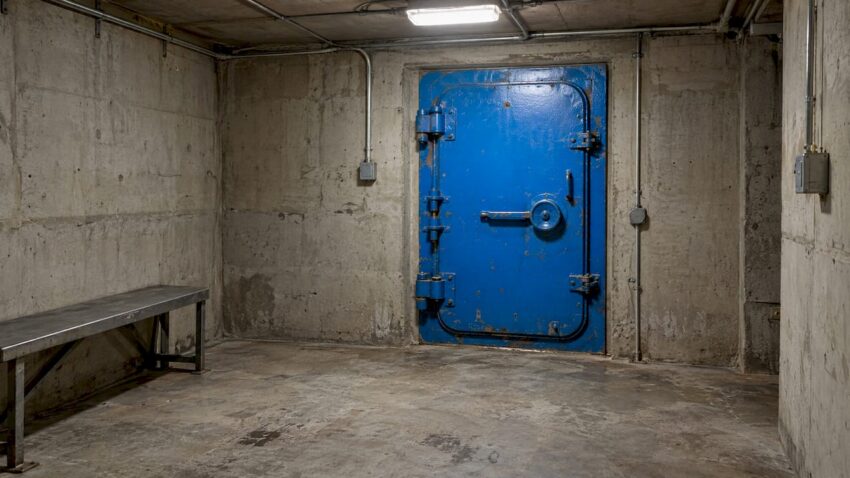
- The bunker. A couple of survivors, a hatch that only opens from outside, and a radio that repeats their own conversations an hour later.
- The parked car. Two people, one night, a locked door and a passenger window that shows a different street each time they look.
How to choose between these premises
Run each idea through four quick filters:
- Cage: can you explain in one sentence why they cannot leave?
- Cast: can you tell it with two to five people?
- Secret: is there hidden information that gives each person something to lose?
- Clock: is something running out, such as air, daylight, battery, a deadline?
If an idea fails two of the four, change the room or the people before you write a word. Our own story on writing horror shorts for a low budget goes deeper on shooting these with almost no money.
Make a familiar room unsettling
Atmosphere Press recommends sensory detail, meaning sound, texture, smell, temperature, light and shadow, and transforming a familiar place into a frightening one. Mark Watson’s advice is narrower and more useful: choose two or three details instead of cataloguing every surface, and add one impossible detail.
Try it on the laundromat. Don’t describe every machine. Give the hum, the warm plastic smell, and one dryer door that is cold to the touch while the drum spins. That is enough.
L. Marie Wood suggests treating the space as an active threat with personality, with limitations, consequences, history, textures, smells and sounds, rather than a neutral box. Give your room rules the characters slowly learn.
For more on the craft of fear without blood, see our piece on horror atmosphere versus gore and our guide to writing dread.
Keep tension rising when nobody can leave
This is where most contained stories sag. Three habits help.
Shrink the options slowly. Wood recommends narrowing choices gradually while still offering possible exits or tools, and making every attempted solution costly or risky. She also describes escalating from inconvenience to danger: a sticking door or missing phone signal first, then failing lights, altered air, repeated sounds and vanishing exits.
Establish, then interrupt. Writer’s Digest advises first familiarizing readers with the setting, then interrupting its patterns so ordinary events become strange. Show the dinner ritual twice before the chair fills.
Escalate three ways. Hillshire Media says each major event should raise danger, personal cost or understanding, and the strongest scenes do all three and force a harder decision. Repeated attacks alone make a contained story feel repetitive.
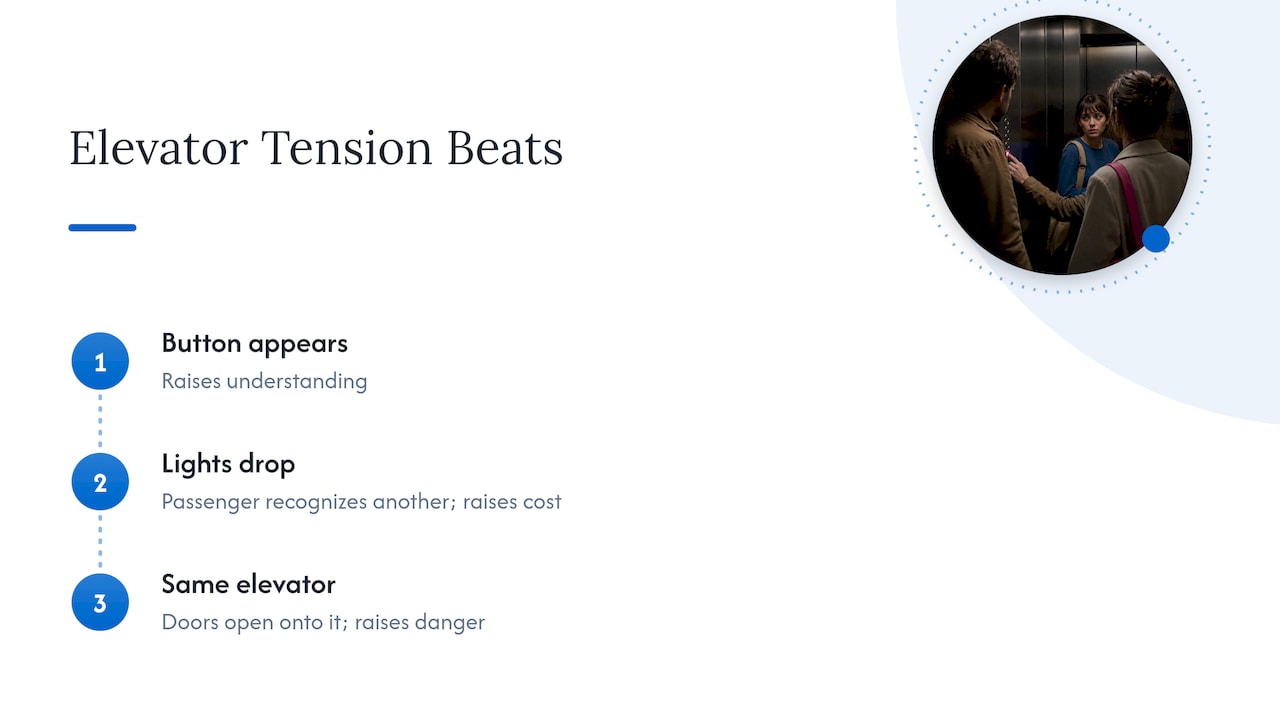
A worked example with the elevator: first the button appears (understanding), then the lights drop and one passenger recognizes another (cost), then the doors open onto a floor that is the same elevator (danger). Each beat changes something.
Give the people inside conflicting goals
A room full of people who want the same thing is a lecture. No Film School recommends conflicting goals, clashing values and hidden information, which produce turning points and shifts in leverage and power. In the funeral room, one sibling wants the request honored, one wants it buried, one wants to leave. Each also knows something the others do not.
Haunted places work best as metaphors for the relationship under strain. Writer’s Digest reads the ghosts of American Horror Story as the Harmon marriage’s betrayal and guilt. Ask what your room is a metaphor for, then let it punish exactly that.
Point of view matters too. One horror writer argues that readers need mental, emotional and physical connection with the viewpoint character, so stay close inside one head.
From idea to full story in six steps
- Find your fear. Atmosphere Press suggests listing five personal fears, choosing one, and sketching protagonist, antagonist and stakes.
- Write the premise line. Hillshire Media’s formula joins a vulnerable protagonist, a disturbing force, an immediate objective, personal stakes, an irreversible loss and a constraint that blocks easy escape.
- Lock the cage. Plant every reason they cannot leave in the first act.
- Map the space. Sketch rooms and objects so each one can be used, broken or turned against someone later.
- Set a clock. A short time span keeps pressure high.
- Pay off the secret. Reveal it when it costs the most.
If you are headed to the screen, our notes on horror short film structure and coming up with a concept pick up from here.
Perspective
We write dark supernatural fiction about guilt, revenge and redemption, and we keep coming back to the same lesson: the scariest room is the one a character carries with them. A locked door is only a door until someone inside has something to hide.
That is why we lean on psychological pressure over spectacle. When the cage is a memory, a promise or a person, the reader cannot skim past it, and the story lingers after the last page. Our books are built around that idea, with characters who are their own worst haunting.
If you are choosing between a clever setting and a wounded character, pick the character. The setting will find its teeth on its own.
Nathaniel
Read how contained dread feels on the page
If you learn by reading, our dystopian horror and dark supernatural fiction shows psychological pressure at work. Start with The Nether, or browse the Nether and EA200 series in ebook or paperback on Amazon, or read them free with Kindle Unlimited.
For more reading in this vein, see our list of claustrophobic horror books with trigger notes.
FAQ
What are single location movies called?
Most often they are called contained films. A chamber film is a close cousin that focuses on concentrated psychological conflict between a few characters rather than on the space itself. Many strong horror stories are both.
What makes a good single location horror idea?
A good idea has a believable reason nobody can leave, a small cast with conflicting goals, and hidden information that surfaces over time. The location should shape the fear, not just hold it.
Can a single location horror story work without a monster?
Yes. Sound, playback, a confession, an empty chair or a repeating room can drive escalation on their own. Relationship tension, guilt and grief often supply the threat.
How long should a contained horror story be?
The format suits short stories and short films especially well, because a limited cast and short time span stay tight over a small number of pages. Longer work needs more reversals in danger, cost and understanding.
Sources
- Seven Rooms. Seven Nightmares. Seven Days to Shoot. (Raindance)
- Chamber Films vs Contained Movies (Creative Screenwriting)
- How to Write (and Direct) a Contained Story (No Film School)
- Dark Corners: 4 Strategies for Developing Horror Settings (Writer’s Digest)
- Unlocking the locked-room mystery (Writers Online)
- How to Write a Horror Novel (Atmosphere Press)
- Writing Scary Settings (Mark Watson Books)
- The Horror of Being Trapped (L. Marie Wood)
- Osgood Perkins and Tatiana Maslany on Keeper (Collider)
- Horror Stories: 6 Keys to Writing Stories That Will Scare (Writer’s Digest)
- How to Write a Horror Book That Keeps Readers Hooked (Hillshire Media)
- What makes a great horror story? (Winding Road Stories)