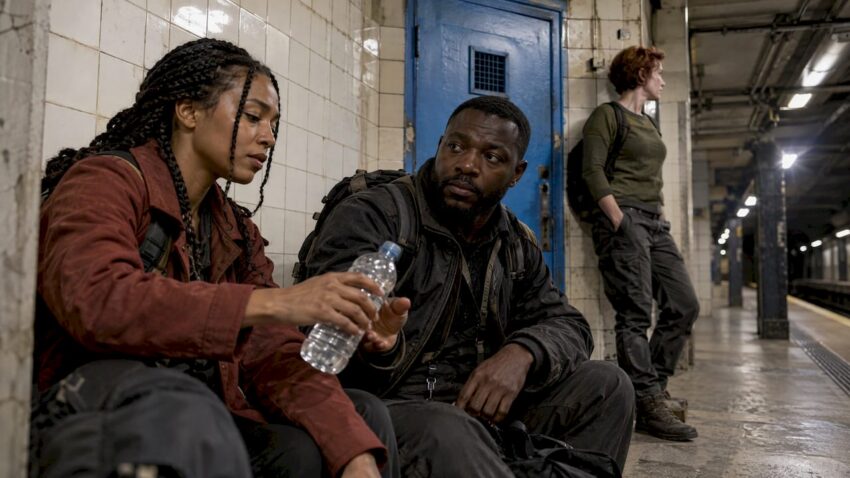
Found family in dystopia is a group of unrelated characters who take on the roles blood relatives cannot or will not fill, and who do it under a system built to isolate them. The bond works as a survival strategy and as a quiet act of defiance. In the best stories it also becomes the place where characters are changed, for better or worse. This guide explains what the trope means, why dystopian settings suit it so well, how to spot a convincing one, and what to read next.
TL;DR
- Found family means a chosen group that provides belonging, purpose and understanding when a character’s biological or legal family cannot.
- Dystopias intensify the trope because oppressive systems break ordinary family ties and force people to build secret, loyal alternatives.
- The most convincing chosen families grow through small, ordinary moments and real conflict, not through crisis alone.
- Readers who want psychological depth should look for bonds that change characters, including bonds that carry guilt.
- Our dark dystopian books are free to read with Kindle Unlimited, so you can explore the themes without extra cost.
Table of Contents
- What found family means in dystopian fiction
- Why the theme resonates in dystopian settings
- How oppressive systems shape the bonds
- What makes a dystopian found family feel real
- A reader’s checklist for psychologically deep dystopias
- When the family itself is dark
- Our perspective
- Start reading the dark stuff
- FAQ
- Sources
What found family means in dystopian fiction
A found family, sometimes called a chosen family, is a group of people who form deep, familial connections without blood relations. According to The Indiependent’s guide to the trope, this usually happens in response to loss, rejection or displacement from the biological family.
An academic thesis from Penn State’s honors program gives a more precise definition. It describes a found family as a group that supplies material and emotional needs, such as belonging, purpose and understanding, when a person’s existing family is unable or unwilling to. The same work separates two forms:
- Substitutional families replace the blood or legal family entirely.
- Supplemental families meet the needs that the biological family leaves unmet.
That distinction is useful when you read dystopian fiction. A character who has lost every relative to a plague, a purge or a prison camp needs a substitutional family. A character who still has parents but lives under a regime that demands those parents inform on them needs something supplemental, a place where the real self is safe.
Why the dystopian version is different
In a contemporary novel, a found family is often a warm refuge. In a dystopia, it is also a risk. Belonging to the wrong group can be illegal. Trusting the wrong person can be fatal. That tension makes every act of loyalty carry weight, and it is why the trope shows up so often in dark speculative fiction.
If you are still sorting out the genre itself, our guide to how dystopian and post-apocalyptic stories differ explains why the same trope behaves differently in a controlling society than in a collapsed one.
Why the theme resonates in dystopian settings
There are a few reasons chosen family and dystopia fit together so well.
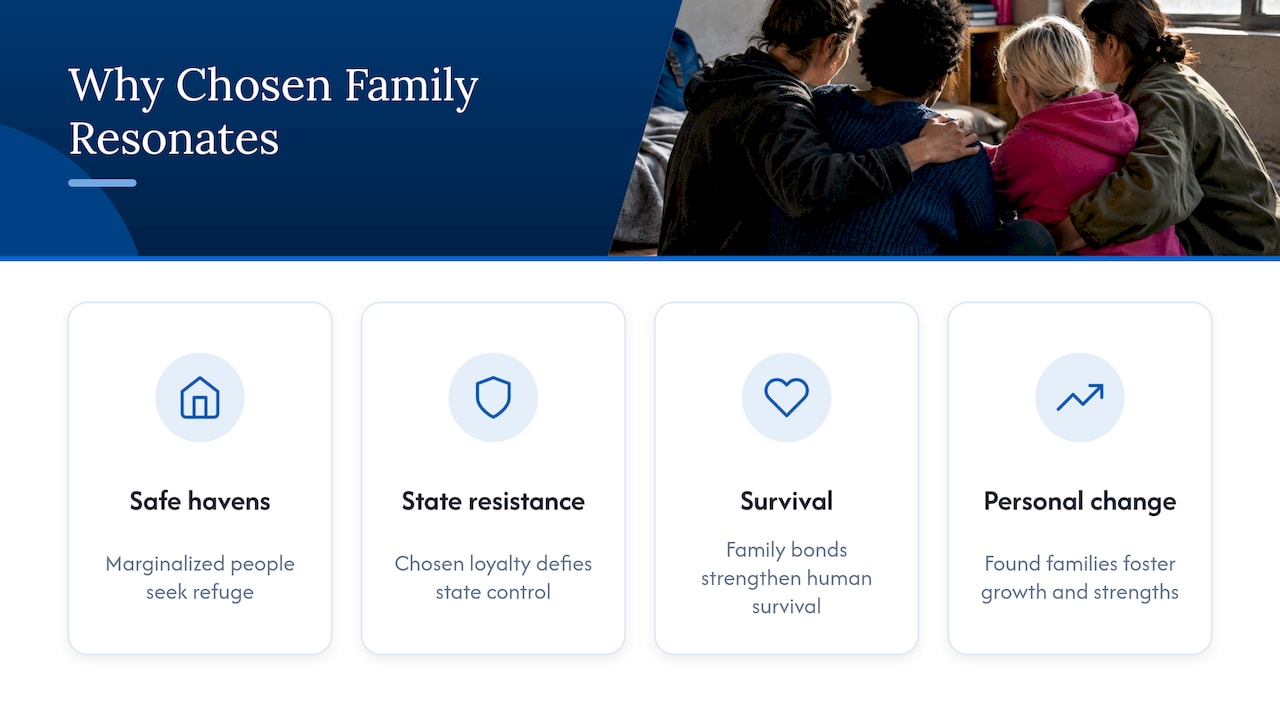
It mirrors real experience. The Indiependent notes that the trope reflects the lives of marginalized people who look for safe havens beyond their biological roots. It offers a model of connection based on choice, loyalty and empathy instead of rigid labels or biological obligation. Dystopias exaggerate the pressures that make such havens necessary, so the metaphor lands harder.
It answers the central dystopian threat. Dystopian regimes work by isolating individuals: severing loyalties, replacing them with loyalty to the state, and making every neighbor a potential informant. A chosen family is the direct counter-move. It is a loyalty the state did not authorize.
It raises the stakes of survival. Novelist Justin Cronin, in an interview with Publishers Weekly, argued that family bonds strengthen the survivability of the human species. Even if you read that as one author’s perspective rather than settled science, it explains why so many survival stories turn on who travels together.
It lets characters change. A craft essay on the author Lauren DeStefano observes that found families can help characters grow, face their weaknesses and develop new strengths beyond simple support. In a dystopia, where the old self is often the first casualty, that transformation is the emotional payoff readers come for.
How oppressive systems shape the bonds
The surrounding danger does more than push characters together. It shapes what the family looks like, how it behaves and what it costs.
Secret networks under surveillance
One academic study of trauma and intimacy in Margaret Atwood’s Gilead describes how characters form clandestine support networks that give emotional and practical help, easing trauma and creating belonging under an oppressive regime. Notice the word clandestine. The family has to hide, so intimacy becomes coded: a glance, a shared task, a whispered name.
Kinship as survival and resistance
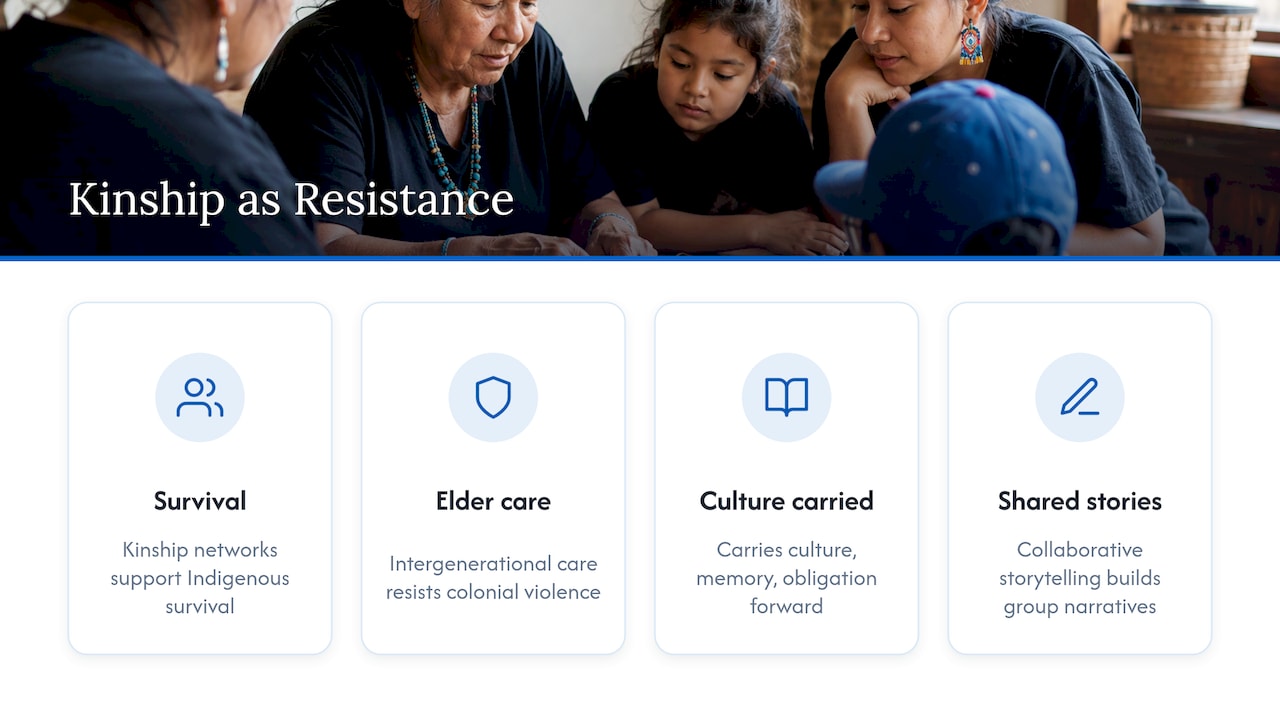
Indigenous-authored speculative fiction treats this theme with particular depth. A 2025 article on care and liberation in apocalyptic fiction argues that in Cherie Dimaline’s The Marrow Thieves, networks of kinship are key to Indigenous survival in an apocalyptic setting.
A second 2025 study goes further. It finds that in Indigenous-authored dystopias, intergenerational care and Elder mentorship work as a form of resistance against the extractive violence of settler colonialism. The same study reports Dimaline’s view that peoples who have already survived an apocalypse make ideal protagonists for redefining kinship as resistance.
This reframes the trope. A found family is not only a comfort. It can be a way of carrying culture, memory and obligation forward when a system is trying to erase them. Kinship stories are also built through shared telling, and collaborative storytelling shows how a group can construct a narrative together, much as these characters construct a family.
Shared adversity as the starting point
Craft guidance from River Editor notes that found families often form through shared adversity and shared goals, with vulnerability and support slowly building trust and intimacy. That is the template most dystopian novels follow: a mission, a hiding place or a journey puts strangers in the same danger, and the bond grows from what they endure together.
What makes a dystopian found family feel real
Anyone can put five survivors in a bunker and call them a family. The difference between a convincing bond and a decorative one comes down to a handful of choices.
Small moments, not only crisis
The craft essay on DeStefano’s work argues that these relationships feel believable when they are built through accumulated small, ordinary moments rather than dramatic events alone. Think of sharing the last of the water, noticing who sleeps badly, or learning someone’s habits well enough to predict them. A gunfight can show courage, but only routine can show closeness.
Friction before trust
The same source stresses that characters should be able to resist or clash before the connection develops, and that found families should not bond too quickly. In a dystopia this is natural, because survivors often hold different strategies. One wants to hide. One wants to fight. One wants to bargain. Conflict that comes from those differences feels earned.
Conflict that requires repair
River Editor’s guide says realistic found-family dynamics include conflicts that must be repaired through actions and conversations rather than simple apologies. A character who betrays the group and is forgiven in one line has not been forgiven in any way a reader believes. A character who spends three chapters earning it has.
Different bonds for different people
Lynn Krueger of Lynn’s Author Studio observes that the strongest chosen families avoid uniform relationships. One member may bond intellectually with another, protectively with a third and emotionally with a fourth, each meeting a different need. When every pair in the group relates the same way, the family reads as a cast list.
Voluntary and maintained
Chandler Supple of River Editor notes that these bonds feel more meaningful because they are voluntary and actively maintained. He adds that physical comfort and small non-verbal cues often say more than words about deep, platonic intimacy. A hand on a shoulder at the right time can do more than a speech.
A reader’s checklist for psychologically deep dystopias
If you want dystopian stories where the found family carries emotional weight, here is what to look for as you browse.
- A bond that changes someone. Does the group force a character to grow, confront a weakness or become someone new? Transformation is the sign that the family matters to the plot, not just the mood.
- Specific needs. Does each member need something different from the group? Look for characters who are drawn together for distinct reasons, not just proximity.
- Everyday texture. Are there quiet scenes of ordinary care between the set pieces? Those are the moments that make the loss scenes hurt.
- Conflict with consequences. Do arguments leave marks that have to be repaired, or do they vanish by the next chapter?
- The system as pressure. Does the oppressive world actively shape the family, through secrecy, scarcity or fear, instead of serving as a backdrop?
- Moral weight. Do the characters face choices where loyalty to the group costs them something? Our list of dystopian ethics books is built around exactly those tests of conscience.
Where to go next
How much dread you want, and for how long, will shape your pick. If you like your tension compressed, start with short dystopian novels you can finish in a sitting, or sample the form through dystopian short stories. If you want the horror to lead, our roundup of dystopian horror novels is the place to start. And if the question that interests you is who you would travel with after everything falls, the post-apocalyptic survival books list and our look at apocalyptic survival ethics follow that thread.
When the family itself is dark
Found family is usually written as warmth, but dystopian horror has room for the shadow side. A chosen family can be a place where guilt is shared, where a group keeps a terrible secret together, or where loyalty is demanded at a price. The craft sources above point to the same truth from the opposite direction: a bond that has been tested, strained and repaired reads as real, and a bond that has never been uncomfortable does not.
This is also where psychological depth enters. Horror that works on the mind is less interested in what the monster does than in what the group does to itself under pressure. If that distinction interests you, our piece on psychological thriller versus horror draws the line, and the explainer on what dystopian horror means shows how a society itself can become the monster the family has to survive.
Our perspective
We write dark supernatural and dystopian fiction about revenge, guilt and redemption, and we keep coming back to one conviction: the most frightening thing in a ruined world is rarely the ruin. It is what people do to one another, and what they will do for one another, once the old rules are gone.
That is why we put so much work into character. A bond between two people in a dark story only matters if we know what each of them is carrying. Our books aim for rich character development and plots that linger, so the relationships are not decoration. They are where the psychological pressure shows up.
We also think readers deserve access without a barrier. Our books, including The Nether, Stories of a Condemned Soul and Evolution A200: A Bubonic Apocalypse, are available on Kindle Unlimited, so subscribers can read the whole story without paying extra. If you came here looking for dystopian fiction where emotion runs as deep as the dread, we wrote it for you.
Nathaniel
Start reading the dark stuff
If you want dystopian horror where the psychology matters as much as the plot, our books are built for that. The Nether and the Evolution A200 series are available as ebooks and paperbacks on Amazon, and they are free to read with a Kindle Unlimited subscription. Browse the full Nathaniel Connors book collection to pick your starting point.
Starting with the apocalypse? Evolution A200: A Bubonic Apocalypse is where that series begins. Prefer something more haunted and personal? Try The Nether. If you are a subscriber, our Kindle Unlimited tips will help you get more from your membership.
FAQ
What is found family in a dystopian story?
It is a group of characters who are not related but act as family, usually because their real families are gone, hostile or controlled by the regime. Academic work divides these groups into substitutional ones, which replace blood family, and supplemental ones, which fill gaps the biological family leaves. In a dystopia, the bond is often secret and risky.
Why do dystopian novels use found family so often?
Oppressive systems tend to break up natural loyalties, so a chosen family becomes the clearest form of resistance and survival. It also mirrors real experiences of people who seek safety beyond their biological roots. And it gives characters someone to change alongside, which makes the story more emotional.
How do you make a found family feel believable?
Let trust build through small, ordinary moments instead of one big rescue. Give characters different survival strategies so they can clash. Make conflicts require real repair through actions, not a quick apology. Craft guides from River Editor and Lynn’s Author Studio both make these points.
Can a found family be a source of horror?
Yes. A chosen group can share guilt, keep dangerous secrets or demand loyalty at a cost. That is where psychological horror often lives, in the pressure between people rather than in an external threat. Those stories ask what loyalty is worth when the world has no rules.
Where can I read dark dystopian fiction on Kindle Unlimited?
Our Nathaniel Connors books, including The Nether and Evolution A200: A Bubonic Apocalypse, are available on Kindle Unlimited. Subscribers can read them without an additional purchase. You can also buy them as ebooks or paperbacks on Amazon.
Sources
- Penn State Honors College thesis on found family (2021)
- A Deep Dive Into Tropes: Found Family, The Indiependent
- PW Talks with Justin Cronin, Publishers Weekly (2012)
- How Lauren DeStefano Creates Authentic Relationships, Lynn’s Author Studio
- The Legacy of Trauma and Intimacy: Intergenerational Impact (2024)
- Care and Liberation in the Black Anthropocenes (2025)
- Care as Resistance: Indigenous Feminist and Queer perspectives (2025)
- How to Write Found Family Dynamics That Feel Earned, River Editor (2026)