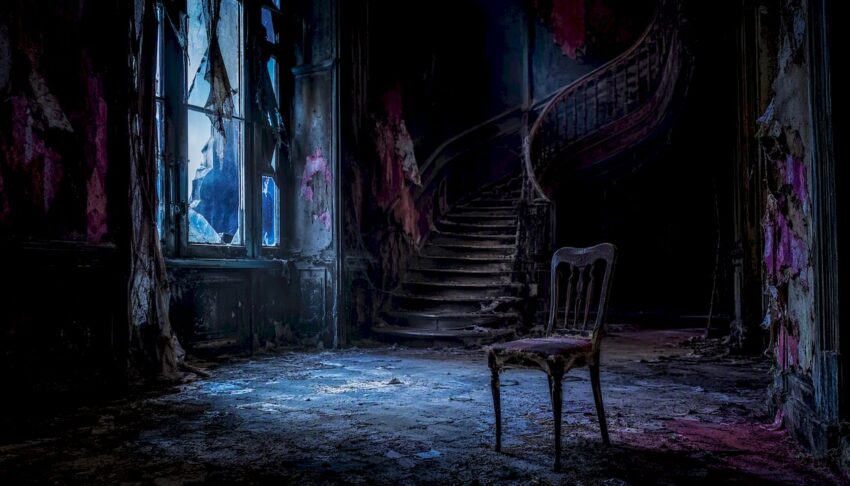
Horror subgenres are distinct approaches to eliciting fear, each defined by recurring themes, tone, and techniques that target a specific emotional response. Think of them the way Mental Floss frames it: just as music fans gravitate toward jazz or metal based on how they want to feel, horror fans connect to different expressions of dread. The taxonomy isn’t rigid, but it’s genuinely useful.
The major clusters break down like this:
- Psychological and elevated/arthouse (mind-focused dread, unreliable reality)
- Supernatural and paranormal (ghosts, demons, possession)
- Visceral/gore (splatter, body horror, cannibal)
- Creature and monster (animal, alien, mythological)
- Folk, occult, and witch (ritual, community, ancient belief)
- Speculative (sci-fi/techno, cosmic/Lovecraftian, pandemic/medical)
- Hybrid and formal (found footage, analog horror, comedy-horror, giallo)
The canonical films that anchor this guide span more than six decades: Psycho (1960), Rosemary’s Baby (1968), Night of the Living Dead (1968), The Exorcist (1973), Halloween (1978), Alien (1979), The Shining (1980), The Thing (1982), A Nightmare on Elm Street (1984), Get Out (2017), Hereditary (2018), and The Babadook (2014). H. P. Lovecraft’s fiction anchors the cosmic horror tradition. One thing to expect throughout: most great horror films borrow from more than one subgenre, and that’s a feature, not a flaw.
Key Takeaways
Horror subgenres are the clearest map available for matching your emotional tolerance to the right film or book — and knowing the taxonomy makes you a sharper reader, viewer, and writer.
| Point | Details |
|---|---|
| Subgenres target different fears | Psychological horror produces terror; cosmic horror produces existential dread; visceral/gore targets revulsion. |
| Three signals classify most films | Check antagonist origin, primary emotion targeted, and visual intensity to place any film in its dominant subgenre. |
| Overlap is normal | Most great horror films blend subgenres; identify the primary “fear engine” rather than forcing a single label. |
| Comfort level guides entry points | Start with psychological or supernatural horror; approach body horror and splatter only after calibrating your tolerance. |
| Nathanielconnors maps to multiple subgenres | Evolution A200 covers pandemic/dystopian horror; The Nether covers dark supernatural — both available on Kindle Unlimited. |
Table of Contents
- What actually makes something “horror”?
- How horror evolved from Gothic novels to analog dread
- The major horror subgenres, defined one by one
- How to tell subgenres apart and find what fits your taste
- Why subgenre awareness changes how you read and write horror
- Read fiction that actually lives in these subgenres
- Sources
What actually makes something “horror”?
Horror is defined by one core contract with the audience: it asks you to feel afraid. But the type of fear varies enormously, and those variations are what separate subgenres from each other.
The genre’s shared characteristics include:
- Threat — something endangers a character’s body, mind, identity, or soul
- Transgression — a boundary (natural, moral, or physical) is crossed
- Vulnerability — the protagonist lacks full control or knowledge
- Dread vs. startle — sustained atmospheric tension versus sudden shock
Cinematic technique shapes which of those elements dominates. Sound design is probably the most underrated tool: Bernard Herrmann’s strings in Psycho trained audiences to associate staccato violins with imminent violence. POV framing pulls viewers into the protagonist’s limited sightline, making the unknown feel immediate. Practical effects, especially in body horror, create revulsion that CGI rarely matches because the audience knows something physical was actually built.
The emotional aims also differ sharply by subgenre. Psychological horror targets terror (the anticipation of something awful). Supernatural horror often aims for uncanny dread (the wrongness of something that shouldn’t exist). Visceral/gore horror goes for revulsion and a kind of transgressive thrill. Cosmic horror produces existential dread, the feeling that the universe is indifferent and vast and you are very small.
Pro Tip: To identify a subgenre quickly, ask three questions: Where does the threat come from (human, supernatural, or unknown)? What emotion does the story primarily target (terror, revulsion, or existential dread)? How graphic is the body emphasis? Those three signals, outlined by LA Film School, will place most films in the right cluster within minutes.
How horror evolved from Gothic novels to analog dread
Horror didn’t arrive fully formed. It grew through distinct waves, each one reacting to the anxieties of its era, and understanding that arc explains why certain conventions feel dated or fresh.
Gothic literature (late 18th–19th century) gave the genre its DNA: crumbling architecture, aristocratic menace, psychological torment, and the supernatural as a metaphor for repressed desire. Mary Shelley’s Frankenstein (1818) and Bram Stoker’s Dracula (1897) established templates that still run through modern horror.
Early cinema (1920s–1930s) translated Gothic imagery to screen. Nosferatu (1922) codified the vampire film. Universal’s monster cycle — Dracula (1931), Frankenstein (1931), The Wolf Man (1941) — gave the genre its first studio infrastructure and its first recognizable subgenre: the classic monster film.
Postwar reinvention (1950s–1960s) brought science fiction anxiety into the mix. Atomic-age creature features reflected Cold War paranoia. Then Alfred Hitchcock’s Psycho (1960) broke the mold entirely: the monster was human, the violence was psychological, and the shower scene proved that suggestion could be more disturbing than explicit gore. Rosemary’s Baby (1968) and Night of the Living Dead (1968) arrived the same year, one establishing occult paranoia and one inventing the modern zombie film, as Wikipedia’s horror film history documents.
The 1970s–1980s golden era produced the films most people think of when they hear “horror.” The Exorcist (1973) defined supernatural possession. Halloween (1978) codified slasher conventions: the masked killer, the final girl, the suburban setting. Alien (1979) fused sci-fi and body horror in a way that felt genuinely new. The Shining (1980) pushed psychological horror into high art. The Thing (1982) took practical body horror to an extreme that still unsettles viewers. Filmsite’s curated horror history maps how each of these films shaped the conventions that followed.
The 1990s–2000s brought meta-awareness (Scream, 1996), found footage (The Blair Witch Project, 1999; Paranormal Activity, 2007), and a wave of J-horror (Ringu, 1998; Ju-On, 2002) that introduced new visual grammar — long black hair, jerky movement, cursed media — rooted in Japanese folklore and contemporary anxieties about technology.
The 2010s–present saw two major shifts. First, what critics call “elevated horror” (films like Hereditary, 2018, and The Babadook, 2014) prioritized grief, trauma, and atmosphere over conventional scares. Second, analog horror emerged as a digital-native subgenre, using the aesthetic of degraded VHS or public-access footage to unsettle viewers through nostalgia and format distortion.
Regional horror deserves its own note. South Korean cinema (A Tale of Two Sisters, 2003; The Wailing, 2016), Thai horror (Shutter, 2004), and Indonesian horror (Impetigore, 2019) draw on local folklore, religious belief, and social hierarchies to produce fear that feels culturally specific. These films demonstrate that horror’s emotional mechanics are universal even when the mythology is not, a point Wikipedia’s genre overview makes clearly.
| Era | Milestone Film | Subgenre Impact |
|---|---|---|
| 1960 | Psycho | Established psychological/slasher proto-conventions |
| 1968 | Night of the Living Dead | Invented the modern zombie subgenre |
| 1968 | Rosemary’s Baby | Defined occult/folk paranoia horror |
| 1973 | The Exorcist | Set the template for supernatural possession |
| 1978 | Halloween | Codified slasher structure and iconography |
| 1979 | Alien | Merged sci-fi with body horror |
| 1980 | The Shining | Pushed psychological horror toward literary prestige |
| 1982 | The Thing | Elevated practical body horror to its peak |
| 1999 | The Blair Witch Project | Launched found footage as a mainstream format |
| 2017 | Get Out | Defined social/psychological horror for a new era |
| 2018 | Hereditary | Anchored the elevated horror wave |
The major horror subgenres, defined one by one
Blumhouse’s taxonomy categorizes significant modern horror films into roughly two dozen subgenre labels with input from industry experts. That’s a useful floor. The list below covers every major category plus notable niches, grouped into clusters where the overlap is meaningful.
Mind-focused cluster
Psychological horror targets the mind rather than the body. The threat is often internal: paranoia, guilt, grief, or an unreliable perception of reality. The Shining is the canonical example — Jack Torrance’s disintegration is as frightening as anything supernatural in the Overlook Hotel. Hereditary layers grief onto occult dread so effectively that the two become inseparable. Primary fear: terror and existential uncertainty. Typical setting: isolated house, institution, or the protagonist’s own mind.
Elevated/arthouse horror is a contested label, as CBR notes, best treated descriptively rather than as a strict category. These films prioritize atmosphere, theme, and character over conventional scares. The Babadook uses a monster as a metaphor for depression. Get Out uses social horror to examine racism. The “elevated” tag sometimes functions as marketing, but the stylistic qualities — slow pacing, literary themes, restrained gore — are real and distinguishable.
Supernatural and paranormal cluster
Supernatural/paranormal horror involves forces that operate outside natural law: ghosts, demons, curses, and entities that shouldn’t exist. The Exorcist remains the benchmark for demonic possession. Rosemary’s Baby works through slow paranoia rather than overt spectacle, making the supernatural feel like a conspiracy hiding in plain sight. Primary fear: uncanny dread, the wrongness of the impossible made real.
Gothic/haunted-house horror is supernatural horror with a specific architectural obsession. The house itself becomes a character — decaying, secretive, and malevolent. Shirley Jackson’s The Haunting of Hill House (1959) is the literary standard. The setting carries the weight of history, inheritance, and repressed trauma. For a deep dive into gothic horror’s conventions and influence, E. L. Ravenheart’s gothic horror overview is worth reading.
Occult/folk horror grounds the supernatural in ritual, community, and ancient belief. The threat comes from organized human practice rather than random haunting. Rosemary’s Baby sits here as much as in supernatural horror. Folk horror often features isolated communities, seasonal rituals, and the horror of collective belief turned violent. Primary fear: betrayal by community, the power of belief systems.
Vampire horror follows one of the genre’s oldest archetypes. The vampire is simultaneously predator, seducer, and metaphor — for disease, for aristocratic exploitation, for sexuality. The subgenre ranges from Gothic dread (Nosferatu) to romantic tragedy to contemporary action-horror. Primary fear: violation, infection, loss of will.
Visceral/gore cluster
Slasher/killer horror centers on a human or semi-human antagonist who stalks and kills, usually with a weapon rather than supernatural power. Halloween (1978) and A Nightmare on Elm Street (1984) define the form, though Freddy Krueger’s dream-world origin blurs the line with supernatural horror. The subgenre has strict conventions: the final girl, the masked killer, the body count, the suburban or rural setting. Primary fear: physical vulnerability, being hunted.
Body horror/splatter focuses on the transformation, violation, or destruction of the human body. The Thing (1982) is the apex: the alien doesn’t just kill, it assimilates and reshapes flesh into something grotesque. David Cronenberg’s Videodrome (1983) and The Fly (1986) are equally central. The emotional target is revulsion, not just fear. Primary fear: loss of bodily integrity, transformation.
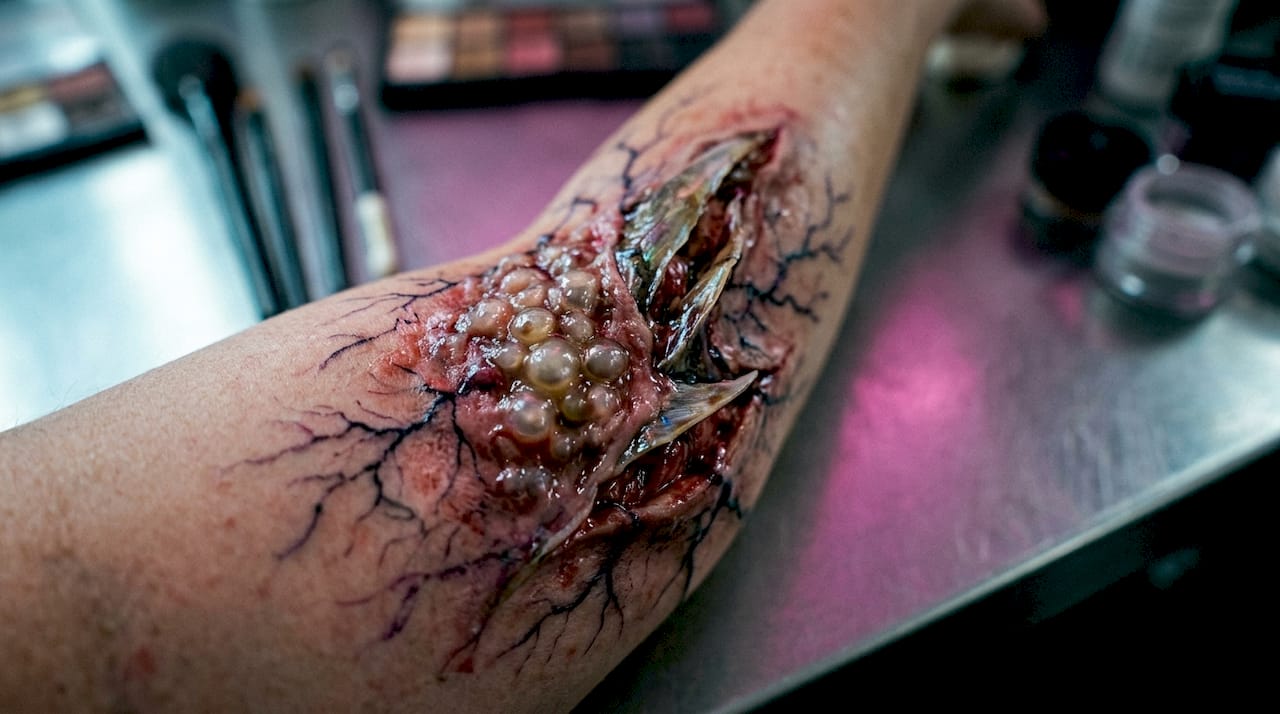
Cannibal horror is a body-horror adjacent subgenre that uses consumption as its central transgression. It tends toward extreme content and often carries social commentary about civilization and savagery. Primary fear: predation, dehumanization.
Giallo is an Italian subgenre that blends slasher mechanics with stylized aesthetics: vivid color, operatic violence, mystery plotting, and a fetishistic attention to the killer’s perspective. Directors like Dario Argento (Suspiria, 1977; Deep Red, 1975) defined the form. Primary fear: voyeuristic dread, the aestheticization of violence.
Speculative cluster
Sci-fi/techno horror places the threat in science, technology, or space. Alien (1979) is the defining text: the xenomorph is a biological weapon, the corporation is complicit, and the body horror is inseparable from the sci-fi premise. Primary fear: technology out of control, the hostile universe, corporate indifference to human life.
Cosmic/Lovecraftian horror draws on H. P. Lovecraft’s foundational idea: the universe is vast, ancient, and utterly indifferent to humanity. The horror comes not from a monster that wants to hurt you but from the realization that you are cosmically irrelevant. The Thing carries Lovecraftian DNA. Annihilation (2018) is a modern example. Primary fear: existential dread, the limits of human comprehension.
Pandemic/medical horror uses disease, infection, or medical systems as the threat vector. Contagion (2011) is the clinical end of the spectrum; zombie films often overlap here when the zombie condition is framed as viral. Primary fear: contamination, loss of bodily autonomy, institutional failure.
Zombie horror began with Night of the Living Dead (1968), which used the undead as social commentary on race, consumerism, and conformity. The subgenre has two dominant modes: slow shambling dread (Romero’s model) and fast-moving viral panic (28 Days Later, 2002). Primary fear: death, infection, the collapse of civilization.
Creature and monster cluster
Monster/creature horror features a non-human antagonist that is primarily physical: a shark, a giant insect, a sea creature, a werewolf. Jaws (1975) is the template. The monster is often a displaced natural force or a metaphor for a social threat. Primary fear: predation, the unknown in the natural world.
Eco-horror frames nature itself as the antagonist, often as a response to human environmental damage. Birds, plants, insects, or entire ecosystems turn hostile. The Birds (1963) is the classic example. Primary fear: nature’s indifference or retribution.
Hybrid and formal cluster
Found footage uses the conceit of discovered or recorded footage to create documentary immediacy. The Blair Witch Project launched the mainstream wave. As CBR points out, found footage is sometimes better understood as a formal technique than a standalone subgenre — the same story could be told in found footage or conventional cinematography. What it delivers is a raw, unpolished texture that makes the threat feel real. Primary fear: authenticity, the sense that this actually happened.
Analog horror is a digital-native evolution of found footage that uses the aesthetic of degraded VHS, public-access television, or corrupted digital files to unsettle viewers. It exploits nostalgia and format distortion. The Mandela Catalogue and Local 58 are prominent examples. The label is still emerging, as CBR notes, but the emotional effect is distinct.
Comedy-horror uses humor to disarm the audience before delivering genuine scares, or uses horror conventions to generate comedy. Evil Dead II (1987) and An American Werewolf in London (1981) balance both tones. The subgenre requires precise tonal control — tip too far toward comedy and the scares evaporate.
Home invasion horror places the threat inside domestic space, the one place characters expect safety. Primary fear: violation of sanctuary, the failure of the home as refuge.
Erotic/sexual horror uses desire and sexuality as the vehicle for dread. Primary fear: violation, the body as site of danger.
Here’s a quick comparison across the broadest categories:
| Category | Primary fear | Pace | Typical antagonist | Comfort level |
|---|---|---|---|---|
| Psychological | Terror, uncertainty | Slow build | Internal/human | Moderate |
| Supernatural | Uncanny dread | Variable | Entity/demon/ghost | Moderate–high |
| Visceral/gore | Revulsion | Fast | Human killer or creature | High (graphic) |
| Cosmic | Existential dread | Slow | Unknown/incomprehensible | Moderate |
| Creature/monster | Predation | Variable | Animal or alien | Moderate |
| Sci-fi/techno | Loss of control | Variable | Technology or alien | Moderate |
Pro Tip: Blumhouse’s subgenre taxonomy is one of the most practical classification tools available — it maps roughly two dozen labels with short descriptions that help you identify where a specific film lands when the answer isn’t obvious.
How to tell subgenres apart and find what fits your taste
The fastest way to classify a horror film is to identify its primary “fear engine” — the thing the story is fundamentally asking you to be afraid of. A slasher and a supernatural film can share the same setting and body count, but one asks you to fear a human predator and the other asks you to fear something that shouldn’t exist. That distinction changes the entire emotional experience.
Use this checklist:
- Antagonist origin: Human? Supernatural? Creature? Unknown/cosmic?
- Primary emotion targeted: Terror? Revulsion? Existential dread? Uncanny wrongness?
- Visual intensity: Implied violence? Moderate gore? Extreme body horror?
- Typical setting: Isolated house? Urban? Wilderness? Space? The protagonist’s mind?
- Pacing: Slow atmospheric build? Fast-cut action? Documentary texture?
Watchlists by comfort level
Low intensity (start here if you’re new or sensitive): Psychological and atmospheric horror with minimal gore. The Babadook (2014) for grief-as-monster; Get Out (2017) for social dread; Rosemary’s Baby (1968) for slow paranoia. These films earn their fear through tension and implication. For readers, books similar to House of Leaves offer the same slow-burn psychological intensity in prose form.
Medium intensity: Supernatural and classic monster films with moderate scares. The Exorcist (1973), The Shining (1980), A Nightmare on Elm Street (1984), Alien (1979). These films have iconic imagery and genuine dread but are part of the cultural mainstream for a reason — they’re crafted, not just brutal.
High intensity: Visceral, body horror, and extreme content. The Thing (1982) for practical body horror at its peak; Hereditary (2018) for a film that combines psychological devastation with genuinely disturbing imagery. These are not entry points. Know your triggers before you sit down.
Pro Tip: Many streaming platforms now include content warnings that specify whether a film contains graphic violence, body horror, or disturbing imagery. Use them. Horror is more enjoyable when you’re choosing the right intensity level for your mood, not white-knuckling through something that’s actively distressing you.
For cross-genre picks, Hereditary is the best single film for experiencing psychological horror and body horror simultaneously — the grief is real, the occult is real, and the body horror arrives without warning. Get Out is the cleanest entry point for social-psychological horror: the threat is entirely human, the pacing is controlled, and the film rewards close attention. The LA Film School’s subgenre guide offers additional starter examples organized by category for readers who want a structured sampling path.
- Start with psychological or supernatural horror to calibrate your baseline.
- Move to creature or monster films if you want more visceral tension without extreme gore.
- Try folk or occult horror for atmosphere and community-based dread.
- Approach body horror and splatter only when you know you can handle graphic transformation.
- Explore found footage and analog horror when you want a raw, documentary texture.
- Sample comedy-horror (Evil Dead II, An American Werewolf in London) when you want the genre’s conventions played with rather than straight.
Why subgenre awareness changes how you read and write horror
Horror is the genre where knowing what you’re walking into matters most. Every other genre — romance, thriller, literary fiction — gives you a general emotional contract. Horror gives you dozens of different contracts, and signing the wrong one is how you end up traumatized by a film you weren’t ready for, or bored by one that’s too mild.
What I find most interesting about the taxonomy is how it exposes the difference between fear and dread. Slasher films and body horror produce fear — the acute, adrenaline-driven response to immediate threat. Cosmic horror and psychological horror produce dread — the sustained, low-frequency unease that lingers after the film ends. Most people have a strong preference for one over the other, and they often don’t know it until they’ve sampled both. Understanding the subgenre map accelerates that self-knowledge.
For writers, subgenre conventions are tools, not constraints. The slasher’s isolation structure, the folk horror’s community betrayal, the body horror’s transformation arc — these are emotional delivery mechanisms. You can borrow the mechanism without copying the plot. Evolution A200: A Bubonic Apocalypse works in the pandemic/medical horror space by using disease as a social accelerant, pushing characters toward moral collapse rather than just physical death. That’s a subgenre tool applied to a dystopian frame. The Nether operates in dark supernatural territory, but the real horror is psychological — guilt and consequence as forces that reshape reality. Neither book is a genre exercise; both use subgenre anatomy to produce specific emotional effects.
The mistake most writers make is treating subgenre as a checklist: add a masked killer, set it in a summer camp, kill the promiscuous characters first. That’s pastiche. The better move is to identify the emotional target — what do you want the reader to feel, and when — and then select the subgenre tools that produce that effect most efficiently. Tone, sensory focus, antagonist origin, pacing: these are the actual levers, as Blumhouse’s subgenre framework makes clear when you read it as a writer rather than a viewer.
One more thing worth saying: the “elevated horror” debate is mostly a distraction. Critics who use the label to distinguish “serious” horror from “genre” horror are drawing a line that doesn’t hold up. The Thing is as thematically rich as Hereditary. Night of the Living Dead is as politically pointed as Get Out. The subgenre map is more useful than the prestige hierarchy. Know what kind of fear you’re making, make it well, and let the labels sort themselves out.
Read fiction that actually lives in these subgenres
If you’ve read this far, you already know which subgenres pull at you. The next step is finding fiction that delivers those specific emotional effects rather than generic “horror.”
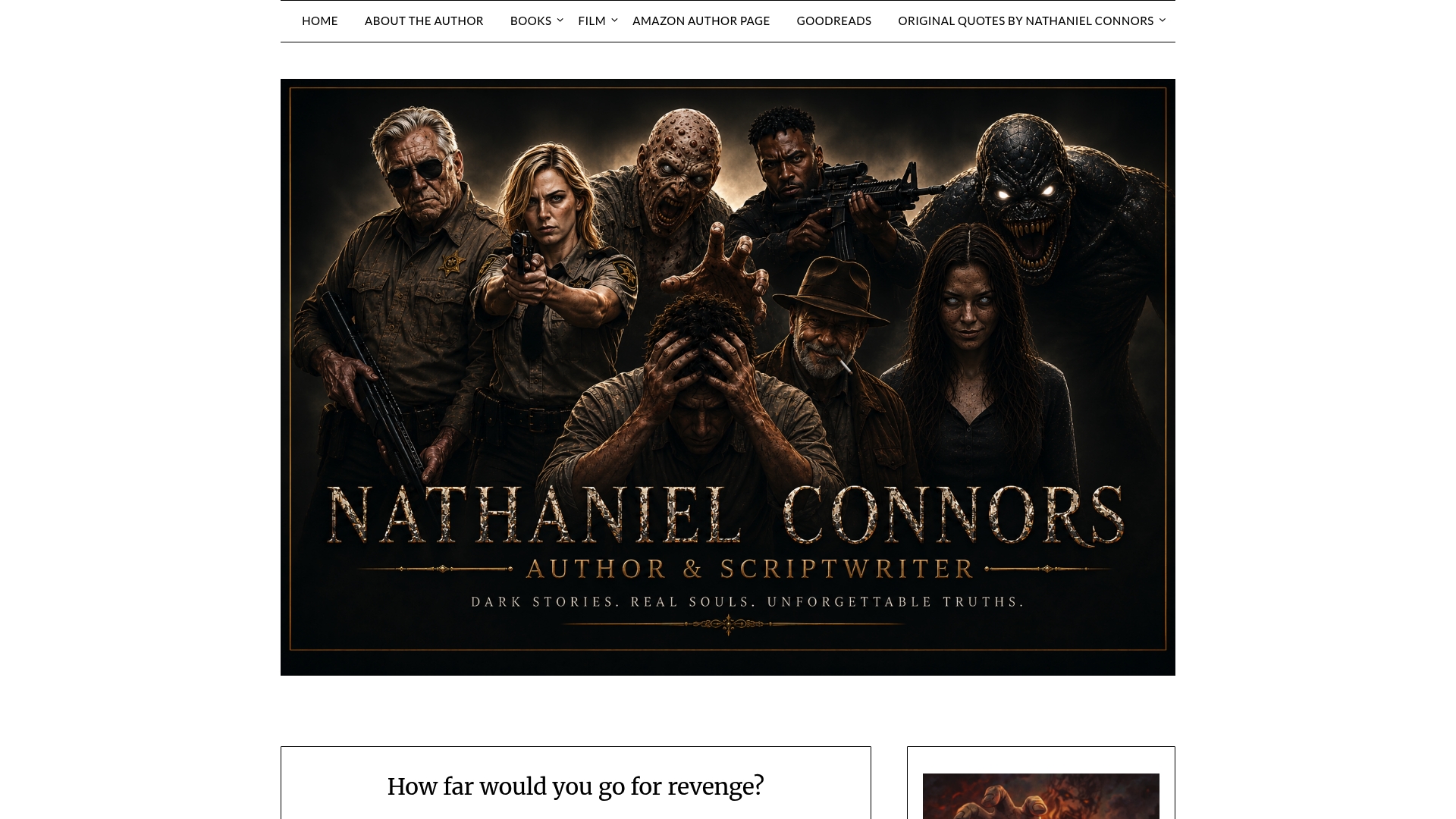
Nathanielconnors’s work maps directly onto several of the subgenres covered here. Evolution A200: A Bubonic Apocalypse sits squarely in dystopian and pandemic/medical horror — disease as the mechanism, moral collapse as the real subject. The Nether operates in dark supernatural territory with psychological horror running underneath it. Stories of a Condemned Soul explores guilt, revenge, and redemption through a lens that blurs the line between psychological and supernatural. All three are available on Amazon in ebook and paperback, and all three are included in Kindle Unlimited — meaning subscribers can read them without additional cost. If you want fiction that takes subgenre conventions seriously and uses them to produce specific, sustained emotional effects rather than cheap scares, start with the full dystopian horror reading list.
Sources
These references cover the taxonomy, history, and canonical examples in more depth than any single article can.
- Blumhouse | HORROR SUBGENRES
- 10 Horror Subgenres to Know Before Planning Your Next Movie Marathon
- Horror film
- 10 Best Horror Subgenres
- 10 Subgenres of Horror Films Explained – LA Film School
- Filmsite
When checking release dates, director credits, or box office figures for specific films, go directly to the film’s own Wikipedia page or IMDb entry rather than relying on aggregator lists, which occasionally carry errors.