Dark supernatural books work best when they refuse to let you off easy: morally compromised characters, atmosphere thick enough to chew, and a supernatural force that never fully explains itself. The picks below run from gothic dread to grimdark brutality to cosmic horror, chosen for tone, pacing, and how far each one is willing to go.
- Empire of the Vampire by Jay Kristoff — best for readers who want grimdark scale with vampire lore.
- House of Leaves by Mark Z. Danielewski — best for readers who want experimental, dread-soaked psychological horror.
- Reliquary by Hannah Whitten — best for gothic dread in an isolated, claustrophobic setting.
- The Nether by Nathaniel Connors — best for readers drawn to psychological monsters and guilt-driven horror.
Selection here favors tone and intensity over popularity: each title earned its spot for atmosphere, thematic weight, and how honestly it handles horror.
Key Takeaways
The strongest dark supernatural books combine morally ambiguous characters, sustained atmospheric dread, and a supernatural element that resists tidy explanation, whether the setting is a secondary fantasy world or your own street.
| Point | Details |
|---|---|
| Match mood to setting | Choose secondary-world fantasy for heroic-adjacent dread, modern settings for pure horror intrusion. |
| Check intensity before committing | Content warnings for violence, body horror, and sustained dread vary widely across these twelve picks. |
| Sample before buying | Read 20 to 50 pages or an audiobook sample, and use Kindle Unlimited to test titles risk-free. |
| Trend toward metaphor | Recent 2024–2026 releases like Fiend and Reliquary use monsters as stand-ins for grief and family secrets. |
| Try Connors for psychological horror | The Nether and Stories of a Condemned Soul focus on guilt and interior monsters, available free via Kindle Unlimited. |
Table of Contents
- What Are the Best Dark Supernatural Books Right Now?
- How Do You Choose the Right Dark Supernatural Book for You?
- Which Authors and Subgenres Should You Explore Next?
- What Recent Releases and Trends Should You Know About?
- What Actually Counts as Dark Supernatural Fiction?
- Where Did Dark Supernatural Literature Come From?
- Which Books Actually Shaped the Genre?
- How Do Dark Supernatural Themes Vary Across Cultures?
- What Motifs and Symbols Keep Showing Up?
- What Order Should You Read These Series In?
- Why I Keep Coming Back to Dark Supernatural Fiction
- Want More Psychological Dread? Start Here
- Where to Read More on Dark Supernatural Fiction
- Frequently Asked Questions
- Sources
What Are the Best Dark Supernatural Books Right Now?
Dark supernatural fiction sits at the intersection of dark fantasy and horror, and the strongest current titles lean hard into both moral ambiguity and genuine fear. Some of these are secondary-world epics with monstrous stakes; others are contemporary hauntings that never leave your own house. What ties them together is a refusal to soften the ending or explain away the monster. Below are twelve books worth your time, organized loosely from grimdark epic to intimate psychological horror.
Empire of the Vampire by Jay Kristoff opens with a half-vampire priest chained and interrogated by the very church that raised him, and the flashback structure lets Kristoff stack betrayal on betrayal across a sun-starved world. It’s operatic, violent, and unapologetically long. Best for: grimdark fans who want vampire mythology married to religious horror. Content warning: graphic violence, sexual content, torture. Available in ebook, paperback, and audiobook; a 2021 release that’s become a modern grimdark benchmark.
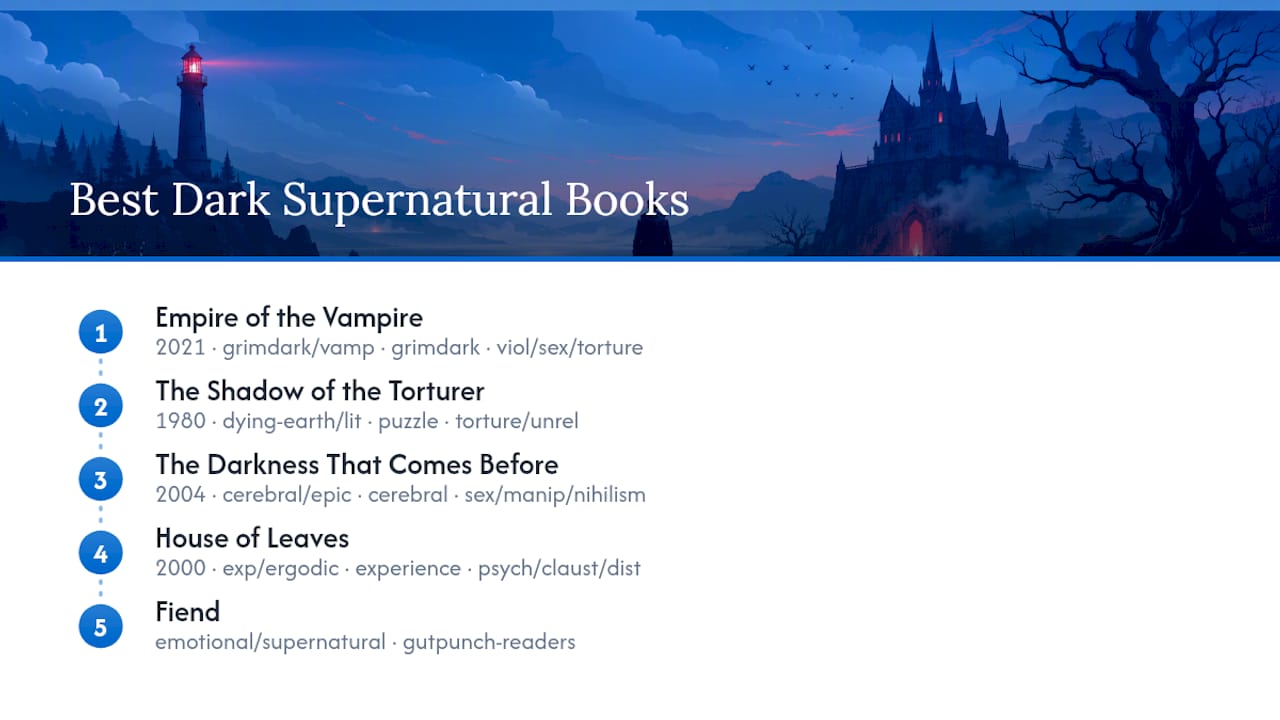
The Shadow of the Torturer, the opening volume of Gene Wolfe’s Book of the New Sun, follows Severian, a journeyman torturer exiled from his guild for showing mercy to a prisoner. Wolfe’s prose is dense and deliberately unreliable, and the “dying earth” setting reads as much like decayed myth as science fiction. Best for: literary readers who enjoy puzzle-box narration and slow-burn dread. Content warning: disturbing torture scenes, unreliable narration that can frustrate casual readers. A 1980 classic, still in print in paperback and ebook.
The Darkness That Comes Before by R. Scott Bakker plunges into a world of philosopher-warriors and manipulative sorcery ahead of a holy war, and its cold, clinical prose makes the horror feel almost academic. Best for: readers who want cerebral, morally bleak epic fantasy over action-driven plotting. Content warning: sexual violence, manipulation, and a genuinely nihilistic worldview. First published in 2004, available in paperback and ebook.
House of Leaves by Mark Z. Danielewski turns a hallway that’s slightly larger on the inside into one of horror fiction’s most disorienting reading experiences, using footnotes, typographic tricks, and nested narrators to mirror the house’s impossible geometry. Best for: readers who want horror that messes with the reading experience itself. Content warning: psychological breakdown, claustrophobia, disturbing imagery. A 2000 release, widely available in paperback; less suited to audiobook given its visual formatting.
Fiend by Alma Katsu uses a monstrous threat as a lens on grief and family fracture, a pattern showing up across recent supernatural fiction. Best for: readers who want their supernatural horror to double as an emotional gut-punch. Content warning: grief, family trauma, body horror. Released as a newer title, available in ebook and audiobook.
Reliquary by Hannah Whitten strands its characters on an isolated setting where family secrets and a monstrous presence in the water surface together, and the claustrophobic gothic atmosphere is the book’s real engine. Best for: gothic dread lovers who want slow-building supernatural menace. Content warning: drowning imagery, sustained psychological dread. A recent release, available in ebook, hardcover, and audiobook.
House of Salt and Sorrows by Erin A. Craig reimagines “The Twelve Dancing Princesses” as a gothic mystery where sisters die one by one in a mansion perched over the sea. Best for: readers who want gothic atmosphere without extreme gore. Content warning: death, grief, mild body horror. Published in 2019, available in ebook, paperback, and audiobook, and popular with Kindle Unlimited readers who want lighter-intensity gothic fare.
Malazan Book of the Fallen, beginning with Gardens of the Moon, by Steven Erikson throws readers into a sprawling war between empires, gods, and ascendant beings with almost no hand-holding. Best for: committed series readers who want massive scope and morally gray armies. Content warning: war violence, large body count, dense mythology that some readers find alienating early on. First published in 1999, available in paperback and ebook.
The Blacktongue Thief by Christopher Buehlman follows a debt-bound thief through a war-scarred world of goblins and witches, balancing genuine horror with sharp, dark humor. Best for: readers who want grimdark fantasy that doesn’t take itself entirely seriously. Content warning: violence, body horror, dark themes played partly for wit. Released in 2021, available in ebook, paperback, and audiobook.
Gideon the Ninth by Tamsyn Muir mashes necromancy, sword-swinging swordswomen, and a haunted-house murder mystery into one of the more inventive genre-blending dark fantasy releases of the last decade. Best for: readers who want claustrophobic secondary-world settings with bleak humor. Content warning: body horror, death, disturbing imagery.
The Nether by Nathaniel Connors builds a haunting narrative around revenge and guilt, following a protagonist whose psychological unraveling is as frightening as anything supernatural chasing him. Best for: readers who want interior, character-driven dread over external monsters. Content warning: psychological trauma, violence.
Stories of a Condemned Soul by Nathaniel Connors collects shorter dark fiction exploring redemption and the monsters people carry inside themselves, making it a strong entry point for readers who want to sample intensity before committing to a novel. Best for: readers who prefer shorter, concentrated doses of dread. Content warning: varies by story; several contain intense psychological themes.
Evolution A200: A Bubonic Apocalypse by Nathaniel Connors merges dystopian collapse with supernatural horror elements, following characters navigating a plague-ravaged world where the line between disease and something worse blurs. Best for: readers who want dystopian horror layered with supernatural dread. Content warning: disease, death, graphic survival scenarios.
“Dark fantasy typically occurs in a secondary or overtly fantastic world and often carries an implicit promise of heroism, while horror emphasizes intrusion into the mundane and pervasive dread.” This distinction, drawn by genre analyst Rachel Neumeier, explains why Malazan and House of Leaves feel like different species of dark fiction even though both traffic in horror.
Pro Tip: If you’re new to grimdark fantasy, start with The Blacktongue Thief before attempting Malazan or Empire of the Vampire. Buehlman’s humor gives you an emotional exit valve that the denser epics don’t offer.
Kindle Unlimited subscribers can find several of these titles, along with Connors’ full catalog, at no added cost, which matters if you’re testing a new subgenre before committing money to a series that might run six books deep.
How Do You Choose the Right Dark Supernatural Book for You?
Matching a book to your tolerance starts with naming what kind of fear you actually want. Do you want dread that builds slowly, or shock that arrives fast? Do you want gore, or do you want the horror to stay psychological and interior?
Consider these criteria before you commit to a 700-page grimdark epic:
- Setting preference: secondary-world fantasy (Malazan, Empire of the Vampire) versus modern-urban intrusion horror (House of Leaves, Fiend).
- Pacing: dense, literary pacing (Book of the New Sun) versus fast, plot-driven momentum (The Blacktongue Thief).
- Structure: standalone reads (House of Salt and Sorrows) versus long series commitments (Malazan, Empire of the Vampire).
- Focus: interior psychological horror (The Nether) versus external monstrous threat (Reliquary, Fiend).
- Identify your dread threshold: gothic unease, sustained cosmic dread, or grimdark brutality.
- Pick setting: fantasy world or our world with something wrong in it.
- Check length and format: standalone novella or multi-book commitment.
- Sample before buying: read the first 20 to 50 pages, or grab an audiobook sample.
Pro Tip: Use Kindle Unlimited to sample two or three titles from different subgenres in the same week. You’ll learn your actual tolerance faster than any review can tell you.
If you need lower-intensity horror, avoid books explicitly labeled grimdark, skip anything flagged for sustained body horror, and lean toward standalone gothic titles like House of Salt and Sorrows before diving into series-length grimdark.
Which Authors and Subgenres Should You Explore Next?
Once you’ve found your lane, these authors deepen it:
- Jay Kristoff → grimdark fantasy with religious horror; read next if you loved Empire of the Vampire’s scale.
- Gene Wolfe → literary dark fantasy with unreliable narration; read next for prose-forward dread.
- R. Scott Bakker → philosophical, nihilistic epic fantasy; read next if cerebral bleakness appeals more than action.
- Mark Z. Danielewski → experimental horror; explore for more form-breaking psychological terror.
- Tamsyn Muir → necromantic dark fantasy with bleak humor; read next for genre-blending inventiveness.
- Nathaniel Connors → psychological supernatural horror rooted in guilt and revenge; read next for interior, character-driven dread.
Each author brings a distinct strength: Wolfe’s prose density, Bakker’s philosophical bleakness, Muir’s tonal whiplash, and Connors’ focus on the monsters people build inside themselves.
What Recent Releases and Trends Should You Know About?
Dark supernatural fiction between 2024 and 2026 has leaned harder into metaphor. Contemporary titles increasingly weaponize the supernatural as a stand-in for grief, corporate greed, and buried family secrets rather than treating the monster as pure external threat.
Fiend by Alma Katsu exemplifies this shift, using its creature as a vehicle for grief and family fracture rather than a simple scare mechanism. Reliquary by Hannah Whitten does something similar, letting an isolated island setting surface long-buried family secrets alongside its aquatic horror.
The pattern is consistent enough that it’s worth naming: publishers and indie authors are increasingly releasing these titles simultaneously in ebook and Kindle Unlimited formats, making it easier than ever to sample the trend without committing to a hardcover purchase before you know if the tone fits.

What Actually Counts as Dark Supernatural Fiction?
Dark supernatural fiction sits in the overlap between dark fantasy and horror, and the boundary comes down to setting and what the story promises the reader. When magic or the supernatural is a normalized part of the world, the story reads as dark fantasy. When something supernatural intrudes on an otherwise ordinary, modern setting, it reads as supernatural horror.
Dark fantasy also tends to carry an implicit promise: the protagonist has some agency to fight back, even if the odds are brutal. Horror, by contrast, keeps survival genuinely uncertain and centers on dread rather than heroic struggle. That’s why Malazan reads as epic dark fantasy despite its horrific violence, while House of Leaves reads as pure horror despite its fantastical premise.
“Dark supernatural” as a shelf label is broader than either term alone. It covers gothic ghost stories, psychological hauntings, grimdark epics, and cosmic horror, unified mainly by mature themes, morally compromised characters, and a supernatural element that refuses easy explanation. If you’re searching for this category and keep bumping into both “dark fantasy” and “supernatural horror” as separate shelf tags, that’s why: the umbrella term absorbs both.
Where Did Dark Supernatural Literature Come From?
The roots run through Gothic literature of the late 1700s and 1800s, when writers like Ann Radcliffe and Mary Shelley used crumbling castles and reanimated corpses to explore guilt and forbidden knowledge. Edgar Allan Poe pushed the interior psychological angle further, making the narrator’s unraveling mind as frightening as any external monster.
The twentieth century split the tradition into distinct lanes. H.P. Lovecraft introduced cosmic horror, where indifference and incomprehensibility replaced the Gothic’s moral order. Meanwhile, writers like Fritz Leiber and later Stephen King grounded horror in ordinary, modern settings, making the supernatural feel like an intrusion rather than a distant myth. Epic fantasy authors like Michael Moorcock and Glen Cook introduced moral ambiguity into secondary-world fantasy, effectively inventing the grimdark lane that authors like Kristoff and Erikson now occupy.
By the 1980s and 1990s, writers like Gene Wolfe and Clive Barker blurred the line further, treating body horror and philosophical dread as compatible with literary ambition. Today’s dark supernatural fiction inherits all three threads: Gothic atmosphere, cosmic indifference, and grimdark moral complexity, often blended within a single book.
Which Books Actually Shaped the Genre?
A handful of titles set the template that current dark supernatural fiction still follows. Frankenstein established the idea that the real monster is often human ambition and guilt, a theme that runs directly into Connors’ work on psychological monsters. Lovecraft’s Cthulhu Mythos stories established cosmic horror as a distinct mode, where scale and indifference generate more dread than any single villain.
Gene Wolfe’s Book of the New Sun, beginning with The Shadow of the Torturer, proved that dark supernatural fiction could carry the literary weight of dense, unreliable prose. Glen Cook’s Black Company series and Michael Moorcock’s Elric novels pioneered grimdark’s moral ambiguity decades before the term existed, directly influencing writers like Erikson and Kristoff. Wikipedia’s category of dark fantasy novels catalogs many of these canonical works if you want to trace the lineage further.
More recently, House of Leaves proved horror could break narrative form entirely, influencing a generation of experimental horror writers who treat structure itself as a source of dread.
How Do Dark Supernatural Themes Vary Across Cultures?
Western dark supernatural fiction leans on Gothic castles, vampires, and cosmic indifference, but the core impulse, using the supernatural to process guilt and fear, shows up globally in different shapes. Japanese horror (J-horror) fiction and film, from Ringu to countless yokai-inspired tales, favors vengeful spirits tied to unresolved social wrongs rather than external monsters, and dread tends to build through atmosphere rather than jump scares.
Latin American fiction often folds the supernatural into magical realism, where ghosts and curses coexist with ordinary life as accepted fact rather than intrusion. This changes the horror calculus: the fear comes from moral consequence, not from the supernatural’s mere existence. African diasporic horror traditions frequently center ancestral spirits and inherited trauma, using the supernatural to interrogate colonial history and generational guilt.
Slavic and Eastern European folklore contributes a darker, more fatalistic strain, visible in the “unquiet dead” tropes that influenced vampire fiction long before Bram Stoker formalized it. Reading across these traditions widens what “dark supernatural” can mean beyond the Anglo-American Gothic and grimdark defaults, and several contemporary Western authors now borrow directly from these non-Western frameworks to freshen familiar tropes.
What Motifs and Symbols Keep Showing Up?
Certain images recur across dark supernatural fiction because they carry built-in psychological weight. The haunted house or crumbling estate, seen in House of Leaves and House of Salt and Sorrows, externalizes guilt and family dysfunction as literal architecture. Water, especially drowning imagery, shows up in Reliquary and countless gothic tales as a symbol of suppressed memory and inescapable fate.
Blood and vampirism, central to Empire of the Vampire, typically represent inherited sin or corrupted legacy passed down through bloodlines. Plague and disease, the engine behind Evolution A200: A Bubonic Apocalypse, function as a metaphor for social collapse and the failure of institutions to protect the vulnerable. Mirrors and doubles appear across the genre to represent fractured identity or guilt made visible.
The condemned or cursed soul, a motif Connors returns to directly in Stories of a Condemned Soul, reflects the genre’s core preoccupation: punishment that outlasts death, and guilt that can’t be outrun no matter how far the character travels.
What Order Should You Read These Series In?
For the Malazan Book of the Fallen, start with Gardens of the Moon even though many longtime fans admit it’s the hardest entry point. Erikson deliberately withholds explanation, and the payoff across later books rewards patience more than any reading-order trick.
For Book of the New Sun, read The Shadow of the Torturer first and continue in publication order. Wolfe built the series as one continuous unreliable narration, so skipping around breaks the puzzle structure entirely.
If you’re sampling Nathaniel Connors’ catalog, start with Stories of a Condemned Soul for a shorter introduction to his tone before moving to The Nether for a full novel-length psychological descent, then Evolution A200: A Bubonic Apocalypse if you want the dystopian scale turned up.
For standalone gothic titles like Reliquary and House of Salt and Sorrows, reading order doesn’t matter since each stands alone, but pacing your reading between intense grimdark epics and shorter standalones helps prevent burnout on any single subgenre.
Why I Keep Coming Back to Dark Supernatural Fiction
What draws me to this genre isn’t the monster on the page. It’s the guilt underneath it, the psychological wreckage a character carries long before anything supernatural shows up to make it literal. My own books, including The Nether and Stories of a Condemned Soul, work from that same premise: the scariest thing in the room is usually the person, not the ghost. If you gravitated toward Connors on this list, start there. If you wanted gothic dread instead, start with Reliquary.
Want More Psychological Dread? Start Here
If the picks on this list that hit hardest were the ones built on guilt and interior collapse rather than external monsters, my own catalog sits squarely in that lane. The Nether, Stories of a Condemned Soul, and Evolution A200: A Bubonic Apocalypse all dig into the same psychological territory as House of Leaves and Fiend, just filtered through revenge and redemption instead of hauntings or plague metaphors alone.
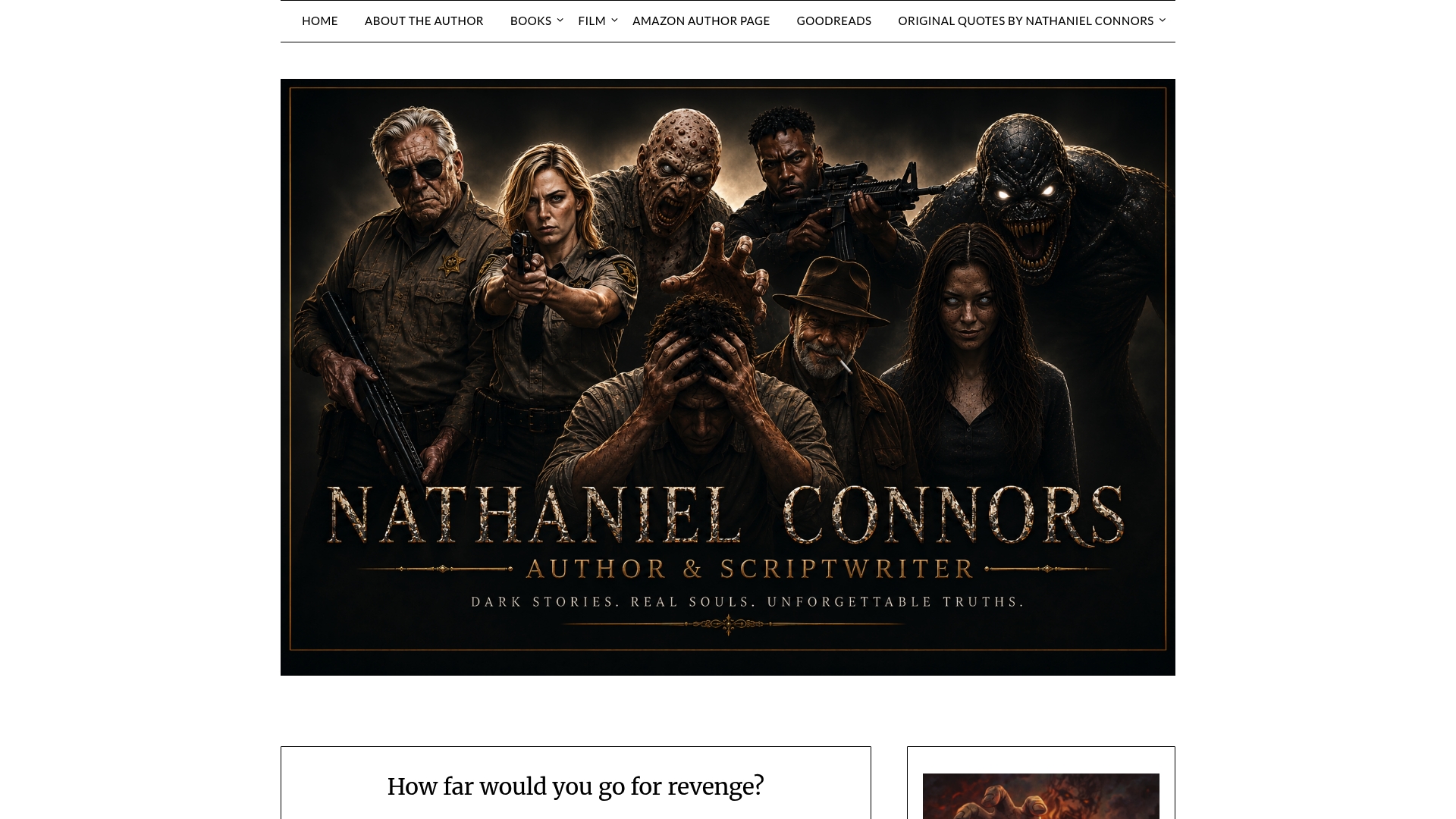
All three titles are available in ebook and paperback on Amazon, and readers with a Kindle Unlimited subscription can read them at no added cost, which makes them a low-risk way to test whether Connors’ brand of psychological horror fits your tolerance. If The Nether’s guilt-driven unraveling sounds like your speed, that’s the natural starting point. If you want dystopian scale layered over supernatural dread, go straight to Evolution A200: A Bubonic Apocalypse. Browse the full catalog of dystopian horror novels and pick the title that matches the mood you came here looking for.
Where to Read More on Dark Supernatural Fiction
- Dark Fantasy vs Horror — Rachel Neumeier: a clear genre-boundary essay for readers sorting tone from setting.
- Category: Dark Fantasy Novels — Wikipedia: a broad catalog of canonical and influential titles.
- Gideon the Ninth — Macmillan: publisher description and sample chapter access.
- Nathaniel Connors: author bio, full title list, and Kindle Unlimited availability notes.
Frequently Asked Questions
What makes a book “dark supernatural” instead of just horror?
Dark supernatural fiction spans both dark fantasy and straight horror. The dividing line is usually setting: supernatural elements normalized within a fantastic world read as dark fantasy, while supernatural forces intruding on a realistic, modern setting read as horror.
Are dark fantasy and supernatural horror the same thing?
Not quite. Dark fantasy often implies the protagonist has some agency to push back against the darkness, even at great cost. Horror tends to keep survival genuinely uncertain and centers on dread rather than heroic struggle.
Which book on this list is best for a horror beginner?
House of Salt and Sorrows offers gothic atmosphere without extreme gore, making it a gentler entry point than grimdark epics like Empire of the Vampire or Malazan.
Can I read these on Kindle Unlimited?
Several titles, including works by Nathaniel Connors, are available through Kindle Unlimited, letting subscribers sample dark supernatural fiction without an added purchase.
What’s the difference between grimdark and cosmic horror?
Grimdark centers on moral ambiguity and brutal consequence within an active plot, as in The Blacktongue Thief. Cosmic horror centers on humanity’s insignificance against forces too vast to understand or fight, a mode Lovecraft established and modern authors still echo.
Where should I start if I want psychological rather than gore-driven horror?
Start with The Nether by Nathaniel Connors or House of Leaves by Mark Z. Danielewski. Both build dread through interior collapse and guilt rather than explicit violence.
Sources
- Goodreads — Fiend
- Reliquary by Hannah Whitten | Hachette UK
- Dark Fantasy vs Horror – Rachel Neumeier
- Gideon the Ninth — Macmillan