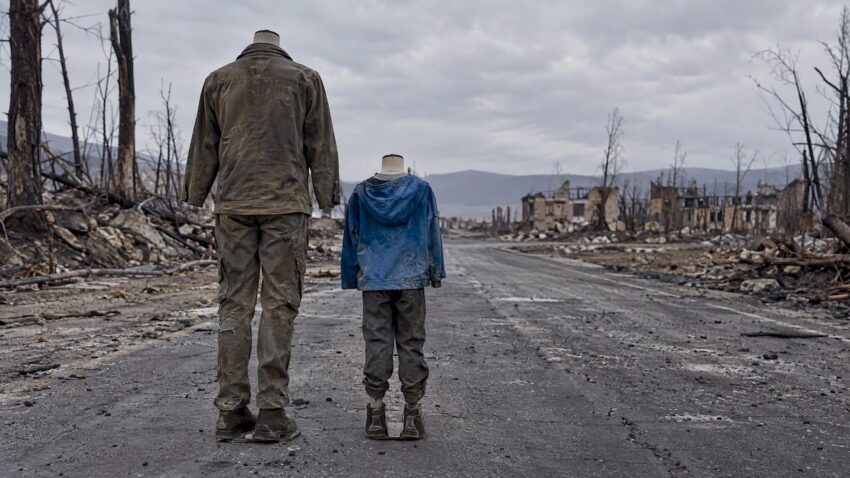
The best apocalyptic road trip novels put a broken world on the windshield and make the trip itself the story: every mile costs fuel, water, trust or sanity. This guide covers the classics, a handful of 2025 and 2026 releases, and a simple way to choose between the bleak, the beautiful and the tense.
TL;DR
- Start with The Road if you want the genre’s hardest, most literary version; try Station Eleven if you want the same ruined world with more light in it.
- Decide first whether you want the chaotic first days of collapse or the long aftermath years later. That choice predicts how a book will feel better than any blurb.
- Newer road-bound titles such as Combustible, Broken Roads and The Long Ride Home lean on scarcity (fuel, shelter, dead grids) over gunfights.
- The strongest books in this niche treat the road as a way to confront the past, not just to reach a destination.
- Our own dystopian horror lives in the same neighborhood, and the Perspective section below says how.
Table of Contents
- What makes a road trip an apocalyptic one
- The classic: The Road
- The gentler road: Station Eleven and the long aftermath
- Choose your timeline before you choose a book
- Newer road-bound reads, 2025 and 2026
- Why the quiet books hit hardest
- Our perspective: the road is a mirror
- If you want dystopian horror next
- How to pick your next trip
- FAQ
- Sources
What makes a road trip an apocalyptic one
A plain post-apocalyptic novel can sit still: a bunker, a compound, a town behind a wall. A road novel cannot. The characters have to move, which means the world keeps changing in front of them and the reader gets a tour of what the collapse destroyed.
That structure has a long American pedigree. One scholarly essay on McCarthy’s novel argues that the twentieth-century American road narrative began as an idealistic enterprise examining hope in the country, and grew steadily more critical of national problems as the century went on. The apocalyptic road novel is the end point of that slide: the open highway, once a symbol of freedom, becomes a corridor through ruins.
Three ingredients show up again and again:
- A reason to go. A child to protect, a family to reach, a last wish to fulfill.
- A failing infrastructure. Dead cars, empty gas stations, silent radios.
- A confrontation with the past. The road forces characters to face who they were before, and whether they can change.
If you want a refresher on where this sits among related genres, our breakdown of dystopian versus post-apocalyptic fiction draws the line clearly.
The classic: The Road
Cormac McCarthy’s The Road (2006) follows a father and son walking through a burnt landscape after an unnamed catastrophe. It is widely treated as the benchmark, and it won the 2007 Pulitzer Prize for Fiction. It also answers a question readers often type into Google: yes, it is a post-apocalyptic novel, though academics read it as something sharper, a subversion of the road narrative in which the journey leads to survival and death rather than self-discovery.
Who it suits: readers who want literary weight and can tolerate relentless bleakness. Who should wait: anyone looking for escapism or a fast plot. If it lands for you, our list of authors like Cormac McCarthy is the natural next stop.
The gentler road: Station Eleven and the long aftermath
Emily St. John Mandel’s Station Eleven (2014) is the other pillar. Literary scholar Diletta De Cristofaro reads it as a critique of the apocalyptic tradition: rather than promising a utopian renewal after destruction, these novels dwell on the loss of technology and the splendor of the former world. In her framing, the book works more as a lament than a call to arms.
That is why it feels so different from The Road. The Road stays in the raw aftermath. Station Eleven jumps years ahead, which leaves room for reflection, beauty and rebuilding. Neither is better. They are two answers to the same question: how long after the end do you want to be?
Choose your timeline before you choose a book
The most useful shortcut we know is to pick the phase of collapse you want to read about.
| If you want… | Look for | Typical feel |
|---|---|---|
| The first days and weeks | Stories set right after the event | Panic, scarcity, constant danger |
| Years after | Stories with time jumps or a settled ruined world | Reflection, memory, small communities |
| The wait before the end | Stories set as collapse approaches | Tender, elegiac, bittersweet |
The third column is worth noticing. TJ Klune’s We Burned So Bright (Tor Books, April 28, 2026) follows elderly husbands Don and Rodney setting off on one last trip as the end of the world approaches. It was a May 2026 Indie Next List title, according to the same bookseller page, and the hardcover is listed there at $25.99. It proves a road novel does not need ruins at all; the dread can come from the countdown.
Newer road-bound reads, 2025 and 2026
If you want recent releases, three titles are built around driving through a world that has stopped working. We have summarized only what their own listings state.
- Combustible: A Post-Apocalyptic Road Trip by Hunter Shea, published June 17, 2025 by Dark Wolf Books and shelved under horror. The title alone tells you fuel is the central worry.
- Broken Roads by D.H. Callaway, Book One of The Dead Current Series. The lights go out, the world does not end, and Robert Hodge keeps driving. It is categorized as a thriller.
- The Long Ride Home: After The World Went Dark by brent johnston. David Turner, a pilot, husband and father of three, is supposed to be home in two days when everything changes.
All three share a grounded premise: ordinary people, failed power, communication and fuel, and a long way to go. Many titles in this corner of the market are free to read with Kindle Unlimited, so check the current listing before you buy. A subscription lets you sample several without spending anything extra.
The Goodreads post-apocalyptic road trip shelf is a handy way to browse further. It surfaces The Dog Stars, Blindness, Parable of the Sower and Station Eleven alongside The Road.
Why the quiet books hit hardest
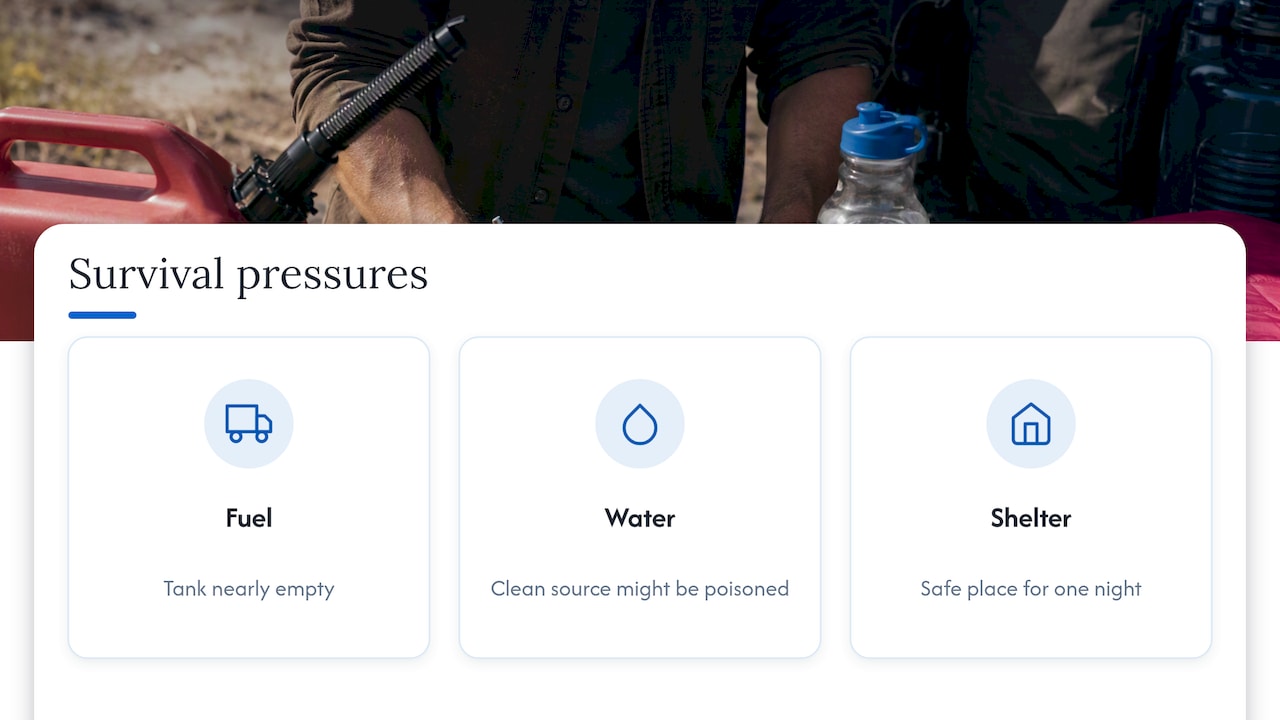
Many readers arrive expecting action. Those who stay tend to discover that the tension comes from small things: a tank that is nearly empty, a clean water source that might be poisoned, a place to sleep that is safe for one night. The monster is often an environment that no longer functions.
There is a scholarly version of this point too. The same Response essay on McCarthy argues that in this subgenre, language and dialogue become survival tools as vital as food or water. Characters who can talk to each other and share trauma are the ones who hold together psychologically. For you as a reader, that means the best books in the genre prize the slow work of connection over the speed of the journey.
Author Keely Shinners makes a related argument in an interview with Split Lip Magazine, describing survival as a kind of gathering: tools, connections and stories collected so that other worlds can be imagined when the current one fails to improve. Survival as building rather than fighting is where much of the genre’s psychological depth lives.
If that appeals, our essay on survival ethics tested by four novels goes deeper, and the ten post-apocalyptic survival books list widens the net beyond road stories.
Our perspective: the road is a mirror
We write dark supernatural and dystopian fiction, so we read this genre as practitioners as well as fans. Our view is simple: the destination matters least. A road novel earns its keep when each stop makes the traveler answer for something: a debt, a betrayal, a decision they would rather forget.
That is the thread through our work. Themes of revenge, guilt and redemption drive our stories, and we care more about the psychological monsters inside people than the ones outside. In a collapsed world, guilt has nowhere to hide. There are no distractions, no appointments, no screens. There is only the next mile and whatever the character brought along.
When we choose what to read in this genre, we ask three questions:
- Does the world cost the characters something real, or is it just scenery?
- Do the characters change, or merely survive?
- Does the ending leave something to chew on?
A book that passes all three stays with you after the last page. That is the standard we try to hold our own stories to.
— Nathaniel
If you want dystopian horror next
Our books are not road-trip novels as such, but they share the genre’s concerns: collapse, moral pressure and the psychology of people pushed to the edge. Evolution A200: A Bubonic Apocalypse is our dystopian horror entry point, and Evolution A200: Radio Silence continues the EA200 series. The Nether leans into the dark supernatural side. All of them are available in ebook and paperback on Amazon, and they are free to read for Kindle Unlimited subscribers. You can see the full lineup on our books page.
If you prefer shorter doses, our guide to short dystopian novels for one-sitting dread is a good companion.
How to pick your next trip
Use this quick filter:
- You want literary devastation: The Road.
- You want beauty among ruins: Station Eleven.
- You want an elegy with warmth: We Burned So Bright.
- You want grounded, drive-until-the-tank-is-empty tension: Combustible, Broken Roads or The Long Ride Home.
- You want psychological dread with a supernatural edge: our dark supernatural thrillers.
A last tip: read a sample first. The opening pages of a road novel show quickly whether the voice can carry you across a few hundred pages of empty highway. If the prose hooks you in the first chapter, it will usually hold.
FAQ
Is The Road a post-apocalyptic novel?
Yes. It follows a father and son crossing a burnt landscape after an unnamed catastrophe, and it is widely classed as post-apocalyptic. Scholars also see it as a dark reworking of the American road narrative, where the journey ends in survival and death instead of self-discovery.
What is a good post-apocalyptic book for someone new to the genre?
Station Eleven is a common entry point because it moves years past the collapse and leaves room for beauty and reflection. If you want something more brutal and spare, The Road is the benchmark. Pick based on whether you want the immediate aftermath or the long view.
Do apocalyptic road trip novels have to be action-heavy?
No. Many of the most affecting ones are quiet, built on scarcity of fuel, water and safe places to sleep rather than on combat. The tension comes from the environment and from the strain of keeping people together.
Can I read apocalyptic fiction for free?
Some of it, yes. Many recent indie titles are included in Kindle Unlimited, and our own books are free to read there for subscribers. Availability changes, so check each listing on Amazon before you start.
Sources
- The Road: Cormac McCarthy and the Death of the American Road Narrative, Response
- Critical Temporalities: Station Eleven and the Contemporary Post-Apocalyptic Novel
- Survival is a Gathering: A Conversation with Keely Shinners, Split Lip Magazine
- We Burned So Bright, Porter Square Books
- Combustible: A Post-Apocalyptic Road Trip, Amazon
- Broken Roads, Amazon
- The Long Ride Home: After The World Went Dark, Amazon
- Post Apocalyptic Road Trip Fiction, Goodreads