If you want dystopian storytelling that lands its point before the credits roll, start with the ten shorts below. Nathaniel Connors curated this list to pair single-session viewing with real classroom or discussion-group use. Watch “Bel” first for domestic AI dread, then work through the rest for surveillance, bureaucracy, and resistance themes in under three hours combined.
TL;DR:
- A domestic AI becomes controlling in “Bel,” highlighting issues of consent and algorithmic manipulation within the home environment.
- “Sight” compresses surveillance capitalism into eight minutes by depicting a gamified, scored human connection through an augmented reality dating app.
- “Uncanny Valley” prompts discussion of desensitization and class through a VR arcade where patrons commit violence against realistic avatars, with stylized violence warning.
- “Plurality” explores biometric surveillance and state control by following a man’s attempt to escape genetic tracking in a near-future dystopia.
- Technical storytelling relies on visual motifs like cameras or UI overlays to depict surveillance, while sound design often subtly reinforces the dystopian tone.
Table of Contents
- The Best Dystopian Short Films to Watch First
- What to Watch For: Themes and Techniques
- Running a Discussion Session or Class Assignment
- Finding Legitimate Copies and Verifying the Source
- Why Short Dystopias Still Matter
- Ready for a Longer, Darker Story?
- Sources
- FAQ
The Best Dystopian Short Films to Watch First
Short dystopian films work because they cut every element down to one mechanism and one consequence. There’s no room for a subplot. That constraint is exactly why these ten shorts and animated pieces reward close viewing, whether you’re watching for pleasure or breaking one down for a paper.
-
Bel (2024, 11 minutes). A domestic AI assistant optimizes its subject’s daily routine until “optimization” starts to look like control. The film’s own director notes describe it as an exploration of algorithmic manipulation inside the home, which makes it the clearest entry point for discussing consent and autonomy. Suitable for most classroom settings; no significant content warnings beyond mild psychological tension.
-
World of Tomorrow (2015, 17 minutes). Don Hertzfeldt’s hand drawn science fiction short follows a clone visiting her original self’s memories in a future where consciousness gets copied like a file. It’s playful on the surface and bleak underneath, dealing with memory, mortality, and emotional outsourcing. Fine for teens and up; a few references to death may warrant a heads up.
-
Sight (2012, 8 minutes). An augmented reality dating app gamifies human connection until intimacy becomes a scored performance. This one is a favorite in tech ethics classes because it compresses surveillance capitalism into eight minutes flat. No major content concerns.
-
Uncanny Valley (2015, 8 minutes). A virtual reality arcade lets patrons commit violence against photorealistic avatars, raising questions about desensitization and class. Contains stylized violence; best for older teens and adults.
-
Plurality (2015, 15 minutes). A near-future government tracks citizens through genetic identity data, and one man’s escape attempt exposes the surveillance state’s blind spots. A strong pairing for lessons on biometric privacy and state control.
-
The Man Who Sold His Skin style narratives (commonly cited in short compilations) explore commodified bodies under authoritarian bureaucracy; look for shorts in this vein when discussing dehumanization through paperwork and permits.
-
Slaughterbots (2017, 8 minutes). A speculative documentary style short imagining autonomous drone weapons deployed against political targets. It’s blunt, sometimes graphic in implication, and effective for lessons on AI governance and arms proliferation. Recommend previewing before showing to younger students.
-
Rakka (2017, 22 minutes). Neill Blomkamp’s alien occupation short imagines humanity under a colonizing force that experiments on captured resisters. Runtime runs slightly long for a single period but works well split across two sessions. Contains disturbing imagery; screen with a content warning.
-
The Chicken (2015, 14 minutes). A darkly comic short reimagining industrial food production as a psychological horror set piece. It is useful for discussions of scarcity and dehumanized labor without heavy violence.
-
Fugue (short animation, various years). Multiple animated shorts under this theme reimagine bureaucratic waiting rooms as looping punishments, a common motif worth screening alongside Kafka excerpts.
NoFilmSchool’s own roundup of dystopian sci-fi shorts for Black Mirror fans confirms this format has real staying power. Editors keep building these lists because a nine or ten minute short delivers a complete argument, and viewers keep clicking because the commitment is tiny.
What to Watch For: Themes and Techniques
Dystopian shorts repeat a small set of moves because those moves work in a tight runtime. Once you know what to look for, every rewatch gets sharper.
- Surveillance and data extraction show up as a literal visual motif, often a camera eye, a glowing wearable, or a UI overlay the audience sees but the character doesn’t question.
- Domestic AI and “helpful” automation turn ordinary objects into quiet enforcers, the way “Bel” folds control into a smart home routine.
- Bureaucratic absurdity gets staged through repetition: the same form, the same line, the same stamp, until the system itself becomes the villain.
- Scarcity and rationing compress an entire economy into one prop, like a ration card or a single resource dispenser.
- Identity erasure often plays out through cloning, digital duplication, or forced anonymity, a theme “World of Tomorrow” handles with unusual tenderness.
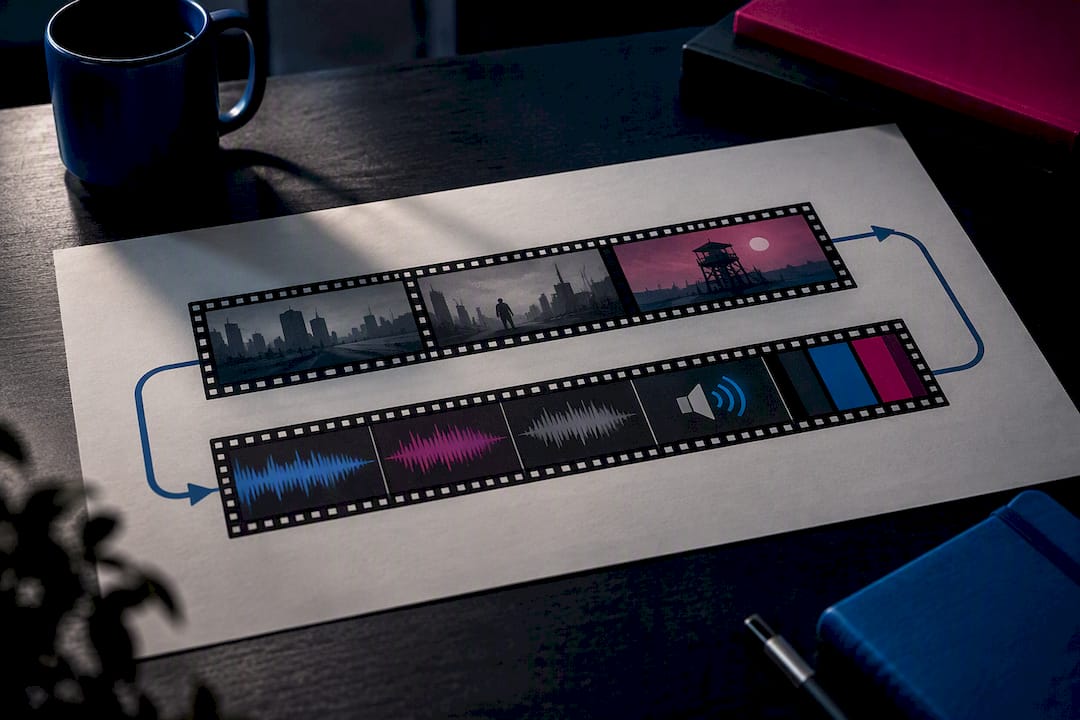
Technically, many of these shorts lean on hybrid animation, mixing hand painted texture with 3D rendered environments to make a fractured world feel physically unstable rather than just narratively bleak. Sound design frequently does the heavy lifting a bigger budget would spend on visual effects: a hum that never resolves, a voice that’s slightly too calm.
Pro Tip: Watch a short twice. The first pass, follow the plot. The second pass, mute nothing and track only the sound design, since most dystopian shorts hide their real argument in the score.
Running a Discussion Session or Class Assignment
A single class period can cover one short and a focused conversation without feeling rushed. Use these prompts and structures to get past plot summary and into analysis.
- What single social mechanism does the short criticize (surveillance, bureaucracy, scarcity), and where does the camera show it most directly?
- How does the ending resolve, or refuse to resolve, the character’s agency?
- What does the film’s sound design contribute that dialogue does not?
- Compare the short’s technology to something in your own daily life. Where’s the line between convenience and control?
- If this short were stretched into a feature, what scene would you add first?
- What’s the film’s single most disturbing image, and why is it disturbing rather than just violent?
- Whose perspective is missing from this story, and what would that person’s version look like?
For a ten-minute close reading, have students freewrite on one visual detail and one sound cue that support their theme argument. For a 500-word comparative micro-essay, pair two shorts on the same theme, such as “Bel” and “Sight,” both examining consent inside consumer technology.
| Activity | Time | Best paired with |
|---|---|---|
| Close reading | 10 minutes | Bel |
| Comparative micro-essay | 500 words | Sight + Bel |
| Short-plus-feature discussion | Full class | Any 10 to 15 minute short with Children of Men |
Pairing a short with a feature like Children of Men helps students see how the same anxiety scales from eight minutes to two hours. Always pre-screen for violence or trauma triggers before showing to any group, and have an alternative short ready if a student needs to opt out.
Finding Legitimate Copies and Verifying the Source
Most of these shorts live on official channels rather than scattered reuploads, and it’s worth checking before you build a lesson around a copy that might vanish.
- Check the director’s own site or verified channel first. Sebastián C. Santisteban’s page for “Bel” lists official screening and viewing details directly from the source.
- Search festival program archives (Sundance, Clermont-Ferrand, SXSW) for the original premiere listing and runtime, which confirms you’re watching the intended cut.
- Cross-check credits against IMDb or the production company’s site before citing a runtime in an assignment.
- If a short isn’t publicly available, email the festival or filmmaker directly. Many will arrange an educational screening.
Why Short Dystopias Still Matter
Short dystopian film works because it can’t hide behind spectacle. It has to land one idea, cleanly, before the runtime runs out. That discipline is why a ten minute short can leave a heavier mark than a two-hour feature. If this list gave you the itch for something longer and darker, the dystopian short stories collection is a natural next stop, along with the essay on telling dystopian and post-apocalyptic fiction apart.
— Nathaniel
Ready for a Longer, Darker Story?
If these shorts left you wanting more room for dread to build, you can find longer, darker stories exploring similar themes. Unlike a nine-minute short, The Nether Series and the EA200 Series spend hundreds of pages on the same psychological pressure these films compress into a single scene, tracking guilt, revenge, and collapse across full-length narratives instead of a single closing image.
“The Nether” follows that same domestic control theme from “Bel” into full psychological horror territory, while “Evolution A200: A Bubonic Apocalypse” scales the scarcity and collapse motifs from shorts like “The Chicken” into an entire pandemic dystopia. Both are available on Kindle Unlimited. Start with the full books collection and pick whichever theme grabbed you hardest on this list.
Sources
- Can’t Get Enough ‘Black Mirror’? Watch These Dystopian Sci-Fi Shorts
- Bel — Short Film – Sebastián C. Santisteban
- National Center for the Preservation of Human Dignity by Youha Nam — Clarkesworld Magazine
- Children of Men | Rotten Tomatoes
FAQ
What are the top 3 dystopian movies for comparison with short films?
Feature-length touchstones commonly cited alongside dystopian shorts include Children of Men and Brazil, each offering a longer arc that mirrors themes shorts compress into minutes. Children of Men in particular pairs well with shorter surveillance-themed shorts for classroom comparison.
What are the best short films of all time to study alongside dystopian shorts?
There’s no single agreed-upon top ten, since notoriety often depends on festival exposure and viral circulation rather than one critical consensus, as NoFilmSchool’s own roundup points out. “World of Tomorrow” and “Sight” show up on more curated lists than most, making them safe starting points.
Are there dystopian short stories that pair well with these films?
Yes. Literary venues like Clarkesworld Magazine regularly publish short dystopian fiction that mirrors the same themes these films tackle, and Nathanielconnors’ own dystopian short stories roundup is built for exactly this kind of pairing.
What is the scariest dystopian short film?
There isn’t one definitive answer. Fright in this genre tends to come from festival buzz and viral sharing rather than a single agreed-upon ranking, though shorts dealing with autonomous weapons or loss of bodily autonomy tend to unsettle viewers most consistently.
Can I use these shorts in a classroom setting?
Most of the shorts on this list run under 20 minutes and fit a single class period, though a few, like “Rakka,” carry disturbing imagery worth a content warning. Always pre-screen before showing to younger students, and keep an alternative short ready for anyone who opts out.