Start with Nathaniel Connors’s The Nether and Evolution A200: A Bubonic Apocalypse if you want psychological dread that lingers, then work through the ten hidden gems below organized by mood and subgenre. Every pick comes with reading notes, content advisories, and exact availability details, so you know before you buy.
TL;DR:
- Most underrated horror novels stand out for their high-quality writing that outshines their limited sales, reviews, or mainstream recognition.
- Small presses and out-of-print titles are prime sources for discovering underrated horror books, often built around regional settings or unique psychological themes.
- Content warnings for underrated horror novels frequently include graphic violence, body horror, sexual assault, and substance abuse, with tone labels like slow-burn or weird fiction indicating style.
- Evaluating underrated status involves checking for small-press origins, out-of-print editions, high engagement reviews, and whether the book’s reputation is limited by distribution rather than quality.
- Nathaniel Connors’s titles, including The Nether and Evolution A200, exemplify character-driven, slow-burn horror and are readily accessible on Kindle Unlimited for immediate reading.
Table of Contents
- What Makes These the Most Underrated Horror Novels Worth Reading?
- How Do You Tell If a Horror Novel Is Genuinely Underrated?
- Where Can You Find Obscure or Out-of-Print Horror Novels?
- What Content Warnings Should You Know Before Starting an Underrated Horror Novel?
- Why I Rescue Overlooked Horror, and What I’d Hand You First
- An Editor’s Take on Why Most Underrated Horror Lists Fail
- Start Here: Read Nathaniel Connors’s Recommended Titles
- Sources
- FAQ
What Makes These the Most Underrated Horror Novels Worth Reading?
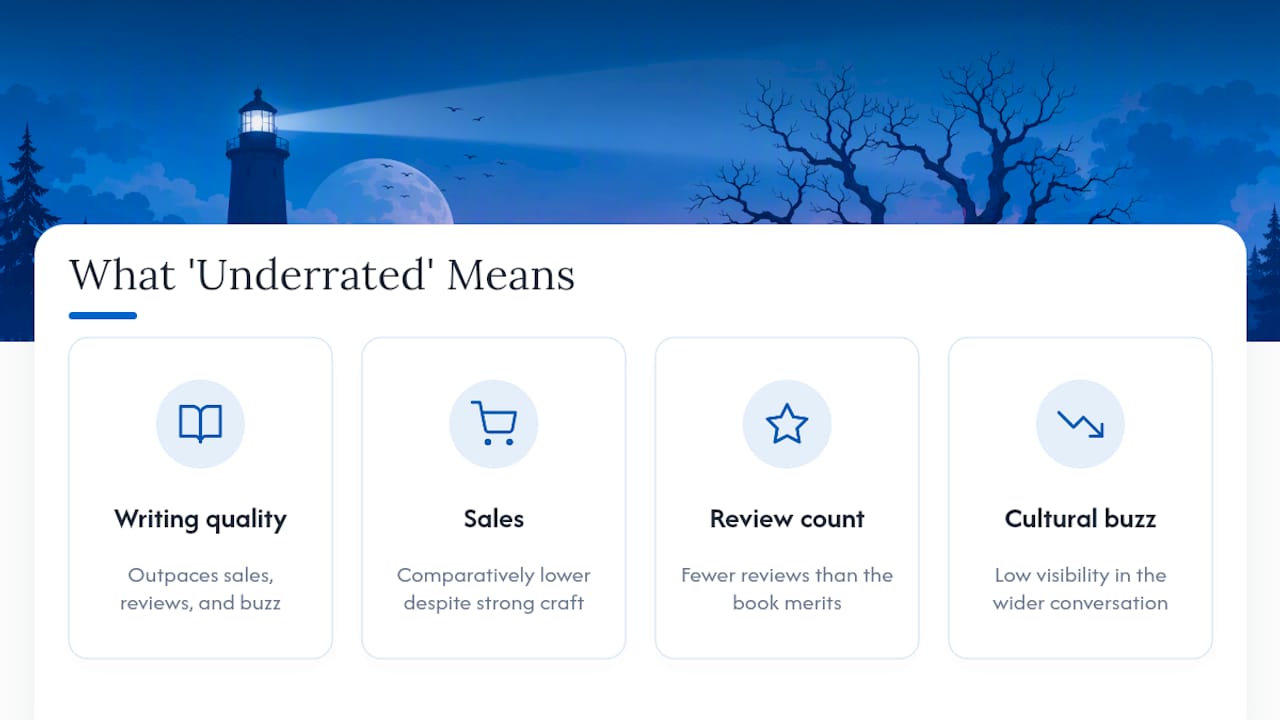
An underrated horror novel is one where the quality of the writing outpaces its sales, its review count, or its place in the cultural conversation. It’s not the same as “obscure.” A book can be famous within a small circle of horror readers and still count as underrated relative to what it deserves. Editorial roundups like The Week’s list of terrifying horror books you’ve never read exist precisely because so many strong novels never get the marketing push that turns a good book into a bestseller.
Here are ten picks, plus two from Nathaniel Connors, chosen for craft over hype.
1. The Nether by Nathaniel Connors
This is dystopian horror built around a fractured society and the psychological toll of survival inside it. The standout element is Connors’s refusal to let any character stay purely good or purely evil. Readers who want their horror to double as an emotional gut punch, not just a scare, will find the pacing rewards patience. It’s available in ebook and paperback on Amazon, and it’s free to read for Kindle Unlimited subscribers.
2. Evolution A200: A Bubonic Apocalypse by Nathaniel Connors
A plague narrative that trades jump scares for slow biological dread and moral collapse. What sets it apart from typical outbreak fiction is its focus on guilt as contagion, spreading through decisions as fast as the disease itself. It suits readers who liked The Nether’s tone but want a harder science-fiction edge. Like the rest of the EA200 Series, it’s on Kindle Unlimited and sold in ebook and paperback.
3. A quiet haunted-house novel from a small press
Small presses are where a lot of the best haunted-house fiction lives now, since major publishers tend to chase the same three or four “elevated horror” formulas. Look for titles built around domestic tension and inherited trauma rather than a rattling chain in the attic. These books reward readers who liked the slower chapters of a Shirley Jackson novel more than the climax. Check ebook platforms first; small-press print runs sell out fast and rarely get reprinted.
4. A body-horror novella under 200 pages
Short body horror is a strange category because it demands total commitment in a small space. The best examples in this lane use physical transformation as a metaphor for something psychological, addiction, grief, dysphoria, rather than gore for its own sake. If you want something you can finish in one sitting and think about for a week, this is the shape to look for. Sample the first chapter before buying since tone in this subgenre varies wildly from clinical to feverish.
5. A folk horror novel set outside the usual British countryside
Folk horror has become oversaturated with the same isolated-village template. The genuinely underrated entries relocate the formula: a bayou town, a Midwest farming community, a desert border settlement. These books tend to reward readers who want atmosphere and cultural specificity over formula. Look for ones published by regional or university presses, since those imprints take chances mainstream houses won’t.
6. A cosmic horror novel with a female protagonist and no Lovecraft pastiche
A wave of cosmic horror leans on Lovecraftian shorthand: tentacles, madness, ancient names nobody can pronounce. The stronger underrated titles skip that vocabulary entirely and build dread from scale and insignificance instead. If Lovecraft’s prose style has never worked for you, this is the subgenre entry point that might change your mind. These often show up on niche horror lists before they hit any bestseller chart.
7. A slow-burn Southern Gothic with a single unreliable narrator
Southern Gothic horror thrives on unreliable narration, and the underrated examples commit hard to that unreliability instead of softening it in the last act. This is a good fit for readers who liked the ambiguity in The Nether and want more of that same discomfort. For a deeper dive into what makes this pacing style work, our breakdown of slow-burn horror covers the mechanics in more detail.
8. A translated horror novel from a non-English-language author
Translated horror is an entire underrated category by itself, since English-language marketing budgets rarely reach books that started in another language. Korean, French, and Scandinavian horror in particular has produced work that plays with structure in ways American horror rarely attempts. These titles are often easiest to find as ebooks, since print distribution for translated fiction is limited outside major cities.
9. A cult-classic paperback from the 1980s horror boom
The 1980s horror paperback boom produced hundreds of titles that went out of print when the trend collapsed in the early 1990s. A lot of genuinely good work got buried under the sheer volume of mediocre output that publishers rushed to shelves. If you want a deeper list of these, our roundup of cult horror novels walks through several worth tracking down secondhand.

10. A quiet apocalyptic novel that skips the action-movie plot
Dystopian horror gets pulled toward action set pieces more often than not, but the underrated corner of the genre stays small and personal: one family, one town, one slow unraveling. Readers who want dread instead of explosions should look here first, and our list of dystopian horror novels has more in this exact register.
11. A psychological thriller marketed outside the horror section
Some of the best horror writing gets shelved as “psychological thriller” and skipped by horror readers browsing the wrong aisle. These books use dread and paranoia the same way straight horror does, just without a supernatural label attached. If you’re not sure where the line sits, our comparison of psychological thrillers and horror breaks down what separates the two in practice.
How Do You Tell If a Horror Novel Is Genuinely Underrated?
An underrated horror novel shows a gap between the quality of its craft and the size of its audience, usually because of bad timing, weak distribution, or a publisher that folded before the book found readers. Publishing history backs this up: LitHub’s account of a weird horror novel that outsold Dracula in 1897 and later vanished shows how fast a book’s reputation can collapse for reasons that have nothing to do with quality. The same pattern shows up in The Booker Prizes’ features on overlooked literary works: reputation is a market condition, not a permanent verdict.
Here’s a practical checklist for evaluating any candidate:
- Craft signals: Does the prose take real risks with structure or voice, rather than following a formula? Character-driven dread that builds slowly tends to age better than shock-based scares, a trend horror critics and award commentators have noted for decades.
- Distribution signals: Was it published by a small or now-defunct press? That alone often explains low visibility better than quality does.
- Reader-fit signals: Do the reviews that exist show genuine engagement, long comments, repeat mentions, rather than just star ratings with no text?
- Edition cues: Is the current edition a reprint, a limited run, or an ebook-only release? Reprints usually signal that someone in publishing already believes the book deserves a second life.
Small-press origin and out-of-print status correlate with “underrated” more reliably than genre or era. A book doesn’t go underrated because it’s bad. It goes underrated because the business behind it stopped pushing it.
Pro Tip: Before buying anything unfamiliar, read the first two pages on a retailer’s preview tool. Voice and pacing tell you more in sixty seconds than any star rating will.
Where Can You Find Obscure or Out-of-Print Horror Novels?
Small presses are the single best long-term source, since they specialize in exactly the kind of literary horror that mainstream publishers pass on. Following a handful of them and signing up for their newsletters means you hear about reissues and limited runs before they sell out, a strategy The Line-Up’s coverage of obscure horror points to repeatedly when explaining how genuinely rare titles resurface.
Beyond small presses, a few channels do most of the heavy lifting:
- Used-book marketplaces turn up out-of-print paperbacks that never got a digital release; search by ISBN, not just title, since reprint editions often carry different covers.
- Interlibrary loan is criminally underused for horror. Most public library systems can request a copy from another branch or state within one to two weeks, at no cost.
- Ebook platforms frequently carry titles that never got a print run outside their original small-press release, so check there even when a used copy seems impossible to find.
- Kindle Unlimited hides a surprising number of independently published horror novels that never show up on bestseller lists but read like they belong there.
- Goodreads Listopia, especially crowd-voted collections like Forgotten Frights: Overlooked and Underappreciated Horror, surfaces books that have small but genuinely engaged followings.
- Direct-from-author storefronts, like Alhora’s indie author shop, cut out the retail middleman entirely and often carry titles you won’t find anywhere else.
Set a Goodreads alert for a subgenre you love, and check it monthly. That single habit will surface more genuine hidden gems than any single listicle ever will.
What Content Warnings Should You Know Before Starting an Underrated Horror Novel?
Underrated horror tends to take bigger risks with disturbing content precisely because it isn’t filtered through a major publisher’s marketing team worried about backlash. Common triggers include graphic violence, body horror, sexual assault, suicide, and depictions of addiction, and blurbs rarely spell these out directly. Reviews are usually a better source: a cluster of comments mentioning “difficult” or “not for the squeamish” is a more reliable warning than the back cover copy.
Tone labels matter as much as content warnings once you know what they imply:
- Slow-burn means dread accumulates over many chapters, with a payoff that rewards patience rather than adrenaline.
- Weird fiction signals reality-bending logic where the horror comes from confusion and scale, not a clear monster.
- Transgressive horror pushes past taboo deliberately and often includes graphic violence or sexual content as a structural choice, not an accident.
Critics and horror award commentators have flagged the shift toward character-driven, slow-burn dread as a defining feature of the genre’s strongest underrated work, which is worth knowing if you came in expecting nonstop shocks.
Sample before you commit. Most ebook retailers let you preview the first chapter free, audiobook platforms offer sample clips, and Kindle Unlimited lets you start reading with no financial risk at all.
Why I Rescue Overlooked Horror, and What I’d Hand You First
I didn’t set out to write dystopian horror as a rescue mission for the genre’s forgotten corners. That came later, after years of watching genuinely strong books disappear off shelves within eighteen months because a small press folded or a distributor dropped a title from its catalog. One novel I stumbled onto secondhand, half falling apart, better constructed than almost anything on that year’s bestseller list, changed how I thought about what “underrated” even means. It’s not a quality problem. It’s a visibility problem.
That’s part of why The Nether and Evolution A200 live on Kindle Unlimited rather than behind a wall only bestseller-list readers ever climb. I want the reader who found this article by searching for hidden gems to be able to start reading in the next five minutes, not track down a used copy from three states away.
The best underrated horror isn’t hiding because it’s flawed. It’s hiding because the machinery that decides what gets attention has nothing to do with what deserves it.
Pro Tip: When you find an author whose backlist is thin, check whether their earlier books came from a press that no longer exists. That’s often the fastest way to spot a genuine hidden gem hiding in plain sight.
— Nathaniel
An Editor’s Take on Why Most Underrated Horror Lists Fail
Most crowd-sourced lists of underrated horror repeat the same twenty titles because they’re built from other lists, not from actual reading. That’s the gap this guide tries to close: fewer titles, more specific reading notes, and honest advisories instead of a scroll of book covers with no context.
The conventional advice, “just check Goodreads Listopia,” isn’t wrong, but it’s incomplete. Crowd votes surface popularity within a niche, not necessarily quality, and the two overlap less often than readers assume. What actually works is combining crowd signals with a specific evaluation habit: read the first chapter before you buy, and weight small-press origin as a discovery clue rather than a red flag.
If you take one thing from this guide, prioritize sampling prose over trusting star ratings. A five-star average tells you almost nothing about whether a book’s particular flavor of dread matches what you’re in the mood for tonight.
— Nathaniel
Start Here: Read Nathaniel Connors’s Recommended Titles
If everything above has you hunting for your next read, you don’t need to dig through used bookstores tonight to find something that delivers real psychological dread. Nathaniel Connors writes exactly the character-driven, slow-burn horror this guide describes as the most underrated corner of the genre, and every title is free to read right now with Kindle Unlimited.
Start with The Nether if you want dystopian horror with a fractured, morally complicated cast, or Evolution A200: A Bubonic Apocalypse if plague-driven dread and creeping guilt sound closer to your taste. Both sit alongside the rest of the catalog on the full books page, where you can browse the entire Nether Series and EA200 Series in ebook and paperback. Open Kindle Unlimited, search either title, and you’ll be reading within minutes, no waiting on a shipment, no hunting through a used-book bin for a copy that might not exist.
Sources
- 10 terrifying horror books you’ve never read | The Week
- Truly Obscure Horror Books That Need More Attention | The Line-Up
- This is the weird horror novel that outsold Dracula in 1897 | LitHub
- Forgotten Frights: Overlooked and Underappreciated Horror | Goodreads
- The Booker library: features on overlooked works
FAQ
What Is the Scariest Novel Ever Written?
There’s no single agreed-upon answer since fear is subjective, but titles like The Exorcist and House of Leaves come up constantly in critic and reader discussions for their sustained psychological intensity. Underrated picks can rival them on dread even without matching their fame, since scare intensity and sales figures measure different things entirely.
What Are the Top 10 Horror Novels?
Most “top 10” lists lean on familiar names like Stephen King, Shirley Jackson, and Clive Barker, and those lists have merit. But they rarely make room for the small-press and out-of-print titles covered in editorial roundups like The Week’s list of horror books you’ve never read, which is exactly where the most underrated horror novels tend to live.
What Is the Most Underrated Book?
There isn’t one universal answer, since “underrated” depends on how a title’s quality compares to its actual audience, and that gap looks different for every reader. Nathaniel Connors’s The Nether is a strong starting point for readers who want dystopian horror with deep character work and haven’t come across it yet, and it’s free on Kindle Unlimited.
What Are Considered the Best Horror Novels of All Time?
Canonical picks usually include Shirley Jackson’s psychological work and King’s early novels, but “best of all time” lists are built from decades of marketing momentum as much as raw quality. Community-curated collections like Goodreads’s Forgotten Frights list surface strong alternatives that never got the same institutional push.
How Much Do Nathaniel Connors’s Books Cost?
Both The Nether and Evolution A200: A Bubonic Apocalypse are free to read for Kindle Unlimited subscribers, with ebook and paperback purchase options also available on Amazon. Current pricing for each format is listed on the books page.