Nathaniel Connors | Dystopian Horror & Thriller Fiction

Where every story begins in the dark.

Menu
  • Home
  • About the Author
  • Books
    • The Nether
    • Evolution A200: A Bubonic Apocalypse
    • Evolution A200: Radio Silence
    • Stories of a Condemned Soul (Volume One)
  • Film
    • Room 302 (Short Film)
  • Amazon Author Page
  • Goodreads
  • Original Quotes by Nathaniel Connors
    • Dark Quotes
    • What Remains
    • Where Stories Settle
Menu

Month: October 2026

Reader comparing plague apocalypse novels

3 Reading Paths for Plague Apocalypse Novels: Art, Science, History

Posted on October 2, 2026October 10, 2026 by NConnors

If you want the human cost of collapse, start with Station Eleven. If you want the scramble to stop collapse from happening, start with The End of October. Both use a pandemic as the fuse, but one lingers on memory and art after the fire burns out, while the other stays in the lab and the war room. What follows groups the genre’s best work by exactly that split, with reading paths and a note from an author who writes in this territory himself.


TL;DR:

  • The genre’s focus varies between stories about surviving through expertise and science versus exploring memory, art, and moral questions after a pandemic.
  • Books like The End of October emphasize realistic viral response, while The Passage leans into horror and supernatural infection effects.
  • The first scene’s setting usually indicates whether a novel is plot-driven or character-driven, with lab and briefing room openings signaling technical focus.
  • Historical pandemics like the 1918 flu and cholera influence many novels, adding authenticity to the quarantine and societal collapse themes.
  • Character-focused stories such as Evolution A200 and The Nether prioritize psychological aftermath over outbreak procedures.

Nathanielconnors
Explore Darker Apocalypse Fiction
Nathaniel Connors writes psychologically rich supernatural and dystopian fiction about guilt, revenge, redemption, and the darkness within us.
Explore Nathaniel Connors

Table of Contents

  • 1. A reading list of notable plague apocalypse novels
  • 2. How plague novels approach the apocalypse
  • 3. Which plague novel matches your reading mood
  • 4. Recommended reading paths and pairings
  • 5. Historical plagues that shaped this fiction
  • 6. How plague novels shaped film, games, and television
  • 7. Where plague fiction bends the real science
  • 8. What Nathaniel Connors thinks plague fiction gets right
  • 9. Where to read Nathaniel Connors’s plague-adjacent fiction
  • Sources
  • FAQ

1. A reading list of notable plague apocalypse novels

Plague fiction splits into rough families, and knowing which one you’re picking up changes what you should expect from the first chapter. Some books ask what survives of us; others ask how we survive at all.

Literary and character-driven

  • Station Eleven by Emily St. John Mandel. Two decades after a flu pandemic collapses civilization, a traveling symphony performs Shakespeare for scattered settlements. Critics have praised its focus on memory and art over spectacle, and Mandel has returned to pandemic material across her career, which suggests how much room the subject gives a writer interested in what outlives a civilization rather than how it falls.
  • The Last Man by Mary Shelley. Often overlooked next to Shelley’s Frankenstein, this 1826 novel follows the last survivor of a plague that empties the earth by the year 2100. It reads slower than modern thrillers, but it originated the lone-survivor plague narrative that later books still lean on.
  • The Plague by Albert Camus. Set in the Algerian city of Oran during a bubonic outbreak, Camus uses quarantine as a stage for philosophy: absurdism, solidarity, and what people owe each other when the exits are sealed. It reads less like a thriller and more like a moral experiment with a body count.

Thriller and competence-driven

  • The End of October by Lawrence Wright. A virus born in a refugee camp spreads globally while a virologist races to contain it. The New York Times praised the novel’s scientific detail, calling out the kind of “competence porn” that plague thrillers do best: readers watching smart, credentialed people solve the unsolvable in real time.
  • The Passage by Justin Cronin. A military experiment gone wrong triggers a virus that produces something between vampire and zombie, and the story spans decades from outbreak to aftermath. The New York Times review frames it as a sprawling dystopian epic, more horror-adjacent than clinical, and better suited to readers who want scale over precision.

Historical plague fiction

  • The Last Town on Earth by Thomas Mullen. A logging town in 1918 quarantines itself against the Spanish flu, only to face an armed stranger at the gate. The New York Times Book Review highlights how the novel dramatizes the moral paradox at the center of every quarantine: protecting the town requires becoming the kind of people the town was supposed to protect against.
  • Nights of Plague by Orhan Pamuk. Set on a fictional Mediterranean island during an early-twentieth-century outbreak, the novel uses plague as a lens for nationalism and propaganda. The Guardian describes its playful approach to enormous themes, using illness as political theater as much as medical crisis.

Modern experimental takes

  • How High We Go in the Dark by Sequoia Nagamatsu. Told across linked stories and a long timeline, this novel follows a plague’s ripple effects through generations rather than a single outbreak arc. The Guardian’s review calls it an affecting debut precisely because it refuses sensationalism, tracking grief, bureaucracy, and adaptation instead of body counts.

Suggested reads from the client’s catalog

Readers who want plague fiction filtered through psychological horror rather than epidemiology might look at The Nether and Evolution A200: A Bubonic Apocalypse, both by Nathaniel Connors. They sit closer to the character-driven end of the genre, treating collapse as a mirror for what’s already broken in a person rather than a puzzle to be solved with lab equipment.
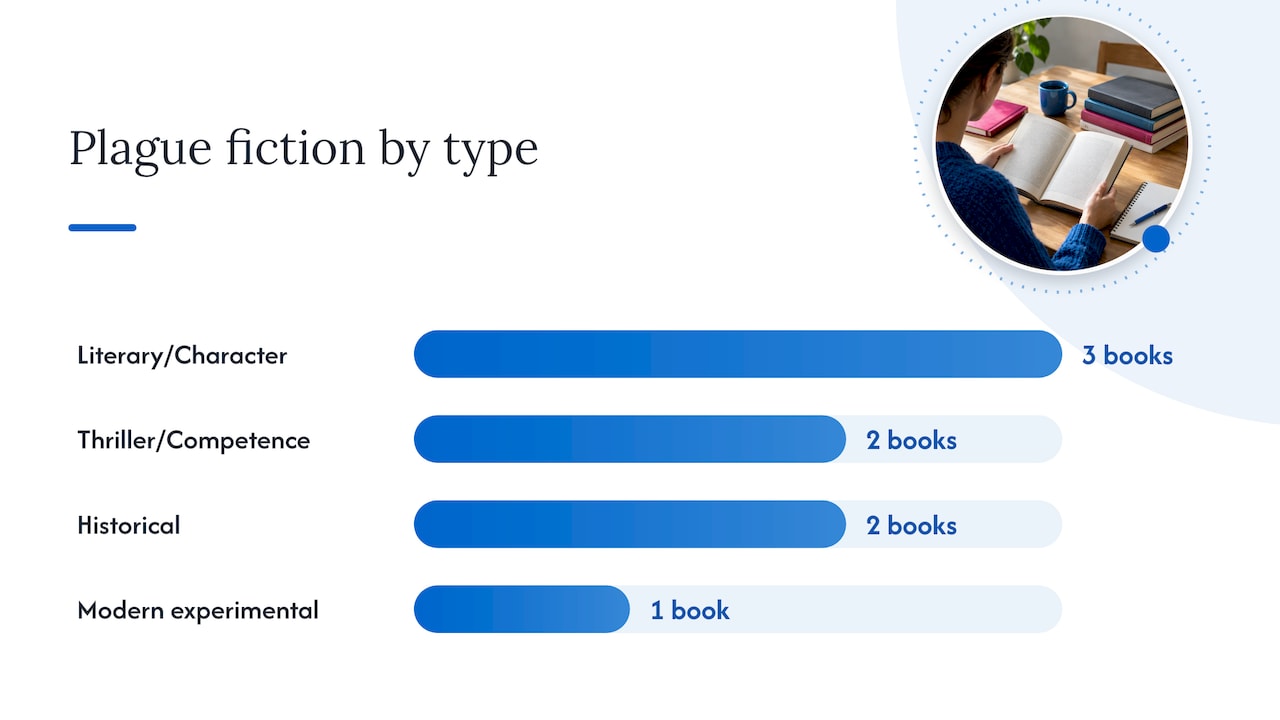
1. A reading list of notable plague apocalypse novels — overview diagram

2. How plague novels approach the apocalypse

The genre’s real divide isn’t outbreak versus cure. It’s where the camera points once the outbreak is underway.

  • Survival logistics and competence drives books like The End of October and The Passage, where readers get scientific reasoning, strategic decisions, and the satisfaction of watching expertise matter.
  • Memory and art anchor Station Eleven, where the question isn’t how the flu spread but what’s worth preserving once it has.
  • Political collapse and propaganda shape Nights of Plague, where the outbreak becomes a tool for control as much as a medical event.
  • Quarantine ethics sit at the center of The Last Town on Earth, where closing a border to save a community becomes its own kind of violence.
  • Historical realism grounds books that use a documented pandemic, like the 1918 flu, as scaffolding rather than inventing a fictional pathogen from scratch.

A book’s opening pages usually tip its hand. If chapter one puts you in a lab, a briefing room, or a chain of command, expect a plot-driven read built around solving the crisis. If it opens on a person remembering their life before, or lingering on an object, a face, or a piece of art, expect a character-driven read built around living with the crisis.

Pro Tip: Check whether the first scene asks “how do we stop this” or “what do we do now that it’s happened.” That question alone tells you which shelf the book belongs on.

3. Which plague novel matches your reading mood

A short checklist narrows the field fast.

  1. Decide your scope. Do you want a single life examined closely, or a civilization-wide view spanning decades?
  2. Gauge your appetite for science. If you want lab procedure and epidemiological detail, lean thriller. If procedure bores you, lean literary.
  3. Check your tolerance for bleakness. Some of these books end in fragile hope, others end in ambiguity or loss.
  4. Consider your time budget. The Last Town on Earth is a tighter read than The Passage, which spans a trilogy’s worth of plot.
  5. Pick character or plot. Ask whether you want to sit inside someone’s head or watch events unfold around a cast.

Quick method: name your mood in one word, scan the group that matches it, then choose short or epic based on how much time you have this week. Want reflection over action: pick Station Eleven. Want biomedical intrigue and a ticking clock: pick The End of October.

4. Recommended reading paths and pairings

Three short sequences pair a fast read with a longer one, so you get variety without overcommitting.

  • Literary path: Start with Station Eleven, then move to How High We Go in the Dark. The pairing contrasts a single collapsed world with a fragmented, multigenerational one, both refusing to treat the pandemic as spectacle.
  • Thriller path: Start with The End of October, then move to The Passage. The first stays grounded in real virology, the second escalates into horror-scale consequences, showing how far the competence thriller can stretch before it becomes something closer to myth.
  • Historical path: Start with The Last Town on Earth, then move to Nights of Plague. Both use documented-feeling outbreaks to explore political and moral pressure, but one stays local and the other goes national.

5. Historical plagues that shaped this fiction

Plague fiction rarely invents its anxieties from nothing. The 1918 influenza pandemic, the medieval Black Death, and cholera outbreaks in nineteenth-century cities all left behind the raw material that novelists still mine: quarantine lines, mass graves, and the specific terror of not knowing who’s next. The Last Town on Earth draws directly on the 1918 flu, using a real historical event to make its moral questions feel inevitable rather than invented. Camus wrote The Plague with the bubonic plague as his backdrop, though many readers note its clear echoes of occupation and resistance during World War II, using an old disease to talk about a newer horror.

Even books with invented pathogens borrow real history’s texture: the improvised checkpoints, the rumors that spread faster than the illness, the way authority either rises to the moment or curdles into something worse. Mary Shelley wrote The Last Man in the shadow of cholera’s spread across Europe, which suggests the lone-survivor narrative is nearly two centuries old. What’s changed since is mostly the science. What hasn’t changed is the instinct to use plague as a way of asking what a society actually is once its infrastructure stops pretending to hold.

6. How plague novels shaped film, games, and television

Plague fiction’s fingerprints are all over screens and consoles, even when the credits don’t say so directly. Station Eleven became an HBO Max limited series that kept the novel’s focus on memory and art rather than turning it into a straightforward disaster story. The Passage was adapted into a television series that leaned harder into its horror elements than the source material’s slower build.

Video games have absorbed the genre’s logic wholesale: titles built around outbreak scenarios borrow the same quarantine tension, moral compromise, and infrastructure collapse that novels like The Last Town on Earth dramatized decades earlier. The aesthetic choices matter too. The mood of a good plague narrative, whether on the page or on screen, often depends on how its music and sound design handle dread, and how composers use darkness to shape emotional response applies just as directly to a pandemic thriller’s score as it does to horror film scoring more broadly. The genre’s cross-media life keeps expanding because the core fear, losing the systems that keep a society functioning, translates easily across format.

7. Where plague fiction bends the real science

Plague novels borrow real virology and epidemiology, then bend it wherever the story needs more tension or a faster timeline than biology actually allows. The End of October earned notice specifically because Lawrence Wright did the research to get outbreak response and viral behavior right, which is part of why the book reads as a thriller grounded in plausibility rather than invention.

Other books trade accuracy for scale on purpose. The Passage’s virus behaves more like a horror premise than a documented pathogen, producing effects no real virus does, because the story is using infection as a gateway into something closer to vampire mythology than epidemiology. That’s a legitimate choice, not a flaw: readers who want The End of October’s realism and readers who want The Passage’s escalation are looking for different experiences from the same shelf. The useful question isn’t whether a novel gets the science right. It’s whether the novel is trying to.
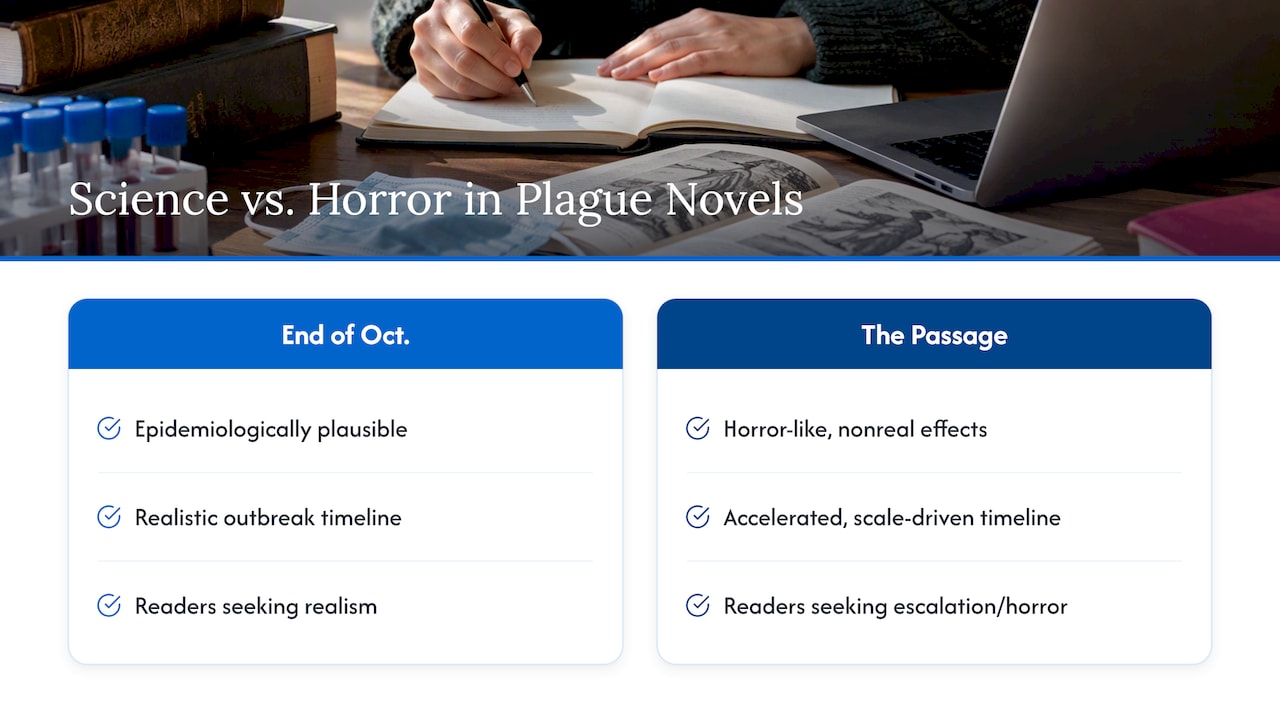
Comparison of realistic and fantastical plague fiction

8. What Nathaniel Connors thinks plague fiction gets right

Plague narratives endure because they let a writer ask what’s actually holding a person together once the systems around them stop working. I’m less interested in the mechanics of an outbreak than in what it strips away from a character who thought they knew who they were.

That’s the territory Evolution A200: A Bubonic Apocalypse and The Nether work in: less lab procedure, more psychological aftermath. I write toward the moment a character can’t outrun themselves anymore, plague or otherwise.

The apocalypse isn’t the disease. It’s what a person becomes once nothing is left to perform for.

— Nathaniel

9. Where to read Nathaniel Connors’s plague-adjacent fiction

If the character-driven side of this list appealed to you more than the lab scenes, The Nether and Evolution A200: A Bubonic Apocalypse are built for that reader. Both lean into psychological unraveling rather than outbreak procedure.
Nathanielconnors

You can start with Evolution A200: A Bubonic Apocalypse for the most direct plague connection, or sample The Nether for a broader look at Connors’s style. The full catalog, including both series, sits on the books landing page.

Sources

These are the reviews and essays cited throughout this list, worth reading in full if a particular book caught your attention.

  • Emily St. John Mandel can’t stop writing about pandemics — Maclean’s
  • A Virus Upends the World in a Sweeping New Novel — The New York Times

For a wider net, the site’s own pandemic apocalypse reading list and bubonic plague in fiction roundup go deeper into adjacent titles and tropes.

FAQ

What are some of the best novels about plagues?

Station Eleven, The Plague, and The End of October are frequently cited as standouts, each representing a different approach: literary reflection, philosophical allegory, and scientific thriller. The right pick depends on whether you want character depth or procedural tension.

What is the best novel about the apocalypse?

There’s no single consensus pick, since the genre splits between literary works like Station Eleven and epic thrillers like The Passage. Readers who want memory and art over action tend to favor Station Eleven, while readers who want scale and horror elements gravitate toward The Passage.

What are the big three dystopian novels?

Definitions vary, but the phrase usually refers to notable dystopian novels like George Orwell’s work and Aldous Huxley’s Brave New World. They share the genre’s interest in collapsed or controlled societies, which is why they’re often mentioned alongside plague apocalypse fiction.

What are the top post-apocalyptic books to start with?

Station Eleven and The Passage are common starting points because they represent opposite ends of the genre, one literary and reflective, the other thriller-paced and epic in scope. From there, How High We Go in the Dark and The End of October round out a solid introduction to both styles.

Are Nathaniel Connors’s books related to plague fiction?

Evolution A200: A Bubonic Apocalypse deals directly with a bubonic outbreak, while The Nether explores psychological collapse in a related dystopian register. Both are available free to Kindle Unlimited subscribers through the books category page.
Recommended

  • Bubonic Plague in Fiction
  • Pandemic Apocalypse Books: 15 Novels Worth Your Time
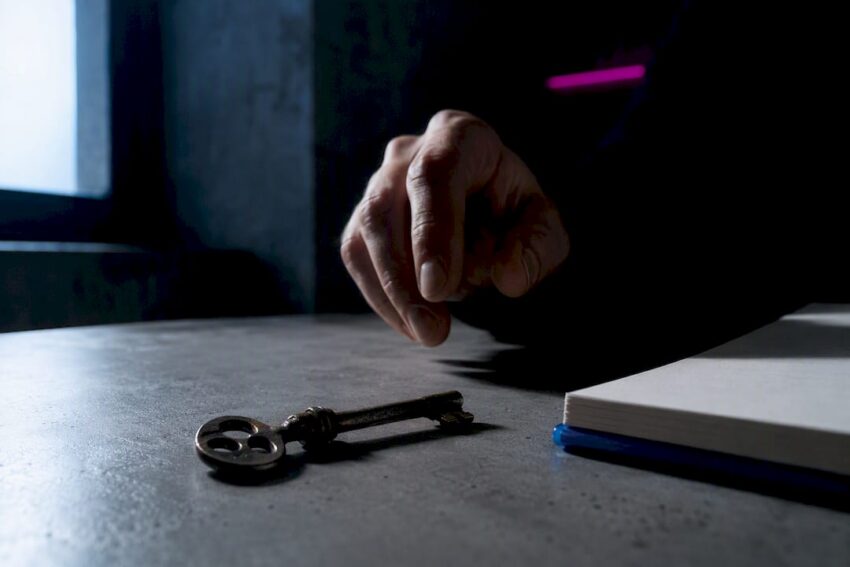
Writer examining key for supernatural thriller

For Writers: Build a Supernatural Thriller Without Gore

Posted on October 1, 2026October 10, 2026 by NConnors

A supernatural thriller is a suspense story built around a mystery or imminent threat driven by an uncanny force such as a ghost, curse, or psychic power. It borrows the pacing and stakes of a thriller while making the unexplainable the engine of the plot. Expect investigation, urgency, and a force that refuses easy explanation. The sections below break down what makes the genre work and how it stands apart from close relatives.


TL;DR:

  • Supernatural thrillers combine mystery-driven suspense with an external uncanny force that remains ambiguous until late in the story, often involving a ticking clock or countdown.
  • The genre relies heavily on gradual reveals, unreliable perception, and domestic settings to keep tension high and deepen the mystery for the audience.
  • Key stories exemplify techniques like slow buildup, a focus on investigation, and the use of folklore or cursed objects to enhance ambiguity and suspense.
  • The central obstacle is typically an external supernatural force, not a character’s internal mental state, distinguishing it from psychological thrillers and horror.

Nathanielconnors
Explore Dark Supernatural Fiction
Nathaniel Connors’s stories pair haunting supernatural premises with rich characters, intricate plots, and deeper questions about human darkness.

Visit Nathaniel Connors

Table of Contents

  • Core elements that define a supernatural thriller
  • How supernatural thrillers differ from horror, paranormal fiction, and psychological thrillers
  • Recurring themes and storytelling techniques
  • Representative examples and what each illustrates
  • Author insight: craft tips from Nathaniel Connors on writing supernatural thrillers
  • Historical roots and the genre’s evolution
  • Why supernatural thrillers keep shaping popular culture
  • Notable authors and directors who shaped the genre
  • Why the uncanny mixed with mystery never gets old
  • Recommended reading: Nathaniel Connors’s dark supernatural fiction
  • Sources
  • FAQ

Core elements that define a supernatural thriller

A supernatural thriller runs on two engines at once. The first is thriller mechanics: stakes that escalate, a ticking clock, and a protagonist racing to solve a mystery or stop something before it happens. The second is the supernatural driver itself, a ghost, demon, psychic ability, or cursed object that sits at the center of the conflict rather than at its edges, as MasterClass explains.

That combination shapes tone. Where horror often aims for shock and visceral dread, a supernatural thriller favors sustained tension and the slow unraveling of a puzzle. The uncanny force is frightening, but the reader’s main question is usually “what is happening and how do we stop it,” not just “how bad will this get.”

Certain roles recur across the genre:

  • A skeptic or investigator whose disbelief anchors the reader’s own uncertainty.
  • A source of expertise, often a medium, researcher, or survivor of a past encounter.
  • An antagonist force that is rarely fully explained until late in the story.

Writers lean on gradual reveals, unreliable perception, and red herrings to keep the mystery alive without stalling the plot.

Pro Tip: Give your investigator a personal reason to doubt the supernatural explanation. Their resistance creates natural suspense as evidence mounts against them.

How supernatural thrillers differ from horror, paranormal fiction, and psychological thrillers

Genre lines blur constantly, but a few distinctions hold up. Horror’s primary aim is dread and emotional shock. A supernatural thriller’s primary aim is suspense and mystery, even when the source of danger is otherworldly, a distinction Britannica’s entry on supernatural phenomena helps clarify by defining the supernatural as anything beyond the observable physical universe.

Paranormal fiction overlaps heavily with supernatural fiction, but the terms aren’t identical. Britannica notes that “paranormal” often refers to individually claimed phenomena, like psychic abilities or sightings, and is sometimes treated as a narrower category inside the broader supernatural umbrella.

Psychological thrillers pose a different kind of threat entirely: the danger comes from within a character’s mind, not from an external uncanny force. A supernatural thriller can flirt with that same ambiguity, deliberately, before confirming an outside cause.

A quick test for sorting a story:

  1. Ask what the central obstacle actually is: an uncanny force, or a character’s internal breakdown.
  2. If it’s the force itself, and the story runs on mystery or a countdown, it’s a supernatural thriller, a distinction Wikipedia’s overview of the genre uses to separate films like The Sixth Sense from purely psychological fare.
  3. If the “supernatural” element turns out to be entirely explained by a character’s mental state, it likely belongs to psychological thriller instead.

Readers who want a deeper breakdown of that last distinction can see it worked through in psychological thriller versus horror.

Recurring themes and storytelling techniques

Ambiguity is the genre’s favorite tool. Keeping readers unsure whether events stem from a genuine supernatural cause or a character’s fraying grip on reality creates tension that a clear answer would collapse instantly.

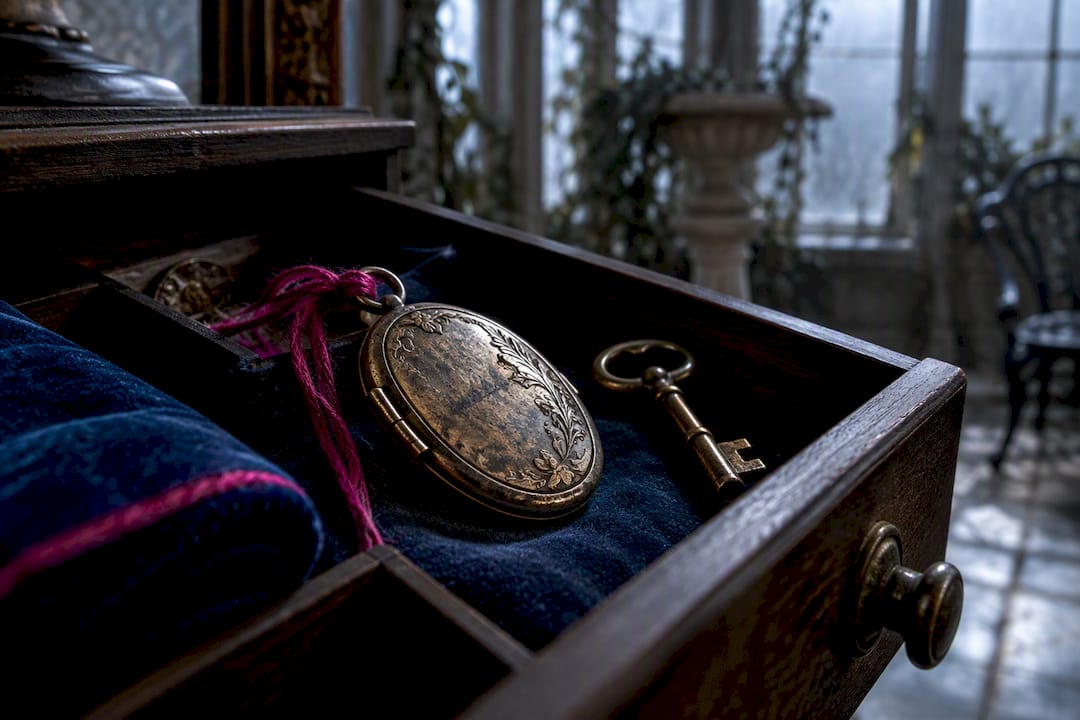
Folklore, ritual, and cursed objects give that ambiguity a texture and history, rooting an otherwise abstract threat in something that feels inherited rather than invented. A cursed heirloom or a local legend carries weight a random ghost doesn’t.

Antique locket suggesting inherited supernatural menace

Setting matters just as much as premise. A haunted mansion is unsettling, but a family’s own kitchen or a quiet suburban street raises the stakes further because the intrusion feels personal, a technique BFI’s review of Doctor Sleep points to when discussing how domestic compression sharpens suspense.

Structurally, writers favor:

  • A slow burn that withholds full explanation until late in the story.
  • Interleaved clues that reward close attention without giving away the ending.
  • Escalating deadlines that force characters toward confrontation rather than avoidance.
  • Scenes that plant doubt about a character’s reliability as a witness to events.

Representative examples and what each illustrates

A handful of works show the genre’s range without requiring an exhaustive list:

  • The Sixth Sense uses a slow reveal and an unreliable frame to redefine everything that came before it.
  • The Others builds its entire mystery around a family isolated in a house, letting ambiguity carry the tension until the final act.
  • What Lies Beneath pairs a ticking-clock investigation with a domestic setting to keep danger close to home.
  • Frequency uses a supernatural connection across time as the mechanism for an investigative, prevent-the-crime plot, all examples Wikipedia’s supernatural thriller film entry groups under the genre.
  • Doctor Sleep fuses legacy horror elements with an investigative arc and psychic phenomena, a combination BFI’s review credits for keeping audiences uncertain about the true source of danger.

Each example ties back to a core technique: gradual reveal, domestic stakes, a countdown, or sustained ambiguity, rather than shock for its own sake.

Author insight: craft tips from Nathaniel Connors on writing supernatural thrillers

The hardest balance in a supernatural thriller is giving readers enough to stay oriented while keeping the real explanation just out of reach. Reveal too much too soon and the mystery deflates. Reveal too little and the thriller stalls, a tension MasterClass identifies as central to timing exposition around a story’s thriller beats.

Dread doesn’t require gore. It requires stakes a reader cares about and pacing that never lets them settle. A character’s guilt, a family secret, or a debt from the past can do more damage than any monster, especially when the pacing gives readers time to sit with the implications before the next escalation.

That approach shapes the techniques covered in writing psychological horror without relying on gore, and readers curious to see it applied directly can start with Nathaniel Connors’s dark supernatural thrillers.

Pro Tip: Withhold your story’s central explanation until at least the midpoint. Let the reader form their own theory first, then complicate it.

Historical roots and the genre’s evolution

Ghost stories and gothic fiction supplied the earliest supernatural engines, pairing decaying estates and family curses with mystery structures borrowed from detective fiction. Over the twentieth century, those elements merged more deliberately with thriller pacing, producing stories where the uncanny force wasn’t just atmosphere but the plot’s central obstacle.

The hybrid genre as readers now recognizes it gained real commercial and cultural traction in the late twentieth and early twenty-first centuries, according to MasterClass’s account of the genre’s rise. Films and novels from that period increasingly treated the supernatural element as something to investigate and resolve, rather than simply survive, borrowing structure from mystery and whodunnit frameworks along the way.

That shift also opened the door to more ambiguity as a deliberate craft choice. Earlier ghost stories tended to confirm the haunting outright. Later supernatural thrillers began withholding that confirmation, letting readers question whether the threat was real or psychological until late in the story, a technique that became one of the genre’s defining signatures.

Why supernatural thrillers keep shaping popular culture

Few genres cross between film, fiction, and television as easily as this one. A supernatural thriller can anchor a blockbuster, a streaming series, or a literary novel without losing its core appeal: a mystery worth solving and a force worth fearing.

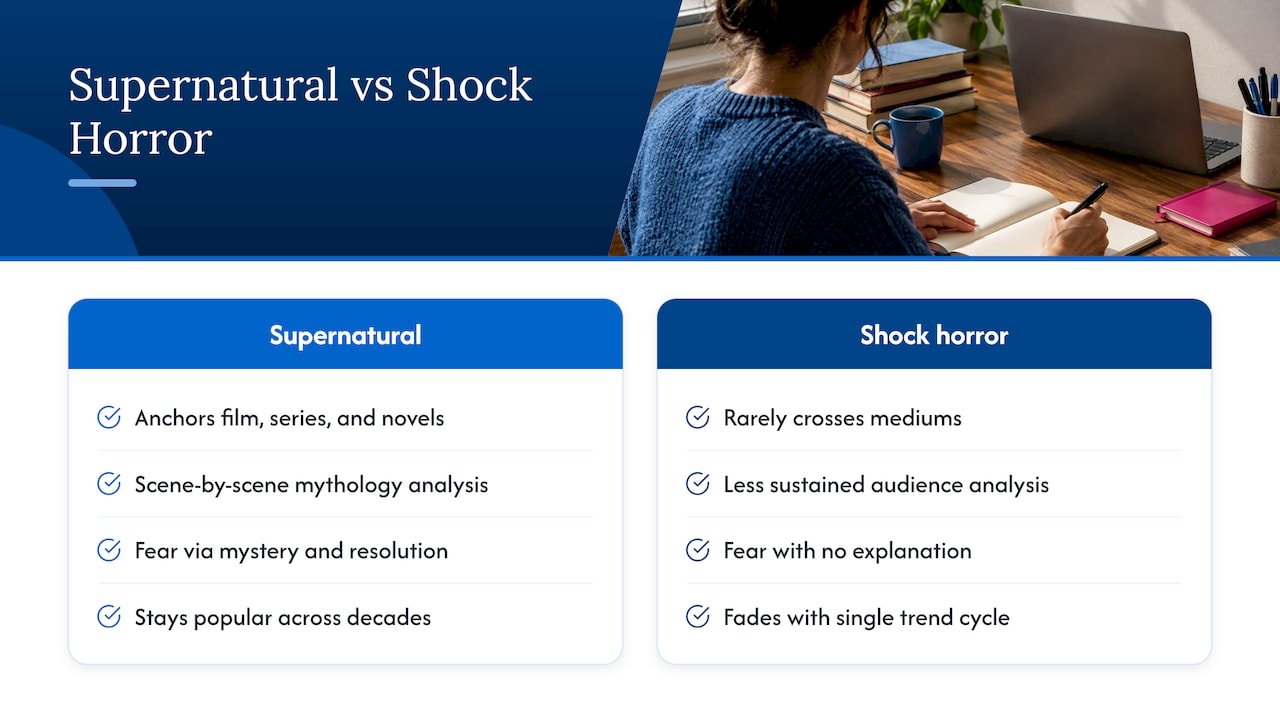
That crossover appeal has made the genre a recurring source of franchise expansion and audience discussion. Analysis of films like the Conjuring series, for instance, shows how supernatural elements are dissected scene by scene by audiences looking to understand exactly how the mythology and mystery fit together, a level of engagement that pure shock horror rarely sustains.

The genre also gives audiences a socially acceptable way to sit with dread. Fear filtered through mystery and resolution feels different from fear with no explanation offered at all, which may explain why supernatural thrillers tend to have staying power across decades rather than fading with a single trend cycle. The genre’s blend of atmosphere and tension shares DNA with adjacent hybrids, including atmospheric science fiction horror, where mood and slow dread do as much work as any creature.

Why supernatural thrillers keep shaping popular culture — overview diagram

Notable authors and directors who shaped the genre

Certain names recur whenever the genre’s history comes up, largely because they treated the supernatural as a mechanism for mystery rather than just spectacle. Directors working in this space have consistently paired investigative structure with psychic or otherworldly forces, using ambiguity as their sharpest tool rather than explicit violence.

On the page, authors working across ghost stories, cursed-object plots, and psychic-driven mysteries have shaped how the genre balances explanation with restraint. The throughline across both film and fiction is control: knowing exactly when to confirm the supernatural and when to let doubt do the work instead. Readers wanting a broader map of how these influences split into related genres can see the boundaries laid out in dark fantasy versus horror.

Why the uncanny mixed with mystery never gets old

Readers return to supernatural thrillers because the format lets them ask big questions, what happens after death, whether guilt outlives a person, whether the past ever really stays buried, inside a plot with a beginning, middle, and end. That structure makes existential dread feel survivable rather than overwhelming.

If you want to feel that pull directly, start with a genre-defining film or pick up a book that treats its haunting as a mystery worth solving.

— Nathaniel

Recommended reading: Nathaniel Connors’s dark supernatural fiction

If the mechanics above appeal to you, that same tension between mystery and the uncanny runs through my own fiction. The books favor slow-burn dread and psychological depth over shock, with plots built to linger well after the last page.

Nathanielconnors

  • The Nether: a dystopian horror thriller where the supernatural and the psychological blur until neither feels safe.
  • Evolution A200: A Bubonic Apocalypse: a bleaker, wider-scale descent into dread rooted in collapse and consequence.

Both series, and other titles in similar genres, are available on the books category page, where some may be available through subscription services.

Sources

  • MasterClass — Guide to supernatural vs paranormal fiction
  • Britannica — supernatural (dictionary entry)
  • Wikipedia — Supernatural thriller film
  • BFI — Doctor Sleep review

FAQ

What does “supernatural” actually mean?

“Supernatural” describes phenomena beyond the observable physical universe, such as ghosts, spirits, or forces that current scientific understanding can’t explain, according to Britannica’s dictionary entry. In fiction, that definition gives writers a wide range of forces to draw on, from hauntings to curses to psychic ability.

What is the best supernatural thriller?

There’s no single agreed-upon “best,” since the genre spans decades and formats, but films like The Sixth Sense and The Others are frequently cited as genre-defining examples for their use of ambiguity and slow reveal, per Wikipedia’s genre overview. The right starting point often depends on whether you prefer a domestic setting or a wider mystery structure.

Can you give me some examples of supernatural fiction?

Supernatural fiction spans ghost stories, cursed-object narratives, and psychic-driven mysteries, appearing across film, television, and novels. Readers newer to the genre often start with the same titles that define the supernatural thriller specifically, including The Sixth Sense, The Others, and Frequency.

What does supernatural horror mean?

Supernatural horror centers on dread and emotional shock caused by an otherworldly force, prioritizing fear itself over mystery-solving. That’s the main contrast with a supernatural thriller, which uses the same uncanny forces but structures the story around investigation, a countdown, or a mystery to resolve.

Recommended

  • Write Psychological Horror That Sticks: Create Dread Without Gore
  • How to Write Psychological Horror: A Craft Guide
  • Psychological Thriller vs Horror: How to Tell and Write Them
  • 20 Psychological Thriller Tropes Every Writer Should Know
  • Previous
  • 1
  • 2
  • 3
  • Facebook
  • Twitter
  • Instagram
  • TikTok
  • Linkedin

Recent Posts

  • Apocalyptic Road Trip Novels Worth the Fuel
  • Evolution A200 Trigger Warnings: What to Know Before You Read
  • Stories of a Condemned Soul: Trigger Warnings and Content Notes
  • Horror Book Content Warnings: A Reader’s Guide
  • Evolution A200 Quotes: Guilt and Survival in Story Context

Recent Comments

No comments to show.

Categories

  • Articles
  • Books
  • Film
  • Kindle Unlimited
  • Social Media
  • Uncategorized
  • October 2026
  • September 2026
  • August 2026
  • July 2026
  • May 2026
  • April 2026
  • December 2021

Share Our Blog

©2026 Nathaniel Connors | Dystopian Horror & Thriller Fiction