The first and most decisive move when adapting a short story to a short film is finding the story’s cinematic spine and writing a logline for your film version. That single sentence forces you to settle your protagonist’s goal, the point of view, and the stakes before you write a page. From there you build a compact development packet, typically landing somewhere in the 6 to 30 page range common for short scripts.
TL;DR:
- For a roughly 12 page script, plan 8 to 14 scene steps, with each scene serving one dramatic purpose and a midpoint reversal.
- For copyrighted stories, identify the rights holder and obtain permission before production or distribution, allowing at least a month for replies.
- Show internal reflection through recurring objects, sound, blocking, or reactions; use narration sparingly, because explanation often signals a scene needs visual revision.
- Price the three costliest elements before finalizing the outline, particularly locations, effects, and cast size, then cut or merge what exceeds the budget.
Nathanielconnors
Explore Stories With Psychological Depth
Nathaniel Connors writes dark supernatural fiction exploring revenge, guilt, and redemption through haunting narratives and intricate plots.
Explore the stories
Table of Contents
Build Your Development Packet From Logline to Script
A short-film adaptation moves through five deliverables, each one narrower and more concrete than the last. Skipping ahead to pages before locking the earlier steps almost always produces a script that wanders.
- Logline: one or two sentences naming your protagonist, their goal, the obstacle, and the stakes, written for the film version you are making, not a summary of the source story.
- One-page rationale: a document stating the two or three “big moves” you are making (a merged character, a changed ending, a new framing device) and the reason each one serves the film rather than just shortening the prose.
- Treatment: a two to five page present-tense summary that reads like someone describing the finished short film scene by scene, with no interior monologue and no narration.
- Step outline: one line per scene, each line naming who wants what in that scene and how the scene turns by its end.
- Script pages: the formatted screenplay itself, built directly from the step outline so that structural problems get caught before you are rewriting dialogue.
The logline is worth slowing down for. If your source story follows a character’s internal spiral, your logline has to pick an external goal that dramatizes that spiral, because a film cannot sit inside a character’s head the way prose can. The rationale is the document that saves you later: when a workshop reader asks why you cut a subplot or invented a new scene, you already have the answer written down, and adaptation guides built around development packets treat this rationale as part of the professional process, not an afterthought.
Expect to write the treatment two or three times before the step outline stabilizes. Most writers find the treatment is where plot problems surface, not the script, because prose problems are easy to paper over with description but a treatment has nowhere to hide a scene that does not work. Budget more time for the treatment than feels necessary and less for the first draft of pages, since a solid step outline turns script writing into execution rather than discovery.
Decide What to Keep, Cut, Merge, or Invent
Before touching the outline, write a single sentence naming the one element of the story that must survive the adaptation intact: a specific image, a relationship, a reveal, or a moral question. Call this the core you protect. Every other element, including beloved lines of prose and minor characters, is negotiable against that sentence.
Run each story element through a quick checklist:
- Keep it if cutting it would damage the core you protect or if it is visually strong as written.
- Cut it if it exists only to deliver backstory or internal reflection that a viewer does not need to follow the plot.
- Merge two characters or scenes if they serve the same function and the film’s runtime cannot support both.
- Invent a new scene if the story relies on information the reader simply knows but a viewer cannot, such as a character’s private memory or a secret held only in narration.
Justified invention is often the hardest skill for new adaptors, because it feels like betrayal of the source. Adaptation practitioners describe this as building a new structural “engine” for the film, a device or reframing that gives cinematic logic to material that worked fine as prose but has no visual shape. A story told entirely through a character’s letters, for instance, might need an invented scene of someone reading those letters aloud, or a visual motif that stands in for the letters’ content.
Pro Tip: Keep a running cut/merge/invent log as you work; it becomes the backbone of your one-page rationale and saves you from re-arguing the same decision twice.
Treat the source story as a reference document rather than a fixed map. Extract the facts, the character histories, and the key images, but give yourself permission to build new connective tissue between them.
Turning Interiority Into Visuals and Natural Exposition
Prose can simply tell you a character feels guilty. Film has to show it, and that gap is where most first-draft adaptations stall. The fix is rarely more dialogue. It is almost always a visual or structural substitution.
- Recurring objects and motifs carry emotional weight without a line of dialogue: a character who keeps returning to a specific object can track an entire emotional arc across a short runtime.
- Voice-over works when it adds a layer the images cannot, such as irony or a withheld truth, but reach for it sparingly. If you find yourself leaning on voice-over to explain what a character is feeling, that usually signals a scene that needs to be rewritten visually rather than narrated.
- Information through less-informed characters lets you avoid characters “saying what they know” to each other. Screenwriters who favor compact, action-driven scripts point out that a fresh or confused character asking a natural question is a far cleaner way to deliver exposition than two informed characters reciting facts at each other.
- Sound design can do work that would otherwise require narration, particularly for dread, memory, or a character’s internal state.
- Blocking and physical distance between characters can replace a paragraph of internal description about a relationship’s state.
A practical test: read your step outline and flag any scene where a character explains their own feelings out loud. Replace at least half of those moments with an action, an object, or a reaction shot before you draft dialogue. The goal is not to remove all interiority. It is to find its visual equivalent, which is the entire craft of adaptation rather than a side skill.
Mapping Beats to Scenes and Setting Your Page Targets
Short scripts run anywhere from roughly 6 to 30 pages, with 8 to 15 pages being the common range for a tightly adapted short story. Choose your target based on how many distinct dramatic turns your core story actually needs, not on how much of the source material you want to include.
For a roughly 12-page script, break your story into 8 to 14 scene steps. Each step should accomplish exactly one thing: establish the world, introduce the want, complicate the want, or pay off a setup. A step outline that tries to do two jobs per scene is usually a sign the scene needs to split or the story needs to cut something else.
- Opening image: establish tone and the ordinary world in as few shots as possible.
- Inciting incident: the event that gives the protagonist a concrete, visual goal.
- Rising complications: two or three scenes that raise the cost of pursuing that goal.
- Midpoint reversal: even a 12-page short benefits from one moment that flips the protagonist’s understanding of the situation.
- Escalation: the obstacle intensifies and options narrow.
- Climax and payoff: a concise resolution that answers the question the logline asked, visually rather than through explanation.
Film-school and industry adaptation assignments commonly converge on a 6 to 30 page range for short scripts, which means your page count is a design choice tied to how many scene steps your core actually requires, not a fixed rule. A scene-breakdown template that maps story beats into structured fields can speed up this step if you want a repeatable format for tracking who wants what in every scene before you draft pages.
Formatting exists to make a script fast to read, and short-film readers, whether festival programmers or classmates in a workshop, judge readability quickly. Stick to the conventions rather than inventing your own.
- Use a mono-spaced screenplay font (Courier or equivalent) and standard master-scene formatting, since sample professional script guidance favors clean scene headings over heavy camera direction.
- Keep camera directions minimal. Let the director and cinematographer make shot choices; your job is the story and the image, not the lens.
- Prepare your deliverables as a set, not just the script: your treatment, your one-page rationale, and, if your course or collaborator requires it, a short reflection memo explaining what you changed from the source and why.
- If you are adapting someone else’s story for a class or workshop, keep an annotated copy of the source alongside your script showing where scenes map to the original, which makes your rationale easy to verify.
- Label drafts clearly by date or version number, and export a clean PDF for any reader outside your immediate collaborators, since formatting can shift unpredictably between word processors.
A reflection memo, even an informal one, is worth writing regardless of whether anyone asks for it. It forces you to articulate your cut/merge/invent decisions in plain language, which usually reveals one or two choices you have not fully justified yet.
Checking Copyright Before You Adapt Someone Else’s Story
If the short story you want to adapt is not your own and not in the public domain, you need permission before you can legally produce or distribute a film based on it. Adapting a copyrighted story into a screenplay creates a derivative work, and the right to prepare derivative works belongs exclusively to the copyright owner under U.S. law, not to whoever adapts it first.
Before contacting anyone, do the groundwork:
- Search the U.S. Copyright Office’s public records to confirm who holds the rights and whether the work is registered, since the Copyright Office’s guidance on derivative works explains how registration records identify the underlying claimant.
- Note the story’s original publication date and any renewal information, which helps determine whether it has entered the public domain.
- Identify the publisher or literary agent listed for the author if the author cannot be reached directly.
When you request permission, include the title and author of the story, a brief description of your planned adaptation (runtime, tone, whether it is a student or festival project), your intended use and distribution plan, and a reasonable deadline for a response. Rights holders often take weeks to reply, so build in a buffer of at least a month before your production timeline needs an answer. If a story is clearly in the public domain, you still benefit from documenting your research in case the question comes up later.
Running Table Reads and Revision Cycles
A script is not finished until it has been heard out loud. Table reads expose dialogue that reads fine on the page but stalls in the mouth, and they surface pacing problems a solo read-through misses.
- Cast a quick table read with readers who have not seen your outline, so their confusion mirrors a real audience’s confusion rather than their familiarity with your intentions.
- Collect notes in two columns: what confused people (change it) and what landed (protect it), rather than a single undifferentiated list.
- Prioritize visual fixes first. Cut any line of dialogue that exists only to explain something a shot could show, before you polish word choice.
- Run a second table read after revisions to confirm the fixes worked rather than just moved the confusion elsewhere.
A workable classroom or self-directed schedule: spend the first week on the logline, rationale, and treatment; the second week on the step outline and a full first draft; and the third week on table reads and revision. Writers adapting their own material should actively recruit an outside reader for this process, since attachment to the original prose often blocks cuts that an external collaborator spots immediately.
Genre-Specific Tips for Dark Supernatural and Psychological Horror
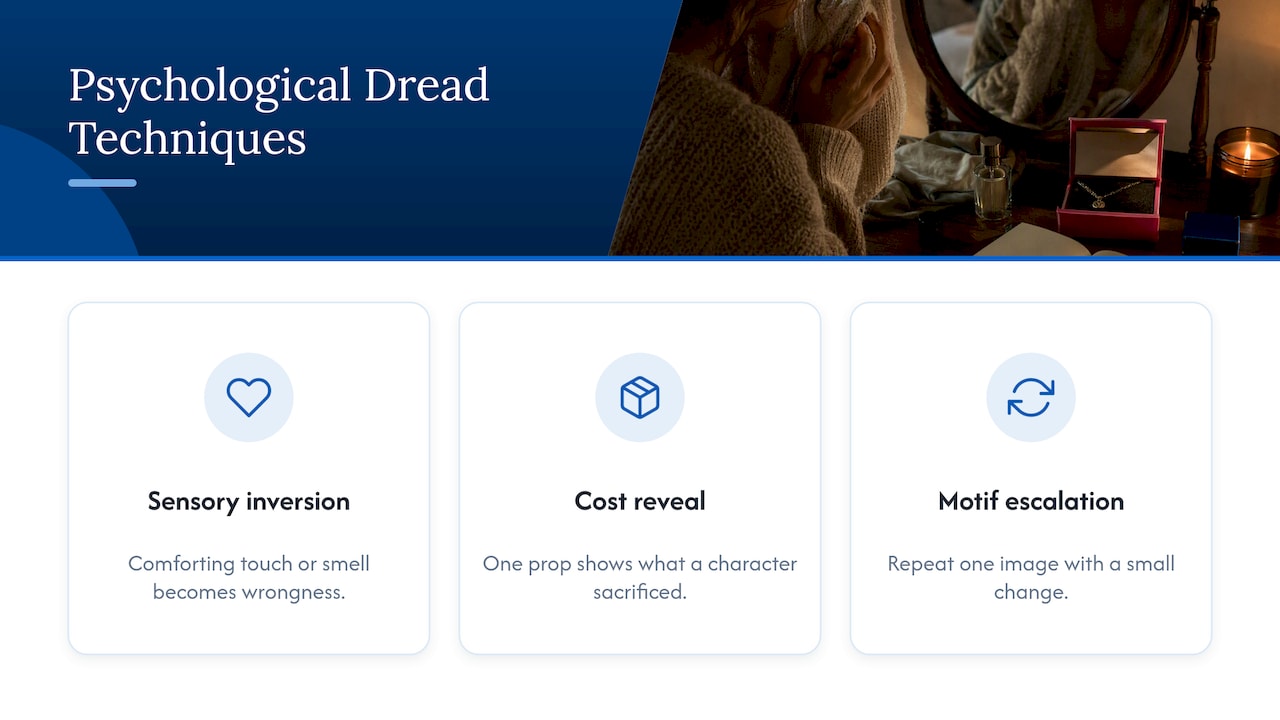
Dread does not translate from page to screen through description. It translates through production choices: a held shot a beat too long, a sound that does not resolve, an actor’s stillness instead of a line of dialogue about fear. When I adapt guilt-driven or supernatural material, I look for the one image or sound that can carry what the prose spent a paragraph explaining, and I build the scene around protecting that image rather than around dialogue.
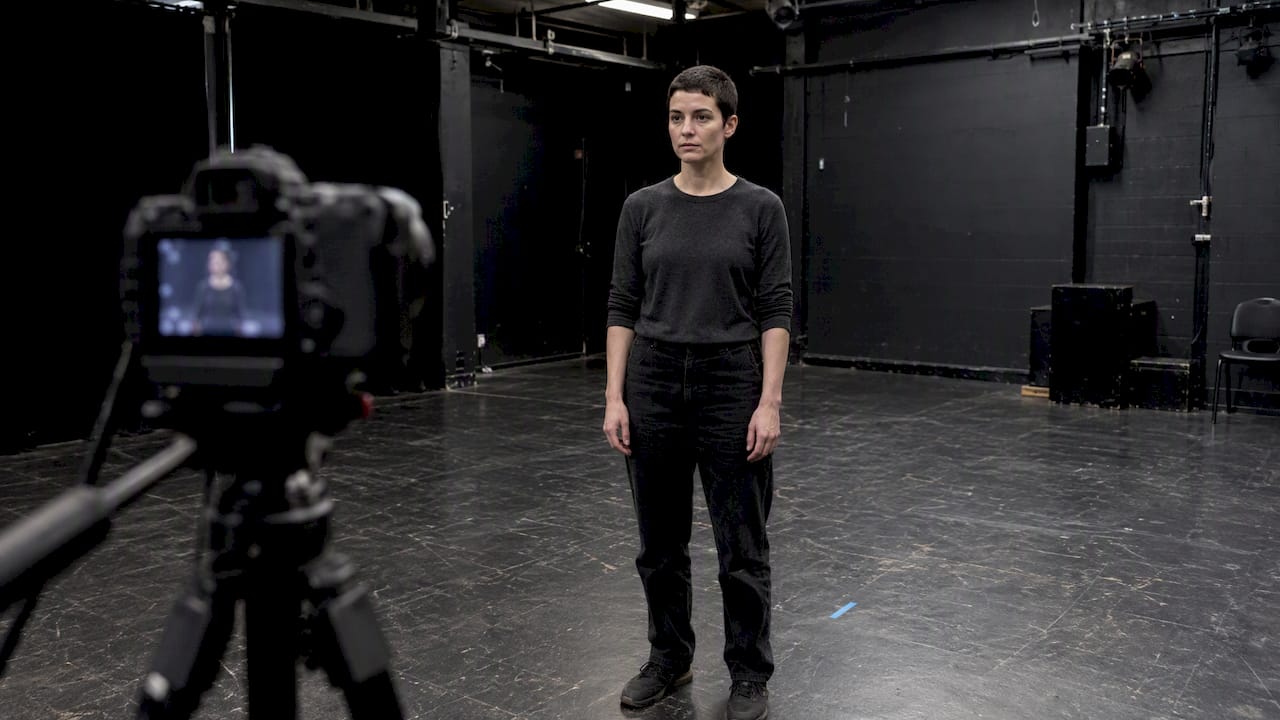
Low-budget supernatural implication beats explicit effects almost every time. Negative space, a character’s reaction shot, an off-screen sound, or a single prop moved between cuts can suggest far more than a visual effect most short-film budgets cannot execute convincingly anyway.
Pro Tip: Screen your rough cut or table read for a small, unfamiliar audience before you lock the edit; their confusion tells you whether the mystery is landing as dread or just as unclear plotting.
Early screenings matter most for calibrating tone. Horror that is too literal reads as weirdness, and horror that is too withheld reads as confusion. A handful of outside viewers will tell you, faster than any amount of your own rewriting, which side you have drifted toward.
Budgeting for a Short Film Adapted From Prose
A short story adaptation carries its own budget logic, separate from an original screenplay, because the source material often tempts you toward scope the budget cannot support. Multiple locations, period settings, or supernatural effects described casually in prose can each represent a disproportionate cost on screen.
Before finalizing your step outline, price out your three most expensive story elements: typically a key location, any practical or visual effect, and cast size. If your core story needs a sprawling setting but your budget supports one or two locations, that is a cut or merge decision, not a problem to solve during production.
Short films adapted from prose also benefit from limiting the shooting schedule implied by your page count. A tightly written 10 to 12 page script shot over one or two days keeps costs predictable, while a script that balloons past 20 pages for the sake of fidelity to the source usually strains both budget and crew patience. Favor suggestion over spectacle wherever the story allows it, particularly for supernatural or violent content, since implication is almost always cheaper and often more effective than depicting an event directly.
Build a small contingency into your budget for reshoots driven by table-read notes. Scripts that go through genuine revision cycles frequently need a pickup scene or two once visual gaps become clear in the edit.
Working With Directors and Producers During Adaptation
Your rationale document is the single most useful tool for this collaboration, because it gives a director and producer a shared reference for why specific changes were made, rather than leaving them to guess whether a deviation from the source was intentional or accidental.
Share your cut/merge/invent log early, before pages are locked. A director reading your treatment alongside that log can flag a scene that looks expensive or impractical to shoot while it is still cheap to revise on paper. Producers in particular need early visibility into any invented scene that adds a location, a visual effect, or additional cast, since those additions affect budget in ways a line of new dialogue does not.
Treat a director’s notes on a short-story adaptation as a second pass of the cut/merge/invent process you already ran. A director will often spot a scene that reads fine as a step outline but has no clear visual solution within the budget, which is exactly the kind of problem the rationale and log are meant to catch collaboratively rather than in isolation on set.
Keep the annotated source story accessible to your director and producer throughout preproduction. When a disagreement arises about whether a change honors the core you protected, pointing back to the original text settles the question faster than relying on memory or assumption.
Casting for Character Development and Theme
Casting a short-film adaptation is where the choices you made in your rationale become physical. If your core story is about a character’s hidden guilt, the actor you cast needs to be able to carry that weight in stillness and reaction shots, since a short runtime rarely allows for a monologue that explains it.
Think about casting against your cut/merge/invent decisions specifically. A merged character needs an actor capable of signaling two distinct traits or histories without new dialogue to flag the seam. An invented character, created to externalize information the source story only narrated, needs to feel as grounded as the characters drawn directly from the prose, or the invention will read as a patch rather than a genuine addition.
Age, physicality, and vocal quality should serve the theme as much as the plot. A story about generational guilt or inherited trauma benefits from casting that makes the thematic relationship visually legible the moment two actors share a frame, before either character speaks. For supernatural or psychological material, an actor’s capacity for restraint often matters more than range. Overt performance tends to undercut dread, while a performer who can hold a look a beat longer than feels comfortable does more for tone than an additional line of dialogue ever could.
Keeping the Story’s Tone and Atmosphere Intact
Tone is the element writers worry about losing most, and it is also the hardest to protect through plot decisions alone. Tone lives in pacing, sound, and visual texture as much as in story events, so protecting it requires decisions outside the step outline.
Carry over the story’s sensory details deliberately: if the prose lingers on a specific sound, a quality of light, or a texture, translate that directly into your shot list and sound design rather than assuming the plot alone will preserve the feeling. A story’s atmosphere often comes from what it withholds, and a film version can withhold just as effectively through editing rhythm, framing choices that keep key information off-screen, and sound that implies more than it states.
Resist the urge to clarify ambiguity that the source story intentionally left open. If the prose never confirms whether an event was supernatural or psychological, forcing that answer in the film version changes the work’s tone even if every plot event stays the same. Protect ambiguity the same way you protect the core story element: name it explicitly in your rationale so collaborators understand it is a deliberate choice, not an oversight.
Why Fidelity Is the Wrong Goal
Most advice about adaptation treats faithfulness to the source as the measure of success, and I think that framing leads writers astray. A short story and a short film are different machines built to produce a similar feeling in a reader or viewer, not the same machine in a different material. The adaptations that fail are usually the ones that tried hardest to be faithful, transcribing scenes and dialogue almost directly from the page, because prose logic and film logic solve different problems.
The adaptations that work protect one thing ruthlessly, the core image or question the story is actually about, and treat everything else as material to reshape freely in service of that core. That is a harder discipline than fidelity, because it requires you to decide what the story means before you decide what to keep. Use the checklist in this guide as a starting structure, not a formula, and let your own genre instincts tell you where the real engine of the story is.
— Nathaniel
FAQ
How long should a short film script be?
Short film scripts commonly run from about 6 to 30 pages, with 8 to 15 pages being the typical range for a tightly adapted short story. Your actual target should match how many distinct dramatic turns your core story needs rather than a fixed page count.
What is the first step in adapting a short story to film?
The first step is finding the story’s cinematic spine and writing a logline for your film version that states the protagonist, goal, obstacle, and stakes. That logline then drives every later decision, from the one-page rationale through the step outline.
Do I need permission to adapt a short story I did not write?
Yes, unless the story is in the public domain. Adapting a copyrighted short story into a screenplay creates a derivative work, and only the copyright holder can authorize that adaptation, so you need to confirm rights ownership and request permission before producing or distributing the film.
How do I show a character’s internal thoughts in a short film?
Replace internal narration with a visual substitute: a recurring object, a sound motif, blocking and physical distance, or a scene where a less-informed character’s question draws the information out naturally. Voice-over can work occasionally, but relying on it heavily usually signals a scene that needs a visual rewrite instead.
How many scenes should a 12-page short film script have?
A roughly 12-page script typically breaks into 8 to 14 scene steps, each accomplishing one clear dramatic function such as establishing the goal, complicating it, or paying off a setup. Keeping each step to a single job helps maintain pacing within a short runtime.
Sources
This site is built around questions of what to protect in a story, and how to externalize dread without losing what made the original unsettling.
If you are adapting a horror short story specifically, our guide on structuring a horror short film and our director-facing blueprint for 5 to 12 page horror scripts go deeper into genre-specific pacing and scene mapping than we could cover here. For writers working with speculative or dystopian material, our dystopian short film resources offer further examples. And if you want to see how we handle dread, guilt, and atmosphere at novel length, our book catalog includes The Nether Series and the EA200 Series, both free to read through Kindle Unlimited.
Recommended