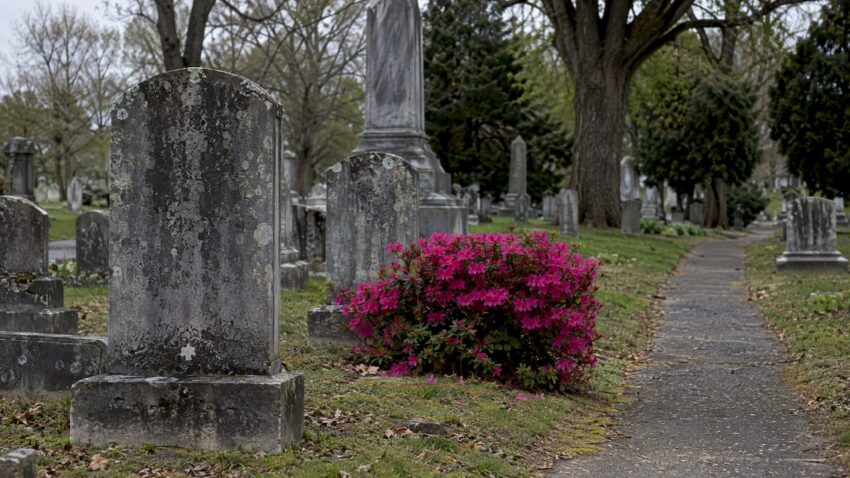
The best afterlife horror novels do not treat death as an ending. They treat it as a place, with rules, geography and a cost, and they ask what a guilty or grieving mind carries across. This guide covers the books that do that most memorably, explains what separates a literal afterlife story from a psychological one, and points you to dark fiction you can read through Kindle Unlimited if you want something with the same emotional weight.
TL;DR
- Afterlife horror comes in three flavors: the literal other world, the return of the dead, and the psychological “afterlife” a living mind builds out of guilt and memory.
- Classics like The Lovely Bones, What Dreams May Come, Lincoln in the Bardo and Pet Sematary each use the afterlife to frighten in a different way.
- Scholars argue that a city or a mind can become infernal without any literal post-death setting, which is why psychological and dystopian horror belong in this conversation.
- Nathaniel Connors writes dark supernatural fiction about revenge, guilt and redemption, and all of his books are available through Kindle Unlimited.
Table of Contents
- What makes a horror novel an afterlife novel
- Afterlife novels worth reading, and how each one frightens
- A quick way to choose
- Why guilt and grief do the real work
- When the afterlife is a state of mind
- How authors build an afterlife
- Dark supernatural fiction on Kindle Unlimited
- Our view: the afterlife is a mirror
- Where to start reading
- Building your own afterlife reading list
- FAQ
- Sources
What makes a horror novel an afterlife novel
A ghost in the attic does not make an afterlife novel. The label fits when the story’s central question is what happens to a person after death, or what the living owe, fear or lose because of it. That gives you three broad families.
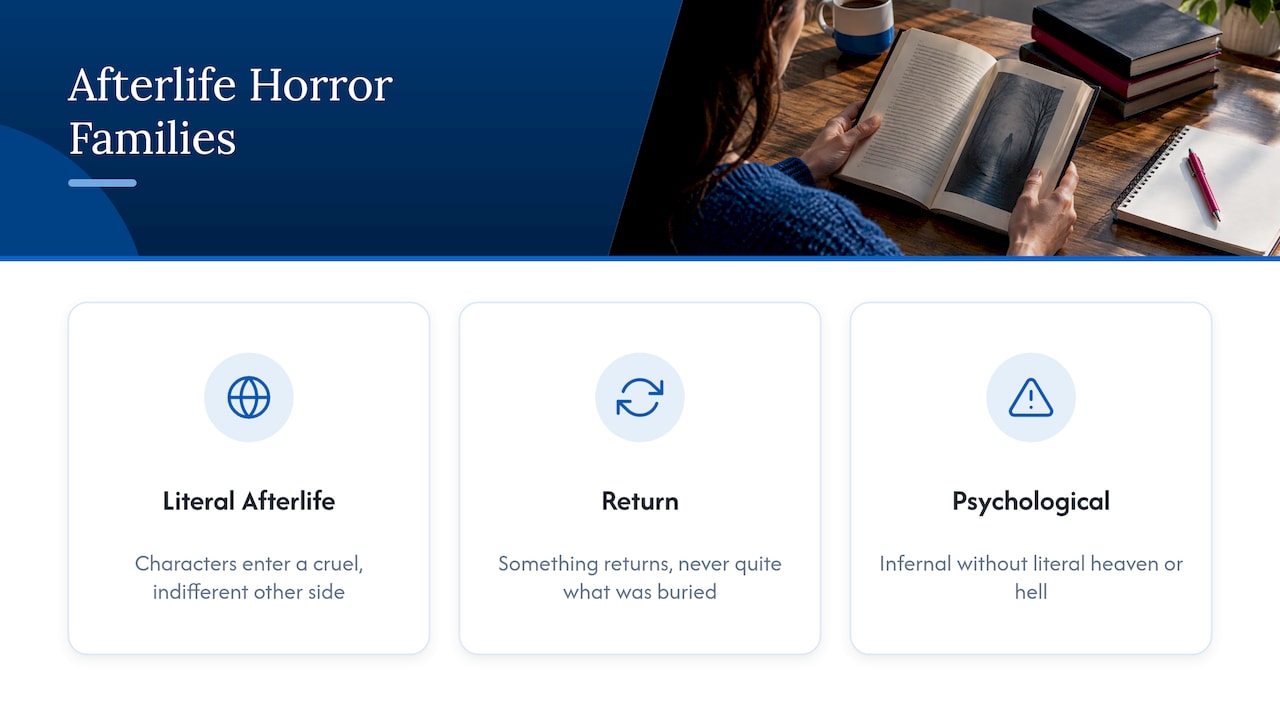
The literal afterlife. The author builds the other side and sends characters through it. Horror comes from rules that are cruel, absurd or indifferent.
The return. Something comes back from death, and it is never quite what was buried. Here the horror is about refusing to let go.
The psychological afterlife. There may be no literal heaven or hell at all. A 2023 academic article in Religions, ‘Not-All-There’ in the Necropolis, reads Alasdair Gray’s Lanark as a dystopian afterlife city and Patrick McGrath’s Spider as a descent structured around madness, memory and guilt. Its argument is that a place can become infernal through disorientation, isolation and instability, so a story can work as an afterlife narrative without a post-death setting.
That third family matters if you read for psychological depth. It means a book about a mind trapped in its own worst memories is doing the same job as a book about a literal underworld.
Afterlife novels worth reading, and how each one frightens
The Guardian’s top 10 books about the afterlife is a good map of the territory. Here is how several of its entries, plus a few other landmarks, build their unease.
The Lovely Bones, by Alice Sebold
Murdered teenager Susie Salmon watches her family from her afterlife and cannot reliably affect what happens to them, according to The Guardian’s description. The dread is helplessness. She can see everything and change almost nothing, which is a quiet nightmare for anyone who has lost someone and wished to reach them.
What Dreams May Come, by Richard Matheson
Chris Nielsen moves through a paradise shaped by thought, then into a grisly lower realm to rescue his wife after her suicide, as The Guardian summarizes it. The idea that the afterlife responds to your mind is the horror engine: if the place is made of what you believe and fear, nowhere is neutral ground.
Lincoln in the Bardo, by George Saunders
The Guardian lists this among the novels centrally concerned with life after death. It is crowded, strange and grief-soaked, a story in which the dead linger because they cannot accept that they are dead.
Surface Detail, by Iain M. Banks
This is the science-fiction pole of the genre. According to the same Guardian guide, it combines digitally constructed afterlives with speculative worldbuilding. If you like your hell engineered, administered and potentially unplugged, start here.
Pet Sematary, by Stephen King
The afterlife here is a negative space: a burial ground that returns the dead in distorted, malevolent forms. An EBSCO research starter describes grief and resistance to death as the forces driving the horror. Louis Creed resurrects his dead son Gage, who returns as a murderous monster-child. It remains the template for the “return” family: the monster is the shape of a parent’s refusal.
The Businessman, by Thomas M. Disch
A stranger, bureaucratic take. Reactor’s guided tour of the novel describes murdered Giselle as a consciousness stuck in her grave, while her mother Joy-Ann enters a hospital-like afterlife halfway house. The horror is administrative, a hereafter that feels like a waiting room with worse paperwork.
Afterlife, by Marcus Sakey
This 2017 thriller sends two dead FBI agents against a satanic entity inside a nested afterlife. In an interview with Publishers Weekly, Sakey said he wanted a modern myth of the afterlife rooted in science and philosophy, with existences nested like Russian dolls, and that imagining being near his wife without being able to interact with her turned the book into a love story. It is a good pick if you want procedural pacing wrapped around a metaphysical premise.
A quick way to choose
| If you want… | Look for… | Start with |
|---|---|---|
| Heartbreak and helplessness | A dead narrator watching the living | The Lovely Bones |
| A hell that responds to your mind | Thought-shaped worlds, rescue quests | What Dreams May Come |
| Grief that turns monstrous | Resurrection with a price | Pet Sematary |
| Bureaucratic or absurd hereafters | Dry, strange, rule-bound afterlives | The Businessman |
| Engineered or digital afterlives | Speculative science fiction | Surface Detail |
| A thriller pace | Monster hunters, nested worlds | Afterlife (Sakey) |
If your reading budget matters, check each title’s current Kindle Unlimited status on its store page, since catalogs rotate.
Why guilt and grief do the real work
Every book above is frightening for the same underlying reason: the afterlife is a pressure chamber for something unresolved. Susie cannot let her family heal without her. Louis cannot accept his loss. Chris cannot leave his wife in a worse place than his own. The setting changes, the wound does not.
That is why readers drawn to psychological horror tend to love this subgenre. The supernatural is a magnifying glass, and what it magnifies is conscience. If that is the angle that interests you, our guide to grief horror books goes deeper on novels where loss is the monster, and why loss makes the scariest stories explains the mechanics.
When the afterlife is a state of mind
Back to the Religions article: its claim is that infernal space can come from disorientation and isolation rather than from a literal underworld. That opens the door to a wider shelf. Dystopian fiction fits, because a ruined or controlled world can function as a hell the characters must live in. So does surreal fiction, where dream logic erodes the border between the living and the dead. If that sounds like your taste, try surreal horror books where dream logic turns dark or the list of existential horror books that make you question reality.
Post-apocalyptic horror also shares DNA with afterlife fiction. The Guardian’s guide singles out Tomorrow’s Gone, which pairs ruined-world survival with a Ranger who reads the dying and an ex-monk who hears voices from beyond. When the world has already ended, the living are walking through an afterlife of their own.
How authors build an afterlife
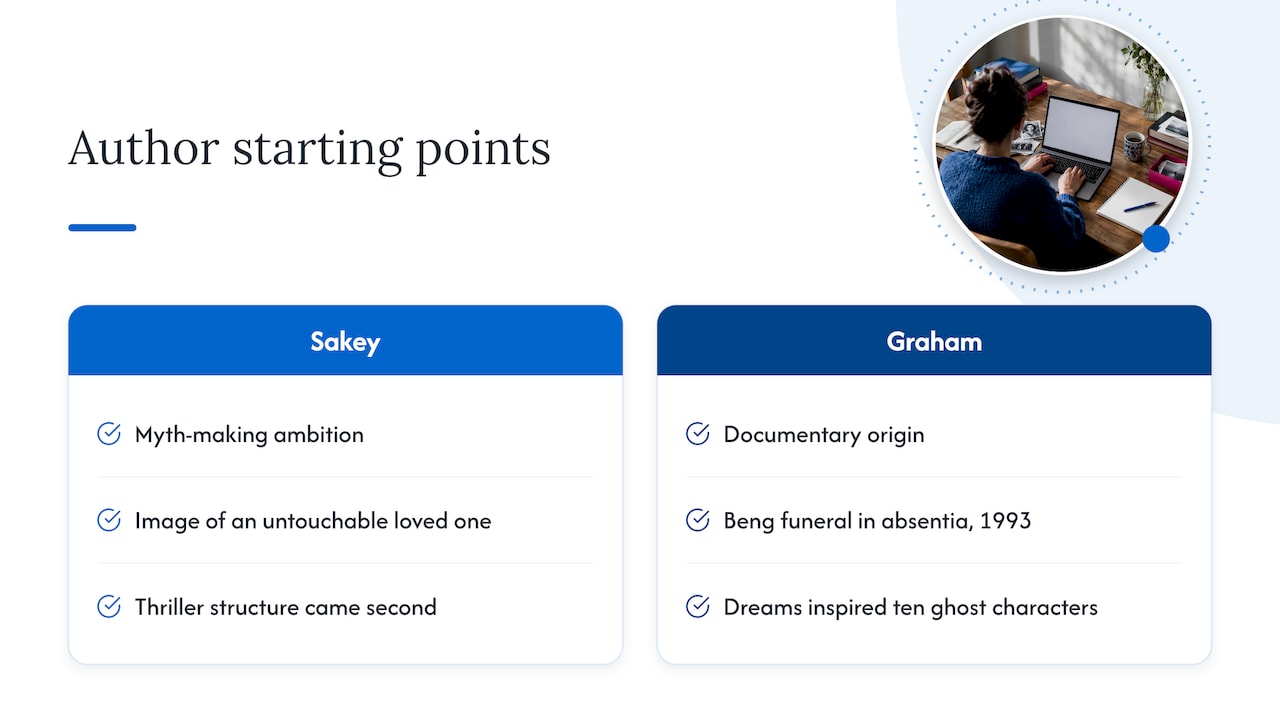
If you are interested in the writing side, two author accounts show how different the starting points can be.
Sakey began with a myth-making ambition and a personal image: being close to someone you love and unable to touch them. The thriller structure came second, as the vehicle for it.
Philip Graham’s route was documentary. He told 3 Quarks Daily that What the Dead Can Say began in 1993, when he gave his father a Beng funeral in absentia in Côte d’Ivoire. A religious leader’s dreams of his father in the Beng afterlife, where people are the same and the dead live invisibly among the living, inspired ten ghost characters who stayed with him for decades.
Both start from a human relationship, not a cosmology. That is a useful lesson for readers too: the afterlife that works on the page is the one that costs somebody something.
Dark supernatural fiction on Kindle Unlimited
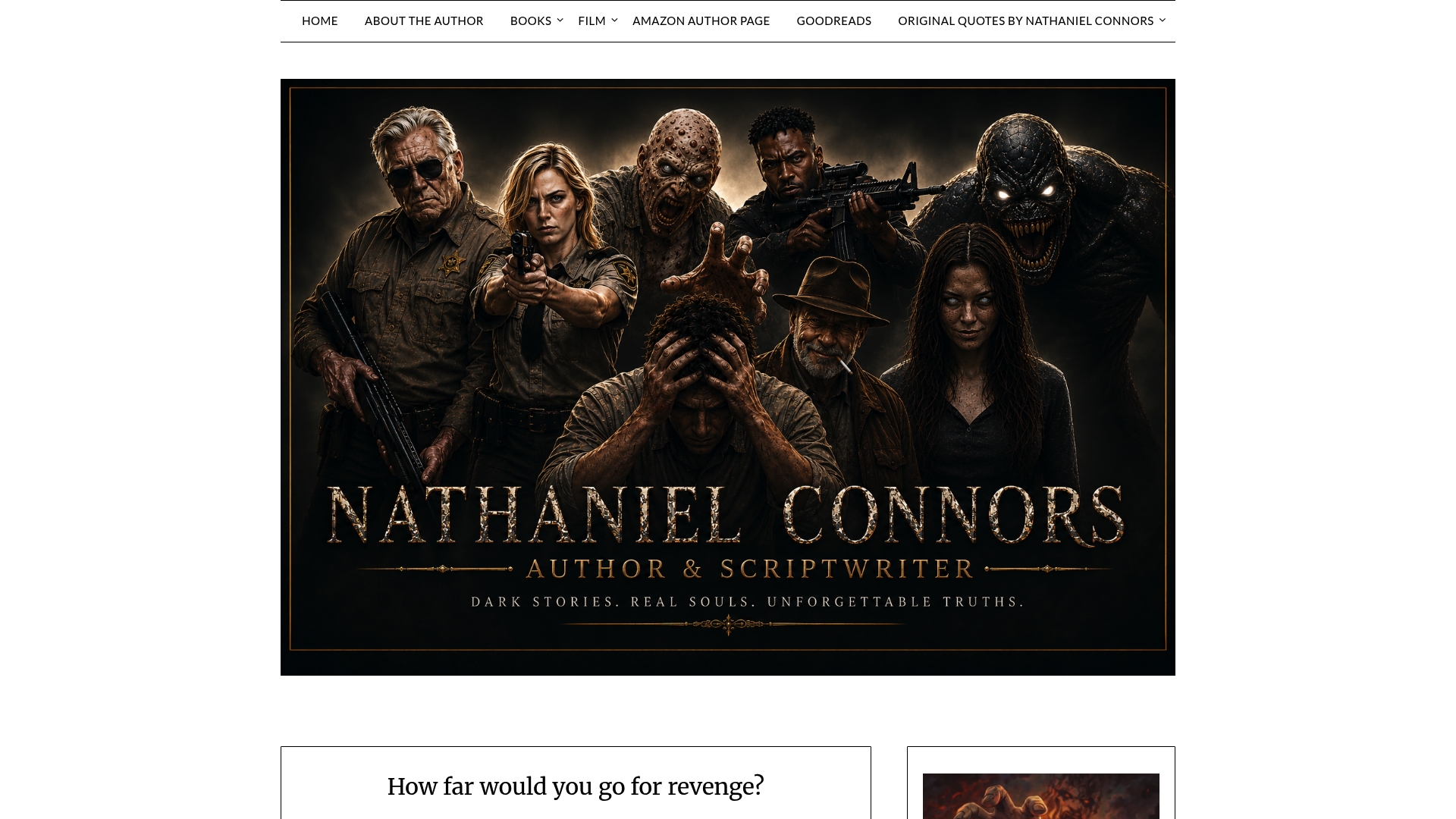
Plenty of readers searching this topic want something they can start tonight without another purchase. Nathaniel Connors writes dark supernatural fiction built around revenge, guilt and redemption, with attention to the psychological monsters inside characters. His titles include The Nether, Stories of a Condemned Soul and Evolution A200: A Bubonic Apocalypse, and they are available free to Kindle Unlimited subscribers, as well as in ebook and paperback.
Here is how they map to the readers above:
- You want guilt and consequence at the center. Start with The Nether, dystopian horror and thriller fiction.
- You want a ruined world with dread in it. Try Evolution A200: A Bubonic Apocalypse, plague and zombie-apocalypse fiction, followed by Evolution A200: Radio Silence.
- You want to understand the tone first. Our roundup of the best dark supernatural books for real dread shows what we mean by the term.
To get the most from a subscription, see these Kindle Unlimited tips.
Our view: the afterlife is a mirror
We think the strongest afterlife horror is never really about where the dead go. It is about what the living cannot put down.
When we write, we start from a person carrying something: a debt, a betrayal, a death they caused or could not prevent. The supernatural arrives to make that weight visible. That is why our stories keep returning to revenge, guilt and redemption. Those three words describe what a haunted person does with the past: strike at it, drown in it, or try to be released from it.
We also believe the scariest monsters are the ones you recognize. A creature that wears your own regret is harder to shut out than any beast. That is the thread running through The Nether, through Stories of a Condemned Soul, and through the dystopian worlds of Evolution A200, where a collapsing society leaves characters alone with what they have done.
If you read afterlife fiction for the lingering ache after the last page, that is the effect we aim for: plots that stay with you and characters whose choices you keep turning over.
Nathaniel
Where to start reading
If you want to move from reading about dark fiction to reading it, the Nether and EA200 series are collected on our books page. Each is available in ebook and paperback and free with Kindle Unlimited.
If you read slowly and like a series, begin with The Nether. If you want a faster, bleaker apocalypse, begin with Evolution A200: A Bubonic Apocalypse. Subscribers can also see the Kindle Unlimited page for what is included.
Building your own afterlife reading list
A few habits make the search easier.
- Decide which family you want. Literal other world, return of the dead, or psychological afterlife. Mixing them in one month can blunt each.
- Pair a classic with a modern. Read Pet Sematary next to a newer grief-driven novel and notice what each generation fears about death.
- Follow the emotion, not the label. A book with no ghosts can still be an afterlife story if it traps a character in guilt. Our list of mind-bending horror books an author recommends leans on that idea.
- Read the craft side too. If you are curious how psychological dread is built, our guide on how to write psychological horror lays out what each scene needs.
FAQ
What is the best afterlife horror novel for a first-time reader?
The Lovely Bones is the gentlest entry, with an afterlife seen through a murdered teenager’s eyes. If you want outright horror, Pet Sematary is the clearest example of death’s consequences turned monstrous. Choose by whether you want sorrow or fear to lead.
Does an afterlife horror novel need a literal heaven or hell?
No. Academic readings such as the 2023 Religions article treat dystopian cities and unstable minds as afterlife spaces too. A story can be an afterlife narrative whenever guilt, memory and isolation become a place the characters cannot leave.
Are there afterlife-style horror books on Kindle Unlimited?
Yes. Nathaniel Connors’s books, including The Nether and Evolution A200: A Bubonic Apocalypse, are available to Kindle Unlimited subscribers. They explore revenge, guilt and redemption in dark supernatural and dystopian settings. Availability of other authors’ titles changes, so check each store page.
Which afterlife novels are best for readers who like dystopian fiction?
Surface Detail by Iain M. Banks uses digitally constructed afterlives, and Lanark uses a dystopian afterlife city. For post-apocalyptic dread with death-related supernatural elements, Tomorrow’s Gone is another option.
Sources
- Top 10 books about the afterlife, The Guardian
- The Trick with Writing Myth Into Thrillers: Marcus Sakey, Publishers Weekly
- A Guided Tour of Supernatural Minnesota: The Businessman, Reactor
- Pet Sematary by Stephen King, EBSCO Research Starters
- ‘Not-All-There’ in the Necropolis: Afterlife and Madness, Religions (MDPI)
- A Stealth Literary Project: The Making of What the Dead Can Say, 3 Quarks Daily