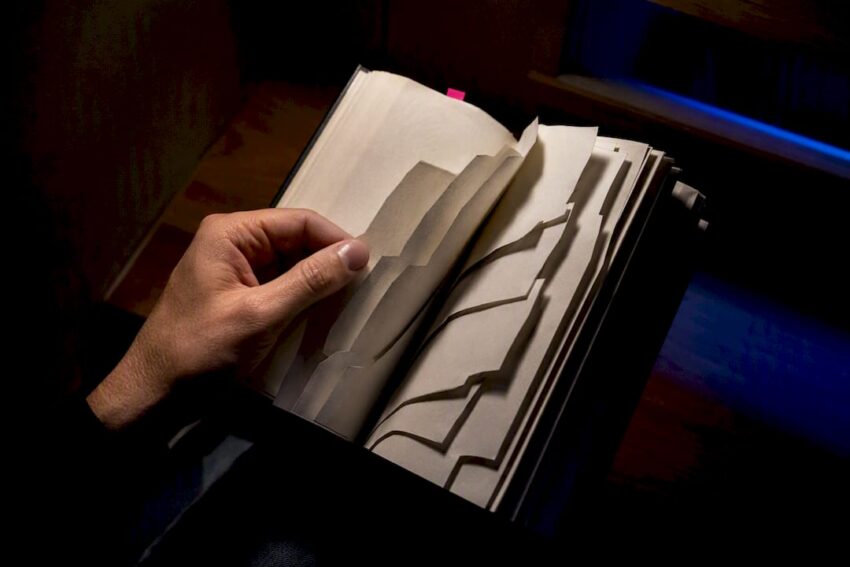
The fastest way into a genuinely mind-bending horror experience is a novel where you can’t trust the narrator, the timeline, or the page itself. Start with Nathaniel Connors’ The Nether and Stories of a Condemned Soul, both built on shifting perspective and psychological unraveling, then branch into structurally experimental classics like House of Leaves. What follows is a shortlist and a guide to the techniques that make these books hit so hard.
TL;DR:
- Many mind-bending horror books rely on fractured timelines, unreliable narrators, and typographic tricks to actively disorient and challenge the reader’s perception.
- Structural complexity should mirror the character’s psychological unraveling to avoid feeling like gimmickry that quickly fades from memory.
- These books often demand patience, note-taking, and rereading, especially for intricate titles like House of Leaves or heavily crafted narratives like Hangsaman.
- Content themes focus on guilt, grief, and mental instability rather than explicit violence, making the emotional depth essential to the disorienting experience.
- Beginners can start with character-driven stories like The Nether or Stories of a Condemned Soul before tackling more experimental works like House of Leaves.
Table of Contents
- The Best Mind Bending Horror Books to Read Right Now
- What narrative devices create a mind-bending reading experience?
- How to read mind bending horror without losing the thread
- Nathaniel Connors’ perspective: what makes the cut
- Where mind bending horror came from
- Key authors who shaped mind bending horror
- Mind bending horror vs. traditional horror
- How mind bending horror affects the way you think while reading
- Why the “just be confusing” advice on this subgenre misses the point
- Ready to read something that gets under your skin?
- Sources
The Best Mind Bending Horror Books to Read Right Now
Some books scare you. These mess with how you process what’s real. The ten below use structure, voice, or imagery to make the reading experience itself feel unstable, not just the plot.
- The Nether by Nathaniel Connors. This one leans on a narrator whose grip on guilt and memory keeps slipping, so scenes you thought were settled get reinterpreted later. Intensity is high and emotional, not gory. Best for readers who want dread that comes from character psychology rather than jump scares.
- Stories of a Condemned Soul by Nathaniel Connors. A collection built around perspectives that fracture across linked stories, each one reframing guilt and redemption from a different angle. The mind-bending part is watching how the same moral weight lands differently depending on whose head you’re in. Best for readers who like horror anthologies with a through line instead of disconnected scares.
- Evolution A200: A Bubonic Apocalypse by Nathaniel Connors. A dystopian horror premise where the collapse of society mirrors a psychological collapse in the characters, blurring which threat is more real. It’s dense and slower burning than the other two titles. Best for readers who want their horror tangled up with dystopian world building.
- House of Leaves by Mark Z. Danielewski. The book is widely described as an experimental, maze-like novel that uses footnotes, mirrored text, and pages that physically warp to disorient you. Reading it is closer to solving a puzzle than following a plot, since the nonlinear and metafictional structure forces you to actively reconstruct the story. Best for readers who don’t mind slowing down and annotating as they go.
- Lost Boy Lost Girl by Peter Straub. Straub reworks haunted house tropes through a nonlinear, multi-voice narrative that deepens psychological dread rather than relying on a single reliable account of events. You piece together what happened from fragments that don’t always agree. Best for readers who liked House of Leaves’ structural ambition but want something a little more grounded in family trauma.
- Moonflow by Bitter Karella. Nominated for the Bram Stoker Award and the Shirley Jackson Award, this one blends eldritch, cosmic imagery with a very human psychological core. It’s newer than most entries here and expands what the subgenre can hold. Best for readers who want surreal horror with a queer, ecological edge.
- Hangsaman by Shirley Jackson. Jackson’s novel blurs reality and dark imaginings so thoroughly that even now, critics debate what actually happens to the protagonist. It’s short, quiet, and unsettling in a way that creeps rather than shocks. Best for readers who want a slower, literary entry point into perception-bending horror.
- We Have Always Lived in the Castle by Shirley Jackson. The narrator is charming and clearly unreliable at the same time, which makes every claim she makes feel suspect. It’s a masterclass in warmth used as a weapon. Best for readers new to unreliable narrators who want an accessible starting point.
- The Fisherman by John Langan. Cosmic horror wrapped inside a story about grief, told by a narrator who keeps interrupting himself with digressions that eventually become the point. Best for readers who like their mind-bending horror slow and literary rather than fast and fragmented.
- Piranesi by Susanna Clarke. Not marketed as horror, but the disorientation of living inside an impossible, endless house makes it a strong companion read for anyone who loved the structural confusion of House of Leaves. Best for readers who want the surreal without the gore.
What narrative devices create a mind-bending reading experience?
Four techniques do most of the heavy lifting in this subgenre, and once you recognize them, you can tell in the first chapter whether a book will disorient you or just unsettle you.
- Nonlinear structure. Events arrive out of order, forcing you to build the timeline yourself, the way Lost Boy Lost Girl layers competing accounts of the same disappearance.
- Unreliable narrators. The voice telling the story has a reason, conscious or not, to distort what happened, so every claim needs to be weighed against evidence elsewhere in the text.
- Metafictional tricks. The book acknowledges its own form, footnotes citing fake sources, characters aware they’re in a story, or documents nested inside documents.
- Typographic play. Page layout itself becomes a storytelling tool, mirrored text, blacked-out passages, or margins that spiral, techniques House of Leaves uses to make the physical book feel haunted.
These aren’t decoration. Authors choose a narrow set of tools, fragmented chronology, unreliable perspective, embedded documents, specifically to make you experience a version of the same epistemic collapse the protagonist is going through. When it works, you stop trusting your own read of the page, which is exactly the point.
Pro Tip: Skim the first few pages for footnotes, appendices, or unusual formatting before you commit. If the structure looks strange on page one, the disorientation is intentional, not a printing error.
How to read mind bending horror without losing the thread
These books ask more of you than a straightforward thriller, so a little preparation pays off. Content-wise, expect themes of guilt, grief, self-harm, and unstable mental states more often than graphic violence, so screen for those specifically if they’re a concern rather than assuming standard horror content warnings will cover it.
Shorter books like Hangsaman tend to concentrate the disorientation into a single, sustained mood. Longer, structurally ambitious books like House of Leaves spread it across competing narrators and formats, which rewards patience more than speed.
- Read a brief synopsis of tone and themes before starting, not full spoilers, just enough to gauge intensity.
- Keep a notes app or margin pen handy for tracking timeline shifts and narrator changes.
- Take breaks between dense sections rather than marathoning; these books reward rereading, not rushing.
- Reread ambiguous endings once you’ve finished, since a second pass often resolves details the first read missed.
- Choose print for books with heavy typographic tricks; ebooks can flatten layout effects that matter to the story.
If ambiguous endings frustrate rather than intrigue you, a closer look at how they function can help you decide which titles are worth the extra effort.
Nathaniel Connors’ perspective: what makes the cut
Nathaniel Connors writes dark supernatural fiction, including The Nether, Stories of a Condemned Soul, and Evolution A200: A Bubonic Apocalypse, all available to read through Kindle Unlimited. The selection criteria behind this list come from that same instinct: psychological depth first, narrative disorientation second, and emotional resonance as the test that separates a genuinely mind-bending book from one that’s just confusing for its own sake.
A book earns a spot on this list when the confusion isn’t a gimmick, it’s the character’s own unraveling handed to the reader. If you finish and immediately want to flip back to page one, that’s the mechanism working as intended.
That standard shows up directly in The Nether, where guilt reshapes memory scene by scene, and in Stories of a Condemned Soul, where each story’s shifting voice recontextualizes the last.
Where mind bending horror came from
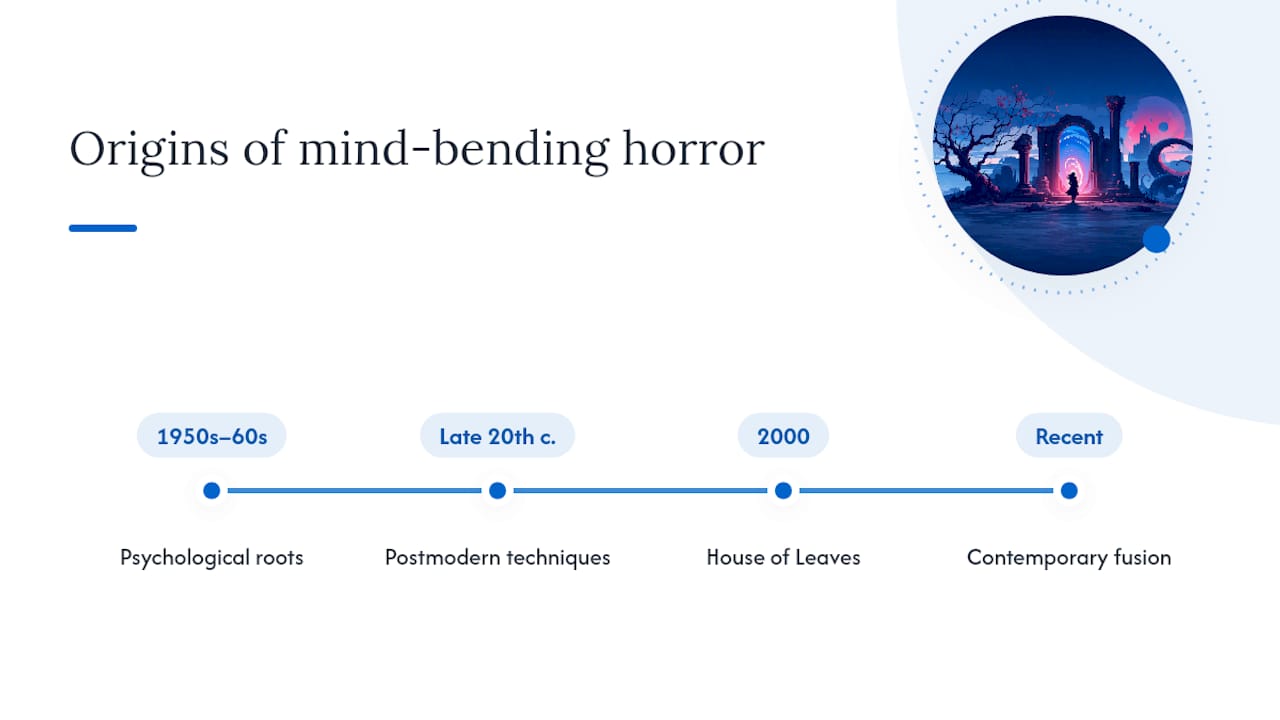
Psychological horror’s roots run through mid-20th-century literary fiction more than pulp horror magazines. Shirley Jackson’s work in the 1950s and 1960s set an early template: supernatural or uncanny elements tied so tightly to a character’s psychological fractures that the strange feels inevitable rather than imposed. That approach, dread rooted in a mind coming apart rather than a monster in the basement, became a foundation the subgenre still leans on.
The structural experimentation arrived later. Postmodern fiction’s appetite for footnotes, unreliable documents, and fractured chronology found a natural home in horror by the late 20th century, culminating in books like House of Leaves in 2000, which treated the physical page as another haunted space. Where earlier psychological horror destabilized the character, this wave started destabilizing the reader directly.
More recently, the subgenre has kept stretching. Award-nominated books like Moonflow show the form absorbing cosmic horror, queer identity, and ecological anxiety into the same perception-bending framework, proof that “mind-bending” isn’t a fixed style so much as a standing invitation for horror writers to break form whenever the story calls for it. Each generation has added its own tools without discarding the ones that came before.
Key authors who shaped mind bending horror
Shirley Jackson remains the clearest throughline. Hangsaman and We Have Always Lived in the Castle both use narrators whose grip on reality is genuinely in question, and that psychological grounding, dread built from character rather than spectacle, is the DNA most later mind-bending horror inherited.
Mark Z. Danielewski pushed the form in a different direction. House of Leaves treats layout, footnotes, and typography as narrative devices in their own right, and its influence shows in every horror novel since that plays with page design to disorient rather than just decorate.
Peter Straub contributed the multi-voice, nonlinear approach seen in Lost Boy Lost Girl, proving that structural fragmentation works just as well in a grounded, family-centered ghost story as it does in something more overtly experimental. John Langan carries a similar torch, folding cosmic dread into narrators who digress and circle rather than march forward.
Newer voices like Bitter Karella are widening the lens further, bringing queer and ecological themes into the same toolkit. Nathaniel Connors works in this lineage too, using unreliable perspective and psychological fracture across The Nether and Stories of a Condemned Soul to keep the tradition of character-rooted disorientation moving forward.
Mind bending horror vs. traditional horror
Traditional horror generally wants you scared of something, a killer, a ghost, a creature with rules you can eventually learn. The fear is external, and once you understand the threat, you regain a kind of control. Mind-bending horror removes that safety net by making the threat epistemological: you’re not sure what happened, who’s telling the truth, or whether the narrator is even a stable guide through their own story.
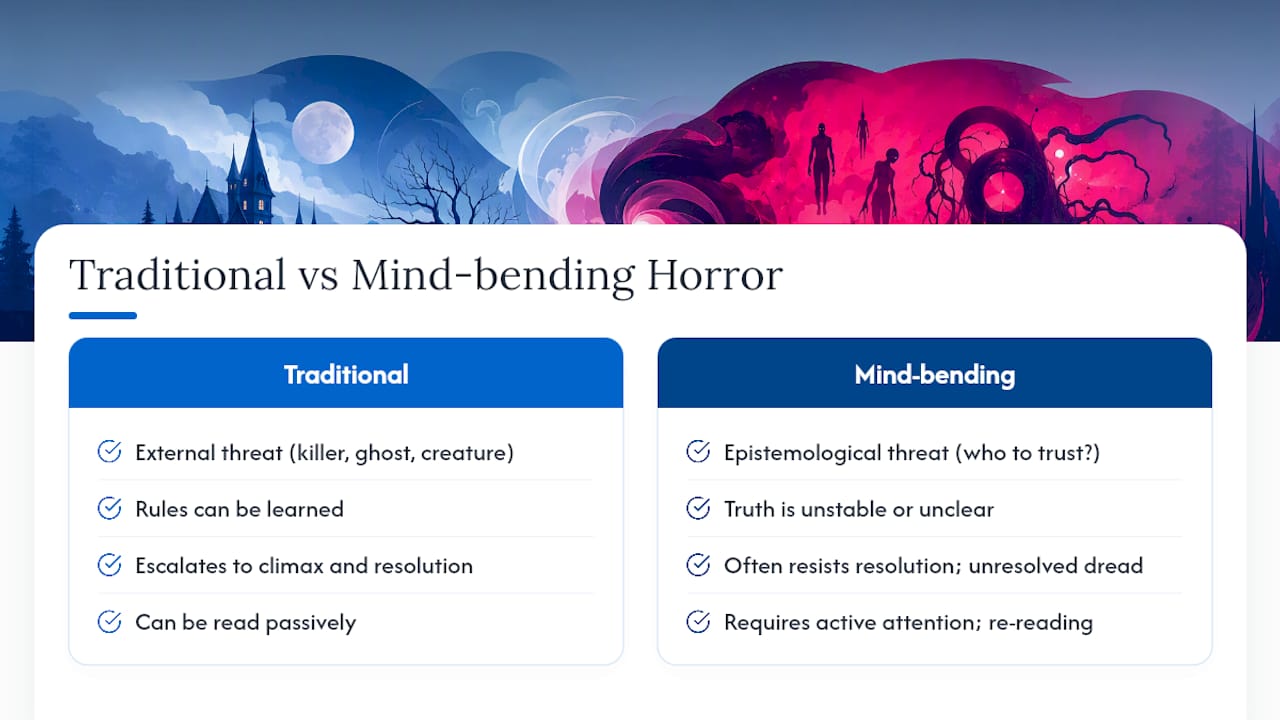
That difference shows up in pacing too. Traditional horror often escalates toward a climax and a resolution. Mind-bending horror, especially structurally experimental entries like House of Leaves, sometimes resists resolution altogether, leaving you to decide what was real. It also demands a different kind of attention. You can read a straightforward slasher novel passively. You generally can’t do that with a book built on fragmented documents or an unreliable narrator, because missing a detail on page one might change how you read page two hundred.
Neither approach is better, they’re aimed at different appetites. Readers who want catharsis and a clear villain tend to prefer traditional horror. Readers who want to sit with unresolved dread and reread their way to understanding tend to gravitate toward the mind-bending side of the shelf.
How mind bending horror affects the way you think while reading
The disorientation isn’t incidental, it’s engineered. Authors deliberately trade passive readability for immersive, interpretive effort, using fragmented chronology and typographic variance to force active reconstruction rather than passive consumption. That shift changes how your brain engages with the text; you start cross-referencing earlier chapters, questioning your own memory of what you just read, and doubting details you’d normally take for granted.
Readers of House of Leaves often describe the experience as closer to solving an interactive puzzle than following a linear story, where the book’s form becomes part of the plot rather than a container for it. That puzzle-solving mode tends to intensify emotional investment, since you’re not just watching a character unravel, you’re doing some of the unraveling yourself as you try to separate fact from unreliable narration.
There’s also a grounding effect worth noting. Horror rooted in specific cultural memory rather than abstract dread, as explored in discussions of Caribbean ghost stories, tends to hit harder because the uncanny feels tied to something lived rather than invented. The same logic applies here: mind-bending horror works best when the confusion is anchored to a believable psychological wound, not just structural novelty for its own sake.
Why the “just be confusing” advice on this subgenre misses the point
Most guides to this subgenre treat disorientation as the goal, pile on unreliable narrators and fractured timelines, and call it a day. That’s backwards. The confusion has to be earned by a character’s actual psychological state, or it just reads as a gimmick you’ll forget within a week.
The books that stick, Hangsaman, House of Leaves, and honestly the ones I’ve written, share one thing: the structural chaos mirrors something falling apart inside a person. Readers should prioritize that emotional anchor over sheer structural complexity when choosing what to read next. A book can be perfectly linear and still leave you questioning reality, if the psychological groundwork is solid.
Start with whichever title matches your patience level, not your ambition. A slow, literary entry point does more for you than forcing your way through something structurally punishing before you’re ready for it. Read one of these craft breakdowns on existential horror themes if you want to understand why the unraveling matters more than the trick.
— Nathaniel
Ready to read something that gets under your skin?
If the shortlist above appealed to you, these dark supernatural thrillers deliver that same psychological unraveling without asking you to decode footnotes or mirrored typography first. The guilt, the fractured memory, the sense that the narrator might be lying to himself, it’s all there, and you can read the catalog free through Kindle Unlimited rather than committing to a purchase upfront.
The Nether and Stories of a Condemned Soul are both good entry points if you want character-driven dread over structural puzzles. Start with Nathaniel Connors’ dark supernatural thrillers to sample the collection, or head straight to Stories of a Condemned Soul if the anthology format appeals to you. Already have a Kindle Unlimited subscription? Check availability for subscribers here and start reading tonight.
Sources
The canonical status and award history cited above come directly from publisher listings, not secondhand summaries, so you can verify them yourself before picking up a copy.
- Penguinrandomhouse
- Moonflow by Bitter Karella | Hachette Book Group
- Hangsaman – Penguin Random House Library Marketing