
If you loved Jeff VanderMeer’s Annihilation, the best books to read next are Piranesi, House of Leaves, Roadside Picnic, Solaris, The Fisherman, The Ruins, Never Let Me Go, The Nether, Roadside Picnic, and House of Leaves. More precisely, the ten titles below capture the same slow-burn dread, ecological menace, and narrative ambiguity that make Annihilation so hard to shake. Most contain graphic or existential themes; check individual content warnings before starting.
Quick shortlist:
- Piranesi by Susanna Clarke — a labyrinthine house that breathes like Area X
- House of Leaves by Mark Z. Danielewski — architectural horror that rewrites reality
- Roadside Picnic by Arkady and Boris Strugatsky — alien contamination without alien contact
- Solaris by Stanisław Lem — an ocean that thinks, and refuses to explain itself
- The Fisherman by John Langan — cosmic dread dressed as a fishing trip
- The Ruins by Scott Smith — a pristine wilderness that turns predatory
- Never Let Me Go by Kazuo Ishiguro — quiet, insular horror with no monsters but plenty of dread
- The Nether by Nathaniel Connors — psychological darkness and moral ambiguity in the supernatural vein
- Stories of a Condemned Soul by Nathaniel Connors — guilt, revenge, and the monsters we carry inside
- Evolution A200: A Bubonic Apocalypse by Nathaniel Connors — dystopian horror where biology becomes the enemy
Pro Tip: Before committing to a long novel, check your library’s Libby app for digital loans — most of these titles are available, and sampling the first chapter costs nothing.
Key Takeaways
The single best next read after Annihilation depends on whether you want lyrical quiet dread (Piranesi, Never Let Me Go), cosmic indifference (Solaris), physical biological horror (The Ruins), or psychological supernatural darkness (The Nether by Nathaniel Connors).
| Point | Details |
|---|---|
| Best for lyrical dread | Piranesi and Never Let Me Go deliver quiet, slow-burn horror with no graphic gore. |
| Best for cosmic/ecological horror | Solaris and Roadside Picnic treat the unknown as an indifferent presence, not a solvable puzzle. |
| Best short reads | Stories of a Condemned Soul and Roadside Picnic are the shortest, most intense options on the list. |
| Content warnings matter | Titles like The Ruins and House of Leaves carry graphic body horror; check before starting. |
| Nathanielconnors’ picks | The Nether and Stories of a Condemned Soul are available on Kindle Unlimited and align with Annihilation’s psychological depth. |
Table of Contents
- The 10 best novels like Annihilation, fully annotated
- 1. Piranesi by Susanna Clarke
- 2. House of Leaves by Mark Z. Danielewski
- 3. Roadside Picnic by Arkady and Boris Strugatsky
- 4. Solaris by Stanisław Lem
- 5. The Fisherman by John Langan
- 6. The Ruins by Scott Smith
- 7. Never Let Me Go by Kazuo Ishiguro
- 8. The Nether by Nathaniel Connors
- 9. Stories of a Condemned Soul by Nathaniel Connors
- 10. Evolution A200: A Bubonic Apocalypse by Nathaniel Connors
- How to pick the right read for your mood right now
- Why Nathaniel Connors’ books belong on this list
- How Annihilation fits into the Southern Reach Trilogy
- Authors whose style runs parallel to VanderMeer’s
- What ecological and weird horror actually is as a genre
- Why weird and ecological horror keeps pulling me back
- Nathaniel Connors’ dark fiction for readers who want more
- Further reading and primary sources
The 10 best novels like Annihilation, fully annotated
Kirkus Reviews explicitly recommends several of these titles as Southern Reach companions, and ThePortalist’s roundup and MeetNewBooks’ community list confirm the same core titles surface repeatedly across reader communities. Here is what each one actually delivers.
1. Piranesi by Susanna Clarke
A man lives inside an infinite house of tidal halls and marble statues, cataloging its tides and its dead. He has no memory of the outside world, and neither does the reader, for most of the book. Clarke’s prose is precise and eerily calm, which makes the wrongness underneath it land harder. The atmosphere is pure Area X: a space that has its own logic, its own rules, and no interest in explaining itself to you.
Why it’s similar: Unreliable narrator, a place that functions as a living entity, slow revelation of a horror that was always in plain sight.
Best for: Readers who want lyrical, quiet dread over gore.
Content warning: Existential themes; mild psychological disorientation.
US availability: Paperback, ebook, and audiobook widely available; check Bookshop.org for independent retail.
2. House of Leaves by Mark Z. Danielewski
A house is slightly larger on the inside than the outside. That single fact unravels everything. Danielewski’s novel is part academic footnote, part found-document horror, part love story, and it uses the physical page as a tool of disorientation. Readers who loved Annihilation’s unreliable field notes will feel immediately at home, and immediately unsettled.
Why it’s similar: Epistolary/found-document structure, a space that defies physics, layered narrators who cannot be trusted.
Best for: Readers who want formal experimentation alongside the dread.
Content warning: Body horror, graphic violence, psychological breakdown.
US availability: Paperback and ebook available; Bookshop.org carries it.
3. Roadside Picnic by Arkady and Boris Strugatsky
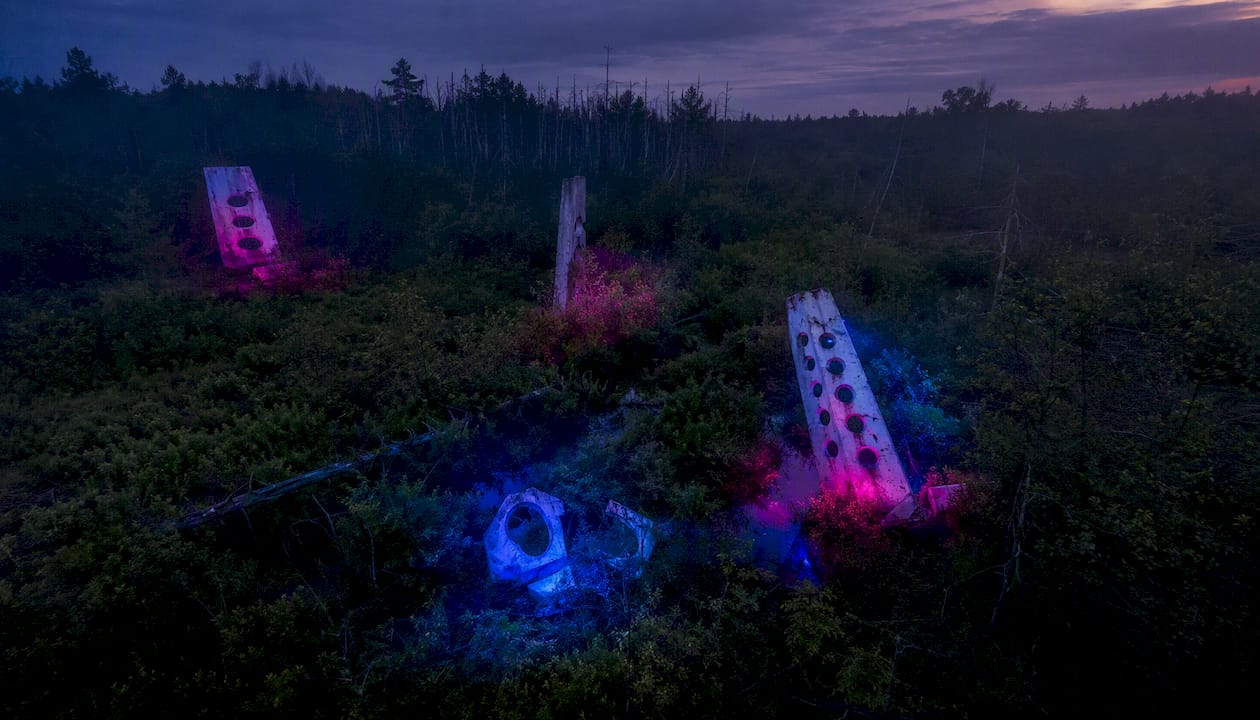
Aliens visited Earth, left behind six Zones of inexplicable debris, and departed without making contact. The Strugatskys never show you the aliens. What you get instead is the Zone itself: a landscape that kills in ways that feel almost casual, full of objects that do impossible things and have no names yet. The novel’s central metaphor — humanity as the ants left behind after a roadside picnic — is one of science fiction’s most quietly devastating ideas.
Why it’s similar: Alien presence felt only through its effects, ecological contamination, no tidy answers.
Best for: Readers who want hard-edged prose and philosophical weight.
Content warning: Violence, existential themes.
US availability: Paperback and ebook widely available.
4. Solaris by Stanisław Lem
A sentient ocean covers the planet Solaris. It generates physical manifestations of the researchers’ deepest memories and traumas, and it never explains why. Lem’s novel is the canonical example of fiction that treats the unknown as an active presence rather than a puzzle to be solved. Critics of weird fiction frequently cite Solaris as the book that proved science fiction could refuse its own genre conventions.
Why it’s similar: The unknown as character, psychological projection, no resolution.
Best for: Readers who want cosmic-scale contact fiction with literary density.
Content warning: Existential despair, psychological distress.
US availability: Multiple translations in paperback and ebook.
5. The Fisherman by John Langan
Two widowers bond over fishing and end up hearing a story about a trench in the Catskills that leads somewhere older than the world. Langan layers a nested narrative inside a nested narrative, and the horror builds so gradually you barely notice until you are already in it. The ecological dread here is specifically American: familiar woods, familiar water, something ancient underneath.
Why it’s similar: Slow-burn pacing, cosmic horror rooted in landscape, nested unreliable narration.
Best for: Readers who want literary weird fiction with a distinctly American flavor.
Content warning: Body horror, grief, existential themes.
US availability: Paperback and ebook available.
6. The Ruins by Scott Smith
Four tourists in Mexico stumble onto a Mayan ruin covered in vines. The vines are not passive. Smith’s novel is the most viscerally physical entry on this list: the horror is biological, relentless, and deeply uncomfortable. Kirkus specifically recommends it for its pristine-wilderness-turned-deadly atmosphere, which maps directly onto Area X’s sense of a natural world that has turned against human bodies.
Why it’s similar: Ecological menace, biological horror, a landscape with agency.
Best for: Readers who want their dread physical and immediate rather than philosophical.
Content warning: Graphic body horror, graphic violence, sustained gore.
US availability: Paperback and ebook widely available.
7. Never Let Me Go by Kazuo Ishiguro
Ishiguro’s novel is quiet in a way that makes the horror worse. Three friends grow up in an English boarding school, and the reader gradually understands what they are and what their lives are for. There are no monsters, no jump scares, no alien zones. The dread comes from acceptance, from the way the characters absorb their fate without quite fighting it. Kirkus places it alongside Annihilation for its insular, character-driven dread.
Why it’s similar: Unreliable, inward narrator; slow revelation; existential horror without supernatural mechanics.
Best for: Readers who want literary fiction that earns its horror through character.
Content warning: Existential despair, themes of bodily autonomy.
US availability: Paperback, ebook, and audiobook widely available.
8. The Nether by Nathaniel Connors
Nathaniel Connors’ The Nether pulls readers into a world where the supernatural and the psychological are impossible to separate. The horror is not external — it lives in the characters’ guilt, their choices, and the darkness they carry before anything otherworldly arrives. Readers who responded to Annihilation’s inward narrator and the sense that the protagonist’s mind is as dangerous as the Zone will find the same tension here.
Why it’s similar: Psychological depth, unreliable interiority, moral ambiguity, creeping atmosphere.
Best for: Readers who want character-driven supernatural horror with genuine emotional weight.
Content warning: Dark psychological themes, violence.
US availability: Ebook and paperback on Amazon; available on Kindle Unlimited.
9. Stories of a Condemned Soul by Nathaniel Connors
A collection of dark supernatural stories built around guilt, revenge, and the question of whether redemption is possible for people who have done real damage. Connors’ short fiction format means each story hits fast and leaves a residue. For readers who loved Annihilation’s sense that the horror is partly self-generated, this collection delivers that same unease in concentrated form.
Why it’s similar: Psychological horror, moral ambiguity, the self as the primary threat.
Best for: Readers who want short, intense reads rather than a long commitment.
Content warning: Dark psychological themes, violence, existential themes.
US availability: Ebook and paperback on Amazon; available on Kindle Unlimited.
10. Evolution A200: A Bubonic Apocalypse by Nathaniel Connors
Biology as catastrophe. Connors’ dystopian novel treats disease as an ecological force with its own momentum, which puts it in direct conversation with the organic, body-altering horror of Annihilation and The Ruins. The world-building is bleak and specific, and the horror of watching a civilization dissolve from the inside out carries the same slow dread as VanderMeer’s contaminated wilderness.
Why it’s similar: Ecological/biological menace, dystopian atmosphere, body horror.
Best for: Readers who want their weird fiction to have a dystopian frame.
Content warning: Body horror, mass death, existential themes.
US availability: Ebook and paperback on Amazon; available on Kindle Unlimited.
At-a-glance comparison
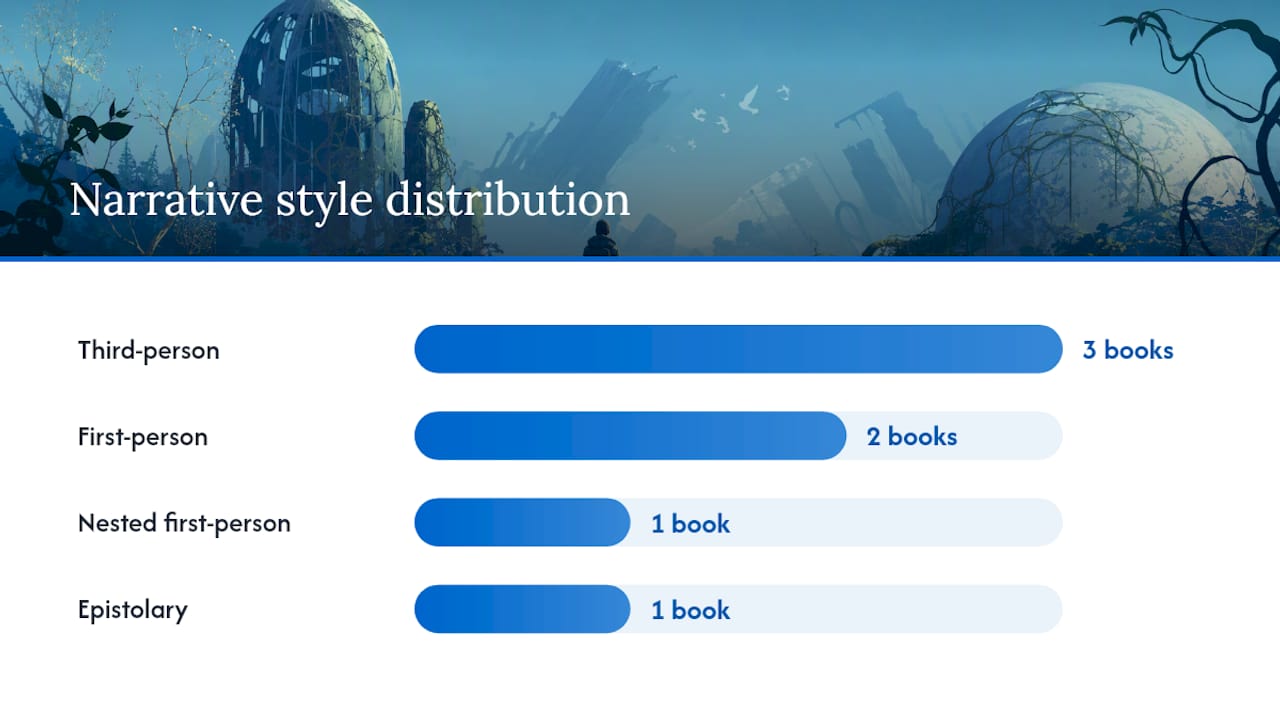
| Title | Why it’s similar | Best for | Narrative style | Pace & length | Content warnings | US availability |
|---|---|---|---|---|---|---|
| Piranesi | Living space, unreliable narrator | Lyrical dread | First-person, limited | Short, meditative | Existential | Paperback, ebook, audio |
| House of Leaves | Found-document, spatial horror | Formal experimentation | Epistolary, layered | Long, slow-burn | Body horror, violence | Paperback, ebook |
| Roadside Picnic | Alien zone, no contact | Philosophical SF | Third-person, gritty | Short, fast | Violence | Paperback, ebook |
| Solaris | Unknown as presence | Cosmic contact fiction | Third-person, dense | Medium, meditative | Existential despair | Paperback, ebook |
| The Fisherman | Landscape horror, nested narration | Literary weird fiction | Nested first-person | Medium, slow-burn | Body horror, grief | Paperback, ebook |
| The Ruins | Biological menace, ecological | Physical dread | Third-person, tense | Medium, fast | Graphic gore | Paperback, ebook |
| Never Let Me Go | Inward narrator, quiet horror | Literary character fiction | First-person, lyrical | Medium, slow | Existential despair | Paperback, ebook, audio |
| The Nether | Psychological depth, atmosphere | Supernatural character horror | Immersive, dark | Medium | Dark themes, violence | Amazon, Kindle Unlimited |
| Stories of a Condemned Soul | Guilt-driven horror, short form | Short intense reads | Short fiction | Short, fast | Dark themes, violence | Amazon, Kindle Unlimited |
| Evolution A200 | Biological dystopia | Dystopian weird fiction | Immersive, bleak | Medium | Body horror, mass death | Amazon, Kindle Unlimited |
How to pick the right read for your mood right now
Start with three questions: How much ambiguity can you tolerate? How long do you want to commit? And how graphic are you willing to go?
- Want short, intense reads you can finish in a sitting? Stories of a Condemned Soul and Roadside Picnic both deliver concentrated dread without a long commitment. Nathanielconnors also has a dedicated list of short dystopian novels for readers who prefer that format.
Pro Tip: If you are unsure about a title’s tone, search for its opening chapter on your library’s Libby or Hoopla app. Five pages will tell you whether the prose style works for you — no purchase required.
For content warnings specifically: any blurb that uses the words “body horror,” “biological,” or “visceral” is signaling graphic physical content. “Existential” and “quiet dread” signal psychological intensity without gore. “Unreliable narrator” almost always means the ending will not resolve cleanly.
Why Nathaniel Connors’ books belong on this list
Readers of Annihilation are drawn to fiction where the horror is psychological before it is physical, where the protagonist’s inner world is as dangerous as the external threat, and where moral clarity is deliberately withheld. That is exactly the territory Nathaniel Connors works in.
- The Nether delivers the same creeping atmosphere and unreliable interiority as Annihilation, but roots its dread in guilt and supernatural consequence rather than ecological contamination. Readers who responded to the biologist’s inward narration will recognize the register immediately.
- Stories of a Condemned Soul offers the psychological horror in short-form bursts — guilt, revenge, and the question of whether the monsters we carry are more dangerous than anything external.
- Evolution A200: A Bubonic Apocalypse sits closest to the ecological horror end of the spectrum, treating biological collapse the way Annihilation treats the Zone: as something with its own momentum that humans cannot negotiate with.
All three titles are available on Amazon in ebook and paperback formats, and Kindle Unlimited subscribers can read them at no additional cost.
Disclosure: Nathaniel Connors is the author of the titles above and the publisher of this site. These recommendations reflect genuine thematic alignment with the other titles on this list.
How Annihilation fits into the Southern Reach Trilogy
Annihilation is the first of three novels in Jeff VanderMeer’s Southern Reach Trilogy. The second book, Authority, shifts perspective entirely: instead of the biologist inside Area X, you follow the new director of the Southern Reach agency trying to understand what the expedition returned. The third, Acceptance, braids multiple timelines and begins to answer some of the trilogy’s questions — though “answer” is a generous word for what VanderMeer provides.
The trilogy works best read in order, but Annihilation functions as a standalone if you stop there. Many readers prefer it that way. Authority is slower and more bureaucratic by design; Acceptance is the most emotionally complex of the three. Kirkus notes that Acceptance echoes the series-level answers readers who want resolution will appreciate, while still preserving the core ambiguity.
If you finish the trilogy and want more VanderMeer, his novel Borne and the follow-up The Strange Bird operate in a different post-apocalyptic ecosystem but carry the same biological weirdness and lyrical prose. His earlier City of Saints and Madmen is weirder and more experimental, closer to House of Leaves in its formal ambitions.
Authors whose style runs parallel to VanderMeer’s
Beyond specific titles, a handful of authors work in the same register as VanderMeer and are worth following as a body of work rather than a single book.
Kelly Link writes short fiction that treats the uncanny as mundane and the mundane as threatening. Her collections Get in Trouble and Magic for Beginners share Annihilation’s refusal to explain its own rules.
Carmen Maria Machado operates in the space between literary fiction and horror, with an emphasis on psychological interiority and unreliable perception. Her Body and Other Parties is the obvious entry point.
Thomas Ligotti is the most extreme option here: pure cosmic pessimism, dense prose, and a complete absence of resolution. His short fiction collection Songs of a Dead Dreamer and Grimscribe is the canonical weird fiction text for readers who want the philosophy as much as the story.
Laird Barron writes Pacific Northwest horror with an ecological edge — ancient, indifferent forces operating through landscape and weather. His collection The Imago Sequence is the best starting point.
For readers drawn to the stark, bleak prose end of the spectrum, Nathanielconnors has a related piece on authors like Cormac McCarthy that covers writers who share that unsparing register.
What ecological and weird horror actually is as a genre
“Weird fiction” is a term with a specific history. H.P. Lovecraft used it to describe stories where the horror comes from the incomprehensible rather than the monstrous — where the threat is too large, too alien, or too indifferent to be defeated or understood. The New Weird, the movement VanderMeer helped define in the early 2000s, updated that tradition with literary prose, ecological anxiety, and a rejection of the genre’s older racial and cultural baggage.
Ecological horror is a related but distinct strain. Where weird fiction is primarily about cognition — the horror of encountering something your mind cannot process — ecological horror is about bodies and environments. The threat is biological, environmental, or systemic. The Ruins is ecological horror. Annihilation is both simultaneously, which is part of why it sits at the center of so many recommendation lists.
Community lists on ThePortalist and MeetNewBooks consistently surface the same core titles because readers are responding to this specific combination: literary prose, ambiguous threat, ecological or spatial menace, and an ending that does not resolve. That combination is rarer than it sounds. Most horror resolves. Most science fiction explains. The books on this list refuse both.
For readers who want to go deeper into the dystopian horror end of this genre, Nathanielconnors maintains a curated list of dystopian horror novels that covers the overlap between ecological collapse and psychological dread.
Why weird and ecological horror keeps pulling me back
There is a specific feeling that the best weird fiction produces — not fear exactly, but a kind of cognitive vertigo, the sensation that the world has more layers than you were told about. Annihilation does this better than almost anything published in the last decade. The biologist’s calm, methodical voice describing things that should not exist is one of the most effective horror techniques I have encountered.
What I find myself returning to, in my own writing and in the books I recommend, is that combination of inward narration and external strangeness. The horror that lives inside a character’s perception is harder to shake than any monster, because you cannot close the book and leave it behind. Solaris does this. Piranesi does this. The Nether is my attempt to do it in the supernatural register.
If you want to understand why this genre works the way it does, start with Piranesi for the lyrical version and Roadside Picnic for the bleak one. Those two books together map the full range of what ecological and weird horror can do.
Nathaniel Connors’ dark fiction for readers who want more
If Annihilation left you wanting fiction that sits in that same uncomfortable space between psychological horror and the supernatural, The Nether by Nathaniel Connors is the direct next step. It carries the same inward dread, the same moral ambiguity, and the same refusal to make the horror comfortable or explainable.

Stories of a Condemned Soul and Evolution A200: A Bubonic Apocalypse round out the catalog for readers who want short-form intensity or dystopian biological horror respectively. All three titles are available in ebook and paperback on Amazon. Kindle Unlimited subscribers can read them at no additional cost. For a broader list of dark reads in the same vein, the dystopian horror novels guide on the Nathanielconnors site covers the overlap between ecological collapse, psychological dread, and supernatural fiction.
Further reading and primary sources
- What Goes On After Area X? (A Southern Reach–Inspired List) | Kirkus Reviews
- 18 Heart-Pounding Books Like Jeff VanderMeer’s ‘Annihilation’ | ThePortalist
- Books like Annihilation (Southern Reach) by Jeff VanderMeer | MeetNewBooks
- Stanisław Lem — Solaris
- bookshop.org