
An unreliable narrator is a storyteller whose credibility is compromised, meaning readers cannot fully trust what they are being told. Wayne C. Booth popularized the term in The Rhetoric of Fiction (1961), and it has since become one of the most studied devices in literary theory. Two quick examples anchor the concept immediately:
- Classic literary: In Edgar Allan Poe’s “The Tell-Tale Heart,” the narrator insists he is perfectly sane while describing how he dismembered a corpse and buried it under the floorboards. His frantic self-defense is the proof of his madness.
- Modern film: In Shutter Island (based on Dennis Lehane’s novel), U.S. Marshal Teddy Daniels investigates a missing patient, but the entire investigation is a constructed delusion. The audience is misled alongside him.
The device is not exclusive to first-person narration. Second- and third-person narrators can be rendered unreliable through selective omniscience, framing, or deliberate omission, as experimental fiction and film regularly demonstrate.
Key Takeaways
An unreliable narrator is a structural device, not simply a dishonest character: the gap between what the narrator reports and what the text implies is where meaning, irony, and suspense are generated.
| Point | Details |
|---|---|
| Core definition | A narrator whose credibility is compromised, coined by Wayne C. Booth in 1961. |
| Five main types | Liar, mentally distorted, naive, biased, and self-deceptive narrators each mislead differently. |
| Top signals to watch | Internal contradictions, memory gaps, over-justification, and implausible knowledge are the clearest red flags. |
| Why authors use it | The device drives suspense, empathy, thematic depth, and moral ambiguity that reliable narration cannot reach. |
| Key craft advice | Plant contradictions early, control omissions deliberately, and give the narrator a psychologically credible motive. |
Table of Contents
- What are the main types of unreliable narrators?
- How can you tell a narrator is unreliable?
- Canonical examples with close readings
- Why do authors use unreliable narrators?
- Where does the term come from, and how do scholars define it?
- How to write an unreliable narrator
- Why unreliable narrators matter to me as a writer
- Sources
What are the main types of unreliable narrators?
Scholars and writing teachers typically organize unreliable narrators into five recognizable categories. Knowing the type helps you both read more critically and write more precisely.
The intentional liar
This narrator knows the truth and withholds or distorts it deliberately. The motive is usually self-protection, manipulation, or control. Amy Dunne in Gillian Flynn’s Gone Girl (2012) is the clearest modern example: she fabricates a diary, plants evidence, and narrates her own crimes as victimhood. The reader is not just misled; they are actively manipulated by a narrator who enjoys it.
The mentally or perceptually distorted narrator
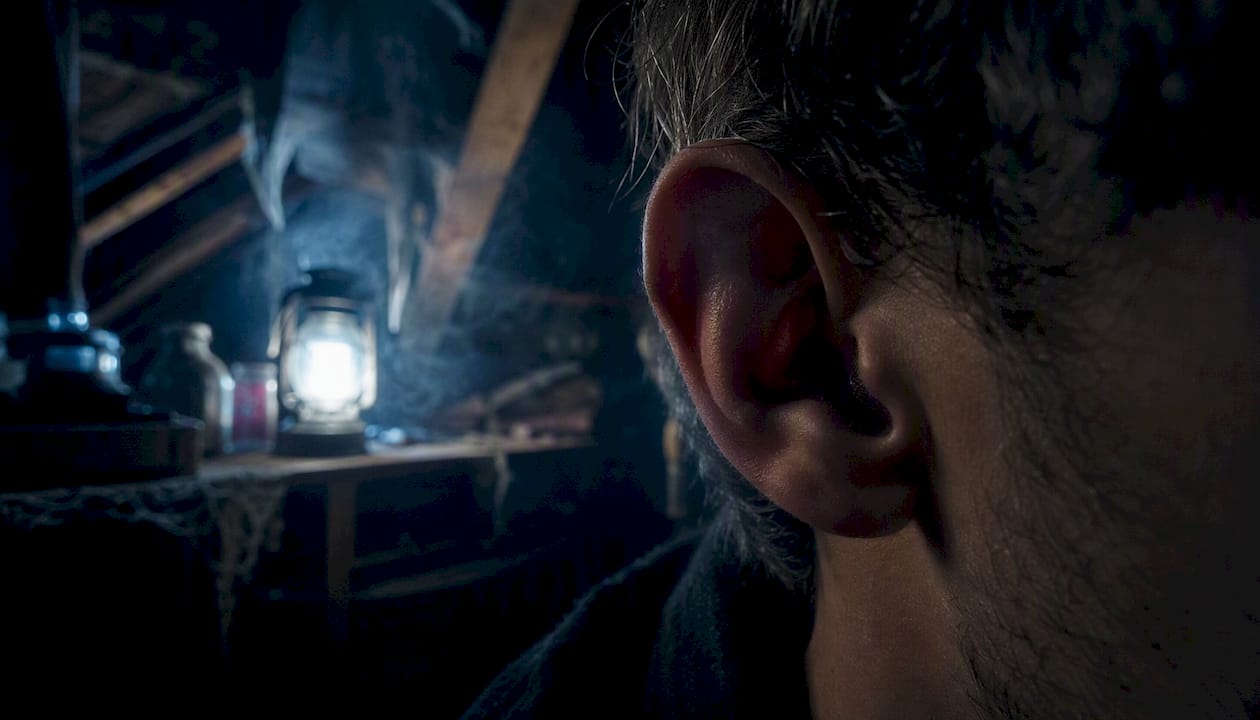
Illness, trauma, or altered perception filters everything this narrator reports. Poe’s unnamed narrator in “The Tell-Tale Heart” (1843) is the archetype. His hypersensitivity, paranoia, and eventual auditory hallucinations make every observation suspect. The narrator’s mental state becomes the lens through which readers must reinterpret every “fact” in the story.
The naive or immature narrator
Youth, inexperience, or limited understanding produces a narrator who misreads the world without knowing it. Holden Caulfield in J.D. Salinger’s The Catcher in the Rye (1951) is the defining case. He calls nearly every adult a “phony,” yet his own contradictions and emotional fragility reveal a teenager who cannot see himself clearly. Readers understand more than Holden does, which is exactly where the novel’s power lives.
The biased or partisan narrator
This narrator has a stake in the story’s outcome and frames events to serve that stake. The bias may be ideological, personal, or social. Humbert Humbert in Vladimir Nabokov’s Lolita (1955) is the most disturbing version: a predator who deploys exquisite prose to aestheticize his crimes and cast himself as a romantic hero. The beauty of the language is the trap.

The self-deceptive narrator (bonding unreliability)
This narrator genuinely believes their own distorted account. They are not lying; they are wrong about themselves. James Phelan calls this “bonding unreliability” because the narrator’s self-deception can paradoxically draw readers closer, creating empathy for a flawed consciousness. The narrator in Fight Club (Chuck Palahniuk, 1996) does not know he has invented Tyler Durden. His sincerity is total, and that sincerity is what makes the reveal devastating.
| Type | Core trait | Canonical example |
|---|---|---|
| Intentional liar | Deliberately withholds or fabricates | Amy Dunne, Gone Girl |
| Mentally distorted | Perception warped by illness or trauma | Narrator, “The Tell-Tale Heart” |
| Naive/immature | Limited understanding, misreads events | Holden Caulfield, The Catcher in the Rye |
| Biased/partisan | Self-serving framing, ideological stake | Humbert Humbert, Lolita |
| Self-deceptive | Sincerely believes their own distortion | Narrator, Fight Club |
How can you tell a narrator is unreliable?
Spotting unreliability is a skill, and it gets sharper with practice. The signals fall into three layers: what the text itself shows, what the text contradicts against the real world, and what genre conventions prime you to expect.
Intratextual signals (inside the text)
- Internal contradictions: The narrator says one thing early and another thing later, with no acknowledgment of the shift. (“I never loved her.” Three chapters later: “She was the only person I ever truly loved.”)
- Memory gaps and vagueness: Suspiciously convenient forgetting. A narrator who cannot recall the exact words of a crucial conversation but remembers every detail of an irrelevant one is hiding something, consciously or not.
- Inconsistent detail: The narrator describes a room as empty, but a later scene reveals a witness was present. Small mismatches accumulate into a pattern.
- Implausible knowledge: The narrator claims to know what another character was thinking or feeling in a scene where they were not present. How do they know this?
- Over-justification: A narrator who protests too much. “I am completely calm. I have never been calmer.” The insistence itself signals the opposite.
Extratextual signals (against the world)
- Impossible claims: The narrator describes events that contradict established facts within the story’s world, or that defy physical possibility.
- Genre cues: Psychological thrillers and Gothic fiction prime readers to distrust the narrator from page one. When a story opens in an asylum or a crime scene, skepticism is the correct default.
Reader-competence signals
- Stock-character recognition: When a narrator fits a recognizable type (the obsessive, the grieving parent, the fugitive), readers bring expectations about what that type typically distorts or omits.
- Dramatic irony: The author gives the reader information the narrator does not have, or the narrator’s tone clashes with the gravity of what they are describing.
Pro Tip: When close-reading for unreliability, keep a running margin note of every claim the narrator makes about themselves. By the midpoint of the text, contradictions in that self-portrait will be visible in a way they are not when you read straight through.
Canonical examples with close readings
These six works are the most-taught examples of unreliable narration in American literature and film. Each one uses a different mechanism.
-
Edgar Allan Poe, “The Tell-Tale Heart” (1843): The narrator opens by insisting, “I am not mad.” He then describes, in meticulous detail, how he stalked an old man for seven nights, murdered him, and dismembered the body. His proof of sanity is his methodical precision, which is itself the evidence of pathology. The unreliability is announced in the first sentence and never lets up. Type: mentally distorted.
-
Vladimir Nabokov, Lolita (1955): Humbert Humbert narrates his abuse of a twelve-year-old girl as a grand love story, deploying ornate, self-conscious prose to aestheticize every interaction. Nabokov plants signals throughout: Lolita cries every night after Humbert falls asleep, a detail he mentions once and never revisits. That single omission tells readers everything Humbert refuses to see. Type: biased/partisan.
-
J.D. Salinger, The Catcher in the Rye (1951): Holden Caulfield dismisses nearly every adult as a “phony,” yet he lies to a stranger on a train about who he is within the novel’s first fifty pages. His diagnosis of the world’s inauthenticity applies to him too, and Salinger never lets Holden notice. The gap between Holden’s self-image and his behavior is where the novel’s meaning lives. Type: naive/immature.
-
Chuck Palahniuk, Fight Club (1996): The unnamed narrator presents Tyler Durden as a separate, charismatic man who enters his life and transforms it. Every scene with Tyler is narrated with the same flat, documentary confidence as every other scene. There are no stylistic signals that Tyler is a dissociated identity until the reveal forces a re-read of every prior chapter. Palahniuk’s craft is in making the unreliability invisible until it cannot be. Type: self-deceptive.
-
Gillian Flynn, Gone Girl (2012): Flynn splits the narration between Nick Dunne and Amy’s diary entries. Nick withholds information about his affair; Amy’s diary is later revealed to be a fabricated document designed to frame him. Both narrators are unreliable, but for opposite reasons: one hides guilt, the other performs victimhood. Flynn uses the dual structure to make readers distrust both voices simultaneously. Type: intentional liar (Amy); biased/partisan (Nick).
-
Dennis Lehane, Shutter Island (2003): U.S. Marshal Teddy Daniels investigates a psychiatric facility, and the entire plot is structured around his investigation. The reveal is that Teddy is himself a patient, and the “investigation” is a therapeutic role-play designed to break through his delusion. Lehane embeds the signals in plain sight: the doctors’ behavior, the patients’ odd familiarity, the geography of the island. On re-read, the novel is a different book entirely. Type: mentally distorted.
Why do authors use unreliable narrators?
The device does specific work that a straightforward, trustworthy narrator cannot do. According to EBSCO Research Starters, unreliable narration is a deliberate strategy for exploring memory failure, subjective perception, and moral ambiguity. Here is what that looks like in practice:
- Suspense and dramatic irony: When readers sense a gap between what the narrator claims and what is actually happening, tension builds naturally. The reader is always slightly ahead of, or behind, the narrator, and that asymmetry is uncomfortable in the best way.
- Theme exploration: Unreliability is the ideal vehicle for themes like self-deception (Lolita), guilt (The Tell-Tale Heart), grief (Shutter Island), and the constructed nature of identity (Fight Club). A reliable narrator would flatten these themes into statement; an unreliable one embodies them.
- Empathy and bonding: Phelan’s “bonding unreliability” captures something counterintuitive: readers often feel more attached to a narrator they know is flawed, not less. Holden Caulfield’s unreliability is inseparable from his vulnerability, and that combination is why the novel still resonates decades after publication.
- Commentary on memory and subjectivity: Every narrator is, to some degree, unreliable, because memory is reconstructive and perception is partial. Foregrounding that unreliability is a way of making an argument about how human consciousness actually works.
- Moral ambiguity: When readers cannot fully trust the narrator, they cannot outsource their moral judgment to the text. They have to decide for themselves what happened and what it means.
For writers working in psychological fiction and dark suspense, these effects are not incidental. They are the point. The unreliable narrator is the mechanism by which a story about guilt, paranoia, or self-destruction gets under a reader’s skin rather than sitting on the surface.
Where does the term come from, and how do scholars define it?
The term “unreliable narrator” was coined by Wayne C. Booth in The Rhetoric of Fiction (1961). Booth’s formulation is precise: a narrator is unreliable when their account departs from the norms of the “implied author,” the version of the author that a careful reader reconstructs from the text as a whole. That gap between narrator and implied author is what generates irony, and it is what gives readers interpretive work to do.
The Cambridge Dictionary offers a more accessible version: an unreliable narrator is one “who tells you what is happening in a book or film but who may not be telling the truth.” Dictionary similarly defines the term in plain language useful for quick reference.
Booth’s model has been expanded significantly since 1961. James Phelan introduced the concept of “bonding unreliability,” arguing that some narrators are made unreliable precisely to draw readers into empathy with a flawed consciousness, not to distance them from it. This is a meaningful revision: Booth’s model emphasizes the gap between narrator and implied author as a source of irony; Phelan’s model shows that the same gap can produce intimacy.
Cognitive and readership-centered theorists, particularly Ansgar Nünning, push further. Nünning argues that unreliability is not a fixed property of the text but something readers construct by comparing the narrator’s account against their own knowledge, values, and genre expectations. On this view, reliability exists on a spectrum, and different readers may draw the line in different places. The Wikipedia entry on unreliable narrators summarizes these competing models and is a useful starting point for readers who want to follow the scholarly debate.
How to write an unreliable narrator
Craft-level unreliability is harder than it looks. The goal is to mislead readers without cheating them: every signal must be present in the text, even if readers only see it clearly on a second read.
A checklist for writers:
- Establish a consistent voice first. Readers need to trust the narrator’s voice before they can be misled by it. Inconsistency in style or register is a different problem from unreliability; fix the former before you introduce the latter.
- Plant contradictions early, subtly. A detail in chapter two that contradicts a claim in chapter one should feel like a minor continuity hiccup on first read and like a flashing signal on re-read.
- Control omissions deliberately. What the narrator does not mention is as important as what they do. Map the gaps: what would a fully honest narrator have said here?
- Give the narrator a credible motive. Readers accept unreliability more readily when the narrator’s distortion makes psychological sense. Fear, shame, grief, and self-protection are all convincing engines.
- Scaffold the reveal. The moment readers understand the narrator has been unreliable should feel earned, not arbitrary. Every planted signal is a step in that scaffold.
Editorial exercises:
- Take a paragraph written from a reliable, neutral perspective and rewrite it from the point of view of a narrator who has a personal stake in making the events sound better than they were.
- Write a scene twice: once from the narrator’s account, once from what a witness would have seen. The gap between the two versions is your unreliability.
- Write a narrator’s self-description, then list three things that description conveniently omits. Those omissions are your raw material.
Pro Tip: Pace the reveal by giving readers one clear, undeniable signal about two-thirds of the way through the story. Before that point, signals should be deniable. After it, readers will re-read everything with new eyes.
A four-step revision process:
- Read the draft and flag every claim the narrator makes about themselves or their motives.
- Map the knowledge gaps: where does the narrator claim to know something they could not plausibly know?
- Test plausibility: does the narrator’s distortion follow from a coherent psychological logic, or does it feel arbitrary?
- Stage the reveal: confirm that every signal planted earlier is genuinely present in the text, not just implied in your notes.
The Oregon State teaching resource on unreliable narrators includes exercises and examples that work well as starting points for writers who want structured practice.
Why unreliable narrators matter to me as a writer
The unreliable narrator is not a trick. It is a way of being honest about how consciousness actually works: partial, self-serving, shaped by fear and desire. When I write characters who are navigating guilt, paranoia, or the kind of darkness that does not announce itself, a fully reliable narrator would betray the material. The reader needs to feel the same uncertainty the character feels.
The craft challenge I find most interesting is not the reveal. It is the moment just before it, when a careful reader senses something is wrong but cannot name it yet. That unease is where psychological fiction lives. My advice: before you decide what your narrator is hiding, decide what they are afraid to know about themselves. The hiding follows from the fear, and readers feel the difference between a narrator who is lying and one who genuinely cannot see the truth.
For readers who want to experience this device in dark, compressed form, the short dystopian novels I recommend are built around exactly this kind of narrative pressure. And if you want to go deeper into the psychological thriller tradition that makes unreliable narration its central engine, the books like The Silent Patient list is a good next stop.
If you want to keep reading in this territory, the best dystopian horror novels list pulls together eight titles that use distorted, unreliable, or morally compromised narrators to maximum effect. Several are available on Kindle Unlimited.

Sources
- Unreliable narrator
- UNRELIABLE NARRATOR | English meaning – Cambridge Dictionary
- What is an Unreliable Narrator? || Definition & Examples
- EBSCO Research Starters — Unreliable narrator
- Unreliable Narrator – Definition and Examples – Poem Analysis
- Dictionary