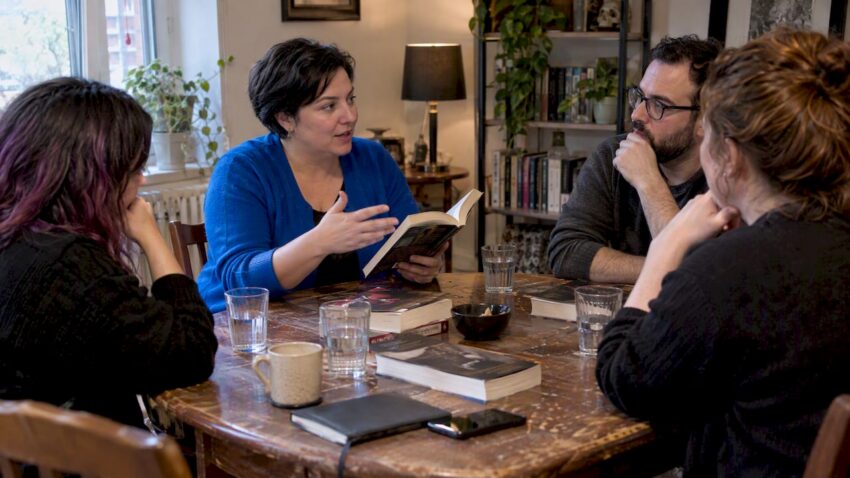
Here are categorized, ready-to-use horror book club questions and a facilitator checklist you can bring to your next meeting. The sets below move from easy icebreakers through atmosphere and craft, character and motive, supernatural metaphor, narration, and endings, then into practical meeting formats, a printable prep sheet, and prompts drawn directly from an author’s own craft notes.
TL;DR:
- Most impactful scenes often rely on sensory details and pacing choices that generate atmosphere, rather than explicit plot points or violence.
- Discussions about supernatural elements should focus on their metaphorical meanings related to social fears, trauma, or personal struggles.
- Engaging debate about character motives, villains, and whether they are victims or villains can reveal deeper thematic layers and moral ambiguity.
- The narrative structure, especially unreliable or multi-perspective narrators, significantly influences audience trust and suspense.
- Ending satisfaction hinges on whether the climax feels earned or leaves unresolved questions, often enhancing thematic depth through ambiguity.
Table of Contents
- 1. Starter questions to open discussion without spoilers
- 2. Atmosphere and craft questions that unpack how dread gets built
- 3. Character, motive, and villain questions that test empathy
- 4. Supernatural elements as metaphor: what the monster really means
- 5. Narration and structure: trusting (or distrusting) the storyteller
- 6. Debriefing endings and the questions that never get answered
- 7. Meeting formats that keep horror discussions lively and safe
- 8. A facilitator checklist and printable question sheet
- 9. Author-sourced prompts for ambiguous endings and psychological character work
- 10. A host’s note on balancing curiosity with care
- Where to find book club picks with real staying power
- FAQ
- Sources
1. Starter questions to open discussion without spoilers
The first ten minutes of any horror meeting set the tone. Skip plot recap and go straight to impression and reaction, since most effective horror discussions avoid long summaries in favor of thematic or emotional questions that get everyone talking fast, a practice Bustle’s host guidance recommends for keeping energy high.
These ten prompts work before anyone risks a spoiler:
- What single moment stuck with you most, and why?
- Did the opening chapter earn your trust, or did it take time?
- Would you recommend this book, and to whom specifically?
- What mood were you in when you finished the last page?
- Which scene would you cut if you were editing this book?
- Did the title match the story once you finished it?
- What did the cover art get right or wrong?
- If you had to describe this book in one sentence to a friend, what would you say?
- Was there a line or phrase you wanted to underline?
- On a gut level, did this book scare you, unsettle you, or just intrigue you?
Use a round-robin format for the first few questions so quieter members speak before louder ones dominate the room. Save deeper analysis for the sections below once everyone has had a turn.
2. Atmosphere and craft questions that unpack how dread gets built
Once the group has warmed up, shift from reaction to mechanics. Horror book-club questions commonly zero in on setting and atmosphere alongside the specific suspense techniques an author uses, according to the Bookclubs ultimate discussion question list. Ask members to point to exact sentences or scenes where dread built, rather than describing a general feeling.
- Which sensory details (sound, smell, light, temperature) did the author use to build unease?
- Where did pacing slow down right before something happened, and why might that choice work?
- Did the setting itself feel like a character, and what gave it that weight?
- Which scene break or chapter cut created the sharpest jolt?
- Was there a moment of silence or stillness that felt louder than noise?
- Did foreshadowing pay off, or did it feel like a cheat once you knew the ending?
Pro Tip: Ask one member to read a short, unsettling passage aloud, then spend two minutes discussing what made it effective before moving on.
For members who want to study these techniques further, our craft guide on writing psychological horror breaks down how dread gets constructed sentence by sentence, and our collection of psychological horror quotes offers short, ready-made passages if you want options beyond the book itself.
3. Character, motive, and villain questions that test empathy
Villain portrayal is one of the most consistent threads in genre-specific discussion guides, and horror book clubs tend to get their liveliest debates when members are asked to argue a character’s actions rather than just judge them, per the Bookclubs question list.
Try these prompts to surface disagreement:
- Was the antagonist a villain, a victim, or both, and what evidence supports your read?
- Which choice did the protagonist make that you would have made differently?
- Did any character’s fear feel more real to you than the supernatural threat itself?
- At what point, if any, did your sympathy for a character shift?
For a livelier session, run a short paired debate:
- Split into pairs and assign one member to argue the antagonist deserves sympathy.
- Give each pair three minutes to build their strongest case.
- Have each pair present their argument to the group in under a minute.
- Open the floor for rebuttals before moving to the next topic.
This format tends to surface opinions that a simple round-robin question never would.
4. Supernatural elements as metaphor: what the monster really means
Genre-specific guides frequently frame supernatural elements as metaphors for real-life fears rather than as plot devices on their own, a pattern the Bookclubs discussion list highlights across thriller and horror titles. Pushing your group toward this interpretation turns a scary story into a conversation about something larger.
- What do you think the central supernatural element actually represents?
- Would the story lose meaning if the supernatural threat were removed, or only lose scares?
- Does the uncanny element connect to a historical event, social fear, or personal trauma?
- If you had to defend the metaphor to someone who thought it was “just a ghost story,” what would you say?
Close this section with a quick vote: ask each member to name the single strongest metaphor in the book, then tally results out loud. Disagreement here almost always generates the best follow-up conversation of the night.
5. Narration and structure: trusting (or distrusting) the storyteller
Narrator perspective shows up again and again in genre discussion frameworks, particularly when a book uses an unreliable narrator, multiple points of view, or a non-linear timeline, as noted in the Bookclubs discussion question resource. These structural choices are often where horror does its quietest, most effective damage.
- Did you trust the narrator from the start, or did doubt creep in gradually?
- If the book used multiple perspectives, whose version did you believe most and why?
- Would an earlier scene read differently if you reread it knowing how the book ends?
- Did the timeline’s structure (linear, fractured, or reversed) change how you experienced suspense?
Pro Tip: When a structural reveal is the twist, ask members to raise a hand before discussing it so anyone catching up can step out of the room for thirty seconds.
6. Debriefing endings and the questions that never get answered
A satisfying horror ending doesn’t always mean a resolved one. Published question lists for thriller and horror titles consistently include prompts about whether the ending felt earned, alongside space for members to name what was left unresolved, a structure confirmed by the Bookclubs PDF question list.
- Did the ending feel earned, or did it arrive too fast?
- Name one question the book never answered. Does that bother you or intrigue you?
- If you could ask the author one thing about the final chapter, what would it be?
Run a quick structured vote: ask each member to rate their satisfaction with the ending on a show of fingers, one to five, then discuss the split. Horror can push past scares into real thematic territory, and ambiguous endings are often where that theme crystallizes. If the ending touched on grief, violence, or loss that hits close to home for someone in the room, give members an easy out to pass on a question without explanation.
For a deeper dive into this exact topic, our piece on sixteen ambiguous endings and their prompts walks through how different authors handle unresolved finales.
7. Meeting formats that keep horror discussions lively and safe
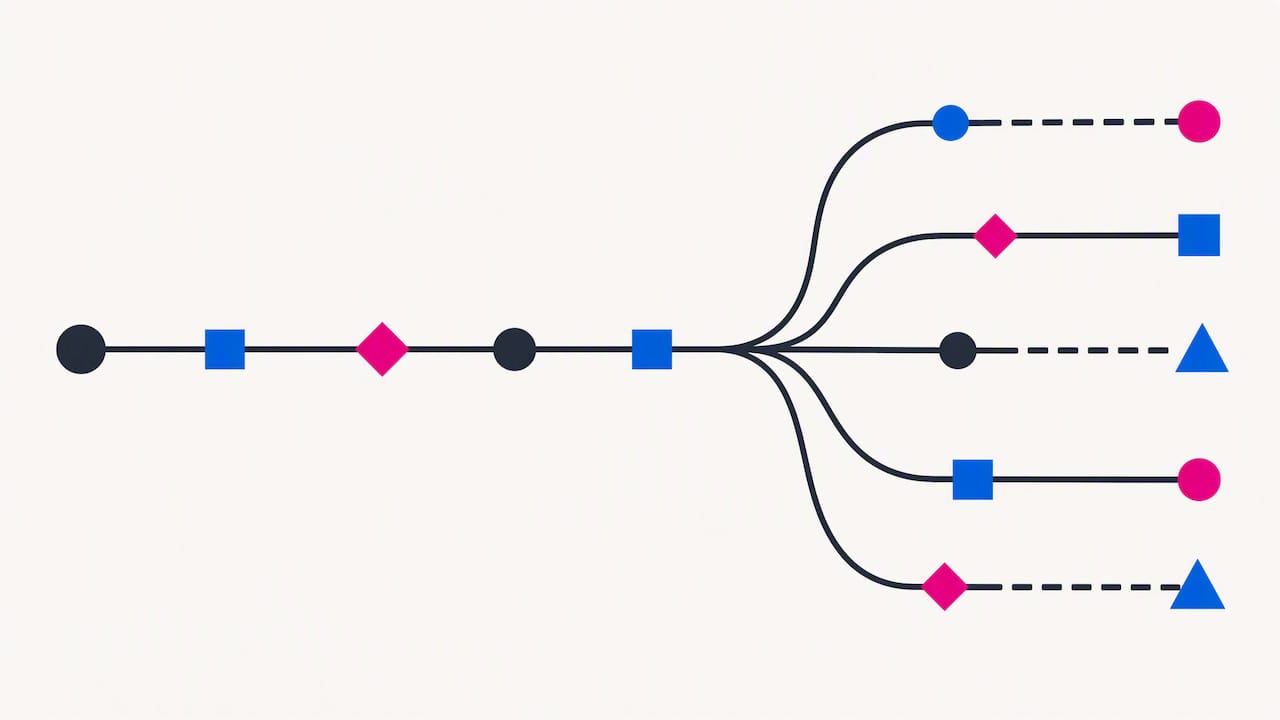
Structure keeps a horror meeting from drifting into either a scare contest or a dry book report. These formats work well in rotation:
- Round-robin opener (10 minutes): one quick reaction question per person, no debate yet.
- Craft deep-dive (15 minutes): atmosphere and structure questions, often with a read-aloud passage.
- Paired debate (10 minutes): character or villain motive argued in pairs, then shared.
- Metaphor vote (5 minutes): quick group vote on the strongest thematic interpretation.
- Ending debrief (10 minutes): satisfaction rating plus unresolved questions.
- Closing round (5 minutes): one-word reactions to send everyone home.
Post a content warning before the meeting and let members opt out of specific questions without pressure. Low-cost mood setting, a single prop on the table or a quiet instrumental playlist, adds atmosphere without relying on gratuitous scare tactics that can alienate sensitive readers.
8. A facilitator checklist and printable question sheet
A short pre-meeting checklist keeps a horror discussion from feeling chaotic:
- Confirm the spoiler policy and share it before the meeting starts.
- List content warnings relevant to the book (violence, self-harm, grief).
- Assign rough time blocks for each section above.
- Print or share a digital copy of your chosen question set in advance.
- Offer an accessible format (large print or screen-reader-friendly document) if anyone needs one.
Copy any of the question sets above into a shared document or printed handout, then hand it out at the door so members can jot notes mid-chapter next time. The table below helps you pick which set to lean on depending on your club’s goal for the night.
| Club goal | Best question set to lead with |
|---|---|
| Light, low-spoiler warm-up | Starter questions |
| Craft-focused analysis | Atmosphere and craft questions |
| Deep thematic discussion | Supernatural metaphor and endings questions |
9. Author-sourced prompts for ambiguous endings and psychological character work
As the author behind The Nether, Stories of a Condemned Soul, and Evolution A200: A Bubonic Apocalypse, Nathaniel Connors builds stories around deep psychological exploration and characters whose motives stay murky long after the last page. These prompts come straight from that approach to craft.
For ambiguous endings:
What did the ending withhold on purpose, and what would be lost if it explained everything?
If the final scene is read as a metaphor rather than a literal event, what changes?
Which character’s fate feels most unresolved, and does that unresolved feeling serve the story?
For psychological character study:
Does this character’s fear say more about them or about the world that shaped them?
Where does guilt, rather than fear, seem to be driving the plot forward?
If this character got one honest moment with no consequences, what would they finally say?
Hosts can use these to steer conversation toward theme and ethics instead of letting the discussion settle for shock value alone.
10. A host’s note on balancing curiosity with care
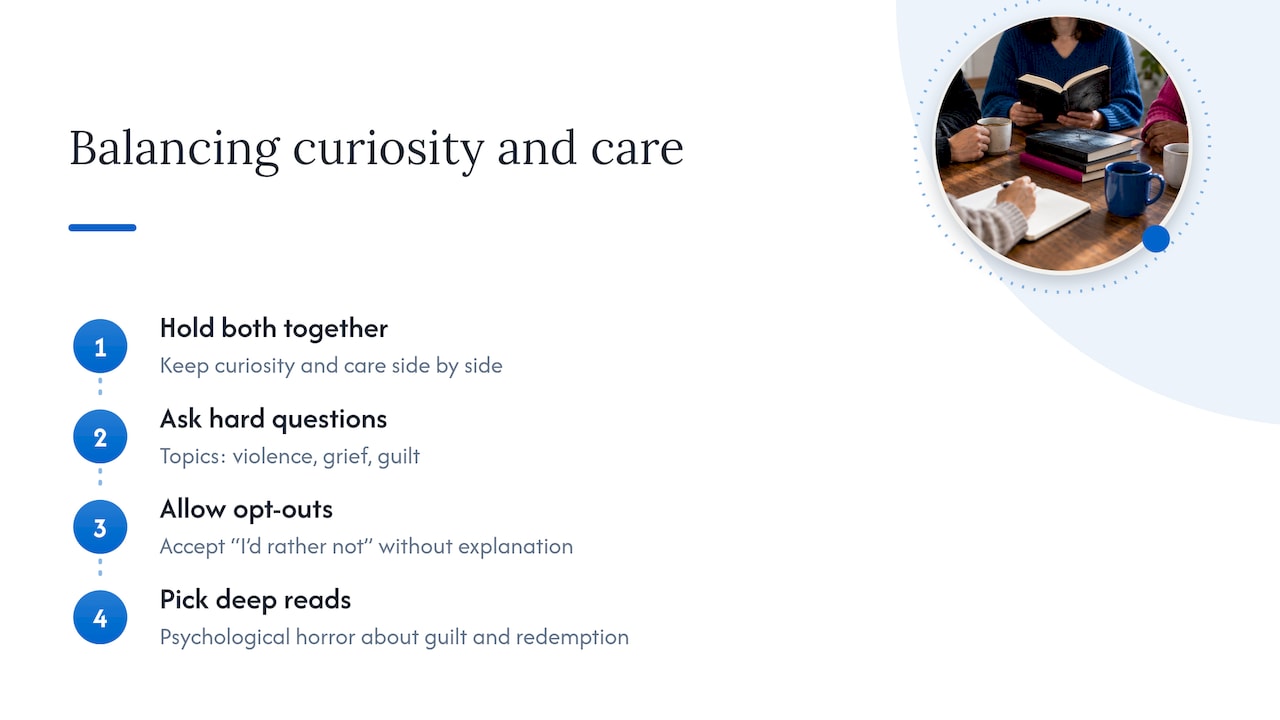
Horror book clubs work best when curiosity and care sit side by side. Ask the hard questions, the ones about violence, grief, or guilt, but leave room for someone to say “I’d rather not go there tonight” without explanation.
If your group is hunting for a next pick with this kind of depth, psychological horror built around guilt and redemption tends to generate exactly these conversations.
— Nathaniel
Where to find book club picks with real staying power
Dark supernatural fiction is built for exactly this kind of conversation: stories about guilt, revenge, and redemption that leave characters’ motives genuinely up for debate. Clubs drawn to ambiguous endings and quiet psychological dread tend to gravitate toward certain titles, while groups that prefer a wider-scale, dystopian backdrop for their horror often pick others.
Browse our full lineup on the books category page to find your club’s next pick, all available free through Kindle Unlimited.
FAQ
What are some funny questions I can ask in a book club?
Light questions work well as icebreakers even in a horror club: ask which character would survive a real horror movie, or which plot twist made someone physically jump. These lower the stakes before moving into heavier thematic discussion.
What is considered the scariest book of all time?
There’s no single agreed-upon answer, since “scariest” depends heavily on personal triggers and reading history. Curated horror roundups, like the one from BookPage, tend to favor literary horror that lingers through theme rather than a single universally crowned title.
What are some good book club discussion questions?
Strong discussion questions move past plot summary into craft, character motive, and theme, covering atmosphere, suspense technique, villain portrayal, and whether supernatural elements function as metaphor, a structure reflected in the Bookclubs ultimate question list. Starting with a low-spoiler icebreaker before moving into these deeper prompts keeps the whole group engaged.
What are some good horror books for a book club?
Look for horror that raises thematic questions about loneliness, trauma, or moral complexity rather than relying only on scares, the kind of pick BookPage recommends for literary horror discussions. For clubs drawn to character-driven dread and guilt-laden plots, our Nether series offers that same kind of lingering ambiguity.
Sources
- The Ultimate List of Book Club Discussion Questions for Fiction and Nonfiction | Bookclubs
- Thought-Provoking Horror to Read With Your Book Club | BookRiot
- 4 literary horror picks for book clubs tired of romance | BookPage