
Surreal horror books are stories in which the rules of reality bend, and the bending is the source of the fear: a building that is larger inside, a drug that opens a second world, a landscape that seems to think. The best ones pair that strangeness with a human wound, so the nightmare means something. If you want that pairing in dystopian, psychological form, our Nathaniel Connors books are free to read with Kindle Unlimited, and the list below shows where they sit among the titles readers most often recommend.
TL;DR
- Surreal horror makes the world itself unreliable. Psychological horror that is not surreal usually keeps reality intact and breaks the mind instead.
- Start with the books readers return to: Annihilation, Switchboard, John Dies at the End, Junji Ito’s story collections and Thomas Ligotti’s short fiction.
- The strongest surreal horror anchors the grotesque in a character’s guilt, grief or ambition. Pick for that emotional core, not only for the strangeness.
- Our dystopian and dark supernatural novels, The Nether and the Evolution A200 books, are available on Kindle Unlimited, so you can read them without an extra purchase.
- Kindle Unlimited catalogs change, so confirm a title is included on Amazon before you borrow it.
Table of Contents
- What makes horror “surreal”
- Surreal horror novels readers recommend most
- Surreal psychological horror: strangeness with a human cost
- Where dystopia and the surreal meet
- Reading surreal horror on Kindle Unlimited
- How to choose your first surreal horror book
- Our perspective: why the monster inside matters most
- Start reading
- FAQ
- Sources
What makes horror “surreal”
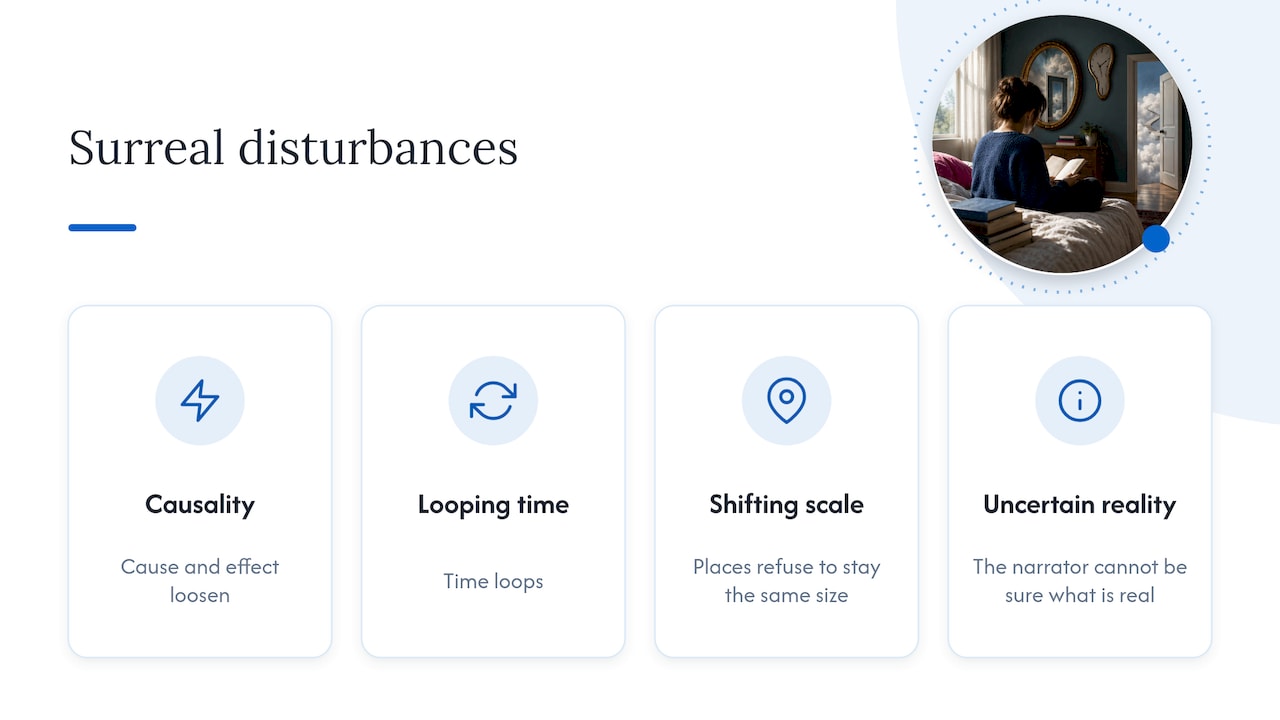
Horror usually scares you with a threat: a killer, a ghost, a disease. Surreal horror scares you with a disturbance in how things work. Cause and effect loosen, time loops, places refuse to stay the same size, and the narrator cannot be sure what is real. You finish a chapter unsettled rather than startled.
That is close to what film writers call psychological horror. No Film School notes that psychological horror is also called cerebral or surreal horror, depending on the plot, and contrasts it with thrillers whose events can be explained through logic and motive. The useful test for a reader is simple: if a rational explanation would end the fear, the book is a thriller. If no explanation could, because the strangeness is the point, you are in surreal territory.
There is also a long lineage behind it. Surrealist artists set out to explore the subconscious, and the subconscious is where horror has always worked. Dreams are the natural model: they feel meaningful, they follow their own logic, and they can be frightening for reasons you cannot name. Readers who enjoy that sensation sometimes wonder where the line sits between a disturbing dream and a meaningful one, and a guide to telling anxiety dreams from prophetic ones takes that question on directly. Surreal horror writers borrow the same ambiguity and refuse to settle it.
Surreal horror novels readers recommend most
No single list defines the genre, but a handful of titles come up again and again. Here is what makes each one surreal, and what kind of reader it suits.
| Book | Author | What bends | Best for |
|---|---|---|---|
| Annihilation | Jeff VanderMeer | A region where nature and infection follow no known law | Readers who like weird fiction with a scientific chill |
| Switchboard | Andrew Post | Dream and reality blur in a haunted apartment building | Readers who want a hallucinatory, visceral nightmare |
| John Dies at the End | David Wong (John Pargin) | A drug opens the door to psychedelic horror | Readers who want dark comedy with their dread |
| The Orange Eats Creeps | Grace Krilanovich | Anti-dreams and a highway that eats people | Readers who like experimental independent fiction |
| Junji Ito’s story collections | Junji Ito | Grotesque, bizarre events that escalate without explanation | Readers who like illustrated body horror |
| House of Leaves | Mark Z. Danielewski | A space that defies measurement and a text that unravels | Readers ready for a long, layered project |
Annihilation and the unnamed biologist
Kirkus Reviews described Jeff VanderMeer’s novel as a supernatural horror story, a psychological thriller and a literary treat at once. Its unnamed biologist narrator slowly comes undone under stress in Area X, while a living underground tower spreads infection. The surreal part is not a single monster. It is the sense that the place is rewriting the people inside it. If that appeals, our list of books like Annihilation goes further down the same path.
Switchboard and the human telephone line
Publishers Weekly called Andrew Post’s novel hallucinatory and viscera-soaked. A police lieutenant in a haunted Erie, Pennsylvania apartment building is turned into a human telephone line carrying messages from an otherworldly being. Reality and dream blur, and time grows circular. It is a good example of surreal structure: the plot does not climb toward a reveal so much as spiral.
John Dies at the End and chemical unreality
LitReactor’s trippy horror list describes characters who experience supernatural phenomena after taking a drug called Soy Sauce, with psychedelic nightmares along the way. Comedy and dread share the page, which makes it a gentler entry point than the experimental titles.
Junji Ito and the grotesque
Book Riot’s piece on compelling surreal horror highlights Junji Ito’s collection of stories full of the grotesque, the strange and the bizarre. If you prefer images to prose, this is the fastest route into the genre.
Thomas Ligotti and the short form
The New Yorker’s profile of Thomas Ligotti, The Horror of the Unreal, reports that Penguin Classics reissued his collections Songs of a Dead Dreamer and Grimscribe in one volume. Ligotti argues the short story is the strongest vehicle for supernatural horror, because a novel cannot consistently project a single effect. That is a useful tip for sampling surreal horror: try a short story collection before committing to a 700-page experiment.
The Orange Eats Creeps
Grace Krilanovich’s novel, first released in 2010, follows nomadic crust punks and wannabe vampires through the Pacific Northwest. A Southwest Review interview describes it with anti-dreams, drug-induced ESP and the Highway That Eats People. It is a landmark of independent American fiction and a demanding read.
For an even bigger text-bending puzzle, see our guide to books like House of Leaves.
Surreal psychological horror: strangeness with a human cost
The search for surreal psychological horror is really a search for a particular balance. Pure strangeness can feel like a puzzle box with nothing inside. Pure psychology can feel too ordinary for a reader who wants dread to have scale. The books that last combine both: the distorted world exposes something the character cannot face.
When you judge a candidate, ask three questions:
- Whose unraveling is it? A defined narrator with something to lose, such as the biologist in Annihilation, gives the strangeness a person to land on.
- Does the weirdness reveal something? Horror that is decorative fades. Horror that exposes guilt, ambition or grief stays with you.
- Do you need answers? Surreal horror often withholds them. If you want a rational explanation at the end, a slow-burn non-supernatural horror pick may suit you better, and our breakdown of psychological thriller versus horror shows where the boundary falls.
If the idea of a book that makes you doubt your footing appeals, our guide to existential horror books that make you question reality covers the neighboring territory in detail, and 10 mind-bending horror books gives a shorter reading list from an author’s point of view.
Where dystopia and the surreal meet
Some readers come to surreal horror through dystopian fiction. A collapsing society already feels unreal: familiar streets become hostile, institutions go silent, and ordinary rules stop applying. Add a supernatural pressure and the result is the kind of dread that sits between speculative fiction and the nightmare.
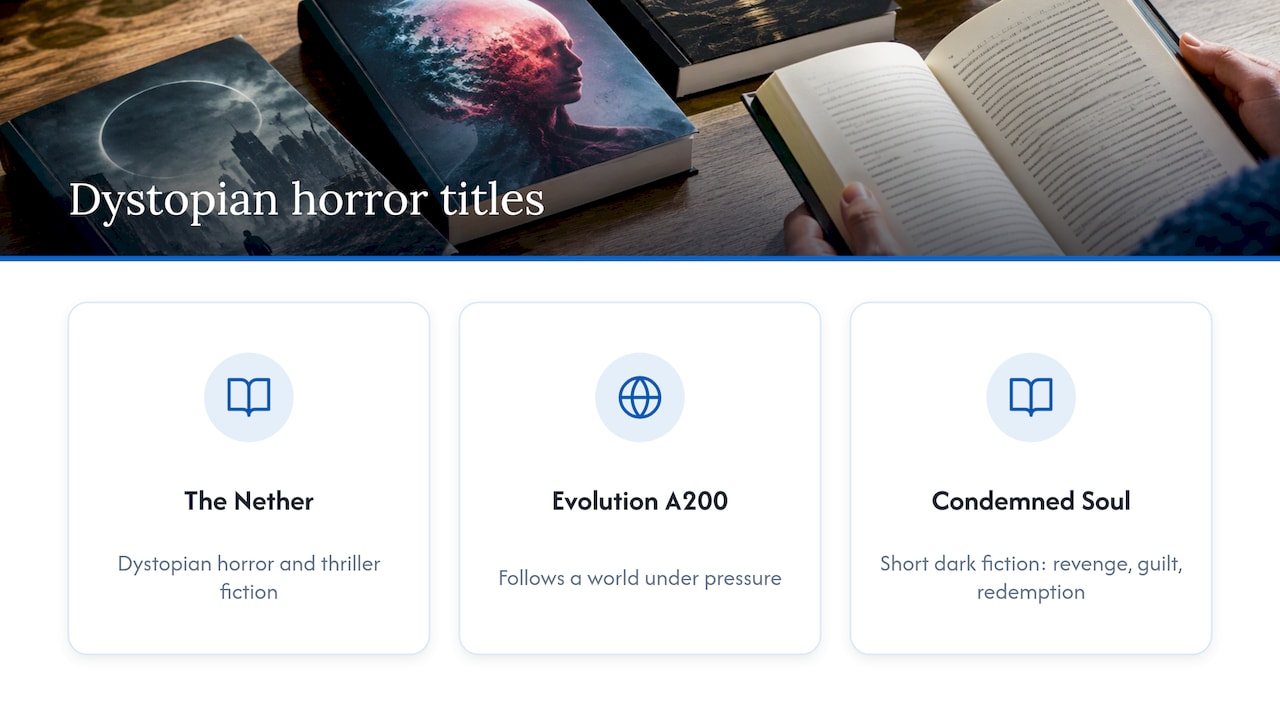
That is the territory we write in. The Nether is dystopian horror and thriller fiction, and the Evolution A200 books, starting with Evolution A200: A Bubonic Apocalypse and continuing with Radio Silence, follow a world under pressure. Stories of a Condemned Soul collects shorter dark supernatural fiction about revenge, guilt and redemption. Across all of them, the monsters that matter are the psychological ones: the guilt people carry and the choices they make when the world gives them no safe option.
If you want a broader on-ramp, our guide to dark supernatural books for readers who want real dread lays out where to begin.
Reading surreal horror on Kindle Unlimited
Kindle Unlimited is a practical way to try the genre, because a book that does not suit you costs nothing extra to put down. Two habits help:
- Check availability on Amazon before you borrow. Catalogs shift, and titles can leave the subscription program, sometimes without notice.
- Sample the short form first. Story collections let you test a writer’s strangeness in one sitting.
All of our books are available with Kindle Unlimited, and they are also sold as ebooks and paperbacks on Amazon.
How to choose your first surreal horror book
- You want a place that feels alive: Annihilation.
- You want a hallucination you cannot wake from: Switchboard.
- You want dread with humor: John Dies at the End.
- You want images that stay with you: Junji Ito.
- You want elegant, cosmic despair in short form: Thomas Ligotti.
- You want dystopian horror with emotional weight and a free read on Kindle Unlimited: The Nether or Evolution A200.
Our perspective: why the monster inside matters most
We write dark supernatural fiction because the scariest thing in a story is rarely the creature. It is the thing the character has been refusing to look at.
That is why we lean on psychological depth. A strange world can unsettle you for a chapter. A strange world that reflects a character’s guilt can unsettle you for weeks, because you recognize the shape of it.
In The Nether, Stories of a Condemned Soul and the Evolution A200 books, we aim for rich character development and plots that leave you thinking after the last page. If you like surreal horror for what it does to your sense of what is real, we think you will find that same pull here, with revenge, guilt and redemption at the center.
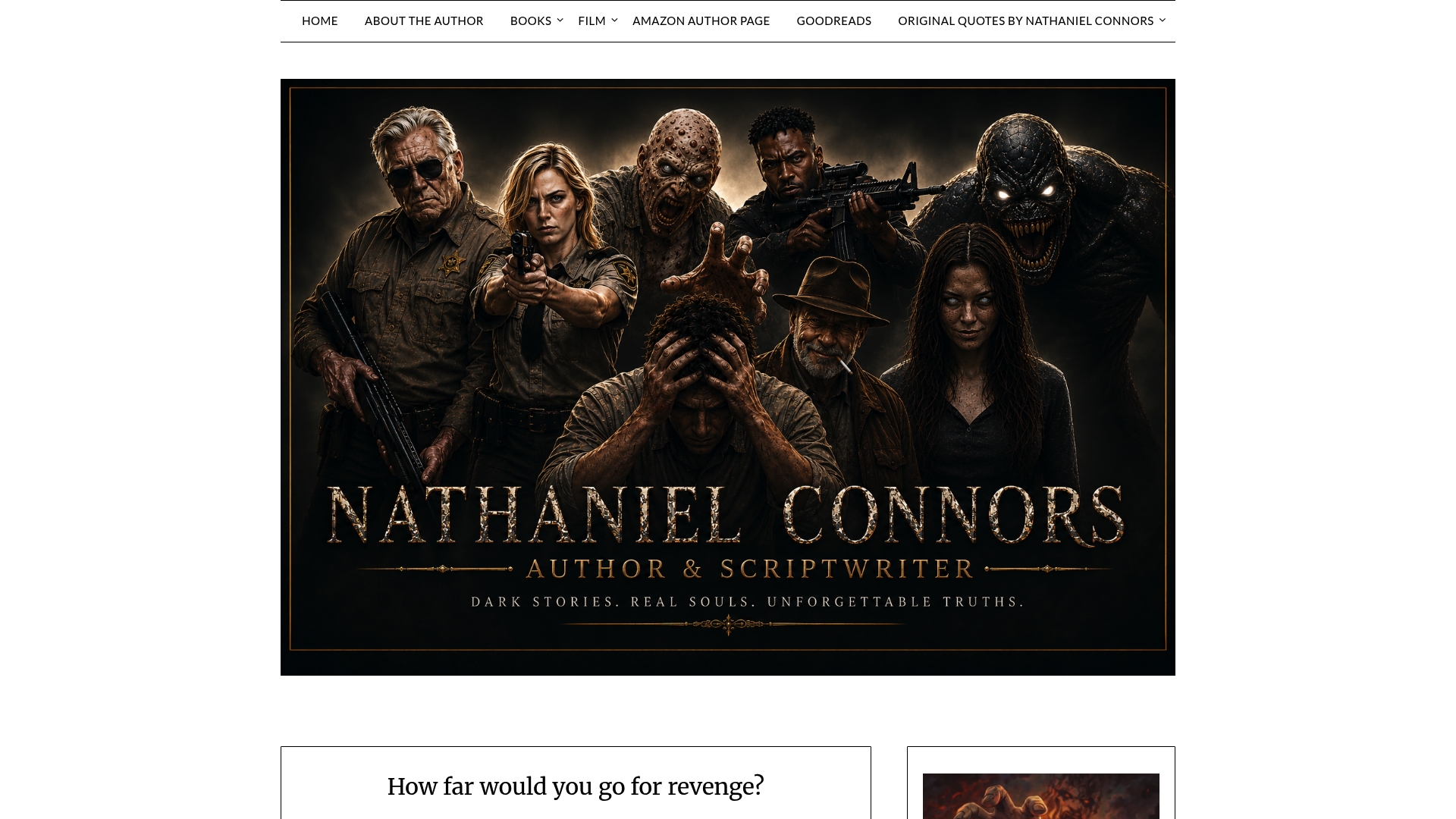
Nathaniel
Start reading
If you want surreal-leaning, psychologically driven dystopian horror, begin with The Nether, or start the Evolution A200 series with A Bubonic Apocalypse. Both are available with Kindle Unlimited, and the full list is on our books page.
FAQ
Can surrealism be horror?
Yes. No Film School says psychological horror is also known as cerebral or surreal horror, depending on the plot. The shared ground is the subconscious: both surrealism and horror work with dreams, distortion and fears that logic cannot dispose of.
What is the difference between surreal horror and psychological horror?
Psychological horror focuses on a mind under strain and often keeps the outside world stable. Surreal horror loosens the world itself, so the reader cannot trust settings, time or events. Many of the best books do both at once, which is why the two terms overlap.
What is a good surreal horror novel to start with?
Annihilation is a common first choice because it pairs a clear narrator with a deeply strange setting, as Kirkus Reviews describes. If you prefer a faster, darker-humored read, try John Dies at the End. If you prefer dystopian stakes, try The Nether.
Are there surreal horror books on Kindle Unlimited?
Yes, the program carries horror across many styles, and our own books are included. Because titles move in and out, check the Amazon listing for the current status before you borrow.
Sources
- No Film School: Defining the Psychological Horror Genre
- Kirkus Reviews: What Goes On in Area X?
- Publishers Weekly: Switchboard by Andrew Post
- LitReactor: 7 Trippy Horror Novels That Will Mess You Up
- Book Riot: Compelling Surreal Horror
- Southwest Review: An Interview with Grace Krilanovich
- The New Yorker: The Horror of the Unreal