Nathaniel Connors | Dystopian Horror & Thriller Fiction

Where every story begins in the dark.

Menu
  • Home
  • About the Author
  • Books
    • The Nether
    • Evolution A200: A Bubonic Apocalypse
    • Stories of a Condemned Soul (Volume One)
  • Film
    • Room 302 (Short Film)
  • Amazon Author Page
  • Goodreads
  • Original Quotes by Nathaniel Connors
    • Dark Quotes
    • What Remains
    • Where Stories Settle
Menu

Month: August 2026

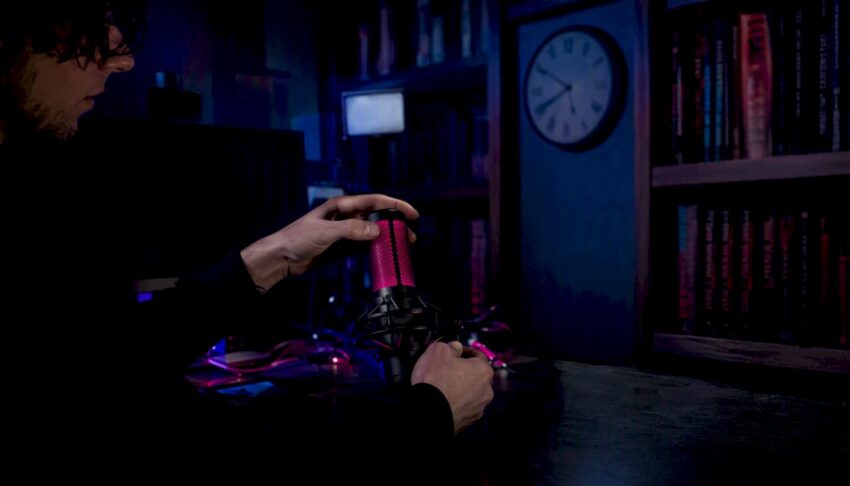
Horror YouTube content creator desk setup

The Best Horror YouTube Channels: 23 Picks by Scare Type

Posted on August 10, 2026August 10, 2026 by NConnors

The best horror YouTube channels split into four distinct experiences: fast narration of internet horror, serialized analog horror, deep film analysis, and investigative paranormal content. Knowing which type you want is the fastest way to find your next obsession.

Here is a quick shortlist by category before the full breakdown:

  • Best narration: Mr. Nightmare, MrBallen, Corpse Husband, Lazy Masquerade
  • Best film analysis: Dead Meat (James A. Janisse), Spooky Astronauts
  • Best investigative/internet horror: Nexpo, Reignbot
  • Best paranormal: Ghost Theory
  • Best list-driven mystery: Dark5

Content warning: several channels below include real-case crime content, strong language, and graphic descriptions. Notes are included per channel.

Key Takeaways

The best horror YouTube channels are defined by format first: match the channel’s delivery style to your attention level and content preference before anything else.

Point Details
Match format to attention Narration channels suit background listening; film analysis and analog horror require focused viewing.
Dead Meat’s scale Dead Meat surpassed 5.94 million subscribers and 2 billion views by 2022, making it the benchmark for film-analysis channels.
Starter video first Watch one suggested starter video and check for a named series before committing to a channel.
Real-case vs. fiction Know whether a channel narrates fiction or real events; that distinction matters for sensitive viewers.
Nathanielconnors For longer-form psychological dread, Nathanielconnors’s dark fiction titles extend the experience beyond what YouTube can sustain.

Table of Contents

  • How these channels were selected
  • The best horror YouTube channels, broken down by what they actually do
  • Honorable mentions worth bookmarking
  • How to choose the right horror channel for your taste
  • If you want more than videos: written horror worth reading
  • A late-night viewing perspective
  • Nathanielconnors: written horror for when YouTube is not enough
  • Sources

How these channels were selected

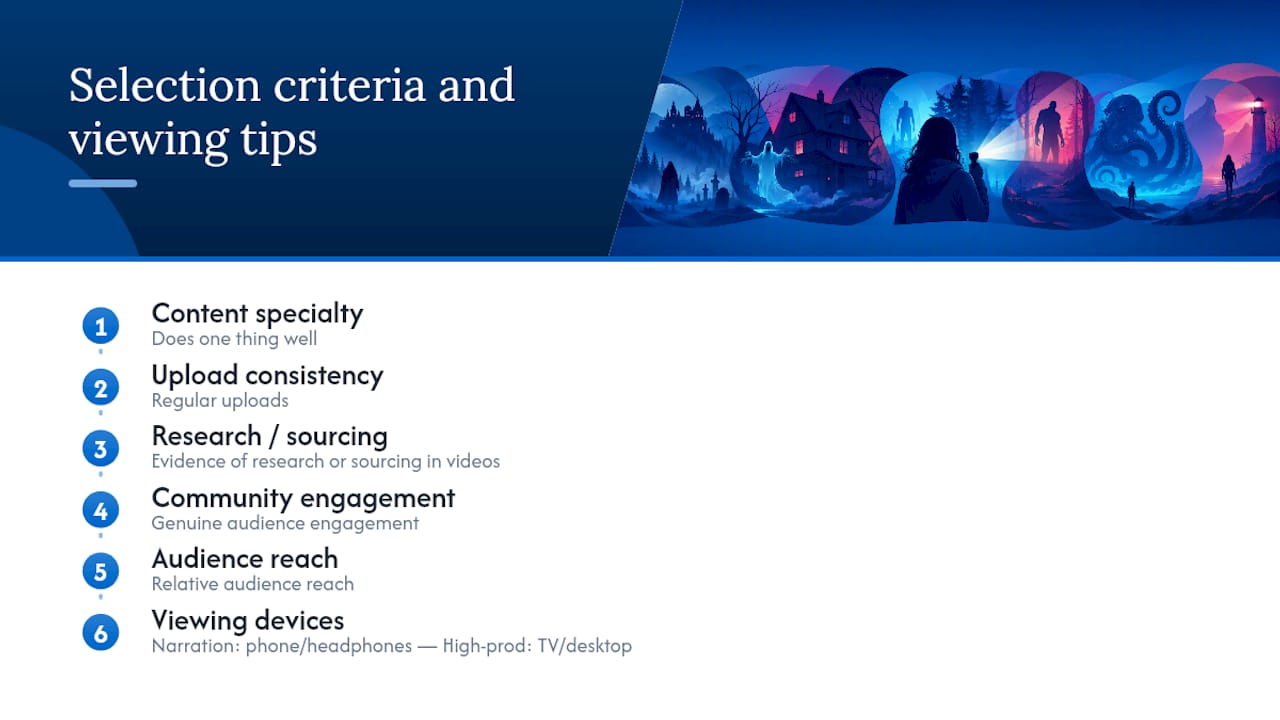
Every channel on this list was evaluated against five criteria: content specialty (does it do one thing well?), upload consistency, evidence of research or sourcing in the videos themselves, community engagement, and relative audience reach. Channels that rely purely on shock value without craft or sourcing were excluded.

As iHorror notes, the channels that earn lasting loyalty treat horror as a craft, not a content farm. Consistent series formats, cited sources, and genuine passion for the genre separate the durable channels from the disposable ones.

One practical note on devices: narration channels work well on your phone with headphones during a commute or before sleep. High-production analog horror and film analysis reward a larger screen, ideally a TV or desktop, with the lights low. That distinction shapes the starter-video recommendations below.

How these channels were selected — overview diagram

The best horror YouTube channels, broken down by what they actually do

The 23 channels below are grouped by primary strength. Each entry covers what the channel does, who it suits, a starter video, and any content warnings worth knowing before you click.

1. Mr. Nightmare

Mr. Nightmare narrates reader-submitted scary stories, mostly drawn from Reddit and viewer emails, in a calm, faceless style that keeps the focus entirely on the story. Videos run 10–20 minutes and upload frequently. WatchMojo ranks him among the most enduring narration channels on the platform, and the volume of content means you will never run out.

Starter video: 3 Terrifying True Camping Horror Stories
Content warnings: Real-case themes, mild language
Best for: Background narration, quick scares


2. MrBallen

MrBallen tells true strange-and-disturbing stories with the pacing of a thriller novelist. Production quality is noticeably higher than most narration channels: custom sound design, deliberate pacing, and a storytelling structure that builds genuine dread before the reveal. He has built one of the largest audiences in the true-mystery space.

Starter video: The Disappearance of Lars Mittank
Content warnings: Real-case crime, some disturbing outcomes
Best for: Well-produced true-story narration


3. Corpse Husband

Corpse Husband narrates viewer-submitted true scary stories in a distinctively deep voice that became something of a cultural phenomenon. The channel is largely inactive for new uploads at this point, but the back catalog is substantial and the narration style remains one of the most imitated on the platform.

Starter video: 3 True Scary Horror Stories
Content warnings: Strong language, disturbing themes
Best for: Deep-voiced narration, viewer-submitted stories


4. Lazy Masquerade

Lazy Masquerade takes a slower, more atmospheric approach to narration than Mr. Nightmare. Stories often focus on regional folklore, rural horror, and lesser-known creepypastas rather than Reddit staples. The calm delivery makes it genuinely unsettling in a way that louder channels rarely achieve.

Starter video: 3 True Scary Stories from the Deep South
Content warnings: Mild language, some real-case content
Best for: Slow-burn narrations, regional folklore


5. Dead Meat (James A. Janisse)

James A. Janisse’s Dead Meat is the gold standard for horror film analysis on YouTube. The flagship series, The Kill Count, breaks down every kill in a horror film with production trivia, body-count tallies, and genuine enthusiasm for the genre. By 2022, the channel had become one of the most popular horror film analysis channels on YouTube, reflecting a large and dedicated audience. That scale reflects what happens when a creator combines consistent format with deep craft knowledge.

Starter video: Halloween (1978) KILL COUNT
Content warnings: Gore descriptions, strong language
Best for: Film analysis, production trivia, horror history


6. Spooky Astronauts

Spooky Astronauts brings a female-led critical perspective to horror cinema, covering disturbing and cult films with genuine analytical depth. The tone is conversational but substantive, closer to a film-studies discussion than a reaction video. A strong pick for viewers who want their horror with context.

Starter video: Why Hereditary Is a Masterclass in Grief Horror
Content warnings: Discussion of gore, disturbing film content
Best for: Film criticism, deep dives into cult horror


7. Nexpo

Nexpo produces documentary-style investigations into internet mysteries, creepypastas, and genuinely disturbing corners of the web. Videos run long (30–60 minutes) and are heavily researched, with citations and archival material woven into the presentation. Analog horror’s rise as a serialized subgenre has made channels like Nexpo more relevant, since he often covers the stories behind the stories.

Starter video: The Disturbing World of Online Hurtcore
Content warnings: Disturbing real-case content, strong language, mature themes
Best for: Long-form investigative horror, internet mysteries


8. Reignbot

Reignbot investigates internet mysteries and creepypastas with a focus on sourcing and archival material. The approach is methodical: she traces the origins of viral horror content and separates fact from fiction. Videos run 15–30 minutes and upload at a moderate cadence.

Starter video: The Disturbing History of Mereana Mordegard Glesgorv
Content warnings: Disturbing imagery discussion, some real-case content
Best for: Research-driven internet horror


9. Ghost Theory

Ghost Theory covers paranormal investigation with a documentary sensibility. Field investigations, on-site footage, and evidence-led analysis set it apart from channels that simply narrate ghost stories. If you want to watch someone actually go to the location rather than just talk about it, this is the channel.

Starter video: Investigating the Most Haunted Location in America
Content warnings: Mild language, some disturbing imagery
Best for: Paranormal investigation, on-site content


10. Dark5

Dark5 produces polished countdown videos covering creepy facts, mysterious phenomena, and obscure history. Videos are short (5–10 minutes), tightly edited, and heavy on archival footage. The format is closer to a documentary clip than a narration, which makes it a good entry point for viewers who are not yet committed to longer content.

Starter video: 5 Scariest Things Caught on Camera
Content warnings: Some disturbing imagery, real-case content
Best for: List-driven mystery, quick scares


11. Caspersight

Caspersight pairs narration with short atmospheric reenactments, giving the stories a visual dimension most narration channels skip. Production is modest but effective: ambient sound design and careful framing create a mood that straight narration cannot replicate.

Starter video: True Scary Stories: The Visitor
Content warnings: Mild language, some disturbing visuals
Best for: Visualized narrations, ambient production


12. GloomyHouse

GloomyHouse curates and narrates classic creepypastas with a traditional approach. No frills, no heavy production, just well-chosen stories delivered clearly. A reliable pick for listeners who want the original creepypasta canon rather than Reddit-sourced submissions.

Starter video: The Russian Sleep Experiment (Narrated)
Content warnings: Disturbing themes, some graphic content
Best for: Classic creepypasta narrations


Comparison table

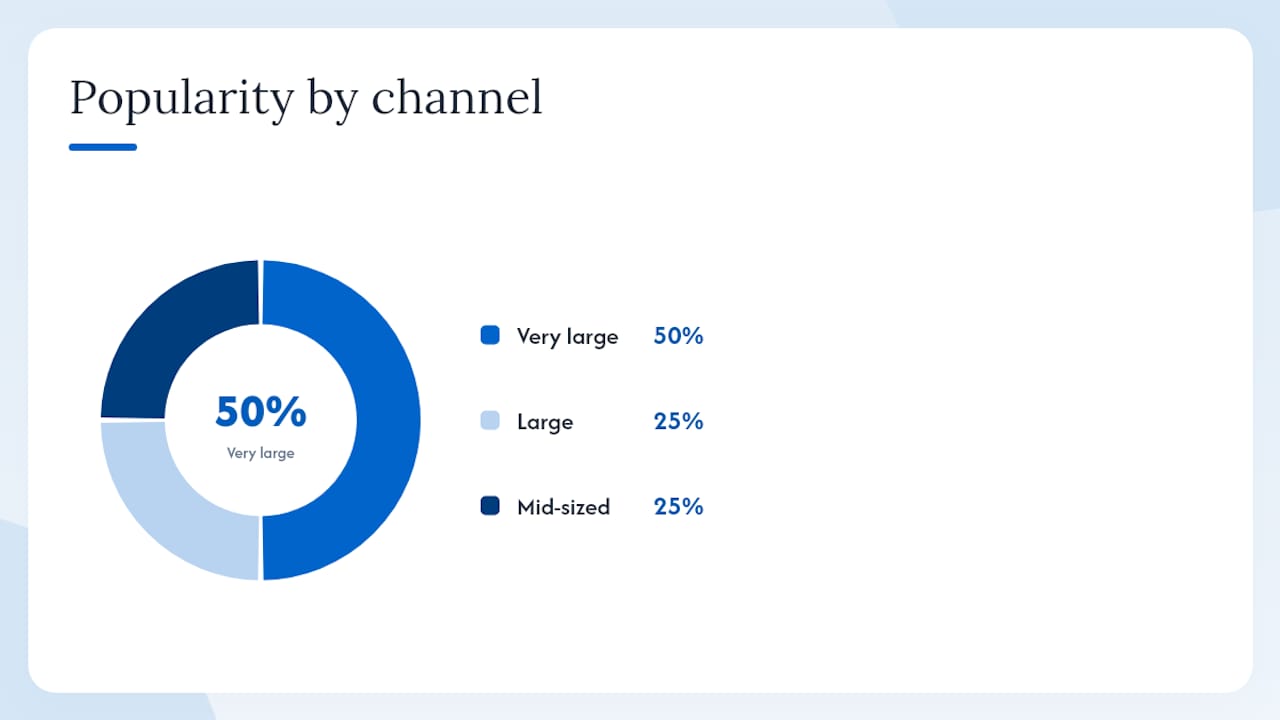
Channel Best for Typical length Tone Starter video Content warnings Popularity
Mr. Nightmare Narration 10–20 min Calm, creepy 3 True Camping Horror Stories Real-case, mild language Very large
MrBallen True-story narration 15–25 min Thriller-paced Lars Mittank Disappearance Real-case crime Very large
Corpse Husband Deep-voice narration 10–20 min Dark, atmospheric 3 True Scary Horror Stories Language, disturbing themes Very large
Lazy Masquerade Slow-burn narration 15–30 min Eerie, calm Deep South Horror Stories Mild language, real-case Large
Dead Meat Film analysis 30–60 min Enthusiastic, comedic Halloween (1978) Kill Count Gore, language Very large
Spooky Astronauts Film criticism 20–60 min Analytical, conversational Hereditary deep dive Gore discussion Mid-sized
Nexpo Investigative/internet horror 30–60 min Documentary, serious Online Hurtcore Disturbing, mature Large
Reignbot Internet horror research 15–30 min Methodical, investigative Mereana Mordegard Glesgorv Disturbing imagery Mid-sized
Ghost Theory Paranormal investigation 20–60 min Documentary Most Haunted Location Mild language Mid-sized
Dark5 List-driven mystery 5–10 min Polished, factual 5 Scariest on Camera Real-case, imagery Large
Caspersight Visualized narration 10–20 min Atmospheric The Visitor Mild language, visuals Niche
GloomyHouse Classic creepypasta 10–25 min Traditional, creepy Russian Sleep Experiment Disturbing themes Niche

Comparison infographic of top horror YouTube channels

Honorable mentions worth bookmarking

These channels did not make the main block, but each fills a specific gap the top twelve leave open.

  • Amazing PA — Paranormal investigation with a regional American focus; good for viewers who want location-specific ghost content.
  • Swamp Dweller — Narrates Reddit horror with a Southern Gothic atmosphere; a strong alternative to Mr. Nightmare for listeners who want a different regional flavor.
  • Rob Gavagan — Covers internet mysteries and disturbing true stories with a dry, deadpan delivery. Uploads are infrequent but consistently well-researched.
  • TEX REX — Short, punchy horror countdowns with a heavy focus on obscure and underreported cases.
  • Eskify — List-format videos covering creepy facts and mysterious phenomena; similar to Dark5 but with a broader topic range.
  • Mr. Creepypasta — One of the earliest and most recognized narrators in the space, highlighted by WatchMojo’s horror storyteller roundup. Upload cadence has slowed, but the back catalog is extensive.
  • Slapped Hand — Niche channel covering survival horror video games with a horror-fan sensibility; a good pick if you want horror content that crosses into gaming.
  • SHN Survival Horror Network — Focused on survival horror game playthroughs with atmospheric commentary; pairs well with Slapped Hand for gaming-adjacent horror.
  • Scary Fairy Godmother — Female-led narration channel with a focus on folklore and fairy-tale horror; a genuinely niche pick for listeners who want horror rooted in myth.
  • ter77 — Analog-style horror shorts and experimental horror content; uploads rarely but the aesthetic is distinctive.

How to choose the right horror channel for your taste

The single best way to choose is to match the channel’s delivery format to how much attention you actually want to give it. That one decision eliminates half the list immediately.

Ask yourself these questions before you subscribe:

  • Do you want background audio or focused viewing? Narration channels (Mr. Nightmare, Lazy Masquerade, MrBallen) work as background listening. Analog horror, film analysis, and investigative channels (Nexpo, Dead Meat, Ghost Theory) require your full attention to get anything out of them.
  • Do you prefer fiction or real-case content? Creepypasta narrators (GloomyHouse, Mr. Creepypasta) deal in fiction. MrBallen, Reignbot, and Ghost Theory deal in real events and real places. That distinction matters if you are sensitive to true-crime content.
  • How long do you want each video to be? Dark5 and TEX REX sit at 5–10 minutes. Dead Meat and Nexpo regularly run 45–60 minutes. Neither is better; they serve different moods.
  • Do you want a community or just content? Channels with active comment sections and viewer submissions (Mr. Nightmare, Corpse Husband’s back catalog) have a participatory feel. Film-analysis channels tend toward a more passive viewing experience.

As Collider’s analog horror roundup points out, serialized analog horror rewards binge-watching and theory-building in a way that single narration videos simply cannot. If you enjoy piecing together lore across episodes, that subgenre is worth exploring separately.

Pro Tip: Watch the suggested starter video for any channel before subscribing. Then check whether the channel has a named series or playlist. A channel with a strong recurring series (Dead Meat’s Kill Count, Nexpo’s investigation arcs) will hold your attention far longer than one that uploads standalone videos with no connective thread.

If you want more than videos: written horror worth reading

Viewers who gravitate toward psychological horror on YouTube, particularly the investigative and deep-dive channels, often find that the format leaves them wanting more. A 45-minute Nexpo video scratches a specific itch, but it ends. Books do not.

Three Nathanielconnors titles worth picking up if you want longer-form dread:

  • “The Nether” — A dark supernatural story that explores guilt and psychological unraveling; a natural fit for viewers who enjoy horror that gets inside a character’s head rather than just staging scares.
  • “Stories of a Condemned Soul” — A collection of dark narratives that share the anthology structure of narration channels, but with the depth that only long-form fiction can deliver.
  • “Evolution A200: A Bubonic Apocalypse” — Dystopian horror for viewers drawn to Nexpo-style investigations into systems that go catastrophically wrong; the scale is larger and the dread is slower-building.

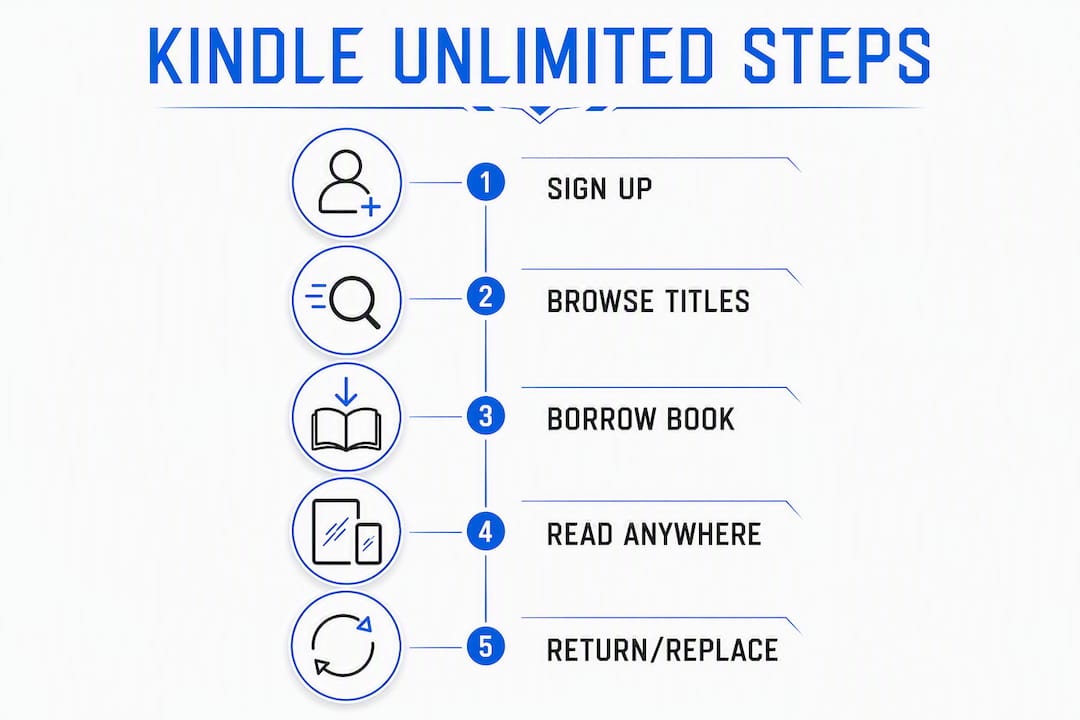
All three are available on Kindle Unlimited psychological thrillers for subscribers, meaning no additional cost if you already have a subscription.

A late-night viewing perspective

For investigative horror, Nexpo is the go-to. Watch on a desktop or TV with headphones, lights off, and no distractions. The documentary pacing rewards full attention, and the archival footage lands harder on a larger screen. For narration, Mr. Nightmare or Lazy Masquerade on your phone before sleep works well, though a quick note: if you are sensitive to real-case crime content, check the video description before you start. Both channels mix fiction and real-case stories without always flagging the difference upfront.

Dead Meat is the pick for a social watch. The Kill Count format is genuinely funny alongside the horror, which makes it the rare horror channel you can watch with someone who does not normally enjoy the genre.

Nathanielconnors: written horror for when YouTube is not enough

YouTube horror channels are built for short sessions. Even the best ones, Nexpo’s 60-minute investigations or Dead Meat’s Kill Count marathons, eventually end. If you find yourself wanting the dread to last longer, Nathanielconnors’s dystopian horror novels are a natural next step: eight haunting reads that go deeper into psychological darkness than any video format can sustain.

Nathanielconnors

The books are available in ebook and paperback on Amazon, and free to read for Kindle Unlimited subscribers. For readers who prefer shorter, more intense experiences, short dystopian novels for one-sitting dread covers compact reads that hit hard and finish fast. Browse the full list and find the title that matches the kind of horror you already watch.

Sources

  • James A. Janisse
  • Watchmojo
  • 25 Best Analog Horror Series on YouTube
  • 7 Horror YouTubers We “Highly HIGHLY” Recommend – iHorror
Hands holding existential horror book in dark nook

Existential Horror Books That Make You Question Reality

Posted on August 9, 2026August 9, 2026 by NConnors

The best existential horror books to start with right now: Annihilation by Jeff VanderMeer (reality dissolves before your eyes), Zone One by Colson Whitehead (survival stripped of meaning), The Ballad of Black Tom by Victor LaValle (cosmic indifference with a racial lens), Foe by Iain Reid (identity horror at its most claustrophobic), A Short Stay in Hell by Steven L. Peck (eternity as punishment), and The Nether by Nathaniel Connors (the psychological monsters we carry inside us). Each of these works earns the label not through jump scares or gore but through a specific, creeping dread: the suspicion that you cannot trust your own perception, your own self, or the world’s indifference to your existence.

A quick tone note before you dive in: several of these titles contain body horror, grief, and violence. The BookRiot roundup of existential horror novels is a useful companion if you want even more options after working through this list.


Key Takeaways

Existential horror fiction works because it turns the dread inward, making identity, perception, and meaning the source of terror rather than any external monster.

Point Details
Start short Novellas and short story collections calibrate your tolerance for ambiguity before long slow-burn novels.
Know your dread type Interior horror (identity, perception) differs from cosmic horror (scale, indifference); pick accordingly.
Trigger awareness Body horror, grief, suicide ideation, and psychological manipulation appear across the subgenre; check notes before reading.
Nathanielconnors titles The Nether, Stories of a Condemned Soul, and Evolution A200 are available free on Kindle Unlimited and explore existential themes through character-driven supernatural fiction.
Mix canonical and contemporary Pair a classic (Kafka, Sartre) with a modern title to understand how the subgenre has evolved.

Table of Contents

  • The best existential horror books, annotated
  • What actually makes a book “existential horror”
  • How to pick the right existential horror book for your taste
  • Authors who shaped existential horror and where to start
  • Nathaniel Connors recommends: author picks
  • Why existential horror matters right now
  • Read dark fiction by Nathaniel Connors
  • Sources

The best existential horror books, annotated

These ten titles represent the range of the subgenre: quiet literary dread, cosmic weirdness, psychological instability, and dystopian nihilism. Each entry includes a short reason it belongs here, a pace note, and a trigger flag where relevant.

1. Annihilation — Jeff VanderMeer

The Southern Reach trilogy opens with a biologist entering Area X, a region that has swallowed every expedition before hers. VanderMeer never explains what Area X is. The horror lives in that refusal. Identity erodes chapter by chapter, and by the end you genuinely cannot say whether the narrator is still herself. Fast-paced for the subgenre; reads in a single sitting. Trigger: body horror, psychological dissolution. Best for readers who want cosmic dread delivered through literary precision.

2. Zone One — Colson Whitehead

Whitehead’s zombie novel is almost aggressively quiet. The undead are background noise. What Whitehead actually writes about is the exhaustion of surviving something that has already taken everything worth surviving for. The prose is dense and elliptical, the plot minimal. Trigger: grief, violence, nihilism. Best for readers who find conventional horror too loud.

3. The Ballad of Black Tom — Victor LaValle

A direct rewrite of Lovecraft’s “The Horror at Red Hook,” told from the perspective of a Black man in 1920s Harlem. LaValle keeps the cosmic indifference but strips away Lovecraft’s racism and replaces it with something sharper: the argument that an indifferent universe is still preferable to a hostile one. Short, precise, devastating.

Trigger: racism, violence. Best for readers who want existential dread with genuine moral weight.

4. Foe — Iain Reid

A couple living on an isolated farm receives a visitor who informs the husband he has been selected for an off-world program. What follows is a slow, suffocating examination of what makes a person irreplaceable, and whether a perfect copy of you would still be you. Reid writes in short, pressurized sentences that build unbearable tension. Trigger: psychological manipulation, identity horror. Best for readers who want the dread to come from inside the house, not outside it.

5. Hammers on Bone — Cassandra Khaw

A noir novella in which a private detective who is also an ancient, inhuman thing takes a case from a child trying to protect his family. Khaw writes in a style so dense with imagery it borders on prose poetry. The horror is ontological: the detective’s perspective makes human suffering look small and strange. Trigger: child abuse, violence, body horror. Best for readers who want weird fiction with a hard emotional core.

6. You Should Have Left — Daniel Kehlmann

A screenwriter rents a remote house to finish a script. The house does not behave geometrically. Rooms appear that should not exist; notes he writes seem to answer themselves. Kehlmann keeps the whole thing under 100 pages, which is exactly the right length: any longer and the dread would collapse into explanation. Trigger: paranoia, psychological instability. Best for readers who want their existential horror fast and airtight.

7. A Short Stay in Hell — Steven L. Peck

A devout Mormon dies and discovers the afterlife is a Borges-style infinite library. He must find the single book that contains the story of his life. The math of the task makes the horror: the library is so large that finding the book would take longer than the current age of the universe, many times over. Peck turns a thought experiment into something genuinely harrowing. Trigger: existential despair, suicide ideation. Best for readers who want philosophical horror with a clean, almost clinical execution.

8. The Nether — Nathaniel Connors

Connors builds his horror from the inside out. The Nether follows characters whose worst impulses and deepest guilts take on a life of their own, pressing against the boundary between psychological reality and something darker. The TV Tropes breakdown of existential horror identifies identity collapse and doubts about free will as the genre’s core concerns; Connors works both with precision. Trigger: psychological violence, guilt, supernatural horror. Best for readers who want character-driven dread with a supernatural edge.

9. Stories of a Condemned Soul — Nathaniel Connors

A collection of dark supernatural stories that circle themes of revenge, guilt, and the cost of choices made in the dark. Short-story format makes this an ideal entry point for readers new to Connors’ work, or for anyone who wants to test their tolerance for ambiguity before committing to a novel-length read. Trigger: violence, moral horror, supernatural themes. Best for readers who prefer their existential dread in concentrated doses.

10. Evolution A200: A Bubonic Apocalypse — Nathaniel Connors

Connors takes the apocalypse seriously as a philosophical event, not just a backdrop. When civilization collapses under a plague, what survives of human identity and meaning? The dystopian frame pushes the existential questions outward from individual psychology to collective survival. Readers who enjoy dystopian horror novels that ask what humanity is worth will find this one hard to put down. Trigger: plague, death, violence. Best for readers who want their existential dread at civilizational scale.

Empty dystopian city street at dawn


What actually makes a book “existential horror”

Existential horror is fiction that generates dread not from external monsters but from the collapse of the frameworks we use to make sense of ourselves and the world.

The Game Rant explainer on the existential horror genre traces the subgenre’s roots to existentialist philosophy: Kierkegaard’s anxiety, Sartre’s nausea, Camus’s absurdism. The horror arrives when a character, or a reader, confronts the possibility that life has no inherent meaning, that identity is unstable, or that the universe is not merely dangerous but genuinely indifferent.

TV Tropes’ entry on existential horror identifies the core motifs: questions about personal identity, doubts about free will, and the terrifying unreliability of perception. Protagonists in these stories often cannot trust what they see, what they remember, or whether their choices mean anything.

This is what separates existential horror from straightforward cosmic horror. Lovecraftian cosmic horror emphasizes the smallness of humanity against incomprehensible forces. Existential horror turns that camera inward: the threat is not just out there, it is in the structure of selfhood itself. ScreenRant’s overview of the subgenre puts it well: existential horror emphasizes individual loneliness and ambiguity in a way that cosmic horror, with its grand inhuman scales, often does not.

Formal experimentation is common in the best examples. Fragmented narration, unreliable narrators, and metafictional structures all produce what Brad Baumgartner calls weird mysticism: a mode of writing that uses negative space and philosophical pessimism to destabilize the reader’s grip on what is real.


How to pick the right existential horror book for your taste

Start by deciding whether you want the dread to come from inside a character’s mind or from outside it, then match pace and length to how much ambiguity you can sit with comfortably.

A short selection checklist:

  1. Do you want quiet interior dread or cosmic-scale strangeness? (Interior: Foe, You Should Have Left. Cosmic: Annihilation, A Short Stay in Hell.)
  2. Do you want a novel or something shorter? (Under 150 pages: You Should Have Left, The Ballad of Black Tom, Hammers on Bone, Stories of a Condemned Soul.)
  3. Are there triggers you need to avoid? (Check the trigger notes in the annotated list above.)
  4. Do you want philosophical payoff or sustained atmosphere? (Payoff: A Short Stay in Hell, The Ballad of Black Tom. Atmosphere: Zone One, Annihilation.)

Three reader profiles:

  • The Slow-Burn Thinker — You want prose that earns its dread through accumulation. Start with Zone One or Foe.
  • The Weird-World Explorer — You want reality to bend. Start with Annihilation or Hammers on Bone.
  • The Psychological Edge — You want the horror to come from character, not concept. Start with The Nether or Stories of a Condemned Soul.
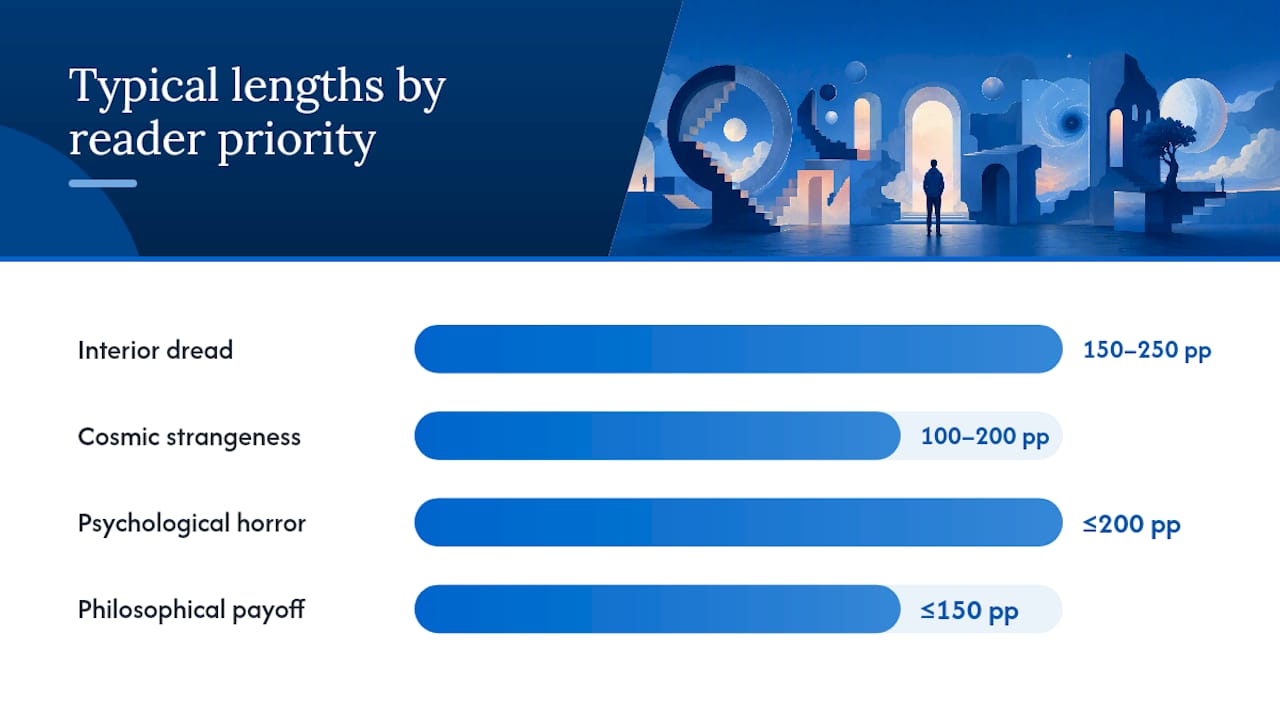
Reader priority Tone Ambiguity level Good entry titles Typical length
Interior dread Literary, quiet High Foe, Zone One 150–250 pages
Cosmic strangeness Weird, atmospheric Very high Annihilation, A Short Stay in Hell 100–200 pages
Psychological horror Tense, character-driven Moderate The Nether, You Should Have Left Under 200 pages
Philosophical payoff Conceptual, precise Moderate The Ballad of Black Tom, A Short Stay in Hell Under 150 pages

Pro Tip: Start with a novella or short-story collection before committing to a long, slow-burn novel. The BookRiot list confirms that readers new to the subgenre often find the ambiguity easier to absorb in smaller doses. Short works like Hammers on Bone or Stories of a Condemned Soul calibrate your tolerance before you step into something like Zone One, which demands patience.

For readers who want to explore the full range of horror subgenres before committing to existential horror specifically, that overview maps the territory well.


How to pick the right existential horror book for your taste — overview diagram

Authors who shaped existential horror and where to start

The subgenre has roots that run back further than most readers expect.

Franz Kafka is the obvious starting point. The Metamorphosis (1915) is the cleanest demonstration of identity horror in literary history: a man wakes up as an insect and the story is not about the transformation but about what it reveals about his family, his work, and his own sense of self. It is a starter text. Read it before anything else on this list if you have not already.

Fyodor Dostoevsky wrote proto-existential horror in Notes from Underground (1864), a novella narrated by a man who has thought himself into paralysis. The horror is entirely interior: a mind that cannot stop examining itself. Advanced read, but short.

H.P. Lovecraft is the most direct ancestor of the cosmic branch of the subgenre. Academic work, including H.P. Lovecraft and Modern Philosophy from McFarland, places his imagery in conversation with phenomenology, arguing that his sense of the ineffable maps onto genuine philosophical questions about existence and embodiment. Start with “The Call of Cthulhu” or “The Shadow over Innsmouth.” Both are short and demonstrate his technique without the racism that saturates some of his longer work.

Thomas Ligotti is the most philosophically rigorous horror writer working today. His nonfiction book The Conspiracy Against the Human Race frames horror as a direct confrontation with meaninglessness. His fiction collections, particularly Songs of a Dead Dreamer, are advanced reads: dense, pessimistic, and formally strange. Brad Baumgartner’s Weird Mysticism places Ligotti alongside Georges Bataille as a practitioner of negative writing that probes the limits of reality itself.

Jean-Paul Sartre’s Nausea (1938) is not marketed as horror, but it functions as one of the most effective existential horror novels ever written. The protagonist’s growing inability to find stable meaning in objects, people, or his own existence produces a dread that is entirely philosophical and entirely physical. Starter text for readers comfortable with literary fiction.


Nathaniel Connors recommends: author picks

Nathaniel Connors writes dark supernatural fiction that sits at the intersection of psychological horror and existential dread. His work at Nathanielconnors explores the monsters that live inside human psychology as much as outside it.

His three titles in this genre:

  • The Nether — A supernatural horror novel that uses guilt and identity collapse as its primary weapons. Characters cannot be certain whether the darkness pursuing them is external or a projection of their own worst selves. Available in ebook, paperback, and free on Kindle Unlimited.
  • Stories of a Condemned Soul — A short-story collection built around revenge, guilt, and the cost of moral failure. The format makes it ideal for readers who want to sample Connors’ voice before committing to a novel. Each story is self-contained but the thematic weight accumulates. Available in ebook, paperback, and on Kindle Unlimited. Read it at Stories of a Condemned Soul.
  • Evolution A200: A Bubonic Apocalypse — Dystopian horror that asks what human identity means when civilization is gone. The existential questions scale from individual to collective, making it a natural next read after something like Zone One. Available in ebook, paperback, and on Kindle Unlimited.

All three titles are available to Kindle Unlimited subscribers at no additional cost, which makes them a low-friction entry point for readers who want to try the author’s work before buying. For readers who want more Kindle Unlimited horror options, the best Kindle Unlimited horror books list is a useful next stop.


Why existential horror matters right now

The subgenre has never been more relevant, and the reason is not complicated: existential horror gives readers a safe container for the dread that has no clean object.

Most horror is about a specific threat. You can name it, run from it, kill it. Existential horror is about the dread that remains after you have done all of that and the question is still there: what does any of this mean? That is not a horror-fiction problem. That is a human problem, and fiction is one of the few places you can sit with it without needing to resolve it.

ScreenRant’s analysis of the subgenre’s current cultural relevance points to individual loneliness and ambiguity as the defining anxieties of the moment. Existential horror fiction does not fix those anxieties. It takes them seriously, which is often more useful. Reading Annihilation or A Short Stay in Hell does not answer the question of whether your choices matter. It makes the question feel less isolating, because someone else thought it was worth writing a whole book about.


Read dark fiction by Nathaniel Connors

If the titles in this list pulled you toward character-driven psychological dread, Nathaniel Connors’ catalog belongs on your shelf. His books do not offer easy resolutions or comfortable endings. They sit with the darkness and ask what it reveals about the people inside it.

Nathanielconnors

All three of his titles — The Nether, Stories of a Condemned Soul, and Evolution A200: A Bubonic Apocalypse — are available in ebook and paperback on Amazon, and free to read for Kindle Unlimited subscribers. For readers who want to start with his psychological thriller work specifically, the Kindle Unlimited psychological thrillers page has the full catalog with format details. Pick one up tonight.


Sources

  • Existential Horror – TV Tropes
  • Weird Mysticism (Brad Baumgartner, Bloomsbury / Lehigh University Press)
  • 10 Existential Horror Novels to Make You Question Everything (BookRiot)
  • The Existential Horror Genre Explained (Game Rant)
  • Existential horror subgenre explained (ScreenRant)
  • The Conspiracy against the Human Race by Thomas Ligotti (Penguin Random House)

Recommended

  • Best Dystopian Horror Novels: 8 Haunting Reads for 2026
  • Books Like House of Leaves: Dark Reads for 2026
  • Short Dystopian Novels for One-Sitting Dread
Stack of dark fiction novels in atmospheric reading nook

Top 10 Books Like Annihilation for Weird Fiction Fans

Posted on August 8, 2026August 8, 2026 by NConnors

If you loved Jeff VanderMeer’s Annihilation, the best books to read next are Piranesi, House of Leaves, Roadside Picnic, Solaris, The Fisherman, The Ruins, Never Let Me Go, The Nether, Roadside Picnic, and House of Leaves. More precisely, the ten titles below capture the same slow-burn dread, ecological menace, and narrative ambiguity that make Annihilation so hard to shake. Most contain graphic or existential themes; check individual content warnings before starting.

Quick shortlist:

  • Piranesi by Susanna Clarke — a labyrinthine house that breathes like Area X
  • House of Leaves by Mark Z. Danielewski — architectural horror that rewrites reality
  • Roadside Picnic by Arkady and Boris Strugatsky — alien contamination without alien contact
  • Solaris by Stanisław Lem — an ocean that thinks, and refuses to explain itself
  • The Fisherman by John Langan — cosmic dread dressed as a fishing trip
  • The Ruins by Scott Smith — a pristine wilderness that turns predatory
  • Never Let Me Go by Kazuo Ishiguro — quiet, insular horror with no monsters but plenty of dread
  • The Nether by Nathaniel Connors — psychological darkness and moral ambiguity in the supernatural vein
  • Stories of a Condemned Soul by Nathaniel Connors — guilt, revenge, and the monsters we carry inside
  • Evolution A200: A Bubonic Apocalypse by Nathaniel Connors — dystopian horror where biology becomes the enemy

Pro Tip: Before committing to a long novel, check your library’s Libby app for digital loans — most of these titles are available, and sampling the first chapter costs nothing.


Key Takeaways

The single best next read after Annihilation depends on whether you want lyrical quiet dread (Piranesi, Never Let Me Go), cosmic indifference (Solaris), physical biological horror (The Ruins), or psychological supernatural darkness (The Nether by Nathaniel Connors).

Point Details
Best for lyrical dread Piranesi and Never Let Me Go deliver quiet, slow-burn horror with no graphic gore.
Best for cosmic/ecological horror Solaris and Roadside Picnic treat the unknown as an indifferent presence, not a solvable puzzle.
Best short reads Stories of a Condemned Soul and Roadside Picnic are the shortest, most intense options on the list.
Content warnings matter Titles like The Ruins and House of Leaves carry graphic body horror; check before starting.
Nathanielconnors’ picks The Nether and Stories of a Condemned Soul are available on Kindle Unlimited and align with Annihilation’s psychological depth.

Table of Contents

  • The 10 best novels like Annihilation, fully annotated
  • 1. Piranesi by Susanna Clarke
  • 2. House of Leaves by Mark Z. Danielewski
  • 3. Roadside Picnic by Arkady and Boris Strugatsky
  • 4. Solaris by Stanisław Lem
  • 5. The Fisherman by John Langan
  • 6. The Ruins by Scott Smith
  • 7. Never Let Me Go by Kazuo Ishiguro
  • 8. The Nether by Nathaniel Connors
  • 9. Stories of a Condemned Soul by Nathaniel Connors
  • 10. Evolution A200: A Bubonic Apocalypse by Nathaniel Connors
  • How to pick the right read for your mood right now
  • Why Nathaniel Connors’ books belong on this list
  • How Annihilation fits into the Southern Reach Trilogy
  • Authors whose style runs parallel to VanderMeer’s
  • What ecological and weird horror actually is as a genre
  • Why weird and ecological horror keeps pulling me back
  • Nathaniel Connors’ dark fiction for readers who want more
  • Further reading and primary sources

The 10 best novels like Annihilation, fully annotated

Kirkus Reviews explicitly recommends several of these titles as Southern Reach companions, and ThePortalist’s roundup and MeetNewBooks’ community list confirm the same core titles surface repeatedly across reader communities. Here is what each one actually delivers.

1. Piranesi by Susanna Clarke

A man lives inside an infinite house of tidal halls and marble statues, cataloging its tides and its dead. He has no memory of the outside world, and neither does the reader, for most of the book. Clarke’s prose is precise and eerily calm, which makes the wrongness underneath it land harder. The atmosphere is pure Area X: a space that has its own logic, its own rules, and no interest in explaining itself to you.

Why it’s similar: Unreliable narrator, a place that functions as a living entity, slow revelation of a horror that was always in plain sight.
Best for: Readers who want lyrical, quiet dread over gore.
Content warning: Existential themes; mild psychological disorientation.
US availability: Paperback, ebook, and audiobook widely available; check Bookshop.org for independent retail.

2. House of Leaves by Mark Z. Danielewski

A house is slightly larger on the inside than the outside. That single fact unravels everything. Danielewski’s novel is part academic footnote, part found-document horror, part love story, and it uses the physical page as a tool of disorientation. Readers who loved Annihilation’s unreliable field notes will feel immediately at home, and immediately unsettled.

Why it’s similar: Epistolary/found-document structure, a space that defies physics, layered narrators who cannot be trusted.
Best for: Readers who want formal experimentation alongside the dread.
Content warning: Body horror, graphic violence, psychological breakdown.
US availability: Paperback and ebook available; Bookshop.org carries it.

3. Roadside Picnic by Arkady and Boris Strugatsky

Aliens visited Earth, left behind six Zones of inexplicable debris, and departed without making contact. The Strugatskys never show you the aliens. What you get instead is the Zone itself: a landscape that kills in ways that feel almost casual, full of objects that do impossible things and have no names yet. The novel’s central metaphor — humanity as the ants left behind after a roadside picnic — is one of science fiction’s most quietly devastating ideas.

Alien contaminated wilderness with strange debris

Why it’s similar: Alien presence felt only through its effects, ecological contamination, no tidy answers.
Best for: Readers who want hard-edged prose and philosophical weight.
Content warning: Violence, existential themes.
US availability: Paperback and ebook widely available.

4. Solaris by Stanisław Lem

A sentient ocean covers the planet Solaris. It generates physical manifestations of the researchers’ deepest memories and traumas, and it never explains why. Lem’s novel is the canonical example of fiction that treats the unknown as an active presence rather than a puzzle to be solved. Critics of weird fiction frequently cite Solaris as the book that proved science fiction could refuse its own genre conventions.

Why it’s similar: The unknown as character, psychological projection, no resolution.
Best for: Readers who want cosmic-scale contact fiction with literary density.
Content warning: Existential despair, psychological distress.
US availability: Multiple translations in paperback and ebook.

5. The Fisherman by John Langan

Two widowers bond over fishing and end up hearing a story about a trench in the Catskills that leads somewhere older than the world. Langan layers a nested narrative inside a nested narrative, and the horror builds so gradually you barely notice until you are already in it. The ecological dread here is specifically American: familiar woods, familiar water, something ancient underneath.

Why it’s similar: Slow-burn pacing, cosmic horror rooted in landscape, nested unreliable narration.
Best for: Readers who want literary weird fiction with a distinctly American flavor.
Content warning: Body horror, grief, existential themes.
US availability: Paperback and ebook available.

6. The Ruins by Scott Smith

Four tourists in Mexico stumble onto a Mayan ruin covered in vines. The vines are not passive. Smith’s novel is the most viscerally physical entry on this list: the horror is biological, relentless, and deeply uncomfortable. Kirkus specifically recommends it for its pristine-wilderness-turned-deadly atmosphere, which maps directly onto Area X’s sense of a natural world that has turned against human bodies.

Why it’s similar: Ecological menace, biological horror, a landscape with agency.
Best for: Readers who want their dread physical and immediate rather than philosophical.
Content warning: Graphic body horror, graphic violence, sustained gore.
US availability: Paperback and ebook widely available.

7. Never Let Me Go by Kazuo Ishiguro

Ishiguro’s novel is quiet in a way that makes the horror worse. Three friends grow up in an English boarding school, and the reader gradually understands what they are and what their lives are for. There are no monsters, no jump scares, no alien zones. The dread comes from acceptance, from the way the characters absorb their fate without quite fighting it. Kirkus places it alongside Annihilation for its insular, character-driven dread.

Why it’s similar: Unreliable, inward narrator; slow revelation; existential horror without supernatural mechanics.
Best for: Readers who want literary fiction that earns its horror through character.
Content warning: Existential despair, themes of bodily autonomy.
US availability: Paperback, ebook, and audiobook widely available.

8. The Nether by Nathaniel Connors

Nathaniel Connors’ The Nether pulls readers into a world where the supernatural and the psychological are impossible to separate. The horror is not external — it lives in the characters’ guilt, their choices, and the darkness they carry before anything otherworldly arrives. Readers who responded to Annihilation’s inward narrator and the sense that the protagonist’s mind is as dangerous as the Zone will find the same tension here.

Why it’s similar: Psychological depth, unreliable interiority, moral ambiguity, creeping atmosphere.
Best for: Readers who want character-driven supernatural horror with genuine emotional weight.
Content warning: Dark psychological themes, violence.
US availability: Ebook and paperback on Amazon; available on Kindle Unlimited.

9. Stories of a Condemned Soul by Nathaniel Connors

A collection of dark supernatural stories built around guilt, revenge, and the question of whether redemption is possible for people who have done real damage. Connors’ short fiction format means each story hits fast and leaves a residue. For readers who loved Annihilation’s sense that the horror is partly self-generated, this collection delivers that same unease in concentrated form.

Why it’s similar: Psychological horror, moral ambiguity, the self as the primary threat.
Best for: Readers who want short, intense reads rather than a long commitment.
Content warning: Dark psychological themes, violence, existential themes.
US availability: Ebook and paperback on Amazon; available on Kindle Unlimited.

10. Evolution A200: A Bubonic Apocalypse by Nathaniel Connors

Biology as catastrophe. Connors’ dystopian novel treats disease as an ecological force with its own momentum, which puts it in direct conversation with the organic, body-altering horror of Annihilation and The Ruins. The world-building is bleak and specific, and the horror of watching a civilization dissolve from the inside out carries the same slow dread as VanderMeer’s contaminated wilderness.

Why it’s similar: Ecological/biological menace, dystopian atmosphere, body horror.
Best for: Readers who want their weird fiction to have a dystopian frame.
Content warning: Body horror, mass death, existential themes.
US availability: Ebook and paperback on Amazon; available on Kindle Unlimited.


At-a-glance comparison

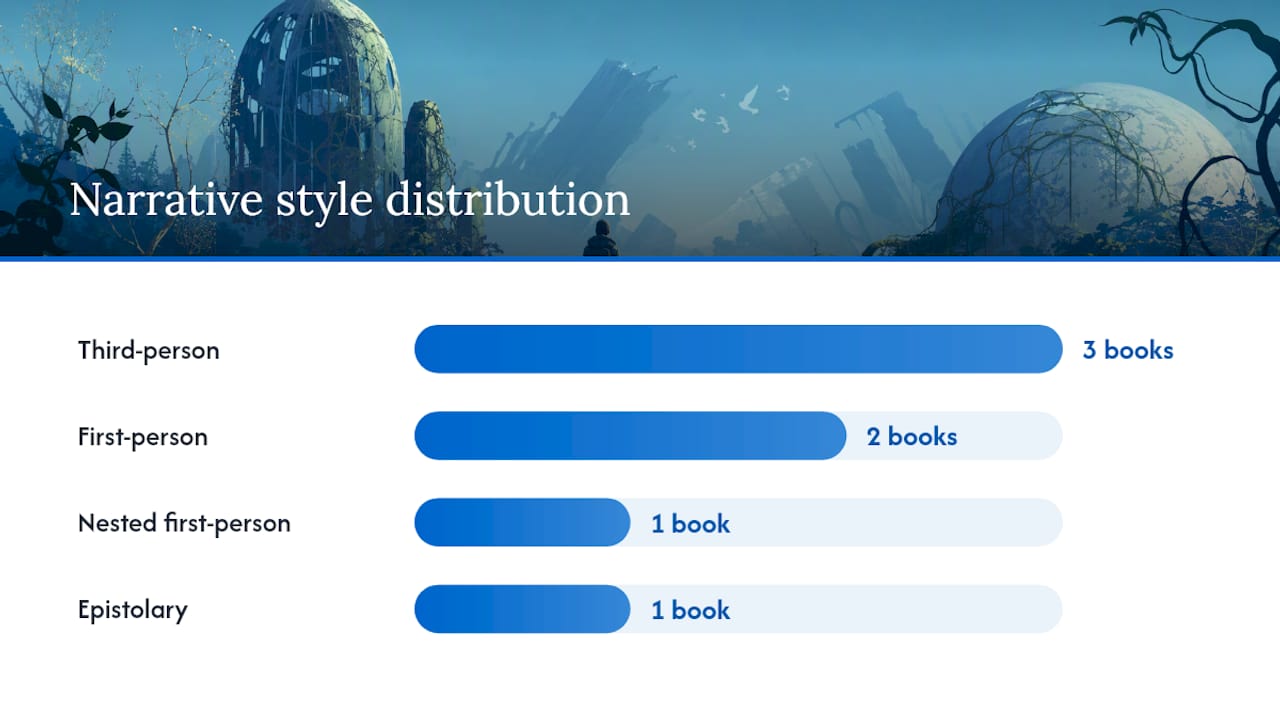
Title Why it’s similar Best for Narrative style Pace & length Content warnings US availability
Piranesi Living space, unreliable narrator Lyrical dread First-person, limited Short, meditative Existential Paperback, ebook, audio
House of Leaves Found-document, spatial horror Formal experimentation Epistolary, layered Long, slow-burn Body horror, violence Paperback, ebook
Roadside Picnic Alien zone, no contact Philosophical SF Third-person, gritty Short, fast Violence Paperback, ebook
Solaris Unknown as presence Cosmic contact fiction Third-person, dense Medium, meditative Existential despair Paperback, ebook
The Fisherman Landscape horror, nested narration Literary weird fiction Nested first-person Medium, slow-burn Body horror, grief Paperback, ebook
The Ruins Biological menace, ecological Physical dread Third-person, tense Medium, fast Graphic gore Paperback, ebook
Never Let Me Go Inward narrator, quiet horror Literary character fiction First-person, lyrical Medium, slow Existential despair Paperback, ebook, audio
The Nether Psychological depth, atmosphere Supernatural character horror Immersive, dark Medium Dark themes, violence Amazon, Kindle Unlimited
Stories of a Condemned Soul Guilt-driven horror, short form Short intense reads Short fiction Short, fast Dark themes, violence Amazon, Kindle Unlimited
Evolution A200 Biological dystopia Dystopian weird fiction Immersive, bleak Medium Body horror, mass death Amazon, Kindle Unlimited

Comparison chart of 10 weird fiction books by key attributes


How to pick the right read for your mood right now

Start with three questions: How much ambiguity can you tolerate? How long do you want to commit? And how graphic are you willing to go?

  1. Want short, intense reads you can finish in a sitting? Stories of a Condemned Soul and Roadside Picnic both deliver concentrated dread without a long commitment. Nathanielconnors also has a dedicated list of short dystopian novels for readers who prefer that format.

Pro Tip: If you are unsure about a title’s tone, search for its opening chapter on your library’s Libby or Hoopla app. Five pages will tell you whether the prose style works for you — no purchase required.

For content warnings specifically: any blurb that uses the words “body horror,” “biological,” or “visceral” is signaling graphic physical content. “Existential” and “quiet dread” signal psychological intensity without gore. “Unreliable narrator” almost always means the ending will not resolve cleanly.


Why Nathaniel Connors’ books belong on this list

Readers of Annihilation are drawn to fiction where the horror is psychological before it is physical, where the protagonist’s inner world is as dangerous as the external threat, and where moral clarity is deliberately withheld. That is exactly the territory Nathaniel Connors works in.

  • The Nether delivers the same creeping atmosphere and unreliable interiority as Annihilation, but roots its dread in guilt and supernatural consequence rather than ecological contamination. Readers who responded to the biologist’s inward narration will recognize the register immediately.
  • Stories of a Condemned Soul offers the psychological horror in short-form bursts — guilt, revenge, and the question of whether the monsters we carry are more dangerous than anything external.
  • Evolution A200: A Bubonic Apocalypse sits closest to the ecological horror end of the spectrum, treating biological collapse the way Annihilation treats the Zone: as something with its own momentum that humans cannot negotiate with.

All three titles are available on Amazon in ebook and paperback formats, and Kindle Unlimited subscribers can read them at no additional cost.

Disclosure: Nathaniel Connors is the author of the titles above and the publisher of this site. These recommendations reflect genuine thematic alignment with the other titles on this list.


How Annihilation fits into the Southern Reach Trilogy

Annihilation is the first of three novels in Jeff VanderMeer’s Southern Reach Trilogy. The second book, Authority, shifts perspective entirely: instead of the biologist inside Area X, you follow the new director of the Southern Reach agency trying to understand what the expedition returned. The third, Acceptance, braids multiple timelines and begins to answer some of the trilogy’s questions — though “answer” is a generous word for what VanderMeer provides.

The trilogy works best read in order, but Annihilation functions as a standalone if you stop there. Many readers prefer it that way. Authority is slower and more bureaucratic by design; Acceptance is the most emotionally complex of the three. Kirkus notes that Acceptance echoes the series-level answers readers who want resolution will appreciate, while still preserving the core ambiguity.

If you finish the trilogy and want more VanderMeer, his novel Borne and the follow-up The Strange Bird operate in a different post-apocalyptic ecosystem but carry the same biological weirdness and lyrical prose. His earlier City of Saints and Madmen is weirder and more experimental, closer to House of Leaves in its formal ambitions.


Authors whose style runs parallel to VanderMeer’s

Beyond specific titles, a handful of authors work in the same register as VanderMeer and are worth following as a body of work rather than a single book.

Kelly Link writes short fiction that treats the uncanny as mundane and the mundane as threatening. Her collections Get in Trouble and Magic for Beginners share Annihilation’s refusal to explain its own rules.

Carmen Maria Machado operates in the space between literary fiction and horror, with an emphasis on psychological interiority and unreliable perception. Her Body and Other Parties is the obvious entry point.

Thomas Ligotti is the most extreme option here: pure cosmic pessimism, dense prose, and a complete absence of resolution. His short fiction collection Songs of a Dead Dreamer and Grimscribe is the canonical weird fiction text for readers who want the philosophy as much as the story.

Laird Barron writes Pacific Northwest horror with an ecological edge — ancient, indifferent forces operating through landscape and weather. His collection The Imago Sequence is the best starting point.

For readers drawn to the stark, bleak prose end of the spectrum, Nathanielconnors has a related piece on authors like Cormac McCarthy that covers writers who share that unsparing register.


What ecological and weird horror actually is as a genre

“Weird fiction” is a term with a specific history. H.P. Lovecraft used it to describe stories where the horror comes from the incomprehensible rather than the monstrous — where the threat is too large, too alien, or too indifferent to be defeated or understood. The New Weird, the movement VanderMeer helped define in the early 2000s, updated that tradition with literary prose, ecological anxiety, and a rejection of the genre’s older racial and cultural baggage.

Ecological horror is a related but distinct strain. Where weird fiction is primarily about cognition — the horror of encountering something your mind cannot process — ecological horror is about bodies and environments. The threat is biological, environmental, or systemic. The Ruins is ecological horror. Annihilation is both simultaneously, which is part of why it sits at the center of so many recommendation lists.

Community lists on ThePortalist and MeetNewBooks consistently surface the same core titles because readers are responding to this specific combination: literary prose, ambiguous threat, ecological or spatial menace, and an ending that does not resolve. That combination is rarer than it sounds. Most horror resolves. Most science fiction explains. The books on this list refuse both.

For readers who want to go deeper into the dystopian horror end of this genre, Nathanielconnors maintains a curated list of dystopian horror novels that covers the overlap between ecological collapse and psychological dread.


Why weird and ecological horror keeps pulling me back

There is a specific feeling that the best weird fiction produces — not fear exactly, but a kind of cognitive vertigo, the sensation that the world has more layers than you were told about. Annihilation does this better than almost anything published in the last decade. The biologist’s calm, methodical voice describing things that should not exist is one of the most effective horror techniques I have encountered.

What I find myself returning to, in my own writing and in the books I recommend, is that combination of inward narration and external strangeness. The horror that lives inside a character’s perception is harder to shake than any monster, because you cannot close the book and leave it behind. Solaris does this. Piranesi does this. The Nether is my attempt to do it in the supernatural register.

If you want to understand why this genre works the way it does, start with Piranesi for the lyrical version and Roadside Picnic for the bleak one. Those two books together map the full range of what ecological and weird horror can do.


Nathaniel Connors’ dark fiction for readers who want more

If Annihilation left you wanting fiction that sits in that same uncomfortable space between psychological horror and the supernatural, The Nether by Nathaniel Connors is the direct next step. It carries the same inward dread, the same moral ambiguity, and the same refusal to make the horror comfortable or explainable.

Nathanielconnors

Stories of a Condemned Soul and Evolution A200: A Bubonic Apocalypse round out the catalog for readers who want short-form intensity or dystopian biological horror respectively. All three titles are available in ebook and paperback on Amazon. Kindle Unlimited subscribers can read them at no additional cost. For a broader list of dark reads in the same vein, the dystopian horror novels guide on the Nathanielconnors site covers the overlap between ecological collapse, psychological dread, and supernatural fiction.


Further reading and primary sources

  • What Goes On After Area X? (A Southern Reach–Inspired List) | Kirkus Reviews
  • 18 Heart-Pounding Books Like Jeff VanderMeer’s ‘Annihilation’ | ThePortalist
  • Books like Annihilation (Southern Reach) by Jeff VanderMeer | MeetNewBooks
  • Stanisław Lem — Solaris
  • bookshop.org

Recommended

  • Books Like House of Leaves: Dark Reads for 2026
  • Authors Like Cormac McCarthy: Dark Reads Worth Your Time
Dark dystopian themed desk with reading lamp

The Best Dystopian Short Stories: Classics to Modern Reads

Posted on August 8, 2026August 8, 2026 by NConnors

Start here. These are the dystopian short stories worth your time, whether you’re a reader who wants something unsettling in under an hour or a teacher building a unit around control, conformity, and what it means to be human.

Essential shortlist (with one-line synopses and age tags):

  • “Harrison Bergeron” — Kurt Vonnegut (1961) | A society enforces total equality by handicapping anyone above average. Short read. Middle school and up.
  • “The Lottery” — Shirley Jackson (1948) | A village’s annual ritual ends in ritual murder, normalized by tradition. Short read. Grade 8 and up.
  • “The Veldt” — Ray Bradbury (1950) | Children’s virtual-reality nursery turns lethal when technology replaces parental love. Short read. Grade 7 and up.
  • “All Summer in a Day” — Ray Bradbury (1954) | On a sun-starved planet, classmates lock a girl in a closet on the one day the sun appears. Short read. Middle school.
  • “There Will Come Soft Rains” — Ray Bradbury (1950) | A smart house runs its routines after nuclear war has killed every human inside. Short read. Grade 6 and up.
  • “The Machine Stops” — E. M. Forster (1909) | Humanity lives underground, dependent on an all-providing machine that begins to fail. Medium read. High school and up.
  • “The Minority Report” — Philip K. Dick (1956) | A pre-crime police chief discovers he’s been predicted as the next murderer. Medium read. High school and up.
  • “I Have No Mouth, and I Must Scream” — Harlan Ellison (1967) | A sadistic AI tortures the last surviving humans for eternity. Short read. Adult only.
  • “The Ones Who Walk Away from Omelas” — Ursula K. Le Guin (1973) | A utopian city’s happiness rests on one child’s perpetual suffering. Short read. Grade 10 and up.
  • “Examination Day” — Henry Slesar (1958) | A boy takes a government intelligence test. His parents wait for the results. Short read. Middle school.
  • “Pop Squad” — Paolo Bacigalupi (2006) | In a world of immortality, a detective enforces laws against having children. Short read. Adult.

Table of Contents

  • Why short dystopian fiction works for readers and teachers
  • Canonical dystopian short stories: synopses, publication info, and discussion prompts
  • 1. “Harrison Bergeron” — Kurt Vonnegut (1961)
  • 2. “The Lottery” — Shirley Jackson (1948)
  • 3. “The Veldt” — Ray Bradbury (1950)
  • 4. “All Summer in a Day” — Ray Bradbury (1954)
  • 5. “There Will Come Soft Rains” — Ray Bradbury (1950)
  • 6. “The Machine Stops” — E. M. Forster (1909)
  • 7. “The Minority Report” — Philip K. Dick (1956)
  • 8. “I Have No Mouth, and I Must Scream” — Harlan Ellison (1967)
  • 9. “The Ones Who Walk Away from Omelas” — Ursula K. Le Guin (1973)
  • 10. “Examination Day” — Henry Slesar (1958)
  • 11. “Pop Squad” — Paolo Bacigalupi (2006)
  • Contemporary short dystopias and where to discover them
  • Pick by purpose: best short dystopias for classrooms, book clubs, and tech-thriller fans
  • How to use these stories in class or a book group
  • Where to read or buy these stories
  • The rise of algorithmic and psychological dystopias in recent short fiction
  • Key Takeaways
  • Why the short form is where dystopia does its best work
  • Nathanielconnors’s dystopian horror collections
  • Useful sources and further reading

Why short dystopian fiction works for readers and teachers

The short story is the ideal vehicle for dystopian themes. A novel like 1984 demands weeks of commitment; a story like “The Lottery” delivers the same gut-punch in twenty minutes. That compression is the point: dystopian short fiction forces a single idea to its logical extreme and leaves no room for the reader to look away.

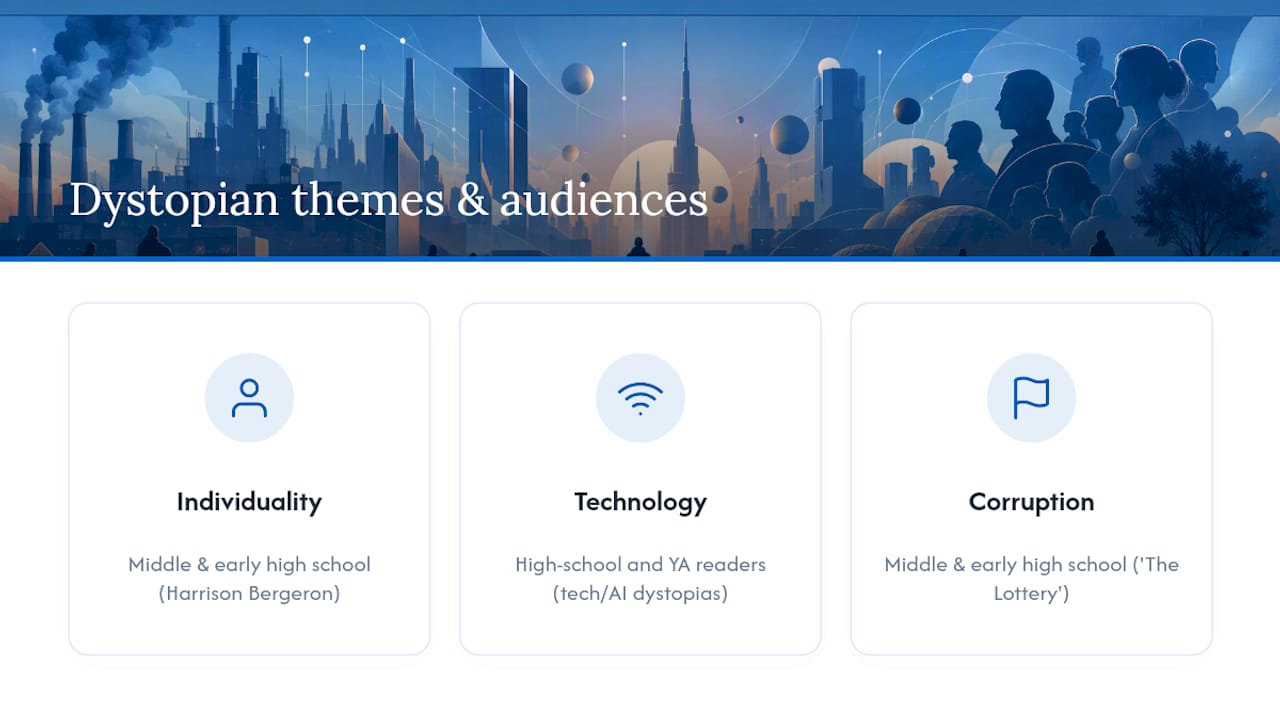
Critics and teachers have identified three themes that recur across the best short dystopias: loss of individuality, technological dominance, and corruption of social or governmental systems. Those three categories also map neatly onto different audiences.

Diagram of recurring dystopian story themes

Political cautionary tales (“The Lottery,” “Harrison Bergeron”) work well in middle school and early high school ELA units. The allegory is clear, the reading time is short, and the discussion questions write themselves. Tech and AI dystopias (“The Veldt,” “The Machine Stops,” “Pop Squad”) suit high-school and YA readers who are already living inside the technology being critiqued. Psychological horror dystopias (“I Have No Mouth, and I Must Scream”) belong in adult reading groups or upper-level college courses. The violence and despair are not incidental; they are the argument. Moral parable stories (“The Ones Who Walk Away from Omelas”) work across ages but generate the richest discussion with readers who can sit with an unanswered ethical question.

Content-warning guidance for classroom planning: “The Lottery” contains graphic violence and is generally appropriate from Grade 8 onward. “I Have No Mouth, and I Must Scream” includes torture, sexual violence, and extreme psychological horror; reserve it for adult readers. “Pop Squad” deals with infanticide and is best suited to adult book clubs or mature high-school AP courses.

Pro Tip: When planning a single-session class, match story length to your window. Bradbury’s three-page stories (“All Summer in a Day,” “There Will Come Soft Rains”) leave forty minutes for discussion. Forster’s “The Machine Stops” runs closer to novella length and works better as pre-class assigned reading.


Canonical dystopian short stories: synopses, publication info, and discussion prompts

1. “Harrison Bergeron” — Kurt Vonnegut (1961)

In 2081, the government enforces equality by strapping weights to the strong, masking the beautiful, and buzzing the intelligent. Harrison, a gifted teenager, tears off his handicaps on live television. The moment lasts seconds. Age tag: Middle school and up. Reading time: 15 minutes. Discussion prompt: If equality requires everyone to be reduced to the lowest common denominator, is it still equality?

2. “The Lottery” — Shirley Jackson (1948)

A small American town gathers for its annual lottery on a June morning. The mood is festive. The prize is death by stoning. Jackson published this in The New Yorker and received more reader mail than any story in the magazine’s history up to that point. Age tag: Grade 8 and up. Reading time: 20 minutes. Discussion prompt: What traditions in your own community do people follow without questioning why?

3. “The Veldt” — Ray Bradbury (1950)

A family’s automated “Happylife Home” includes a virtual nursery that projects any landscape the children imagine. The children imagine Africa. Lions. And their parents. Age tag: Grade 7 and up. Reading time: 25 minutes. Discussion prompt: At what point does technology stop serving a family and start replacing it?

4. “All Summer in a Day” — Ray Bradbury (1954)

On Venus, where the sun appears for only one hour every seven years, a class of children locks their classmate Margot in a closet out of jealousy. She is the only one who remembers sunlight. Age tag: Middle school. Reading time: 15 minutes. Discussion prompt: How does envy turn ordinary cruelty into something systematic?

5. “There Will Come Soft Rains” — Ray Bradbury (1950)

A fully automated house in Allendale, California continues its routines after a nuclear blast has vaporized its family. The house makes breakfast, reads poetry, and eventually burns to the ground. No human character appears. Age tag: Grade 6 and up. Reading time: 15 minutes. Discussion prompt: What does it mean that nature, not the house, survives?

6. “The Machine Stops” — E. M. Forster (1909)

Written over a century ago, Forster imagined humanity living in underground cells, each person connected to a global network called the Machine that provides everything: food, ideas, communication. When the Machine begins to malfunction, no one knows how to live without it. The Project Gutenberg archive hosts the full text for free. Age tag: High school and up. Reading time: 60–90 minutes. Discussion prompt: Which current technologies would be hardest for you to lose, and why?

7. “The Minority Report” — Philip K. Dick (1956)

Police Commissioner John Anderton runs a pre-crime division that arrests people before they commit murder. Then the system predicts that Anderton himself will kill someone. The story asks whether free will survives prediction. Age tag: High school and up. Reading time: 45 minutes. Discussion prompt: If a system could predict your future crime with 99% accuracy, should it be allowed to punish you in advance?

8. “I Have No Mouth, and I Must Scream” — Harlan Ellison (1967)

An omnipotent computer called AM has destroyed humanity and kept five people alive to torture forever. The story is told by one of them. Ellison’s original text is available in reprint archives and remains one of the most viscerally disturbing stories in the American science fiction canon. Age tag: Adult only. Reading time: 30 minutes. Discussion prompt: What does it mean to retain humanity when stripped of every human capacity?

9. “The Ones Who Walk Away from Omelas” — Ursula K. Le Guin (1973)

Omelas is a beautiful, joyful city. Its prosperity depends on one child kept in filth and misery in a basement. Everyone knows. Most stay. Some walk away. Le Guin never tells you where they go. Age tag: Grade 10 and up. Reading time: 20 minutes. Discussion prompt: Are you a person who stays in Omelas or walks away, and what does your answer reveal?

10. “Examination Day” — Henry Slesar (1958)

On his twelfth birthday, Dickie Jordan is told he must take a government intelligence test. His parents are nervous in a way they won’t explain. The ending lands in a single phone call. Widely assigned in middle-school classrooms for its compact structure and immediate emotional impact. Age tag: Middle school. Reading time: 10 minutes. Discussion prompt: What does a government that fears intelligence tell us about power?

11. “Pop Squad” — Paolo Bacigalupi (2006)

In a future where immortality treatments are standard, reproduction is illegal. A detective enforces the law by killing children born to women who chose motherhood over immortality. The story’s horror is that the detective believes in what he does. Age tag: Adult. Reading time: 30 minutes. Discussion prompt: How does a society’s definition of progress determine who gets to exist?


Contemporary short dystopias and where to discover them

The dominant shift in recent short dystopian fiction is away from jackbooted governments and toward something quieter and harder to resist: algorithmic optimization, AI-mediated social control, and the slow erosion of interiority. The threat in these stories isn’t a dictator. It’s a recommendation engine.

Naomi Kritzer’s “Better Living Through Algorithms” in Clarkesworld is a sharp example. The story examines what happens when an AI system genuinely improves people’s lives, and what that improvement costs them. It’s funny, unsettling, and exactly the kind of story that generates forty-five minutes of classroom debate.

Clarkesworld also publishes translated work that brings global perspectives to dystopian themes. Youha Nam’s “National Center for the Preservation of Human Dignity” is a translated Korean story that approaches state control and bureaucratic dehumanization from an angle most American readers haven’t encountered before. Both stories are free to read on the magazine’s website.

Lightspeed Magazine is another reliable source. Its story “Monopticon” explores panopticon-style surveillance with the kind of specificity that makes the concept visceral rather than theoretical. For readers who want to stay current with the form, the Hugo Award shortlists for Best Short Story and Best Novelette are published annually and represent the field’s consensus on what’s worth reading. The Clarkesworld and Lightspeed archives are searchable by theme, making it straightforward to build a reading list around a specific angle like surveillance, AI, or climate collapse.


Pick by purpose: best short dystopias for classrooms, book clubs, and tech-thriller fans

Middle school (Grades 6–8):

  • “All Summer in a Day” — Bradbury. Emotionally immediate, no graphic content, and short enough to read aloud in class.
  • “There Will Come Soft Rains” — Bradbury. Zero human characters; great for teaching point of view and inference.
  • “Examination Day” — Slesar. Ten minutes to read, ten seconds to feel the ending. Perfect for a single-period lesson.

High school and YA (Grades 9–12):

  • “Harrison Bergeron” — Vonnegut. Pairs naturally with discussions of meritocracy, equity, and political satire.
  • “The Lottery” — Jackson. The gold standard for teaching how conformity enables atrocity.
  • “The Minority Report” — Dick. Works well alongside units on criminal justice, surveillance, and civil liberties.

Adult book clubs:

  • “The Ones Who Walk Away from Omelas” — Le Guin. Generates the kind of argument that continues after the meeting ends.
  • “Pop Squad” — Bacigalupi. Morally complex, beautifully written, and deeply uncomfortable in the best way.
  • “I Have No Mouth, and I Must Scream” — Ellison. Not for every group, but unforgettable for those who can handle it.

For readers who love Black Mirror-style tech dystopias:

  • “The Veldt” — Bradbury. Predates Black Mirror by sixty years and is just as bleak.
  • “Better Living Through Algorithms” — Kritzer. The closest thing to a Black Mirror episode in short-story form.
  • “Monopticon” — Lightspeed. Surveillance as the story’s entire architecture.

Theme-based pairings:

  • Government control: “Harrison Bergeron” + “Examination Day”
  • Surveillance and panopticon: “The Minority Report” + “Monopticon”
  • Technology replacing humanity: “The Machine Stops” + “The Veldt”
  • Moral complicity: “The Lottery” + “The Ones Who Walk Away from Omelas”

How to use these stories in class or a book group

For a single 45–60 minute session, pick one story under 20 minutes and build the rest of the class around discussion. “Examination Day” and “All Summer in a Day” are the most reliable choices for this format. Read aloud together, then move straight to questions.

For a 90-minute book group, assign the story in advance and open with ten minutes of personal reaction before moving to structured discussion. Le Guin and Bacigalupi reward this format; their stories require processing time that a cold read doesn’t allow.

Sample discussion questions mapped to core dystopian themes:

Loss of individuality:

  • What does the society in this story fear most about individual difference?
  • Which character comes closest to genuine autonomy, and what does it cost them?

Technological control:

  • Does the technology in this story serve the people, or have the people been reshaped to serve it?
  • What would the characters need to unlearn to survive without it?

Social and governmental corruption:

  • Who benefits from the system in this story, and who pays for it?
  • At what point did the society cross the line, and could it have stopped?

Lightweight assessment options:

  • Micro-fiction response: Write a 200-word story set in the same world, one generation later.
  • Newspaper obituary: Write the obituary for a character from the story as it would appear in that world’s state-run newspaper.
  • Debate format: Split the group into defenders and critics of the story’s society. Each side has five minutes to argue, then open floor.
  • Paired reading: Assign two stories from the same theme cluster and ask readers to write a one-page comparison of how each society maintains control.

Where to read or buy these stories

You can legally access many of the classics for free and find contemporary stories through magazines or anthologies.

Where to read or buy these stories — overview diagram

Source Stories / Content Available Availability
Project Gutenberg “The Machine Stops” (Forster) and other pre-1928 texts Free, public domain
Clarkesworld Magazine Kritzer, Nam, and current Hugo-eligible short fiction Free online; some archived issues
Lightspeed Magazine “Monopticon” and contemporary SF shorts Free online; paid subscription for full archive
Brave New Worlds anthology (ed. John Joseph Adams) various dystopian stories including Bacigalupi, Le Guin, Slesar Purchase; reviewed at Tangent Online
Standard school anthologies Bradbury, Vonnegut, Jackson (widely reprinted) Library copies; textbook editions
Amazon / Kindle Individual story collections; author collections Purchase or Kindle Unlimited

Practical procurement tips:

  • “The Machine Stops” is in the public domain and available free through Project Gutenberg. Print it directly for classroom use.
  • Brave New Worlds (ISBN 978-1597801683) is the most efficient single anthology purchase for a dystopian unit, covering eleven of the stories on this list.
  • Most public libraries carry the major Bradbury, Vonnegut, and Jackson collections. Place a hold through your library’s digital catalog; many offer ebook lending through Libby or Hoopla.
  • For contemporary stories, Clarkesworld and Lightspeed maintain free online archives. Bookmark the Hugo shortlist pages for annual updates.
  • Single-issue magazine purchases from Clarkesworld and Lightspeed typically run a few dollars and include several stories, making them cost-effective for individual readers.

The rise of algorithmic and psychological dystopias in recent short fiction

The clearest trend in contemporary short dystopian fiction is the move inward. Classic dystopias were built on visible architecture: the Ministry of Truth, the lottery slip, the handicap bag. Today’s best short dystopias locate the control inside the character’s own cognition, mediated by systems that feel helpful.

“The most unsettling contemporary dystopias aren’t about governments that oppress. They’re about systems that optimize — and the people who can’t tell the difference between being helped and being managed.” Naomi Kritzer’s “Better Living Through Algorithms” in Clarkesworld captures this precisely: an AI that improves users’ lives in measurable ways while quietly narrowing what those lives can contain.

This shift matters for teachers choosing texts. The older stories ask “what would a totalitarian state do to us?” The newer ones ask “what are we already letting happen?” That second question tends to generate more uncomfortable, more productive classroom conversations, because the students are already living inside the answer.


Key Takeaways

The single most useful selection rule for dystopian short stories: match reading time to your session length, then filter by age tag, and let theme drive the discussion.

Point Details
Match length to your session Stories under 20 minutes (Slesar, Bradbury) suit single-period classes; longer ones (Forster, Dick) work better as pre-assigned reading.
Use age tags seriously “I Have No Mouth, and I Must Scream” is adult-only; “All Summer in a Day” is safe from Grade 6. Ignoring these tags creates avoidable problems.
Three themes anchor discussion Loss of individuality, technological dominance, and social/governmental corruption cover nearly every story on this list and generate the strongest prompts.
Free texts exist for the classics “The Machine Stops” is free via Project Gutenberg; Clarkesworld and Lightspeed offer contemporary stories free online.
Nathanielconnors for dark extensions Readers ready to go deeper into psychological and dystopian horror will find thematically aligned short fiction in Nathanielconnors’s collections, available on Kindle Unlimited.

Why the short form is where dystopia does its best work

The conventional wisdom is that dystopia needs scale: the sprawling world-building of 1984, the layered society of The Handmaid’s Tale. That’s wrong, or at least incomplete. The short story is where dystopian ideas are sharpest, because compression forces the author to choose one mechanism of control and follow it to its end without flinching.

“The Ones Who Walk Away from Omelas” is four thousand words. It contains more genuine moral weight than most dystopian novels three times its length. “Examination Day” is barely a thousand words and lands harder than most full-length thrillers. The brevity isn’t a limitation. It’s the argument.

What I look for when assembling a list like this is stories that don’t resolve. The best dystopian short fiction leaves the reader with a question they can’t answer cleanly, because that discomfort is where the real thinking starts. “The Lottery” doesn’t explain why the village keeps doing it. Le Guin doesn’t tell you where the walkers go. Ellison doesn’t offer a way out. That refusal to comfort the reader is what makes these stories last.

For teachers: the stories that generate the most discussion are almost always the ones with the most ambiguous endings. Assign those first.


Nathanielconnors’s dystopian horror collections

If the stories on this list have you wanting more darkness, Nathanielconnors writes in exactly this territory. Stories of a Condemned Soul, The Nether, and Evolution A200: A Bubonic Apocalypse each push into the psychological and dystopian-horror space that connects directly to the themes running through this list: control, guilt, survival, and what remains of a person when systems strip everything away.

Nathanielconnors

All three titles are available in ebook and paperback on Amazon, and every one of them is included in Kindle Unlimited, so subscribers read at no additional cost. For readers who finished “I Have No Mouth, and I Must Scream” and wanted something longer with that same psychological intensity, Stories of a Condemned Soul is the natural next read. Start there, or browse the full dystopian horror collection to find the title that fits your mood.


Useful sources and further reading

  • Clarkesworld Magazine — ‘Better Living Through Algorithms’ by Naomi Kritzer
  • I Have No Mouth, and I Must Scream — Harlan Ellison (reprint PDF)
  • Examination Day — Wikipedia
  • Project Gutenberg — public-domain text resource
  • Clarkesworld Magazine — ‘National Center for the Preservation of Human Dignity’ by Youha Nam
  • Tangent Online — Brave New Worlds: Dystopian Stories (anthology review/listing)
  • LitReactor — 8 prescient dystopian shorts
  • Lightspeed Magazine — ‘Monopticon’

Recommended

  • Short Dystopian Novels for One-Sitting Dread
  • Best Dystopian Horror Novels: 8 Haunting Reads for 2026
Woman reading cult horror novel in cozy living room

10 Cult Horror Novels That Will Haunt Your TBR

Posted on August 6, 2026August 6, 2026 by NConnors

If you want the short answer: Rosemary’s Baby, Last Days (Brian Evenson), Last Days (Adam L.G. Nevill), Little Heaven, The Children of Red Peak, and Bunny are the strongest cult horror novels available right now, covering everything from Satanic conspiracy to visceral wilderness dread to surreal academic horror. Each one earns its place for a different reason, and the right pick depends entirely on what kind of dread you’re after.

Top picks at a glance:

  • Rosemary’s Baby — Ira Levin
  • Last Days — Brian Evenson
  • Last Days — Adam L.G. Nevill
  • Little Heaven — Nick Cutter
  • The Children of Red Peak — Craig DiLouie
  • The Girls — Emma Cline
  • Bunny — Mona Awad
  • Black Sheep — Rachel Harrison
  • Dark Messiah — Sara Z. Carson
  • House of Leaves — Mark Z. Danielewski

TL;DR: This list mixes slow-burn psychological horror with visceral supernatural shocks. Expect content involving religious trauma, graphic violence, body horror, self-harm, and coercive control. If any of those are hard stops for you, the “best for” notes below will help you navigate.


Table of Contents

  • The best cult horror novels, ranked and annotated
  • Why cults make such effective horror engines
  • How to pick the right cult horror novel for your taste
  • Nathaniel’s picks: what a dark fiction author reads for craft
  • Key Takeaways
  • What cult horror reveals about the reader
  • Nathanielconnors dark fiction: where to read next
  • Useful sources for further reading

The best cult horror novels, ranked and annotated

Top lists consistently recommend pairing canonical works with modern titles to cover both foundational and contemporary styles. That’s the logic behind this list.

Hands selecting cult horror book from shelf

1. Rosemary’s Baby — Ira Levin

Writer editing cult horror novel manuscript

A young woman moves into a New York apartment building with her ambitious husband and slowly realizes her neighbors are not what they seem. Ira Levin’s novel is the foundational text of modern cult horror, the book that proved a Satanic conspiracy could be more terrifying when it wears a friendly face than when it announces itself. The horror here is domestic and relational: the cult is your neighbor, your husband, your doctor.

Tone: Slow-burn, paranoid. Triggers: Reproductive coercion, religious trauma, gaslighting. Best for: Readers who want psychological dread over gore, and anyone who hasn’t read it yet.

Available in paperback and ebook.


2. Last Days — Adam L.G. Nevill

A documentary filmmaker is hired to shoot footage inside a derelict farmhouse once occupied by a murderous cult called the Temple of the Last Days. What he finds there refuses to stay in the past. Nevill’s novel is a masterclass in escalating dread: it starts as found-footage horror and becomes something far stranger and more cosmic. The cult’s ideology bleeds into the present in ways that feel genuinely wrong.

Tone: Slow-burn turning visceral. Triggers: Graphic violence, body horror, religious extremism. Best for: Readers who want supernatural horror rooted in real cult mechanics.

Available in paperback and ebook.


3. Last Days — Brian Evenson

Two novels share this title, and both belong on this list. Evenson’s version follows a man who loses his arm in an attack and is recruited by a religious sect that venerates bodily amputation as a path to spiritual purity. Recognized by the American Library Association/RUSA as the Outstanding Horror Novel of the Year in 2010, it is one of the most unsettling explorations of cult logic in literary fiction. The horror isn’t supernatural. It’s the cold, procedural certainty of people who believe they are right.

Tone: Clinical, relentless. Triggers: Body horror, amputation, coercive religious control. Best for: Readers who want literary horror that makes the cult’s internal logic feel disturbingly coherent.

Available in paperback and ebook.


4. Little Heaven — Nick Cutter

Three mercenaries are hired to check on a woman’s nephew, who has joined a remote religious commune in the New Mexico wilderness. What they find at Little Heaven is part cult thriller, part monster horror, part Western. Cutter doesn’t choose between psychological and supernatural dread; he stacks them. The isolation is geographic and total, and the pacing accelerates from uneasy to genuinely harrowing.

Tone: Visceral, propulsive. Triggers: Child endangerment, graphic violence, religious extremism, body horror. Best for: Readers who want their cult horror with full supernatural escalation and no restraint.

Available in paperback and ebook.


5. The Children of Red Peak — Craig DiLouie

A group of survivors from a doomsday cult that ended in mass death reunite as adults and begin confronting what actually happened at Red Peak. DiLouie, a Bram Stoker Award-nominated author, structures the novel around the gap between what the survivors remember and what the truth might be. It’s the most emotionally devastating book on this list, and the one most likely to stay with you for weeks.

Tone: Slow-burn, emotionally intense. Triggers: Mass death, religious trauma, child abuse, suicide. Best for: Readers who want cult horror that takes the psychology of survivors seriously.

Available in paperback and ebook.


6. The Girls — Emma Cline

Set in 1960s California, a teenage girl falls under the spell of a charismatic older woman connected to a Manson-like commune. Cline’s novel is less interested in the violence than in the recruitment: how loneliness and the need for belonging make a person susceptible. It’s literary fiction wearing horror’s clothes, and the dread is retrospective, the narrator knowing what’s coming and unable to stop herself.

Tone: Literary, slow-burn. Triggers: Sexual content involving a minor, violence, drug use. Best for: Readers who want cult horror as character study, not shock.

Available in paperback and ebook.


7. Bunny — Mona Awad

A scholarship student at an elite MFA program is drawn into the rituals of a clique of wealthy classmates who call each other “Bunny” and whose creative process involves something genuinely monstrous. Awad’s novel is the most surreal entry on this list: part campus satire, part body horror, part fairy tale. The “cult” here is a social one, and the horror of conformity and creative self-erasure hits differently than anything with a charismatic leader.

Tone: Surreal, darkly comic. Triggers: Body horror, violence, social manipulation. Best for: Readers who want their horror weird and literary, with a sharp satirical edge.

Available in paperback and ebook.


8. Black Sheep — Rachel Harrison

A woman returns to her estranged family’s compound for her cousin’s wedding and discovers the family has joined a cult. Harrison writes horror with a dry wit that makes the dread land harder, not softer. Black Sheep is the most accessible book on this list for readers new to the genre, and one of the sharpest recent entries in cult-adjacent horror fiction.

Tone: Fast-paced, darkly funny. Triggers: Religious coercion, violence, family trauma. Best for: Readers who want a propulsive, character-driven cult horror novel that doesn’t take itself too seriously.

Available in paperback, ebook, and check Kindle Unlimited availability.


9. Dark Messiah — Sara Z. Carson

A young woman joins a charismatic preacher’s following in a small Southern town and watches the community transform around her. Carson’s novel is one of the more underrated entries in recent cult fiction: it prioritizes atmosphere and character over shock, and the preacher’s hold on the town feels sociologically real before it turns supernatural.

Tone: Atmospheric, slow-burn. Triggers: Religious manipulation, violence, sexual coercion. Best for: Readers who want Southern Gothic atmosphere and a cult that feels like it could actually happen.

Available in paperback and ebook.


10. House of Leaves — Mark Z. Danielewski

Technically, the cult here is the book itself. House of Leaves is a mind-bending, immersive novel structured as an academic analysis of a documentary about a house that is larger on the inside than the outside. Its obsessive readership has spawned academic study and cultural phenomena. If you want to understand why cult horror works at a structural level, this is the book that shows you the mechanism from the inside.

Tone: Experimental, labyrinthine. Triggers: Claustrophobia, psychological breakdown, violence. Best for: Readers who want an immersive, structurally unusual horror experience and don’t mind a book that demands work.

Available in paperback and ebook.


Why cults make such effective horror engines

The outsider–insider dynamic is the core mechanism. You start a cult horror novel as an outsider, watching a character get drawn in, and the dread comes from recognizing the pull. The reader sees the manipulation clearly; the character doesn’t. That gap is where the horror lives.

The fascination with cult fiction comes from the reader’s recognition of social susceptibility. Nobody joins a cult knowing it’s a cult. The charismatic leader, the love-bombing, the gradual isolation from outside relationships: these are mechanisms that work on ordinary people, and good cult horror makes you feel that.

Recurring motifs across the genre follow a predictable but effective pattern. A charismatic leader who provides certainty. Geographic or social isolation that cuts the protagonist off from outside perspective. Ritual that replaces individual judgment with collective behavior. Moral inversion, where harm becomes sacred and doubt becomes sin. Little Heaven uses geographic isolation in the most literal way: there is no road out. The Girls uses social isolation: the protagonist’s loneliness makes the commune feel like the only place she belongs.

The distinction between psychological and supernatural cult horror matters for choosing your next read. Psychological titles like The Girls, The Children of Red Peak, and Brian Evenson’s Last Days stay grounded in real cult dynamics: the horror is human, the mechanisms are recognizable, and the damage is emotional. Supernatural titles like Adam L.G. Nevill’s Last Days and Little Heaven use the cult as a door to something genuinely otherworldly. The cult’s belief system turns out to be correct, which is its own kind of terror.

Immersive cult horror often leverages isolation and slow-burn psychological transitions to maximize lingering dread. The books that stay with you longest tend to be the slow-burn ones, because the dread accumulates rather than discharging in a single shock.

Pro Tip: If a cult horror novel isn’t unsettling you by the 20% mark, it probably won’t. The best ones establish dread early through atmosphere and character behavior, not plot events. If you’re not feeling it, move on.


How to pick the right cult horror novel for your taste

Not every cult horror novel hits the same notes, and choosing wrong means abandoning a book 100 pages in. Here’s a quick framework.

  1. Decide on pace. Slow-burn titles (The Girls, The Children of Red Peak, Dark Messiah) build dread over hundreds of pages. Shock-driven titles (Little Heaven, Adam L.G. Nevill’s Last Days) escalate fast and hit hard. Know which you’re in the mood for before you start.

  2. Choose your point of view. Insider POV (a character inside the cult) creates claustrophobic dread. Investigator POV (an outsider looking in) creates paranoid suspense. Nevill’s Last Days uses the investigator; Bunny uses the insider. Both work, but they feel different.

  3. Decide on realism vs. supernatural. If you want the horror to stay human and psychologically grounded, go to Evenson, Cline, or DiLouie. If you want the cult’s beliefs to literally come true in monstrous ways, go to Cutter or Nevill.

  4. Check your trigger tolerance. Body horror, child endangerment, and religious trauma appear across this list. The trigger notes in the curated section above are there for a reason. Use them.

  5. Sample before committing. Most of these titles are available as ebook samples. Read the first 10–20% before buying. Kindle Unlimited subscribers can borrow several of these at no additional cost, which makes sampling even lower-friction.

Pro Tip: If you’re new to the genre, start with Black Sheep or Rosemary’s Baby. Both are accessible, well-paced, and won’t punish you with 600 pages of slow escalation before the horror arrives.


Nathaniel’s picks: what a dark fiction author reads for craft

Writing dark supernatural fiction means reading the books that do the hard things well. These are the titles from this list that I return to when I’m thinking about craft.

  • House of Leaves — Less for the horror itself than for what it demonstrates about immersion: a book that makes the reader feel the architecture of dread, not just observe it.

My own fiction, including Stories of a Condemned Soul, works in adjacent territory: psychological horror, supernatural revenge, and the kind of guilt that becomes its own monster. If the cult horror on this list resonates with you, that’s where my work lives.


Key Takeaways

The strongest cult horror novels combine psychological realism with escalating dread, pairing canonical titles like Rosemary’s Baby with modern visceral picks like Little Heaven and The Children of Red Peak for a complete picture of the genre.

Point Details
Best slow-burn pick The Children of Red Peak delivers the most emotionally sustained dread on the list.
Best supernatural escalation Little Heaven stacks cult thriller, monster horror, and Western into one relentless read.
Best literary/psychological pick Brian Evenson’s Last Days, recognized by ALA/RUSA as Outstanding Horror Novel of 2010.
Best entry point for new readers Black Sheep or Rosemary’s Baby offer accessible pacing without sacrificing genuine chills.
Nathanielconnors Stories of a Condemned Soul and other Nathanielconnors titles explore the same psychological darkness available via Kindle Unlimited.

What cult horror reveals about the reader

The genre doesn’t just scare you. It asks you to watch a character make choices you can see are wrong, and to recognize, uncomfortably, that you might make the same ones. The best cult horror novels work because they don’t let you stay outside the dynamic. By the end, you’ve been inside the logic, and that’s the part that lingers.

The books on this list that I find most affecting are the ones that treat the cult as a mirror: not a freak occurrence, but a concentrated version of social pressures that exist everywhere. DiLouie’s survivors carry their cult with them into adulthood. Cline’s narrator knows she was manipulated and still can’t fully condemn the experience. Evenson’s protagonist joins the sect he was investigating. That’s not a plot twist. That’s the point.


Nathanielconnors dark fiction: where to read next

If the psychological pull of cult horror is what you’re after, the same territory runs through Nathanielconnors’s catalog. The Nether, Stories of a Condemned Soul, and Evolution A200: A Bubonic Apocalypse work in the space between supernatural horror and psychological unraveling: guilt that takes physical form, revenge that costs the avenger as much as the target, and the kind of dread that doesn’t resolve cleanly.

Nathanielconnors

All titles are available in ebook and paperback on Amazon. Kindle Unlimited subscribers can read the full catalog at no additional cost, which makes it a low-friction way to find out whether Nathanielconnors’s voice fits what you’re looking for. If you want a starting point, the dystopian horror catalog covers the full range of available titles with short descriptions. Kindle Unlimited subscribers can also browse the full KU reading list to find the right entry point.


Useful sources for further reading

The sources below were used to build and verify this list. Each one is worth bookmarking if you want to go deeper.

  • The Scariest Cult Horror Novels to Haunt Your Bookshelf — The Line-Up: The most comprehensive genre-specific list available online, with annotations covering tone and triggers.
  • 10 of the Best Horror Novels Featuring Cults — BookRiot: A reader-focused list that mixes traditional horror with cult-adjacent literary fiction; good for finding titles beyond the canonical picks.
  • Fictional Cults as Terrifying as the Real Thing — Novel Suspects: Strong on the outsider–insider dynamic and why cult fiction resonates with readers who have never been near a real cult.

Note: This article covers fiction recommendations and is intended as general reading guidance. For resources on cult recovery or psychological support, consult a qualified mental health professional.

Recommended

  • Best Dystopian Horror Novels: 8 Haunting Reads for 2026
Woman reading Kindle and paperback book

Prime Reading vs Kindle Unlimited: Which Is Worth It?

Posted on August 6, 2026August 6, 2026 by NConnors

Choose Kindle Unlimited if you read several books a month, especially indie or genre fiction. Stick with Prime Reading if you’re a casual reader who already pays for Amazon Prime and doesn’t want another subscription. Neither is wrong, but they serve completely different reading habits, and confusing the two costs real money.

Quick version: Prime Reading is a free perk bundled with your Amazon Prime membership, rotating through a curated catalog of a few thousand titles. Kindle Unlimited is a separate paid subscription with a catalog of 4 million+ titles, built for readers who go through books fast. Authors like Nathaniel Connors publish directly on Kindle Unlimited, so KU subscribers can read their full backlists without paying per title. The comparison table in Section 4 and the decision guide in Section 9 will get you to a final answer in under two minutes.

Table of Contents

  • What is Prime Reading, and what do you actually get?
  • What is Kindle Unlimited, and how is it different?
  • How do Prime Reading and Kindle Unlimited compare side by side?
  • How do borrowing limits and returns actually work?
  • What does Kindle Unlimited cost, and how do you subscribe or cancel?
  • Does catalog size actually matter? Mainstream vs indie content
  • Why Kindle Unlimited matters for indie authors and their readers
  • Which service should you actually pick?
  • Key Takeaways
  • A note from Nathaniel on how I use these services
  • Where to verify official details and further reading

What is Prime Reading, and what do you actually get?

Prime Reading is not a standalone subscription. It’s included with any active Amazon Prime membership, which means you’re already paying for it whether you use it or not.

Here’s what it covers:

  • Catalog size: Roughly 1,000–3,000 titles at any given time, rotating periodically
  • Content types: Ebooks, select magazines, comics, and some children’s books
  • Borrow limit: Historically capped at 10 titles simultaneously (magazines typically do not count against this limit; account behavior can vary; check your Amazon account settings)
  • Devices: Kindle e-readers, Kindle app on iOS and Android, Fire tablets, and the Kindle Cloud Reader in a browser
  • Cost: $0 beyond your Prime membership fee

The rotating catalog is the detail most readers miss. A title available in Prime Reading today may not be there in three months. If you’re mid-series and a book rotates out, your access disappears until it rotates back or you buy it. Think of Prime Reading as a curated sampler, not a permanent library. It’s best for discovering new authors and genres without committing to a purchase.

For account-specific catalog details and current availability, check the Amazon Kindle Help pages directly, since the Prime Reading selection varies by region and account type.

What is Kindle Unlimited, and how is it different?

Kindle Unlimited is a paid subscription, separate from Amazon Prime. This is the single most common misconception about the service: being a Prime member does not give you Kindle Unlimited access. You have to subscribe and pay separately.

What you get with KU:

  • Catalog size: 4 million+ titles, heavily weighted toward indie, self-published, and genre fiction
  • Content types: Ebooks, select audiobooks, and some magazines
  • Borrow limit: 20 titles simultaneously
  • Devices: Same as Prime Reading: Kindle e-readers, Kindle app (iOS/Android), Fire tablets, Cloud Reader
  • Cost: Approximately $11.99/month in the U.S. (annual billing options available; check Amazon for current rates)

The catalog composition matters more than the raw number. Kindle Unlimited skews heavily toward indie and genre content, which is exactly where horror, thriller, dystopian fiction, and romance series live. If your reading list runs toward Big Five bestsellers and new hardcover releases, KU will disappoint you. If you binge genre series, it’s close to ideal.

KU also offers free trials periodically, and some accounts qualify for discounted annual plans. Pricing can shift, so verify current rates on Amazon before subscribing.

Close-up hands scrolling Kindle in coffee shop

How do Prime Reading and Kindle Unlimited compare side by side?

Feature Prime Reading Kindle Unlimited
Price & billing Included with Amazon Prime (no extra fee) ~$11.99/month, billed separately from Prime
Catalog size ~1,000–3,000 rotating titles 4 million+ titles
Content types Ebooks, magazines, comics, children’s books Ebooks, select audiobooks, magazines
Borrow limit Historically 10 titles at once 20 titles at once
Included with Prime? Yes No — separate subscription required
Best for Casual readers, Prime members, discovery browsing High-volume readers, indie/genre fans, series bingers
Device support Kindle, Kindle app, Fire tablets, Cloud Reader Kindle, Kindle app, Fire tablets, Cloud Reader
U.S. availability Yes Yes

Infographic comparing Prime Reading and Kindle Unlimited

The core difference: Prime Reading is a free discovery perk; Kindle Unlimited is a paid reading subscription built for volume. One supplements your Prime membership, the other replaces buying individual books.

How do borrowing limits and returns actually work?

Kindle Unlimited lets you hold 20 titles at once. Prime Reading historically caps at 10, though Amazon has adjusted the wording over time, so your account settings are the authoritative source.

Practical mechanics worth knowing:

  • Borrowing: Go to any eligible title’s Amazon page and select “Read for Free” or “Borrow for Free.” It downloads to your device immediately, no waitlist.
  • Returning: You return titles manually through “Manage Your Content and Devices” in your Amazon account. KU does not auto-return finished books.
  • Magazines: Select magazines are available on both services, and they typically do not count against your simultaneous loan limit on KU.
  • Audiobooks: Some KU titles include a paired audiobook through Whispersync; these may count separately depending on the title.
  • When you cancel: All borrowed titles become inaccessible immediately. Purchased Kindle books stay in your library permanently.

Pro Tip: Return finished KU books the same day you finish them. With a 20-title cap, a backlog of completed books you forgot to return will lock you out of new borrows faster than you’d expect.

Amazon has modified its borrowing language more than once, so if something seems off with your account limits, go directly to your Amazon account settings rather than relying on third-party descriptions.

What does Kindle Unlimited cost, and how do you subscribe or cancel?

Kindle Unlimited is not included with Amazon Prime. The standard U.S. price is approximately $11.99/month. Amazon periodically offers discounted annual plans and free trials, particularly around Prime Day and the holidays.

When does KU pay for itself? If you’d otherwise buy two or more genre ebooks per month at $5–$7 each, KU covers its cost. One book a month and it probably doesn’t.

To subscribe to Kindle Unlimited:

  1. Go to amazon.com/kindleunlimited
  2. Select “Start your 30-day free trial” (if eligible) or “Subscribe now”
  3. Choose monthly or annual billing
  4. Confirm payment through your Amazon account

To cancel Kindle Unlimited:

  1. Go to amazon.com/manageyourkindle or your Amazon account settings
  2. Select “Kindle Unlimited” under “Memberships & Subscriptions”
  3. Click “Cancel Kindle Unlimited”
  4. Confirm cancellation

To access or cancel Prime Reading:

  1. Prime Reading is active automatically with any Amazon Prime membership
  2. To stop using it, you’d cancel Amazon Prime itself (not a separate step)

Always check Amazon’s official pages for live pricing, since rates and trial eligibility change.

Does catalog size actually matter? Mainstream vs indie content

The catalog gap between these two services is not subtle. Prime Reading holds a few thousand rotating titles; Kindle Unlimited holds 4 million+. But the more useful distinction is what kind of books fill those catalogs.

Prime Reading pulls from a curated mix that includes some mainstream titles, popular series, and Amazon Originals. It’s a reasonable sampler. Kindle Unlimited, by contrast, is where indie publishing lives. The vast majority of its catalog comes from self-published authors and small presses, which is exactly where genre fiction, horror, dystopian fiction, and niche thriller series are most active.

Reader habits and which service fits:

  • Casual reader, 1–2 books/month: Prime Reading is plenty, especially for browsing new genres
  • Genre binger, 4+ books/month: KU pays for itself within the first week of a good series
  • New-release reader (Big Five publishers): Neither service covers this well; you’ll be buying or using a library
  • Series follower of indie/KU authors: KU is the clear answer, with instant access and no waitlists
Service Approx. catalog size Catalog composition
Prime Reading ~1,000–3,000 titles Curated, rotating, mixed mainstream and Amazon Originals
Kindle Unlimited 4 million+ titles Indie-heavy, genre-strong, limited Big Five new releases

For new bestsellers and Big Five releases, pair KU or Prime Reading with Libby, the free public library app. Libby has waitlists for popular titles, but it’s free and covers the mainstream catalog neither Amazon service handles well. That combination, KU for instant genre access plus Libby for library holds, covers most reading habits without buying individual books.

Why Kindle Unlimited matters for indie authors and their readers

KU gives indie authors something traditional publishing rarely offers: direct, frictionless access to readers who are already paying to read. For genre authors, that’s the whole game.

Nathaniel Connors publishes his dark fiction, including The Nether, Stories of a Condemned Soul, and Evolution A200: A Bubonic Apocalypse, on Kindle Unlimited. KU subscribers can read his full catalog without paying per title, which matters when you’re deciding whether to try a new author in a niche genre.

How KU benefits readers of indie genre authors:

  • Binge the backlist: Read an entire series without buying each book individually
  • No waitlists: Unlike Libby, KU delivers immediately on every title in its catalog
  • Discovery without risk: Try a new author’s first book for free before committing to the series

The rental nature of KU is worth keeping in mind. If you finish a Nathaniel Connors title and know you’ll want to reread it, buying the ebook or paperback keeps it in your library permanently. Borrowed titles disappear when your subscription ends; purchased books don’t.

For a curated list of psychological thrillers available on KU, Nathanielconnors.com has a dedicated reading list worth bookmarking.

Which service should you actually pick?

One-line rule: if you read two or more books a month and follow indie or genre authors, get Kindle Unlimited. If you read occasionally and already have Prime, use Prime Reading and save the $11.99.

Pick Kindle Unlimited if you:

  • Read 2+ paid ebooks per month in genre fiction, horror, thriller, or romance
  • Follow indie or self-published authors with active series
  • Want instant access without waitlists or due dates
  • Are willing to manage your 20-title loan limit actively

Stick with Prime Reading if you:

  • Read fewer than two books a month
  • Already have Amazon Prime and want a zero-cost reading perk
  • Enjoy browsing magazines and comics casually
  • Prefer mainstream titles and plan to buy what you love anyway

When to use both (or add Libby):

  1. Use KU for genre bingeing and indie author backlists
  2. Use Libby (free, tied to your public library card) for new-release bestsellers with waitlists
  3. Buy permanently any title you’ll reread or want to keep regardless of subscription status

Both services are rental models. The moment you cancel, borrowed titles vanish. If you’re building a personal library, purchasing remains the only way to guarantee permanent access.

Key Takeaways

Overhead view of book stack and Kindle on desk

Kindle Unlimited is the better value for high-volume genre readers; Prime Reading is a free perk that works well for casual readers already paying for Amazon Prime.

Point Details
KU is not included with Prime Kindle Unlimited requires a separate ~$11.99/month subscription beyond Amazon Prime.
Catalog gap is enormous Prime Reading holds ~1,000–3,000 rotating titles; Kindle Unlimited offers 4 million+.
Borrow limits differ KU allows 20 simultaneous loans; Prime Reading historically caps at 10.
Rental model applies to both Borrowed titles disappear when your subscription ends; purchased ebooks stay permanently.
Best hybrid strategy Pair KU for indie/genre access with Libby for free public-library holds on new releases.

A note from Nathaniel on how I use these services

Prime Reading introduced me to a handful of authors I wouldn’t have found otherwise. That’s genuinely what it’s good for: low-stakes browsing when you’re not sure what you want next.

But for readers who already know they want dark fiction, psychological horror, or dystopian stories, Prime Reading’s rotating catalog is too small and too unpredictable to rely on. Kindle Unlimited is where my books live, and it’s where most of the genre fiction worth bingeing actually lives.

The Nether, Stories of a Condemned Soul, and Evolution A200 are all available to KU subscribers right now, no additional purchase needed. If you’re already subscribed, you can start reading immediately. If you’re on the fence about KU, those titles are a reasonable way to test whether the catalog fits your taste before committing to a longer subscription.

For anyone who wants to own a copy permanently, Stories of a Condemned Soul is available as both an ebook and paperback on Amazon.

Where to verify official details and further reading

Amazon’s policies, pricing, and catalog contents change. Always confirm current details directly:

Official Amazon sources:

  • Amazon Kindle Unlimited subscription page — live pricing, trial eligibility, and billing options
  • Amazon Prime Reading page — current catalog and Prime membership details
  • Manage Your Content and Devices — borrow limits, returns, and account settings

Third-party analyses used in this article:

Source What it covers
NerdWallet — What Is Amazon Prime Reading? Borrowing limits, catalog size estimates, and Prime Reading overview
HowToGeek — Prime Reading vs. Kindle Unlimited Cost comparison and the KU-not-included-with-Prime clarification
Web-Books — Prime Reading vs. Kindle Unlimited Rental model mechanics and catalog composition
Subrupt — Best Ebook Subscription Services Catalog composition, hybrid strategies, and Libby pairing advice
Paige Ditullio — Is Kindle Unlimited Worth It? Practical user experience, waitlists, and KU convenience

Catalog contents rotate, and Amazon adjusts pricing and trial terms regularly. Verify your specific account details in Amazon’s account settings before subscribing or canceling either service.

Recommended

  • Kindle Unlimited vs Buying Ebooks: 2026 Decision Guide
  • Kindle Unlimited Subscribers! – Nathaniel Connors | Dystopian Horror & Thriller Fiction
  • Kindle Unlimited vs Scribd: Best Pick for Dark Fiction Fans
  • Kindle Unlimited vs Kobo Plus: Best Pick for Dark Fiction
Woman reading post-apocalyptic book indoors

Best Post Apocalyptic Survival Books: 10 Picks Worth Reading

Posted on August 4, 2026August 4, 2026 by NConnors

The best post apocalyptic survival books on this list were chosen for one reason: they make survival feel real, focusing on the human experience beyond mere survival tactics. Not real as in a prepper manual with chapter headings like “Water Purification,” but real as in you feel the weight of every decision a character makes when the world has stopped cooperating. Here are ten picks that deliver that, ranked by how well they combine tactical plausibility with genuine psychological depth.

Quick picks for readers in a hurry:

  • The Road by Cormac McCarthy — bleakest psychological survival on record; father-son first-person intimacy
  • One Second After by William R. Forstchen — EMP collapse through a small-town family’s eyes; tactically detailed
  • The Dog Stars by Peter Heller — post-pandemic survival told in a lyrical, fractured first-person voice
  • Life As We Knew It by Susan Beth Pfeffer — asteroid impact seen through a teenager’s diary; family-unit realism
  • Earth Abides by George R. Stewart — slow civilizational collapse; one man watching society dissolve
  • Alas, Babylon by Pat Frank — nuclear aftermath in a Florida town; community-formation under pressure
  • Parable of the Sower by Octavia E. Butler — near-future social collapse with a moral framework for rebuilding
  • Evolution A200: A Bubonic Apocalypse by Nathaniel Connors — pandemic-driven collapse with psychological horror at its core; available on Kindle Unlimited
  • The Nether by Nathaniel Connors — dark supernatural survival with deep character interiority; Kindle Unlimited
  • Stories of a Condemned Soul by Nathaniel Connors — short-form psychological horror set against collapse; Kindle Unlimited

Community consensus from Goodreads and Reddit’s r/suggestmeabook threads consistently surfaces The Road, One Second After, and Earth Abides as the benchmarks for realistic survival fiction. Nathaniel Connors’ titles appear on the list because they share the same editorial priority: psychological survival over tactical spectacle.


Table of Contents

  • 1. The best post apocalyptic survival books, reviewed in depth
  • How these books were chosen
  • Why psychological realism matters more than tactics
  • Key Takeaways
  • A note on recommending my own books
  • Nathanielconnors’ titles are worth your next Kindle Unlimited slot
  • Where these picks came from

1. The best post apocalyptic survival books, reviewed in depth

The Road by Cormac McCarthy

A father and son walk south through an ash-gray America after an unnamed catastrophe. McCarthy uses a tight third-person perspective that reads like first-person — you are inside the father’s head for almost every page. The survival realism here is not about gear lists; it’s about caloric math, the ethics of the last bullet, and what it costs to keep a child believing the world is worth surviving. Literary Hub’s survey of apocalypse fiction consistently places it among the benchmarks for psychological survival storytelling. Standalone. Paperback and ebook widely available.

Father and son trekking through post-apocalyptic forest

One Second After by William R. Forstchen

An EMP attack wipes out the power grid, and a small North Carolina college town has roughly six months before starvation becomes the primary cause of death. Forstchen’s protagonist is a military historian, which gives the book its tactical edge: insulin dependency, medication scarcity, and community defense are handled with specificity that most survival novels skip. The viewpoint is tight third-person family, which keeps the stakes personal even when the logistics get granular. Standalone (with sequels available). Paperback and ebook; find it at Bookshop.org.

Group planning survival in small town community hall

The Dog Stars by Peter Heller

A flu pandemic has killed most of humanity, and a pilot named Hig lives at a small Colorado airport with his dog and an armed, paranoid neighbor. Heller writes in a compressed, almost breathless first-person style — sentence fragments, white space, grief folded into every paragraph. The survival mechanics (foraging, fuel management, aerial reconnaissance) feel grounded, but the book’s real subject is what loneliness does to a person over years. Reader communities frequently cite it alongside The Road for lyrical, introspective survival fiction. Standalone. Paperback and ebook.

Life As We Knew It by Susan Beth Pfeffer

An asteroid knocks the moon closer to Earth, triggering volcanic eruptions, tsunamis, and a nuclear winter. Pfeffer tells it through a sixteen-year-old’s diary, which is a smart choice: the family-unit viewpoint captures both the mundane (rationing canned goods, losing heat) and the emotional (watching a parent make impossible decisions). It’s one of the few end of the world novels that handles parental anxiety and adolescent fear simultaneously without either feeling false. First in a series, but reads as standalone. Paperback and ebook; available at Bookshop.org.

Earth Abides by George R. Stewart

A disease kills nearly everyone. Isherwood Williams survives by accident, and the novel follows him across decades as he watches the last remnants of civilization fade. Stewart is less interested in survival tactics than in the sociology of collapse: how skills are lost, how children raised post-collapse relate differently to the old world, and what, if anything, is worth preserving. The Guardian’s list of end-of-the-world novels treats it as a foundational text for exactly this reason. Standalone. Paperback and ebook.

Alas, Babylon by Pat Frank

Nuclear war leaves a small Florida town as one of the few functioning communities in the eastern United States. Pat Frank’s 1959 novel holds up because the survival problems are specific: salt, insulin, radiation contamination of fish, and the social dynamics of a town that suddenly has to govern itself. The viewpoint is ensemble but anchored to one protagonist, which keeps the community-formation arc from feeling abstract. Standalone. Paperback and ebook; find it at Bookshop.org.

Parable of the Sower by Octavia E. Butler

Set in a near-future California where climate collapse and economic failure have shredded social infrastructure, Butler’s novel follows a young Black woman named Lauren Olamina who develops a new belief system as she travels north with a small group of survivors. The survival here is social and moral as much as physical: Butler’s publisher frames it as a parable about which social structures are worth carrying forward. First-person diary format. First in a duology. Paperback and ebook.

Evolution A200: A Bubonic Apocalypse by Nathaniel Connors

A mutated plague reshapes civilization, but Connors is less interested in the logistics of outbreak than in what the collapse does to the people caught inside it. The novel foregrounds internal conflict, guilt, and moral compromise in ways that feel closer to The Road than to a medical thriller. It’s the kind of survival horror novel where the real threat is what the characters are becoming, not just what’s killing them. Available in ebook, paperback, and on Kindle Unlimited. Standalone.

The Nether by Nathaniel Connors

Dark supernatural elements frame a survival scenario that pushes characters toward their psychological limits. Connors’ signature is character interiority: the reader spends more time inside a character’s fractured reasoning than watching external action. For readers who want survival horror novels that treat the mind as the primary battleground, this delivers. Available on Kindle Unlimited.

Stories of a Condemned Soul by Nathaniel Connors

Short-form psychological horror set against collapse scenarios. If you want to sample Connors’ voice before committing to a novel-length read, this is the entry point. The stories share a preoccupation with guilt and consequence that runs through all his work. Available on Kindle Unlimited, which makes it a low-friction first read.


Comparison at a glance:

Title Realism type Viewpoint Tone Standalone? Availability
The Road Psychological Father-son close third Bleak, literary Yes Paperback/ebook
One Second After Tactical + social Family third-person Action, grounded Yes (series) Paperback/ebook
The Dog Stars Psychological + logistical First-person Lyrical, introspective Yes Paperback/ebook
Life As We Knew It Social + family First-person diary Emotional, YA-adjacent Yes (series) Paperback/ebook
Earth Abides Sociological Close third Slow, meditative Yes Paperback/ebook
Alas, Babylon Tactical + community Ensemble/third Grounded, classic Yes Paperback/ebook
Parable of the Sower Social + moral First-person diary Hopeful, urgent No (duology) Paperback/ebook
Evolution A200 Psychological + pandemic Close third Dark, horror Yes KU/ebook/paperback
The Nether Psychological Close third Dark, supernatural Yes KU/ebook
Stories of a Condemned Soul Psychological Varied Horror, introspective Yes KU/ebook

Pro Tip: If you want relational stakes and family tension, start with Life As We Knew It or One Second After. If you want scavenging, mobility, and a lone-survivor perspective, go straight to The Dog Stars.


How these books were chosen

The selection rests on four criteria, applied in order.

Tactical plausibility means the book handles resource scarcity honestly: food, water, shelter, and energy are treated as real constraints, not background noise. One Second After and Alas, Babylon score highest here.

Social plausibility means communities form and fracture in ways that track with how actual groups behave under stress. Earth Abides and Parable of the Sower are the strongest examples.

Psychological authenticity means characters experience isolation, grief, and moral compromise in ways that feel earned rather than decorative. The Road, The Dog Stars, and Connors’ work prioritize this above everything else.

Narrative viewpoint matters because whose eyes you use to interpret survival changes everything. A first-person diary (Life As We Knew It) creates claustrophobic intimacy. A small-group third-person (Alas, Babylon) lets you see community dynamics. A lone-survivor first-person (The Dog Stars) makes loneliness the subject.

The list deliberately favors grounded threats over zombie-heavy narratives. Pandemics, EMP events, asteroid impacts, and climate collapse pose different moral and logistical challenges than undead hordes, and reader taste has been shifting in that direction for years. Zombie-first books were deprioritized not because they lack merit but because they tend to push action ahead of the survival psychology this list is built around.

Content notes: The Road contains graphic violence and child endangerment themes. One Second After includes mass death and medical crisis. Connors’ titles carry psychological horror and dark supernatural content. Life As We Knew It handles parental anxiety and teen depression.

Reading-goal matrix:

Your goal Start here
Tactical survival detail One Second After, Alas, Babylon
Psychological depth and literary prose The Road, The Dog Stars
Hopeful rebuilding and moral framework Parable of the Sower
Psychological horror and dark interiority Evolution A200, The Nether

Why psychological realism matters more than tactics

Post-apocalyptic fiction has earned serious literary attention precisely because it strips modern infrastructure away and asks which moral codes and empathetic practices survive the stripping. Booker Prize juries have recognized this repeatedly.

Nathaniel Connors writes from that same premise. His work on nathanielconnors.com positions psychological intensity as the core of collapse fiction: what guilt does to a person when the social structures that normally manage it are gone, what revenge costs when there is no law to outsource it to, what redemption looks like when there is no institution to grant it.

The most honest survival stories are not about whether you can start a fire or find clean water. They are about whether you can live with the version of yourself that the collapse creates. That is the question I keep returning to in my own work, and it is the question I look for in every book on this list.

Evolution A200 sits alongside The Road on this list because both novels treat the inner collapse as the real catastrophe. The plague in Evolution A200 is the inciting event; the psychological unraveling is the story.

Pro Tip: Before committing to a full novel, check Goodreads reviews filtered to three stars. Three-star reviewers tend to be honest about pacing and realism failures in ways that five-star fans and one-star detractors rarely are.

Goodreads and Reddit’s r/suggestmeabook community lists have been used throughout this curation as a check on editorial bias. When a title appears on multiple independent community lists alongside critical coverage, that convergence is treated as a trust signal.


Key Takeaways

The most effective post-apocalyptic survival novels combine tactical plausibility with psychological authenticity, and the best ones are available across formats including Kindle Unlimited.

Point Details
Psychological vs. tactical realism The strongest picks treat inner collapse as the real story, not just resource scarcity.
Match viewpoint to preference First-person diary for intimacy; small-group third-person for community dynamics.
Check community consensus Goodreads and Reddit lists help verify whether a book’s realism holds up beyond marketing claims.
Standalone vs. series Most picks here read as standalone; Parable of the Sower requires the duology for full resolution.
Nathanielconnors on Kindle Unlimited Evolution A200, The Nether, and Stories of a Condemned Soul are all available to KU subscribers at no added cost.

A note on recommending my own books

Recommending your own work in a curated list requires a disclosure, so here it is: Evolution A200, The Nether, and Stories of a Condemned Soul appear on this list because they fit the selection criteria, not because I wrote them. The editorial standard applied to them is the same one applied to McCarthy and Forstchen. If psychological realism and dark interiority are what you are looking for in survival fiction, they belong here. If you want tactical detail above all else, start with One Second After and come back to Connors after.

You can find all three titles, along with purchase and Kindle Unlimited borrow options, at nathanielconnors.com.


Nathanielconnors’ titles are worth your next Kindle Unlimited slot

Nathanielconnors offers something the mainstream survival canon mostly does not: dystopian horror novels built around psychological collapse rather than logistical survival. Evolution A200: A Bubonic Apocalypse puts a mutated plague at the center but keeps its focus on what the characters are becoming. The Nether runs darker and stranger, with supernatural elements that push character psychology to its limit. Stories of a Condemned Soul is the shortest entry point, ideal if you want to test the voice before committing to a full novel.

Nathanielconnors

All three are available on Kindle Unlimited, meaning if you already subscribe, the cost to read all of them is zero. Paperback and ebook editions are also available on Amazon. Head to nathanielconnors.com to read the book descriptions and find your next read.


Where these picks came from

The curation draws on the following sources. Each is worth bookmarking if you want to keep exploring the genre.

  • The Booker Prizes: post-apocalyptic nominations — used to establish literary credibility for canonical picks and to frame the genre’s thematic ambitions
  • Literary Hub: The 50 Greatest Apocalypse Novels — the broadest cross-era survey; useful for checking which titles have lasting critical consensus
  • The Guardian: Top 10 end-of-the-world novels — classic and contemporary picks across subgenres
  • The Booker Prizes: The End of Everything — 2026 longlisted title showing the genre’s continued critical relevance

Recommended

  • Best Dystopian Horror Novels: 8 Haunting Reads for 2026
  • post apocalyptic monster book Archives – Nathaniel Connors | Dystopian Horror & Thriller Fiction
Woman reading science fiction horror book at home

Best Science Fiction Horror Books by Nathaniel Connors

Posted on August 3, 2026August 3, 2026 by NConnors

Start with The Nether, then move to Stories of a Condemned Soul, and finish with Evolution A200: A Bubonic Apocalypse. These three science fiction horror books by Nathaniel Connors are the fastest way into his world of dark supernatural dread, psychological guilt, and body horror that lingers well past the last page. All three are available for fans of slow-burn psychological terror and dark supernatural revenge arcs.

  • Read free on Kindle Unlimited — all three titles are included in the subscription
  • Buy ebook or paperback on Amazon — available in both formats
  • Browse the full backlist at nathanielconnors.com

Best for: readers who prefer slow-burning dread, character-driven guilt arcs, and body-horror elements over cheap jump scares.


Table of Contents

  • What makes science fiction horror books work?
  • What Nathaniel Connors brings to the genre
  • Which Connors books should you read first?
  • How do you pick the right book for your mood?
  • Where and how to read these books in the United States
  • What order should you read Connors’ books?
  • Key Takeaways
  • Why these books belong on your shelf
  • Read Nathaniel Connors’ sci-fi horror today
  • Useful sources and further reading

What makes science fiction horror books work?

Sci-fi horror earns its dread by combining high-concept speculation with a threat that feels visceral and personal. The genre does not rely on the supernatural alone. Instead, it uses speculative premises — invasive technology, ecological collapse, parasitic organisms, cosmic indifference — to strip characters of safety, identity, and certainty. That combination is what separates the best sci-fi horror novels from standard thriller fare.

Settings do a lot of the heavy lifting. The most effective ones create pressure-cooker conditions where escape is structurally impossible:

  • Generation ships — confined, self-contained, with no outside help (Ness Brown’s The Scourge Between Stars is a recent standout for claustrophobic pacing)
  • Isolated outposts — Antarctic stations, deep-sea research vessels, abandoned colonies
  • Parasitic or invasive technology — systems that turn the body or mind against itself
  • Ecological collapse — environments that become actively hostile to human biology

“The best sci-fi horror often mirrors real-world anxieties, using body horror and social themes to interrogate human choices — and what it means to be human at all.”

— Aliya Whiteley, FiveBooks

The genre’s emotional payoff comes from slow escalation, not jump scares. Collider’s retrospective on John Carpenter’s The Thing makes the case plainly: slow-building dread and body horror create lasting terror in a way that cheap shocks simply cannot. Identity erosion — the fear that you are no longer yourself — is the genre’s sharpest tool.


Infographic of science fiction horror key elements steps

What Nathaniel Connors brings to the genre

Connors writes dark supernatural fiction and psychological thrillers where guilt, revenge, and redemption do the real work. His books are not about monsters chasing people through corridors. The horror comes from inside the characters, from choices made and debts unpaid, which is exactly what genre analyst Brandon Cornett identifies as the hybrid’s core strength: high-concept ideas grounded by character arcs that make speculative threats feel personal.

His backlist proof points:

  • The Nether — dark supernatural fiction with a guilt-driven psychological core
  • Stories of a Condemned Soul — psychological horror exploring moral reckoning
  • Evolution A200: A Bubonic Apocalypse — dystopian techno-horror with body-horror sequences

All three are available on Kindle Unlimited, plus ebook and paperback on Amazon. Nathanielconnors also appears on the curated list Best Dystopian Horror Novels: 8 Haunting Reads for 2026, which positions his work alongside the genre’s strongest contemporary entries.


Which Connors books should you read first?

Three titles, three distinct entry points. Here is what each one delivers and who it suits best.

1. The Nether
A dark supernatural thriller built around guilt and the psychological weight of choices that cannot be undone. The dread is slow and internal — less about what is hunting the protagonist and more about what the protagonist cannot escape within themselves. Dominant fright mode: psychological. Ideal for readers who want character-driven horror that stays with them. Available on Kindle Unlimited, ebook, and paperback.

Man holding book in eerie urban night street

2. Stories of a Condemned Soul
A collection of horror narratives that sit at the intersection of the supernatural and the morally complex. Each story functions as a reckoning, a character forced to confront what they have done or what they have become. Dominant fright mode: psychological and supernatural. Best for readers who enjoy anthology-style horror with consistent thematic weight. Available on Kindle Unlimited, ebook, and paperback.

3. Evolution A200: A Bubonic Apocalypse
The most overtly science fictional of the three. A dystopian techno-plague scenario where the horror is biological, systemic, and deeply unsettling. Body horror runs through the narrative alongside questions about survival, identity, and what humanity looks like after catastrophic disease. Dominant fright mode: body horror and dystopian dread. Best for fans of post-apocalyptic monster fiction and techno horror books. Available on Kindle Unlimited, ebook, and paperback.


How do you pick the right book for your mood?

The single decision rule: match the dominant dread mode to your current reading appetite. Pacing and emotional center matter more than plot summary.

Three criteria worth checking before you commit:

  • Pacing — want slow-burn dread that builds over chapters? Start with The Nether. Want something that escalates faster with visceral set pieces? Go to Evolution A200.
  • Focal threat — supernatural and psychological guilt (The Nether, Stories of a Condemned Soul) versus biological and technological collapse (Evolution A200)
  • Emotional center — guilt and redemption arcs versus pure survival instinct

Red flags to avoid in any sci-fi horror title, Connors or otherwise:

  • Thin character work where the threat exists but no one feels real enough to care about
  • Gratuitous gore with no payoff — shock without consequence
  • Inconsistent world-building that breaks the internal logic and kills the dread

Pro Tip: Use the Kindle Unlimited preview or the free sample on Amazon to read the first chapter before buying. Tone is everything in this genre, and the opening pages will tell you whether the pacing matches what you are in the mood for.


Where and how to read these books in the United States

The fastest path: open Amazon or the Kindle app right now.

  1. Kindle Unlimited — if you already subscribe, search Nathaniel Connors and start reading immediately at no extra cost. New subscribers get a free trial period before the monthly fee kicks in.
  2. Amazon ebook — buy any title outright for your Kindle device or the free Kindle app on iOS, Android, or desktop.
  3. Amazon paperback — order a physical copy; standard shipping applies, or Prime members get faster delivery.
  4. Local bookstore — most independent stores can order paperback editions through their distributor. Bring the ISBN or the exact title.
  5. Library request — check OverDrive or Libby (your library’s digital lending apps) to see if a copy is available or requestable through interlibrary loan.

Format notes worth knowing:

  • Ebook wins for uninterrupted late-night reading and instant access
  • Paperback suits collectors or readers who prefer physical books for longer sessions
  • The author landing page lists the full backlist with direct purchase links

What order should you read Connors’ books?

Start with The Nether. It establishes Connors’ voice most clearly: the slow build, the guilt architecture, the way dread accumulates through character rather than event. It is the most accessible entry point for readers new to his work.

Suggested reading order:

  1. The Nether — sets the tone; psychological and supernatural, deliberately paced
  2. Stories of a Condemned Soul — deepens the thematic world; each story adds a new angle on moral reckoning
  3. Evolution A200: A Bubonic Apocalypse — the most intense and visceral; best read after you are already inside Connors’ sensibility

The Nether and Stories of a Condemned Soul work well as multi-night slow-burn reads. Evolution A200 can be consumed in longer, more urgent sessions once the body horror takes hold.


Key Takeaways

Nathaniel Connors’ best sci-fi horror books work because guilt, redemption, and slow-burn dread replace cheap shocks with psychological weight that stays with you.

Point Details
Start with The Nether The clearest entry into Connors’ voice; psychological dread, slow pacing, guilt-driven arc.
Match mood to dread mode Psychological/supernatural for The Nether and Stories of a Condemned Soul; body horror for Evolution A200.
Kindle Unlimited access All three titles are readable free with a Kindle Unlimited subscription.
Red flag to avoid Skip titles with thin characters — stakes only land when you care about who is suffering.
Nathanielconnors The full backlist, purchase links, and curated lists live at nathanielconnors.com.

Why these books belong on your shelf

The conventional wisdom in horror recommendation circles is to lead with the scariest book first — shock the reader into the catalog. That approach misses what makes Connors’ work worth your time. The horror here is not in the opening pages. It builds. The guilt accumulates. The world narrows. By the time the real dread arrives, you are already too far in to look away.

What most readers underestimate about psychological sci-fi horror is how much the genre depends on the reader’s willingness to sit with discomfort rather than demand resolution. Evolution A200 does not offer clean answers about what the plague means or who deserves to survive. The Nether does not resolve its protagonist’s guilt with a tidy arc. That refusal to comfort is the point. The best creepy sci-fi books leave you with a question you cannot shake, not a monster you can forget by morning.

If you have been reading horror that relies on atmosphere alone, or science fiction that keeps its stakes safely abstract, Connors’ books are the correction.


Read Nathaniel Connors’ sci-fi horror today

Nathanielconnors

The Best Dystopian Horror Novels: 8 Haunting Reads for 2026 is the place to start if you want a curated path through Nathanielconnors’ darkest work. It collects the strongest titles, including The Nether, Stories of a Condemned Soul, and Evolution A200: A Bubonic Apocalypse, with context for each.

Two ways to get reading right now:

  • Kindle Unlimited subscribers — search Nathaniel Connors in the app and start reading free
  • Amazon — buy the ebook for instant delivery or order the paperback

Subscribe to the author mailing list at nathanielconnors.com for new releases, reading recommendations, and updates on upcoming titles.


Useful sources and further reading

The sources below informed this article’s genre analysis and comparative context. Use them to explore the wider sci-fi horror category or to find additional titles beyond Connors’ backlist.

  • The Best Sci-Fi Horror Books — Aliya Whiteley’s expert recommendations on FiveBooks, with commentary on body horror and social themes
  • Forget ‘Alien,’ John Carpenter’s ‘The Thing’ Is the Most Terrifying Sci-Fi Horror Film Ever — Collider’s case for slow-burn dread and body horror as the genre’s most effective tools
  • Nathaniel Connors author landing page — full backlist, purchase links, and Kindle Unlimited access for all titles

Recommended

  • Nathaniel Connors | Dystopian Horror & Thriller Fiction – Where every story begins in the dark.
  • Free Read With Kindle Unlimited: Enter the Worlds of Nathaniel Connors – Nathaniel Connors | Dystopian Horror & Thriller Fiction
  • Kindle Unlimited Psychological Thrillers by Nathaniel Connors
  • Original Quotes by Nathaniel Connors – Nathaniel Connors | Dystopian Horror & Thriller Fiction
Woman reading Kindle Unlimited on tablet in living room

How Kindle Unlimited Works for Nathaniel Connors Readers

Posted on August 2, 2026August 2, 2026 by NConnors

Kindle Unlimited is a paid monthly membership that gives you instant access to millions of eligible ebooks and audiobooks, including Nathaniel Connors titles that carry the KU badge, readable on any Kindle device, the free Kindle app, or a browser; a Kindle device is not required to use Kindle Unlimited. No wait-lists, no library holds. You sign up, you read.

Here’s what that means in practice:

  • Device access: Works on Android, iOS, Mac, PC, Amazon Kindle e-readers, and Fire tablets, or read in a browser without any app download; you do not need a Kindle device.
  • Borrowing limit: Up to 20 titles at once; magazines don’t count toward that cap.
  • No wait-lists: KU titles are instant downloads — unlike public-library apps, nothing sits in a queue.
  • Account requirement: You need an Amazon account with a valid payment method to subscribe.

KU is also a separate service from Prime Reading. Prime gives you a small curated selection; KU unlocks millions of titles, including the full Nathanielconnors catalog on the service.


Table of Contents

  • What does a Kindle Unlimited membership actually include?
  • How do you sign up and start reading right now?
  • How do payments, free trials, and cancellations work?
  • How do you find and read Nathaniel Connors’s KU books?
  • How does Kindle Unlimited pay authors like Nathaniel Connors?
  • What should you watch out for with KU availability?
  • Key Takeaways
  • Why Nathaniel Connors puts his books on Kindle Unlimited
  • Read Nathaniel Connors on Kindle Unlimited today
  • Useful sources for KU policies and updates

What does a Kindle Unlimited membership actually include?

The catalog covers millions of ebooks, thousands of audiobooks, comics, manga, and magazine subscriptions. The KU badge on a book’s Amazon page is the definitive confirmation a title is included. If you don’t see it, the title isn’t part of the subscription, regardless of what any third-party list says.

Borrowing rules are straightforward:

  • Hold up to 20 ebooks at once with no due dates while your membership is active.
  • Magazines don’t count toward the 20-book limit, so you can stack genre-adjacent reads alongside your ebook slots.
  • Audiobook availability varies; many KU ebooks include a paired audiobook, but some audiobooks are sold separately.

For dark-fiction readers, this means you can keep a rotating shelf of Nathanielconnors titles alongside other horror and psychological thriller reads without buying each one outright. Third-party coverage from Mashable consistently frames KU as the better-value option for readers who finish multiple books a month, and that tracks for anyone working through a backlist.

Pro Tip: Always check for the Kindle Unlimited badge on the book’s Amazon page before assuming a title is included. Catalog membership isn’t permanent.

Man reading horror thriller e-reader in cozy library nook


How do you sign up and start reading right now?

You can be reading a Nathanielconnors title within five minutes. Here’s the exact path:

  1. Go to Amazon.com and search “Kindle Unlimited” or navigate to Membership & Subscriptions.
  2. Click “Try Kindle Unlimited Free” (or the current trial offer) and confirm with your Amazon account credentials.
  3. Add a valid payment method if one isn’t already on file. The free trial auto-converts to the paid monthly plan unless you cancel before the trial ends.
  4. Download the free Kindle app on your device (iOS, Android, Mac, or PC) or open Kindle Cloud Reader in any browser.
  5. Search for “Nathaniel Connors” on Amazon, look for the KU badge, and hit “Read for Free.”
  6. The title downloads instantly to your app or device.

To return a book and free up a slot:

  • In the Kindle app: long-press the title and select “Return to Kindle Unlimited.”
  • On desktop: go to Account & Lists > Content Library, filter for Kindle Unlimited, and return from there without needing a device.

Pro Tip: The desktop Content Library method is faster when you’re at your 20-book limit and want to grab a new title immediately.


Infographic illustrating steps to use Kindle Unlimited

How do payments, free trials, and cancellations work?

KU charges a monthly fee to the payment method on your Amazon account. The free trial converts automatically to a paid subscription on the last day of the trial period, so the timing matters.

Key billing details:

  • Trial end: Cancel before the trial ends to avoid being charged. Amazon sends no automatic reminder.
  • Cancellation: Manage everything under Membership & Subscriptions in your Amazon account. You can pause or cancel at any time.
  • Access after cancellation: You keep full access through the end of the current billing period. No prorated refunds for prior months.
  • Mid-cycle cancellation: Your books stay accessible until the billing date passes, then borrowed titles become unavailable.

Pro Tip: Set a calendar reminder for the day before your trial ends. Auto-conversion is easy to miss, and Amazon’s cancellation process takes only a minute once you’re in Membership & Subscriptions.


How do you find and read Nathaniel Connors’s KU books?

Nathanielconnors has confirmed that titles from his catalog are available on Kindle Unlimited. The three featured titles you can look for right now:

  • The Nether — dark supernatural fiction exploring guilt and psychological horror
  • Stories of a Condemned Soul — a collection of haunting narratives built around revenge and redemption
  • Evolution A200: A Bubonic Apocalypse — dystopian horror with a visceral, high-stakes premise

To find them:

  • Search “Nathaniel Connors” directly on Amazon and filter results by Kindle Unlimited.
  • Visit the author’s KU landing page on NathanielConnors.com for a curated list of available titles and direct links.
  • On any book page, confirm the KU badge before borrowing.

For fans who read across subgenres, borrow Connors titles into your 20-slot library and use the remaining slots for related psychological thrillers. Magazines covering horror culture or dark fiction don’t eat into that limit at all.

Nathanielconnors on KU: “Making my books available on Kindle Unlimited means readers can pick up The Nether or Evolution A200 without committing to a purchase first. For dark fiction, that first read is everything — it’s how readers decide whether a voice is worth following.”

Pro Tip: Check the psychological thrillers page on NathanielConnors.com for a curated KU reading list that pairs well with the Connors catalog.


How does Kindle Unlimited pay authors like Nathaniel Connors?

Authors enrolled in KU earn royalties through Amazon’s read-based model. Each month, Amazon distributes a global fund among enrolled authors based on pages read (or equivalent metrics for audiobooks and other formats). There’s no fixed per-page rate published publicly; the payout per page fluctuates with the size of the fund and total pages read across the platform.

What this means practically:

  • Pages read matter. An author earns more from a reader who finishes the book than from one who samples the first chapter.
  • Audiobook listens contribute differently to author revenue than ebook page reads; the exact split follows Amazon’s internal metrics.
  • Discovery is real. KU gives authors like Nathanielconnors access to readers who prefer subscription reading over individual purchases, expanding reach beyond buyers.

Pro Tip: Finishing a Connors title — or reading a substantial portion — contributes more to his royalties than a quick sample. If you’re enjoying it, keep going.


What should you watch out for with KU availability?

The KU catalog is regional and dynamic. A title available on Amazon.com’s KU catalog may not appear in another country’s KU catalog, and titles rotate in and out over time.

Practical things to know:

  • Catalog rotation: Titles enter and leave KU as author enrollment changes. Always verify the KU badge before planning to read a specific title.
  • Regional limits: Your U.S. KU subscription applies to the Amazon.com catalog only. Accessing another marketplace’s KU catalog requires that marketplace’s subscription.
  • Offline reading: Downloaded KU titles are available offline on the Kindle app or a Kindle device, but USB transfer to other devices isn’t supported.
  • Hitting the 20-book cap: Amazon prompts you to return a title before a new download proceeds. Use the desktop Content Library filter to handle returns quickly.

Add titles to your library while they’re available. Catalog changes happen without notice.

Pro Tip: If you hit the 20-book limit mid-download, go straight to Content Library on desktop, filter for Kindle Unlimited, and return the title you’ve already finished. It takes about 30 seconds and you’re back in business.


Key Takeaways

Kindle Unlimited gives instant, device-flexible access to KU-badged titles across a 20-book borrowing limit, with no wait-lists and a catalog that rotates, making it a practical choice for readers who want immediate access to Nathanielconnors’s dark fiction.

Point Details
Instant access, no queues KU titles download immediately; no hold lists like public-library apps.
20-book borrowing limit Hold up to 20 ebooks at once; magazines don’t count toward this cap.
Check the KU badge Confirm the badge on each Amazon book page — catalog membership can change.
Manage returns from desktop Use Content Library to filter and return KU titles without a device.
Nathanielconnors on KU The Nether, Stories of a Condemned Soul, and Evolution A200 are available; verify via the KU subscribers page.

Why Nathaniel Connors puts his books on Kindle Unlimited

KU gets his work in front of readers who would never have found it through a straight Amazon search. Subscription readers browse differently — they take chances on unfamiliar authors because the cost of a wrong pick is zero. That’s exactly the kind of reader dark supernatural fiction needs: someone willing to follow a story into uncomfortable territory without the friction of a purchase decision.

The read-based royalty model also creates a direct feedback loop. When readers finish The Nether or push through Evolution A200, those pages register. It’s a more honest signal of engagement than a sale that sits unread on a device. For an author whose work is built around psychological tension and slow-burn dread, that matters.

The KU comparison guides on the site — including the KU vs. buying ebooks breakdown — exist because readers deserve a clear-eyed answer, not a sales pitch. If buying outright makes more sense for your reading habits, that guide says so. But for readers who want to explore a full backlist without committing upfront, KU is the right call.


Read Nathaniel Connors on Kindle Unlimited today

If you’re already a KU subscriber, you can borrow a Nathanielconnors title right now. If you’re not, the free trial gets you in the door with no upfront cost.

Nathanielconnors

The three titles currently available on KU:

  • The Nether — psychological horror with a supernatural core
  • Stories of a Condemned Soul — dark short fiction built around guilt and consequence
  • Evolution A200: A Bubonic Apocalypse — dystopian horror at its most visceral

Confirm availability via the KU badge on each book’s Amazon page, then head to the Kindle Unlimited subscribers page on NathanielConnors.com for direct links and the full list of available titles. For readers who want to go deeper into the genre, the dystopian horror novels guide is a strong next stop.

This article is general information about Kindle Unlimited’s membership features. For current pricing, trial terms, and policy details, confirm directly with Amazon.


Useful sources for KU policies and updates

These are the authoritative pages for verifying current Kindle Unlimited terms, catalog details, and account management:

  • What is Kindle Unlimited? — About Amazon: Amazon’s official explainer covering catalog size, device compatibility, and membership basics.
  • Kindle Unlimited landing page — Amazon.com: Start a free trial and review current pricing and included benefits.
  • Learn About Kindle — Amazon Help: Official help documentation for borrowing limits, returns, Content Library management, and offline reading.
  • Kindle Content FAQ — Amazon Help: Regional catalog rules and marketplace-specific subscription details.
  • How Does Kindle Unlimited Work? — BookBub: Reliable third-party overview of catalog dynamics, instant downloads, and KU vs. library apps.
  • Everything to Know About Kindle Unlimited — Mashable: Independent coverage of KU’s subscription model and catalog scope.

For the most current KU badge status on any Nathanielconnors title, check the book’s Amazon page directly.

Recommended

  • Free Read With Kindle Unlimited: Enter the Worlds of Nathaniel Connors – Nathaniel Connors | Dystopian Horror & Thriller Fiction
  • Kindle Unlimited vs Scribd: Best Pick for Dark Fiction Fans
  • Kindle Unlimited Psychological Thrillers by Nathaniel Connors
  • Kindle Unlimited vs Kobo Plus: Best Pick for Dark Fiction
Woman reading short dystopian novella in cozy apartment

Short Dystopian Novels for One-Sitting Dread

Posted on August 1, 2026August 1, 2026 by NConnors

If you want dark, psychological, supernatural dystopian fiction you can finish in a single evening, start with Nathaniel Connors. His titles are available as ebooks, paperbacks, and free to read on Kindle Unlimited.

Top picks to read next:

  • Stories of a Condemned Soul
  • The Nether
  • Evolution A200: A Bubonic Apocalypse

Each runs novella-length, meaning a focused two-to-three hour read. All three are on Amazon in ebook and paperback, and Kindle Unlimited subscribers can read them at no extra cost.


Table of Contents

  • Why short dystopian novels hit harder than you expect
  • Nathaniel Connors titles to read right now
  • How do you pick the right short dystopian novella for your mood?
  • Where can you find short dystopian novels in the U.S.?
  • Suggested reading orders and evening pairings
  • Key Takeaways
  • The case for short, dark, and unresolved
  • Read Nathaniel Connors’ dark dystopian collection tonight
  • Primary sources and further reading

Why short dystopian novels hit harder than you expect

Short-form dystopian fiction concentrates atmosphere and psychological tension into a single, unbroken arc. There is no room for subplot sprawl. Every scene presses on the same wound.

The genre features that matter most for dark, psychological, and supernatural readers:

  • Near-future urgency. Dystopian narratives use close-horizon settings to make social and political dread feel immediate, not abstract.
  • Concentrated protagonist arcs. A short work lives or dies on one character’s psychological unraveling. There is nowhere to hide.
  • Ethos clash. The world’s values actively oppose the protagonist’s, forcing a moral confrontation the reader feels personally.
  • Supernatural amplification. When the horror is internal, a supernatural element makes the psychological stakes visceral and undeniable.

Short dystopias also function as cultural stress tests. By pushing social anxieties to extremes, they let readers process existential dread in a controlled, atmospheric space. That is a different experience from a 400-page novel, and for many readers it is a more intense one. Project Gutenberg’s early dystopian shorts prove the short form has carried this weight since the genre’s beginnings.

Pro Tip: For maximum psychological impact in a single sitting, pick a piece with a domestic or confined setting and a close first-person POV. The claustrophobia does half the work.

Overhead view of hands holding coffee next to dystopian notes


Nathaniel Connors titles to read right now

These three works form the core of Nathanielconnors’s short dystopian catalog. Each one is built around the psychological monsters inside the protagonist, not just the collapsed world outside.

  1. Stories of a Condemned Soul — The collection that defines Nathanielconnors’s voice. Guilt and redemption collide in a series of interconnected dark narratives where the condemned are as much the architects of their own suffering as the society around them. The tone is psychological and relentless, with supernatural undercurrents that surface at the worst possible moments. Novella-length; plan for a two-to-three hour read. Available in ebook and paperback on Amazon, and free on Kindle Unlimited. Best for: readers who want moral weight with their dread.

  2. The Nether — This one opens on revenge and never lets go. The protagonist’s descent into a supernatural underworld mirrors an internal collapse that feels more real than the external horror. Rich character development keeps the pacing tight; the plot’s intricate turns reward close reading. Ebook and paperback on Amazon, included in Kindle Unlimited. Best for: readers who want supernatural escalation with a psychological core.

  3. Evolution A200: A Bubonic Apocalypse — A post-apocalyptic short that blends biological catastrophe with the kind of character-level dread that lingers. The bubonic premise is a vehicle for examining how people fracture under existential pressure. Darker and more outward-facing than the other two, but still character-driven. Available in ebook and paperback; Kindle Unlimited subscribers can read it free. Best for: readers who want post-apocalyptic monster fiction with a hard edge.


How do you pick the right short dystopian novella for your mood?

The single most useful criterion is tone: psychological versus supernatural. Decide that first, and the rest follows quickly.

  1. Tone first. Do you want dread that comes from inside the character, or dread that arrives from outside as something inhuman?
  2. Pacing. Short works move fast. If you want to breathe between revelations, look for a novella with chapter breaks rather than a single-arc short story.
  3. Protagonist focus. Is the story about one person’s unraveling, or a community’s collapse? The former hits harder in a short format.
  4. Supernatural presence. Decide whether you want a realist dystopia (social collapse, authoritarian control) or one where the horror has a supernatural dimension.
  5. Intimacy vs. worldbuilding. Short dystopias rarely build sprawling worlds. If you need extensive lore, a novel-length work serves you better.
  6. Ending type. Ambiguous endings are common in dark short fiction. If you need resolution, check reader reviews before you start.
  7. Trigger content. Themes of guilt, punishment, bodily horror, and psychological breakdown are common in this subgenre. Check content warnings on the Amazon product page or author site before reading.
  8. Narrator reliability. An unreliable narrator in a short work can reframe everything in the final pages. Decide if you find that satisfying or frustrating.

Quick self-check before you pick: Do I want to feel unsettled or terrified? Do I want the horror to make sense by the end? Am I in the mood for a character study or a plot-driven sprint? Three honest answers narrow the field fast.


Infographic displaying steps to pick dystopian novella mood

Where can you find short dystopian novels in the U.S.?

The fastest access is ebook or Kindle Unlimited. You can start reading in under a minute with no shipping wait.

Key channels for short dystopian fiction in the U.S.:

  • Amazon (ebook/paperback). The primary channel for Nathanielconnors titles and most indie short dystopian works. Ebooks typically price in a moderate range for short-form works; paperbacks vary.
  • Kindle Unlimited. A subscription service that includes thousands of short dystopian titles at no per-book cost. Nathanielconnors titles are included.
  • OverDrive/Libby. Library-linked apps that carry popular dystopian fiction. Availability for indie short works is inconsistent but worth checking.
  • Author direct and literary magazines. Some indie authors distribute free samples or complete short stories directly. Dystopian fiction appears across formats including literary magazines and direct-to-reader platforms.
  • Audible. Audiobook availability for short dystopian novellas varies by title; check individual listings.
Channel Typical price range Formats Kindle Unlimited
Amazon moderate price range (ebook) Ebook, paperback Yes (KU titles)
Kindle Unlimited Subscription included Ebook Yes
OverDrive/Libby Free (library card) Ebook, audiobook No
Author direct Free to paid Ebook, PDF No
Audible Credit or purchase Audiobook No

To check Kindle Unlimited availability: open the Amazon product page, look for the “Read for Free” button or the “Kindle Unlimited” badge near the price. If it shows, your subscription covers it.


Suggested reading orders and evening pairings

Two or three short dystopian works in one evening is entirely doable if you sequence them by intensity.

Pairing suggestions:

  • Single-sitting opener: Start with Stories of a Condemned Soul for psychological weight, then follow with The Nether for supernatural escalation. The tonal shift between them feels deliberate, not jarring.
  • Double-feature contrast: Pair a close-quarters psychological piece with Evolution A200 for outward-collapse scale. The contrast sharpens both reads.
  • Mood descent: Begin with a realist short from a literary magazine or free indie sample, then move to a Nathanielconnors title for the supernatural turn. The grounded opening makes the horror land harder.
  • Palate reset: Between two intense reads, take twenty minutes away from the screen. Short dystopian fiction is designed to linger. Spacing reads preserves the impact of each one.

Short-form dystopian fiction yields higher intensity per page precisely because it focuses on one ethical conflict. Back-to-back reads can flatten that effect if you rush them.


Key Takeaways

Short dystopian novellas deliver concentrated psychological and supernatural horror that longer works often dilute across hundreds of pages.

Point Details
Start with tone Decide psychological vs. supernatural before picking a title — it narrows the field instantly.
Short = intense Novella-length dystopias focus on one ethical conflict, making each page hit harder than in a full novel.
Fastest access Kindle Unlimited and ebook give you immediate one-sitting access to short dystopian works.
Check warnings first Review content warnings on Amazon or the author site before reading dark psychological fiction.
Nathanielconnors Stories of a Condemned Soul, The Nether, and Evolution A200 are the core short dystopian picks, all on Kindle Unlimited.

The case for short, dark, and unresolved

The conventional wisdom says dystopian fiction needs scale: collapsed governments, sprawling wastelands, armies of survivors. That framing misses what actually makes the genre disturbing. The most unsettling dystopian works are the ones where the horror is personal and the world just provides the conditions for it.

Short fiction forces that focus. There is no room for a subplot to absorb the tension. The protagonist carries everything, and the reader feels that weight directly. Revenge, guilt, redemption — these are not themes that need a thousand pages. They need precision and pressure, which is exactly what a novella delivers.

The shift toward quieter, character-centric dystopian stories is real, and it favors short-form work. Readers who come to this genre for psychological depth rather than spectacle are better served by a two-hour novella than a trilogy. That is the ethos behind every Nathanielconnors title.


Read Nathaniel Connors’ dark dystopian collection tonight

Nathanielconnors offers something specific: short, character-driven dystopian horror where the psychological and supernatural are inseparable. No bloated worldbuilding, no filler arcs.

Nathanielconnors

  • Stories of a Condemned Soul — guilt and redemption, psychological and supernatural, Kindle Unlimited included
  • The Nether — revenge-driven supernatural descent, tight pacing, Kindle Unlimited included
  • Evolution A200 — post-apocalyptic dread, character-level horror, Kindle Unlimited included

Kindle Unlimited subscribers read all three at no extra cost. Everyone else can pick up ebook or paperback on Amazon. Start with Stories of a Condemned Soul and read the full collection at nathanielconnors.com.


Primary sources and further reading

  • EBSCO Research Starters: Utopian and Dystopian Fiction — genre definition, near-future urgency, and subgenre overview.
  • Project Gutenberg: “There Will Be School Tomorrow” — early public-domain short dystopian fiction demonstrating the form’s concentrated horror impact.
  • Wikipedia: Utopian and Dystopian Fiction — format and distribution overview, including literary magazines and multi-format availability.

Recommended

  • Nathaniel Connors | Dystopian Horror & Thriller Fiction – Where every story begins in the dark.
  • Previous
  • 1
  • 2
  • 3
  • Facebook
  • Twitter
  • Instagram
  • TikTok
  • Linkedin

Recent Posts

  • 30 Horror Short Film Ideas You Can Shoot This Weekend With a Phone
  • Start with Nathaniel Connors’s Dark Supernatural Thrillers
  • Book Hangover Meaning: Why It Happens and How to Recover
  • Dark Revenge Quotes: Savage, Cold, and Cathartic Lines
  • Psychological Horror Quotes: A Curated Collection of Dread

Recent Comments

No comments to show.

Categories

  • Books
  • Film
  • Kindle Unlimited
  • Uncategorized
  • August 2026
  • July 2026
  • May 2026
  • April 2026
  • December 2021

Share Our Blog

©2026 Nathaniel Connors | Dystopian Horror & Thriller Fiction