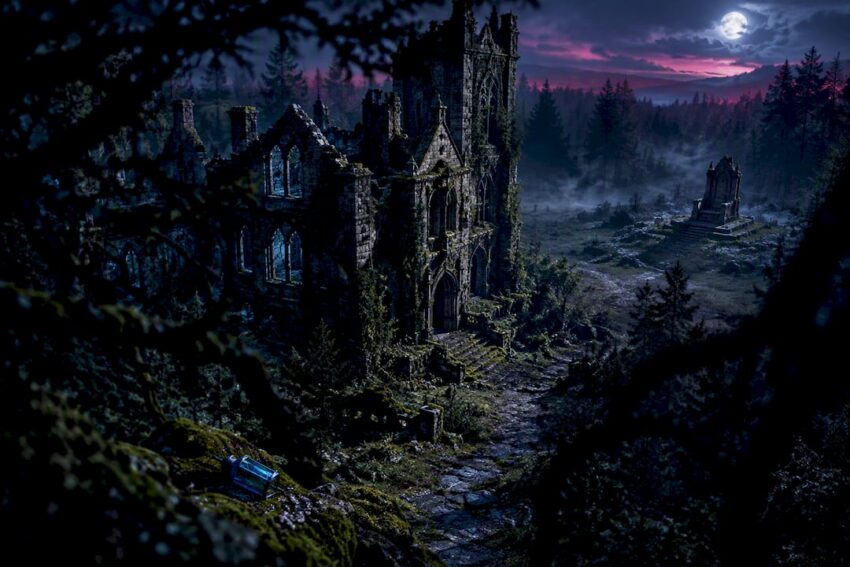
Horror exists to make you afraid. Dark fantasy exists to make you sit in dread and moral discomfort while wandering a world built on magic. They overlap constantly, and plenty of great books sit right on the fence, but that’s the functional split: one genre wants your pulse up, the other wants your conscience unsettled.
TL;DR:
- Horror focuses on provoking immediate fear, using quick pacing, sensory detail, and threats that often intrude into recognizably normal worlds.
- Dark fantasy emphasizes atmospheric buildup, moral ambiguity, and systemic darkness, usually set in invented worlds with high stakes.
- Setting distinguishes the genres, with horror rooted in real-world environments and dark fantasy in secondary worlds with mythic significance.
- Character perspectives differ, with horror often following victims in first or tight third person, while dark fantasy presents morally gray protagonists in broader viewpoints.
- Hybrid stories may feature elements from both genres and should be marketed clearly to set correct audience expectations regarding tone and themes.
Table of Contents
- Dark Fantasy vs. Horror: What Each Genre Is Actually Built to Do
- Setting and Worldbuilding: How Place Shifts Genre Expectations
- Tone, Pacing, and the Craft Techniques Behind Fear vs. Dread
- Characters, Monsters, and Point-of-View Choices
- Overlap, Hybrids, and a Quick Genre Checklist
- Historical Roots: Where These Genres Actually Came From
- Motifs and Symbolism: What Each Genre Keeps Coming Back To
- Audience Expectations and Reception Differences
- Cultural Currents Shaping Both Genres
- How the Medium Changes the Genre
- Practical Guidance for Writers Choosing or Blending These Genres
- Why This Distinction Actually Matters to Me
- Where to Read Dark Supernatural Fiction That Sits in This Overlap
- Sources
- FAQ
Dark Fantasy vs. Horror: What Each Genre Is Actually Built to Do
Start with definitions, because most genre arguments collapse the second someone actually looks them up.
Horror is a genre built around a single mission: disturb the audience. According to EBSCO’s research primer on horror stories, the genre relies on suspense, shock, and a threat to normal life, whether that threat is a monster, a haunted house, or a slow psychological unraveling. The Wikipedia entry on horror film backs this up from the critical side, framing the genre around a “threat to normality” that has to be confronted, survived, or destroyed by the story’s end. Fear is the deliverable. Everything else, plot, character, theme, serves that goal.
Dark fantasy runs on a different engine. It’s a fantasy subgenre that folds in horror elements, but its primary job is atmospheric and moral, not purely visceral. Wikipedia’s entry on dark fantasy describes it as fiction with a brooding tone, moral ambiguity, and supernatural machinery, cursed landscapes, corrupting magic, protagonists who are hard to root for cleanly. The point usually isn’t to scare you in the jump-and-gasp sense. It’s to leave you unsettled about what “good” and “evil” even mean inside that world.
Here’s how the goals actually diverge in practice:
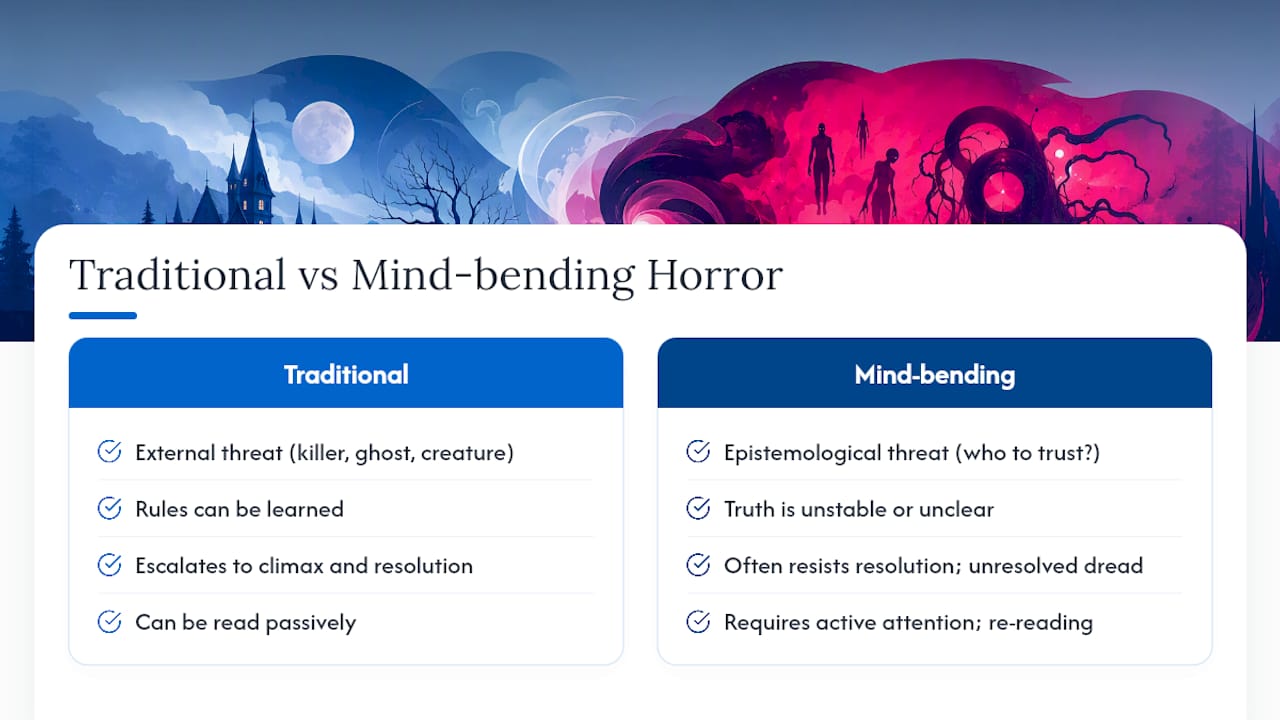
- Horror aims for fear, dread, or revulsion as the primary reader response; success means the reader felt genuinely rattled.
- Dark fantasy aims for atmosphere, moral tension, and mythic weight; success means the reader felt disturbed on a slower, more thoughtful burn.
- Horror typically resolves around survival or defeat of a specific threat.
- Dark fantasy typically resolves around cost, corruption, or the price a character paid for power.
- Horror’s techniques include jump scares, isolation, and body horror.
- Dark fantasy’s techniques include cursed bargains, morally compromised heroes, and worldbuilding that makes darkness feel systemic rather than intrusive.
Neither approach is “scarier” by design. They’re aimed at different nerves.
Setting and Worldbuilding: How Place Shifts Genre Expectations
Where a story happens changes what genre it reads as almost automatically.
Dark fantasy usually lives in a secondary world, an invented setting with its own history, magic system, and rules of consequence. That distance from our reality is doing real work: it lets an author build mythic stakes (the fate of a kingdom, a bloodline curse, a war between gods) without needing to justify why any of it is happening in the reader’s actual world. The horror in dark fantasy tends to be baked into the setting itself. A forest that eats travelers, a throne that corrodes whoever sits on it, magic that always demands payment in something the caster can’t get back.
Horror, by contrast, usually needs the mundane to work. The genre’s core move is intrusion: something wrong enters a world that was, until page one, recognizably normal. A suburban house. A hospital. A small town nobody’s ever heard of. That contrast between “ordinary” and “violated” is what generates dread, and it’s why horror struggles a little in fully invented fantasy worlds where “weird” is already the baseline. If everything is already strange, nothing can intrude on normal.
That setting choice bleeds straight into marketing and reader expectations:
- A secondary-world story with an epic map and multiple kingdoms signals dark fantasy even before the reader hits chapter one.
- A story set in a real, recognizable town or era signals horror, because the reader’s own sense of “normal” becomes the thing at risk.
- Hybrid works often use a secondary world but structure a specific arc as an intrusion narrative within it, which is one of the fastest ways a fantasy book earns a horror label anyway.
Tone, Pacing, and the Craft Techniques Behind Fear vs. Dread
Fear and dread are built with different tools, even when the sentence-level prose looks similar on the page.
Horror pacing tends to compress. Short chapters, tight scenes, a reveal strategy that withholds the threat’s full shape until late, then delivers it fast. Sensory detail in horror leans concrete and immediate: the sound in the hallway, the smell in the basement, the exact second the lights cut out. The goal is a nervous system response, not a philosophical one.
Dark fantasy pacing tends to stretch. Atmosphere gets built over chapters, not paragraphs, and the “reveal” is often a slow understanding of what a character’s power has cost them rather than a single jump-scare moment. Ambiguity does a lot of the heavy lifting here. The reader isn’t always sure who to trust, whether the protagonist’s choices were justified, or whether the villain’s logic is actually wrong. That moral fog is the load-bearing wall of the genre, and it’s part of why dark fantasy narratives foreground the corrupting cost of power as a central theme rather than a side effect.
Three quick craft contrasts:
- Reveal timing. Horror often reveals the threat’s nature late and fast; dark fantasy reveals a character’s moral compromise gradually, scene by scene.
- Sensory focus. Horror leans on immediate, bodily sensory detail; dark fantasy leans on environmental and symbolic detail (rot, decay, corrupted beauty).
- Resolution. Horror typically closes a threat loop; dark fantasy typically closes a cost loop, showing what the protagonist gave up to win, survive, or simply keep going.
Pro Tip: If you want to test which genre a scene is actually functioning as, ask what the reader is supposed to feel at the exact moment the scene ends. Relief that a threat is gone points to horror. A lingering “was that the right call?” points to dark fantasy.
Writers looking to sharpen the fear-specific side of this toolkit can go deeper in this craft guide to writing psychological horror, which breaks down how to build dread without relying on gore.
Characters, Monsters, and Point-of-View Choices
Who a story follows, and how it frames its monster, is one of the fastest tells for which genre you’re actually reading.
Horror protagonists are frequently victims or survivors: ordinary people thrown into extraordinary danger, defined largely by how they react to a threat rather than by long moral arcs. Dark fantasy protagonists are more often morally gray, antiheroes, reluctant villains, characters who’ve already made a compromise before the story even starts. That difference shapes everything downstream, including how a reader is meant to feel about the “monster” in the room.
- In horror, the monster is usually a metaphor, a stand-in for a societal anxiety (disease, technology, isolation, guilt) that the story wants to interrogate through fear.
- In dark fantasy, the monster is more often a mythic agent, a being with its own logic, history, and sometimes sympathetic motive, closer to a tragic force than a symbol.
- First-person or tight third-person point of view tends to intensify horror’s fear response, since the reader is trapped inside a character’s panic in real time.
- A more distanced or multi-character point of view tends to support dark fantasy’s ambiguity, letting readers weigh competing moral perspectives instead of just one character’s terror.
A story told entirely from inside a monster’s head, sympathetically, rarely reads as pure horror anymore. It’s already drifted toward dark fantasy, whatever the marketing copy claims. For more on how these choices separate horror from its closest cousin, the comparison between psychological thriller and horror covers where perspective and pacing pull a story in each direction.
Overlap, Hybrids, and a Quick Genre Checklist
Plenty of the best-known dark fiction refuses to sit neatly in one box, and that’s not a labeling failure. It’s the genre working as intended.
Practicing authors and readers frequently describe dark fantasy and horror as points on a spectrum rather than separate shelves, and the long-running discussion from author Rachel Neumeier makes the case directly: dark fantasy tends toward secondary-world settings and moral complexity, horror tends toward intrusions into ordinary life and a sharper focus on fear. Community threads back this up too. A widely referenced r/Fantasy discussion on grimdark versus dark fantasy versus horror shows readers converging on the same handful of signals again and again: setting, protagonist type, and whether the piece is chasing terror or unease.
That gives you a workable checklist for any borderline book:
- Primary response. Did the story mainly want you afraid, or mainly want you uneasy and morally conflicted?
- Setting. Secondary world with invented rules, or our world (or something close to it) getting invaded?
- Narrative focus. Survival of a specific threat, or the cost of a choice, curse, or power?
- Marketing signals. Does the cover, blurb, or category page use “terrifying” language or “epic,” “cursed,” “grim” language?
A story about a plague-ravaged kingdom where the cure demands human sacrifice reads as dark fantasy if the tension centers on who deserves to be saved. The identical premise reads as horror if the tension centers on a single family trying to survive the outbreak in real time. Same skeleton, different genre, purely because of where the camera points.
Historical Roots: Where These Genres Actually Came From
Horror’s literary lineage traces back through Gothic fiction, Mary Shelley, Edgar Allan Poe, the Victorian ghost story tradition, all built around intrusion, decay, and the fear of what modern life had supposedly left behind. The genre picked up new subgenres over the 20th century as cinema and pulp fiction expanded its toolkit, giving us slasher horror, cosmic horror, and body horror as distinct branches with their own conventions, a taxonomy that Wikipedia’s horror fiction overview lays out in detail.
Dark fantasy’s roots run through a different, but adjacent, tradition: high fantasy and myth, crossed with the Gothic sensibility horror was already refining. Writers who wanted the scope of epic fantasy, kingdoms, prophecies, invented cosmologies, but without the moral cleanliness of a traditional hero’s journey, started blending in horror’s atmosphere and dread. The result borrowed fantasy’s architecture and horror’s mood without fully committing to either genre’s rulebook.
Both genres have kept evolving in tandem rather than in isolation. Horror absorbed fantasy’s taste for elaborate mythologies (cosmic horror is arguably where this shows up most). Dark fantasy absorbed horror’s willingness to let a story stay unresolved and uncomfortable. Neither genre’s history makes sense read in isolation from the other.
Motifs and Symbolism: What Each Genre Keeps Coming Back To
Horror’s recurring symbols circle around contamination and violation: the haunted house that used to be a home, the infected body that used to be healthy, the trusted neighbor who turns out to be the threat. These motifs work because they take something safe and invert it. The disruption is the point.
Dark fantasy’s recurring symbols circle around cost and corruption: the crown that poisons whoever wears it, the magic that ages the caster, the bargain that seemed fair until the price came due. Where horror asks “what if something safe turned dangerous,” dark fantasy asks “what if power always demanded something you weren’t ready to lose.”
Both genres use darkness literally and figuratively, but they point it in different directions. Horror’s darkness is usually external, a force invading from outside. Dark fantasy’s darkness is usually internal and systemic, baked into the world’s magic, politics, or bloodlines from the start. That’s a big part of why dark fantasy villains often get sympathetic treatment and horror monsters rarely do.
Audience Expectations and Reception Differences
Horror readers generally show up wanting to feel something physical, a racing pulse, a genuine startle, the specific pleasure of being scared inside a safe context. When a horror book fails to deliver a real scare, readers tend to call it out directly. That’s the contract; break it and reviews reflect it fast.
Dark fantasy readers show up for something slower: immersion in a bleak, richly built world and a willingness to sit with morally uncomfortable characters. A dark fantasy book doesn’t need a single scare to succeed. It needs to make the reader feel the weight of its world and its choices. Reviews for weak dark fantasy usually complain about flat worldbuilding or shallow moral stakes, not a lack of scares.
That divide creates real mismatch risk. A horror fan picking up a dark fantasy novel expecting jump scares will likely feel let down by a slow, brooding book that never delivers a clean scary set piece. A dark fantasy fan picking up straight horror might find it thin on worldbuilding or moral nuance, even if it’s genuinely frightening. Genre labeling exists precisely to prevent that mismatch, and Rachel Neumeier’s writing on the two genres makes clear that even experienced readers rely on setting and tone cues, not just cover art, to sort books correctly before buying.
Cultural Currents Shaping Both Genres
Horror has always tracked cultural anxiety closely. Cold War paranoia produced invasion narratives. The rise of industrial and medical fears produced body horror. Pandemic-era fiction produced a wave of contamination and outbreak stories. The genre functions almost like a cultural nervous system, absorbing whatever a society is quietly afraid of and giving it a shape.
Dark fantasy tracks something slightly different: a cultural appetite for morally complicated power structures. Its rise alongside grimdark fantasy in the last few decades lines up with broader fiction trends away from clean heroism and toward stories where every faction has blood on its hands. Readers tired of tidy good-versus-evil arcs found dark fantasy’s moral fog more honest to how power actually works.
Regional and literary traditions matter here too. Gothic literature’s European roots shaped horror’s early obsession with decaying estates and cursed bloodlines. Epic fantasy’s roots in myth and folklore shaped dark fantasy’s comfort with gods, curses, and prophecy as load-bearing plot devices. Neither genre grew in a vacuum, and both keep borrowing from each other as cultural tastes shift.
How the Medium Changes the Genre
The format a story ships in changes what tools it has available, and that reshapes how each genre actually functions.
Literature can sustain dark fantasy’s slow-burn atmosphere for hundreds of pages in a way that’s harder to pull off on screen, which is part of why the genre’s most ambitious worldbuilding still lives primarily in novels and series. Horror translates unusually well to film, because visual and sound design (a slammed door, a discordant score, a shape in a dark hallway) can deliver a jump scare in seconds that would take paragraphs to build on the page.
Games add a layer neither medium fully replicates: player agency. Horror games can trap a player inside a threat in real time, turning fear into something closer to lived experience than observed story. Dark fantasy games lean on that same agency differently, letting players make the morally costly choices themselves rather than just watching a character make them, which intensifies the genre’s core interest in consequence.
Each medium pulls creators toward the techniques it does best, which is one reason a novel and a film adaptation of “the same” dark supernatural story can feel like they belong to two different genres entirely.
Practical Guidance for Writers Choosing or Blending These Genres
Genre choice starts with one question: what do you want the reader feeling when they close the book? If the answer is “shaken and relieved it’s over,” build toward horror’s tools, tight pacing, a real threat, a resolution that closes the loop. If the answer is “unsettled and still thinking about it,” lean into dark fantasy’s slower atmosphere and moral cost.
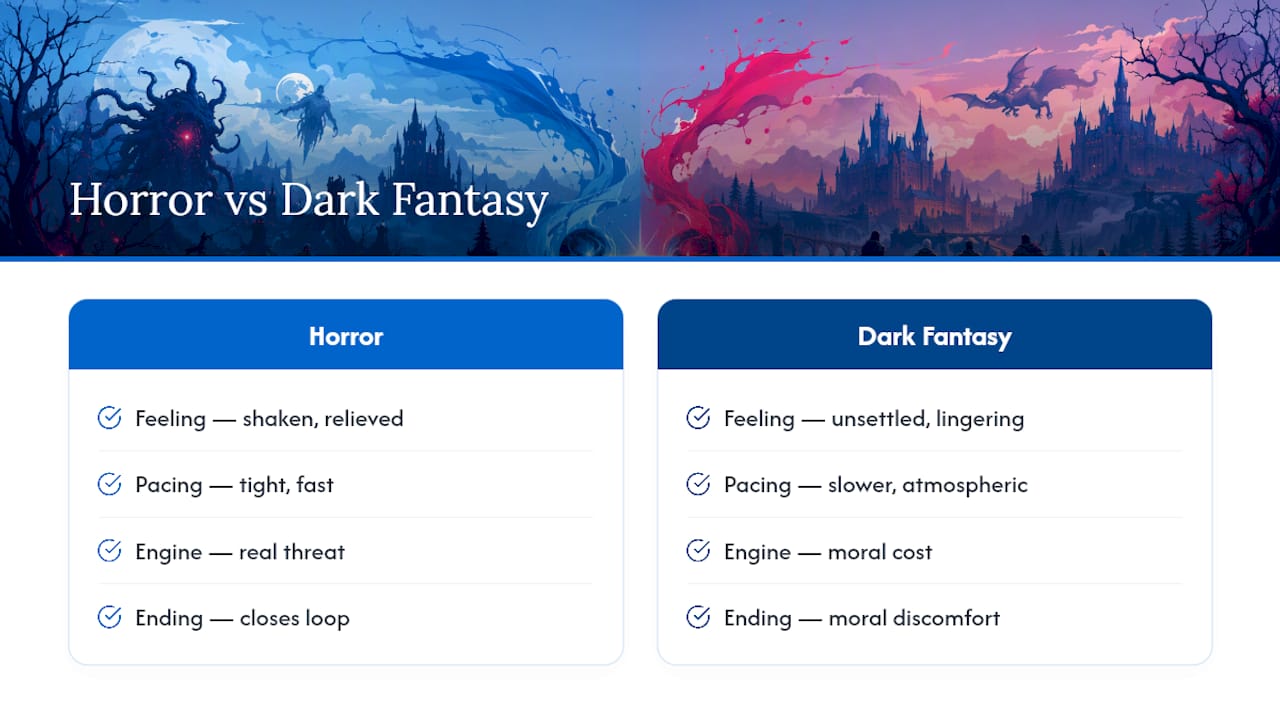
At the scene level, the same principles hold. Open with a hint of wrongness, not a full reveal, in either genre. Escalate dread by making each scene slightly worse than the reader expects rather than jumping straight to the worst outcome. And if magic exists in your world, decide early what it costs the user, because that cost is often the fastest way to signal dark fantasy over generic horror.
Hybrid work needs the most careful marketing. If a book leans fifty-fifty, the blurb should say so honestly rather than overselling the scare factor to horror readers who’ll feel misled by a slow burn, or overselling the mythic scope to fantasy readers who’ll be caught off guard by genuine horror set pieces.
Pro Tip: Write the ending’s emotional beat before you write the opening scene. Knowing whether you’re closing on relief or on moral discomfort will tell you, scene by scene, which genre’s tools to reach for.
Why This Distinction Actually Matters to Me
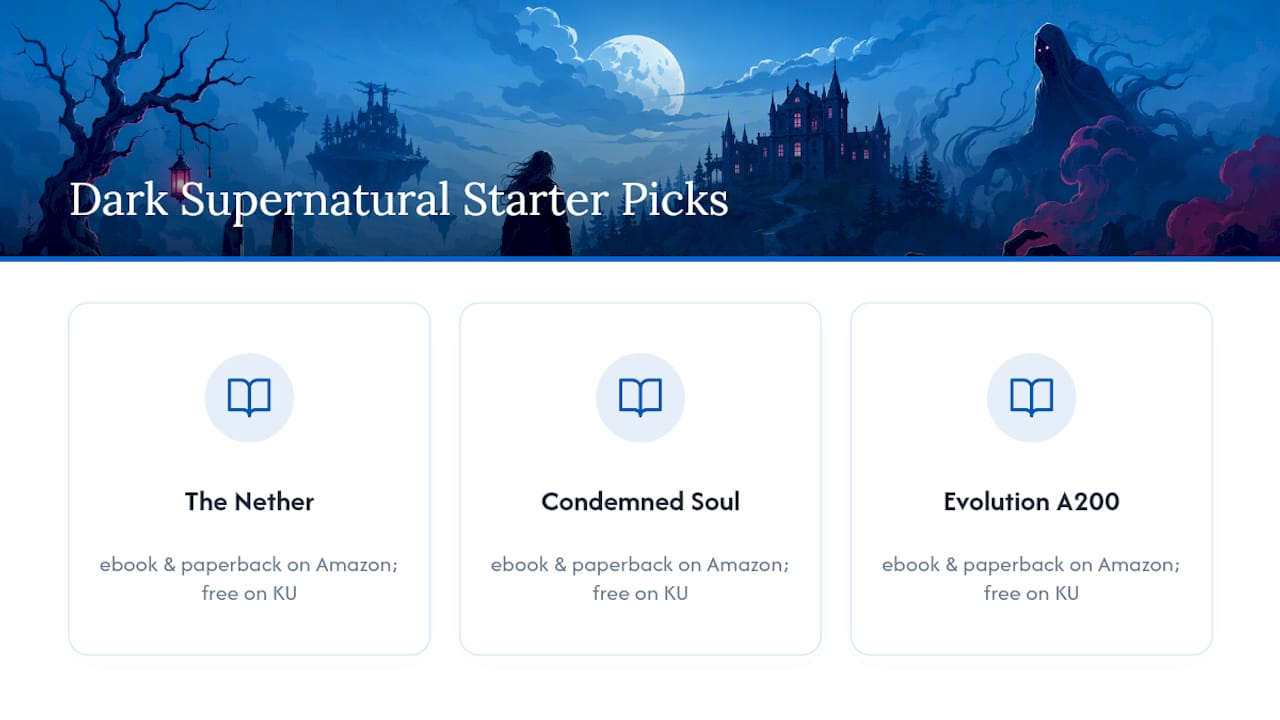
Genre labels aren’t gatekeeping. They’re a promise. When a reader picks up a book expecting dread and moral weight and instead gets a slasher plot, that’s a broken promise, not a matter of taste. I’ve built my own work, from The Nether to Evolution A200, around that same brooding, morally uncomfortable space where fear and dark fantasy overlap, and I think the genre conversation gets more honest once writers stop treating “horror” as a catch-all for anything unsettling.
— Nathaniel
Where to Read Dark Supernatural Fiction That Sits in This Overlap
If the overlap between dread, moral ambiguity, and genuine fear is what pulled you into this article, that’s the kind of territory some dark supernatural fiction explores. Some books lean into psychological dread and guilt with a slow, brooding pull rather than cheap scares, while others push similar unease into dystopian, body-horror territory. These stories often explore the psychological monsters underneath the supernatural ones, which is the point of blending these genres instead of picking one.
Every title is available in ebook and paperback on Amazon, and free to read for Kindle Unlimited subscribers, so there’s no added cost to see whether this tone matches what you’re after. Start with the full catalog of Nathaniel Connors’s books, including the complete Nether Series and EA200 Series, and pick whichever premise pulls at you first.
Sources
Concrete examples make the distinction stick faster than any definition.
- EBSCO Research Starter: Horror stories
- Horror film — Wikipedia
- Rachel Neumeier — Dark Fantasy vs Horror
Each example demonstrates one thing clearly: setting and reader response, not marketing category, decide where a story actually lands. Readers who want a curated shortlist built specifically around this dread-first sensibility can check this list of dark supernatural books built for real dread.
FAQ
What Are the Three Main Subgenres of Horror?
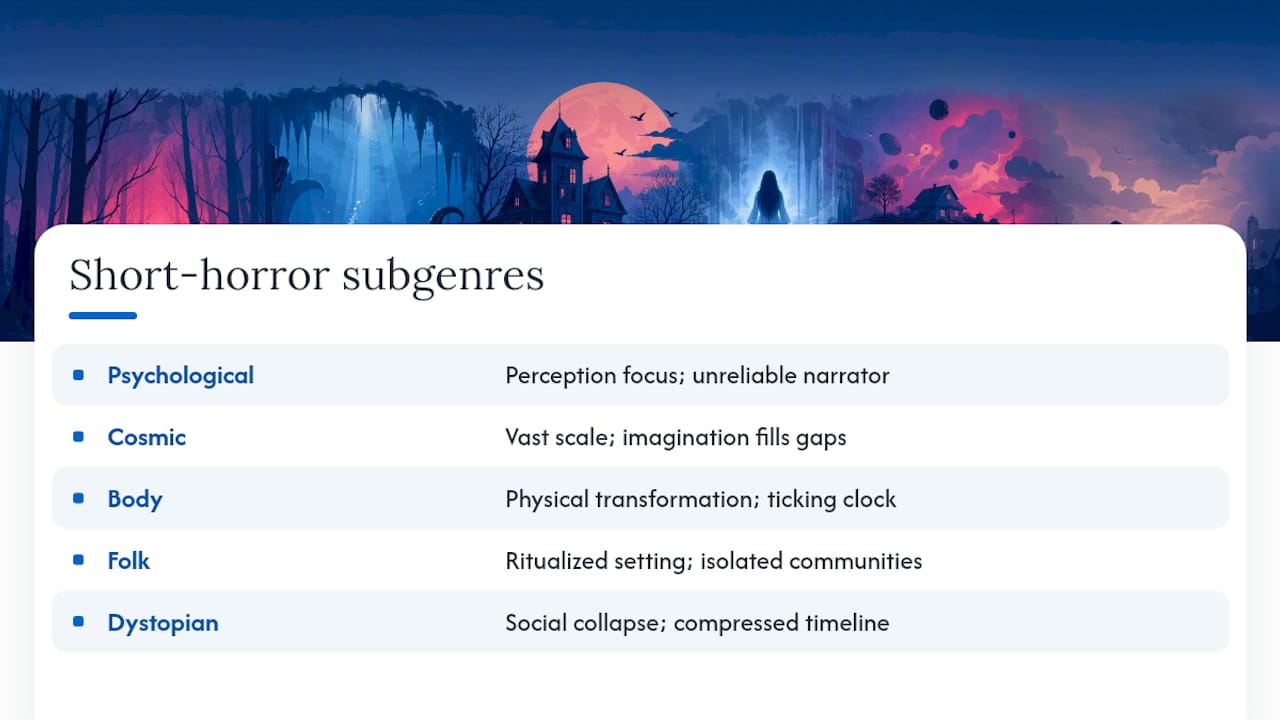
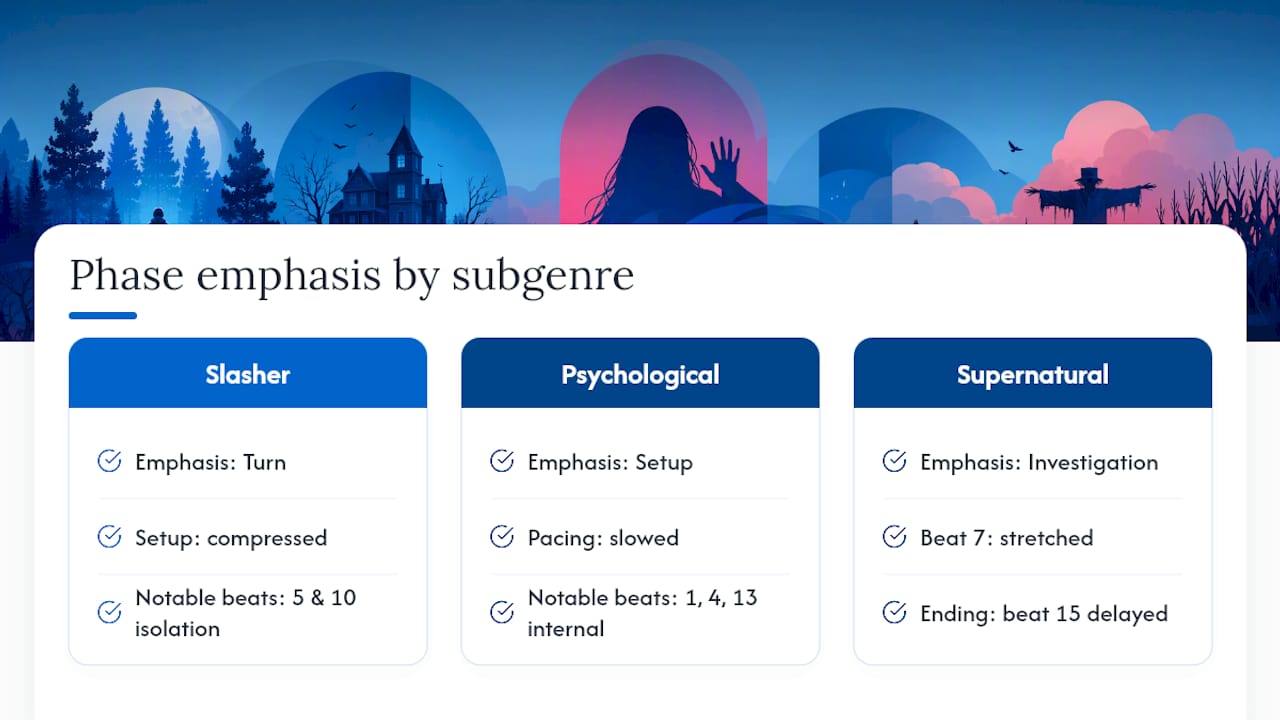
Horror commonly splits into psychological horror, supernatural horror, and body horror, though broader taxonomies also include slasher and cosmic horror as distinct branches. Each prioritizes a different technique, mental dread, ghosts and demons, or physical transformation, to produce fear.
Is Harry Potter Considered Dark Fantasy?
Not typically. The series has dark moments, but its overall tone stays hopeful and its moral lines stay relatively clear, which puts it closer to traditional fantasy than to dark fantasy’s brooding, morally ambiguous territory.
What Are Some Examples of Dark Fantasy?
Mervyn Peake’s Gormenghast novels are a strong example, built entirely around a decaying secondary world without relying on jump scares. Fairy-tale retellings centered on cursed bargains and epic fantasy featuring morally compromised rulers also fit the genre well.
Is The Lord of the Rings High Fantasy or Dark Fantasy?
The Lord of the Rings is generally classified as high fantasy, not dark fantasy, because its moral framework stays clear and its tone ultimately leans hopeful despite real darkness along the way. Dark fantasy typically requires sustained moral ambiguity and a brooding tone throughout, which Tolkien’s core trilogy doesn’t sustain.
What Is the Fastest Way to Tell Dark Fantasy From Horror?
Ask what the story wants you to feel at the end of a scene. Genuine fear or relief points to horror; lingering unease about a choice or a cost points to dark fantasy.