Nathaniel Connors | Dystopian Horror & Thriller Fiction

Where every story begins in the dark.

Menu
  • Home
  • About the Author
  • Books
    • The Nether
    • Evolution A200: A Bubonic Apocalypse
    • Evolution A200: Radio Silence
    • Stories of a Condemned Soul (Volume One)
  • Film
    • Room 302 (Short Film)
  • Amazon Author Page
  • Goodreads
  • Original Quotes by Nathaniel Connors
    • Dark Quotes
    • What Remains
    • Where Stories Settle
Menu

Category: Articles

Clinician weighing scarce medicine in field clinic

Five Questions for Apocalyptic Survival Ethics, Tested by Four Novels

Posted on September 11, 2026September 23, 2026 by NConnors

Under sustained collapse, moral norms typically shift toward group-first survival, but reasoned ethical heuristics can still limit harm and preserve the possibility of rebuilding. This article walks through the major philosophical frameworks, the dilemmas that recur across real planning exercises and survival fiction, a practical checklist for hard calls, and what four landmark stories (Station Eleven, The Road, World War Z, The Walking Dead) teach about the cost of getting it wrong.


TL;DR:

  • Scarcity intensifies in-group loyalty, making exclusion and violence more justifiable, while moral frameworks struggle to maintain their authority.
  • Kantian duty ethics can become lethal in survival scenarios, utilitarian calculus depends on unreliable data, and virtue ethics erodes as character standards fail under stress.
  • Hard moral dilemmas like triage, lethal force, and cannibalism tend to recur, driven by the certainty that reversing difficult choices feels impossible once resources are depleted.
  • A five-question checklist helps prevent ethical drift when making quick survival decisions under stress, emphasizing immediacy, proportionality, reversibility, and accountability.
  • Fiction offers a valuable space for moral rehearsal, helping individuals understand their reasoning patterns before facing real-life collapse or trauma.

Nathanielconnors
Explore the Human Cost of Collapse
Nathaniel Connors writes dark supernatural and dystopian fiction about guilt, revenge, redemption, and the psychological monsters within us.

Explore the stories

Table of Contents

  • What Happens to Morality When the World Ends?
  • Kant, Utilitarianism, Virtue Ethics, and Maslow: Four Lenses for Collapse
  • The Dilemmas That Keep Coming Back
  • A Five-Question Checklist for Hard Calls
  • What Four Survival Stories Teach About Moral Trade-Offs
  • Nathaniel Connors on Writing the Ethics of Collapse
  • Social Contracts and Rebuilding Ethics After Collapse
  • Leadership and Authority When the Rules Run Out
  • How Prolonged Crisis Wears Down Moral Judgment
  • Personal Survival Versus the Good of the Group
  • What Happens to Law and Justice After the Old System Falls
  • Why Moral Imagination Still Matters
  • Where to Read More on Collapse and Character
  • Sources

What Happens to Morality When the World Ends?

Apocalyptic survival ethics is the study of how people make right-and-wrong decisions once the institutions that normally enforce morality (police, courts, hospitals, markets) stop functioning. It’s a niche corner of applied ethics, but it draws on serious philosophical machinery: Kantian duty theory, utilitarian calculus, virtue ethics, and Abraham Maslow’s hierarchy of needs all get pressure-tested when characters (fictional or hypothetical) have to choose who eats, who gets the last dose of antibiotics, or who gets left outside the gate.

The pattern researchers and literary critics keep finding is depressingly consistent. Pre-collapse altruism tends to erode into what one academic analysis calls extreme citizenism, a narrowing of moral concern to “my group” at the expense of everyone else, according to a character study applying Kant and Maslow to apocalyptic fiction. That’s not a moral failure unique to villains. It’s a structural response to scarcity, and it shows up in serious government planning exercises, not just zombie shows.

That’s the uncomfortable starting point for this whole conversation. Morality doesn’t vanish after collapse. It reorganizes around survival, and understanding how it reorganizes is the first step toward making better choices when your own turn comes.

Kant, Utilitarianism, Virtue Ethics, and Maslow: Four Lenses for Collapse

Each major ethical framework answers a different question when the world stops working, and none of them gives you a clean answer alone.

Kantian duty ethics asks whether an action treats people as ends in themselves rather than tools. Kant’s categorical imperative doesn’t bend for circumstance, which is exactly why it struggles in survival scenarios. A duty not to lie or not to abandon the vulnerable sounds noble in a functioning society. When the institutions that once enforced reciprocal duty disappear, following Kant strictly can get you killed, and it can get people depending on you killed too.

Utilitarianism flips the question to consequences: which action produces the most good for the most people? This is the logic behind triage, and it’s the logic World War Z’s fictional government planners lean on when resources run out. The problem is measurement. You rarely know the real fatality rate, the real supply chain, or the real odds of rescue, and a miscalculated mortality estimate changes the entire moral calculus of what’s justified, a risk highlighted in reporting on scenario-planning exercises like Dark Winter and TOPOFF.

Virtue ethics asks a quieter question: what would a courageous, temperate, just person do here, and what habits am I building with this choice? It matters because character erodes gradually. Small compromises normalize larger ones.

Maslow’s hierarchy explains why the other three frameworks keep losing ground. Once physiological safety is threatened, higher order moral reasoning often gets crowded out entirely.

  • Kant: protects individual dignity, but rigid rules can fail catastrophically under scarcity.
  • Utilitarianism: optimizes group survival, but is only as sound as your data.
  • Virtue ethics: builds resilient character, but depends on a community to reinforce norms.
  • Maslow: explains why people abandon frameworks 1 through 3 under threat.

Pro Tip: Don’t pick one framework and marry it. Use Kant to check whether you’re treating someone as disposable, utilitarianism to weigh scale, and virtue ethics to ask what kind of person the choice is making you into.

The Dilemmas That Keep Coming Back

Certain moral crises recur across nearly every collapse scenario, real or fictional, because they map onto the same structural problem: too little of something essential and too many people who need it.

  1. Triage. Allocating scarce medicine, food, or shelter by criteria like survival odds or usefulness to the group is efficient on paper. The hazard is that “usefulness” quietly becomes a proxy for who counts as a full person, and triage frameworks built for hospitals under mass-casualty conditions were never designed for open-ended, months-long scarcity.
  2. Lethal force. Killing to stop an immediate, unambiguous threat is different from killing to preempt a hypothetical future threat. The second category is where most rationalized violence in survival fiction actually happens.
  3. In-group loyalty (citizenism). Groups form fast under threat, and loyalty to the group can justify excluding or attacking outsiders within a matter of months, not years, according to analysis of survival-fiction communities like Terminus. The shift from “we protect our own” to “outsiders don’t count” is a short slope, not a cliff.
  4. Cannibalism. It remains one of the strongest taboos across human cultures, carries genuine legal ambiguity in true emergency contexts, and produces documented psychological aftereffects in survivors of real disasters, from shipwrecks to plane crashes. Fiction uses it as the clearest marker of a character (or society) that has crossed a line it cannot walk back from.

The recurring failure mode across all four isn’t cruelty. It’s certainty. People convince themselves the hard call is obviously correct because reversing course feels impossible once resources are already spent. That false confidence, more than scarcity itself, is what pushes reasonable people toward atrocity.

A Five-Question Checklist for Hard Calls

Most catastrophic ethical decisions in survival scenarios aren’t made in a vacuum. They’re made fast, under stress, with incomplete information, which is exactly why a short checklist beats an elaborate philosophy in the moment.

Ask these five questions before acting on any decision involving harm to another person or exclusion of someone from group resources:

  • Is the threat immediate and specific, or am I acting on fear of what might happen later?
  • Have I actually run out of alternatives, or have I just stopped looking for one?
  • Is my response proportional to the actual threat, not the worst-case version of it?
  • Can this decision be reversed or corrected if I’m wrong?
  • Could I explain this decision, in full, to the community afterward without flinching?

That last question does the most work. Planning exercises for pandemic and bio-threat response, including tabletop simulations like Dark Winter, consistently show that decisions made in secrecy or without accountability drift further from proportionality over time, per reporting on how scenario planning shapes real policy choices. Documentation and openness aren’t bureaucratic nice-to-haves. They’re a check against your own rationalization.

Two fallback principles cover most situations the five questions don’t fully resolve: minimize total harm, and protect people who cannot protect themselves first. Neither principle guarantees a good outcome, but both keep you oriented toward rebuilding something worth rebuilding, rather than just outlasting everyone else.

Pro Tip: Write your reasoning down, even a few lines, right after a hard decision. Memory reshapes itself to justify past choices. A contemporaneous note is the only honest record you’ll have of what you actually knew at the time.

What Four Survival Stories Teach About Moral Trade-Offs

Fiction functions as a low-cost laboratory for testing ethical positions that would be reckless to test in reality, a point literary critics have made repeatedly about post-apocalyptic novels from Cormac McCarthy onward.

  • Station Eleven by Emily St. John Mandel makes the case that preserving art, memory, and cooperative culture isn’t a luxury after collapse. It’s a survival strategy for the species, not just the individual.
  • The Road by Cormac McCarthy strips ethics down to a father protecting a son in a world offering almost no reason for decency. The novel’s power comes from characters who try to hold onto pre-collapse values anyway, at real cost to themselves.
  • World War Z by Max Brooks dramatizes state-level triage through fictional plans like the Redeker Plan, sacrificing some regions to save others, exposing how power and inequality shape who gets called expendable, according to comparative analysis of the book’s political themes.
  • The Walking Dead repeatedly stages the same problem: a proto-state forms, draws a boundary, and then has to decide what happens to people on the wrong side of it. Academic readings treat the series as an extended argument about leaving the state of nature and what civil society actually costs to rebuild.

Nathaniel Connors on Writing the Ethics of Collapse

An author writes dark supernatural fiction and psychological horror built around one persistent question: what does a person become under sustained pressure? That question runs through a plague novel focusing on characters facing triage and loyalty dilemmas, not as abstract philosophy but as decisions with faces attached to them.

Fiction lets readers rehearse moral reasoning without real-world stakes. Reading how a character justifies excluding a stranger, or rationalizes a lethal choice, gives you a low-cost way to notice your own reasoning patterns before a real crisis forces the same choice on you. That’s the practical case for treating apocalyptic plague fiction as more than entertainment. It’s moral rehearsal.

Social Contracts and Rebuilding Ethics After Collapse

Philosophers from Hobbes to Locke built entire systems around one question: why do people agree to limit their own freedom in exchange for collective security? Post-collapse survival groups answer that question in real time, usually without realizing they’re doing political philosophy.

The first ethical system to reappear after any collapse is almost never a formal government. It’s an informal contract: contribute labor or resources, and you get protection and a share of what the group has. This is functional utilitarianism at the group level, and it works reasonably well at small scale. The trouble starts as groups grow and the contract needs enforcement, which requires someone with authority to enforce it.

Rebuilding ethics after collapse means rebuilding the mechanisms that make a social contract credible, not just the promise itself. That includes some method for resolving disputes, some limit on arbitrary punishment, and some way for members to exit a group that turns exploitative without being treated as a traitor. Groups that skip straight to rules without any of that groundwork tend to produce authority without legitimacy, which is a durable recipe for internal collapse even when the outside threat is contained.

Leadership and Authority When the Rules Run Out

Authority in a survival community faces a problem ordinary leadership doesn’t: there’s no external check on power once courts, elections, and free press stop functioning. Whoever controls food, weapons, or information effectively controls the group’s moral boundaries too.

That concentration of power isn’t automatically corrupt, but it removes the friction that normally slows corruption down. A leader’s decisions about resource allocation, who joins the group, and who gets exiled are also, functionally, that leader’s answers to every ethical question this article has raised. The absence of accountability doesn’t make those decisions wrong by default. It makes them unchecked, which is a different and more dangerous problem.

The healthiest survival leadership structures, in fiction and in real disaster response, tend to build accountability back in deliberately: shared decision-making on major calls, transparent reasoning shared with the group, and some standing mechanism for challenging a leader’s judgment without it counting as mutiny. Leaders who resist that scrutiny, insisting decisions must stay centralized “for efficiency,” are usually the same leaders whose ethics drift furthest from the group’s actual interests.

How Prolonged Crisis Wears Down Moral Judgment

Ethical reasoning assumes a baseline of psychological stability that prolonged apocalyptic stress systematically destroys. Chronic threat, sleep deprivation, grief, and hypervigilance don’t just make decisions harder. They change what decisions feel justifiable in the first place.

Desensitization is the clearest pattern. Acts that would have seemed unthinkable in month one (using violence preemptively, abandoning someone who’s slowing the group down, hoarding resources without disclosure) become normalized through repetition and group reinforcement. This isn’t a character flaw exclusive to weak people. It’s a predictable outcome of sustained threat exposure, and recognizing that pattern in yourself, mid-crisis, is one of the hardest and most valuable skills a person can build in advance.

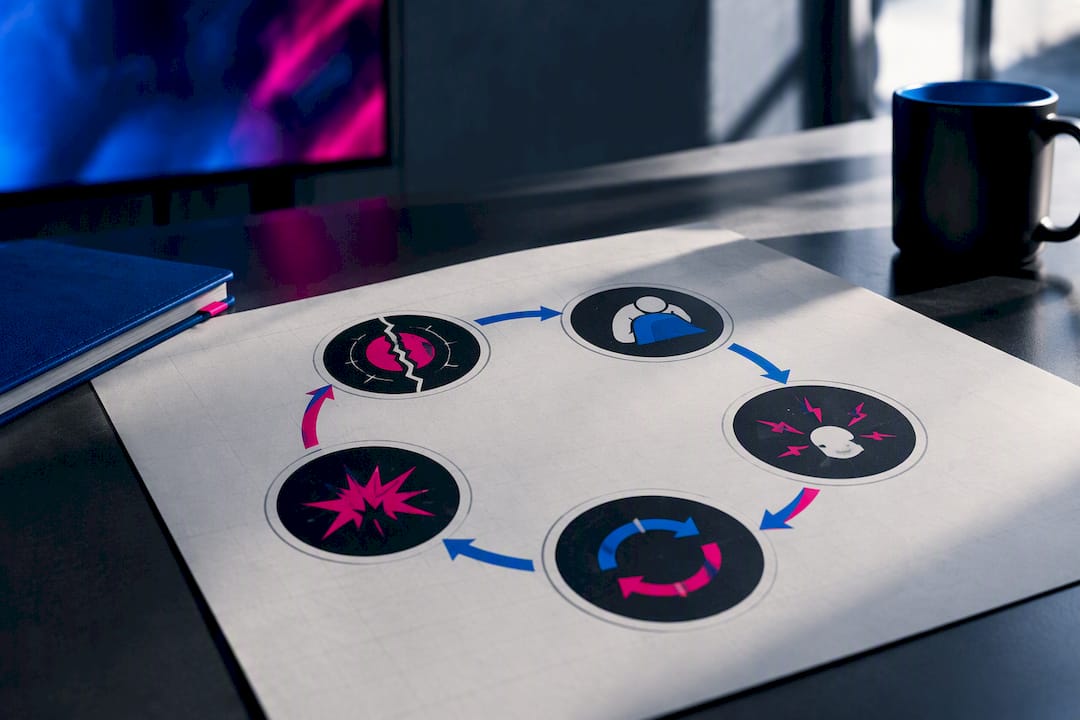
Crisis pressures narrowing moral judgment

The five-question checklist covered earlier exists specifically to counter this drift. Written reasoning and community accountability act as a check against a psychological state that will otherwise rationalize almost anything, given enough repetition and enough scarcity.

Personal Survival Versus the Good of the Group

Every survival story eventually forces the same trade-off: protect yourself, or absorb risk for people you’re not obligated to help. Neither answer is automatically correct, and framing it as pure selfishness versus pure altruism misses what’s actually happening.

Groups tend to survive collapse better than isolated individuals, which means contributing to group welfare is often the more effective personal-survival strategy, not a sacrifice of it. Cooperative behavior shows up as enlightened self-interest as much as generosity. The real tension isn’t self versus group. It’s short-term self-interest versus long-term self-interest, with group welfare usually landing on the long-term side of that ledger.

Where genuine conflict does arise, the useful question isn’t “who deserves this resource more.” It’s whether the group’s welfare, taken as a whole, actually depends on this specific sacrifice, or whether that framing is being used to justify a choice that was really about individual convenience. Groups that maintain some baseline transparency about who’s carrying disproportionate risk tend to sustain cooperation longer than groups where sacrifice is assumed silently and resentment builds underneath it.

What Happens to Law and Justice After the Old System Falls

Formal law depends on enforcement infrastructure, courts, police, prisons, that mostly disappears in a genuine collapse scenario. What replaces it says everything about a survival community’s underlying ethics.

The immediate replacement is usually ad hoc: a leader or council issues rulings case by case, with punishment scaled to whatever the group can enforce, which is often exile or violence rather than anything resembling due process. This is a real regression, not just a narrative device, and it’s why the transition from informal justice back to something resembling due process is one of the clearest markers of genuine rebuilding rather than mere survival.

Fair post-collapse justice systems, fictional and theorized alike, tend to share a few features: rulings are explained publicly rather than delivered by decree, punishment is proportionate rather than exemplary, and there’s some path back into the group for people who’ve been sanctioned rather than permanent exile as the default. Structural injustices from before the collapse don’t disappear in this process. They frequently just take new forms, reshaped rather than erased by the crisis, a pattern critical readings of zombie apocalypse media trace in detail. A justice system built after collapse inherits every bias its builders carried in with them.

What Happens to Law and Justice After the Old System Falls — overview diagram

Why Moral Imagination Still Matters

The frameworks and checklists in this article won’t make a hard decision easy. What they can do is slow you down long enough to notice which framework you’re actually using and whether it fits the moment. That pause is moral imagination: the ability to picture the person on the other side of your decision before you make it, not just the group you’re protecting.

Fiction builds that muscle cheaply. If a scene from The Road or World War Z stuck with you, sit with why. That reaction is worth more than any checklist.

— Nathaniel

Where to Read More on Collapse and Character

If the moral terrain in this article interests you as fiction rather than just philosophy, a certain plague novel is a clear entry point into themes of plague, scarcity, and the choices people make when institutions fail. It’s not a survival manual and doesn’t pretend to be one. It’s a character study of what collapse does to people who thought they knew their own limits.

Nathanielconnors

Readers who want a wider entry into Connors’ catalog before committing to one title can start with the dark supernatural thrillers collection, which gathers the author’s psychological horror and dystopian work in one place. Several titles are available at no added cost through Kindle Unlimited. For a broader sense of how apocalyptic and dystopian fiction use collapse to interrogate character, the curated list of post-apocalyptic survival books is worth a browse, and readers who enjoy short-form fiction that rewards this kind of reflection might also appreciate this collection of short stories worth pondering.

To go deeper into Evolution A200 specifically, or to sample a chapter before buying, visit the dark supernatural thrillers page and start reading today.

Sources

  • Morality in an Apocalypse: A Character Analysis using Kant and Maslow
  • The Ethics of Terminus – Econlib
  • The Ethical Game: Morality in Postapocalyptic Fictions from Cormac McCarthy to Video Games
  • The Rise of the ‘Scenario,’ a Trendy Way of Forecasting our Dystopian Future

Recommended

  • Best Post Apocalyptic Survival Books: 10 Picks Worth Reading
  • Pandemic Apocalypse Books: 15 Novels Worth Your Time
  • Existential Horror Books That Make You Question Reality
  • Dystopian vs Post-Apocalyptic: How to Tell the Difference
Hand turning fragmented horror novel pages

10 Mind Bending Horror Books an Author Recommends to Rewire Reading

Posted on September 10, 2026September 23, 2026 by NConnors

The fastest way into a genuinely mind-bending horror experience is a novel where you can’t trust the narrator, the timeline, or the page itself. Start with Nathaniel Connors’ The Nether and Stories of a Condemned Soul, both built on shifting perspective and psychological unraveling, then branch into structurally experimental classics like House of Leaves. What follows is a shortlist and a guide to the techniques that make these books hit so hard.


TL;DR:

  • Many mind-bending horror books rely on fractured timelines, unreliable narrators, and typographic tricks to actively disorient and challenge the reader’s perception.
  • Structural complexity should mirror the character’s psychological unraveling to avoid feeling like gimmickry that quickly fades from memory.
  • These books often demand patience, note-taking, and rereading, especially for intricate titles like House of Leaves or heavily crafted narratives like Hangsaman.
  • Content themes focus on guilt, grief, and mental instability rather than explicit violence, making the emotional depth essential to the disorienting experience.
  • Beginners can start with character-driven stories like The Nether or Stories of a Condemned Soul before tackling more experimental works like House of Leaves.

Nathanielconnors
Enter Nathaniel Connors’ Dark Fiction
Explore psychological horror, dystopian fear, and emotionally intense stories shaped by revenge, guilt, redemption, and the monsters within.

Explore the author’s books

Table of Contents

  • The Best Mind Bending Horror Books to Read Right Now
  • What narrative devices create a mind-bending reading experience?
  • How to read mind bending horror without losing the thread
  • Nathaniel Connors’ perspective: what makes the cut
  • Where mind bending horror came from
  • Key authors who shaped mind bending horror
  • Mind bending horror vs. traditional horror
  • How mind bending horror affects the way you think while reading
  • Why the “just be confusing” advice on this subgenre misses the point
  • Ready to read something that gets under your skin?
  • Sources

The Best Mind Bending Horror Books to Read Right Now

Some books scare you. These mess with how you process what’s real. The ten below use structure, voice, or imagery to make the reading experience itself feel unstable, not just the plot.

  • The Nether by Nathaniel Connors. This one leans on a narrator whose grip on guilt and memory keeps slipping, so scenes you thought were settled get reinterpreted later. Intensity is high and emotional, not gory. Best for readers who want dread that comes from character psychology rather than jump scares.
  • Stories of a Condemned Soul by Nathaniel Connors. A collection built around perspectives that fracture across linked stories, each one reframing guilt and redemption from a different angle. The mind-bending part is watching how the same moral weight lands differently depending on whose head you’re in. Best for readers who like horror anthologies with a through line instead of disconnected scares.
  • Evolution A200: A Bubonic Apocalypse by Nathaniel Connors. A dystopian horror premise where the collapse of society mirrors a psychological collapse in the characters, blurring which threat is more real. It’s dense and slower burning than the other two titles. Best for readers who want their horror tangled up with dystopian world building.
  • House of Leaves by Mark Z. Danielewski. The book is widely described as an experimental, maze-like novel that uses footnotes, mirrored text, and pages that physically warp to disorient you. Reading it is closer to solving a puzzle than following a plot, since the nonlinear and metafictional structure forces you to actively reconstruct the story. Best for readers who don’t mind slowing down and annotating as they go.
  • Lost Boy Lost Girl by Peter Straub. Straub reworks haunted house tropes through a nonlinear, multi-voice narrative that deepens psychological dread rather than relying on a single reliable account of events. You piece together what happened from fragments that don’t always agree. Best for readers who liked House of Leaves’ structural ambition but want something a little more grounded in family trauma.
  • Moonflow by Bitter Karella. Nominated for the Bram Stoker Award and the Shirley Jackson Award, this one blends eldritch, cosmic imagery with a very human psychological core. It’s newer than most entries here and expands what the subgenre can hold. Best for readers who want surreal horror with a queer, ecological edge.
  • Hangsaman by Shirley Jackson. Jackson’s novel blurs reality and dark imaginings so thoroughly that even now, critics debate what actually happens to the protagonist. It’s short, quiet, and unsettling in a way that creeps rather than shocks. Best for readers who want a slower, literary entry point into perception-bending horror.
  • We Have Always Lived in the Castle by Shirley Jackson. The narrator is charming and clearly unreliable at the same time, which makes every claim she makes feel suspect. It’s a masterclass in warmth used as a weapon. Best for readers new to unreliable narrators who want an accessible starting point.
  • The Fisherman by John Langan. Cosmic horror wrapped inside a story about grief, told by a narrator who keeps interrupting himself with digressions that eventually become the point. Best for readers who like their mind-bending horror slow and literary rather than fast and fragmented.
  • Piranesi by Susanna Clarke. Not marketed as horror, but the disorientation of living inside an impossible, endless house makes it a strong companion read for anyone who loved the structural confusion of House of Leaves. Best for readers who want the surreal without the gore.

What narrative devices create a mind-bending reading experience?

Four techniques do most of the heavy lifting in this subgenre, and once you recognize them, you can tell in the first chapter whether a book will disorient you or just unsettle you.

  • Nonlinear structure. Events arrive out of order, forcing you to build the timeline yourself, the way Lost Boy Lost Girl layers competing accounts of the same disappearance.
  • Unreliable narrators. The voice telling the story has a reason, conscious or not, to distort what happened, so every claim needs to be weighed against evidence elsewhere in the text.
  • Metafictional tricks. The book acknowledges its own form, footnotes citing fake sources, characters aware they’re in a story, or documents nested inside documents.
  • Typographic play. Page layout itself becomes a storytelling tool, mirrored text, blacked-out passages, or margins that spiral, techniques House of Leaves uses to make the physical book feel haunted.

These aren’t decoration. Authors choose a narrow set of tools, fragmented chronology, unreliable perspective, embedded documents, specifically to make you experience a version of the same epistemic collapse the protagonist is going through. When it works, you stop trusting your own read of the page, which is exactly the point.

Pro Tip: Skim the first few pages for footnotes, appendices, or unusual formatting before you commit. If the structure looks strange on page one, the disorientation is intentional, not a printing error.

How to read mind bending horror without losing the thread

These books ask more of you than a straightforward thriller, so a little preparation pays off. Content-wise, expect themes of guilt, grief, self-harm, and unstable mental states more often than graphic violence, so screen for those specifically if they’re a concern rather than assuming standard horror content warnings will cover it.

Shorter books like Hangsaman tend to concentrate the disorientation into a single, sustained mood. Longer, structurally ambitious books like House of Leaves spread it across competing narrators and formats, which rewards patience more than speed.

  1. Read a brief synopsis of tone and themes before starting, not full spoilers, just enough to gauge intensity.
  2. Keep a notes app or margin pen handy for tracking timeline shifts and narrator changes.
  3. Take breaks between dense sections rather than marathoning; these books reward rereading, not rushing.
  4. Reread ambiguous endings once you’ve finished, since a second pass often resolves details the first read missed.
  5. Choose print for books with heavy typographic tricks; ebooks can flatten layout effects that matter to the story.

If ambiguous endings frustrate rather than intrigue you, a closer look at how they function can help you decide which titles are worth the extra effort.

Nathaniel Connors’ perspective: what makes the cut

Nathaniel Connors writes dark supernatural fiction, including The Nether, Stories of a Condemned Soul, and Evolution A200: A Bubonic Apocalypse, all available to read through Kindle Unlimited. The selection criteria behind this list come from that same instinct: psychological depth first, narrative disorientation second, and emotional resonance as the test that separates a genuinely mind-bending book from one that’s just confusing for its own sake.

A book earns a spot on this list when the confusion isn’t a gimmick, it’s the character’s own unraveling handed to the reader. If you finish and immediately want to flip back to page one, that’s the mechanism working as intended.

That standard shows up directly in The Nether, where guilt reshapes memory scene by scene, and in Stories of a Condemned Soul, where each story’s shifting voice recontextualizes the last.

Where mind bending horror came from

Psychological horror’s roots run through mid-20th-century literary fiction more than pulp horror magazines. Shirley Jackson’s work in the 1950s and 1960s set an early template: supernatural or uncanny elements tied so tightly to a character’s psychological fractures that the strange feels inevitable rather than imposed. That approach, dread rooted in a mind coming apart rather than a monster in the basement, became a foundation the subgenre still leans on.

The structural experimentation arrived later. Postmodern fiction’s appetite for footnotes, unreliable documents, and fractured chronology found a natural home in horror by the late 20th century, culminating in books like House of Leaves in 2000, which treated the physical page as another haunted space. Where earlier psychological horror destabilized the character, this wave started destabilizing the reader directly.

More recently, the subgenre has kept stretching. Award-nominated books like Moonflow show the form absorbing cosmic horror, queer identity, and ecological anxiety into the same perception-bending framework, proof that “mind-bending” isn’t a fixed style so much as a standing invitation for horror writers to break form whenever the story calls for it. Each generation has added its own tools without discarding the ones that came before.

Where mind bending horror came from — overview diagram

Key authors who shaped mind bending horror

Shirley Jackson remains the clearest throughline. Hangsaman and We Have Always Lived in the Castle both use narrators whose grip on reality is genuinely in question, and that psychological grounding, dread built from character rather than spectacle, is the DNA most later mind-bending horror inherited.

Mark Z. Danielewski pushed the form in a different direction. House of Leaves treats layout, footnotes, and typography as narrative devices in their own right, and its influence shows in every horror novel since that plays with page design to disorient rather than just decorate.

Peter Straub contributed the multi-voice, nonlinear approach seen in Lost Boy Lost Girl, proving that structural fragmentation works just as well in a grounded, family-centered ghost story as it does in something more overtly experimental. John Langan carries a similar torch, folding cosmic dread into narrators who digress and circle rather than march forward.

Newer voices like Bitter Karella are widening the lens further, bringing queer and ecological themes into the same toolkit. Nathaniel Connors works in this lineage too, using unreliable perspective and psychological fracture across The Nether and Stories of a Condemned Soul to keep the tradition of character-rooted disorientation moving forward.

Mind bending horror vs. traditional horror

Traditional horror generally wants you scared of something, a killer, a ghost, a creature with rules you can eventually learn. The fear is external, and once you understand the threat, you regain a kind of control. Mind-bending horror removes that safety net by making the threat epistemological: you’re not sure what happened, who’s telling the truth, or whether the narrator is even a stable guide through their own story.

Traditional and mind-bending horror comparison

That difference shows up in pacing too. Traditional horror often escalates toward a climax and a resolution. Mind-bending horror, especially structurally experimental entries like House of Leaves, sometimes resists resolution altogether, leaving you to decide what was real. It also demands a different kind of attention. You can read a straightforward slasher novel passively. You generally can’t do that with a book built on fragmented documents or an unreliable narrator, because missing a detail on page one might change how you read page two hundred.

Neither approach is better, they’re aimed at different appetites. Readers who want catharsis and a clear villain tend to prefer traditional horror. Readers who want to sit with unresolved dread and reread their way to understanding tend to gravitate toward the mind-bending side of the shelf.

How mind bending horror affects the way you think while reading

The disorientation isn’t incidental, it’s engineered. Authors deliberately trade passive readability for immersive, interpretive effort, using fragmented chronology and typographic variance to force active reconstruction rather than passive consumption. That shift changes how your brain engages with the text; you start cross-referencing earlier chapters, questioning your own memory of what you just read, and doubting details you’d normally take for granted.

Readers of House of Leaves often describe the experience as closer to solving an interactive puzzle than following a linear story, where the book’s form becomes part of the plot rather than a container for it. That puzzle-solving mode tends to intensify emotional investment, since you’re not just watching a character unravel, you’re doing some of the unraveling yourself as you try to separate fact from unreliable narration.

There’s also a grounding effect worth noting. Horror rooted in specific cultural memory rather than abstract dread, as explored in discussions of Caribbean ghost stories, tends to hit harder because the uncanny feels tied to something lived rather than invented. The same logic applies here: mind-bending horror works best when the confusion is anchored to a believable psychological wound, not just structural novelty for its own sake.

Why the “just be confusing” advice on this subgenre misses the point

Most guides to this subgenre treat disorientation as the goal, pile on unreliable narrators and fractured timelines, and call it a day. That’s backwards. The confusion has to be earned by a character’s actual psychological state, or it just reads as a gimmick you’ll forget within a week.

The books that stick, Hangsaman, House of Leaves, and honestly the ones I’ve written, share one thing: the structural chaos mirrors something falling apart inside a person. Readers should prioritize that emotional anchor over sheer structural complexity when choosing what to read next. A book can be perfectly linear and still leave you questioning reality, if the psychological groundwork is solid.

Start with whichever title matches your patience level, not your ambition. A slow, literary entry point does more for you than forcing your way through something structurally punishing before you’re ready for it. Read one of these craft breakdowns on existential horror themes if you want to understand why the unraveling matters more than the trick.

— Nathaniel

Ready to read something that gets under your skin?

If the shortlist above appealed to you, these dark supernatural thrillers deliver that same psychological unraveling without asking you to decode footnotes or mirrored typography first. The guilt, the fractured memory, the sense that the narrator might be lying to himself, it’s all there, and you can read the catalog free through Kindle Unlimited rather than committing to a purchase upfront.

Nathanielconnors

The Nether and Stories of a Condemned Soul are both good entry points if you want character-driven dread over structural puzzles. Start with Nathaniel Connors’ dark supernatural thrillers to sample the collection, or head straight to Stories of a Condemned Soul if the anthology format appeals to you. Already have a Kindle Unlimited subscription? Check availability for subscribers here and start reading tonight.

Sources

The canonical status and award history cited above come directly from publisher listings, not secondhand summaries, so you can verify them yourself before picking up a copy.

  • Penguinrandomhouse
  • Moonflow by Bitter Karella | Hachette Book Group
  • Hangsaman – Penguin Random House Library Marketing

Recommended

  • 10 Cult Horror Novels That Will Haunt Your TBR
  • Existential Horror Books That Make You Question Reality
  • Best Dystopian Horror Novels: 8 Haunting Reads for 2026
  • Books Like House of Leaves: Dark Reads for 2026
Writer arranging horror beat cards

15 Beats to Map Lingering Dread: A Horror Beat Sheet

Posted on September 9, 2026September 23, 2026 by NConnors

A horror beat sheet is a structural map of the key turning points a horror story needs, grouped into three acts: Setup, Turn, and Prestige. The strongest version isn’t a generic commercial template, it’s a 15-beat horror adaptation, popularized by writers like TL Bodine, that stretches out dread instead of rushing to a feel-good midpoint. Start by mapping those 15 beats onto scene cards before you write a single page of prose.


TL;DR:

  • The horror beat sheet emphasizes a slow, dread-building structure with 15 specific beats, focusing on isolation and the emotional weight of loss.
  • Key beats include establishing normalcy, first contact, false safety, and the darkest hour, with the climax typically near the story’s end at 90-95% completion.
  • Writers should start by drafting the darkest hour before progressing to earlier beats to better calibrate tension and emotional depth.
  • Subgenre variations, such as slasher or supernatural horror, shift the weight and timing of certain beats, especially investigation and resolution.
  • Maintaining ambiguity, pacing scene variability, and delaying full threat revelation enhance suspense and keep tension from sagging between beats.

Nathanielconnors
Read Horror That Lingers
Explore Nathaniel Connors’s dark supernatural fiction, where dread, psychological depth, and haunting plots continue beyond the final page.
Explore the stories

Table of Contents

  • What Is a Horror Beat Sheet, and Why Does Horror Need Its Own?
  • The 15 Horror Beats, Act by Act
  • Adapting Save the Cat for Horror Without Losing Its Bones
  • How Pacing and Climax Timing Shape the Scares
  • Turning Beats Into Scene Cards or a Plottr Project
  • Which Horror Tropes Line Up With Which Beats
  • Beat Sheet Variations for Slasher, Psychological, and Supernatural Horror
  • How to Keep Tension From Sagging Between Beats
  • Common Pitfalls That Flatten a Horror Beat Sheet
  • Nathaniel’s Take: Draft the Darkest Hour First
  • Templates and Guides to Put This Beat Sheet to Work
  • Sources

What Is a Horror Beat Sheet, and Why Does Horror Need Its Own?

Horror runs on a different engine than a romantic comedy or a heist thriller. A standard beat sheet built for commercial pacing wants momentum and reversals. Horror wants isolation, dread that compounds scene over scene, and a protagonist who keeps making the wrong call because the right one costs too much.

That’s why the 15-beat horror structure from StorytellingDB splits into three phases instead of forcing horror into a shape built for other genres:

  • Setup (Act 1): establishes the mundane world before it curdles, usually running about a quarter of the total story
  • Turn (Act 2): the point where denial stops working and the threat becomes undeniable
  • Prestige (Act 3): the confrontation and its aftermath, where the story pays off (or refuses to pay off) the dread it built

TL Bodine’s widely cited breakdown, “A Horror Beat Sheet”, gave this structure its lasting vocabulary, beats like “The World Is Not What It Seems” and “Evil Cannot Be Conquered, Only Delayed.” Save the Cat’s commercial framework offers useful bones, but as horror-focused breakdowns of that model point out, it needs real surgery before it fits the genre. Tools like Plottr’s horror beat sheet template have since built that adapted structure into something you can drag, drop, and time out against a manuscript.

The 15 Horror Beats, Act by Act

Here’s the full beat list with a one-line scene prompt for each, ready to drop into a scene card or outlining document.

  1. The world is not what it seems. Write a scene where the protagonist’s ordinary routine has one detail that’s slightly wrong and easy to dismiss.
  2. Establish normalcy. Show the protagonist’s relationships and daily stakes so their eventual loss means something.
  3. First contact. Give the protagonist a small, explainable brush with the threat, a noise, a missing pet, a strange visitor.
  4. Dismissal or denial. Have someone rationalize the first contact away, reinforcing the world’s false safety.
  5. Isolation begins. Cut off one support system, physical distance, a broken phone, a skeptical friend, so help gets harder to reach.

Turn (Act 2, the middle stretch where denial collapses)

  1. It gets real. Force an incident too big to explain away, the moment the protagonist admits something is actually wrong.
  2. Investigation. Send the protagonist digging for answers, research, a local legend, an old case file.
  3. False victory or false safety. Let them believe they’ve solved it or escaped it, then let that belief crack.
  4. Escalation. Raise the threat’s boldness or body count, proving the false safety was an illusion.
  5. Full isolation. Strip away the last resource, a car that won’t start, a landline that’s dead, a town that won’t believe them.
  6. Darkest hour. Bring the protagonist to their lowest point, stripped of allies, tools, and confidence.

Prestige (Act 3, the final stretch and aftermath)

  1. Decision to face it. Show the protagonist choosing to confront the threat instead of running, even knowing the odds.
  2. Confrontation. Stage the direct clash between protagonist and threat, physical, psychological, or both.
  3. The cost. Reveal what the confrontation took, a death, a piece of the protagonist’s sanity, a relationship that won’t survive.
  4. Evil cannot be conquered, only delayed. Close on an image or line suggesting the threat is contained, not destroyed.

For novels, expand a single beat like “It gets real” into a two or three scene sequence rather than one chapter. Screenplays tend to compress each beat into a scene or two, and short stories often collapse several early Setup beats into a single opening paragraph so the horror can breathe sooner.

Pro Tip: Write beat 11, the darkest hour, before you write beats 6 through 10. Knowing exactly how low your protagonist falls makes it far easier to calibrate how much hope to dangle earlier without undercutting the eventual gut punch.

The 15 Horror Beats, Act by Act — overview diagram

Adapting Save the Cat for Horror Without Losing Its Bones

Save the Cat wasn’t built for dread, it was built for momentum and audience reassurance, and applying it unchanged tends to rush horror’s slow build. Practitioners who’ve broken down Save the Cat for horror point to specific beats that need reshaping rather than wholesale rejection.

  • “Fun and Games” becomes “Lingering Tension.” Instead of a lighthearted midpoint stretch, use this space for quiet, unresolved dread, a character noticing something is off but staying silent about it.
  • “B Story” becomes an isolation lever. Use the secondary relationship not for romantic comedy relief but to strip away support right when the protagonist needs it most.
  • “All Is Lost” gets extended, not compressed. Horror’s darkest hour deserves more real estate than a single scene; let it stretch across two or three.
  • Save the “Fun and Games” reversal for after the confrontation, not before it. A brief, false sense of relief right after the climax hits harder than one planted mid-story.

Before: a character solves a clue and feels triumphant. After: the character solves the clue and immediately realizes it means the threat is closer than they thought.

How Pacing and Climax Timing Shape the Scares

Act 1 in horror typically takes about a quarter of the story, giving readers enough time in the mundane world before things curdle, according to craft breakdowns of act structure. What happens after that first act matters more than how many jump scares you cram in.

Modern horror favors placing its climax near 90 to 95% of the total story, holding back full confrontation until nearly the end so dread has room to compound rather than resolve early.

That “lingering horror” approach means spacing quiet, character-driven scenes between shocks rather than stacking scares back to back. Save the full reveal of your monster or threat for as late as the story can bear it, ambiguity does more work than explanation for most of the run.

Turning Beats Into Scene Cards or a Plottr Project

Once the beat list is set, converting it into a working outline takes four steps:

  1. Allocate a rough word count or page count to each beat based on its act (Setup gets the least per beat, Prestige often gets the most).
  2. Write a one-sentence scene goal for every card, what the protagonist wants, and what stands in the way.
  3. Tag each card with tone (quiet, escalating, explosive) and stakes (personal, physical, existential).
  4. Sequence the cards and check that no two high-intensity beats sit back to back without a quiet beat between them.

Beat 6, “It gets real,” often works best split into two scene cards: one where the protagonist witnesses undeniable proof, and a second where they try and fail to tell someone who believes them. That failed confrontation with disbelief is often more unsettling than the original incident.

  • Plottr’s horror template already sorts cards into Setup, Turn, and Prestige columns, matching this 15-beat list almost one-to-one.
  • Export your timeline as a scene list once it’s built, useful for tracking pacing gaps before you start drafting prose.

Which Horror Tropes Line Up With Which Beats

Certain genre staples aren’t random, they’re beat-driven, and knowing which beat a trope belongs to keeps you from wasting it too early or too late.

The skeptical authority figure (a sheriff, a doctor, a parent) belongs at beat 4, dismissal or denial. Introduce them too late and the story loses a built-in source of tension between what the protagonist knows and what the world believes.

The “we should split up” moment is a beat 10 device, full isolation, not a beat 3 device. Using it too early strands your cast without enough established relationships for the eventual loss to sting.

The false ending where the threat seems dead almost always lands at beat 8, false victory, and its collapse fuels beat 9’s escalation. Readers who’ve seen enough horror expect this reversal, so the trick is making the collapse feel inevitable rather than cheap.

The cursed object or location typically triggers beat 3, first contact, giving the story a concrete, examinable source for the wrongness before the threat becomes personal. Films built on scene-by-scene escalation, the kind of structure you can trace almost beat for beat in something like Scream, show how tightly trope placement and beat placement can align once you start looking for it.

The “final girl” or last survivor archetype usually carries beats 12 through 15 alone, decision, confrontation, cost, and the delayed rather than defeated ending. Give her too much company through the Prestige act and the isolation that makes those beats work evaporates.

Beat Sheet Variations for Slasher, Psychological, and Supernatural Horror

The 15-beat skeleton holds across subgenres, but where the weight sits changes considerably.

Slasher horror compresses Setup and spends most of its length in the Turn, cycling through escalation and false safety multiple times as the body count climbs. Isolation (beat 5 and beat 10) often gets literalized, a cabin, a summer camp, a phone line that’s been cut.

Psychological horror slows everything down and spends extra time on beats 1 and 4, the world not being what it seems and denial. The threat is frequently the protagonist’s own mind or memory, so beat 13’s confrontation is internal rather than physical. Readers looking for that register specifically will find sharper guidance in a craft guide to psychological horror, which goes deeper into pacing dread without relying on physical threat at all.

Supernatural horror tends to stretch beat 7, investigation, since uncovering the rules of a ghost, curse, or entity takes real narrative space. Beat 15’s “delayed, not conquered” ending fits supernatural stories especially well, since most hauntings and curses resist permanent resolution by design.

Whichever subgenre you’re writing, the three-act shell, Setup, Turn, Prestige, stays intact. What shifts is how long you linger in each phase and which beats absorb the extra weight.

Three horror subgenres across three act phases

How to Keep Tension From Sagging Between Beats

The beat sheet tells you what happens; it doesn’t automatically make any of it scary. Suspense lives in the gaps between beats, not in the beats themselves.

Vary scene length deliberately. A string of long, atmospheric scenes needs a short, sharp one to break the rhythm, and vice versa. Predictable pacing lets readers relax, which is the opposite of what you want heading into the Turn.

Give your protagonist partial information, never full clarity. Craft guides that focus on tone and sensory detail over plot mechanics note that a well-placed unreliable narrator or restricted point of view does more for suspense than any additional plot twist. Readers fill in gaps with worse possibilities than you could write outright.

Foreshadow specific, small details rather than vague dread. A recurring guides advises anchoring your foreshadowing in a concrete detail like a smell, sound, and reusing it right before a major beat pays dividends. That callback rewards attentive readers without spelling out the danger too soon.

Resist the urge to explain the monster early. Ambiguity about the threat’s rules and limits is often scarier than a fully explained mythology, save the explanation, if you give one at all, for the Prestige act.

Common Pitfalls That Flatten a Horror Beat Sheet

Even a well-built beat sheet can produce a flat draft if you fall into a few predictable traps.

Treating the beat sheet as a rulebook instead of a heuristic. If a draft reads flat, the fix is usually moving a beat to raise the emotional stakes or deepen the protagonist’s isolation, not forcing the story to match the outline exactly.

Skipping the mundane world in Act 1. Rushing past beats 1 through 3 to get to the scares faster robs the eventual loss of any weight, readers need to see what’s at stake before it’s threatened.

Letting the midpoint feel like relief instead of tension. Borrowing Save the Cat’s “fun and games” beat unmodified drains the Turn act of momentum, that space needs unease, not a breather.

Revealing the threat too early or too fully. Once the monster’s rules and limits are fully known, dread has nowhere left to grow, hold at least part of the mystery until the Prestige act.

Isolating the protagonist too soon. Cutting off support before beat 5 or beat 10 removes the tension of watching help slip away in real time.

Rushing the darkest hour. A single-scene beat 11 rarely earns the confrontation that follows, give the lowest point room to actually feel low.

Nathaniel’s Take: Draft the Darkest Hour First

I write the darkest hour beat before anything else. Once I know exactly how far a character falls, in something like Stories of a Condemned Soul, everything earlier in the outline gets calibrated against that low point instead of guessed at. That habit came from noticing how often early drafts of dread stories peak too soon, then have nowhere left to go.

Try it on your next outline: write beat 11 first, then work backward through beats 6 through 10, and forward through the confrontation and cost. The craft guide to writing psychological horror covers more on calibrating stakes this way, if that’s the register you’re working in.

— Nathaniel

Templates and Guides to Put This Beat Sheet to Work

If you want the 15 beats without rebuilding the framework from scratch, the craft guide to writing psychological horror breaks down beat-to-scene conversion in more depth, including how to tag tone and stakes on each card so dread survives the jump from outline to draft. It’s built for exactly the workflow described above: allocate length, write scene goals, tag tone, then sequence.

Nathanielconnors

If you’d rather see the beat sheet in action than build one from theory, Some novels apply this exact structure, with isolation stretched past comfort, a darkest hour that earns its weight, and an ending that delays evil instead of neatly defeating it. The Nether and Stories of a Condemned Soul are both free to read on Kindle Unlimited, and either one doubles as a working example of beats 10 through 15 done at full length. Start there, read the darkest hour chapter with the beat sheet open beside it, and you’ll see exactly where the structure earns its keep.

Sources

  • Horror beat (StorytellingDB)
  • How to write horror (LitReactor)
  • Horror beat sheet template (Plottr)

Recommended

  • Write Psychological Horror That Sticks: Create Dread Without Gore
  • How to Write a Horror Short Film That Actually Scares People
  • 30 Horror Short Film Ideas You Can Shoot This Weekend With a Phone
Cropped paperback beside anonymous e-reader

Paperback vs Ebook: Research Backed Advice From an Author

Posted on September 8, 2026September 23, 2026 by NConnors

For most readers, the honest answer is both, chosen by purpose rather than loyalty: eBooks win for commuting, travel, and binge reading whole series fast, while paperbacks win for deep study, comprehension, and anything you want to keep, lend, or display. Budget-focused readers who read a lot tend to land on subscriptions like Kindle Unlimited, while collectors and slow readers stay loyal to print. The trade-offs that decide it, ownership limits, resale value, eye comfort, and how each format handles memory, get their own breakdown below.


TL;DR:

  • eBooks are significantly cheaper for heavy readers through subscriptions like Kindle Unlimited, which can reduce the per-book cost to nearly zero for those reading multiple titles monthly.
  • Paperbacks are more durable, resellable, and deliver better long-term ownership, making them preferable for collectors and readers who want a physical library.
  • Physical books provide better memory retention and comprehension for complex texts due to spatial landmarks, while eBooks excel for quick research and digital annotation.
  • Portability heavily favors eReaders, which can hold thousands of titles in a lightweight device, but physical books offer sentimental value and a tangible shelf presence.
  • Eye strain is generally lower with eReaders using e-ink technology, which reflects ambient light like paper, whereas backlit screens, especially on phones or tablets, increase fatigue during long reading sessions.

Nathanielconnors
Choose Your Next Dark Read
Explore Nathaniel Connors’s haunting fiction, from psychological thrills to dystopian horror, available through Kindle Unlimited for subscribers.
Explore the books

Table of Contents

  • Paperback Vs Ebook: A Quick Pros and Cons Breakdown
  • How Does Format Affect Focus and Comprehension?
  • Are Ebooks Cheaper Than Paperbacks Long Term?
  • Which Format Travels and Stores Better?
  • Do Ebooks Help With Accessibility and Reading Comfort?
  • What Do You Actually Own With Each Format?
  • Is Paperback or Ebook Better for the Environment?
  • How Do You Choose the Right Format for You?
  • What’s the Actual Difference Between a Paperback and an Ebook?
  • Which Devices and Apps Work With Ebooks?
  • Is It Easier to Find a Book in Paperback or Ebook?
  • Does Reading on Paper Cause Less Eye Strain Than a Screen?
  • Author Perspective: Why I Publish in Both Formats
  • Where to Get Nathaniel Connors’s Books
  • Sources

Paperback Vs Ebook: A Quick Pros and Cons Breakdown

Print still dominates the American market by revenue and units, according to Statista’s format-share tracking, and that single fact tells you something the “digital killed print” narrative gets wrong. Paperbacks aren’t a legacy format limping along. They’re the format most Americans still choose, even with a phone in every pocket.

Here’s the split, stripped down to what actually changes your reading life.

Paperback pros:

  • No batteries, no login, no software updates ever
  • Better memory retention and comprehension for long, complex texts
  • Resells, lends, and survives a coffee spill (mostly)
  • Feels permanent on a shelf, which matters to collectors

Paperback cons:

  • Heavier to carry, especially in multiples
  • Costs more per unit to produce and ship
  • Takes up physical space that eventually becomes a moving problem

eBook pros:

  • Carries hundreds of titles on one device
  • Instant lookup, search, adjustable text, and built-in dictionaries
  • Often cheaper per title, and dramatically cheaper per book under a subscription

eBook cons:

  • You’re usually licensing access, not owning a copy outright
  • No resale, and limited ability to lend
  • Dependent on battery, firmware, and a company’s continued support

Best-for mapping, based on how these traits actually play out:

Reader profile Better fit Why
Daily commuter eBook One device, zero extra weight
Student cramming for exams Paperback (with eBook backup) Print aids retention; digital aids search
Collector Paperback Editions, covers, and resale value matter
Reader with vision or dexterity limits eBook Adjustable fonts and text-to-speech
Budget-conscious binge reader eBook subscription Per-title cost drops fast with volume

How Does Format Affect Focus and Comprehension?

Print has a real, measurable edge here, and it’s not nostalgia talking. Research summarized in Psychology Today found that physical books can improve comprehension and memory retention compared to e-readers, largely because paper gives your brain something screens don’t: a spatial map. You remember that the big plot twist happened “near the end, on the right-hand page, about two-thirds down.” That tactile landmarking helps you navigate and recall long-form text in a way a scrolling screen simply can’t replicate.

eBooks fight back with a different kind of advantage. HowToGeek makes a solid case that eReaders are objectively better for research reading: instant word lookups, built-in search across an entire book, and highlights you can export instead of transcribe. If you’re reading nonfiction and need to find that one paragraph again three chapters later, a Kindle beats flipping pages every time.

Distraction is the real wild card, and it’s mostly a phone problem, not an eBook problem. Reading on a tablet that also runs Instagram invites trouble. Reading on a dedicated eReader with notifications off behaves almost like paper.

So the practical split looks like this: textbooks and dense nonfiction lean print, research-heavy reading leans digital, and leisure fiction, including horror and dark thriller reading where the point is immersion, works well in whichever format keeps you turning pages without picking up your phone.

How Does Format Affect Focus and Comprehension? — overview diagram

Are Ebooks Cheaper Than Paperbacks Long Term?

Paperbacks generally cost more to produce, print, warehouse, and ship, and that cost shows up in the sticker price. eBooks skip nearly all of it, which is a big reason digital editions often undercut print by several dollars per title.

But “cheaper” depends entirely on how you read. A reader who buys five books a year will likely save modestly going digital, title for title. A reader who devours 30 or more books a year is a different story. That’s where subscription economics take over: Investopedia’s comparison notes that models like Kindle Unlimited can push the per-book cost down dramatically for heavy readers, since one flat monthly fee replaces dozens of individual purchases. If you read two or three books a month, a subscription can pay for itself within weeks. Our breakdown of Kindle Unlimited versus buying eBooks outright walks through exactly where that breakeven point tends to land.

There’s a flip side print keeps that digital can’t touch: resale. A paperback holds trade-in or resale value at a used bookstore or online marketplace; a licensed eBook has none. That’s worth factoring in for anyone who reads a book once and moves on. Industry-wide, AAP’s revenue reporting shows print still generates the bulk of publishing revenue in the United States, a sign that plenty of readers still see enough value in owning a physical copy to pay the premium.

Are Ebooks Cheaper Than Paperbacks Long Term? — overview diagram

Which Format Travels and Stores Better?

No contest for portability: an eReader holds an entire vacation’s worth of reading in something lighter than a single hardcover. That’s the single biggest lifestyle argument for digital, and it’s why so many commuters and travelers go all in on eBooks.

Paperbacks bring something a device can’t: a shelf from an independent press. There’s real value, sentimental and practical, in seeing your reading history lined up in a room, in being able to hand a favorite to a friend without a password. That value comes with a cost, though. Physical collections take up space, and space costs money, especially when you’re moving.

Digital isn’t risk-free either. Battery deaths at the worst moment, firmware updates that change how a device behaves, and the general reality that your library lives on someone else’s servers are all real considerations. The fix is simple: download titles for offline reading before a trip, and if a platform allows DRM-free files, keep a personal backup.

Do Ebooks Help With Accessibility and Reading Comfort?

For readers with vision or dexterity challenges, eBooks are frequently the better tool, not just a convenient one. OrCam’s accessibility overview points out that adjustable fonts, variable brightness, high-contrast display modes, and built-in text-to-speech make digital reading genuinely easier for many people who struggle with small print or holding a heavy book open.

Specific features worth knowing about:

  • Font size and typeface adjustment, useful for low vision or dyslexia
  • Text-to-speech narration built into most eReading apps
  • High-contrast or dark modes that reduce glare
  • One-handed page turns, easier than holding open a thick paperback

Print still has a place here, though. Some readers with sensory processing needs or certain cognitive conditions focus better with a fixed, non-illuminated page and no notification risk. If that’s you, a large-print paperback edition might outperform even an accessibility-optimized eBook. The right call depends on the specific need, not a blanket rule for either format.

What Do You Actually Own With Each Format?

A paperback is yours the moment you pay for it. It doesn’t need a company’s servers, an account login, or a firmware update to keep working; as research on reading in the digital age points out, printed text needs no electricity or servicing to remain readable, decades from now if you take care of it.

Most eBooks work differently. You’re typically buying a license to access a file within a platform’s ecosystem, not a transferable copy you fully control. Platforms can restrict formats, and in rare cases pull titles entirely. If long-term access matters to you, look for DRM-free purchase options where they exist, and keep records of what you’ve bought.

Collectors get an extra layer of value from print: signed copies, first editions, and cover variants carry a durability and rarity that a digital file simply cannot replicate.

Is Paperback or Ebook Better for the Environment?

Neither format is environmentally free, and the honest comparison depends on how much you read. Paperbacks carry a footprint from paper production, printing, and shipping. eBooks shift that cost to manufacturing an eReader and the electricity to charge it.

Lifecycle estimates commonly cited by outlets like Kitaboo suggest an eReader’s manufacturing footprint breaks even against print somewhere around 20 to 25 books read, assuming a device that lasts several years. Read fewer books than that on the device before replacing it, and paper may actually come out ahead.

Practical moves either way: buy used paperbacks when you can, keep an eReader running as long as possible instead of upgrading yearly, and recycle old devices through a manufacturer take-back program rather than a drawer.

How Do You Choose the Right Format for You?

Run through this checklist before your next book purchase:

  1. How often do you read? Heavy readers benefit more from digital subscriptions; occasional readers may not recoup the cost.
  2. Do you travel or commute with your reading? If yes, weight and portability push you toward eBooks.
  3. What’s your budget shape? One-time spender or steady monthly reader, each favors a different pricing model.
  4. Do you have vision or dexterity needs? That often tips the scale toward digital’s adjustable features.
  5. Do you want to keep, lend, or resell the book? Only paperback delivers on all three.

A few quick reader profiles to sanity-check your answer:

  • The student: Paperback for deep study and annotation, eBook for quick searchability during research. Both, honestly.
  • The commuter: eBook, almost always, for the sheer weight savings alone.
  • The collector: Paperback or hardcover, no contest, since resale and display value matter more than convenience.
  • The budget binge-reader: A subscription service, since per-title cost collapses once you’re reading multiple books a month. Our Kindle Unlimited versus Scribd comparison breaks down which subscription fits genre fiction fans best.
  • The occasional reader: Whichever format is already in the house. Neither has a clear edge at low volume.

Pro Tip: Before committing to a full library in either format, test both cheaply first. Borrow a library eBook, download a free sample chapter, or grab a used paperback for a few dollars. You’ll know within one chapter which format keeps you reading.

What’s the Actual Difference Between a Paperback and an Ebook?

A paperback is a bound, printed physical object, ink on paper, glued or sewn into a soft cover. An eBook is a digital file, usually in EPUB or MOBI format, displayed through software on a screen. That distinction sounds obvious, but it drives every other difference in this comparison: production cost, portability, durability, and how your brain processes the words on the page.

Paperbacks are manufactured in print runs, shipped to warehouses, and sold as finite physical units. Once a run sells out, getting more takes time and money. eBooks have no such constraint. A single file can be sold infinitely with zero marginal production cost once it’s formatted, which is a big part of why digital pricing tends to run lower.

The reading interface differs too. A paperback needs nothing but ambient light and two working hands. An eBook needs a charged device, compatible software, and usually an internet connection at some point to download or sync your library. That dependency is the trade you make for the convenience of carrying a thousand books in your pocket.

Which Devices and Apps Work With Ebooks?

Compatibility is where eBooks get genuinely complicated compared to a paperback’s zero-setup simplicity. Amazon’s Kindle ecosystem runs on its own AZW and KFX formats, readable on Kindle devices and the free Kindle app across phones, tablets, and computers. Most other retailers and libraries use the EPUB format instead, which works on Apple Books, Kobo devices, Google Play Books, and library apps like Libby.

The practical snag: Kindle format and EPUB format don’t talk to each other. Buy a Kindle-format book and you’re locked into Amazon’s apps and devices. This is exactly why checking format compatibility before buying, especially if you’re mixing purchases across retailers, saves a real headache later. Readers who stick with one ecosystem (all Kindle, or all EPUB) avoid the conversion mess entirely.

Is It Easier to Find a Book in Paperback or Ebook?

New releases from major publishers almost always launch in both formats simultaneously, so availability is often a wash for current titles. Where the gap shows up is at the edges: older backlist titles, small-press releases, and self-published work are frequently eBook-only, since digital carries no print-run risk for the publisher.

Paperbacks pull ahead in a different way, used-book availability. Secondhand paperbacks circulate through used bookstores, library sales, and resale marketplaces in a way licensed eBooks structurally cannot, since there’s no legal secondhand market for most digital licenses. If you’re hunting a specific out-of-print title, a used paperback search often beats a digital storefront that simply doesn’t carry it anymore.

Subscription services complicate the picture further. A book can be “available” on Kindle Unlimited one month and gone the next, since publishers rotate titles in and out of these programs on their own schedules, unlike a paperback sitting on your shelf, which is available for as long as you own it.

Does Reading on Paper Cause Less Eye Strain Than a Screen?

Paper has a built-in advantage here: it reflects ambient light rather than emitting its own, which is closer to how your eyes evolved to read. No screen means no flicker, no blue-light exposure, and no backlight glare competing with the words.

E-ink displays, the technology behind dedicated eReaders like a basic Kindle, close most of that gap. They reflect light similarly to paper and don’t emit the blue light that backlit phone and tablet screens do, which is why most eye-strain complaints trace back to reading on phones and tablets, not dedicated eReaders.

Backlit screens are the real culprit for fatigue, especially in low light or during long reading sessions. If eye strain is a concern, an e-ink eReader with adjustable warmth settings, read in decent ambient light with regular breaks, performs close to paper. Reading the same book on a phone at midnight is where fatigue actually creeps in.

Author Perspective: Why I Publish in Both Formats

I offer my novels in paperback and eBook, and through Kindle Unlimited, because readers don’t experience dark fiction the same way twice. Some want The Nether on their nightstand, spine cracked, dog-eared at the scene that got under their skin. Others want Stories of a Condemned Soul loaded on a phone for a commute, or free through Kindle Unlimited so they can binge without a second thought.

Format changes how dread lands. A paperback slows you down, forces you to sit with the unease between chapters. An eBook lets you keep going at 1 a.m. when you know you shouldn’t. Both are valid ways to read horror. I just want readers to have the choice.

— Nathaniel

Where to Get Nathaniel Connors’s Books

If this comparison has you leaning toward trying a format you don’t usually reach for, dark supernatural fiction is a good low-risk place to start. My novels, including The Nether, Stories of a Condemned Soul, and Evolution A200: A Bubonic Apocalypse, are available in both paperback and eBook formats, and select titles can be read through Kindle Unlimited.

Nathanielconnors

If you’re a heavy reader weighing subscription value against buying outright, that decision matters more with genre fiction you might binge in a weekend. Start with the full collection of dark supernatural thrillers to see formats and available purchasing options for each title, or check Kindle Unlimited access if you’d prefer to read without individual purchase. Either way, pick the format that fits how you actually read, then pick up the book.

Sources

  • The Case for Paper: Books vs. E-Readers | Psychology Today
  • Book format market share (USA) | Statista
  • 4 ways eReaders are objectively better than paper books | HowToGeek

Recommended

  • Kindle Unlimited vs Buying Ebooks: 2026 Decision Guide
  • Prime Reading vs Kindle Unlimited: Which Is Worth It?
  • Kindle Unlimited vs Scribd: Best Pick for Dark Fiction Fans
Closed gate at a historic quarantine station

Dread Forward Bubonic Plague in Fiction, Start with Nathaniel Connors

Posted on September 7, 2026September 23, 2026 by NConnors

For readers who want dread-forward historical realism, start with a canonical classic like Camus. For thematic, psychological horror rooted in plague-as-metaphor, pick up Nathaniel Connors’s Evolution A200: A Bubonic Apocalypse. This page sorts recommendations by subgenre, checks the history against the fiction, and covers a mortality toll that reshaped Europe by a significant portion.


TL;DR:

  • Novels rooted in historical accuracy focus on authentic details like trade routes and quarantine practices, avoiding melodramatic cures or survival stories.
  • Dystopian plague fiction, exemplified by Connors’s Evolution A200, explores societal collapse and psychological dread rather than precise historical events.
  • Plague narratives commonly use the disease as a metaphor for social critique, highlighting class inequality, societal breakdown, and moral tests.
  • Fiction often blurs transmission modes, wrongly portraying bubonic plague as universally airborne, and exaggerates rapid death for storytelling simplicity.
  • The most impactful plague stories prioritize tone and dread over strict accuracy, emphasizing emotional discomfort, guilt, and internal conflict.

Nathanielconnors
Enter a Bubonic Apocalypse
Nathaniel Connors explores plague, societal collapse, psychological dread, and the deeper human emotions beneath supernatural horror.

Visit Nathaniel Connors

Table of Contents

  • What Are the Best Bubonic Plague Novels by Subgenre?
  • How Do Authors Use Plague as a Theme or Metaphor?
  • What Does Fiction Get Wrong About the Bubonic Plague?
  • How Do You Choose the Right Plague Novel for Your Mood?
  • What Makes Nathaniel Connors’s Plague Fiction Different?
  • How Has Plague Fiction Shaped Popular Culture?
  • How Does Bubonic Plague Fiction Compare to Other Disease Narratives?
  • Why Dread-Forward Plague Fiction Beats the Sanitized Version
  • Where to Start Reading Nathaniel Connors’s Plague Fiction
  • Sources

What Are the Best Bubonic Plague Novels by Subgenre?

The searcher who types “bubonic plague in fiction” usually wants a shortcut past the noise. Readers looking for plague-themed novels tend to split into four camps: those chasing historical accuracy, those after literary weight, those drawn to dystopian collapse, and those who want the disease as a vehicle for horror. Community reading lists on platforms like Goodreads confirm this split. Readers bounce between meticulous period detail and speculative, fear-driven reimaginings, often in the same reading month.

Historical realism rewards readers who want the texture of the 14th century rendered faithfully, down to the smell of a quarantined ship and the sound of a death cart.

  • Novels set during the medieval outbreak that follow real trade routes and documented quarantine practices give readers a grounded sense of how contagion actually moved through Europe.
  • The best of these avoid melodrama. They let the historical record do the heavy lifting instead of inventing miracle cures or improbable survivors.

Literary and classic picks use plague less as a historical event and more as a philosophical stress test.

  • Albert Camus’s The Plague remains the reference point here. Critics at Britannica describe it as an exploration of the “horror of the everyday,” how ordinary rituals and relationships fracture once contagion enters the picture.
  • Boccaccio’s The Decameron frames the 1348 outbreak in Florence as the excuse for ten storytellers to retreat and spin tales, turning catastrophe into a structure for narrative itself.

Dystopian and post-apocalyptic takes reimagine plague as the trigger for total societal collapse, often stripping away historical setting entirely.

  • These books ask what happens after the outbreak ends the world as we know it, not just the outbreak itself.
  • Nathaniel Connors’s Evolution A200: A Bubonic Apocalypse belongs here. It reworks bubonic plague as the spark for a dystopian unraveling, built around psychological dread rather than clinical detail. It’s free to read for Kindle Unlimited subscribers.

Horror and supernatural readers want the plague treated as something closer to a curse or a monster than a bacterium.

  • These stories lean into isolation, paranoia, and the sense that something beyond biology is stalking the characters.
  • Connors’s The Nether and Stories of a Condemned Soul sit adjacent to this shelf. Neither is a plague narrative outright, but both share the same DNA: guilt, isolation, and a psychological monster that outlasts the physical threat.

Pro Tip: If you’re not sure which lane fits your mood, ask whether you want to understand history or escape it. Historical realism teaches. Dystopian and horror plague fiction unsettles.

How Do Authors Use Plague as a Theme or Metaphor?

Plague rarely functions as pure medical backdrop in fiction. It’s almost always doing double duty as social critique. Scholars examining epidemic narratives, including analyses of Jack London’s plague writing, note that authors use outbreak scenarios specifically to expose class divides and put characters’ morals under pressure neither peacetime nor war would reveal.

Four motifs recur across bubonic plague narratives:

  • Societal breakdown: institutions fail first, and fiction uses that failure to ask what actually held society together.
  • Class dynamics: who can flee, who gets treated, who is left behind. Plague makes existing inequality visible instead of theoretical.
  • Morality tests: characters face choices with no clean answer, and the disease strips away the luxury of moderation.
  • Metaphoric death: the illness stands in for something else entirely, addiction, grief, moral rot, that spreads the same way a contagion does.

Historical realism tends to foreground societal breakdown and class. Horror and dystopian fiction lean harder into the metaphoric register, where the plague itself matters less than what it represents.

Pro Tip: A theme-driven plague book will linger on a character’s internal reckoning even after the outbreak subsides. A plot-driven one keeps racing toward the next crisis. Read the first two chapters and you’ll know which you’ve got.

What Does Fiction Get Wrong About the Bubonic Plague?

Fiction usually nails the atmosphere and fumbles the biology. The bubonic plague is caused by the bacterium Yersinia pestis, typically spread through flea-infested rats, with a separate pneumonic form capable of jumping person to person through the air, according to HISTORY’s overview of the Black Death. Novels frequently blur these transmission modes together, treating the disease as a single, universally airborne killer for narrative convenience.

The Black Death killed an estimated over 20 million people in Europe during the 1340s, amounting to about one-third of the continent’s population. Later waves stayed brutal: the 1665 Great Plague of London saw mortality approach roughly a quarter of the city at its peak.

Common fictional liberties include instant death within hours (real progression usually ran days), universal lethality without treatment (survival rates varied), and skipping the quarantine measures, like the isolation of the village of Eyam, that actually slowed outbreaks. Modern antibiotics treat plague effectively today, which is exactly why most contemporary plague fiction has to invent a reason the disease can’t simply be cured.

How Do You Choose the Right Plague Novel for Your Mood?

Pick by tone first, accuracy second. The two rarely pull in the same direction, and knowing which one you actually want saves you from an annoyed three-star review later.

  1. Decide your tolerance for historical detail versus thematic resonance. If inaccuracy pulls you out of a story, stick to realism. If you read for atmosphere, let historical fiction plague settings bend the facts.
  2. Choose your pacing preference. Slow-burn dread and fast, collapse-driven plotting are different reading experiences entirely.
  3. Weigh gore against psychological dread. Some plague fiction lingers on visible suffering; other titles keep the horror internal, in guilt, isolation, and decision-making under pressure.
  4. Ask what you want the ending to do. A tidy resolution suits realism. Ambiguity suits horror and literary fiction about pandemics.

Red flags worth skipping: books that treat the plague as instantly and uniformly fatal with zero survivors, and stories that use the outbreak purely as a moralizing device with no character complexity underneath it.

What Makes Nathaniel Connors’s Plague Fiction Different?

Nathaniel Connors writes dark supernatural fiction built around guilt, revenge, and redemption, and Evolution A200: A Bubonic Apocalypse applies that same lens to a bubonic outbreak rather than a haunted house or a cursed inheritance. Connors treats the plague less as a medical event and more as a pressure test for the psychological monsters his characters already carry.

That’s a deliberate choice. Plague narratives suit psychological horror because contagion strips away the normal social buffers, isolation, silence, suspicion, that let guilt and dread fester undisturbed.

  • Evolution A200: A Bubonic Apocalypse: dystopian collapse triggered by a bubonic outbreak, best for readers who want dread over documentary accuracy. Free on Kindle Unlimited.
  • The Nether: psychological horror exploring guilt and the monsters we carry internally. Available to read through Kindle Unlimited.
  • Stories of a Condemned Soul: a collection built on redemption and reckoning, useful for readers who liked the moral-testing angle in classic plague fiction. Available to read through Kindle Unlimited.

How Has Plague Fiction Shaped Popular Culture?

Plague fiction didn’t stay confined to the page. It reshaped how audiences imagine outbreak, quarantine, and collapse decades before any of us lived through a real pandemic. Camus’s The Plague gets quoted in political commentary and public health discourse alike, treated as a ready-made vocabulary for describing collective denial and slow institutional failure.

The Black Death’s cultural residue runs deeper than most readers realize. Even Shakespeare’s era felt it directly: recurring outbreaks periodically shut down London’s theaters, a documented public-health response detailed by the Shakespeare Birthplace Trust. Plague wasn’t a plot device for Shakespeare so much as a persistent background hazard, one that could close his own workplace without warning.

That historical residue feeds directly into modern dystopian fiction. Contemporary horror and speculative writers now use bubonic plague narratives as shorthand for institutional collapse, the same way zombie fiction uses undead hordes: less about the biology, more about testing how fast civilization’s veneer cracks. Reading lists compiled by libraries and readers on sites like Goodreads show steady, sustained interest in this shelf, proof that plague narratives keep finding new readers generation after generation, not just during actual public health scares.

How Has Plague Fiction Shaped Popular Culture? — overview diagram

How Does Bubonic Plague Fiction Compare to Other Disease Narratives?

Bubonic plague carries something viral outbreak fiction usually lacks: centuries of documented history to draw from. Novels about invented pandemics or engineered viruses build their own rules from scratch. Bubonic plague fiction inherits an entire historical infrastructure, quarantine procedures, trade route spread, and recorded mortality waves, that authors can either honor or subvert.

That history changes the narrative math. Fictional viral outbreaks tend toward speed and shock: characters die in hours, cities fall in days. Bubonic plague novels, even dramatized ones, usually inherit a slower, grinding timeline, weeks and months of siege rather than a single explosive event. The horror is attritional rather than sudden.

Compared to influenza-based fiction, which usually stays clinical and procedural, bubonic plague narratives:

  • Carry built-in class critique, since documented history shows the wealthy fled while the poor could not.
  • Come pre-loaded with folk memory, buboes, plague doctors, mass graves, giving authors instant visual shorthand that invented diseases have to build from zero.
  • Allow easy blending with supernatural framing. The historical association between the plague and death itself makes it a natural fit for horror, where fictional viruses read as more sterile and scientific.

The result: bubonic plague fiction tends to hit harder emotionally, even when it takes more liberties with the biology.

Why Dread-Forward Plague Fiction Beats the Sanitized Version

The conventional advice on plague fiction pushes readers toward historical fidelity as the gold standard, as if accuracy alone makes a book worth your time. That undersells what actually makes these stories stick. The novels readers return to years later aren’t the ones that got the flea vectors right. They’re the ones that made isolation feel physically uncomfortable and made a character’s guilt outlast the outbreak itself.

That’s the gap most reading guides miss: they sort by history when they should sort by dread. A reader chasing historical fiction plague settings for the texture, not the citations, will feel cheated by a dry, textbook-accurate novel with no emotional stakes. Prioritize tone first. Ask what kind of fear you want, procedural or psychological, before you ask what century it’s set in. Nathaniel Connors’s dystopian take on bubonic collapse works precisely because it treats accuracy as a tool for dread, not an obligation to a syllabus.

— Nathaniel

Where to Start Reading Nathaniel Connors’s Plague Fiction

If the dystopian and horror picks above caught your attention, Evolution A200: A Bubonic Apocalypse is the fastest way in. It takes the bubonic outbreak and turns it into a slow, dread-soaked collapse where the real threat isn’t the disease itself but what it exposes in the people trying to survive it.

Nathanielconnors

The book is free to read for Kindle Unlimited subscribers, or available as an ebook and paperback on Amazon if you’d rather own a copy outright. If you finish it wanting more of the same psychological register, The Nether and Stories of a Condemned Soul dig into similar territory, guilt, isolation, and reckoning, minus the outbreak setting. Browse the full shelf of dark supernatural thrillers and start with whichever premise unsettles you the most.

Sources

  • Mystery of the Black Death | Background | PBS
  • Pestilence and playwright – Shakespeare Birthplace Trust
  • Black Death – Causes, Symptoms & Impact | HISTORY

Recommended

  • Pandemic Apocalypse Books: 15 Novels Worth Your Time
  • Best Science Fiction Horror Books by Nathaniel Connors
  • Existential Horror Books That Make You Question Reality
Writer revising a horror manuscript

Writing Redemption Arcs: 7 Stages to Make Change Earned in Horror

Posted on September 6, 2026September 23, 2026 by NConnors

A redemption arc works when the reader believes the character earned it, because it cost them something and demanded repeated, hard choices under pressure. The single rule that separates earned redemption from a cheap ending: change has to be demonstrated through sustained decisions and real loss, not declared through a speech or a single sacrifice. What follows breaks that principle into stages, forms, pacing rules, and a revision checklist you can run against your own draft.


TL;DR:

  • A redemption arc must show sustained decisions and real losses at each stage, not just declarations or single sacrifices, to feel earned.
  • Character tests should escalate in difficulty and be accompanied by concrete costs, with skepticism from others persisting beyond the redemption moment.
  • Common pitfalls include instant forgiveness, unearned guilt, and quick power gains, which can be fixed by adding obstacles, costs, and justified skepticism.
  • Redemption should be built on a backstory that explains motivation without excusing bad actions, and early actions of goodness should be planted as a thread for later redemption.
  • The process takes multiple scenes across the story, with setbacks and tests in series, especially in longer works, to convincingly demonstrate genuine change.

Table of Contents

  • What Are the Stages of a Redemption Arc?
  • Sacrifice, Temptation, or Repair: Which Redemption Arc Fits Your Story?
  • How Do You Set Up a Redemption Arc Before It Begins?
  • How Long Should a Redemption Arc Take?
  • Why Do Redemption Arcs Feel Cheap, and How Do You Fix Them?
  • Earned vs. Rushed Redemption: Two Micro-Examples
  • A Checklist for Drafting and Revising Your Redemption Arc
  • Nathaniel Connors’ Perspective: Writing Dark, Earned Redemption
  • A Small Exercise Before You Revise
  • Where to Read More on Earned Redemption and Dark Fiction
  • Sources

What Are the Stages of a Redemption Arc?

Craft guides increasingly point to a seven-stage anatomy for planning believable redemption: wrong, recognition, remorse, change, amends, testing, and acceptance. Each stage needs its own scene weight. Skip one, and the arc collapses into a montage.

  • The wrong. Establish a real transgression with real victims. Vague villainy (“he was cruel”) gives you nothing to redeem later.
  • Recognition. The character sees the wrong clearly, often through a consequence they can no longer rationalize away.
  • Remorse. This has to show, not get stated. A character who says “I regret what I did” once and moves on hasn’t shown remorse. One who flinches at a reminder of it three chapters later has.
  • Active change. New behavior under old triggers. If the character only behaves well when nothing tempts them, you haven’t shown change.
  • Amends. Concrete restitution, even partial or refused. Snape spends years protecting Harry with no expectation of thanks, which is precisely why it reads as real.
  • Testing. The character faces a situation where the old behavior would be easier, safer, or more rewarding, and chooses differently anyway.
  • Acceptance. Other characters, or the reader, finally grant trust, usually incompletely.

Carry proof of each stage forward. A useful trick: give the character a small habit or object tied to the old self, then show how their relationship to it shifts scene by scene. Scrooge doesn’t just wake up nicer on Christmas morning. He sends the goose, visits his nephew, and raises Cratchit’s wages, three separate acts of amends across the closing chapters, not one.

Sacrifice, Temptation, or Repair: Which Redemption Arc Fits Your Story?

Redemption arcs generally take one of three forms: sacrifice, temptation, and forgiveness or repair.

  • Sacrifice arcs end the character’s arc with a costly, often fatal act that pays off everything before it. Zuko’s late turn in Avatar: The Last Airbender trades on years of failed attempts before the sacrifice lands.
  • Temptation arcs keep dangling the old path in front of the character so readers watch them choose against it repeatedly. These suit series more than standalones, since temptation needs room to recur.
  • Forgiveness or repair arcs center on rebuilding a specific relationship, ideal when your story’s stakes are interpersonal rather than world ending.

Sacrifice delivers the biggest emotional payoff but risks feeling like a shortcut if it arrives without earlier testing. Temptation is the most plausible over a long arc but needs patience from your reader. Pick based on scale: sacrifice for a single climactic book, temptation for a series, repair for character-driven or literary work.

How Do You Set Up a Redemption Arc Before It Begins?

The setup work happens long before the character starts changing. Readers need to believe the capacity for good already existed, buried under bad choices, not manufactured on the spot when the plot needs it.

  1. Write a motivating backstory, not an excusing one. Explain why the character became who they are without letting that explanation cancel out responsibility. A commander who tortures prisoners because he watched his unit die under a previous, merciful leader has motivation. He still doesn’t get a pass for torture.
  2. Plant a kernel of good early, visible before any hint of change arrives. A small act of loyalty to one person, a private moment of doubt, a rule the character refuses to break even when it costs them. This is the thread the redemption later pulls on.
  3. Balance sympathy against culpability deliberately. Give the reader enough interiority to understand the character, then immediately follow it with an action that reminds them what that character actually did. Alternating these keeps sympathy from sliding into excuse.
  4. Seed the specific flaw that will need fixing. If redemption means learning to trust people, show the mistrust costing them something concrete in act one, not just as a personality trait.

Guilt is the emotional engine underneath most of this setup, and understanding how guilt actually functions in fiction helps you write remorse that reads as involuntary rather than performed.

How Long Should a Redemption Arc Take?

Redemption resists rushing because real change is messy and non-linear, which means your pacing has to leave room for failure along the way. A character who gets it right on the first attempt hasn’t been tested. A character who fails, recovers, and tries again has.

In shorter stories, the redemption stages are compressed, but multiple tests should still show the character’s growing commitment. In a series, you have room to stretch recognition and testing across multiple volumes, letting setbacks pile up before the payoff arrives, a structure several craft guides map explicitly across book lengths.

Each test should escalate past the last one:

  • Test one: a low-stakes situation where the old behavior would go unnoticed.
  • Test two: a moment where choosing right costs the character something they value.
  • Test three: a full collision between old self-interest and new principle, ideally with someone watching who still doubts them.

Cost has to be real and specific. Not “he felt guilty,” but he loses his rank, his closest ally stops speaking to him, or he’s exiled from the only home he’s known. Characters: if you can’t point to a concrete cost the character paid, the redemption probably isn’t earned yet.

Pro Tip: Keep the cast skeptical for longer than feels comfortable. If every character forgives the redeemed character at roughly the same pace, readers will sense the story rigging the outcome rather than earning it.

Why Do Redemption Arcs Feel Cheap, and How Do You Fix Them?

Most failed redemption arcs share one of four problems, and each has a specific line-level fix.

  • Instant forgiveness. The character apologizes once and the cast moves on. Fix: insert at least one scene where a wronged character explicitly refuses to forgive, even after the apology.
  • Deathbed redemption. The character sacrifices themselves in the final act with no prior testing. Fix: work backward and plant two earlier moments where they had the chance to sacrifice something smaller and did.
  • Sympathy-as-redemption. A tragic backstory substitutes for actual behavioral change. This is one of the most common traps, since backstory explains motive but never substitutes for observable change. Fix: cut any scene where sympathy is the only thing shifting the reader’s opinion, and replace it with an action.
  • Power-up-as-redemption. The character gets stronger and this reads as growth. Fix: separate the power increase from the moral arc entirely, and test the moral change in a scene where power is irrelevant.

Run these against your draft in revision by tracking cost and skepticism through the manuscript: mark every scene where a character forgives or trusts the redeemed character, and check whether that trust was earned in the pages just before it.

Earned vs. Rushed Redemption: Two Micro-Examples

  1. Earned: A soldier who ordered a village burned spends the next third of the book failing to protect refugees, gets rejected by the one survivor who recognizes him, and finally earns a grudging alliance only after he takes a wound meant for someone else. The annotation: three tests, one explicit rejection, one physical cost. Nothing here erases the burned village. It still comes up in dialogue near the end.
  2. Rushed: The same soldier confesses his guilt in a single monologue, and the refugee forgives him on the spot because “everyone deserves a second chance.” No test, no cost, no resistance from the cast. The redemption reads as authorial convenience rather than character work.

The earned version transfers across genres with small adjustments. In a courtroom drama, swap the physical wound for a career or reputation lost. In antihero-driven fiction, you can stretch the rejection stage across an entire season or volume, since audiences already extend antiheroes more patience than outright villains.

A Checklist for Drafting and Revising Your Redemption Arc

Before you call an arc finished, check it against these six items:

  • A kernel of good was planted before any sign of change.
  • Remorse shows through action or behavior, not just a stated apology.
  • The character faces at least three tests that escalate in difficulty.
  • At least one cost is concrete and named, not implied.
  • Other characters remain skeptical well past the character’s own turning point.
  • A consequence from the original wrong still exists at the story’s end.

The simplest rule of thumb worth pinning above your desk: if you can’t name the specific cost your character paid, the redemption isn’t finished yet. Run each scene through that question during revision, and cut any moment where forgiveness arrives faster than the harm it’s answering.

Nathaniel Connors’ Perspective: Writing Dark, Earned Redemption

Dark supernatural fiction has a specific temptation around redemption: the reader wants relief from dread, and it’s tempting to hand that relief over too soon. The stronger choice is almost always to make the reader wait, and to make the character’s environment refuse to let them forget what they did.

The characters I find most interesting are the ones who never fully escape what they’ve done. Redemption in a haunted or supernatural setting works best when the guilt has a physical presence, an object, a place, a figure that keeps returning, so the character’s growth is measured against something that won’t just fade with time.

One technique worth borrowing: let the supernatural element itself track the character’s moral state, so a shift in behavior has to register against something outside the character’s own head. Readers who want to see these ideas at work can find more in the Stories of a Condemned Soul collection.

— Nathaniel

A Small Exercise Before You Revise

Writing a genuinely earned arc is slow, deliberate work, and that’s the part most drafts skip. Take one scene where your character apologizes or expresses regret, and rewrite it in five minutes so the apology gets rejected, or so it costs them something specific, like a relationship, a position, or a piece of their identity. Then run the full checklist above against your revised draft, and see how many boxes it actually clears.

Illustration of apology rejection and consequences

Where to Read More on Earned Redemption and Dark Fiction

If you want to see these mechanics at work in finished fiction rather than checklist form, Nathaniel Connors builds guilt, atonement, and cost into the psychological horror at the center of his novels.

Nathanielconnors

The through line across his work is that nothing gets erased. Characters who’ve done real damage don’t get let off easily, and the supernatural elements often exist specifically to keep that damage visible long after the initial act. That’s the same principle this guide walks through, dramatized rather than diagrammed.

A few places to start:

  • Start with Nathaniel Connors’s Dark Supernatural Thrillers for novels built around guilt, consequence, and slow-earned change.
  • How to Write Psychological Horror for a deeper craft guide on building dread through character psychology rather than plot mechanics.
  • 15 Redemption Arc Books for Readers Who Want Earned Endings for more examples of the pattern outlined above, drawn from published fiction.

Most of these titles are available on Kindle Unlimited, so pick one up and see how the cost of a character’s past plays out across an entire book, not just a single scene.

Sources

  • How to write a compelling redemption arc — Jerry Jenkins
  • How to write satisfying redemption arc (not instant forgiveness) — River Editor
  • Writing a redemption arc in fiction — Behind the Draft

Recommended

  • How to Write Psychological Horror: A Craft Guide
  • Write Psychological Horror That Sticks: Create Dread Without Gore
  • How to Write a Horror Short Film That Actually Scares People
Anonymous books arranged into dark reading routes

Dark Speculative Fiction: A Curator’s Map With Diverse Reading Routes

Posted on September 5, 2026September 23, 2026 by NConnors

Dark speculative fiction is any story that uses a nonrealist frame (science fiction, fantasy, horror, alternate history) to explore existential dread, social collapse, or psychological breakdown rather than comfort or escapism. This guide defines the term, maps its major branches, and hands you a curated reading list, including work from Nathaniel Connors, sorted by the mood or question you’re chasing.


TL;DR:

  • Dark speculative fiction often explores systemic collapse, psychological breakdown, or existential dread through subgenres like dystopian, horror, weird, gothic, and Black speculative fiction.
  • Its narratives use tools such as unreliable narration, moral inversion, ambiguous endings, and settings built on scarcity to heighten psychological and societal unease.
  • Different subgenres emphasize threats from systems, minds, unknown forces, or moral bargains, which helps identify a book’s primary source of dread.
  • The genre’s style frequently features nonlinear structures, claustrophobic perspectives, slow pacing, and environmental symbolism to evoke disorientation and decay.
  • Readers should focus on mood and thematic intent rather than classic titles, choosing works that match their desired emotional experience or mood.

Table of Contents

  • What Dark Speculative Fiction Actually Means
  • The Subgenres That Feed Into Dark Speculative Fiction
  • The Craft Behind the Dread
  • Where to Start, Based on What You Want
  • How Different Voices Expand the Genre
  • Author Spotlight: Nathaniel Connors
  • Where Dark Speculative Fiction Came From
  • The Authors Who Shaped the Genre
  • Dark Speculative Fiction vs. Horror and Traditional Speculative Fiction
  • Techniques That Define the Genre’s Style
  • An Editorial Take on Reading Dark Speculative Fiction
  • Start Reading Dark Speculative Fiction Tonight
  • Sources

What Dark Speculative Fiction Actually Means

Speculative fiction is the umbrella term literary scholars use to cover fantasy, science fiction, horror, and any story that asks “what if reality worked differently?” It’s the parent category, and Wikipedia’s overview of the genre treats it as a container rather than a single tradition. Dark speculative fiction is what happens when that container gets pointed at the worst possibilities inside a premise instead of the most wondrous ones.

That distinction matters because “speculative” alone tells you nothing about tone. A story about a colony on Mars can be a triumphant adventure or a slow suffocation of hope, depending on what the author does with isolation, resource scarcity, and human fallibility. Dark speculative fiction leans into the second version. It uses the “what if” not to marvel at possibility but to press on where a society, a mind, or a body might break.

Some practitioners argue the term works best as a tone rather than a fixed shelf category. That framing, as House of Gamut’s curated list of dark speculative titles suggests, lets a single writer move between science fiction, fantasy, and literary fiction while still contributing to a coherent dark field. A few quick comparisons show the shift in practice:

  • A first-contact story that ends in wonder is speculative fiction. One that ends in the slow realization that humanity was never in control is dark speculative fiction.
  • A fantasy quest where the hero saves the kingdom is speculative fiction. One where the hero becomes the thing they set out to destroy leans dark.
  • A near-future tech thriller about a helpful new device is speculative fiction. One where that device quietly erodes free will is dark speculative fiction.

The word “dark” isn’t decoration. It signals that dread, moral compromise, or systemic collapse are doing real narrative work.

The Subgenres That Feed Into Dark Speculative Fiction

No single tradition owns this space. Dark speculative fiction pulls from at least five distinct branches, each contributing its own flavor of unease.

Five branches of dark speculative fiction

Dystopian fiction works through near-future allegory. It takes a real anxiety, authoritarian creep, environmental collapse, unchecked technology, and pushes it a few decades forward until the warning becomes impossible to ignore. StudioBinder’s breakdown of dystopian characteristics notes that the genre’s near-future setting is what creates its urgency; a dystopia set a thousand years out reads more like fantasy than warning. Utopian and dystopian fiction have long functioned as political commentary on contemporary social trends, which is why so many dystopias age into accidental prophecy.

Psychological horror turns the camera inward. Instead of a monster in the basement, you get an unreliable narrator, a slipping grip on reality, or paranoia that the reader can’t fully distinguish from fact. Psychological horror’s defining feature is that dread, not gore, drives the story, and it overlaps heavily with dark speculative fiction whenever a speculative twist (a curse, a haunting, an altered mind) amplifies that internal collapse.

Weird and liminal fiction sits closer to cosmic horror. It’s less interested in explainable monsters than in the sense that reality itself has thin spots, moments where logic stops applying and something vast and indifferent presses through.

Dark fantasy and gothic fiction borrow the trappings of traditional fantasy (magic systems, secondary worlds, inherited curses) but refuse the genre’s usual optimism. Decaying estates, moral rot passed through bloodlines, and bargains that always cost more than promised are gothic staples that dark fantasy keeps alive.

Afrofuturism and Black speculative fiction reframe the entire conversation. Rather than treating darkness only as threat, these traditions often carry ancestral memory, alternate histories, and political reclamation alongside dread, a broadening documented by Emory Libraries’ research guide on the tradition’s scope.

Pro Tip: If you’re not sure which subgenre a book belongs to, ask what’s actually threatening the protagonist: a system (dystopian), their own mind (psychological horror), an unknowable force (weird fiction), or a moral bargain (dark fantasy). That question sorts most dark speculative books faster than any back-cover blurb.

The Craft Behind the Dread

Dark speculative fiction doesn’t scare or unsettle readers by accident. Writers reach for specific tools, and once you notice them, you’ll spot them everywhere.

Unreliable narration is probably the most common. When you can’t fully trust the person telling the story, every scene carries a second layer of tension: not just what’s happening, but whether what’s happening is even real. Moral inversion does similar work at the plot level, forcing a sympathetic character into a choice that corrupts them, or revealing that the “hero” was compromised from page one. Ambiguous endings deny the reader closure on purpose, leaving the dread to linger past the last page. And worldbuilding built on scarcity (of resources, of freedom, of trust) turns the setting itself into a source of pressure rather than backdrop.

The Craft Behind the Dread — overview diagram

These devices serve a handful of recurring themes: existential dread (the sense that meaning itself is unstable), social critique (systems failing the people inside them), psychological instability (minds that can’t be trusted, including the reader’s own read on events), and increasingly, ecological despair, the fear that the natural world itself has turned hostile or indifferent.

You can see all four themes stacked in a single passage from Butler’s work, where climate collapse, social breakdown, and one protagonist’s fragile grip on safety compound into something closer to dread than adventure:

The speculative premise isn’t the point. It’s the delivery mechanism. A plague, a haunting, a ravaged coastline: these are vehicles for asking what happens to a person, or a society, once the usual guardrails disappear.

That’s the throughline across every subgenre on this list. The monster, the collapse, the curse, none of it matters without a character whose interior state gives the darkness weight.

Where to Start, Based on What You Want

Different readers come to dark speculative fiction chasing different feelings. Pick the mood, not just the subgenre.

  • Atmospheric dread: Start with “Annihilation” or “Piranesi.” Both trade plot momentum for a slow, creeping sense that something’s fundamentally wrong with the world’s rules.
  • Political allegory: “The Handmaid’s Tale” and “Parable of the Sower” hit hardest here. Both use speculative premises to sharpen real anxieties about control and collapse. Readers who want more in this vein should check out this roundup of dystopian horror novels.
  • Psychological mindbender: “We Need to Talk About Kevin” and “House of Leaves” strip away the supernatural and make the reader’s own uncertainty the source of horror. For a primer on where psychological horror ends and thriller begins, see this genre comparison.
  • Culturally rooted speculative vision: “Kindred” and “Beloved” use speculative or ghost story frameworks to process historical trauma in ways realist fiction often can’t reach.
  • Existential unease: If you want the “why does any of this matter” flavor of dread, this collection on existential horror digs into books built specifically around that question.

How Different Voices Expand the Genre

Afrofuturism and Black speculative fiction don’t just add representation to dark speculative fiction. They change what darkness is allowed to mean. In much of the Western horror and dystopian canon, dread points forward, toward an imagined collapse. In Black speculative traditions, dread often points backward too, carrying the weight of historical violence, alongside speculative elements like ancestral memory and alternate histories that let darkness coexist with reclamation, a dynamic Emory’s research guide on the tradition traces in detail.

That shift changes the emotional register. Octavia Butler’s collapse narratives never feel purely nihilistic, because survival and lineage matter as much as danger. Toni Morrison’s ghosts aren’t there to frighten so much as to insist on being remembered. Readers who want more names in this space should look for N.K. Jemisin, Nnedi Okorafor, and Tananarive Due, each of whom bends speculative dread toward questions of memory, power, and inheritance rather than jump scares.

Author Spotlight: Nathaniel Connors

Nathaniel Connors writes dark supernatural fiction centered on revenge, guilt, and redemption, the psychological wreckage left behind once a haunting or curse forces a character to confront what they’ve buried. Titles like “The Nether,” “Stories of a Condemned Soul,” and “Evolution A200: A Bubonic Apocalypse” span gothic horror, dark fantasy, and dystopian plague fiction, but they share a fixation on the internal cost of guilt, which is what makes them dark speculative fiction rather than straightforward horror.

That range matters. Connors doesn’t stay inside one subgenre lane; he moves between supernatural dread and societal collapse depending on which frame best serves the emotional wound at the center of the story. Readers can sample the full catalog through Nathaniel Connors’s dark supernatural thrillers, with every title free to read for Kindle Unlimited subscribers.

Where Dark Speculative Fiction Came From

The instinct to use imagined worlds for warning or reckoning goes back centuries, but the modern shape of dark speculative fiction owes the most to three overlapping waves. Gothic fiction in the 18th and 19th centuries (think decaying estates, inherited curses, and moral rot) established the idea that atmosphere and dread could carry as much weight as plot. Mary Shelley’s “Frankenstein” pushed that gothic sensibility into speculative territory, using scientific overreach as the source of horror rather than a haunted house.

The 20th century added political urgency. Orwell and Huxley wrote dystopias as direct responses to totalitarianism and industrial control, cementing near-future allegory as a dark speculative staple. Mid-century weird fiction, running through H.P. Lovecraft’s cosmic horror despite the racism embedded in his work, introduced the idea that some threats are too vast for human minds to fully process, a thread that runs straight through to contemporary weird fiction like VanderMeer’s.

The later 20th century brought a crucial expansion: writers like Octavia Butler began using speculative frameworks to process historical trauma and social collapse from perspectives the earlier canon had largely ignored. That expansion, from warning fiction into memory and reclamation, is arguably the most significant shift the genre has seen, and it’s still reshaping what “dark” gets to mean today.

The Authors Who Shaped the Genre

A handful of writers didn’t just contribute books to dark speculative fiction, they redefined what the category could do. George Orwell proved that dystopian allegory could double as urgent political argument, a template every dystopian writer since has worked from or against. Shirley Jackson demonstrated that psychological horror didn’t need a monster; “The Haunting of Hill House” made a building’s ambiguity scarier than any explained threat.

Octavia Butler expanded the genre’s emotional range entirely, using speculative premises (time travel, empathic ability, ecological collapse) to explore slavery’s legacy and climate anxiety with equal weight. N.K. Jemisin carried that expansion into contemporary fantasy, building magic systems explicitly tied to systemic oppression rather than treating fantasy worldbuilding as neutral. Jeff VanderMeer kept weird fiction’s cosmic-dread tradition alive for a new generation, trading Lovecraft’s explicit threats for something closer to ecological unease.

Each of these writers solved a different problem: how to make political critique feel urgent, how to make an unreliable mind terrifying, how to make historical trauma legible through speculative distance, how to make oppression structural rather than incidental, and how to make nature itself feel unknowable again. Dark speculative fiction today draws on all five solutions at once.

Dark Speculative Fiction vs. Horror and Traditional Speculative Fiction

The overlap with horror is real, but the emphasis differs. Horror’s primary goal is usually to produce fear, often through immediate physical threat or supernatural danger. Dark speculative fiction can produce fear too, but its central concern is usually existential or psychological: what does this threat reveal about the character, the society, or the nature of reality itself? A slasher story wants you afraid of the killer. A dark speculative story wants you unsettled by what the killer’s existence implies about the world.

The line against traditional (non dark) speculative fiction is about tone and intent rather than subject matter. A first-contact story, a magic school, a climate-adaptation narrative: any of these can go either direction. What tips a story into dark speculative territory is whether it uses its premise to explore dread, moral collapse, or systemic failure rather than wonder, adventure, or hope. Same ingredients, opposite destination.

Techniques That Define the Genre’s Style

Beyond the devices already covered (unreliable narration, moral inversion, ambiguous endings), a few stylistic habits show up again and again. Fragmented or nonlinear structure mirrors psychological breakdown on the page itself, forcing readers to reconstruct events the way a traumatized narrator might. Close, claustrophobic point of view keeps readers locked inside one character’s limited, often compromised, perception rather than granting the safety of an omniscient narrator.

Slow-burn pacing is another signature. Dark speculative fiction rarely front-loads its threat; it lets dread accumulate through small, unsettling details before the full scope of the horror becomes clear. And environmental symbolism, decaying houses, poisoned landscapes, collapsing infrastructure, does double duty as both setting and metaphor for internal or societal decay. Writers reach for these techniques because straightforward exposition can’t replicate the disorientation that makes dark speculative fiction feel dangerous rather than merely described.

An Editorial Take on Reading Dark Speculative Fiction

The biggest mistake readers make with this genre is treating “dark” as a content warning instead of a craft choice. Darkness here isn’t decoration bolted onto a plot to make it edgier. It’s the mechanism that lets a story ask harder questions than a hopeful narrative usually can. That’s why Butler’s plague-ravaged California and Connors’s guilt-haunted characters belong on the same reading list despite looking nothing alike on the surface.

The conventional advice to “start with the classics” undersells how much the genre has expanded. Orwell and Shelley built the foundation, but Afrofuturism and Black speculative fiction have done more to reshape what darkness can mean in the last fifty years than any single dystopian classic. If you’re serious about understanding this space, don’t treat diverse voices as a side quest after the “real” canon.

Start with mood, not chronology. Figure out whether you want dread, reckoning, or disorientation, then let that choice, not a syllabus, decide your next book.

— Nathaniel

Start Reading Dark Speculative Fiction Tonight

Most curated lists point you toward a dozen authors and leave you to hunt down each book separately, comparing prices across a dozen tabs. This guide highlights a few distinct entry points into the genre corresponding to supernatural guilt, gothic reckoning, and dystopian collapse, with several titles available for Kindle Unlimited subscribers.

Nathanielconnors

That range means you don’t have to guess which subgenre fits your mood before committing. If tonight calls for a haunting built on buried guilt, or a plague narrative that reads closer to Butler’s societal breakdowns than a zombie thriller, both live in the same catalog rather than scattered across different authors’ backlists. Start with Nathaniel Connors’s dark supernatural thrillers and pick the title that matches the dread you’re actually looking for tonight.

Sources

A few resources go deeper into specific pieces of this genre map:

  • Speculative fiction – Wikipedia
  • What is Dystopian Fiction? Definition and Characteristics – StudioBinder
  • My Top 20 Dark Speculative Fiction Books of 2023 – House of Gamut

Recommended

  • Best Dystopian Horror Novels: 8 Haunting Reads for 2026
  • Books Like House of Leaves: Dark Reads for 2026
  • The Best Dark Supernatural Books for Readers Who Want Real Dread
  • Top 10 Books Like Annihilation for Weird Fiction Fans
Director planning an unsettling horror film shot

5 to 12 Pages: Director’s Blueprint for Indie Horror Short Film Scripts

Posted on September 4, 2026September 23, 2026 by NConnors

The fastest way to write a horror short that works is to pick one unforgettable image and build a 2 to 12 minute scene around it, using a minimal cast, a single location, and sound design instead of exposition. Everything else, structure, dialogue, formatting, is in service of that one shot. Aim for a script between 5 and 12 pages, and use the resources below to study how professionals pull it off.


TL;DR:

  • Focus on one unforgettable image that justifies the entire short and build the script tightly around that single shot without unnecessary exposition.
  • Keep the cast small and the location limited, ideally to two characters and one setting, to generate fear quickly and maintain audience engagement.
  • Use practical effects, strong sound design, and deliberate silence to maximize tension on a low budget, with locations that naturally create suspense.
  • Trim dialogue to essentials, emphasizing physical action over verbal explanation, and avoid revealing the monster or threat too early to preserve mystery.
  • Reinforce theme with visual motifs and a consistent threat rule, avoiding explicit dialogue about the theme to deepen emotional impact and build lasting dread.

Table of Contents

  • What Makes a Horror Short Film Script Effective?
  • How Long Should a Horror Short Film Script Be?
  • Writing Characters and Choosing Your Source of Horror
  • Sound, Lighting, and Locations That Do the Scaring for You
  • Formatting Rules and Where to Study Sample Scripts
  • Revising Your Script and Getting It Seen
  • Writing Dialogue That Earns Its Place in a Horror Short
  • Using Theme and Motif to Deepen a Short’s Scares
  • Building Memorable Scares Into a Short Runtime
  • Legal Considerations Before You Write or Shoot
  • A Working Writer’s Perspective on the One-Shot Method
  • Where to Go Next If You Want to Write Darker, Deeper Horror
  • Sources

What Makes a Horror Short Film Script Effective?

Every horror short that sticks with you was built backward from one moment. Writers call it “THAT SHOT,” the single image so unsettling it justifies the entire runtime. A woman’s shadow moving a half second before she does. A door that was locked from the inside. Once you find that image, StudioBinder’s guide to writing horror shorts recommends rewriting the whole script around it so nothing dilutes the payoff.

Cast and location size matter more in horror than in almost any other genre. A short with six characters and three settings spreads audience attention too thin to build dread. Two characters, one house, one hallway, that’s plenty. Access Creative College’s guide to short horror points out that shorts need to generate fear fast, and a tight cast lets you skip introductions and go straight to unease.

Tropes are the other trap. Jump scares telegraphed by a swelling score, a cat leaping into frame, a killer who’s always exactly where the character isn’t looking, audiences have seen them all. Contest judges specifically reward scripts with a distinct twist or unusual concept rather than a familiar setup executed competently.

Three moves that consistently subvert expectations:

  • Let the “monster” be revealed as mundane, then reveal something worse underneath.
  • Withhold the scare past where the audience expects it, then deliver it somewhere quieter.
  • Give the threat a rule the audience learns alongside the protagonist, not before.

Pro Tip: Write your THAT SHOT description as its own sentence before you write a word of the script. If you can’t describe it in one sentence, it’s not focused enough yet.

How Long Should a Horror Short Film Script Be?

Short film math runs roughly one page per minute, but horror shorts often run tighter because dread needs room to breathe on screen even when the script itself stays lean. A 5 page script can easily run 6 to 8 minutes once you factor in held shots and silence. Many festivals cap horror short submissions, and Killer Shorts recommends scripts that build dread inside a tight, low-cost footprint rather than a sprawling one for most contest categories.

A beat sheet that fits this runtime looks like this:

  1. Page 1: Establish the ordinary world in as few lines as possible. One detail is enough.
  2. Page 1 to 2: Plant the inciting incident, the first wrong note.
  3. Page 2 to 6: Escalate through small, specific violations of normalcy. Each beat should raise the stakes without repeating the last one.
  4. Page 6 to 8: Deliver THAT SHOT at or near the climax, not before.
  5. Page 8 to 10: Resolve fast. A horror short earns its ending in seconds, not pages.

Cut any scene that explains why the threat exists. The audience doesn’t need backstory; they need the next wrong noise. If a line of dialogue exists only to clarify plot mechanics, delete it and trust the visual instead.

Writing Characters and Choosing Your Source of Horror

A horror short only works if the audience cares who’s in danger, and caring takes seconds, not pages. Give your protagonist one clear vulnerability the threat can exploit directly, a parent who can’t stop checking on a sleeping child, someone who can’t leave a house they just inherited, someone who doesn’t believe in the thing that’s about to kill them. The vulnerability does double duty: it’s characterization and plot mechanism at once.

Choosing your horror type early shapes every other decision. Psychological horror rewards close quarters and unreliable perception, ideal when you have one location and one actor who can carry ambiguity. Supernatural horror needs a rule system the audience can learn quickly, since you won’t have time to over-explain lore. Environmental horror, isolation, weather, a structure that’s wrong, works well when dialogue is limited or absent entirely.

Writing visually means cutting anything that reads like narration dressed as action. Compare these:

  • Weak: “She feels a chill and senses something is wrong.”

  • Strong: “Her breath fogs. It didn’t a second ago.”

  • Weak: “He realizes the footsteps have stopped.”

  • Strong: “The footsteps stop. He doesn’t.”

Every action line should describe something a camera can capture, not an internal state. If you can’t film the sentence, rewrite it.

Sound, Lighting, and Locations That Do the Scaring for You

Silence scares audiences more reliably than money does. Sound design is often the primary tension tool in short-form horror, more than lighting, more than effects, because a controlled absence of sound makes the audience lean in right before you break it. Write silence into your script deliberately, as its own beat, not just as the gap between lines.

Boom microphone recording silence on horror set

Practical effects beat CGI on a short film budget almost every time. The Blair Witch Project built an entire feature’s dread from handheld camera work, found-footage framing, and environmental sound, no digital effects required. That approach scales down perfectly for a short. A flashlight beam that catches something for one frame does more work than a rendered creature ever will on a limited budget.

Write your locations to work for you, not against your budget:

  • One hallway, shot from both ends, reads as two locations in the edit.
  • Practical lighting sources (lamps, phone screens, headlights) motivate shadow without a lighting rig.
  • A single room with one door creates natural tension around entry and exit.
  • Attics, basements, and cars are cheap to dress and inherently claustrophobic.

Statistic Callout: Contest guidelines from Killer Shorts note that many horror short competitions cap scripts around 12 pages, rewarding writers who can build dread inside a tight, low-cost footprint rather than a sprawling one.

Formatting Rules and Where to Study Sample Scripts

Standard screenplay format applies to horror shorts the same way it applies to features: 12-point Courier, scene headings in caps, one page per roughly one minute. Tools like Final Draft, WriterDuet, and the free Fade In alternative all handle this automatically, so spend your energy on the writing, not the margins.

Studying real scripts teaches pacing you can’t learn from rules alone. StudioBinder maintains a library of free horror scripts worth downloading specifically to see how professionals stage a scare on the page, where the white space sits, how long a beat runs before the cut.

When you read a sample script, don’t just read for plot. Track three things specifically:

  • Where the writer places sound cues in the action lines versus leaving them implied.
  • How many lines pass between the first hint of wrongness and the actual scare.
  • Whether THAT SHOT is described in one tight sentence or buried in a paragraph.

Outlets like No Film School also break down scene-level craft choices in horror writing, useful once you’ve read a few full scripts and want to understand why specific beats land.

Revising Your Script and Getting It Seen

Run your draft through three passes with a specific job each time: pass one for structure and pacing, pass two for dialogue and clarity, pass three read aloud for rhythm. A table read with three or four people, cast cold with no context, reveals more about pacing problems than a week of solo rewrites.

Before submitting anywhere, run this checklist:

  1. Does THAT SHOT still land, or has it been softened by later drafts?
  2. Can a stranger follow the plot with zero verbal explanation?
  3. Does the script hit its page-count target for the contest or platform you’re targeting?
  4. Have you cut every line of dialogue that only explains plot mechanics?

Once it’s tight, horror shorts typically find audiences through genre festivals, curated horror YouTube channels, and short film platforms that program by theme rather than length. Submit where horror is a dedicated category, not a general shorts bucket, since horror-specific judges read for different instincts.

Writing Dialogue That Earns Its Place in a Horror Short

Horror dialogue works best when it does less than the writer wants it to. The instinct in a first draft is to have a character explain what’s happening, name the threat, voice the fear out loud. Cut that instinct on sight. The scariest line in most successful shorts is the one that undersells the danger, not the one that announces it.

Give characters speech patterns rooted in denial rather than awareness. Someone standing in front of something wrong is more likely to say “that’s weird” than to scream. That gap between what they say and what the audience sees is where tension actually lives. A character who names the monster too early collapses the mystery you spent pages building.

Silence between lines matters as much as the lines themselves. A pause before an answer, an unfinished sentence, a question that never gets a response, all of these do more than a fully written exchange. When two characters need to communicate urgency, let one interrupt the other. Real fear doesn’t wait for complete sentences.

Avoid dialogue that functions as stage direction in disguise (“Did you hear that? It came from the basement.”) unless the character’s denial or disbelief is the point. Instead, let physical behavior carry information the dialogue doesn’t need to state. A character checking a lock twice tells the audience more than a line about being scared.

Keep exchanges short. Horror shorts rarely have room for a conversation longer than four or five lines before the scene needs to move. If a scene’s dialogue runs long, ask whether a visual beat could replace half of it.

Using Theme and Motif to Deepen a Short’s Scares

A horror short with a theme underneath its scares tends to outlast the ones built purely on shock. Guilt, isolation, grief, and loss of control are the four themes that show up again and again in effective short horror, because each one gives the audience an emotional reason to feel dread beyond the immediate threat on screen.

Motif works differently from theme but supports it directly. A recurring object, a sound that repeats, a color that shows up at each escalation, these give the audience a pattern to recognize, and recognition builds dread faster than novelty does. If a character hears a specific knock in the opening scene, that same knock returning at the climax carries weight the first instance didn’t have.

Choose one motif and commit to it across the entire script rather than introducing several that compete for attention. A short film doesn’t have the runtime to develop three visual threads. Pick the motif that connects most directly to your protagonist’s vulnerability, then let it appear at the start, escalate once in the middle, and pay off at THAT SHOT.

Three-stage horror motif escalation timeline

Theme should never be stated in dialogue. If your short is about guilt, no character should say the word “guilt.” The theme lives in the images and choices, the door someone can’t bring themselves to open, the phone call they let ring out. Readers and viewers register theme intuitively when it’s built into structure rather than announced in a line.

Building Memorable Scares Into a Short Runtime

A short film doesn’t have time to earn a scare the way a feature does, so every scary moment needs to work harder per second than it would in a longer format. The most memorable short-form scares tend to rely on anticipation rather than surprise: the audience sees the threat coming and dreads the arrival more than the arrival itself.

Long takes and slow pans are two of the most reliable tools for stretching that anticipation on a limited budget, because they cost nothing extra to write and force the audience to sit inside a moment rather than cut past it. Write these into your action lines explicitly. “The camera holds” is a legitimate scripting choice, not just a directing note.

Make your scares specific rather than general. “Something moves in the dark” is vague. “The chair by the window is empty. It wasn’t a moment ago.” gives the reader and eventual viewer something concrete to fear. Specificity is what makes a scare replay in someone’s memory after the runtime ends.

Save your biggest scare for last, but plant a smaller one early to establish the rules of your world. Two well-placed scares beat five scattered ones in a short film, because each additional scare dilutes the impact of the ones before it. Trust restraint over volume.

Legal Considerations Before You Write or Shoot

Original horror short scripts belong to the writer the moment they’re written, under U.S. copyright law, but registering the script with the U.S. Copyright Office creates a public record that matters if a dispute ever arises. Many festivals and contests also require proof of original ownership before they’ll accept a submission.

If your script references a real location, a real event, or a real person, get clearance or fictionalize enough that it’s no longer identifiable. Horror leans heavily on “based on a true story” framing, but using someone’s actual name, likeness, or documented experience without permission can create legal exposure regardless of genre.

Music, stock footage, and sound effects used in an eventual production need licensing even for a short with no budget. A script itself doesn’t require these clearances to exist on the page, but if you’re writing with a specific song or sound cue in mind, note that as a placeholder rather than assuming it will clear for free.

Co-writers and collaborators should have a simple written agreement about ownership and credit before revisions begin, even for a five-page short. Verbal agreements on horror shorts written for festival submission or shared script libraries are one of the most common sources of dispute once a project gets attention.

A Working Writer’s Perspective on the One-Shot Method

Building an entire short around one image sounds almost too simple until you try cutting a script down to it. The temptation is always to add a second unsettling moment for insurance. Resist it. A script built around a single potent image, say, a phone that keeps ringing with no one on the other end, gets stronger every time you cut something that isn’t that phone. The revision that actually saves a draft is almost always subtraction, not addition.

Before calling a script finished, run it against a short checklist: does THAT SHOT still land cold on a first read, does the cast size still feel necessary, and does the dialogue explain anything the visuals already show. If you want the deeper mechanics behind picking a horror subtype that fits your concept, the psychological horror craft guide breaks that down further.

— Nathaniel

Where to Go Next If You Want to Write Darker, Deeper Horror

If the one-shot method got you thinking past the short form, that instinct for restraint and dread is exactly what carries into longer fiction. Readers who want that same tightly built unease, sustained over an entire book rather than twelve pages, are the reason Nathaniel Connors’s dark supernatural thrillers exist.

Nathanielconnors

The same instincts that make a short script work, one clear threat, one vulnerable protagonist, restraint over spectacle, are what shape novels like The Nether and Stories of a Condemned Soul. If your short leans psychological rather than supernatural, the companion guide on writing psychological horror that sticks walks through building dread without relying on gore, a useful read whether you’re scripting a five-page short or outlining something longer.

Many titles are available to read for Kindle Unlimited subscribers, which can help readers study how a feature-length psychological thriller sustains tension. Start with The Best Dark Supernatural Books for Readers Who Want Real Dread to find the title that matches the tone of horror you’re trying to write.

Sources

  • Practical Effects vs CGI — LA Film School
  • 10 tips on writing a horror short screenplay that doesn’t suck! — Killer Shorts
  • How to make a horror short film — Access Creative College

Recommended

  • How to Write a Horror Short Film That Actually Scares People
  • 30 Horror Short Film Ideas You Can Shoot This Weekend With a Phone
  • How to Write Psychological Horror: A Craft Guide
Readers debating an ambiguous book ending

Read It Twice: 16 Ambiguous Endings, Prompts, and an Author’s Take

Posted on September 3, 2026September 23, 2026 by NConnors

An ambiguous ending is any conclusion that deliberately withholds a final answer, leaving the reader to decide what happened and what it means. Readers chase them because the not knowing becomes part of the story’s afterlife, argued over for years. If you want somewhere to start tonight, pick up The Turn of the Screw, Life of Pi, or, for something newer and considerably darker, Nathaniel Connors’s The Nether.


TL;DR:

  • Ambiguous endings are often deliberate choices by authors to evoke unresolved themes like guilt, memory, or justice, not accidental plot stops or incomplete drafts.
  • Titles like The Turn of the Screw and Life of Pi expertly use unreliable narrators or multiple versions of events to deepen reader interpretation and ongoing debate.
  • Many unresolved conclusions, such as The Mystery of Edwin Drood or In the Woods, rely on storytelling tools like authorial omission or narrative uncertainty to sustain ambiguity.
  • The reason readers revisit ambiguous endings is to actively interpret the story’s core themes, rather than seeking straightforward resolutions or concrete answers.
  • Matching ambiguity to genre—such as crime, dystopian, or supernatural fiction—enhances the thematic resonance and impact of unresolved stories.

Table of Contents

  • What Makes a Book’s Ending Ambiguous?
  • 1. The Turn of the Screw by Henry James
  • 2. Life of Pi by Yann Martel
  • 3. Picnic at Hanging Rock by Joan Lindsay
  • 4. The Giver by Lois Lowry
  • 5. The Mystery of Edwin Drood by Charles Dickens
  • 6. Gone Girl by Gillian Flynn
  • 7. The Road by Cormac McCarthy
  • 8. We Need to Talk About Kevin by Lionel Shriver
  • 9. The Buried Giant by Kazuo Ishiguro
  • 10. American Psycho by Bret Easton Ellis
  • 11. In the Woods by Tana French
  • 12. The Nether by Nathaniel Connors
  • 13. Stories of a Condemned Soul by Nathaniel Connors
  • 14. Evolution A200: A Bubonic Apocalypse by Nathaniel Connors
  • 15. Never Let Me Go by Kazuo Ishiguro
  • 16. The Lottery of the Sea (short story collections and weird fiction anthologies)
  • Which Reading Route Fits the Ending You Want?
  • The Craft Behind an Unresolved Ending
  • How to Talk About an Ending Without Ruining It
  • Why I Write Endings That Don’t Resolve
  • What Ambiguous Endings Actually Ask of a Reader
  • More Books Built Around Unresolved Dread
  • Sources

What Makes a Book’s Ending Ambiguous?

An ambiguous ending withholds a key fact the plot has trained you to want: did the crime get solved, did the narrator tell the truth, did the character survive. Genre fiction usually closes that loop. Literary fiction, crime fiction with something to say, and weird fiction often refuse to, on purpose.

The trick is distinguishing intentional ambiguity from a story that simply stopped. Charles Dickens died mid-serialization of The Mystery of Edwin Drood, and nobody alive knows who killed Edwin, because Dickens himself may not have finalized it. Britannica notes the novel has generated theories and even stage adaptations that let audiences vote on the murderer, since the historical record offers no resolution. That’s an accident of literary history creating ambiguity, not a craft choice. Compare that to Margaret Atwood ending The Handmaid’s Tale on a tape recording that simply cuts off. SparkNotes explains that Offred’s fate is never confirmed. Atwood chose that silence. It’s a different kind of unresolved, and knowing which kind you’re reading changes how satisfying it feels.

1. The Turn of the Screw by Henry James

James built an entire ghost story around a governess who may be seeing spirits, or may be losing her mind. The book never tells you which. Readers who love unreliable narrators built entirely on tone and suggestion will find this the gold standard, and it rewards a same-day reread once you know the ending.

2. Life of Pi by Yann Martel

Pi survives a shipwreck and tells two versions of his ordeal, one involving a tiger, one involving human cruelty dressed up as animals. Martel lets you choose which version to believe, and the choice says more about you than about Pi. Curated lists consistently flag this title as a gateway into ambiguous fiction for readers new to the genre.

3. Picnic at Hanging Rock by Joan Lindsay

Three schoolgirls and a teacher vanish on a rock formation in 1900, and the novel never explains where they went. Lindsay originally wrote a final chapter revealing the answer, then cut it before publication, which makes this one of the rare cases where the ambiguity was a deliberate edit, not an accident.

4. The Giver by Lois Lowry

Jonas escapes his controlled society at the end, sledding toward a light and music he may only be imagining as he freezes to death. Lowry never confirms whether he reaches safety or dies in the snow, and the sequel, Gathering Blue, sidesteps rather than answers the question.

5. The Mystery of Edwin Drood by Charles Dickens

Dickens’s final, unfinished novel leaves its central murder mystery permanently open. Penguin Random House’s edition preserves the manuscript as Dickens left it, including his notes, which is part of the appeal: you’re reading a genuine historical mystery about the mystery itself.

6. Gone Girl by Gillian Flynn

Flynn resolves the whodunit but not the moral question. Amy gets away with it, Nick knows she got away with it, and the two of them settle into a marriage built on mutual blackmail. The plot ends. The reader’s discomfort doesn’t.

7. The Road by Cormac McCarthy

The boy meets a family at the end who may save him or may simply be the next threat in a post-apocalyptic landscape built on cannibalism and distrust. McCarthy gives you just enough hope to question whether you’re being naive for taking it.

8. We Need to Talk About Kevin by Lionel Shriver

Shriver’s epistolary novel about a school shooter’s mother never fully settles whether Eva’s parenting caused Kevin’s violence or whether some children are simply born wrong. The ambiguity sits on nature versus nurture, and book clubs tend to split hard on it.

9. The Buried Giant by Kazuo Ishiguro

An elderly couple in post Arthurian Britain search for their son while a mist erases everyone’s memories. The novel’s final scene, a boat crossing that echoes myth and death, refuses to say plainly what happens to either character.

10. American Psycho by Bret Easton Ellis

Patrick Bateman confesses to a string of murders and nobody believes him, or the murders never happened outside his head. Ellis never resolves which reading is correct, and that instability is the entire point of the satire.

11. In the Woods by Tana French

French’s debut leaves her narrator’s own childhood disappearance unsolved, a choice that infuriated some readers expecting a tidy procedural. Crime fiction commentators point out that this kind of withholding forces the reader to sit with the detective’s failure instead of his triumph.

12. The Nether by Nathaniel Connors

Connors leaves the moral status of his central haunting deliberately unsettled: is the entity a punishment the protagonist has earned, or a force with no interest in justice at all. Fans of guilt-driven supernatural horror who want the dread to survive the last page should start here, and it’s available free through Kindle Unlimited.

13. Stories of a Condemned Soul by Nathaniel Connors

A collection built around characters facing consequences that never fully resolve on the page, which suits readers who prefer their horror in shorter, sharper doses rather than a single long arc. Each story closes on its own kind of unfinished reckoning.

14. Evolution A200: A Bubonic Apocalypse by Nathaniel Connors

Connors’s dystopian plague novel keeps the survival and moral costs of its outbreak open-ended by design, less concerned with a clean resolution than with what the characters became along the way. Readers drawn to unresolved dystopian horror will recognize the family resemblance to titles like The Road.

15. Never Let Me Go by Kazuo Ishiguro

Kathy watches Tommy die as a donor and the novel ends with her simply driving away, no rebellion, no rescue, no answer to whether any of it could have been stopped. The ambiguity here isn’t plot, it’s whether resignation was ever avoidable.

16. The Lottery of the Sea (short story collections and weird fiction anthologies)

Short weird fiction, the kind collected in anthologies built around cosmic horror and unexplained phenomena, tends to end on image rather than answer: a door left open, a light in the water, a character who simply stops narrating. If you want ambiguity in twenty minutes rather than three hundred pages, this is the shelf to browse.

Which Reading Route Fits the Ending You Want?

Not every ambiguous ending scratches the same itch. Some readers want a philosophical puzzle. Others want a crime that refuses to close. Matching the route to the mood saves you from picking up the wrong kind of unresolved.

  • Literary route: The Turn of the Screw, Never Let Me Go, and The Buried Giant suit readers who want the ambiguity to sit on theme and psychology rather than plot mechanics.
  • Crime and suspense route: In the Woods and Gone Girl work for readers who want the investigation to end but the justice question to stay open.
  • Weird and speculative route: Picnic at Hanging Rock and short weird fiction anthologies fit readers chasing uncanny, unexplainable events over tidy resolution.
  • Dystopian and horror route: The Road, The Giver, and Connors’s Evolution A200 and The Nether suit readers who want the unresolved ending to carry real dread, not just puzzlement.
  • Short and novella route: The Turn of the Screw and single stories from Stories of a Condemned Soul work when you want the ambiguity delivered in one sitting.

Books that lean hardest into ambiguity almost always reward a second pass, since you already know where the gaps are and can hunt for the clues you missed the first time. That makes most of these titles strong book club picks, since a room full of readers rarely agrees on what actually happened, and that disagreement is where the conversation gets good.

The Craft Behind an Unresolved Ending

Writers build ambiguity out of a handful of specific tools, and knowing which one is in play tells you how to read the ending. An unreliable narrator, like James’s governess, makes you distrust the account you just spent the whole book believing. Authorial omission, Atwood’s cut recording in The Handmaid’s Tale, simply refuses to supply the missing fact. SparkNotes’ analysis treats that omission as the point rather than a flaw.

Three craft tools behind ambiguous endings

Then there’s the accident of history: an author dies mid-manuscript, as Dickens did with Edwin Drood, and ambiguity becomes a byproduct rather than a design choice. Crime fiction critics note that in mysteries specifically, an unresolved ending often reframes the entire book: it stops being about catching a criminal and starts being about why justice failed in the first place.

The psychological payoff is why readers keep returning to these books. An ending that hands you nothing forces you to become an active interpreter instead of a passive recipient, and one analysis of the device argues that ambiguity works best when it echoes the book’s own themes, memory, identity, guilt, so the unresolved ending extends the argument rather than dodging it. Readers who love unreliable narrators tend to describe the same feeling: the story doesn’t end when the pages run out, it ends when you stop arguing about it.

How to Talk About an Ending Without Ruining It

Good discussion questions about ambiguous endings focus on motive and theme rather than plot mechanics, which keeps the conversation spoiler-safe for anyone still reading.

  1. What does the character’s final choice suggest about what they valued most?
  2. If the ambiguous detail were resolved one way, how would the book’s theme change?
  3. Which small detail earlier in the book might be a clue you missed?
  4. Does the narrator’s credibility shift in the final chapters, and where exactly?
  5. Whose version of events would you believe if you had to choose, and why?
  6. What does the author gain by refusing to answer the central question?
  7. Does the ending feel earned, or does it feel like an exit from a problem the author couldn’t solve?
  8. How would a sequel, if one existed, most likely resolve the gap, and would you want it to?

Reread the final chapter specifically hunting for hedged language, words like “seemed” or “perhaps,” since that’s usually where writers plant their unreliable clues. Keep a short note of anything a narrator claims but never proves.

Pro Tip: When a book club conversation about an unresolved ending turns heated, ask everyone to state which detail in the text they’re basing their reading on. Debates about ambiguous endings usually aren’t disagreements about the book, they’re disagreements about which sentence everyone weighted most heavily.

Why I Write Endings That Don’t Resolve

I use ambiguity when a character’s guilt is the actual subject of the book, not a plot device I need to wrap up. If a story is about whether someone deserves what’s coming for them, handing the reader a clean verdict lets them off the hook. I’d rather they sit with the discomfort a little longer.

In The Nether, the haunting’s motives stay unclear because I wanted readers arguing about whether the protagonist earned it, not just whether he survived it. Stories of a Condemned Soul does the same thing in miniature, story by story. Both are available free through Kindle Unlimited, and if you want the fuller craft explanation behind this choice, I’ve written more about it in what an open ending actually means in storytelling.

What Ambiguous Endings Actually Ask of a Reader

What Ambiguous Endings Actually Ask of a Reader — overview diagram

The conventional advice on this topic treats ambiguous endings as a trick, a way for a writer to dodge the hard work of resolution. That’s true occasionally, but it misses why the best ones work. An ending like The Handmaid’s Tale’s isn’t lazy, it’s a refusal to give you comfort you haven’t earned. The books on this list that hold up years later are the ones where the unresolved question mirrors the book’s real subject: guilt, memory, justice, identity.

If you’re picking your next read, prioritize the ambiguity that matches what unsettles you already. A crime that doesn’t get solved hits differently than a narrator you can’t trust, and both hit differently than a character you can’t tell survived. Don’t chase the ending. Chase the specific kind of unease that made you pick up the book in the first place.

— Nathaniel

More Books Built Around Unresolved Dread

If titles like The Nether left you wanting more books that refuse to hand over a clean answer, Nathaniel Connors’s catalog is built almost entirely on that discomfort, moral ambiguity, lingering dread, and endings that ask more questions than they answer.

Nathanielconnors

Start with Nathaniel Connors’s dark supernatural thrillers for the full range of his unresolved, guilt driven horror. A few specific places to begin:

  • Dark supernatural thrillers, the full category page for readers who want more of this exact mood.
  • Stories of a Condemned Soul, a short-story collection for readers who want the ambiguity delivered in smaller doses.
  • Existential horror books that make you question reality, for readers who came here for The Buried Giant or Never Let Me Go.

Every title Connors has published is free to read for Kindle Unlimited subscribers, so if you’re already a member, the next unresolved ending is a tap away.

Sources

  • SparkNotes — What does the ending of The Handmaid’s Tale mean?
  • CrimeReads — Five of the greatest ambiguous endings in the annals of crime fiction
  • Will Remains — And what did you mean by that?
  • TCK Publishing — 10 Books with Ambiguous Endings That Will Keep You Thinking

Recommended

  • What Does an Open Ending Mean in Storytelling?
Literary analysis materials arranged in four groups

4 Types of Guilt in Literature and How to Write Them Believably

Posted on September 2, 2026September 23, 2026 by NConnors

Guilt in literature is the interior force that turns conscience into motive, driving characters toward confession, ruin, or redemption long before any external consequence catches up with them. It matters because it converts abstract morality into plot: a guilty character must act, hide, confess, or self-destruct, and that pressure generates conflict a story can’t manufacture any other way. This article breaks down the four recognized types of literary guilt, walks through the texts that define the theme, and hands writers concrete tools for putting guilt on the page without melodrama.


TL;DR:

  • Most novels weave multiple types of guilt, from private to public, creating a layered progression that fuels character development and plot.
  • Guilt drives characters to act, confess, or self-destruct, making it a fundamental engine for conflict and narrative momentum.
  • Specific motifs like stains, sounds, or fragmented narration concretely anchor guilt and heighten emotional impact without overt exposition.
  • Classic works like Crime and Punishment and Inferno exemplify guilt’s structural role, from private torment to divine or moral reckoning.
  • Modern fiction often explores collective and inherited guilt, reflecting contemporary concerns with systemic trauma and social accountability.

Table of Contents

  • What Are the Four Types of Guilt in Literature?
  • Why Does Guilt Drive So Much Great Fiction?
  • Which Books Best Illustrate Guilt in Literature?
  • How Do Horror and Gothic Fiction Use Guilt Differently?
  • How Has Guilt Evolved as a Literary Theme Over Time?
  • Do Different Cultures Portray Guilt in Fiction Differently?
  • How Does Guilt Interact With Redemption, Sin, and Justice?
  • What Character Archetypes Are Built Around Guilt?
  • How Do You Write Believable Guilt in Fiction?
  • Nathaniel Connors’s Perspective: Why I Keep Returning to Guilt
  • Recommended Reading: Titles That Explore Guilt and Moral Darkness
  • Sources

What Are the Four Types of Guilt in Literature?

Scholars analyzing guilt in literature typically sort it into four categories: private, shared, implied, and public, a classification that goes back to foundational educational literature analysis still cited in classrooms today. Each type does different narrative work, and most novels lean on more than one at once.

Private guilt lives entirely inside a character’s head, invisible to everyone else in the story. Raskolnikov’s conscience in Crime and Punishment is the textbook case: no detective is closing in on him for most of the novel. His own mind is the prosecutor.

Shared guilt, sometimes called complicity guilt, spreads across two or more characters bound by the same act or silence. Think of a group that watches a crime happen and says nothing. No single person pulled the trigger, but everyone carries a piece of it, and that division of blame often creates more narrative tension than a single guilty party would.

Implied guilt never gets named outright. The narrative just suggests it through atmosphere, a character’s avoidance of a certain street, a recurring nightmare, a refusal to answer a simple question. Gothic fiction runs on this type because dread works better than confession.

Public guilt happens when private wrongdoing gets exposed to a community, and the story shifts from internal torment to social consequence: trial, shame, exile, or ruin.

  • Private guilt: internal, self-prosecuted, often invisible to other characters
  • Shared guilt: distributed across a group bound by complicity or silence
  • Implied guilt: suggested through mood, avoidance, or motif rather than stated
  • Public guilt: exposed to a community, triggering external judgment

A single novel frequently moves a character through all four stages. A private wrongdoing festers, pulls in an accomplice, gets hinted at through symbolism for two hundred pages, and finally erupts into a public reckoning. That progression is often the backbone of the plot itself.

Why Does Guilt Drive So Much Great Fiction?

Guilt works as a narrative engine because it forces choice. A guilty character can’t stay passive. They have to act to relieve the pressure, whether that means confessing, covering up, self-punishing, or lashing out at someone who reminds them of what they did. Every one of those responses generates plot.

The psychological pull runs deeper than mechanics, though. Literature lets readers borrow a character’s guilt without paying the real cost of it, which is part of why the emotion translates so well onto the page. As Philosophy Now puts it in discussing Dr. Willard Gaylin work, guilt sits “between us and ourselves,” a private and painful negotiation that fiction externalizes so readers can watch it happen from a safe distance. That externalization is also what generates empathy for characters who’ve done terrible things. Readers don’t excuse Raskolnikov. They understand him, which is a different and more uncomfortable kind of engagement.

Writers dramatize that internal negotiation through a small set of recurring techniques, including the recurring guilt motifs like a stain or poison, as explored in Wine and Literature References: The Full Cultural Story:

  • Interior monologue that circles the same memory obsessively
  • Physical symptoms: insomnia, tremors, nausea, a flinch at a sound
  • Repeated motifs (a stain, a smell, a piece of clothing) that anchor the guilt to something concrete
  • Fragmented or unreliable narration that mirrors a fraying conscience

Pro Tip: Don’t let a character state their guilt outright in early drafts. Write the scene where they avoid eye contact, change the subject, or overreact to an unrelated accusation instead. The reader should diagnose the guilt before the character admits it.

Critics have treated this as one of literature’s oldest recurring engines for a reason; guilt has been central to character-driven drama since classical tragedy, and it hasn’t lost its grip on modern fiction either.

Which Books Best Illustrate Guilt in Literature?

Certain texts have become shorthand for entire subcategories of literary guilt, and reading lists compiled by outlets like The Guardian return to the same handful of names for good reason. Here’s how four canonical works, plus a few modern additions, put the theory into practice.

  1. Inferno by Dante Alighieri. Dante doesn’t just depict guilt; he engineers an entire cosmology around it, sorting sinners into circles by the exact nature of their moral failure. The punishment always mirrors the sin, which turns guilt into architecture. It’s the clearest literary proof that guilt can function as a structural principle for an entire work, not just a character trait.

  2. Crime and Punishment by Fyodor Dostoevsky. This is the definitive private-guilt novel. Raskolnikov murders a pawnbroker convinced he’s above conventional morality, then spends the rest of the book unraveling under the weight of a conscience he didn’t know he had. The physical toll (fever, delirium, isolation) makes his guilt a bodily fact before it becomes a confessed one. Dostoevsky’s insight, still cited in academic surveys tracing guilt as a structural theme across European fiction, is that guilt punishes long before any court does.

  3. Beloved by Toni Morrison. Morrison writes guilt that isn’t strictly personal. Sethe’s act of violence against her own child is inseparable from the inherited, collective guilt of slavery itself, a wound that resurfaces literally in the form of Beloved’s ghost. This is shared and implied guilt operating at a historical scale, where one woman’s choice carries the moral weight of an entire system.

  4. Ironweed by William Kennedy. Francis Phelan’s guilt over accidentally dropping his infant son isn’t building toward redemption so much as it’s kept him frozen for decades, homeless and drifting through Albany while ghosts of his past literally walk beside him. Kennedy’s novel is a rare case where guilt doesn’t resolve. It just accumulates.

  5. Modern picks worth adding to a reading list: contemporary novels dealing with survivor’s guilt after collective trauma, domestic fiction exploring a parent’s private failures, and psychological thrillers where an unreliable narrator’s guilt drives the entire mystery structure. Critics keep returning to these newer works because they update the same four classical categories for readers used to faster pacing and tighter interiority.

How Do Horror and Gothic Fiction Use Guilt Differently?

Horror doesn’t only chase fear. A meaningful body of scholarship argues that horror often works by manufacturing guilt, aligning the audience’s perspective with a perpetrator rather than a victim. Susanne Kord’s analysis suggests that when a horror narrative puts you inside the killer’s point of view, even briefly, it’s manipulating you into a kind of borrowed complicity, and that discomfort is often the real engine of dread, not the jump scare.

Gothic fiction takes a different angle: it scales guilt up from the personal to the inherited. American Gothic in particular has a long habit of externalizing national or historical wrongdoing, slavery, colonial violence, generational trauma, and letting it resurface as a haunting in an individual family’s story. The guilt isn’t the character’s own making, but confronting it becomes the only available path toward any kind of atonement.

Both traditions rely on similar formal tricks to keep guilt visible without stating it outright:

  • Spectral returns: a ghost, a recurring visitor, a thing that won’t stay buried
  • Repetition of a single image or phrase that gains dread with each appearance
  • Narrative alignment that traps the reader inside a compromised point of view

How Has Guilt Evolved as a Literary Theme Over Time?

Classical tragedy treated guilt as cosmic bookkeeping. Gods and fate assigned punishment, and a character’s job was mostly to suffer it, as Dante’s structured circles of hell still demonstrate centuries later. Guilt was external, imposed, almost architectural.

The novel form shifted that balance inward. By the nineteenth century, Dostoevsky and his contemporaries had turned guilt into a psychological event that happens whether or not anyone catches you, which is a fundamentally different kind of storytelling than divine punishment. Guilt stopped being something done to a character and became something a character did to themselves.

The twentieth century added a further layer: guilt as collective and historical inheritance. Morrison’s Beloved belongs to a wave of fiction treating trauma as something that outlives the person who caused it, passed down through families and communities rather than resolved by a single confession. Modern fiction has kept stretching that idea, with contemporary novels increasingly interested in guilt that belongs to systems, not just individuals, climate guilt, generational guilt, institutional complicity, while still keeping the old private-guilt engine running underneath.

Do Different Cultures Portray Guilt in Fiction Differently?

Western literary tradition, especially post-Enlightenment fiction, tends to frame guilt as an individual, internal reckoning, a private argument between a character and their own conscience. That’s the Dostoevsky model, and it’s shaped centuries of European and American fiction built around a single protagonist’s moral crisis.

Comparison of individual and communal guilt

Many non-Western literary traditions treat guilt as inseparable from community and duty rather than personal introspection. Guilt in these contexts often reads less like private torment and more like a disruption of social or familial obligation, a debt owed to family, ancestors, or community rather than to an abstract internal moral code. Fiction rooted in those traditions frequently resolves guilt through communal ritual or restored relationship rather than solitary confession.

Even within Western fiction, the flavor of guilt shifts by tradition. Catholic-influenced literary cultures lean toward guilt tied to confession and absolution, a structured path from sin to forgiveness. Protestant-influenced traditions, particularly in American fiction, often leave guilt unresolved, a permanent internal ledger with no clean mechanism for closure. That difference alone explains a lot about why American Gothic rarely offers its haunted characters a tidy ending.

How Does Guilt Interact With Redemption, Sin, and Justice?

Guilt rarely appears alone on the page. It’s almost always in conversation with at least one adjacent theme, and how a writer stages that conversation determines the emotional shape of the whole book.

Guilt and redemption form the most common pairing: a character’s guilt becomes the fuel for a redemptive arc, provided the narrative gives them a real chance to act on it. Withhold that chance, as Kennedy does in Ironweed, and guilt curdles into something closer to punishment without parole.

Guilt and sin are close cousins but not identical. Sin is the act or transgression itself; guilt is the psychological aftermath. A character can sin without ever feeling guilty (that’s usually your antagonist), and a character can feel crushing guilt over something that wasn’t really a sin at all, which is often the more interesting story to tell.

Guilt and justice pull in opposite directions more often than you’d expect. Legal or social justice wants a verdict and a punishment that fits the crime. Guilt doesn’t care about proportion. It can outlast any sentence, or vanish entirely for someone who’s never held accountable, and that mismatch between what the law delivers and what a conscience actually settles for is where a lot of literary tension lives.

How Does Guilt Interact With Redemption, Sin, and Justice? — overview diagram

What Character Archetypes Are Built Around Guilt?

A handful of archetypes recur across guilt-centered fiction, and recognizing them helps both readers analyzing a text and writers building one.

The haunted confessor narrates from a place of unresolved guilt, often directly to the reader, using confession as both structure and plea (Raskolnikov again, or any first-person narrator whose guilt shapes the telling itself). The silent accomplice never commits the central wrongdoing but enables it through inaction, carrying shared guilt that the plot slowly exposes. The scapegoat absorbs guilt that rightfully belongs to someone else, often a whole community’s guilt displaced onto one person, a pattern as old as tragedy and still common in modern courtroom fiction. The haunted inheritor carries guilt they didn’t personally earn, generational or historical, and their arc is usually about deciding whether to confront it or keep running (Morrison’s Sethe, in a sense, inherits and transmits this at once).

None of these archetypes are mutually exclusive. A single character can start as a silent accomplice and end the book as a haunted confessor, which is often exactly the kind of arc that makes a guilt-driven novel worth finishing.

How Do You Write Believable Guilt in Fiction?

Believable guilt on the page almost always comes down to specificity and consequence, not confession speeches. Writer’s Digest’s craft guidance makes a point worth repeating: guilt has to cost the character something concrete, or it reads as decoration rather than motive.

  1. Show it, don’t announce it. Anchor guilt in sensory detail, a smell that triggers a memory, a sound the character flinches at, and repeat that motif across the story so it accumulates weight instead of resetting each time.

  2. Let it cause bad decisions. Guilty characters make worse choices, not better ones. If your character’s guilt never leads them to lie, avoid someone, or sabotage a good thing out of self-punishment, the guilt isn’t actually doing narrative work.

  3. Use narration that’s limited or biased. A guilty narrator will rationalize, omit, and circle back to the same self-justifying story. First person or close third person lets the reader catch the gaps the character can’t see in themselves.

  4. Run the scene through a quick checklist. Does this guilt have a clear motivating cause? Does it produce a visible consequence in the next scene? Does it escalate, or is it static? If a guilt-driven scene doesn’t move the plot or the character, cut it or sharpen it.

  5. Escalate gradually. Private guilt that jumps straight to public confession in chapter three skips the slow burn that makes guilt-driven fiction compelling in the first place.

Pro Tip: The fastest way to tip guilt into melodrama is over-narrating it. Trust one strong physical detail over three sentences of interior explanation. A character who can’t finish a sentence says more than a character who explains exactly why they feel guilty.

Writers looking to place guilt within broader genre structures might also study common psychological thriller tropes, since guilt-driven unreliable narration is one of the genre’s most dependable engines. And if guilt is pulling your protagonist toward getting even rather than confessing, that overlap is worth studying through how revenge functions as a literary theme in its own right, since the two emotions frequently share a plot.

Nathaniel Connors’s Perspective: Why I Keep Returning to Guilt

Guilt is the engine behind most of what I write, including Stories of a Condemned Soul, where the haunting isn’t the point so much as the reckoning underneath it. What draws me back to it is simple: a character who feels nothing gives you nothing to work with, but a character dragging around real guilt hands you atmosphere and motive in the same breath. If this theme interests you as a reader or a writer, my catalog is a good place to keep exploring it.

*— Nathaniel

Recommended Reading: Titles That Explore Guilt and Moral Darkness

If the classics above left you wanting a darker, more contemporary take on guilt, my catalog was built around exactly that tension.

[Image removed due to lack of sourced support]

Stories of a Condemned Soul digs into implied and private guilt through a collection of interlinked hauntings, where what a character avoids saying matters as much as what they confess. The Nether leans harder into inherited and collective guilt, following characters who carry weight that isn’t entirely their own making, closer to Morrison’s territory than Dostoevsky’s. Evolution A200: A Bubonic Apocalypse pushes guilt to a societal scale, where public accountability and collapse replace any private reckoning entirely.

All three are part of my dark supernatural thriller catalog, and every one of them reads free for Kindle Unlimited subscribers. If you’ve made it this far into an article about literary guilt, you already know what kind of story you’re looking for. Start with whichever title matches the type of guilt that interests you most, and read the rest from there.

Sources

  • ED112428 – Guilt in Literature., 1975 – ERIC
  • Guilt (Philosophy Now)
  • Gangs and guilt: Towards a new theory of horror film (Susanne Kord)
  • Guilt Is a Recurring Theme in Literature and Drama (New York Times)
  • Top 10 books about guilt | Fiction (The Guardian)

Recommended

  • Revenge in Literature: Themes, Classics, and Modern Reads
  • 20 Psychological Thriller Tropes Every Writer Should Know
  • How to Write Psychological Horror: A Craft Guide
  • Psychological Thriller vs Horror: How to Tell and Write Them
  • Previous
  • 1
  • 2
  • 3
  • 4
  • 5
  • …
  • 7
  • Next
  • Facebook
  • Twitter
  • Instagram
  • TikTok
  • Linkedin

Recent Posts

  • 6 Revenge Reads That Teach How to Write Revenge Stories With Connors
  • 3 Questions Readers and Writers Use to Spot Literary vs Genre Horror
  • Author Sourced The Nether Review: Spoiler Safe for Slow Burn Horror
  • 5 Exercises Under 1 Hour to Sharpen Horror Worldbuilding for Writers
  • Evolution A200: Radio Silence

Recent Comments

No comments to show.

Categories

  • Articles
  • Books
  • Film
  • Kindle Unlimited
  • Social Media
  • Uncategorized
  • September 2026
  • August 2026
  • July 2026
  • May 2026
  • April 2026
  • December 2021

Share Our Blog

©2026 Nathaniel Connors | Dystopian Horror & Thriller Fiction