Nathaniel Connors | Dystopian Horror & Thriller Fiction

Where every story begins in the dark.

Menu
  • Home
  • About the Author
  • Books
    • The Nether
    • Evolution A200: A Bubonic Apocalypse
    • Stories of a Condemned Soul (Volume One)
  • Film
    • Room 302 (Short Film)
  • Amazon Author Page
  • Goodreads
  • Original Quotes by Nathaniel Connors
    • Dark Quotes
    • What Remains
    • Where Stories Settle
Menu

Author: NConnors

Nathaniel Connors is a longtime New England resident who currently resides in Massachusetts. His work often explores themes of authority, power, survival, and consequence, blending speculative fiction with psychological tension across dystopian horror, science fiction, and psychological thriller. Connors first gained recognition with his sci-fi/fantasy novel Revelation: Creatures Rule the Night in March 2012. He followed with two additional titles in the series in 2013, Lucifer’s Legionnaire and The Chronicles of Lucifer: An Anthology Based on the Revelation Series. After reobtaining the publishing rights to his debut work, Connors released expanded editions of both Creatures Rule the Night and Lucifer’s Legionnaire in 2018. That same year, he published the psychological thriller Stories of a Condemned Soul, followed in 2019 by his highest-grossing title, Evolution A200: A Bubonic Apocalypse. In April 2026, Connors expanded his catalog with the release of The Nether, a dystopian horror novel exploring societal collapse, grief, vengeance, and the monstrous consequences lurking beneath a fractured world. In addition to his novels, Connors has spent several years working in film and screenwriting. He is the creator and lead writer for the film adaptations of The Salesman (based on Stories of a Condemned Soul) and EA200: A Bubonic Apocalypse. His three-minute psychological thriller Room 302, filmed by Brian Stiver, was highlighted on Project Greenlight. Today, Connors continues to build his literary and cinematic universe, with the upcoming second installments of both Evolution A200 and Stories of a Condemned Soul scheduled for release later this year.
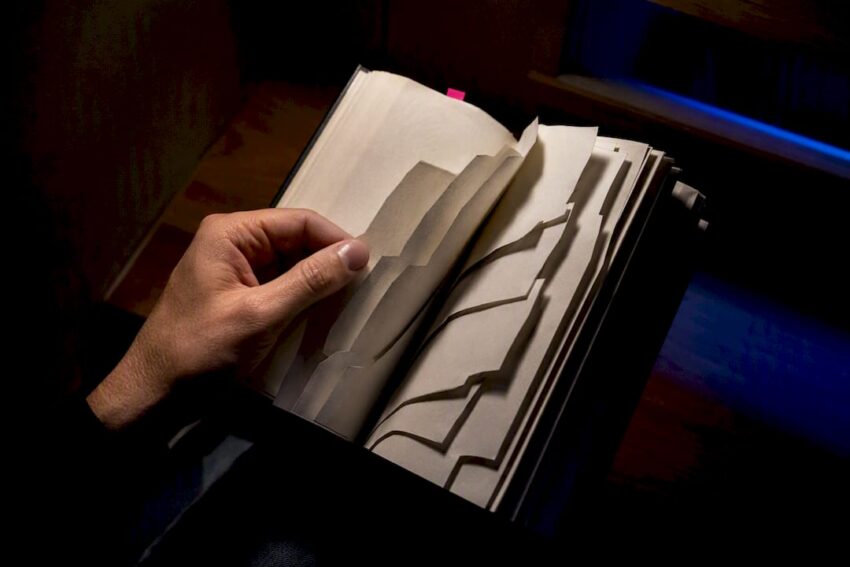
Hands closing a dark supernatural fiction book

Book Hangover Meaning: Why It Happens and How to Recover

Posted on August 28, 2026August 28, 2026 by NConnors

A book hangover is the lingering emotional pull of a story after you’ve finished it, the kind that leaves you staring at your bookshelf unable to commit to anything new. It shows up as rumination on characters, a flat or wistful mood, and a strange reluctance to start the next book on your list. It’s a normal reaction to deep emotional engagement with fiction, and it usually fades faster once you understand what’s actually happening in your head.


TL;DR:

  • Most hangovers last a few hours to two days and are usually triggered by emotional investment in emotional or open-ended stories.
  • Longer-lasting effects, often weeks, indicate themes that resonate personally or unresolved feelings that may benefit from professional support.
  • Coping strategies include choosing contrasting genres, discussing the book, or journaling themes, with deeper reflection reserved for persistent or heavy feelings.
  • Book hangovers reflect deep narrative transport and empathy, which can extend as ongoing psychological work or growth rather than mere post-reading blues.
  • Engaging further with dark or morally complex books can deepen the emotional processing and turn lingering feelings into meaningful insights.

Table of Contents

  • What A Book Hangover Feels Like: Symptoms And Signs
  • Why Book Hangovers Happen: The Psychology Behind Them
  • How Long A Book Hangover Lasts (And When It Means More)
  • Coping Strategies That Actually Help You Move On
  • The Upside: When A Book Hangover Signals Growth
  • Why Dark Fiction Hits Harder: A Note From Nathaniel
  • The Part Of This Advice People Get Wrong
  • If You Want More Of That Mood: Curated Reads From Nathaniel Connors
  • Sources

What A Book Hangover Feels Like: Symptoms And Signs

You know it when it hits: the last page closes and something in you refuses to move on. The symptoms cluster in a few predictable ways, and recognizing them helps you name what’s happening instead of just feeling vaguely off.

  • Trouble picking up a new book, or picking one up and putting it down repeatedly
  • Persistent, intrusive thoughts about characters or the fictional world
  • A mood dip, wistfulness, or a sense of grief for something that wasn’t real
  • Daydreaming about alternate endings or “what happened next”
  • Pulling back socially, wanting quiet time to sit with the feeling

Genre and ending style change the intensity. A tightly closed standalone novel tends to produce a shorter, sharper wave of feeling; you grieve, then move on. A series finale or an open-ended cliffhanger is different territory. BookBub’s rundown of common hangover signs notes that series endings and intensely emotional reads consistently produce the strongest reactions, because you’re not just losing one story, you’re losing a world you’ve lived in across multiple books.

Why Book Hangovers Happen: The Psychology Behind Them

The mechanism has a name: narrative transportation. It describes what happens when your attention, emotions, and mental imagery all converge on a story so completely that you lose track of time and start responding to fictional events as if they carry real emotional weight. Research published in PLOS One frames transportation as a convergent process, not a passive one. Your brain isn’t just watching the story unfold. It’s actively building and inhabiting it.

That immersion doesn’t switch off the moment you close the book. If you spent ten hours inside a character’s perspective, feeling their fear, their guilt, their small victories, your nervous system doesn’t get a memo that the story is over. The emotional residue lingers because the engagement was never passive to begin with.

There’s also an empathy component. Fiction reading has been linked to short-term boosts in empathy and theory-of-mind processing, the mental work of imagining what someone else is thinking or feeling. When a book forces you to sit inside a mind very different from your own for hundreds of pages, that perspective-taking muscle gets a real workout, and it doesn’t relax instantly just because you’ve reached the final chapter.

Maja Djikic, PhD, offers one of the clearest explanations of why this lingers. She describes book hangovers as a form of sadness at losing characters or a fictional world you’d grown attached to, and notes that when the reaction is especially intense, it can mean the book’s themes are still active somewhere in your psyche, still being processed. That’s a meaningfully different framing than “you’re just sad it ended.” It suggests your mind is doing ongoing work.

Room with colored lights and symbolic shadows

Journalistic coverage backs up the everyday version of this. VICE’s reporting on the phenomenon describes the lingering reaction as something close to grief, driven by how much emotional investment the reader put into the story in the first place. Think about the last time a side character died and you had to put the book down for a minute. That’s transportation and empathy working together in real time, and the hangover is just that same mechanism refusing to shut off on schedule.

How Long A Book Hangover Lasts (And When It Means More)

For most readers, the fog lifts within a few hours to a couple of days. You finish the book, feel unmoored, maybe reread a chapter or vent to a friend, and then naturally drift toward something new.

Longer hangovers, stretching into weeks, usually mean the book hit something personal. Unresolved grief, a relationship parallel, or a theme that echoes your own life can turn a story reaction into genuine reflection rather than simple post-book blues. That’s not automatically a problem.

It’s worth paying attention, though, if the low mood starts interfering with sleep, work, or relationships, or if it doesn’t budge after a few weeks. At that point you’re likely dealing with something the book surfaced rather than something the book caused, and it’s reasonable to talk to a professional about what’s underneath it.

Coping Strategies That Actually Help You Move On

Not every recovery tactic works for every hangover, but there’s a rough order of operations that tends to work, starting with the lowest-effort options and building toward deeper processing if the feeling won’t quit.

  1. Pick a contrasting book. If you just finished a slow, devastating literary novel, don’t reach for another one. A fast-paced thriller or a different genre entirely resets your attention instead of competing with what you just read.
  2. Reread your favorite passages. Going back to a scene you loved, rather than the whole book, gives you closure without dragging the process out.
  3. Talk about it. Reader surveys and book-club advice compiled by Reader’s Digest consistently point to discussion as one of the most effective coping steps: texting a friend, posting in an online group, or recommending the book to someone else extends the enjoyment instead of just mourning its end.
  4. Journal about the themes. Writing down what the book made you think about, rather than just what happened in it, converts rumination into something more productive.
  5. Create a closing ritual. Some readers keep a running list of favorite quotes or a one-line review for every book they finish. It’s a small act that signals to your brain: this one is filed away now.

Sequence matters. Try the low-effort options first, a contrasting book or a conversation, before assuming you need deep reflection. Save the journaling and thematic processing for hangovers that don’t fade after a day or two.

Pro Tip: When picking your next read, choose a “bridge” book with a different tone but a similar pace to the one you just finished. Jumping from a slow-burn tragedy to a chaotic action novel can feel jarring, but a book with comparable rhythm and lower emotional stakes eases the transition without forcing you to abandon the mood entirely.

The Upside: When A Book Hangover Signals Growth

Not every hangover is something to shake off. Djikic’s research ties deep narrative engagement to real perspective-taking, and the temporary empathy boost that comes from transportation doesn’t have to be wasted once the story ends.

If a book keeps surfacing in your thoughts, treat that as a prompt rather than a nuisance. Sketch the book’s central themes into a reading journal. Seek out a nonfiction title on the subject the novel raised, whether that’s grief, moral compromise, or survival under pressure. Some readers find their actual behavior shifts, more patience with a difficult family member, a new interest in a topic they’d ignored. A hangover that won’t quit might just be your mind asking for more time with an idea worth keeping.

Why Dark Fiction Hits Harder: A Note From Nathaniel

Dark supernatural fiction tends to produce unusually stubborn hangovers, and I think that’s by design rather than accident. When a story asks you to sit with guilt, revenge, or the parts of a character that mirror something uncomfortable in yourself, the emotional transportation goes deeper than plot. You’re not just watching events happen. You’re recognizing something.

If a book leaves you unsettled for days, try this: write down the one moment that stuck with you and ask what it’s actually reminding you of. That’s usually where the real story is.

The Part Of This Advice People Get Wrong

Most coping lists treat the book hangover like a problem to solve fast, get over it, pick a new book, move along. That misses the point for a meaningful share of readers. If Djikic’s research is right that intensity often reflects how active a book’s themes still are in your mind, then rushing past that reaction throws away useful information.

The Part Of This Advice People Get Wrong — overview diagram

The conventional advice isn’t wrong, exactly. A contrasting book or a conversation with a friend genuinely helps most hangovers, and you should try those first. Where it falls short is treating every lingering feeling as equally shallow. A three-hour funk after a fun thriller and a two-week preoccupation after a book that mirrored your own grief are not the same event, and they don’t deserve the same fix.

Prioritize this: notice the difference before you reach for a distraction. If the feeling is light, distract yourself and move on. If it’s heavy, sit with it for a day before you force yourself into the next book. That distinction is the entire difference between coping and actually learning something from what you read.

— Nathaniel

If You Want More Of That Mood: Curated Reads From Nathaniel Connors

If your hangover came from a story that got under your skin, staying in that emotional register for a bit longer, rather than fighting it, is often the better move. A few paths worth trying:

  • Browse The Best Dark Supernatural Books for Readers Who Want Real Dread for titles built on the same slow, psychological unease that produces the strongest hangovers.
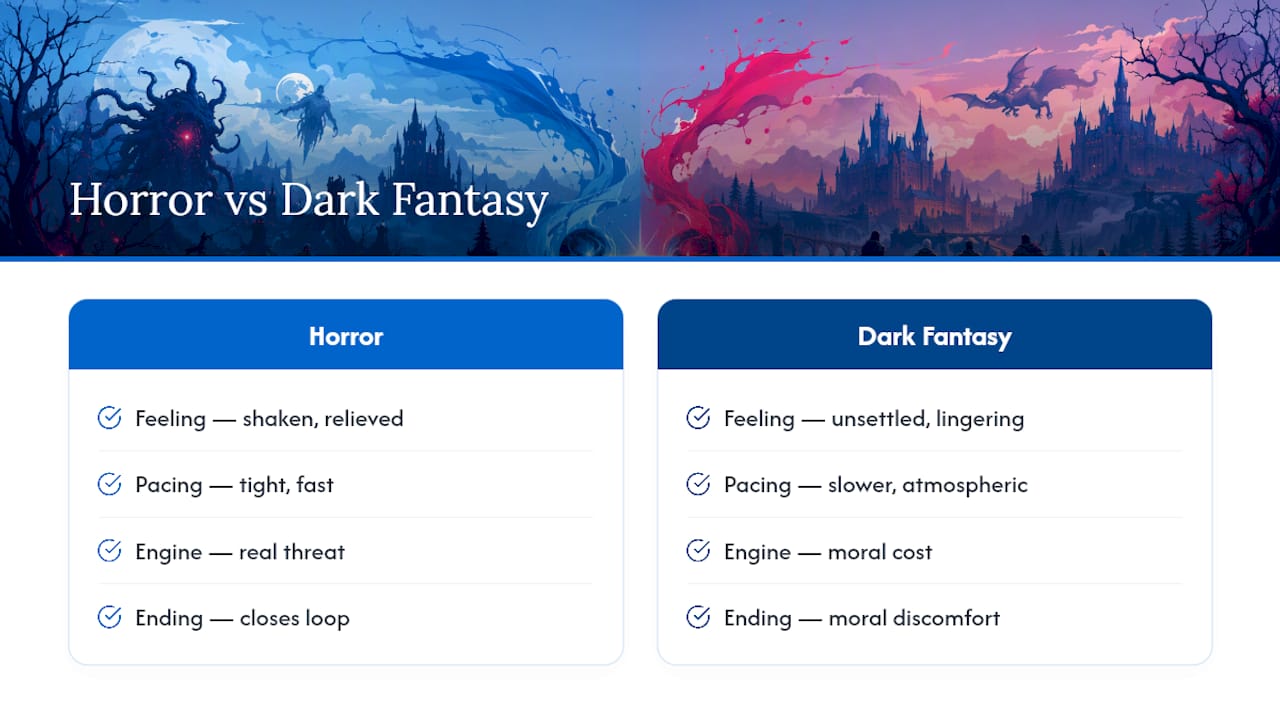
  • If you’re not sure whether you want another straight horror read or something more morally tangled, Grimdark vs Horror: How to Tell the Difference will help you pick your next mood deliberately instead of by accident.

Nathanielconnors

My own novels, including The Nether, Stories of a Condemned Soul, and Evolution A200: A Bubonic Apocalypse, are built around exactly the kind of guilt, revenge, and psychological reckoning that tends to leave readers sitting with a book long after the last page. All three are free to read through Kindle Unlimited, so you can sample a full novel without committing to a purchase first. If you’re already deep in a hangover from something dark and immersive, that’s usually the best time to lean into another one rather than forcing yourself toward something lighter. Start with a sample chapter and see whether the world pulls you in the same way.

Sources

  • PLOS One — study on narrative transportation
  • The Phenomenon and Psychology of a Book Hangover — Book Riot
  • Book hangovers are real — VICE
  • Here’s why you get a book hangover—and how to get over it — Reader’s Digest
  • Signs of a book hangover — BookBub
Worn dagger and candle on dark wooden desk

Dark Revenge Quotes: Savage, Cold, and Cathartic Lines

Posted on August 27, 2026August 27, 2026 by NConnors

Here are the darkest, most usable revenge quotes, ready to copy, caption, or drop straight into a manuscript. These curated dark revenge quotes span savage one-liners, cold and calculated threats, and karmic warnings, organized so you can find the right tone in seconds.

  • “I don’t get angry. I get even, and then I get everything else.”
  • “Forgive them anyway. Just make sure they lose sleep wondering why you’re smiling.”
  • “She wasn’t looking for closure. She was looking for a receipt.”
  • “Karma doesn’t knock. It just walks in and takes a seat.”
  • “You taught me how to lose. I’m about to teach you how it feels.”

The full themed collections, literary sources, and original lines from Nathaniel Connors follow below.


TL;DR:

  • Using revenge quotes for social media or writing is safer when they express feelings rather than target real individuals, to avoid legal risks.
  • Attribution to famous authors like Bacon, Shakespeare, or Martin enhances the quote’s impact and provides appropriate context.
  • Cold, patient revenge lines tend to be more psychologically powerful by emphasizing patience over explosive fury.
  • Structuring revenge expressions around a feeling rather than a specific target helps keep the message safe and thematically focused.
  • Full-length revenge stories explore the consequences of revenge, extending themes beyond brief quotes into deeper moral and emotional territory.

Table of Contents

  • Curated Dark Revenge Quotes by Tone
  • How to Use Dark Revenge Quotes Responsibly
  • Notable Literary Revenge Quotes and Their Context
  • Original Dark Revenge Lines by Nathaniel Connors
  • Using Revenge Quotes as Captions and Writing Prompts
  • Why Dark Revenge Quotes Hit So Hard Emotionally
  • Matching the Tone to Your Audience
  • Where Famous Revenge Quotes Actually Come From
  • Integrating Revenge Quotes Into Writing and Social Posts
  • What Most Quote Collections Get Wrong About Revenge
  • Continue the Story in Full-Length Dark Fiction
  • Key Takeaways
  • Sources

Curated Dark Revenge Quotes by Tone

Different moods call for different weapons. Below are five short collections built for specific uses, from a savage caption to a cold, cinematic threat whispered by a villain who’s already won.

Savage and unfiltered

  1. “Careful. I forgive quickly, but I remember everything.”
  2. “You lit the match. Don’t act surprised when the house burns.”
  3. “I used to pray for you. Now I just wait.”
  4. “The last thing you’ll break in me was my patience.”
  5. “You made me the villain of your story. Watch me perform.”
  6. “I don’t need to destroy you. You’re already doing that part.”
  7. “Every apology you never gave is a debt I intend to collect.”
  8. “I stopped being kind the day kindness stopped being returned.”
  9. “You wanted a reaction. This is worse. This is a plan.”
  10. “I hope your conscience finds you before I do.”

Cold and cunning

The proverb “revenge is a dish best served cold” first entered English through an 1846 translation of French novelist Eugène Sue, and it still frames how we talk about vengeance that waits rather than erupts, according to Phrases. These lines fit that patient, calculated register.

  1. “I’m not angry anymore. I’m organized.”
  2. “Patience isn’t weakness. It’s the sharpest blade I own.”
  3. “You’ll never see it coming, because I already let you win the argument.”
  4. “I don’t raise my voice. I raise the stakes.”
  5. “Smile all you want. I’ve already written the ending.”
  6. “Some debts are paid in silence, then all at once.”
  7. “I let you underestimate me. It was the last mistake you made cheaply.”
  8. “You’ll find out slowly, which is exactly the point.”
  9. “I’m not plotting. I’m simply finished waiting.”
  10. “Calm isn’t peace. Sometimes it’s just aim.”

Karma and justice

  1. “You don’t need my forgiveness. The universe already has a form for this.”
  2. “I don’t have to ruin you. Your choices have a long memory.”
  3. “What you did to me is filed. Karma just processes slower than court.”
  4. “The debt collects itself. I just get to watch.”
  5. “You’ll meet yourself again, in someone crueler.”
  6. “Justice is patient. I’ve learned to be, too.”
  7. “Nothing evens out by accident. Something always comes due.”
  8. “I stopped chasing you the day I realized consequences don’t need help.”
  9. “You built this ending yourself. I just get the front-row seat.”
  10. “The world keeps better books than either of us.”

Short and punchy

  1. “Watch your back. I taught it how to bend.”
  2. “I don’t miss you. I miss who I thought you were.”
  3. “Enjoy the silence. It’s the last easy thing you’ll get from me.”
  4. “You lost me. That’s the whole punishment.”
  5. “I’m the ghost story you tell yourself now.”
  6. “Regret looks good on you. Wear it.”
  7. “You closed one door. I burned the rest.”
  8. “This is the quiet before the reckoning.”

How to Use Dark Revenge Quotes Responsibly

Dark revenge quotes exist for expression, not action, and that distinction matters more than it sounds. Revenge itself is personal and informal, while justice hands the grievance to an impartial process, a distinction worth remembering before any line becomes a real-world message, per Rabbi Sacks’s commentary on justice and revenge.

Safe, productive uses include:

  • Writing prompts for a villain’s internal monologue or a character’s turning point.
  • Captions that name an emotion (betrayal, exhaustion, defiance) without naming a target.
  • Private journaling to process anger instead of acting on it.

Avoid these three moves entirely:

  • Tagging or naming a real person in a threatening post.
  • Sharing anyone’s private information alongside a vengeful caption.
  • Publishing anything a reasonable person could read as an actual threat, which can carry legal consequences.

Pro Tip: Turn a raw revenge line into micro-poetry by cutting the target out entirely. Swap “you” for an image: “The house that burned wasn’t mine to save” reads as art, not a warning label.

Notable Literary Revenge Quotes and Their Context

Literature has always trusted revenge to reveal character, and these lines carry weight precisely because of where they come from. Goodreads’ revenge-tagged collection confirms how often the same handful of canonical sources recur across quote culture, which is worth knowing before you repost one as anonymous.

  • “Waste no more time arguing about what a good man should be. Be one.” — Marcus Aurelius, Meditations. Less a threat than a redirection, useful for captions about rising above pettiness.
  • “If you prick us, do we not bleed?” — William Shakespeare, The Merchant of Venice. Shylock’s speech turns personal grievance into a demand for recognition, strong for dramatic monologue writing.
  • “Revenge is a kind of wild justice.” — Francis Bacon, Of Revenge. Bacon’s essay argues private vengeance often backfires socially, a caution as much as a quote, according to Lotz in Translation’s analysis of Bacon.
  • “When the snows fall and the white winds blow, the lone wolf dies, but the pack survives.” — George R.R. Martin, A Game of Thrones. Framed as loyalty, but it doubles as a warning about isolating an enemy.
  • “I ate his heart in the marketplace, and none dared say a word.” — George R.R. Martin, A Storm of Swords. About as savage as literary revenge gets, best used sparingly for shock value.
  • “Keep your friends close, but your enemies closer.” — attributed in spirit to Machiavellian strategy popularized through fiction. Cold, tactical, ideal for captions about calculated patience.
  • “I felt then that I hated him beyond all measure at that moment.” — Robert Louis Stevenson, Strange Case of Dr Jekyll and Mr Hyde. Captures the moment rage stops being abstract.
  • “Look on my works, ye Mighty, and despair!” — often paired with revenge and hubris themes in literary discussion, useful as a villain’s closing line.

The proverb “revenge is a dish best served cold” also traces back to that same 1846 translation, and it has resurfaced in Kind Hearts and Coronets, The Godfather, and Star Trek II, according to phrases.org.uk, proof that a single well-timed phrase can outlive its source by more than a century.

Original Dark Revenge Lines by Nathaniel Connors

These lines are original, written for readers who want something that hasn’t already circulated on a dozen quote aggregators.

  • “I don’t haunt houses. I haunt decisions.”
  • “You buried the truth. I brought a shovel and patience.”
  • “The dead don’t forgive. They just wait for you to join them.”
  • “Every ghost was once someone’s unfinished sentence.”
  • “I stopped being your conscience. Now I’m just your consequence.”
  • “Guilt doesn’t knock twice. It moves in.”
  • “You called it closure. I call it the calm before.”
  • “Some debts follow you past the grave, and I collect at both addresses.”

Building a cold revenge line comes down to pairing one ordinary image with a final clause that turns fatal or ironic, a technique also described in WritingExplained’s breakdown of delayed revenge. That collision of the mundane and the merciless drives much of the psychological horror in Stories of a Condemned Soul, where personal vengeance gets weighed against something closer to justice.

Using Revenge Quotes as Captions and Writing Prompts

A revenge quote works as a caption when it names a feeling instead of a person. “Enjoy the silence. It’s the last easy thing you’ll get from me” reads as mystery online, but the same line becomes a scene starter offline. Try writing the paragraph that comes right before it: what did the silence replace, and who broke first?

Quill dipping into ink on writer's desk

For writing prompts, split any quote on this page into a setup and a payoff. Take “I don’t get angry. I get even, and then I get everything else” and build backward: what was taken, and what does “everything else” actually mean to that character? That reverse-engineering exercise turns a static line into a scene, a monologue, or a chapter opening. Screenwriters use the same trick for villain reveals, letting a cold one-liner land after the audience already suspects the betrayal, which is why so many revenge lines get remembered as the moment right before the twist, not during it.

Why Dark Revenge Quotes Hit So Hard Emotionally

Dark revenge quotes work because they name something most people are taught to suppress. Betrayal produces a specific kind of anger that rarely gets a clean outlet, and a sharp, dark line gives that anger shape without demanding action. Most readers reach for these quotes to validate a feeling and redirect the energy, not to plan anything against a real person.

That’s a meaningful distinction. A quote that says “I don’t need to destroy you, you’re already doing that part” lets someone acknowledge their fury while quietly reminding them that inaction can be its own form of power. The psychological relief comes from naming the wound precisely, the same reason journaling and venting to a friend work: articulation reduces the charge behind an emotion. Cold, calculated lines tend to produce a different feeling than savage ones. Savage quotes deliver a burst of validation, immediate and hot. Cold quotes deliver something closer to control, the sense that patience itself is a form of power. Choosing between them is less about mood and more about what kind of relief you need in that moment.

Matching the Tone to Your Audience

Not every revenge quote belongs in every context, and picking wrong can flatten the impact or read as tone-deaf. Start with the platform: a savage line built for shock works on a caption but reads as excessive in a greeting card or memoir excerpt. A cold, understated line does the opposite, often landing flat as a quick social post but perfectly in a short story’s closing paragraph.

Neon-lit modern room corner with fractured mask sculpture

Consider who’s reading before you consider what sounds cool. A quote for a personal audience who already knows the backstory can afford ambiguity, something like “you’ll find out slowly, which is exactly the point.” A quote for strangers needs to stand alone without context, which favors punchier, self-contained lines like “regret looks good on you, wear it.” Fiction writers building a villain’s voice should lean toward Bacon’s cooler register, since a villain who monologues with restraint reads as more dangerous than one who screams. If you’re writing for catharsis rather than performance, the karma and justice category tends to work best, since it frames the pain as already resolved by something bigger than you, which is often the actual relief people are looking for.

Where Famous Revenge Quotes Actually Come From

Context changes how a quote lands. Shakespeare’s Shylock speech reads as a plea for humanity when you know the character has been publicly humiliated throughout the play, which is very different from reading the line cold as a generic threat. Bacon wrote Of Revenge as a moral essay, not a battle cry, arguing that vengeance keeps a wound open rather than closing it, according to Lotz in Translation’s reading of the essay. That context flips the quote from menacing to cautionary.

The “dish best served cold” proverb has its own arc worth knowing. It didn’t originate as ancient wisdom. It surfaced in an 1846 French to English translation and only became a cultural fixture after decades of reuse in film, most famously in The Godfather and Star Trek II, per phrases.org.uk. Knowing that history means you can use the phrase deliberately, either leaning into its cinematic weight or subverting it for irony. Martin’s Storm of Swords quote lands harder once you know it follows one of fiction’s most infamous betrayal sequences, which is why lifting a line without its context sometimes drains the very power that made it worth quoting.

Integrating Revenge Quotes Into Writing and Social Posts

The strongest use of a revenge quote in fiction rarely sits alone. Place it right after a betrayal scene, and let the line carry the emotional turn instead of narrating the character’s feelings directly. That’s a basic craft move: show the event, then let a single sharp line do the emotional labor a paragraph of exposition would otherwise handle clumsily.

For social posts, timing matters more than the line itself. Posting a savage quote in the heat of an actual conflict reads as a subtweet, and readers can usually tell. Posting the same line weeks later, detached from any obvious target, reads as reflection instead of aggression. Pair a quote with a personal caption line for context, something like a single sentence about growth or distance, and it shifts from vague hostility to earned perspective. For screenwriting or character work, alternate tones across a scene: open with something savage to establish stakes, then close on something cold to signal control has replaced rage. That shift alone tells an audience the character has changed without a line of dialogue explaining it.

What Most Quote Collections Get Wrong About Revenge

Most revenge quote pages online are volume plays, hundreds of anonymous lines with no attribution and no sense of when to use which one. That approach treats a revenge quote like a commodity instead of a tool, and it shows: readers copy a line, post it, and move on without ever learning where it came from or why it works.

The conventional wisdom says bigger collections serve readers better. I’d argue the opposite. A shorter list built around real attribution, from Bacon’s caution about wild justice to Martin’s brutal pack imagery, gives a quote more weight than a thousand unsourced one-liners ever could. Context is what separates a quote you remember from one you scroll past.

What gets underestimated most is the gap between catharsis and incitement. A dark line that names betrayal precisely does real psychological work; a line aimed at a real person crosses into something else entirely. Readers should prioritize picking quotes that name a feeling, not a target, and lean on the literary and original lines here that were built with that boundary already in mind.

— Nathaniel

Continue the Story in Full-Length Dark Fiction

A quote can capture a moment of vengeance, but it can’t follow a character through the full weight of what revenge costs. If these lines resonated, The Best Dark Supernatural Books for Readers Who Want Real Dread rounds up Nathaniel Connors’ novels for readers who want that arc played out completely, guilt, consequence, and all.

Nathanielconnors

Titles like The Nether and Stories of a Condemned Soul explore the same territory these quotes only gesture at: what happens after the vengeance lands, and whether it ever actually settles the debt. Both are free to read for Kindle Unlimited subscribers, so there’s no added cost to find out whether the dread holds up over three hundred pages instead of three sentences. Start with the recommended list above and pick whichever premise unsettles you fastest.

Key Takeaways

Dark revenge quotes work best when they’re organized by tone, sourced with real attribution, and kept clearly separate from anything resembling a real-world threat.

Point Details
Match tone to context Savage lines fit captions; cold, calculated lines fit fiction and villain voice.
Use attribution when possible Sourcing a quote to Bacon, Shakespeare, or Martin adds weight anonymous lines lack.
Keep catharsis separate from threats Name a feeling, never a real target, to stay on the safe side of expression.
Delay builds power The “served cold” framing works because patience reads as more dangerous than outburst.
Explore the full arc Nathanielconnors’ novels extend these same revenge themes into complete, consequence-driven stories.

Sources

  • Justice and Revenge | Covenant and Conversation (Rabbi Sacks)
  • Quotes & Commentary #35: Bacon – Lotz in Translation
  • Phrases
  • Writingexplained
Dim dystopian study with typewriter and skull sculpture

Psychological Horror Quotes: A Curated Collection of Dread

Posted on August 26, 2026August 26, 2026 by NConnors

A curated list of 40-plus evocative psychological horror quotes, grouped by theme, with author context and original lines from Nathaniel Connors woven throughout. This isn’t a raw tag dump. It’s an organized read for anyone who wants the exact lines that capture how horror lives in the mind rather than in the monster under the bed.

Here’s what you’ll find below:

  • Six theme groups: loss of self, blurred reality, cognitive fragmentation, inner monsters and guilt, sleep and dream terror, and obsession or surveillance.
  • Short context for each quote, plus author notes on Shirley Jackson, Thomas Harris, Michael F. Simpson, and others whose work defines the genre.
  • A handful of original quotes from Nathaniel Connors, clearly labeled, drawn from his own dark supernatural fiction.
  • Practical guidance near the end on how to credit a quote correctly if you plan to share one.

Jump to any theme heading below if you already know the mood you’re chasing.

Key Takeaways

Psychological horror quotes work because they compress an internal collapse, identity loss, blurred reality, guilt, into a single sharp image rather than a description of an external threat.

Point Details
Six core themes Loss of self, blurred reality, fragmentation, inner monsters, sleep terror, and obsession cover most of the genre.
Shirley Jackson’s key line “To learn what we fear is to learn who we are” ties fear directly to identity.
Attribution matters Credit author, title, and link the source instead of reposting long passages.
Original material available Nathaniel Connors’s own quotes appear on the Dark Quotes landing page for further reading.
Short lines carry the most weight A single compressed image tends to outlast a full paragraph of description.

If these lines resonated, the full stories behind them are worth the trip. Start with The Best Dark Supernatural Books for Readers Who Want Real Dread for a reading path, or go straight to the Dark Quotes landing page for more original excerpts. All three of Nathaniel Connors’s novels, including The Nether and Evolution A200: A Bubonic Apocalypse, are free to read for Kindle Unlimited subscribers.

Table of Contents

  • Psychological Horror Quotes Organized By Theme
  • Who Wrote These Lines, and Why They Still Unsettle
  • How to Use and Credit These Quotes
  • Original Psychological Horror Quotes From Nathaniel Connors
  • Why Short Lines Do the Heaviest Lifting
  • Sources

Psychological Horror Quotes Organized By Theme

The best psychological horror quotes don’t describe a threat. They describe what a mind does to survive one, which is why the same six themes keep resurfacing across a century of dark fiction. Below, each theme groups together short, sourced lines with a note on why they land.

Loss of self and identity

Fear, in this genre, is rarely about dying. It’s about not recognizing yourself anymore.

  • “To learn what we fear is to learn who we are,” from Shirley Jackson, is one of the most quoted lines in psychological horror because it reframes fear as a mirror rather than a threat.
  • “I am not myself tonight” appears across dozens of psychological-horror adjacent texts as a stock line, precisely because it names the genre’s core anxiety in five words.
  • “The house was not sane” (paraphrased sentiment from The Haunting of Hill House) treats a building as a psychological state rather than a location.
  • Original, Nathaniel Connors: “He kept a list of who he used to be, and every year, the list got shorter.”

Blurred reality and unreliable perception

  • Michael F. Simpson’s lines on control and fragmentation show how a narrator’s grip on reality can dissolve until distortion starts to feel like the only logical response to captivity.
  • Mark Z. Danielewski’s House of Leaves is full of sentences that fold in on themselves, and its most frequently cited lines work precisely because the page itself seems to be lying to you.
  • A recurring line from psychological-thriller collections warns that “the mind will build a room to hide in, and lock the door from the inside,” a compact image of self-deception.
  • Original, Nathaniel Connors: “The mirror agreed with everything I said. That’s how I knew something was wrong.”

Cognitive fragmentation

  • “Perfect sense” is the phrase Simpson uses to describe a controlled mind’s logic, a two-word line that does more work than a paragraph of exposition.
  • Fragmented syntax, broken sentences, mid-thought cuts. These aren’t stylistic accidents in the genre; they’re the point, mimicking a psyche coming apart in real time.
  • A Times Now roundup of psychological-thriller lines collects several examples where a character’s thoughts trail off mid-sentence, and the missing words carry more dread than finished ones would.

Inner monsters, guilt, and possession

Thomas Harris built an entire career on this theme. Hannibal Lecter’s most quoted lines rarely mention violence directly; they describe appetite, curiosity, and control as if they were virtues.

Vinyl record and dark office objects with colored lighting

Sleep, dream, and insomnia horror

Some of the genre’s sharpest lines treat sleep as the least safe part of the day. A recurring device: the narrator can’t tell if they’re awake, and neither can the reader.

  • Original, Nathaniel Connors: “I stopped trusting my dreams the night one of them left a mark.”

Obsession and creeping surveillance

  • Watching, being watched, and not knowing which one is happening. That’s the engine behind most stalker-adjacent psychological horror, and it shows up constantly in Goodreads’ psychological horror tag collection, where dozens of user-verified quotes circle the same idea from different angles.
  • Original, Nathaniel Connors: “He didn’t break into the house. He just started leaving things in it, so I’d know he could.”

Who Wrote These Lines, and Why They Still Unsettle

Every theme above traces back to a handful of writers who each solved the “make fear internal” problem differently.

Comparison chart of psychological horror authors' techniques

Shirley Jackson wrote horror almost entirely without monsters. Her genius was making ordinary domestic detail feel like a threat, which is why her single most quoted line does double duty as both horror and psychology:

Empty room with cracked mirror and flickering candlelight

Thomas Harris built dread through voice rather than violence. Hannibal Lecter talks like a therapist, not a killer, and that mismatch between tone and content is the technique worth studying.

Michael F. Simpson writes directly about the mechanics of a controlled mind, and his quotes on fragmentation and forced logic are some of the clearest examples of what psychological breakdown sounds like from the inside.

Mark Z. Danielewski used the physical layout of the page to disorient readers in House of Leaves, a formal trick that makes blurred reality a typographic experience, not just a narrative one.

Jonathan Harnisch writes from inside dissociation and identity disorder, producing lines that read less like fiction and more like a transcript of a mind losing its footing.

As novelist Andrew Pyper has put it, psychological horror is more interesting than physical horror because it deals with the “irrational, contradictory, mysterious” workings of the mind rather than an external monster. That’s the throughline connecting every author above. Fear, in this genre, is a symptom, not a cause. Fear itself has a long literary pedigree, too. The Folger Shakespeare Library points out how often the word shows up across Shakespeare’s plays, a reminder that mining dread from the mind rather than the sword is centuries older than the modern horror shelf.

How to Use and Credit These Quotes

Sharing a quote in a caption, blog post, or classroom discussion is usually fine under U.S. fair use, but the safety margin depends on length and purpose, not just intent. A short line used for commentary or illustration sits on solid ground. A full paragraph lifted for a commercial product does not. This isn’t legal advice, just the practical line most publishers draw.

  1. Keep excerpts short: a sentence or two, not a page.
  2. Credit the author and the work every time: “Shirley Jackson, The Haunting of Hill House.”
  3. Link to the original source (Goodreads, the publisher, or the author’s site) instead of reproducing a long passage.
  4. Request permission for anything beyond a short excerpt, especially for print, merchandise, or paid content.

Pro Tip: Screenshotting a quote card is convenient, but a text-based post with a link back to the original source protects you legally and gives the original author credit search engines can actually trace.

Original Psychological Horror Quotes From Nathaniel Connors

Nathaniel Connors writes dark supernatural fiction built around the same internal monsters covered above: guilt that outlives the act that caused it, and identity that erodes under pressure rather than snapping all at once. That’s the throughline across The Nether, Stories of a Condemned Soul, and Evolution A200: A Bubonic Apocalypse.

A few original lines, pulled from that body of work:

  • “He kept a list of who he used to be, and every year, the list got shorter.”
  • “The mirror agreed with everything I said. That’s how I knew something was wrong.”
  • “I stopped trusting my dreams the night one of them left a mark.”
  • “He didn’t break into the house. He just started leaving things in it, so I’d know he could.”
  • “Guilt doesn’t visit. It moves in and pays rent.”

Readers who want the full context behind these lines, including craft notes on how they’re built, can browse more original material on the Dark Quotes landing page or read the craft guide to writing psychological horror for a breakdown of the techniques behind them.

Point Details
Source is Nathaniel Connors’s fiction Original lines above are drawn directly from The Nether and Stories of a Condemned Soul.
Craft focus The recurring device is guilt and identity erosion rather than external monsters.
Where to read more The Dark Quotes landing page collects additional original excerpts by theme.

Why Short Lines Do the Heaviest Lifting

The shortest lines in this collection are almost always the ones that stick, and that’s not an accident. A single image, done well, forces the reader’s own imagination to finish the horror. That’s harder to write than it looks: cutting a paragraph of dread down to one sentence means finding the exact image that carries the whole weight. I write toward that compression deliberately. If a line from Stories of a Condemned Soul or the Evolution A200 series stays with you after you close the page, that was the goal from the first draft.

— Nathaniel

Sources

  • Quote by Shirley Jackson: ‘To learn what we fear is to learn who we are’ | Goodreads
  • 15 dark and thought-provoking quotes from psychological thrillers | Times Now
  • Andrew Pyper quote on psychological horror | AZQuotes

Recommended

  • How to Write Psychological Horror: A Craft Guide
  • Existential Horror Books That Make You Question Reality
  • Psychological Thriller vs Horror: How to Tell and Write Them
  • 10 Cult Horror Novels That Will Haunt Your TBR
Neon-lit dark dystopian alley with broken clipboard

Dystopian Horror Meaning: When Society Becomes the Monster

Posted on August 25, 2026August 25, 2026 by NConnors

Dystopian horror means a story where the social system itself is the source of dread, not a masked killer or a haunted house. It differs from plain dystopia, which critiques oppressive systems through the lens of politics and loss of freedom, and from pure horror, which usually locates the threat in a body, a ghost, or a monster. Dystopian horror fuses both: the government, the corporation, or the machine becomes the monster, and the terror is visceral because it’s administered like policy. Margaret Atwood’s The Handmaid’s Tale works this way. The theocracy isn’t background noise. It’s the thing that reaches into your body and controls it.

  • A regime, algorithm, or institution replaces the traditional monster
  • The dread is bodily and immediate, not just intellectual or political
  • Escape is blocked by law, surveillance, or bureaucracy rather than geography

Key Takeaways

Dystopian horror works because it converts systemic critique into bodily dread, making institutional harm feel as immediate as a monster’s attack.

Point Details
Core definition Dystopian horror turns oppressive systems into the source of visceral, bodily fear.
Dystopia’s focus Society-level control, surveillance, censorship, and scarcity drive the critique.
Horror’s focus Immediate, sensory dread through body horror, psychological terror, or cosmic fear.
The crossover mechanic Policy and procedure get routed through the body until abstraction becomes unbearable.
Quick identification test Check whether the source of fear has a job title and whether refuge is blocked by law.

Table of Contents

  • Defining Dystopian Fiction and Its Core Motifs
  • What Horror Actually Means as a Genre
  • Dystopia vs. Horror: Systemic Critique vs. Visceral Threat
  • How the System Becomes the Monster
  • Dystopian Horror in Literature, Film, and TV
  • Why the Crossover Matters
  • A Quick Checklist for Spotting Dystopian Horror
  • Nathaniel Connors on Why This Subgenre Sticks
  • Explore More Dystopian Horror to Read Next
  • Where the Genre-Blend Argument Actually Lands
  • Sources

Defining Dystopian Fiction and Its Core Motifs

A dystopian novel, according to Britannica, depicts a society defined by oppressive control, a false promise of perfection, and the erosion of individual freedom, usually as a pointed critique of real political or cultural patterns. Merriam-Webster narrows the definition further: a dystopian world or society is one where people live dehumanized, fearful lives. Neither definition requires monsters or gore. Dystopia can be entirely bloodless and still be devastating, because the horror is structural.

What separates a compelling dystopia from a lazy one is how specifically it commits to its motifs. Wikipedia’s overview of the genre catalogs the recurring building blocks, and most great dystopian fiction leans on several at once:

  1. Totalitarian control — a single party or leader dictates behavior, as in George Orwell’s Nineteen Eighty-Four.
  2. Surveillance — constant monitoring erodes privacy, the engine behind 1984’s telescreens.
  3. Censorship — information gets erased or rewritten, the entire premise of Ray Bradbury’s Fahrenheit 451.
  4. Loss of individuality — citizens are stripped of names, choices, or identity, as in Lois Lowry’s The Giver.
  5. Environmental degradation — a ruined ecology forces desperate social arrangements, seen in Paolo Bacigalupi’s The Water Knife.
  6. Scarcity — resource shortages justify brutal rationing systems, central to Suzanne Collins’s The Hunger Games.
  7. Propaganda — the state manufactures consent through slogans and manipulated narrative, a hallmark of Orwell’s Ministry of Truth.

These motifs alone don’t produce horror. They produce critique. Horror needs something else layered on top, and that’s where the second genre enters the conversation.

What Horror Actually Means as a Genre

Horror is built to produce fear in the reader’s body, not just in their head. Where dystopia argues a point about power, horror wants your pulse to spike. That distinction shows up in three overlapping registers writers and critics use to describe the genre:

  • Body horror targets the physical: mutation, disfigurement, loss of bodily control, the stuff that makes skin crawl.
  • Psychological horror works through dread, paranoia, and the slow collapse of a character’s sense of reality.
  • Cosmic or existential horror exploits the fear of insignificance, of forces too vast or alien to reason with.

Horror prioritizes the immediate. A dystopia can spend a hundred pages building a bureaucratic case against a regime. Horror doesn’t have that patience. It wants a hand on the back of your neck in the first chapter, sensory and specific: the sound in the walls, the thing under the skin, the smell of something wrong.

Endings matter too. Horror rarely resolves clean. Characters survive, but they’re marked. Trauma lingers past the last page, and the shock of the final scene often matters more than any neat resolution. That’s a different emotional contract than dystopian fiction typically makes, which brings the two genres into direct contrast.

Dimly lit haunted room with old chair

Dystopia vs. Horror: Systemic Critique vs. Visceral Threat

The cleanest way to separate the two genres is by asking where the camera points. Dystopia points at the system. Horror points at the body. Both genres map catastrophe, just from different altitudes: dystopia sketches the architecture of oppression, while horror delivers the immediate cost of standing inside it.

Three axes make the split concrete:

  • Scale. Dystopia operates at the level of society, laws, and institutions. Horror usually narrows to an individual or a small group facing a threat that doesn’t care about policy.
  • Source of the threat. In dystopia, the antagonist is a structure: a party, a corporation, an algorithm. In horror, it’s a monster, a haunting, a disease, or a body turning against itself.
  • Narrative payoff. Dystopian fiction tends to end on revelation or critique. It wants you to see the machine clearly. Horror tends to end on catharsis or unresolved terror. It wants you to feel the machine’s teeth.

A quick example of each axis in action: Brave New World critiques a society engineered around comfort and control, which is scale and structure without much bodily terror. The Texas Chain Saw Massacre is almost pure horror, all threat and no system commentary. The Handmaid’s Tale sits in between, using the state’s legal machinery to inflict direct bodily harm on its narrator, which is where dystopian horror actually lives.

Pro Tip: Check the point-of-view and the pacing of dread. If the tension builds through paperwork, checkpoints, and rules, you’re reading dystopia. If it builds through sensory detail and physical vulnerability, you’re reading horror. If both are happening at once, on the same page, you’ve found dystopian horror.

How the System Becomes the Monster

Analytic writing on the subgenre describes this crossover as societal horror: a mode where bureaucracy, surveillance, and institutional violence generate the same kind of dread usually reserved for monsters. The mechanism is specific. A writer takes a policy, a procedure, or a law, and routes it through a human body until the abstraction becomes unbearable to read.

Several devices recur across the subgenre:

  • Institutionalized body horror — medical or legal procedures performed on citizens as a matter of routine, not violence, which makes them worse.
  • Medicalized violence — harm delivered through clinics, treatments, or “corrective” programs rather than weapons.
  • Administered transformation — a character changed, sterilized, or reprogrammed by official process rather than a curse or a virus.
  • Deceptive utopia — a society that looks peaceful on the surface, with the horror hidden in what happens to anyone who steps out of line.

The most unsettling image in dystopian horror is rarely a creature. It’s a waiting room, a form to sign, a procedure scheduled for Tuesday. The horror comes from how ordinary the violence is allowed to look.

That’s the trick writers in this space use again and again: put policy inside the body, and the reader can’t look away from the paperwork anymore. Atwood does this with the Ceremony in The Handmaid’s Tale, where state-sanctioned assault is dressed in ritual language. The horror isn’t hidden. It’s scheduled.

Dystopian Horror in Literature, Film, and TV

  1. The Handmaid’s Tale (Margaret Atwood) pairs totalitarian religious control with direct bodily violation, making the state’s laws the actual monster.
  2. Nineteen Eighty-Four (George Orwell) uses surveillance and psychological torment (Room 101) to turn state control into something felt in the body, not just observed from outside.
  3. Black Mirror (various episodes), especially “White Bear” and “White Christmas,” turns social punishment and technology into instruments of prolonged bodily and psychological suffering.
  4. The Platform (2019 film) confines characters in a vertical prison where scarcity and institutional rules produce cannibalism and physical desperation, a direct fusion of dystopian scarcity and body horror.
  5. Annihilation (Jeff VanderMeer) blends environmental collapse with cosmic body horror, as an unexplained zone rewrites human biology from the inside out.
  6. Severance (Apple TV+) uses a corporate procedure that splits a worker’s consciousness in two, turning workplace policy into a form of psychological horror about identity and consent.

Each example earns its place because the system and the body are inseparable. Remove either half and the horror collapses into something else entirely, a straight thriller or a clean political allegory.

Why the Crossover Matters

Making a system feel bodily is what gives dystopian horror its urgency. Readers can nod along with an essay about surveillance overreach and forget it by dinner. It’s much harder to forget a scene where surveillance results in a specific character losing something physical and irreversible. That’s the emotional leverage the subgenre exploits, and it’s why it tends to outlast pure political allegory in a reader’s memory.

The subgenre also asks something specific of its audience:

  • Sustained discomfort rather than a quick scare and release
  • Ethical reflection on how ordinary people participate in harmful systems
  • Recognition that institutional violence rarely announces itself as violence

That demand comes with responsibility on the writer’s side. Depicting systemic violence for shock value alone, without the structural logic that makes it dystopian, just becomes exploitative horror wearing a political costume. The best work in this space treats the system’s cruelty as something to be understood, not just survived.

A Quick Checklist for Spotting Dystopian Horror

  1. Is the source of fear institutional? A law, a company, or a government agency, not a lone creature.
  2. Is bodily harm tied to policy? The violence follows procedure, paperwork, or protocol.
  3. Is refuge denied by law rather than geography? Characters can’t simply run; the system follows them.
  4. Does the tone shift between clinical and visceral? Bureaucratic language sits next to sensory, physical dread.

Applied example: a story where a government “resettlement program” turns out to be a covert medical experiment checks every box above.

Pro Tip: If you can’t tell whether a scene is dystopian or horror, check who’s holding the clipboard. If the monster has a job title, you’re likely in dystopian horror territory.

Nathaniel Connors on Why This Subgenre Sticks

What draws me to dystopian horror is the moment a reader realizes the villain has an org chart. There’s no monster to defeat, only a system that keeps functioning whether you fight it or not, and that’s a harder kind of fear to shake. My own work leans into that same territory, where guilt and institutional harm get tangled together in a body that can’t escape either.

  • Start with Best Dystopian Horror Novels: 8 Haunting Reads for 2026 for a curated entry point
  • Compare related subgenres in Dystopian vs Post-Apocalyptic: How to Tell the Difference
  • Learn more about the author at Nathaniel Connors’ author page

Explore More Dystopian Horror to Read Next

If the fusion of policy and body horror is what pulls you into a story, Best Dystopian Horror Novels: 8 Haunting Reads for 2026 collects titles built on exactly that tension, several of them available to read at no added cost through Kindle Unlimited. Nathaniel Connors’ own novels, including The Nether and Stories of a Condemned Soul, sit in that same tradition: institutions, guilt, and bodily consequence tangled together until the line between system and monster disappears. Readers who want a broader shelf of dread beyond dystopia specifically can also check The Best Dark Supernatural Books for Readers Who Want Real Dread for adjacent reading.

Where the Genre-Blend Argument Actually Lands

Where the Genre-Blend Argument Actually Lands — overview diagram

The conventional take treats dystopia and horror as neighbors that occasionally borrow from each other. That undersells what’s happening in the strongest work. The system doesn’t just create the conditions for horror. It performs the horror, scene by scene, with the calm of routine paperwork.

Most readers new to the subgenre focus on setting: the surveillance state, the ration cards, the propaganda posters. Those are dressing. The real test is whether harm gets delivered through the body and whether the story keeps you uncomfortable rather than satisfied once the political point lands. Prioritize that test over genre labels, and you’ll spot dystopian horror faster than any checklist alone can manage.

— Nathaniel

Sources

  • Dystopian novel | literary genre | Britannica
  • Dystopian Definition — Merriam-Webster
  • Dystopia — Wikipedia
  • What is dystopian horror, and what makes it its own subgenre? — Mark Andrew Watson (Substack)

Recommended

  • Best Dystopian Horror Novels: 8 Haunting Reads for 2026
  • Dystopian vs Post-Apocalyptic: How to Tell the Difference
  • The Best Dystopian Short Stories: Classics to Modern Reads
Dark wooden desk with revenge-themed books and candle

Revenge in Literature: Themes, Classics, and Modern Reads

Posted on August 24, 2026August 24, 2026 by NConnors

Revenge in literature is the motive and structural engine that pits personal retribution against public justice, usually at moral cost to whoever pulls the trigger. It drives plot, tests character, and almost always asks the same question: does getting even actually settle anything? LitCharts has tracked this tension across classic texts for years, and Nathaniel Connors builds entire novels around the same collision between vengeance and conscience.

  • Revenge is a private act; justice is a public, sanctioned one, and literature loves to blur that line.
  • The best revenge stories cost the avenger something, even when they “win.”
  • The theme shows up everywhere from Jacobean tragedy to modern horror and psychological thrillers.

Key Takeaways

Revenge in literature functions as a moral pressure test that exposes the difference between personal retribution and public justice, almost always at a cost to the avenger.

Point Details
Revenge and justice differ Revenge is personal and unsanctioned; justice is public and rule-bound, and literature exploits that gap.
Classic texts model the cost Monte Cristo, Hamlet, and Wuthering Heights each show vengeance corroding the avenger.
Modern genres reframe the theme Thrillers, fantasy, and horror update revenge with feminist and psychological angles.
Structure follows a pattern Flashback plants the wound, plotting escalates the moral cost, ending delivers catharsis or reversal.
Endings rarely stay clean Most serious revenge narratives end in ambiguity, ruin, or moral reckoning rather than a tidy win.

Table of Contents

  • What Revenge in Literature Actually Does to a Story
  • Classic Examples: What Monte Cristo, Hamlet, and Wuthering Heights Teach Us
  • Modern and Cross-Genre Revenge Novels Worth Reading
  • The Toolbox Authors Use to Build a Revenge Plot
  • How to Write a Strong Essay on Revenge as a Literary Theme
  • Nathaniel Connors and the Weight of Vengeance
  • Why Characters Actually Choose Vengeance
  • Revenge Looks Different Across Cultures and Eras
  • Is Revenge Ever Morally Justified in Fiction?
  • How Revenge Plots Usually End
  • An Editorial Take on Studying Revenge in Fiction
  • Sources

What Revenge in Literature Actually Does to a Story

Justice is supposed to be impersonal, weighed by a court or a code, applied evenly. Revenge is personal. It’s one person deciding they, not the law, get to settle the score. Novels and plays exploit that gap constantly, staging what happens when a wronged character stops waiting for the system and starts acting alone.

That distinction splits into two flavors worth knowing for any close reading:

  1. Private revenge — an individual act, usually secret, driven by grief or humiliation (Edmond Dantès plotting for years in disguise).
  2. Public revenge — vengeance dressed up as justice, sanctioned by a state, a mob, or a code of honor, which lets authors ask whether “legal” and “moral” are the same thing at all.

Revenge works so well as a story engine because it gives a character a goal sharp enough to organize an entire plot around, while quietly corroding them along the way. DIY MFA calls revenge one of literature’s classic masterplots precisely because it fuses external action (the plan) with internal decay (the obsession). A protagonist chasing revenge rarely ends the book as the person who started it.

Revenge rarely restores what was lost. Across the canon, the pattern repeats: the avenger gets their moment, and it costs more than they expected.

Classic Examples: What Monte Cristo, Hamlet, and Wuthering Heights Teach Us

Three texts do most of the heavy lifting in any serious study of this theme, and each teaches a different lesson.

  • The Count of Monte Cristo shows revenge’s collateral damage. Edmond Dantès spends fourteen years engineering an elaborate payback against the men who destroyed his life, and it works, mostly. But LitCharts’s analysis points out that his schemes hurt people who never wronged him, forcing Dantès into a moral recalculation by the novel’s end. Getting even and getting justice turn out to be different projects entirely.
  • Hamlet is the textbook revenge tragedy: a ghost demands blood, a prince stalls, and the delay itself becomes the drama. Hamlet’s hesitation raises the genre’s central question, whether revenge belongs to men or to providence, and the play answers it with a stage littered with bodies. Nobody, including the avenger, survives clean.
  • Wuthering Heights turns revenge generational. Heathcliff’s fury at his mistreatment doesn’t die with him. It gets passed to the next generation like an inheritance, warping relationships that had nothing to do with the original injury.

The ghost’s demand in Hamlet sets the terms for the entire revenge-tragedy genre: personal grievance dressed as sacred duty, with the avenger’s own destruction baked into the bargain.

Each of these texts treats vengeance as a structural device with its own arithmetic: a wrong committed, a debt calculated, and a payment that always runs over budget.

Modern and Cross-Genre Revenge Novels Worth Reading

The theme didn’t stay in the nineteenth century. It migrated into thrillers, fantasy, horror, and feminist fiction, each genre bending the mechanics differently.

  1. Gone Girl by Gillian Flynn — a marriage weaponized into an elaborate, ice-cold act of retribution.
  2. Vicious by V.E. Schwab — two former friends turned superpowered rivals, each convinced the other deserves ruin.
  3. The Count of Monte Cristo remains the genre’s founding blueprint and still tops most curated lists, including The Guardian’s roundup of top revenge reads.
  4. Ninth House by Leigh Bardugo — a dark academia mystery where past violence demands a reckoning; confirmed as widely available for U.S. readers.
  5. My Sister, the Serial Killer by Oyinkan Braithwaite — a pitch-black feminist thriller where loyalty and payback tangle together.
  6. The Silent Patient by Alex Michaelides — a psychological thriller built around a wife’s silence and a slow-burning motive.
  7. The Talented Mr. Ripley by Patricia Highsmith — revenge reframed as pure opportunism and self-preservation.
  8. Sharp Objects by Gillian Flynn — small-town secrets and inherited cruelty, revenge simmering under domestic surface.
  9. Contemporary horror lists compiled by sites like Dark Distractions point to why these stories satisfy: readers want to watch wrongs finally get answered, even fictionally.

Whatever the genre, the same question survives the jump: does the payback actually settle anything, or just multiply the damage?

The Toolbox Authors Use to Build a Revenge Plot

Revenge plots aren’t improvised. They lean on a small set of recurring devices that experienced readers learn to spot fast.

  • Revenge cycles — one act of vengeance triggers another, spiraling across families or generations, a pattern documented in revenge-tragedy criticism going back centuries.
  • The avenging angel — a character positioned as righteous punisher, blurring hero and villain until the reader isn’t sure which one they’re rooting for.
  • Collateral damage — innocent characters caught in the blast radius, the device that turns triumph into tragedy.
  • The unreliable narrator — a voice that hides its own motive, letting the reader discover the vengeance plot alongside (or after) the other characters.

Structurally, most revenge plots share a shape: a flashback plants the original wound, a middle section tracks the plan and the toll it takes, and the ending delivers either catharsis (the wrong is answered) or reversal (the avenger becomes what they hated). Genre changes the flavor more than the skeleton. Horror leans into visceral, physical punishment; realist fiction lingers on the moral wreckage instead. DIY MFA’s breakdown of technique versus genre convention is worth reading if you want the mechanics spelled out further, and Mark Watson’s guide to story themes is a solid primer if you’re building a plot from scratch rather than just analyzing one.

Pro Tip: When you’re stuck identifying a revenge motif in a text, ask who the collateral damage is. That character usually reveals the author’s actual verdict on whether the revenge was worth it.

How to Write a Strong Essay on Revenge as a Literary Theme

Treat revenge as a thematic argument, not a plot summary. Here’s a working set of prompts and a structure that holds up under grading.

  1. Thesis prompt A: Argue that a chosen text presents revenge and justice as fundamentally incompatible (use Hamlet or Monte Cristo).
  2. Thesis prompt B: Trace the specific cost of revenge to the avenger across one novel, chapter by chapter.
  3. Thesis prompt C: Compare cyclical revenge in Wuthering Heights to a modern example like Vicious.
  4. Close-reading prompt: Quote the moment a character chooses vengeance over mercy. What imagery surrounds that choice?
  5. Structure advice: Anchor every paragraph to technique (point of view, imagery, pacing) rather than “what happens next.” Instructors reward the device to effect to meaning chain, not recap.

Nathaniel Connors and the Weight of Vengeance

Guilt, revenge, and redemption sit at the center of Nathaniel Connors’s fiction, where characters rarely get a clean payoff for the wrongs they avenge. His novella Stories of a Condemned Soul asks how far a person will go for personal justice and what’s left of them afterward, the exact question this article keeps circling back to.

Readers drawn to this theme have a few places to go next:

  • The Best Dark Supernatural Books for Readers Who Want Real Dread — a curated list heavy on moral horror and reckoning.
  • Books Like The Silent Patient — for readers who want the psychological-thriller angle on vengeance.
  • Connors’s titles, including The Nether and Evolution A200: A Bubonic Apocalypse, are free to read on Kindle Unlimited, so there’s no added cost to testing whether his take on guilt and payback fits your shelf.
Point Details
Revenge fiction pairs with dark fantasy Fans of vengeance plots often enjoy the moral horror in Connors’s catalog.
Free access lowers the barrier Kindle Unlimited subscribers can read Connors’s novels at no added cost.
Related reading extends the theme Curated lists on dark supernatural fiction connect readers to more revenge-adjacent stories.

Why Characters Actually Choose Vengeance

Most literary avengers aren’t chasing abstract justice. They’re chasing relief from a specific wound: humiliation, grief, betrayal, or the sense that no one else will ever answer for what happened. That’s why revenge plots read as psychologically dense rather than simply violent. Dantès isn’t driven by principle; he’s driven by fourteen years of rehearsing his own destruction in a prison cell. Heathcliff isn’t righting a cosmic wrong; he’s punishing everyone near him for a childhood of contempt.

Dim prison cell corner with bench and shadows

Shame and helplessness show up constantly as the actual engine under the surface plot. A character who felt powerless once often becomes obsessed with proving they’ll never feel that way again, and revenge offers a script for that. Grief does similar work: when the legal system offers no adequate answer to a death or a betrayal, fiction lets characters write their own verdict.

The unsettling part, and the part good authors exploit, is how good revenge feels in the moment inside the story. It’s rarely framed as pure madness. It’s framed as relief, even triumph, right up until the cost becomes visible. That gap between the emotional payoff and the eventual price is where most revenge narratives find their tension, and it’s why flat “villain wants payback” writing falls short of the genre’s real potential.

Revenge Looks Different Across Cultures and Eras

Jacobean revenge tragedy, the genre that gave us Hamlet and its bloodier cousins, treated vengeance as a matter of honor bound up with family and social rank. A wrong against your bloodline demanded an answer, and failing to answer it was itself shameful. That’s a very different frame from, say, contemporary feminist revenge fiction, where the “wrong” is often systemic (abuse, dismissal, silencing) and the payback reads as reclamation rather than honor-debt.

Empty stage with wooden chair and dramatic shadows

Historical revenge plots often folded in religious or providential frameworks: was the avenger an instrument of divine justice, or a sinner usurping God’s role? Analysis of the revenge-tragedy genre traces this tension straight through English Renaissance drama, where the avenger frequently dies alongside their target, punished by the same moral order they invoked.

Modern and cross-cultural revenge stories tend to secularize that question without eliminating it. The debt still exists; it just gets weighed against psychology, trauma, or social justice instead of divine law. Horror fiction, in particular, often externalizes the moral question into something supernatural: a curse, a haunting, a monster that embodies the original crime and metes out its own brand of payback outside any human court.

Is Revenge Ever Morally Justified in Fiction?

Literature almost never lets revenge stay simple. The satisfying version, where a clear villain gets exactly what they deserve, exists, but the more memorable revenge stories complicate it on purpose. The Guardian’s curated list of revenge novels leans toward exactly this kind of moral ambiguity rather than tidy comeuppance.

The core ethical question a revenge plot poses is whether personal retribution can ever substitute for justice, and most serious texts answer no, even while making the revenge feel earned. Dantès gets his vengeance and loses his innocence in the trade. Hamlet gets his and loses his life, his mother, and most of the Danish court. The moral arithmetic rarely balances clean.

Writers use this imbalance deliberately. It lets a story explore whether the avenger has become the thing they set out to destroy, a question that hits harder than a simple morality tale about villains getting punished. Readers stay invested because the ambiguity feels true to how grievance actually works outside of fiction, messy, escalating, and rarely resolved by a single act.

How Revenge Plots Usually End

Three endings dominate the genre. The first is catharsis: the wrong gets answered, the avenger finds some peace, and the moral ledger closes, even if imperfectly. The second is reversal: the avenger becomes indistinguishable from their target, undercutting whatever righteousness fueled the original plan. The third is mutual destruction, the ending Hamlet chooses, where the act of vengeance consumes avenger and target alike.

Diagram showing three revenge plot endings

Very few major revenge narratives end with a clean, uncomplicated win. Even The Count of Monte Cristo, often read as a revenge fantasy with a satisfying payoff, ends with Dantès questioning whether he had the right to play judge, jury, and executioner at all. That hesitation at the finish line is almost a genre signature.

What determines which ending a story reaches usually comes down to whether the author treats revenge as a plot device or a thematic argument. Stories that use it as pure motive tend toward the catharsis ending. Stories that use it to interrogate the character’s soul tend toward reversal or mutual ruin, the darker, more literary register where Connors’s own fiction tends to live.

An Editorial Take on Studying Revenge in Fiction

Most study guides treat revenge as a synonym for motive, a box to check before moving on to “real” themes like identity or power. That undersells it badly. Revenge is one of the few themes that forces a character’s morality and a story’s structure to move in lockstep. Every scheme, every delay, every reversal is doing double duty: advancing plot and revealing exactly what a character is willing to sacrifice for the feeling of being made whole again.

Where conventional analysis falls short is treating the “satisfying” ending, the villain getting what’s coming, as the interesting part. It isn’t. The interesting part is the moment right before, when the avenger still has a choice and takes the darker road anyway. That’s where a text tells you what it actually believes about justice, and it’s the passage worth quoting in an essay, not the final confrontation everyone already remembers.

If you’re studying this theme, read backward from the ending. Ask what it cost the character to get there before asking whether they deserved to win.

Sources

  • Justice, Revenge, and God’s Will Theme in The Count of Monte Cristo | LitCharts
  • A Case Study on Revenge as a Literary Theme – DIY MFA
  • Top 10 books about revenge | The Guardian
Dim reading nook with blank indie horror books

How to Discover Indie Horror Worth Your Time

Posted on August 23, 2026August 23, 2026 by NConnors

Pick three curated sources and stick with them: one indie press, one horror magazine or newsletter, and one reader community. Then sample something short. That’s the whole system.

  • Follow one press with a horror catalog you can browse in ten minutes.
  • Follow one magazine or newsletter that curates rather than just lists.
  • Join one community (a Goodreads group or a horror-focused subreddit) where readers actually argue about books.

Run two checks before buying anything: read the opening page, and look for at least two independent recommendations from people who aren’t the author’s friends.

Pro Tip: Queue a Kindle Unlimited title or a themed anthology tonight and subscribe to one newsletter before you close this tab. Momentum beats research.

Key Takeaways

Discovering indie horror worth reading depends on following a few curated sources consistently rather than chasing every new release you stumble across.

Point Details
Pick three channels Commit to one press, one magazine or newsletter, and one community for at least a month.
Run the opening-page test A confident, clear first page usually predicts a well-edited full manuscript.
Verify with two opinions Only trust a recommendation once two independent readers back it.
Sample cheap and short Use Kindle Unlimited, anthologies, and novellas to test authors before committing.
Try Nathaniel Connors His titles, including Stories of a Condemned Soul, are free to sample on Kindle Unlimited and pass the same quality checks this guide recommends.

Table of Contents

  • How Do You Start Discovering Indie Horror Today?
  • Where Do You Actually Find Indie Horror?
  • How Do You Tell If an Indie Horror Book Is Any Good?
  • What’s the Cheapest Way to Sample Indie Horror?
  • How Do You Build a Discovery Habit That Actually Sticks?
  • Do Indie Horror Awards Actually Help You Find Good Books?
  • Can Horror Conventions and Virtual Events Help You Discover New Authors?
  • What Does Nathaniel Connors Look For When He Discovers New Horror?
  • Read Something That Passes Every Check on This List
  • Where Else Should You Look?
  • Frequently Asked Questions
  • Sources

How Do You Start Discovering Indie Horror Today?

You don’t need a spreadsheet. You need forty minutes and a plan you’ll actually follow.

  1. Pick your press. Scroll a small horror publisher’s catalog page and note two titles with covers and blurbs that grab you.
  2. Pick your magazine or newsletter. Subscribe to one that curates short fiction or recommends new releases regularly.
  3. Pick your community. Search Goodreads groups or Reddit for “indie horror” threads and skim the last month of posts.
  4. Search smart. On Goodreads, browse shelves tagged for Kindle Unlimited horror. On Reddit, search r/horrorlit for “indie” or “small press” inside the community search bar, not Google.
  5. Queue two samples. Add one Kindle Unlimited title and one anthology to your reading app now, not later.
  6. Log it somewhere. Use a Goodreads “Want to Read” shelf or a single running note. One place, not five.

That’s the entire loop. Repeat it weekly and the backlog builds itself.

Where Do You Actually Find Indie Horror?

The horror shelves at big retailers reward whoever spent the most on ads, not whoever wrote the best book. Indie horror lives somewhere else entirely, and knowing the map saves you hours of scrolling.

Indie presses are the strongest filter you have. A press with a consistent editorial eye vets manuscripts before you ever see them, which means their backlist is a pre-screened reading list. Book Riot’s roundup of indie press horror is a solid entry point, and LitReactor’s list of active indie publishers names roughly a dozen worth bookmarking. Once you find a press whose taste matches yours, its new releases become a trusted stream you don’t have to re-evaluate every time.

Magazines and short-fiction zines surface new authors faster than novels do. A themed anthology issue lets you sample five or six voices in one sitting, which is the quickest way to find a writer worth following into their longer work.

Retail discovery works if you know where to dig. Kindle Unlimited horror shelves and Amazon’s horror subcategories bury gems under algorithm noise, so search by subgenre terms (folk horror, body horror, cosmic dread) instead of the generic “horror” tag.

Social discovery through BookTok, horror podcasts, and YouTube reviewers who specialize in small press work can be genuinely useful, but filter hard. Most horror content on those platforms covers whatever a publisher paid to promote. Look for reviewers who explicitly cover self-published and small-press titles.

Home podcast studio with microphone and lamp

Reader communities close the loop. Threads in r/horrorlit and Goodreads groups regularly surface names you won’t find anywhere else, because readers there share discoveries without a marketing budget behind them.

How Do You Tell If an Indie Horror Book Is Any Good?

You can judge most indie horror books in under two minutes, before you spend a dollar.

  • Open-page test: Read the first page. Does the voice sound controlled, or does it stumble through exposition? Confident prose on page one usually holds up.
  • Production signals: Check formatting and proofreading in the sample. A few typos aren’t a dealbreaker; a sample riddled with them usually signals the whole manuscript skipped a proper edit.
  • Cover craft matters less than people assume. A modest cover with a clean, well-paced opening beats a flashy cover with clumsy prose every time.
  • Social verification: Look for two independent recommendations, not two mentions from the same three accounts.
  • Editorial signals: Check whether the book comes from a press with a real backlist, or whether it’s picked up any award mentions or anthology inclusions. The Bram Stoker Award nominee and winner lists are a quiet goldmine for small-press horror that already passed a rigorous filter.

Martinez outlines for indie fiction readers.*

What’s the Cheapest Way to Sample Indie Horror?

You can read your way through a dozen indie authors without spending much at all.

Kindle Unlimited turns sampling into a numbers game. Browse the KU horror shelf on Goodreads, which surfaces many KU-eligible titles with community ratings attached, and our own roundup of Kindle Unlimited horror books narrows that further.

  • Themed anthologies let you test five or six authors in one purchase.
  • Novellas are the smartest first commitment. You’ll know within an hour if a writer’s voice works for you.
  • Library apps like Libby carry indie titles many readers overlook, and small bookstores will often special-order a small-press book on request.

How Do You Build a Discovery Habit That Actually Sticks?

Chasing every recommendation you see is how discovery fatigue sets in. A tighter system fixes that.

  1. Commit to three channels for one month. One press, one newsletter, one community. Don’t add a fourth until the month is up.
  2. Run a twenty-minute weekly ritual. Scan new releases from your press, read two opening pages, queue two samples.
  3. Keep every discovery in one place. A Goodreads “Want to Read” shelf works fine. So does a plain note. Just pick one.
  4. Escalate to a purchase when the signal repeats. If a title shows up from your press, your newsletter, and your community independently, that’s your buy signal.

Pro Tip: Consistency matters more than volume. Three sources checked weekly will surface more good books over a year than fifteen sources checked once.

Do Indie Horror Awards Actually Help You Find Good Books?

Awards exist for exactly this problem: they compress hundreds of releases into a shortlist someone else already vetted. The Horror Writers Association’s Bram Stoker Award is the one most worth tracking, because its categories split by format (novel, first novel, long fiction, short fiction, anthology), which means you can hunt specifically for novellas or story collections instead of wading through every horror release of the year.

Comparison chart of Bram Stoker Award categories

Smaller, genre-specific awards and “best of” lists from horror-focused outlets serve a similar function on a tighter scale. A press or magazine that gets a title nominated is telling you, indirectly, that its editorial standards hold up against outside scrutiny. That’s worth more than a five-star average from a few dozen anonymous reviews.

The habit worth building: check award longlists and shortlists once or twice a year, not constantly. Cross-reference a nominee against the discovery channels you already follow. If a title you’d never heard of shows up on both your community’s recommendation thread and an award shortlist, that’s about as strong a signal as indie horror discovery gets. Treat awards as a filter layered on top of your existing channels, not a replacement for them. The shortlist tells you a book cleared a bar; your own opening-page test still tells you whether it’s a bar you care about.

Can Horror Conventions and Virtual Events Help You Discover New Authors?

Live events put you in a room (physical or virtual) with the authors themselves, which is a discovery channel no algorithm replicates. Small horror conventions and virtual cons built around independent publishing regularly feature panels where small-press authors read excerpts and talk process, and that direct exposure tells you more about a writer’s voice in five minutes than a dozen scrolled reviews.

Virtual conventions lowered the barrier further. Many now run entirely online, with panel recordings, live chats, and vendor halls where small presses sell directly to readers. You get the same access an in-person attendee gets, minus travel cost, and you can usually watch panels after the fact if your schedule doesn’t line up live.

Author interviews and horror podcasts function as a lower-commitment version of the same thing. A twenty-minute conversation with a small-press author tells you whether their sensibility matches yours before you spend money on the book. Treat convention panels and podcast interviews as auditions: you’re not just hearing about a book, you’re hearing the author’s actual voice, which is often the clearest indicator of whether their prose will land for you.

If you only take one action from this section, follow the programming schedule of one horror convention (virtual or in person) for a season and see which authors keep showing up. Repetition across events is its own kind of recommendation.

What Does Nathaniel Connors Look For When He Discovers New Horror?

I follow the same three channels I’d recommend to anyone: a couple of small presses whose taste I trust, one horror-fiction newsletter, and Kindle Unlimited when I want to sample without commitment. Anthologies do most of the heavy lifting. Reading six authors in one themed collection tells you fast who’s worth following into a full novel.

What I actually respect on the page is simple: a narrator with a real interior life and prose that doesn’t announce its own cleverness. That’s the standard I hold my own work to in The Nether and Stories of a Condemned Soul, and it’s the same standard I apply to everything I sample.

Read Something That Passes Every Check on This List

Every quality signal covered above (a controlled opening, a consistent voice, no filler between the scares) is the standard behind Stories of a Condemned Soul. It’s built for exactly the kind of reader running the opening-page test and the two-recommendation check before committing.

Nathanielconnors

You don’t have to take it on faith. Sample it the way this guide recommends: read the opening pages free, or stream it at no added cost through Kindle Unlimited if you’re already subscribed. If the voice holds up on page one, you’ve found your next read. Start with Stories of a Condemned Soul and see how it holds against your own checklist.

Where Else Should You Look?

  • Horror books from indie presses (Book Riot)
  • 13 indie publishers producing fresh hot horror fiction (LitReactor)
  • Best Dystopian Horror Novels for your next pick

Frequently Asked Questions

What’s the fastest way to discover indie horror if I have no starting point?
Follow one indie press, browse the Goodreads Kindle Unlimited horror shelf, and sample one anthology. That combination surfaces titles within a day.

Are indie horror books lower quality than traditionally published ones?
Not inherently. Quality varies more by press and editing than by publishing model. The opening-page test and two-recommendation rule catch most weak titles regardless of who published them.

Is Kindle Unlimited a reliable way to find good indie horror?
Yes, especially paired with community-curated shelves. KU removes the cost barrier to sampling widely, which is the real advantage.

How do I find indie horror without relying on Amazon’s algorithm?
Go through curated channels instead: presses, magazines, awards shortlists, and reader communities. Search subgenre terms rather than generic tags when you do use retail search.

Do awards actually predict a good indie horror read?
They’re a strong filter, not a guarantee. A Bram Stoker Award nomination means a book cleared industry scrutiny, but your own opening-page check still matters.

Sources

  • Horror books from indie presses | Book Riot
  • 13 indie publishers producing fresh hot horror fiction | LitReactor

Recommended

  • Best Dystopian Horror Novels: 8 Haunting Reads for 2026
Hands writing horror script on digital tablet

How to Write a Horror Short Film That Actually Scares People

Posted on August 22, 2026August 22, 2026 by NConnors

To write a horror short film that lands, lock down one premise, one location, and one to three characters, then let sound and silence carry the fear instead of a monster budget. Draft your five-word tagline first. Something like “Babysitter hears herself upstairs” or “He answers his own knock.” If you can’t compress the idea that small, it’s not a short yet. It’s a feature pretending to be one.

Your immediate task: write that tagline, then expand it into a single logline sentence. Everything else, structure, dialogue, effects, gets built on top of those two lines.

  • Verdict: one premise, one location, one to three characters, sound-driven scares
  • Do this now: write a five-word tagline and a one-sentence logline
  • Highest-leverage tools: atmosphere (sound and light) and pacing, not gore or cast size

Key Takeaways

A producible horror short depends on one tight premise, minimal cast and locations, sound-led scares, and page counts matched honestly to runtime.

Point Details
Compress before you draft Reduce your idea to a five-word tagline and one-sentence logline before writing a scene.
Cast and locations stay small Limit speaking roles to one to three and locations to one or two for producibility.
Sound carries the scares Build a sound map into the script; silence and off-screen cues cost nothing to shoot.
Match pages to runtime Target 4 to 6 pages for 5 minutes, 8 to 11 pages for 10 minutes.
Test before you shoot Run a table read and a rough temp-sound mock-up to catch pacing problems early.

Table of Contents

  • How Do You Come Up with a Concept for a Horror Short Film?
  • What’s the Best Structure for a Short Horror Script?
  • How Do You Write Characters and Dialogue That Build Dread?
  • How Do You Write a Horror Short for a Low Budget?
  • How Long Should a Horror Short Film Script Be?
  • How Do You Test a Horror Script Before You Shoot It?
  • What Can Writers Learn from Nathaniel Connors About Psychological Dread?
  • Ready to Write Your Own Dread-Soaked Short?
  • Where to Study Horror Short Film Craft Further
  • What Most Advice on Writing Horror Shorts Gets Wrong
  • Frequently Asked Questions
  • Sources

How Do You Come Up with a Concept for a Horror Short Film?

A single-idea premise is one unresolved question the audience can’t shake. Not “haunted house,” but “what if the thing in the house has always been you?” Short horror lives or dies on that kind of compression, and the strongest shorts succeed precisely because they commit to one atmosphere-driven idea instead of trying to cram in backstory and world-building the runtime can’t support.

Here’s the exercise. Do it in this order:

  1. Write the premise as one sentence with no character names (“A woman realizes the reflection in her mirror blinks a half-second late”).
  2. Cut it to a five-word tagline. If you can’t, the idea has two ideas hiding inside it. Split them.
  3. Write the logline: character, want, obstacle, and the twist of dread, in one sentence under 30 words.
  4. Run the producibility test below before you write a single scene.

The producibility test has four questions. Can you shoot this in one location, or two at most? Does it need more than a handful of props? Does the cast exceed three speaking roles? Can you tell the whole story in under 12 pages? If any answer breaks the short-film math, the premise needs trimming, not the script.

Pro Tip: Write your tagline on a sticky note and keep it visible while you draft. Every scene that doesn’t serve that five-word idea gets cut, no matter how clever it feels in isolation.

What’s the Best Structure for a Short Horror Script?

Two beat templates cover most of what works in short horror, and both are built to deliver dread fast rather than build a sprawling arc.

Template A: The Single-Scene Twist

  • Hook (page 1): establish the ordinary, then plant one wrong detail
  • Escalation (pages 2 to 4): the character investigates, and the wrongness compounds
  • Reveal (pages 4 to 6): the audience learns what’s actually happening, slightly before or with the character
  • Twist (final page): the last image or line recontextualizes everything before it

Template B: Escalating Containment

  • Setup (pages 1 to 2): trap the character somewhere they can’t easily leave
  • Slow reveal (pages 2 to 5): drip information about the threat through sound and environment, not dialogue
  • Pressure (pages 5 to 8): the walls close, literally or psychologically
  • Break (final 1 to 2 pages): the containment fails, violently or ambiguously

For a 3 to 5 minute short, aim for 3 to 5 pages total, using Template A almost exclusively since there’s no runway for slow escalation. For a 5 to 12 minute short, 5 to 12 pages fits Template B better, since it needs room to breathe before the pressure builds. StudioBinder’s beat-to-runtime guidance backs this up: study successful scripts and you’ll notice the scares almost always land at predictable page intervals, not randomly scattered through the runtime. Keeping cast and locations minimal isn’t just a budget move either. It’s what makes twist and open endings land, since there’s nowhere for the audience’s attention to drift.

How Do You Write Characters and Dialogue That Build Dread?

Short horror doesn’t have time for backstory monologues, so every character needs to function as want plus vulnerability, nothing more. A babysitter who’s afraid of being blamed for something. A man who can’t admit he’s lost. Give the audience that single fracture point in the first thirty seconds of screen time, and their reactions to the threat will read as earned instead of generic screaming.

Actor showing subtle psychological dread

Sensory detail beats explanation every time. Write in present tense, specific to what a camera and a microphone can actually capture: “The floorboard doesn’t creak. It exhales.” That’s a stage direction that tells your cinematographer and sound designer exactly what to build, and it leaves gaps the audience’s imagination fills in far more effectively than any explanation could. Fear of the unknown works because the audience’s brain generates something worse than anything you could film.

Formatting itself is a scare tool. Keep your action lines short and clipped through normal scenes, then let one paragraph go dense and slow right before a scare beat. That shift in white space physically primes the reader, and it translates directly to how an editor will pace the cut. Research on script structure confirms that white-space manipulation genuinely amplifies the moment when the scare lands, because the reader’s eye slows down exactly when you need their attention locked.

  • Give each character one want and one crack in their armor
  • Write sensory, present-tense action lines; leave interpretation to the audience
  • Compress normal scenes; expand only the paragraph right before a scare
  • Plant a recurring image early and let it return, altered, at the climax

Statistic Callout: Short horror scripts that keep their cast under four speaking roles and their locations to one or two consistently rank among the most produced festival entries, according to production breakdowns from Raindance, because tight scope leaves more craft budget for atmosphere instead of logistics.

Subtext does the heaviest lifting here. If your character says “I’m fine” while backing toward a door, that’s the whole scene. Don’t let anyone explain what they’re afraid of out loud. Horror dialogue that announces the threat kills tension instantly; horror dialogue that avoids naming it keeps the dread alive.

How Do You Write a Horror Short for a Low Budget?

Write toward what you can actually shoot. If you have access to one apartment, one basement, or one backyard at night, build the premise around that location before you write a single scene, because using what’s already available is the single biggest lever for controlling cost without sacrificing quality. Block your action on the page with the shoot in mind. If a scene can play in one continuous take instead of six coverage angles, write it that way. That choice saves an entire day of setup time.

Sound is your cheapest and most powerful effect. Write specific cues into the script itself, footsteps on a specific surface, a door that doesn’t fully latch, silence that cuts out mid-scene, because low-budget horror consistently earns its scares through pacing and sound design rather than visual spectacle. A practical trick worth stealing from production-focused writers: build a sound map alongside your script, a simple column noting which diegetic and non-diegetic sounds hit at each beat, so nothing gets left to chance on shoot day.

Practical effects almost always beat digital ones on a shoulder-season budget. A shape glimpsed through frosted glass, a shadow that moves wrong, makeup and lighting angle rather than a rendered creature. Camera placement does more work than any effect: shoot from behind an object, obscure the frame’s edges, let the audience’s peripheral vision do the panicking.

  • Write scenes for locations you can actually access more than once
  • Block for continuous takes to cut coverage time
  • Build a sound map into the script before you shoot
  • Use implied effects (shadows, sound, framing) over visible ones

Pro Tip: Schedule night-shoot pages in dedicated blocks and cap your daily page count at two to three pages for horror. Scares take longer to light and stage than dialogue scenes, and rushing them is the fastest way to lose the dread you wrote on the page.

How Long Should a Horror Short Film Script Be?

The one-page-per-minute rule holds roughly true for horror shorts, though horror often runs slightly under that because so much of the fear lives in silence rather than dialogue. A 5-minute short should land at 4 to 6 pages. A 10-minute short should land at 8 to 11 pages. If you’re consistently running long, the premise probably needs trimming, not the pacing.

  1. Draft in Final Draft, Arc Studio Pro, or another industry-standard format; sloppy formatting reads as amateur before anyone reaches the story.
  2. Keep sluglines precise and limit new locations. Every INT./EXT. change costs setup time on shoot day.
  3. Cut any paragraph over four lines outside of your one designated scare beat per scene.
  4. Trim dialogue ruthlessly. If a line explains what the image already shows, cut the line.
  5. Convert exposition into a visual beat wherever possible. A photo on a wall says more than a line of backstory.

How Do You Test a Horror Script Before You Shoot It?

A table read tells you things a solo read-through never will. Invite people who don’t know your ending, ideally a mix of writers and non-writers, and watch for where they laugh at the wrong moment, where they get confused about geography, and where the room goes quiet in a good way. That silence is data.

Before committing to a shoot day, build a rough mock-up using still frames or a rough animatic with temp sound layered in. This kind of cheap, early test validates whether your scare’s timing actually works before you’ve spent a single dollar on a location or crew.

Your final pre-shoot checklist should confirm: every practical effect has a clear, written execution note; every scare beat has an assigned sound cue; blocking is locked for continuous takes; and any physical effect involving actors has a documented safety plan reviewed by whoever’s running the effect.

  • Invite fresh readers to a table read and track confusion, timing, and reactions
  • Build a rough cut with temp sound before locking the shooting script
  • Confirm every scare has a sound cue and every effect has a safety note

What Can Writers Learn from Nathaniel Connors About Psychological Dread?

Nathaniel Connors builds his fiction, including The Nether and Stories of a Condemned Soul, around the idea that the scariest monster is usually a decision the character already made. That’s a useful prompt for short-form horror writers stuck on premise. Instead of asking “what’s the scary thing,” ask “what does my character feel guilty about, and what would happen if that guilt showed up wearing a face?” Guilt, revenge, and unfinished business compress well into short runtimes because the audience doesn’t need backstory. They recognize the feeling instantly.

Pick one image early, a specific object, a repeated sound, a particular color, and thread it through every beat, changing slightly each time it reappears. By the final page, that motif should carry weight it didn’t have on page one.

The recurring image is the story’s real narrator. If a door closing on page 1 means nothing different by page 8, you haven’t written a short. You’ve written a scene that repeats.

Pro Tip: After your first draft, write two versions of your final line, one that resolves the fear and one that leaves it open. Read both aloud to someone cold. Whichever version they bring up unprompted a day later is the one to keep. Studying your own personal fears for this exercise, rather than borrowed tropes, is what gives a five-minute script a voice.

If you want to see these choices carried through an actual finished script, Room 302 walks through one execution from page to screen.

What Can Writers Learn from Nathaniel Connors About Psychological Dread? — overview diagram

Ready to Write Your Own Dread-Soaked Short?

Everything above works because horror short films succeed on constraint, not scale: one idea, one location, a handful of characters, and sound doing the heavy lifting a bigger budget would spend on visual effects.

If the psychology behind guilt, revenge, and lingering dread is what draws you to horror writing in the first place, Nathaniel Connors’ longer fiction digs into that same territory at full length. The Nether and Evolution A200: A Bubonic Apocalypse are both free to read for Kindle Unlimited subscribers, and they’re worth studying for how sustained dread gets built scene by scene rather than beat by beat. Start with the curated list of dystopian horror novels if you want a reading list built around exactly the atmosphere and pacing techniques this guide covers.

Where to Study Horror Short Film Craft Further

  • Access Creative College: premise selection and atmosphere-first writing
  • No Film School: low-budget production interviews
  • StudioBinder: beat structure and personal-fear mining
  • Arc Studio Pro: white-space scripting technique
  • Iguanify’s runtime guide: pacing short-form content to a target length

What Most Advice on Writing Horror Shorts Gets Wrong

Most guides treat premise, structure, and production as three separate conversations. They aren’t. The moment you write “she hears footsteps upstairs,” you’ve already made a budget decision, a casting decision, and a sound design decision, whether you meant to or not. The strongest short horror writers I’ve studied treat every line as doing double duty: serving the story and serving the shoot.

The conventional wisdom oversells plot twists and undersells restraint. A clean, unresolved ending, the kind that leaves a single unanswered question, tends to outperform a clever reveal, because dread that lingers past the credits is worth more than a gasp that fades in the parking lot. Writers also underestimate how much a recurring image does. One thread, pulled through three or four beats, does more emotional work than a page of backstory ever will.

If you take one thing from this guide, let it be the tagline exercise. A short, precise tagline forces clarity in your concept. Write it before you write anything else, and let it discipline every choice that follows.

Frequently Asked Questions

How long should a horror short film be?
Most festival-friendly horror shorts run 5 to 12 minutes, translating to roughly 5 to 12 script pages using the one-page-per-minute standard, though horror often runs slightly shorter per page due to sound-driven silence.

What makes a good horror short film idea?
A good idea is a single, specific fear compressed into one unresolved question, expressed in a location and cast size you can actually shoot. If you can’t state it in five words, it likely needs to be split into two ideas.

Should a horror short have a twist ending?
Not necessarily. Twist endings work, but an unresolved or lingering ending often lands harder in short form because it keeps the dread alive after the credits instead of resolving it neatly.

How many characters should a horror short film have?
One to three speaking roles is a practical limit to keep production manageable. Fewer characters means faster scheduling, tighter dialogue, and more budget left for sound and lighting.

Do I need special effects to write a scary short film?
No. Sound design, negative space, and implied threats often create more effective scares than visible monster effects in short horror, both creatively and financially, since they cost almost nothing to execute well.

Sources

  • How To Make a Good Horror Short Film – Access Creative College
  • Here’s How to Create Viral, Low-Budget Horror – No Film School
  • Anatomy of a scare: how to write horror – Arc Studio Pro
  • How to write horror – StudioBinder
Open apocalyptic book with keys and candle

Pandemic Apocalypse Books: 15 Novels Worth Your Time

Posted on August 21, 2026August 21, 2026 by NConnors

Start with these six if you want the best of the genre without wading through filler: The Stand for scope and myth, Station Eleven for character and quiet devastation, World War Z for oral-history pacing, The Andromeda Strain for procedural science, The Hot Zone for the nonfiction gut-punch, and Evolution A200: A Bubonic Apocalypse by Nathaniel Connors if you want a bubonic apocalypse book with a psychological, body-horror edge that most lists skip.

That spread covers the three reading purposes people usually bring to this genre: literary reflection on collapse and rebuilding, high-octane thriller pacing, and clinically grounded medical detail. Reader-rating aggregates and lists like Bookshop consistently surface the same handful of titles, which is a decent signal of staying power, not just marketing. Library systems back that up too. If you’re new to the genre, here’s your shortlist:

  • Want epic scope and biblical dread? The Stand.
  • Want quiet, character-driven collapse? Station Eleven.
  • Want a documentary feel? World War Z.
  • Want lab-coat realism? The Andromeda Strain or The Hot Zone.
  • Want something darker and stranger that most “best of” lists miss? Evolution A200: A Bubonic Apocalypse, Nathaniel Connors’s own entry, recommended here as a starting point for readers who want body horror layered into the outbreak narrative.

Key Takeaways

The strongest pandemic apocalypse books balance outbreak realism with character depth, and readers get the most value by matching a title’s tone and pace to their own tolerance for dread.

Point Details
Start with the shortlist The Stand, Station Eleven, World War Z, The Andromeda Strain, and The Hot Zone cover the genre’s core tones.
Match tone to purpose Pick literary fiction like Station Eleven for reflection, or medical thrillers like The Andromeda Strain for realism.
Character focus outlasts outbreak mechanics Critics note the genre’s staying power comes from social rebuilding themes, not virology detail.
Check trigger sensitivity first Body horror and medical detail vary widely by title, so sample chapters before committing to longer books.
Consider Evolution A200 for psychological depth Nathaniel Connors’s bubonic apocalypse novel adds body horror and character unraveling, free on Kindle Unlimited.

Table of Contents

  • The Best Pandemic Apocalypse Books to Read Right Now
  • Quick Picks by Subgenre
  • How to Pick the Right Pandemic Apocalypse Book for You
  • Why This Genre Keeps Finding New Readers
  • Author Spotlight: Nathaniel Connors and Evolution A200
  • Frequently Asked Questions
  • Sources

The Best Pandemic Apocalypse Books to Read Right Now

This list runs from genre-defining classics to titles published in the last few years, and it deliberately mixes literary fiction, medical thrillers, and outright horror. Each entry gets the author, the year, what actually happens, who it’s for, and where you can find it.

1. The Stand — Stephen King (1978, complete/uncut edition 1990)

King’s superflu wipes out 99% of the world’s population within weeks, then splits survivors into two camps: one gathering around a saintly old woman in Nebraska, the other pulled toward a supernatural warlord in Las Vegas. The uncut edition restores roughly 400 pages the original publisher cut for cost reasons, according to Penguin Random House’s retail description. This is the book to start with if you want scale. It’s less about virology and more about what people become once the rules disappear, told across a doorstop of a novel that never quite feels bloated. Available in paperback, ebook, and audiobook, with the uncut edition being the version most readers recommend.

2. World War Z — Max Brooks (2006)

Structured as an oral history collected after a zombie plague has already run its course, Brooks uses first-person interviews from soldiers, doctors, and survivors across a dozen countries to reconstruct the outbreak’s spread. It’s technically a zombie novel, but the outbreak mechanics, government cover-ups, and pandemic panic read almost identically to virus fiction, which is why it shows up on nearly every pandemic apocalypse books list. Best for readers who want propulsive, bite-sized chapters rather than one continuous narrative. Widely available in print, ebook, and a full-cast audiobook that’s genuinely one of the better audio adaptations in the genre.

Tape recorders on table in basement

3. The Andromeda Strain — Michael Crichton (1969)

A satellite crashes in rural Arizona carrying an extraterrestrial microorganism that kills nearly everyone in the surrounding town within minutes. A team of scientists races to understand the pathogen inside a sealed underground lab before it mutates or escapes. This is the procedural blueprint for the medical thriller subgenre. Crichton wrote it like a case file, complete with fake documents and technical asides, and that clinical distance is exactly what makes it work. Best for readers who want realism over emotion. Print, ebook, and audiobook.

4. The Hot Zone — Richard Preston (1994)

The one nonfiction entry on this list, and arguably the scariest book here precisely because it’s true. Preston chronicles a 1989 Ebola scare at a monkey-import facility in Reston, Virginia, and uses it as a launching point to trace the virus’s origins in Central Africa. It reads like a thriller, but every detail is reported. If you’ve ever wondered why outbreak fiction feels plausible, this is the book that set the template. Best for readers who want their apocalyptic disease books grounded in something that actually happened. Available in print, ebook, and audiobook.

5. Station Eleven — Emily St. John Mandel (2014)

A flu pandemic called the Georgia Flu kills most of the world’s population within days, and the novel picks up twenty years later with a traveling symphony performing Shakespeare across the ruins of the Great Lakes region. Mandel spends almost no time on outbreak mechanics. According to Britannica, the novel centers on the society survivors rebuild rather than the collapse itself, which is why it reads more like literary fiction than a thriller. The book saw a documented resurgence of reader interest during the COVID-19 pandemic, per the same Britannica entry, as people looked for fiction that processed what they were living through. Best for readers who want emotional depth over plot mechanics. Print, ebook, and audiobook, plus an HBO Max adaptation if you want to compare mediums.

6. Evolution A200: A Bubonic Apocalypse — Nathaniel Connors (2026)

A modern take on bubonic plague as an engineered or evolved pathogen, filtered through Connors’s signature psychological horror lens rather than straight medical procedural. Where most bubonic apocalypse books lean historical, this one is contemporary and unafraid to get into body horror territory, exploring what happens to identity and morality once physical collapse and psychological unraveling happen at the same time. It’s a fit for readers who came to this list from The Stand or The Hot Zone but want something with more interiority and dread. Available in ebook and paperback on Amazon, and free to read for Kindle Unlimited subscribers.

Medical vials and syringes in dark room

7. The Passage — Justin Cronin (2010)

Book one of a trilogy. A government experiment to create a super-soldier serum instead produces vampiric, virus-infected humans who overrun North America. Cronin blends literary prose with vampire-apocalypse tropes, and the pacing rewards patience. If you commit to this one, budget for The Twelve and The City of Mirrors afterward. Best for readers who like a slow-burn epic. Print, ebook, and audiobook.

8. Oryx and Crake — Margaret Atwood (2003)

Book one of the MaddAddam trilogy. A genetically engineered plague wipes out humanity, leaving one survivor, Snowman, alone with a new species bioengineered by his former friend. Atwood’s prose is sharp and satirical, and the pandemic here is deliberate, a designed extinction event rather than an accident. Best for readers who want speculative science fiction with literary weight. Print, ebook, and audiobook.

9. The End of Men — Christina Sweeney-Baird (2021)

A virus kills only men, and the novel tracks the societal reordering that follows through multiple female narrators across the medical and political response. According to the publisher’s description, the book leans into the gendered consequences of collapse rather than just cataloging the outbreak. A genuinely fresh angle on dystopian pandemic stories, and one of the stronger recent entries for readers who want the genre to say something new. Print, ebook, and audiobook.

10. The End of October — Lawrence Wright (2020)

Wright, a journalist and nonfiction writer, built this pandemic thriller around plausible epidemiology and the geopolitical fallout of a fast-moving virus, according to his own author page. It was written before COVID-19 but published right as the real pandemic began, which gave it an eerie, almost predictive reputation. Best for readers who want realism with a global political dimension layered on top. Print, ebook, and audiobook.

11. Severance — Ling Ma (2018)

A fungal pandemic called Shen Fever turns victims into zombie-like figures trapped repeating routine tasks. Ma uses this premise as satire on corporate life and immigrant identity, following a young woman who keeps showing up to her office job in Manhattan long after everyone else has fled. Best for readers who want dark comedy folded into apocalyptic disease books. Print and ebook, with a strong audiobook narration.

12. Wanderers — Chuck Wendig (2019)

A mysterious sleepwalking sickness spreads across America, with victims walking in trance-like processions that no force can stop. Wendig builds an ensemble cast across science, religion, and politics, and the novel doubles as social commentary on polarization. Long, ambitious, and one of the more recent doorstop epics in the genre. Best for readers who liked The Stand’s scale but want a 21st-century political lens. Print, ebook, and audiobook.

13. Zone One — Colson Whitehead (2011)

A literary zombie novel set in post-apocalyptic Manhattan, following a low-level survivor tasked with clearing straggler infected from the city’s ruins. Whitehead’s prose is dense and melancholic, closer to literary fiction than horror, and it treats the zombie plague as a lens for grief and bureaucracy rather than action set pieces. Best for readers who want prose style over plot momentum. Print and ebook.

14. The Dog Stars — Peter Heller (2012)

A flu has killed most of the population, and a pilot named Hig survives in a small Colorado airport community with his dog and a paranoid neighbor. This one is quieter and more meditative than most entries here, closer to survivalist literary fiction than a thriller. Best for readers who want intimacy and interiority over epic scope. Print, ebook, and audiobook.

15. The Book of M — Peker Shepherd (2018)

People start losing their shadows, and with them, their memories, in a slow-building apocalypse that’s more magical realism than hard science. It’s an unconventional pick for this list, but it captures the same social-collapse and rebuilding themes as more traditional pandemic fiction, just through a stranger lens. Best for readers who want the genre pushed somewhere unexpected. Print, ebook, and audiobook.

Quick Picks by Subgenre

Different readers want different things from a plague apocalypse book, so here’s how the genre splits by taste.

  • Medical thriller: The Andromeda Strain, The Hot Zone, The End of October. Best for readers who want lab procedure and epidemiological accuracy over emotional drama; realism is the whole appeal, pace stays tight, and the science mostly holds up.
  • Literary post-apocalyptic: Station Eleven, Zone One, The Dog Stars. Best for readers who want prose and character over plot mechanics; realism takes a back seat to mood, and pacing is slow and intimate rather than propulsive.
  • Biothriller / body horror: Evolution A200: A Bubonic Apocalypse, Oryx and Crake. Best for readers who want the collapse to get personal and physical; realism blends with speculative science, and the pace tends to build dread rather than deliver constant action.
  • Survivalist and social collapse: The Stand, Wanderers, The Passage. Best for readers who want ensemble casts and sprawling scope; pace is epic, not intimate, and these run long by design.
  • Satirical or genre-bending: Severance, The Book of M. Best for readers who want the pandemic apocalypse novel format used to say something about modern life or push into magical realism.

How to Pick the Right Pandemic Apocalypse Book for You

Six titles or fifteen, the decision usually comes down to a handful of preferences. Run through this checklist before you commit:

  • Tone: Do you want bleak and literary, or fast and cinematic?
  • Realism: Do you want plausible virology, or are you fine with speculative or supernatural elements?
  • Pace: Epic and sprawling, or tight and character-focused?
  • Character focus: Ensemble cast or single protagonist?
  • Scale of collapse: Regional outbreak or full civilizational reset?
  • Trigger sensitivity: Body horror, medical detail, and mass death are baseline features of this genre; some titles (Connors’s work especially) go further into psychological unraveling than others.

Pro Tip: Sample the audiobook narrator before committing to a long book like The Stand or Wanderers. A mismatched narrator can make an 800-page pandemic epic feel twice as long, and most retailers let you preview the first few minutes free.

Pro Tip: If you’re sensitive to graphic medical detail or body horror, check reader reviews for content notes before starting The Hot Zone or Evolution A200. Both lean into physical description that some readers find intense.

Most of these titles are available in the U.S. through Amazon in ebook, paperback, and audiobook formats, and several, including Connors’s Evolution A200, are included with a Kindle Unlimited subscription at no extra cost.

Why This Genre Keeps Finding New Readers

Pandemic fiction endures because it does something most disaster fiction can’t: it lets readers rehearse collapse and recovery at the same time. Critics writing for SFRA Review have argued that the genre mirrors real anxieties about institutional failure while still making room for social reconstruction and a narrow, hard-won hope. That’s a different emotional contract than a zombie apocalypse book, which usually promises constant threat with little room for rebuilding.

Britannica’s read on Station Eleven backs this up from another angle: the novel’s staying power comes from its focus on character and community rebuilding rather than outbreak mechanics, and that focus is exactly why it saw renewed readership during COVID-19. Readers weren’t looking for accurate epidemiology. They were looking for a blueprint on how people hold onto meaning after everything falls apart.

Pro Tip: Read these novels for their social networks, not their outbreaks. Track who the characters trust, who they exclude, and how new communities form. That’s usually where the real insight lives, not in the virus itself.

Author Spotlight: Nathaniel Connors and Evolution A200

Nathaniel Connors writes dark supernatural fiction built around revenge, guilt, and redemption, with titles including The Nether and Stories of a Condemned Soul exploring the psychological monsters people carry rather than the external ones. Evolution A200: A Bubonic Apocalypse fits squarely into this list because it treats the outbreak as a mechanism for psychological collapse, not just a biological event. It sits closer to The Hot Zone’s visceral dread than Station Eleven’s quiet rebuilding, but with Connors’s signature focus on the darkness inside individual characters rather than institutions.

The book is available in ebook and paperback on Amazon, and it’s free to read for Kindle Unlimited subscribers, no added cost beyond the subscription itself. If Evolution A200 worked for you, Connors’s other dark fiction extends the same psychological intensity into different territory. Readers who want more of that dread without a full-length commitment can start with the short dystopian reads collection, and those who want a broader survey of dark, apocalyptic fiction can check out the dystopian horror novel roundup for eight more haunting picks.

Frequently Asked Questions

What’s the difference between a plague apocalypse book and a zombie apocalypse book?
A plague apocalypse book centers on the pathogen itself, transmission, mortality, and societal collapse from illness. A zombie apocalypse book uses infection as a trigger for an ongoing physical threat (the infected keep attacking), which shifts the story toward action and survival rather than epidemiology. World War Z sits in both camps depending on how you read it.

Are these books based on real pandemics?
Some are. The Hot Zone is nonfiction reporting on a real 1989 Ebola scare. The End of October was written using plausible epidemiology before COVID-19 hit, which gave it an eerily predictive reputation once the real pandemic began. Most fiction on this list, including Evolution A200, uses fictional or engineered pathogens rather than real diseases.

What’s a good starting point if I’ve never read pandemic apocalypse novels before?
Station Eleven is the most accessible entry point if you want literary depth without heavy medical detail. If you’d rather start with something faster-paced, World War Z’s interview structure makes it easy to read in short bursts.

Is Evolution A200 part of a series?
It stands as a distinct entry in Nathaniel Connors’s body of dark fiction, sharing thematic DNA with his other psychological horror titles like The Nether, but it does not require reading them in any particular order.

Where can I read these books for free or at low cost?
Several titles, including Evolution A200: A Bubonic Apocalypse, are available to Kindle Unlimited subscribers at no added cost beyond the subscription. Public libraries, including systems like Madison Public Library, also carry many of these titles in print, ebook, and audiobook formats.

Sources

For readers who want to verify picks or find more titles, these resources are worth bookmarking:

  • The wrong kind of viral? Post‑apocalyptic pandemics in contemporary North American fiction
  • Station Eleven | Novel, Summary, & Author | Britannica
  • Best Virus Pandemic Fiction Books

Recommended

  • Best Dystopian Horror Novels: 8 Haunting Reads for 2026
  • Short Dystopian Novels for One-Sitting Dread
Open horror novel with candlelight in dim library

Slow Burn Horror Books: Top Picks for Atmosphere and Dread

Posted on August 20, 2026August 20, 2026 by NConnors

If you want horror that crawls under your skin instead of jumping out at you, start here. These picks exemplify patience, mood, and dread that outlasts the last page.

  • The Haunting of Hill House by Shirley Jackson: a masterclass in unreliable narration and a house that never has to raise its voice.
  • House of Leaves by Mark Z. Danielewski: the payoff arrives in fragments, and the format itself becomes the threat.
  • The Little Stranger by Sarah Waters: postwar decay disguised as a ghost story, with dread that seeps in through class anxiety.
  • A Head Full of Ghosts by Paul Tremblay: possession horror filtered through media obsession, withheld until the ending forces a reckoning.
  • The Woman in Black by Susan Hill: a short, controlled slow burn that proves atmosphere doesn’t need three hundred pages to work.
  • Let the Right One In by John Ajvide Lindqvist: isolation and adolescence turned into something genuinely unsettling, one quiet scene at a time.
  • The Changeling by Victor LaValle: grief transformed into a modern fairy tale that takes its time before it turns monstrous.

Key Takeaways

Slow burn horror succeeds by withholding payoff, building atmosphere through sensory detail and unreliable narration, and rewarding readers who stay patient through the buildup.

Point Details
Definition matters Slow burn horror prioritizes dread and atmosphere over jump scares, unlike fast-paced horror.
Craft techniques drive tension Isolation, unreliable narrators, and withheld payoff are the core tools authors rely on.
Match mood to book Choose gothic, domestic, or experimental slow burns based on tone and available reading time.
Endings decide success A weak final act is the most common failure mode, so payoff quality matters most.
Nathaniel Connors fits the mold The Nether and Stories of a Condemned Soul apply the same slow-building dread found in these picks.

Table of Contents

  • What Makes a Book a Slow Burn Horror Novel?
  • How Do Authors Build Dread Slowly?
  • Which Slow Burn Horror Books Should You Read First?
  • How Do You Pick the Right Slow Burn Horror Book?
  • What’s the Best Reading Order for Slow Burn Horror?
  • Why These Books Made the Slow Burn Horror List
  • A Curator’s Note on Slow Burn Horror
  • Want More Slow Burn Horror? Try These Next
  • Frequently Asked Questions
  • Sources

What Makes a Book a Slow Burn Horror Novel?

Slow burn horror prioritizes long-form psychological dread and atmosphere over immediate jolts. It’s a subgenre that withholds overt supernatural or violent payoff until late in the story, letting silence and suggestion do the work that jump scares usually handle in fast horror.

Fast-paced horror wants a reaction in seconds. Slow burn horror wants a reaction that lingers for days. A slasher novel spikes your pulse on page ten; a slow burn like House of Leaves spends chapters destabilizing your sense of what’s real before anything overtly frightening happens.

This overlaps heavily with what’s often called literary horror, a category that leans on prose craft and philosophical weight rather than shock value. Shirley Jackson’s work and Danielewski’s experimental structure are the standard reference points for readers chasing that immersive, unsettled feeling rather than a quick scare.

How Do Authors Build Dread Slowly?

Slow burn craft depends on a specific toolkit, and once you notice it, you’ll spot it in every book on this list.

  • Patient escalation: small wrongness compounds into something larger, never all at once.
  • Unreliable narrators: the reader questions the story right alongside the protagonist.
  • Isolation: physical or social confinement removes escape routes and outside perspective.
  • Sensory detail: sound, smell, and texture do more work than explicit description.
  • Suggestive prose: what’s implied outweighs what’s stated.
  • Withheld payoff: the real horror surfaces only in the last act.

This mirrors what genre analysts call the art of tension building, where silence and incremental stakes replace quick scares, and it’s the same mechanism driving cinematic slow burns like Hereditary or The Witch. The psychological payoff comes from anticipation itself. You lean into the story because you’re piecing together a threat before the characters do, and that gap between reader knowledge and character knowledge is where the dread actually lives.

Pro Tip: Keep a mental (or literal) note of small details that repeat, a recurring smell, a phrase, a room mentioned twice. Slow burns plant micro-escalations early that only make sense once you’re fifty pages further in.

Close-up of small symbolic details on desk

Which Slow Burn Horror Books Should You Read First?

Classics that defined the subgenre. The Haunting of Hill House by Shirley Jackson remains the benchmark for psychological haunted house fiction, built almost entirely on perception and loneliness. Beloved by Toni Morrison uses haunting as a vehicle for generational trauma, and it belongs on any literary horror shortlist precisely because it never treats its ghost as a gimmick. Best for readers who want prose that rewards rereading.

Modern essentials. House of Leaves remains the reference point for experimental slow burn, a novel that turns its own footnotes into a maze. A Head Full of Ghosts by Paul Tremblay updates possession horror for the reality-TV era, and its structure keeps the truth ambiguous until the final pages. Mexican Gothic by Silvia Moreno-Garcia builds atmosphere across its opening third before shifting into an unnerving, intense payoff that critics consistently single out.

Psychological and clinical dread. The Changeling by Victor LaValle wraps grief and fatherhood around a fairy tale structure that turns genuinely disturbing by its midpoint. Best for readers who want emotional stakes as high as the horror stakes.

Gothic and house-focused horror. The Little Stranger by Sarah Waters uses a decaying manor and postwar class tension to build dread that’s more social than supernatural. The Woman in Black by Susan Hill proves a haunted house story can be short, controlled, and still devastating.

Dusk view of gothic manor with wrought iron gate

Short, quick slow burns. Let the Right One In by John Ajvide Lindqvist pairs isolation and adolescence with a vampire story that earns its horror through patience, not spectacle. If you want something newer with a similarly measured buildup, Home Sick by Rhiannon Grist tests a reader’s patience early but rewards it with a haunting final act.

Author works worth adding. Nathaniel Connors’ The Nether, Stories of a Condemned Soul, and Evolution A200: A Bubonic Apocalypse each lean into slow-building psychological horror rooted in guilt, revenge, and dystopian dread, and they sit comfortably alongside the classics above for readers drawn to character-first horror.

How Do You Pick the Right Slow Burn Horror Book?

Match the book to your mood before you match it to the hype. Gothic settings (The Little Stranger, The Woman in Black) suit readers who want decay and class tension; domestic settings (A Head Full of Ghosts) suit readers who want horror inside ordinary family life.

  • Short reads (The Woman in Black, Let the Right One In) work for a weekend; immersive novels (House of Leaves, Beloved) need weeks.
  • If you want ambiguity, pick Jackson or Tremblay. If you want a hard, explicit payoff, pick Mexican Gothic.
  • Read in focused sessions rather than scattered five-minute bursts. Slow burns lose their power when interrupted.

Pro Tip: If a slow burn hasn’t shifted its atmosphere by the halfway mark, that’s often a structural signal the payoff will be thin. Keep reading if small details are compounding; consider setting it aside if nothing has changed since chapter one.

What’s the Best Reading Order for Slow Burn Horror?

If you’re new, start here:

  1. The Woman in Black — short, controlled, low commitment.
  2. The Haunting of Hill House — the genre’s clearest blueprint.
  3. Let the Right One In — accessible prose with real emotional stakes.

If you already love slow burn, try these next:

  1. House of Leaves — demands patience and a willingness to get lost.
  2. A Head Full of Ghosts — rewards readers who track unreliable narration closely.
  3. Beloved — literary weight paired with genuine haunting.

Starting simple builds tolerance for ambiguity before you tackle books that actively resist a clean resolution.

Why These Books Made the Slow Burn Horror List

Every title here had to deliver atmosphere, patient pacing, character-driven tension, and a late-stage payoff that actually lands. Prose craft mattered as much as plot; a weak ending is the most common failure mode in slow burn fiction, so books that stick the landing got priority.

Intensity note: annotations flag pacing from very slow (House of Leaves) to moderate slow burn (Let the Right One In) so you can gauge patience required before committing.

Diagram comparing pacing intensity of slow burn horror books

All titles listed are currently available in the US market in paperback, ebook, or Kindle Unlimited formats.

A Curator’s Note on Slow Burn Horror

I’ve spent years writing dark supernatural fiction that leans on dread instead of shock, and that’s exactly why these books matter to me. The Nether and Stories of a Condemned Soul grew out of the same patience these authors practice: let guilt and consequence build until the reader can’t look away.

Want More Slow Burn Horror? Try These Next

If Jackson’s patient dread or Tremblay’s unreliable narration hooked you, my own books lean into that same territory of psychological horror and dystopian unease.

Nathanielconnors

  • The Nether: guilt and revenge told through a slow, unraveling structure similar to The Changeling.
  • Stories of a Condemned Soul: character-focused dread that builds toward a late, heavy payoff.
  • Evolution A200: A Bubonic Apocalypse: dystopian horror for readers who liked the isolation and creeping wrongness of Let the Right One In.

All three are available in ebook and paperback on Amazon, and Kindle Unlimited subscribers can read them at no added cost. If you want a broader entry point first, dystopian horror novels that share this pacing make a solid next stop, and readers pressed for time can start with short dystopian reads built for one sitting. Ready to sample the author directly? Head to the Kindle Unlimited psychological thrillers page and start reading today.

Frequently Asked Questions

What are the best slow burn horror books for beginners?
The Woman in Black, The Haunting of Hill House, and Let the Right One In offer strong entry points because they build dread without demanding the reader tolerate heavy ambiguity or experimental structure.

How is slow burn horror different from psychological horror novels?
Slow burn horror is a pacing style; psychological horror is a thematic focus on mental unraveling. Many books, like A Head Full of Ghosts, are both at once, but a slow burn can also be gothic or supernatural without being psychological.

Are slow burn horror books good for readers who dislike jump scares?
Yes. These books earn their scares through atmosphere and suggestion rather than sudden shocks, which makes them a better fit for readers who find jump scares cheap or exhausting.

Do slow burn horror novels always have a strong ending?
Not always. A weak payoff is the most common complaint against slow burns, which is why the titles on this list were chosen partly for how well their endings land.

Can short books still qualify as slow burn horror?
Absolutely. The Woman in Black proves a slow burn can work in under two hundred pages if the atmosphere is controlled and the payoff is earned rather than rushed.

Sources

  • House of Leaves — Wikipedia
  • Skulls in the Stars — Mexican Gothic by Silvia Moreno-Garcia
  • Writing Tension: The Art of Slow-Burn Horror — Sinister Film Fest
  • Mexican Gothic by Silvia Moreno-Garcia — Penguin Random House

Recommended

  • Books Like House of Leaves: Dark Reads for 2026
  • Best Dystopian Horror Novels: 8 Haunting Reads for 2026
  • Short Dystopian Novels for One-Sitting Dread
  • Best Kindle Unlimited Horror Books for Subscribers
Dark supernatural books on a wooden desk

The Best Dark Supernatural Books for Readers Who Want Real Dread

Posted on August 19, 2026August 19, 2026 by NConnors

Dark supernatural books work best when they refuse to let you off easy: morally compromised characters, atmosphere thick enough to chew, and a supernatural force that never fully explains itself. The picks below run from gothic dread to grimdark brutality to cosmic horror, chosen for tone, pacing, and how far each one is willing to go.

  • Empire of the Vampire by Jay Kristoff — best for readers who want grimdark scale with vampire lore.
  • House of Leaves by Mark Z. Danielewski — best for readers who want experimental, dread-soaked psychological horror.
  • Reliquary by Hannah Whitten — best for gothic dread in an isolated, claustrophobic setting.
  • The Nether by Nathaniel Connors — best for readers drawn to psychological monsters and guilt-driven horror.

Selection here favors tone and intensity over popularity: each title earned its spot for atmosphere, thematic weight, and how honestly it handles horror.

Key Takeaways

The strongest dark supernatural books combine morally ambiguous characters, sustained atmospheric dread, and a supernatural element that resists tidy explanation, whether the setting is a secondary fantasy world or your own street.

Point Details
Match mood to setting Choose secondary-world fantasy for heroic-adjacent dread, modern settings for pure horror intrusion.
Check intensity before committing Content warnings for violence, body horror, and sustained dread vary widely across these twelve picks.
Sample before buying Read 20 to 50 pages or an audiobook sample, and use Kindle Unlimited to test titles risk-free.
Trend toward metaphor Recent 2024–2026 releases like Fiend and Reliquary use monsters as stand-ins for grief and family secrets.
Try Connors for psychological horror The Nether and Stories of a Condemned Soul focus on guilt and interior monsters, available free via Kindle Unlimited.

Table of Contents

  • What Are the Best Dark Supernatural Books Right Now?
  • How Do You Choose the Right Dark Supernatural Book for You?
  • Which Authors and Subgenres Should You Explore Next?
  • What Recent Releases and Trends Should You Know About?
  • What Actually Counts as Dark Supernatural Fiction?
  • Where Did Dark Supernatural Literature Come From?
  • Which Books Actually Shaped the Genre?
  • How Do Dark Supernatural Themes Vary Across Cultures?
  • What Motifs and Symbols Keep Showing Up?
  • What Order Should You Read These Series In?
  • Why I Keep Coming Back to Dark Supernatural Fiction
  • Want More Psychological Dread? Start Here
  • Where to Read More on Dark Supernatural Fiction
  • Frequently Asked Questions
  • Sources

What Are the Best Dark Supernatural Books Right Now?

Dark supernatural fiction sits at the intersection of dark fantasy and horror, and the strongest current titles lean hard into both moral ambiguity and genuine fear. Some of these are secondary-world epics with monstrous stakes; others are contemporary hauntings that never leave your own house. What ties them together is a refusal to soften the ending or explain away the monster. Below are twelve books worth your time, organized loosely from grimdark epic to intimate psychological horror.

Empire of the Vampire by Jay Kristoff opens with a half-vampire priest chained and interrogated by the very church that raised him, and the flashback structure lets Kristoff stack betrayal on betrayal across a sun-starved world. It’s operatic, violent, and unapologetically long. Best for: grimdark fans who want vampire mythology married to religious horror. Content warning: graphic violence, sexual content, torture. Available in ebook, paperback, and audiobook; a 2021 release that’s become a modern grimdark benchmark.

Diagram comparing dark supernatural books by themes and audience

The Shadow of the Torturer, the opening volume of Gene Wolfe’s Book of the New Sun, follows Severian, a journeyman torturer exiled from his guild for showing mercy to a prisoner. Wolfe’s prose is dense and deliberately unreliable, and the “dying earth” setting reads as much like decayed myth as science fiction. Best for: literary readers who enjoy puzzle-box narration and slow-burn dread. Content warning: disturbing torture scenes, unreliable narration that can frustrate casual readers. A 1980 classic, still in print in paperback and ebook.

The Darkness That Comes Before by R. Scott Bakker plunges into a world of philosopher-warriors and manipulative sorcery ahead of a holy war, and its cold, clinical prose makes the horror feel almost academic. Best for: readers who want cerebral, morally bleak epic fantasy over action-driven plotting. Content warning: sexual violence, manipulation, and a genuinely nihilistic worldview. First published in 2004, available in paperback and ebook.

House of Leaves by Mark Z. Danielewski turns a hallway that’s slightly larger on the inside into one of horror fiction’s most disorienting reading experiences, using footnotes, typographic tricks, and nested narrators to mirror the house’s impossible geometry. Best for: readers who want horror that messes with the reading experience itself. Content warning: psychological breakdown, claustrophobia, disturbing imagery. A 2000 release, widely available in paperback; less suited to audiobook given its visual formatting.

Fiend by Alma Katsu uses a monstrous threat as a lens on grief and family fracture, a pattern showing up across recent supernatural fiction. Best for: readers who want their supernatural horror to double as an emotional gut-punch. Content warning: grief, family trauma, body horror. Released as a newer title, available in ebook and audiobook.

Reliquary by Hannah Whitten strands its characters on an isolated setting where family secrets and a monstrous presence in the water surface together, and the claustrophobic gothic atmosphere is the book’s real engine. Best for: gothic dread lovers who want slow-building supernatural menace. Content warning: drowning imagery, sustained psychological dread. A recent release, available in ebook, hardcover, and audiobook.

House of Salt and Sorrows by Erin A. Craig reimagines “The Twelve Dancing Princesses” as a gothic mystery where sisters die one by one in a mansion perched over the sea. Best for: readers who want gothic atmosphere without extreme gore. Content warning: death, grief, mild body horror. Published in 2019, available in ebook, paperback, and audiobook, and popular with Kindle Unlimited readers who want lighter-intensity gothic fare.

Malazan Book of the Fallen, beginning with Gardens of the Moon, by Steven Erikson throws readers into a sprawling war between empires, gods, and ascendant beings with almost no hand-holding. Best for: committed series readers who want massive scope and morally gray armies. Content warning: war violence, large body count, dense mythology that some readers find alienating early on. First published in 1999, available in paperback and ebook.

The Blacktongue Thief by Christopher Buehlman follows a debt-bound thief through a war-scarred world of goblins and witches, balancing genuine horror with sharp, dark humor. Best for: readers who want grimdark fantasy that doesn’t take itself entirely seriously. Content warning: violence, body horror, dark themes played partly for wit. Released in 2021, available in ebook, paperback, and audiobook.

Gideon the Ninth by Tamsyn Muir mashes necromancy, sword-swinging swordswomen, and a haunted-house murder mystery into one of the more inventive genre-blending dark fantasy releases of the last decade. Best for: readers who want claustrophobic secondary-world settings with bleak humor. Content warning: body horror, death, disturbing imagery.

The Nether by Nathaniel Connors builds a haunting narrative around revenge and guilt, following a protagonist whose psychological unraveling is as frightening as anything supernatural chasing him. Best for: readers who want interior, character-driven dread over external monsters. Content warning: psychological trauma, violence.

Stories of a Condemned Soul by Nathaniel Connors collects shorter dark fiction exploring redemption and the monsters people carry inside themselves, making it a strong entry point for readers who want to sample intensity before committing to a novel. Best for: readers who prefer shorter, concentrated doses of dread. Content warning: varies by story; several contain intense psychological themes.

Evolution A200: A Bubonic Apocalypse by Nathaniel Connors merges dystopian collapse with supernatural horror elements, following characters navigating a plague-ravaged world where the line between disease and something worse blurs. Best for: readers who want dystopian horror layered with supernatural dread. Content warning: disease, death, graphic survival scenarios.

“Dark fantasy typically occurs in a secondary or overtly fantastic world and often carries an implicit promise of heroism, while horror emphasizes intrusion into the mundane and pervasive dread.” This distinction, drawn by genre analyst Rachel Neumeier, explains why Malazan and House of Leaves feel like different species of dark fiction even though both traffic in horror.

Pro Tip: If you’re new to grimdark fantasy, start with The Blacktongue Thief before attempting Malazan or Empire of the Vampire. Buehlman’s humor gives you an emotional exit valve that the denser epics don’t offer.

Kindle Unlimited subscribers can find several of these titles, along with Connors’ full catalog, at no added cost, which matters if you’re testing a new subgenre before committing money to a series that might run six books deep.

How Do You Choose the Right Dark Supernatural Book for You?

Matching a book to your tolerance starts with naming what kind of fear you actually want. Do you want dread that builds slowly, or shock that arrives fast? Do you want gore, or do you want the horror to stay psychological and interior?

Consider these criteria before you commit to a 700-page grimdark epic:

  • Setting preference: secondary-world fantasy (Malazan, Empire of the Vampire) versus modern-urban intrusion horror (House of Leaves, Fiend).
  • Pacing: dense, literary pacing (Book of the New Sun) versus fast, plot-driven momentum (The Blacktongue Thief).
  • Structure: standalone reads (House of Salt and Sorrows) versus long series commitments (Malazan, Empire of the Vampire).
  • Focus: interior psychological horror (The Nether) versus external monstrous threat (Reliquary, Fiend).
  1. Identify your dread threshold: gothic unease, sustained cosmic dread, or grimdark brutality.
  2. Pick setting: fantasy world or our world with something wrong in it.
  3. Check length and format: standalone novella or multi-book commitment.
  4. Sample before buying: read the first 20 to 50 pages, or grab an audiobook sample.

Pro Tip: Use Kindle Unlimited to sample two or three titles from different subgenres in the same week. You’ll learn your actual tolerance faster than any review can tell you.

If you need lower-intensity horror, avoid books explicitly labeled grimdark, skip anything flagged for sustained body horror, and lean toward standalone gothic titles like House of Salt and Sorrows before diving into series-length grimdark.

Which Authors and Subgenres Should You Explore Next?

Once you’ve found your lane, these authors deepen it:

  • Jay Kristoff → grimdark fantasy with religious horror; read next if you loved Empire of the Vampire’s scale.
  • Gene Wolfe → literary dark fantasy with unreliable narration; read next for prose-forward dread.
  • R. Scott Bakker → philosophical, nihilistic epic fantasy; read next if cerebral bleakness appeals more than action.
  • Mark Z. Danielewski → experimental horror; explore for more form-breaking psychological terror.
  • Tamsyn Muir → necromantic dark fantasy with bleak humor; read next for genre-blending inventiveness.
  • Nathaniel Connors → psychological supernatural horror rooted in guilt and revenge; read next for interior, character-driven dread.

Each author brings a distinct strength: Wolfe’s prose density, Bakker’s philosophical bleakness, Muir’s tonal whiplash, and Connors’ focus on the monsters people build inside themselves.

What Recent Releases and Trends Should You Know About?

Dark supernatural fiction between 2024 and 2026 has leaned harder into metaphor. Contemporary titles increasingly weaponize the supernatural as a stand-in for grief, corporate greed, and buried family secrets rather than treating the monster as pure external threat.

Fiend by Alma Katsu exemplifies this shift, using its creature as a vehicle for grief and family fracture rather than a simple scare mechanism. Reliquary by Hannah Whitten does something similar, letting an isolated island setting surface long-buried family secrets alongside its aquatic horror.

The pattern is consistent enough that it’s worth naming: publishers and indie authors are increasingly releasing these titles simultaneously in ebook and Kindle Unlimited formats, making it easier than ever to sample the trend without committing to a hardcover purchase before you know if the tone fits.

E-reader device ready to read dark supernatural books

What Actually Counts as Dark Supernatural Fiction?

Dark supernatural fiction sits in the overlap between dark fantasy and horror, and the boundary comes down to setting and what the story promises the reader. When magic or the supernatural is a normalized part of the world, the story reads as dark fantasy. When something supernatural intrudes on an otherwise ordinary, modern setting, it reads as supernatural horror.

Dark fantasy also tends to carry an implicit promise: the protagonist has some agency to fight back, even if the odds are brutal. Horror, by contrast, keeps survival genuinely uncertain and centers on dread rather than heroic struggle. That’s why Malazan reads as epic dark fantasy despite its horrific violence, while House of Leaves reads as pure horror despite its fantastical premise.

“Dark supernatural” as a shelf label is broader than either term alone. It covers gothic ghost stories, psychological hauntings, grimdark epics, and cosmic horror, unified mainly by mature themes, morally compromised characters, and a supernatural element that refuses easy explanation. If you’re searching for this category and keep bumping into both “dark fantasy” and “supernatural horror” as separate shelf tags, that’s why: the umbrella term absorbs both.

Where Did Dark Supernatural Literature Come From?

The roots run through Gothic literature of the late 1700s and 1800s, when writers like Ann Radcliffe and Mary Shelley used crumbling castles and reanimated corpses to explore guilt and forbidden knowledge. Edgar Allan Poe pushed the interior psychological angle further, making the narrator’s unraveling mind as frightening as any external monster.

The twentieth century split the tradition into distinct lanes. H.P. Lovecraft introduced cosmic horror, where indifference and incomprehensibility replaced the Gothic’s moral order. Meanwhile, writers like Fritz Leiber and later Stephen King grounded horror in ordinary, modern settings, making the supernatural feel like an intrusion rather than a distant myth. Epic fantasy authors like Michael Moorcock and Glen Cook introduced moral ambiguity into secondary-world fantasy, effectively inventing the grimdark lane that authors like Kristoff and Erikson now occupy.

By the 1980s and 1990s, writers like Gene Wolfe and Clive Barker blurred the line further, treating body horror and philosophical dread as compatible with literary ambition. Today’s dark supernatural fiction inherits all three threads: Gothic atmosphere, cosmic indifference, and grimdark moral complexity, often blended within a single book.

Which Books Actually Shaped the Genre?

A handful of titles set the template that current dark supernatural fiction still follows. Frankenstein established the idea that the real monster is often human ambition and guilt, a theme that runs directly into Connors’ work on psychological monsters. Lovecraft’s Cthulhu Mythos stories established cosmic horror as a distinct mode, where scale and indifference generate more dread than any single villain.

Gene Wolfe’s Book of the New Sun, beginning with The Shadow of the Torturer, proved that dark supernatural fiction could carry the literary weight of dense, unreliable prose. Glen Cook’s Black Company series and Michael Moorcock’s Elric novels pioneered grimdark’s moral ambiguity decades before the term existed, directly influencing writers like Erikson and Kristoff. Wikipedia’s category of dark fantasy novels catalogs many of these canonical works if you want to trace the lineage further.

More recently, House of Leaves proved horror could break narrative form entirely, influencing a generation of experimental horror writers who treat structure itself as a source of dread.

How Do Dark Supernatural Themes Vary Across Cultures?

Western dark supernatural fiction leans on Gothic castles, vampires, and cosmic indifference, but the core impulse, using the supernatural to process guilt and fear, shows up globally in different shapes. Japanese horror (J-horror) fiction and film, from Ringu to countless yokai-inspired tales, favors vengeful spirits tied to unresolved social wrongs rather than external monsters, and dread tends to build through atmosphere rather than jump scares.

Latin American fiction often folds the supernatural into magical realism, where ghosts and curses coexist with ordinary life as accepted fact rather than intrusion. This changes the horror calculus: the fear comes from moral consequence, not from the supernatural’s mere existence. African diasporic horror traditions frequently center ancestral spirits and inherited trauma, using the supernatural to interrogate colonial history and generational guilt.

Slavic and Eastern European folklore contributes a darker, more fatalistic strain, visible in the “unquiet dead” tropes that influenced vampire fiction long before Bram Stoker formalized it. Reading across these traditions widens what “dark supernatural” can mean beyond the Anglo-American Gothic and grimdark defaults, and several contemporary Western authors now borrow directly from these non-Western frameworks to freshen familiar tropes.

What Motifs and Symbols Keep Showing Up?

Certain images recur across dark supernatural fiction because they carry built-in psychological weight. The haunted house or crumbling estate, seen in House of Leaves and House of Salt and Sorrows, externalizes guilt and family dysfunction as literal architecture. Water, especially drowning imagery, shows up in Reliquary and countless gothic tales as a symbol of suppressed memory and inescapable fate.

Cracked gothic window with vines and shadows

Blood and vampirism, central to Empire of the Vampire, typically represent inherited sin or corrupted legacy passed down through bloodlines. Plague and disease, the engine behind Evolution A200: A Bubonic Apocalypse, function as a metaphor for social collapse and the failure of institutions to protect the vulnerable. Mirrors and doubles appear across the genre to represent fractured identity or guilt made visible.

The condemned or cursed soul, a motif Connors returns to directly in Stories of a Condemned Soul, reflects the genre’s core preoccupation: punishment that outlasts death, and guilt that can’t be outrun no matter how far the character travels.

What Order Should You Read These Series In?

For the Malazan Book of the Fallen, start with Gardens of the Moon even though many longtime fans admit it’s the hardest entry point. Erikson deliberately withholds explanation, and the payoff across later books rewards patience more than any reading-order trick.

For Book of the New Sun, read The Shadow of the Torturer first and continue in publication order. Wolfe built the series as one continuous unreliable narration, so skipping around breaks the puzzle structure entirely.

If you’re sampling Nathaniel Connors’ catalog, start with Stories of a Condemned Soul for a shorter introduction to his tone before moving to The Nether for a full novel-length psychological descent, then Evolution A200: A Bubonic Apocalypse if you want the dystopian scale turned up.

For standalone gothic titles like Reliquary and House of Salt and Sorrows, reading order doesn’t matter since each stands alone, but pacing your reading between intense grimdark epics and shorter standalones helps prevent burnout on any single subgenre.

Why I Keep Coming Back to Dark Supernatural Fiction

What draws me to this genre isn’t the monster on the page. It’s the guilt underneath it, the psychological wreckage a character carries long before anything supernatural shows up to make it literal. My own books, including The Nether and Stories of a Condemned Soul, work from that same premise: the scariest thing in the room is usually the person, not the ghost. If you gravitated toward Connors on this list, start there. If you wanted gothic dread instead, start with Reliquary.

Want More Psychological Dread? Start Here

If the picks on this list that hit hardest were the ones built on guilt and interior collapse rather than external monsters, my own catalog sits squarely in that lane. The Nether, Stories of a Condemned Soul, and Evolution A200: A Bubonic Apocalypse all dig into the same psychological territory as House of Leaves and Fiend, just filtered through revenge and redemption instead of hauntings or plague metaphors alone.

Nathanielconnors

All three titles are available in ebook and paperback on Amazon, and readers with a Kindle Unlimited subscription can read them at no added cost, which makes them a low-risk way to test whether Connors’ brand of psychological horror fits your tolerance. If The Nether’s guilt-driven unraveling sounds like your speed, that’s the natural starting point. If you want dystopian scale layered over supernatural dread, go straight to Evolution A200: A Bubonic Apocalypse. Browse the full catalog of dystopian horror novels and pick the title that matches the mood you came here looking for.

Where to Read More on Dark Supernatural Fiction

  • Dark Fantasy vs Horror — Rachel Neumeier: a clear genre-boundary essay for readers sorting tone from setting.
  • Category: Dark Fantasy Novels — Wikipedia: a broad catalog of canonical and influential titles.
  • Gideon the Ninth — Macmillan: publisher description and sample chapter access.
  • Nathaniel Connors: author bio, full title list, and Kindle Unlimited availability notes.

Frequently Asked Questions

What makes a book “dark supernatural” instead of just horror?
Dark supernatural fiction spans both dark fantasy and straight horror. The dividing line is usually setting: supernatural elements normalized within a fantastic world read as dark fantasy, while supernatural forces intruding on a realistic, modern setting read as horror.

Are dark fantasy and supernatural horror the same thing?
Not quite. Dark fantasy often implies the protagonist has some agency to push back against the darkness, even at great cost. Horror tends to keep survival genuinely uncertain and centers on dread rather than heroic struggle.

Which book on this list is best for a horror beginner?
House of Salt and Sorrows offers gothic atmosphere without extreme gore, making it a gentler entry point than grimdark epics like Empire of the Vampire or Malazan.

Can I read these on Kindle Unlimited?
Several titles, including works by Nathaniel Connors, are available through Kindle Unlimited, letting subscribers sample dark supernatural fiction without an added purchase.

What’s the difference between grimdark and cosmic horror?
Grimdark centers on moral ambiguity and brutal consequence within an active plot, as in The Blacktongue Thief. Cosmic horror centers on humanity’s insignificance against forces too vast to understand or fight, a mode Lovecraft established and modern authors still echo.

Where should I start if I want psychological rather than gore-driven horror?
Start with The Nether by Nathaniel Connors or House of Leaves by Mark Z. Danielewski. Both build dread through interior collapse and guilt rather than explicit violence.

Sources

  • Goodreads — Fiend
  • Reliquary by Hannah Whitten | Hachette UK
  • Dark Fantasy vs Horror – Rachel Neumeier
  • Gideon the Ninth — Macmillan

Recommended

  • Books Like House of Leaves: Dark Reads for 2026
  • Best Dystopian Horror Novels: 8 Haunting Reads for 2026
  • Short Dystopian Novels for One-Sitting Dread
  • Previous
  • 1
  • 2
  • 3
  • 4
  • 5
  • 6
  • 7
  • Next
  • Facebook
  • Twitter
  • Instagram
  • TikTok
  • Linkedin

Recent Posts

  • 5 Point Checklist for Readers and Writers: Weird vs Cosmic Horror
  • Writers: 12 Apocalypse Types in Fiction and What They Mean
  • 4 Craft Rules for Writers and Readers: Blend Thriller and Dystopian
  • Finish Tonight: Nathaniel Connors’ Short Horror Novels for One Sitting
  • Match Your Nerve: 8 Gateway Picks to Choose a Horror Book

Recent Comments

No comments to show.

Categories

  • Books
  • Film
  • Kindle Unlimited
  • Uncategorized
  • September 2026
  • August 2026
  • July 2026
  • May 2026
  • April 2026
  • December 2021

Share Our Blog

©2026 Nathaniel Connors | Dystopian Horror & Thriller Fiction